
What Does It Mean When Chicken Breast Is Stringy? Causes
If you wonder what it means when chicken breast is stringy, the answer is usually that the meat has a texture problem or has been cooked too hard. Often, the muscle fibers separate, tighten, or lose moisture, which gives the chicken a fibrous, shredded feel.
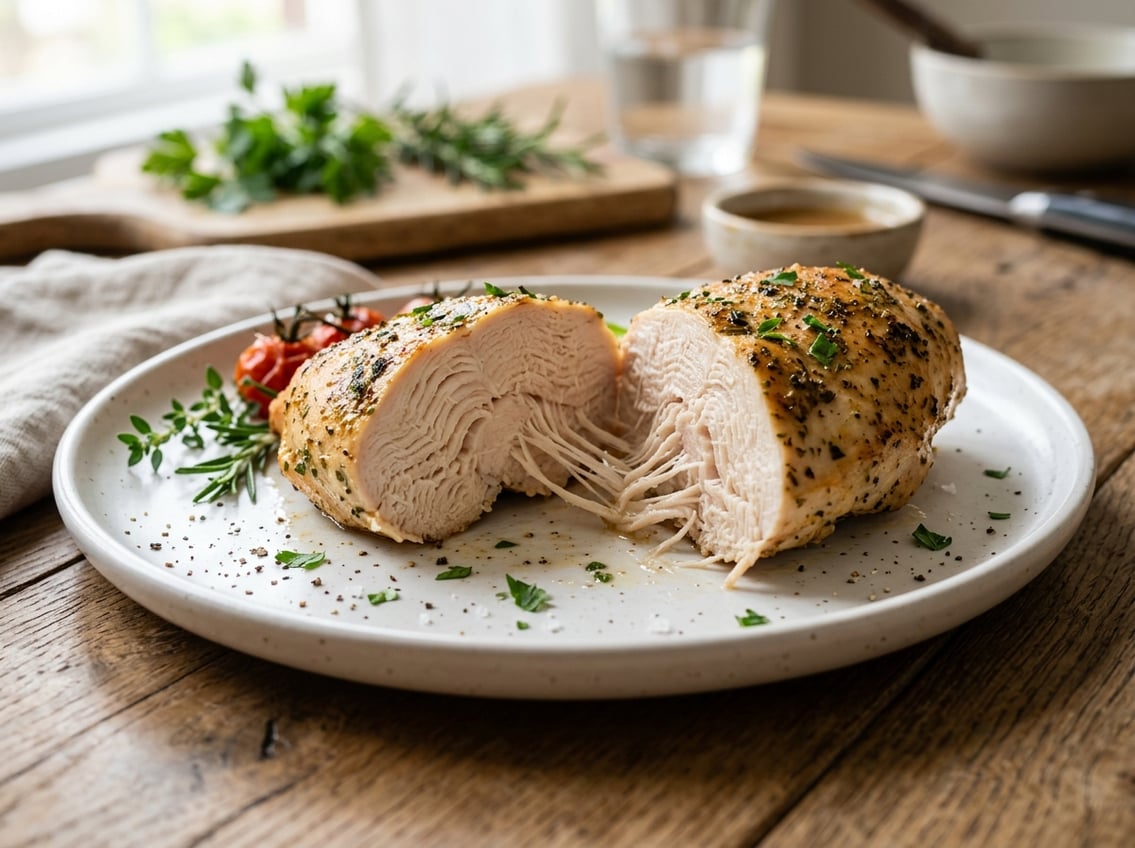
Raw chicken may already look split or mushy, or cooked chicken can turn dry and hard to chew. Stringy chicken breast usually shows a visible change in structure, not just the normal grain of the meat.
Chicken breast is naturally lean, so texture problems show up more clearly than in darker cuts. Terms like spaghetti meat and woody chicken describe different defects, and cooking methods can make either one more noticeable.
What A Stringy Chicken Breast Usually Signals
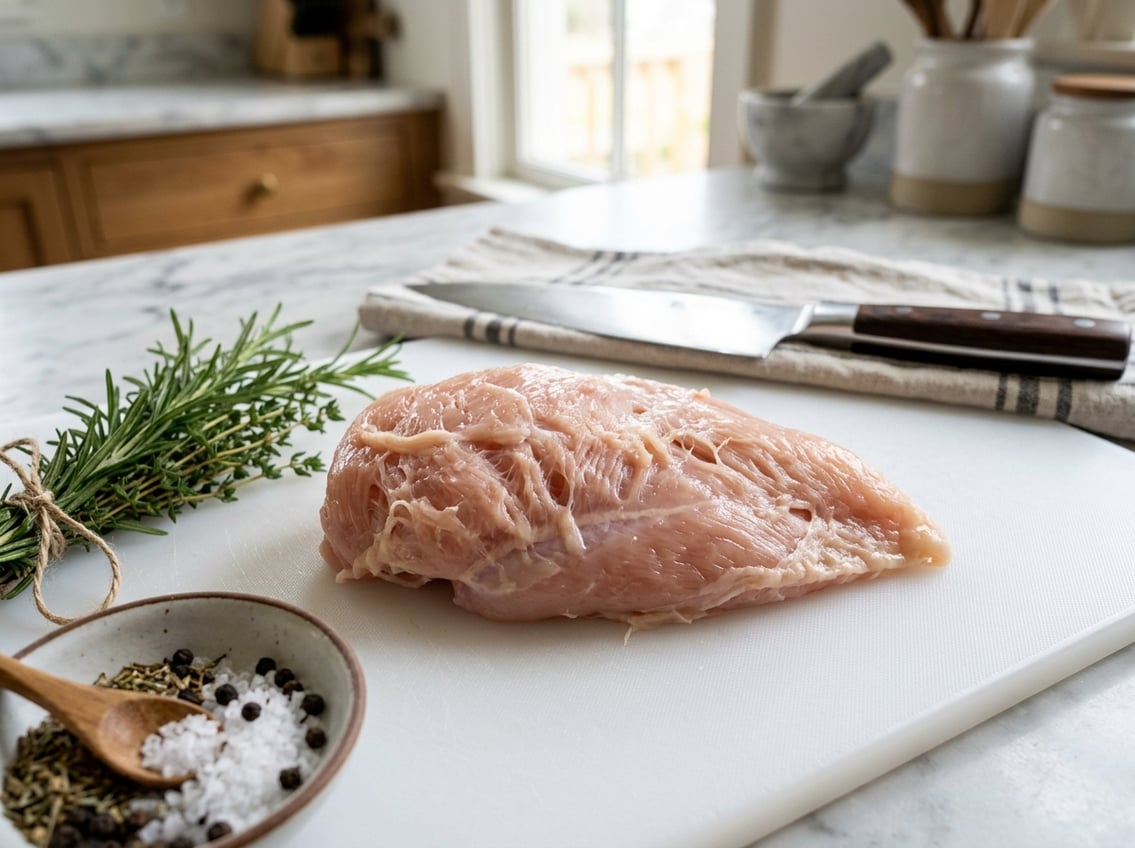
A stringy chicken breast often points to a defect in the meat itself, especially if it looks loose, split, or oddly soft before cooking. The fibers can tighten and the meat can lose moisture during cooking, which makes the texture even more obvious.
How Normal Grain Differs From A Texture Defect
Normal chicken has visible grain, but the fibers stay compact and even. The lines look fine and connected, not ragged or separated.
With spaghetti meat, the breast may look like loose strands or shredded fibers. The surface can look split, soft, or fragile, which is different from a normal firm breast.
Spaghetti Meat Vs. Woody Chicken
Spaghetti meat and woody chicken are not the same issue. Spaghetti meat is usually soft, split, and stringy, while woody chicken feels dense, dry, and rubbery.
Spaghetti meat is tied to weak support between muscle bundles, while woody chicken comes from a different quality problem.
Why Raw Chicken Can Look Mushy Or Split Apart
Raw chicken can look mushy when the muscle structure has weakened during growth, processing, chilling, or handling. It may also tear apart with light pressure.
That look does not always mean spoilage. Sometimes, the chicken has a texture defect such as spaghetti meat, which can become more obvious after cooking.
Why The Texture Happens
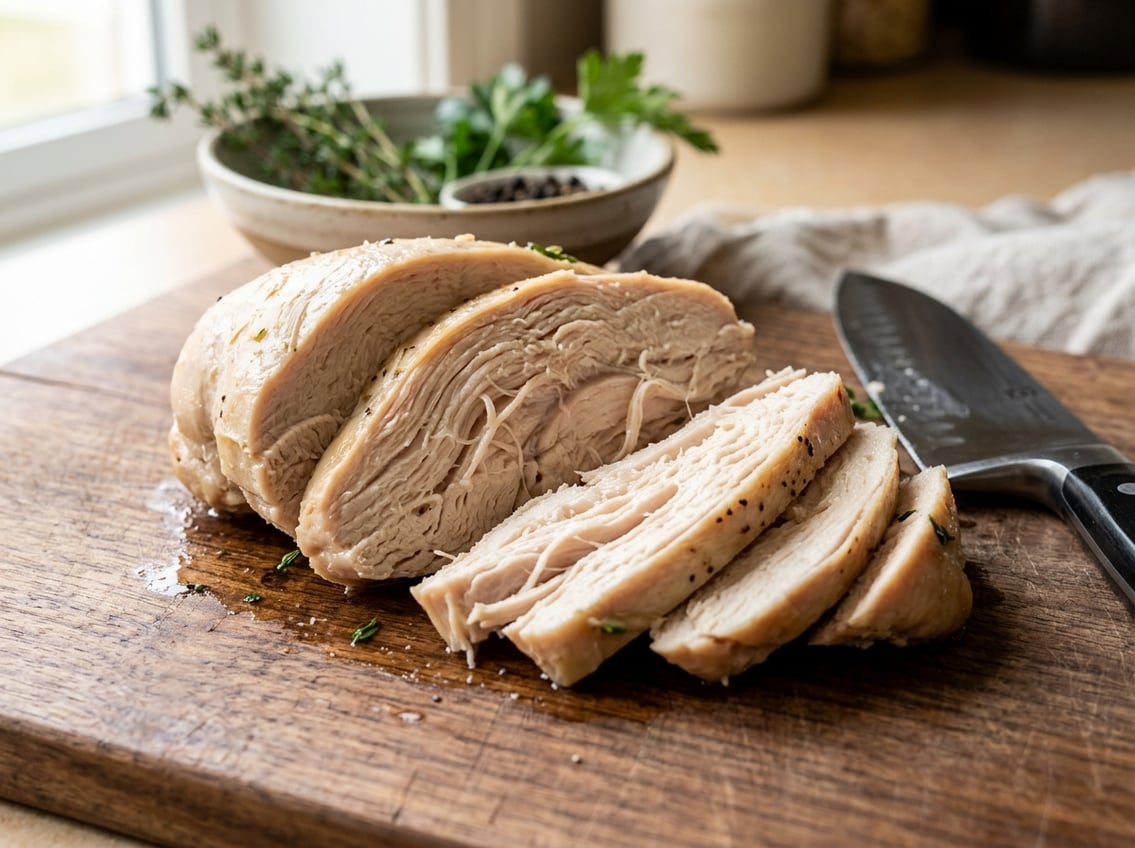
Stringy texture usually comes from the bird, the heat, or both. Fast growth can weaken the meat structure, and cooking methods can push lean breast meat past the point where it stays tender.
Fast Growth And Weak Connective Tissue
In spaghetti meat chicken, the connective tissue may not be strong enough to hold the muscle bundles together. Some breasts split into visible strands before or after cooking.
Faster-growing birds are more likely to show this problem because the breast muscle can grow faster than its support structure.
Overcooking And Moisture Loss
Overcooking is one of the most common reasons chicken breast turns tough and stringy. The proteins contract too much, squeeze out moisture, and leave the meat dry.
That dry, tight texture is common in tough chicken. Even a properly safe internal temperature can still lead to poor texture if the chicken stays on heat too long.
High Heat, Freezing Damage, And Handling Problems
High heat can tighten the fibers quickly, especially in thin or uneven pieces. Repeated freezing and thawing can also damage the meat structure and make it more fragile.
Rough handling during trimming, packaging, or thawing can split the fibers too. Once the structure weakens, the chicken may look stringy before it even hits the pan.
Is It Safe To Eat And When To Skip It
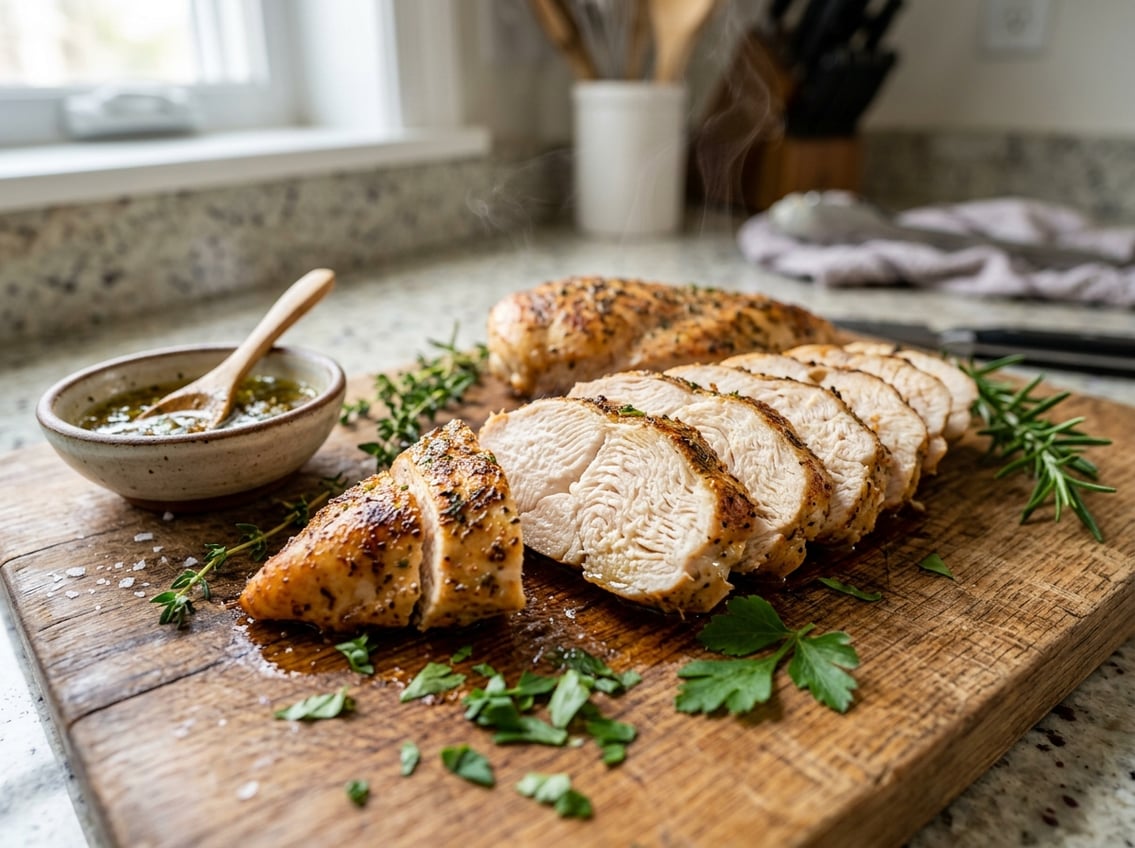
Stringy chicken is often a texture issue, not a safety issue. The key is separating a structural defect from signs that the meat has gone bad.
Texture Problems Vs. Spoilage Signs
If the chicken only looks like spaghetti meat chicken or feels mushy, it may still be safe if it was stored and cooked properly. A texture defect does not automatically mean the food is unsafe.
Skip it if you notice a bad smell, slimy surface, gray-green color, or sour taste. Those signs point to spoilage, and you should avoid spaghetti meat only if the meat also shows these safety problems.
How Taste, Juiciness, And Nutrition Can Change
Stringy chicken may still taste mild, but it often feels drier and less pleasant to chew. Severe cases can lose more liquid during cooking, which reduces juiciness.
The nutrition does not usually change in a major way. The biggest difference is texture, not basic protein content.
Best Uses For Chicken With Noticeable Texture Issues
If the chicken is safe, use it in dishes where texture matters less. Shredded chicken, soups, stews, casseroles, and tacos can hide some of the stringiness.
A mildly mushy breast can also work if you slice it thin and mix it with sauce. If the texture is extreme, avoid serving it as a plain chicken breast.
How To Buy And Cook Chicken For Better Texture
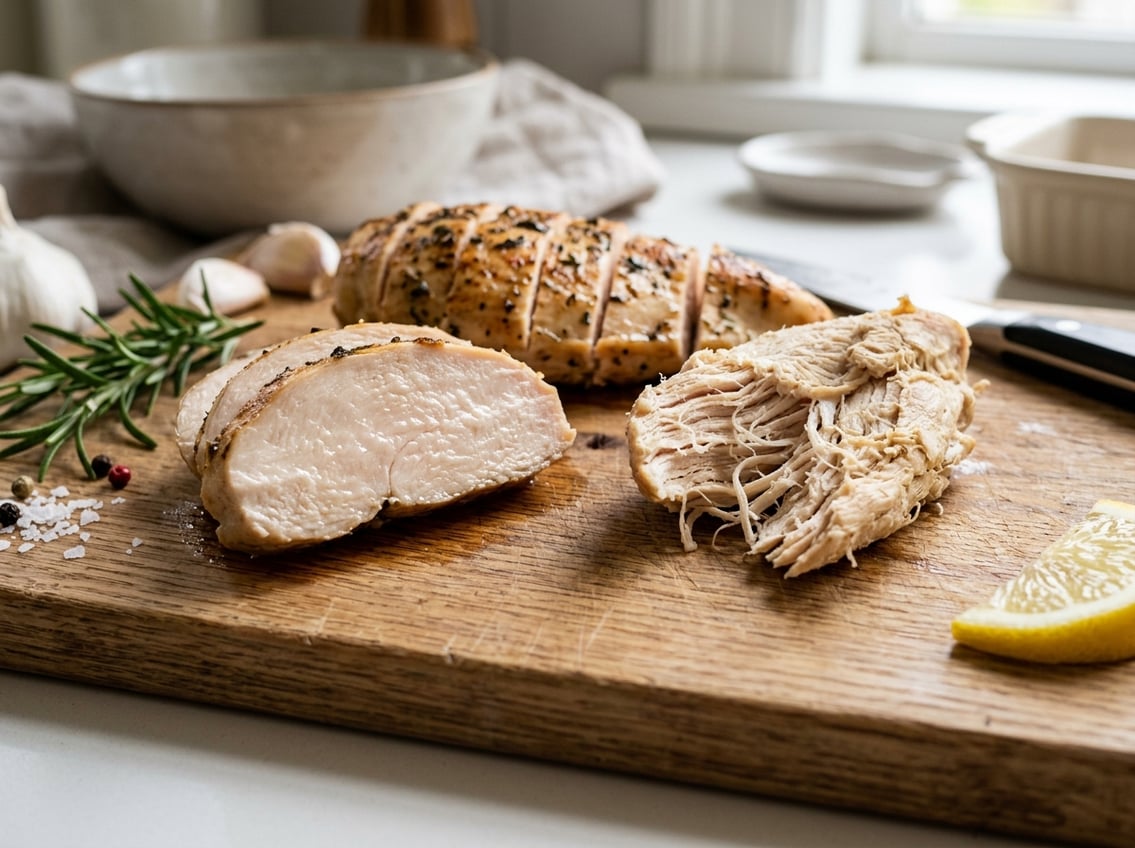
You can lower the risk of tough chicken by choosing better pieces at the store and using gentler cooking methods. Small changes in buying and prep often make a noticeable difference.
What To Look For At The Store
Choose chicken breast that looks firm, even, and moist without feeling slimy. Avoid pieces that look split, oddly fibrous, or very pale.
If possible, pick breasts that look smaller and more uniform. Those are less likely to be the kind of stringy chicken breast that cooks up with a weak texture.
Cook Low And Slow Or Use Gentler Methods
To avoid spaghetti meat style dryness, use moderate heat and stop cooking as soon as the chicken reaches a safe temperature. A meat thermometer helps you avoid overcooking.
Gentler methods like baking at a lower temperature, poaching, brining, or marinating can help keep breast meat tender. In daily cooking, cook low and slow works better than blasting the chicken with high heat.
Slice Against The Grain To Improve Bite
When you cut cooked chicken, look for the direction of the muscle fibers.
Slice against the grain to shorten those fibers and make each bite feel less stringy.
This step will not fix a major texture defect.
It can improve mild toughness and make chicken breast easier to chew and serve.


