
What Happens If You Cook Chicken Breast From Frozen Safely
Cooking frozen chicken breast can be safe and practical when you use the right method. You need more time and close attention to temperature, because the center starts colder and heats more slowly.
If you cook chicken breast from frozen safely, the meat should still reach 165°F and be safe to eat. The texture may be a little less even than with thawed chicken.
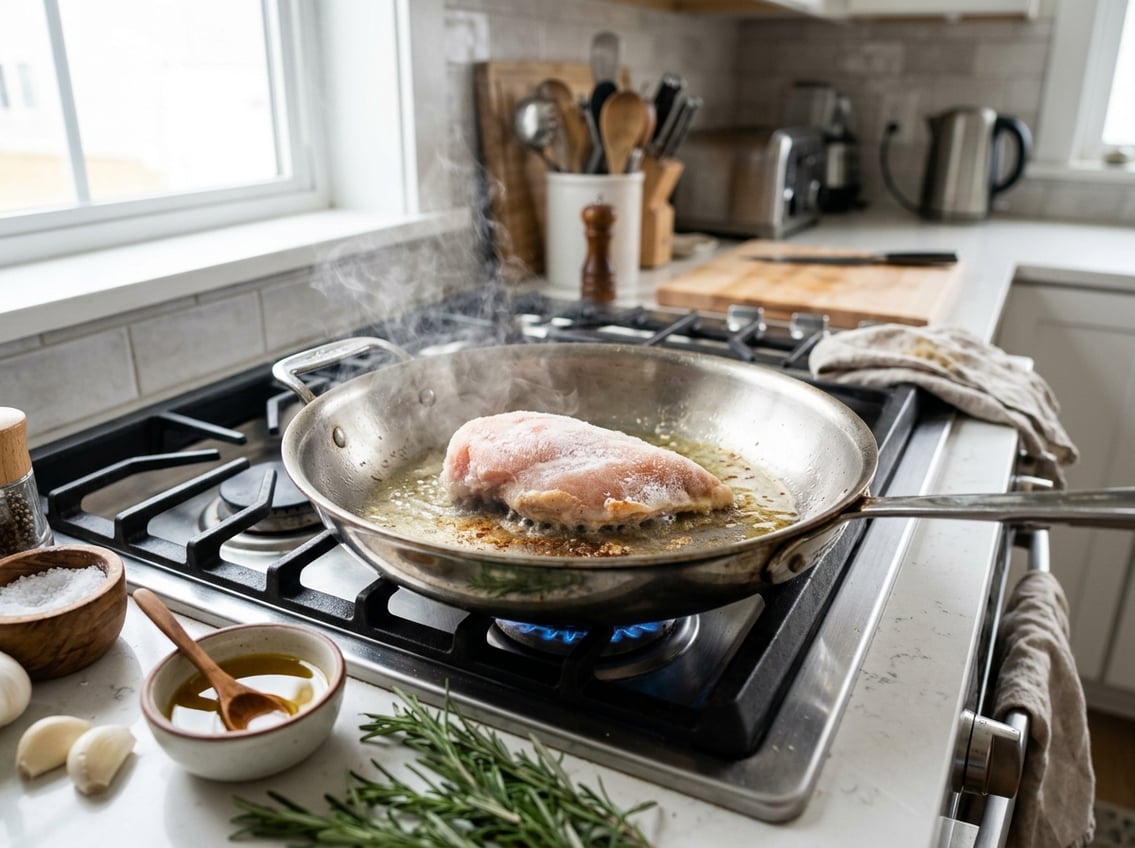
That extra time matters. Frozen chicken generally takes about 50% longer than fresh chicken, and you should use a thermometer every time.
What Changes When Chicken Breast Starts Frozen
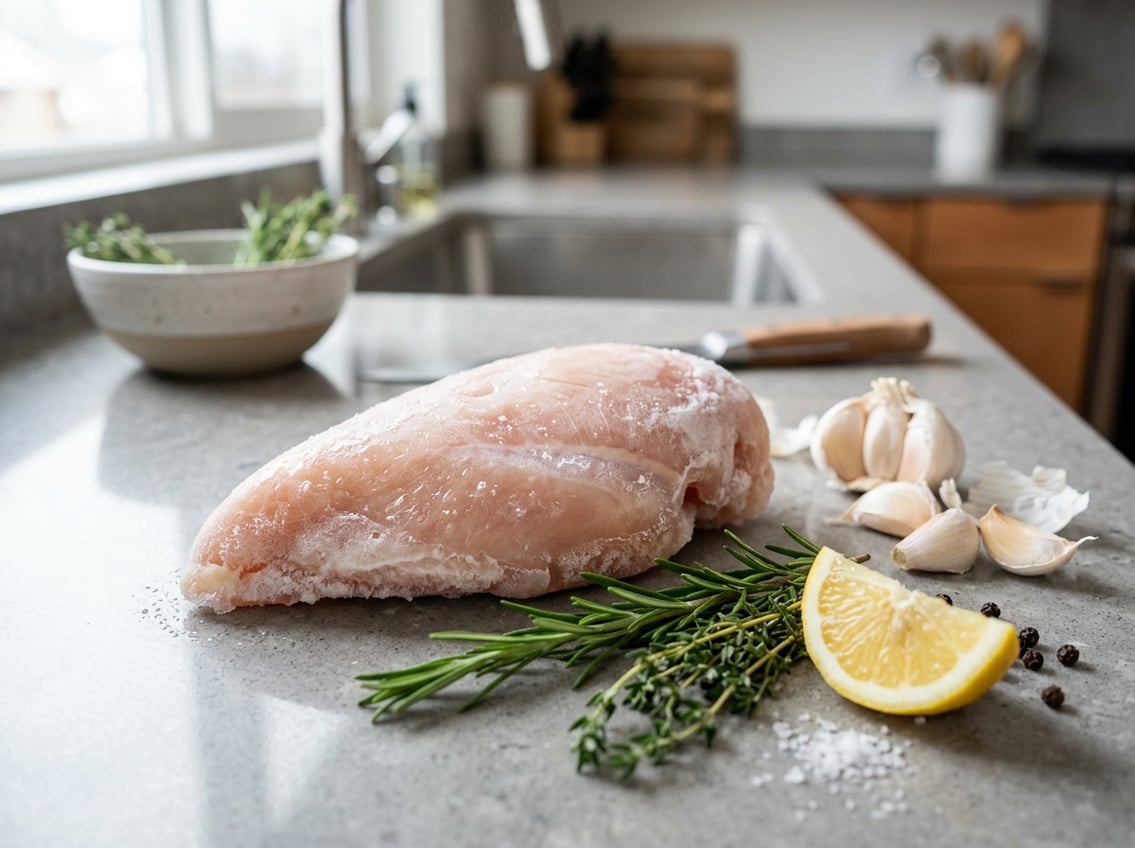
When you cook frozen chicken breast, the outside heats first while the center lags behind. You need more cook time than you would for a thawed breast, and you need to check the thickest part for doneness.
This rule applies whether you cook frozen chicken breast or other cuts from frozen. The main question is always how long to cook frozen chicken without drying out the outside before the inside reaches 165°F.
Longer Cook Time and Less Even Heating
Frozen chicken takes longer because part of the cook time goes into thawing the meat as it heats. The outside can finish before the center, especially if the heat is too high.
Lower, steady heat gives you a better chance of cooking through evenly. Baking, simmering, and pressure cooking work better than fast, dry searing.
Texture and Moisture Differences
Frozen chicken breast often cooks up a little less juicy than a fully thawed breast. Freezing can change the meat’s texture, so the final result may feel slightly firmer.
Moist heat helps. A covered pan, broth, or sauce can reduce dryness and improve the final texture.
When Frozen Chicken Breast Still Turns Out Well
Frozen chicken breast turns out best when the pieces are similar in size and not stuck together. It also helps to season early and avoid high heat that browns the outside too quickly.
A USDA-referenced Allrecipes guide notes that you can cook chicken from frozen safely as long as it reaches 165°F. Frozen chicken is a solid backup for busy nights when you did not thaw ahead.
Safety Rules That Matter Most
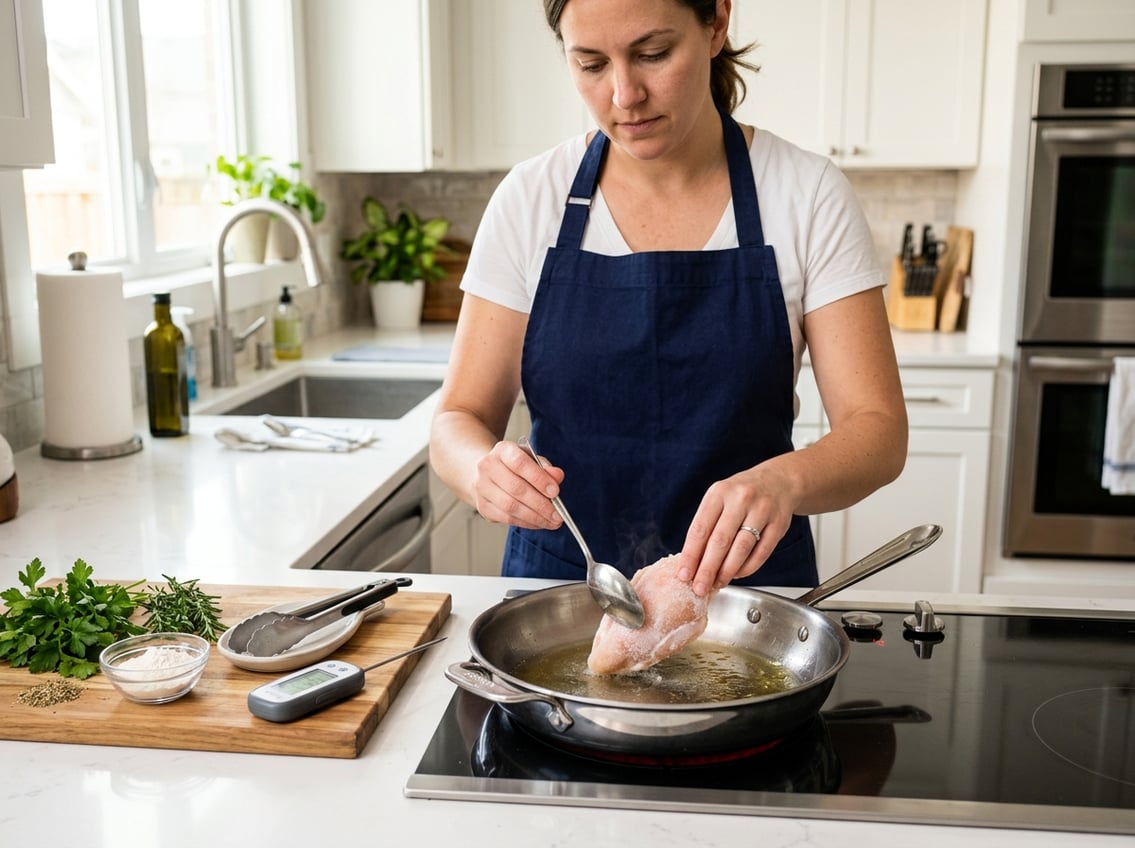
Safe cooking starts with temperature, not appearance. Chicken can look done on the outside while still being unsafe in the center, so you need a thermometer and a careful method.
The biggest risks come from slow heating, uneven heating, and methods that leave chicken too long in the danger zone.
Why 165°F Is Non-Negotiable
You should cook chicken until the thickest part reaches 165°F. That is the safe minimum internal temperature for poultry, and it applies whether the chicken started fresh, frozen, or partially thawed.
A thermometer is the only reliable way to know. Color, juices, and firmness can all mislead you.
Why Partially Thawed Chicken Can Be Riskier
Partially thawed chicken can cook unevenly if some areas are frozen and others are already warm. That can leave one part undercooked while another part finishes early.
If you started thawing the chicken, keep thawing it until it is fully ready to cook, or cook it right away with a method that handles uneven starting temperatures well. Do not leave it on the counter to “finish thawing,” since that raises the food safety risk.
Methods to Avoid or Use With Caution
Do not cook chicken from frozen in a slow cooker or microwave. A slow cooker heats too slowly and a microwave can leave the inside unevenly cooked.
Use caution with very high-heat pan cooking, since it can burn the outside before the inside reaches 165°F. Safer choices include oven baking, simmering, poaching, and pressure cooking.
Best Ways to Get Good Results
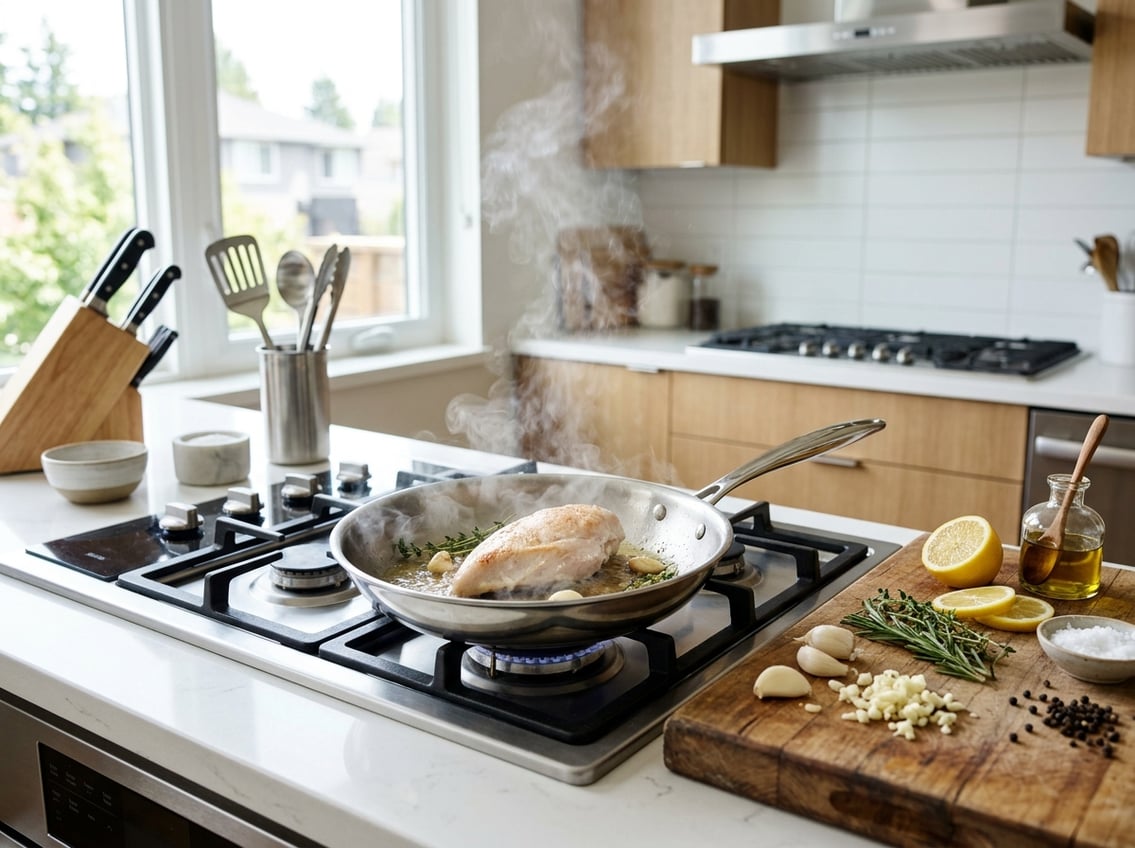
The best methods for frozen chicken breast cook it through without scorching the outside. Dry heat works best in the oven, while moist heat gives you more forgiveness on the stovetop.
If you want speed, a pressure cooker is useful. If you want simple control, the oven is a strong choice.
Bake Frozen Chicken Breast in the Oven
To bake frozen chicken breast, heat the oven to about 350°F and place the chicken on a lined baking sheet. Brush it with oil, add seasoning, and bake uncovered until the center reaches 165°F.
This method works for both single and multiple breasts. It gives you room to season well and works for weeknight meals, meal prep, and sliced chicken for salads or sandwiches.
Simmer or Poach on the Stovetop
If you want a juicier result, simmer the chicken in broth or sauce. Keep the heat at a gentle simmer, cover the pan, and cook until the thickest part reaches 165°F.
This method is one of the easiest ways to cook frozen chicken breast without drying it out. It works well if you plan to shred the meat for tacos, soups, or casseroles.
Use an Instant Pot for Faster Cooking
A pressure cooker shortens the total time and works well for frozen chicken breast. Put the pieces in a single layer, add broth, season lightly, and cook on high pressure.
Boneless frozen breasts usually need about 10 to 15 minutes under pressure, plus a short natural release. This method is useful when you need dinner fast and still want a safe result.
Cook Times by Cut and Practical Tips
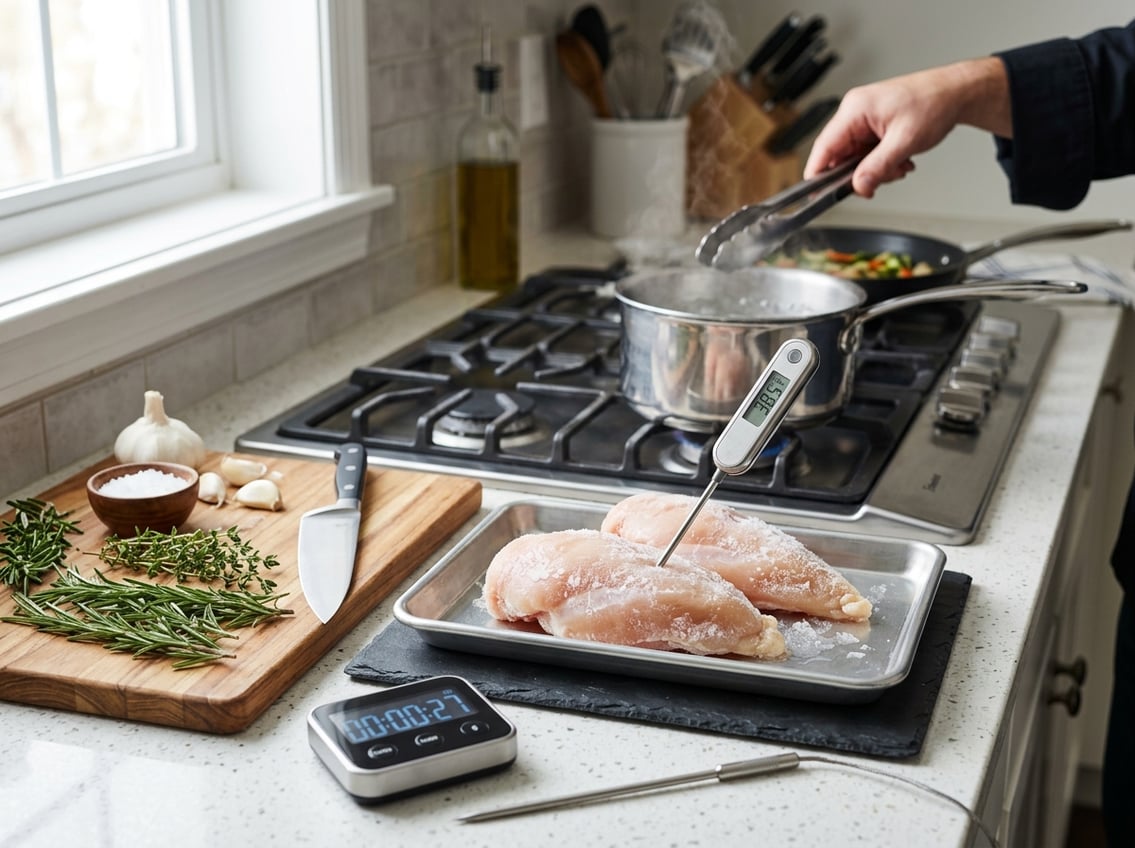
Cook time changes with size, bone, and shape. Thin pieces finish faster, while bone-in cuts and larger pieces need more time.
Use these times as a starting point, then check the temperature in the thickest part. If you are unsure, keep cooking and check again.
Boneless Breasts, Bone-In Breasts, and Tenderloins
For oven cooking at 350°F, Allrecipes’s frozen chicken timing chart lists these approximate times:
- Boneless chicken breasts, 4 to 6 ounces: 30 to 45 minutes
- Bone-in chicken breasts, 6 to 8 ounces: 45 to 60 minutes
- Chicken tenderloins or tenders: about 28 to 33 minutes
If you are cooking on the stovetop in broth or sauce, boneless breasts usually take longer than in the oven, often around 38 to 45 minutes. Bone-in pieces take longer.
Frozen Chicken Tenders, Wings, and Drumsticks
Smaller cuts cook differently because their shape is thinner or more irregular. For frozen chicken tenders, wings, and drumsticks, the exact time depends on the method.
A useful starting point from Allrecipes is:
- Frozen chicken tenders: about 28 to 33 minutes in the oven
- Frozen chicken wings: about 45 to 60 minutes in the oven
- Frozen chicken drumsticks: about 53 to 68 minutes in the oven
For faster methods, the Instant Pot and air fryer can cut time, though you still need to verify 165°F before serving. If you cook frozen chicken wings or frozen chicken drumsticks, check the thickest area near the bone.
Seasoning, Sauces, and Resting Before Slicing
Season before cooking if you can. Frozen chicken can still take on flavor during baking or simmering.
Oil, dry spices, broth, and sauces help protect the surface from drying out. Rest the chicken for 5 to 10 minutes after baking.
Let it rest for 10 to 15 minutes after pressure cooking. That pause helps the juices settle, so you lose less moisture when you slice.
Keep a thermometer close by if you cook frozen chicken often. Use methods that fit the cut for better texture and safety.


