
Why Is Chicken Breast Better Than Thigh for Health?
Chicken breast is often considered better than thigh for health because it gives you more lean protein with fewer calories and less fat. This makes it easier to fit into calorie goals while still giving your body the protein it needs.

If you want a leaner source of protein for weight control, muscle support, or macro tracking, chicken breast is usually the better health choice. Chicken thigh can still fit a healthy diet, but it brings more fat and calories per serving.
Each cut serves a different goal. Knowing which nutrients matter most for your meals helps you compare chicken breast and chicken thigh in a practical way.
When Chicken Breast Is the Better Choice

Chicken breast is the leanest common cut of chicken. Boneless, skinless chicken breast is generally lower in calories and fat than thigh.
That makes chicken breast a strong pick when you want a high-protein meal without many extra calories.
Lower Calories and Fat Per Serving
A three-ounce serving of boneless, skinless chicken breast has about 140 calories and 3 grams of fat. The same amount of boneless, skinless chicken thigh has about 170 calories and 9 grams of fat, according to The Pioneer Woman’s nutrition comparison.
Lower fat makes chicken breast easier to fit into meals with other calorie-dense foods, like rice, pasta, cheese, or sauces.
More Protein Per Calorie
Chicken breast gives you a lot of protein for the calories you spend. That is why many people choose it for lean protein without extra fat.
If you track macros, chicken breast usually gives you more room to build the rest of your meal around vegetables, grains, and healthy fats.
Why It Fits Weight Loss and Lean Eating Goals
Chicken breast fits well when your goal is to lower calories while keeping protein high. It works in meal prep, salads, wraps, and simple dinners where you want control over portion size.
It also helps when you want a filling meal that does not push your daily fat intake too high.
Nutrition Differences That Actually Matter
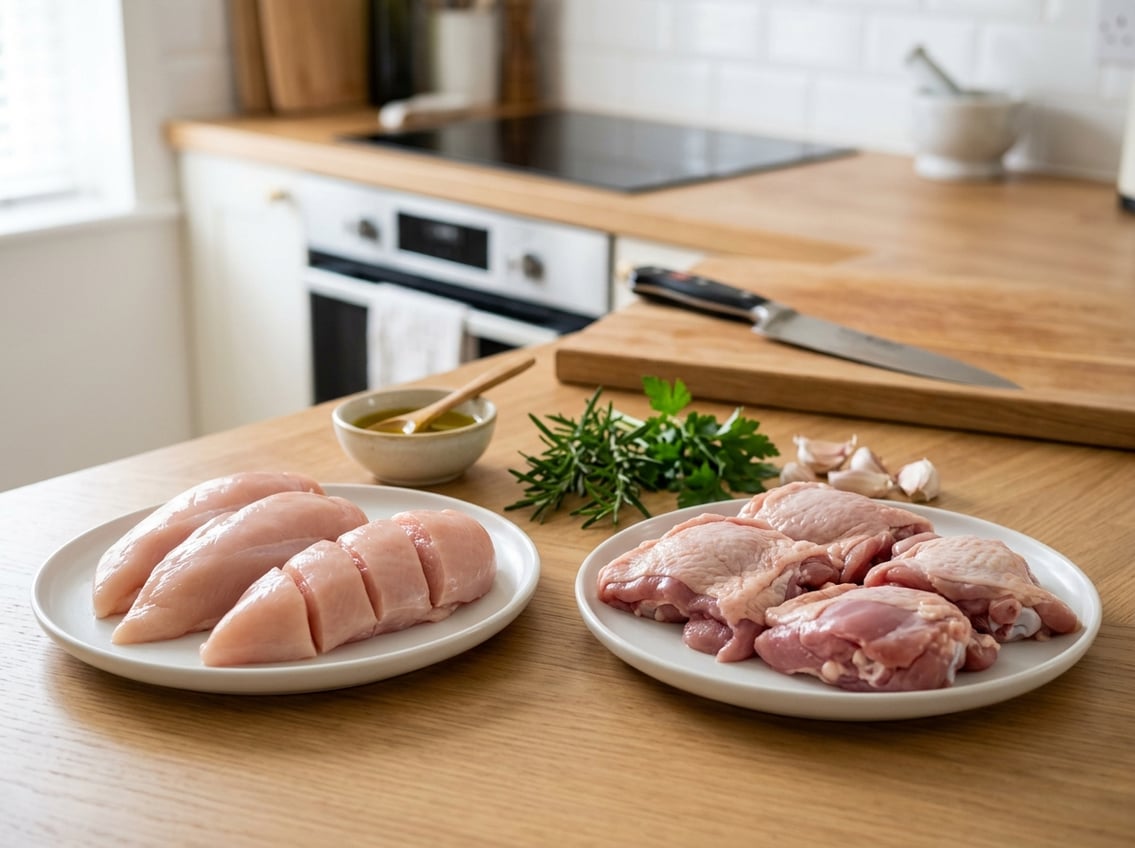
The biggest nutrition gap between chicken breast and chicken thigh is that breast is leaner, while thigh has more fat. This changes calories, satiety, and how the meat fits into your diet.
Protein, Fat, and Calorie Comparison
Chicken breast and chicken thigh both provide high-quality protein, but their macro balance is different. A macro comparison from CY Chicken shows that chicken breast has a much higher protein-to-fat ratio than thigh.
Chicken thigh still gives you protein, yet it also brings more fat per bite. Thigh often feels richer and more filling, while breast feels lighter.
Micronutrients in White Meat vs Dark Meat
Chicken thigh, which is dark meat, tends to offer more iron and zinc, and it may provide more vitamin B12 than breast. Those nutrients matter, especially if you eat poultry often and want to cover more than just protein.
Chicken breast still has value as a protein food. It simply leans more toward lower fat and lower calories.
How Skin, Portion Size, and Processing Change the Numbers
Skin changes the nutrition quickly. Skin-on chicken thighs add more fat and calories than skinless chicken cuts.
Skinless chicken thighs still stay higher in fat than breast. Portion size matters too.
A large chicken breast can be much more than one serving, so the numbers can change fast if you eat a full piece. Processed chicken can shift the nutrition even more because breading, added oils, and sodium raise calories.
Cooking Performance and Best Uses
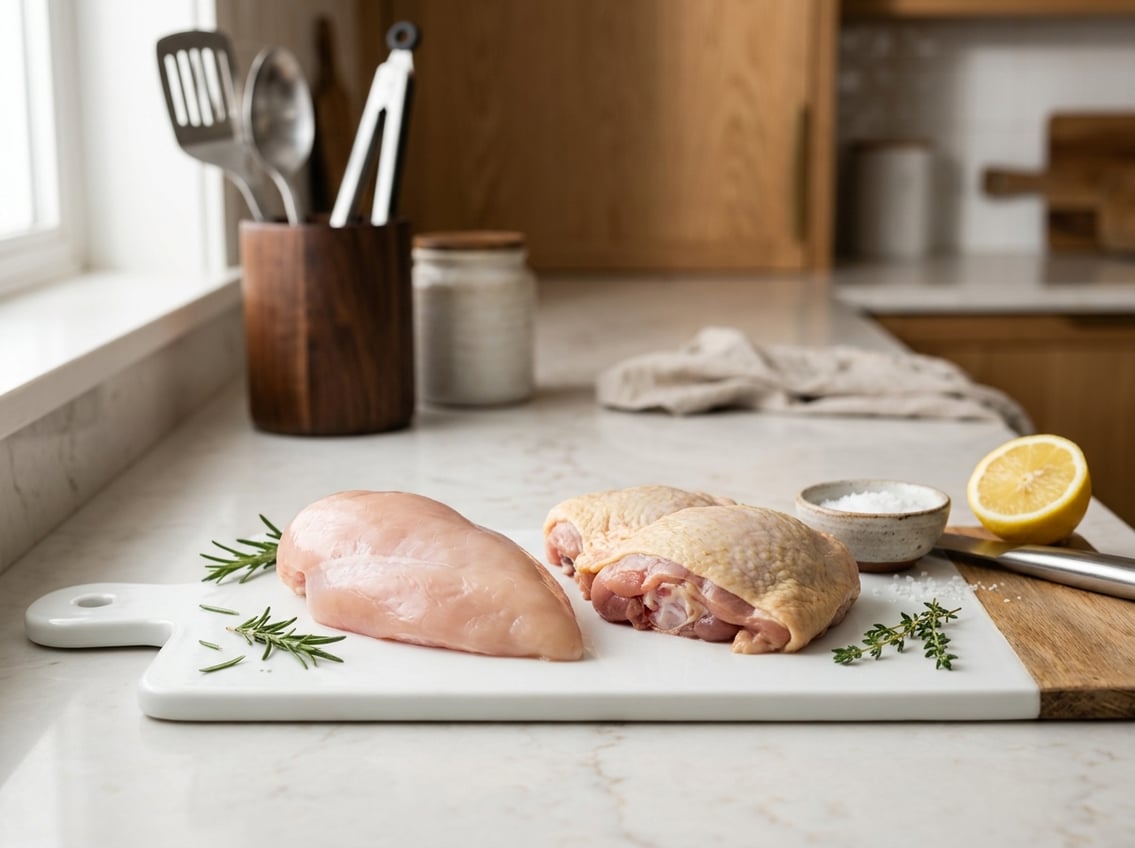
Chicken breast and chicken thighs behave differently in the pan, oven, and grill. Breast cooks faster, while thigh stays juicier and gives you more room for error.
Why Breasts Work Well for Fast, Simple Meals
Chicken breast works well for quick meals with a mild flavor. It is good for sliced salads, sandwiches, stir-fries, and meal prep bowls.
Because it is lean, it can dry out if you overcook it. Careful timing matters, especially for baked or grilled chicken breast.
Why Thighs Stay Juicier and More Forgiving
Chicken thighs have more fat and connective tissue, which helps them stay tender during cooking. That makes them easier to cook without drying them out.
They work especially well in recipes that use strong heat or longer cooking times, like braises, roasts, and skillet dinners. If you want richer flavor and less risk of overcooking, thighs have an advantage.
Healthier Cooking Methods for Either Cut
For either cut, your cooking method matters as much as the meat itself. Grilling, baking, poaching, air frying, and pan-searing with a light amount of oil are all smart choices.
Keep sauces and breading modest if you want the healthiest result. A simply seasoned baked chicken breast or grilled thigh can both fit a balanced meal.
How to Choose Based on Your Goal

Your best choice depends on what you want from the meal. Chicken breast is the stronger lean protein pick, while chicken thigh brings more flavor, fat, and satiety.
Best Option for Muscle Building and High-Protein Meals
If you want a high-protein meal with fewer calories, chicken breast is usually the better fit. It gives you more lean protein per calorie, which works well for muscle building plans that also control fat intake.
Chicken breasts are easy to portion and prep. This makes them useful when consistency matters.
Best Option for Fullness, Flavor, and Budget
If your priority is taste, tenderness, and a more satisfying meal, chicken thigh can be the better pick. Chicken thighs often cost less than breasts, which can help if you cook often on a budget.
Skinless chicken thighs can still be part of a healthy diet, especially when you pair them with vegetables and whole grains. They are also a strong choice when you want a richer meal that feels less dry.
When Mixing Breast and Thigh Makes the Most Sense
You do not need to choose only one cut. Mixing chicken breast and chicken thigh gives you a balance of lean protein, flavor, and texture.
This approach works well for soups and casseroles. It also suits taco fillings and meal prep.
If you want the health benefits of breast with some of the taste and moisture of thigh, combining both is a practical middle ground.


