
How Does Chicken Breast Look Like When Cooked? Visual Signs
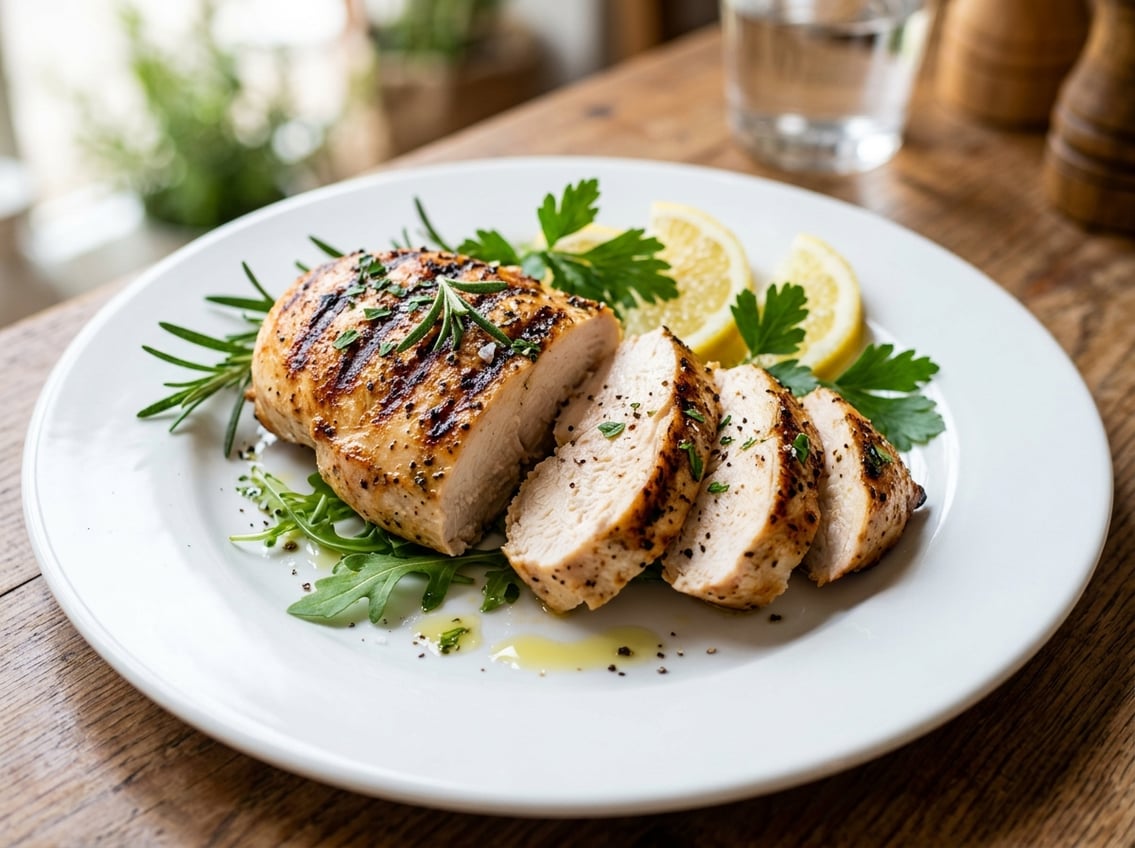
When you ask how does chicken breast look like when cooked, the short answer is this: it should look opaque, pale white to light tan inside, with no raw pink center and no pink juices.
The surface may look browned, grilled, or lightly golden, depending on the cooking method. The inside should look firm and fully set.
A properly cooked chicken breast looks opaque, feels firm, and releases clear juices. The safest check is still an internal temperature of 165°F.
That visual check matters, because undercooked chicken breast can still look glossy, translucent, or pink in the thickest part.
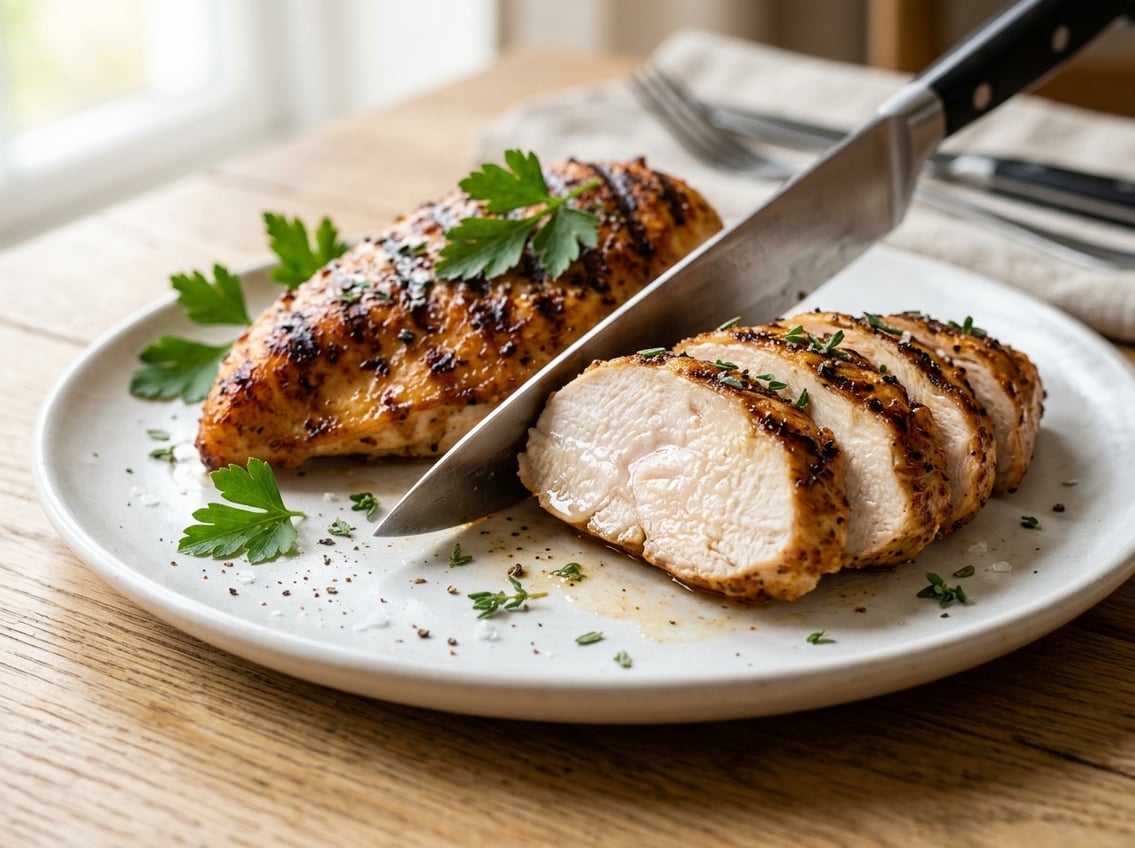
Knowing what cooked chicken breast looks like helps you avoid both undercooked and overcooked chicken breast.
It also makes it easier to judge doneness after different cooking methods, since baked, grilled, and poached chicken do not all look the same on the outside.
What to Look For Right Away
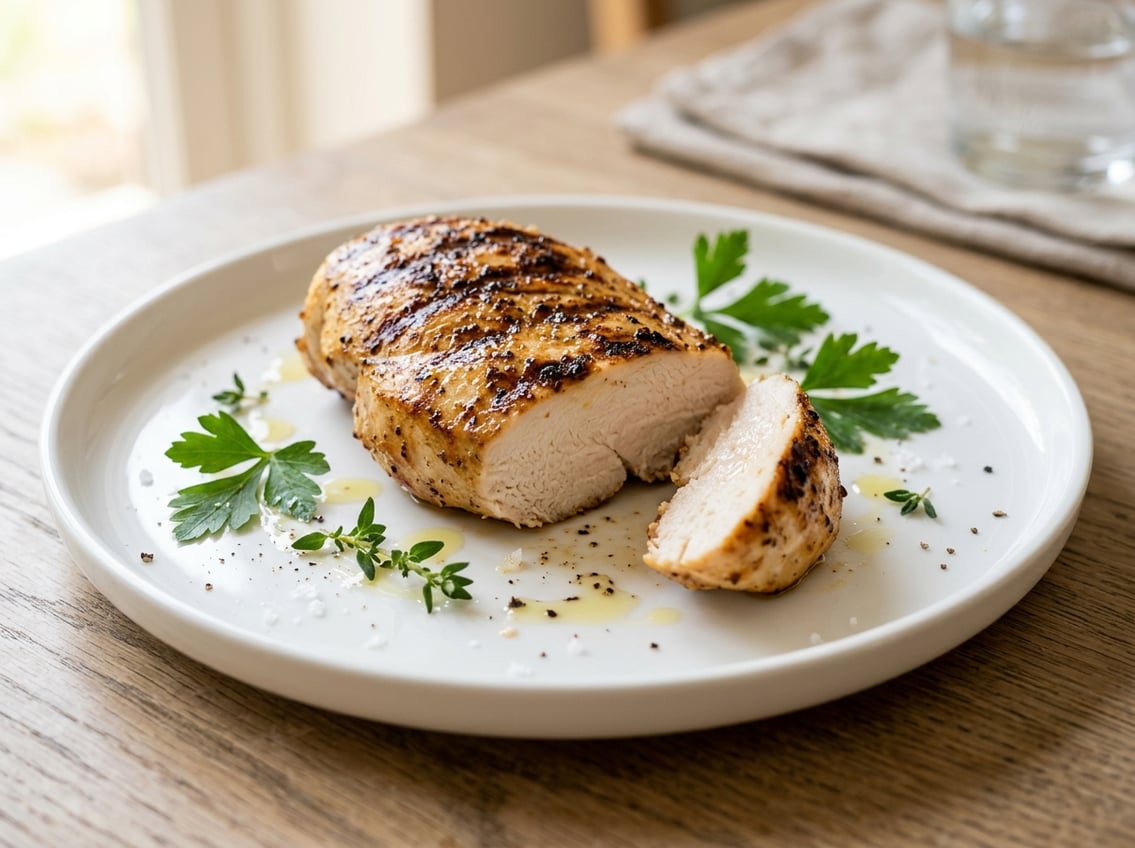
The fastest visual check is a mix of color, firmness, and juices.
These clues can help you spot cooked chicken, but they work best when you use them together with the internal temperature and a touch test.
Color in the Center
The center of cooked chicken breast should look opaque, not translucent.
A fully cooked chicken breast usually has a white or very light tan interior, while undercooked chicken breast often shows a pink or glassy center.
Small pink streaks can happen near bones or from seasonings, smoke, or marinades.
The key is the thickest part of the breast, which should no longer look raw.
Texture and Firmness
A cooked chicken breast should feel firm with a little spring when pressed.
The touch test is helpful here, because undercooked chicken tends to feel soft or squishy, while overcooked chicken breast feels very tight and dry.
Fully cooked chicken breast should feel firm and springy, not rubbery or gelatinous.
That same texture usually matches an opaque interior.
Clear Juices vs Pink Juices
When you cut into cooked chicken, the juices should run clear.
Pink or red juices can point to undercooked chicken breast, especially if the center still looks translucent.
Juices alone are not enough to judge doneness, since resting, marinades, and cooking method can affect the color.
Use them as one clue, not the only clue.
The Safest Way to Check Doneness
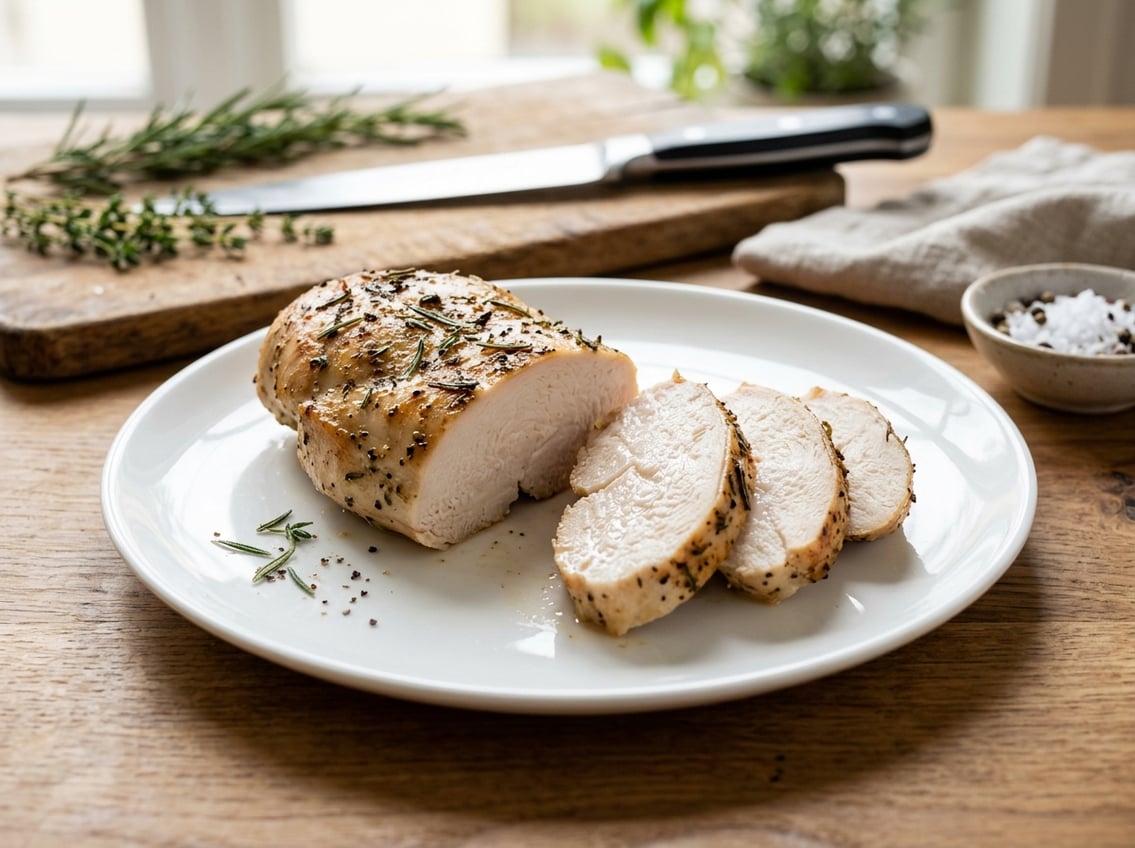
Food safety comes first, because visual checks can be misleading.
The most reliable method is a meat thermometer, and the goal for chicken breast is an internal temperature of 165°F.
Why 165°F Matters
At 165°F, chicken is considered fully cooked and safe to eat.
That temperature is important because undercooked chicken can carry harmful bacteria like salmonella and campylobacter, which can lead to foodborne illness.
A thermometer gives you a clear answer when the outside looks done before the center actually is.
That gap is common with thick chicken breasts.
How to Use a Meat Thermometer Correctly
Insert a digital thermometer into the thickest part of the chicken breast.
Avoid touching bone, pan surfaces, or fatty edges, since those can give a false reading.
Check several spots if the breast is uneven in thickness.
If the thickest point reads 165°F, the rest is usually ready too.
When Visual Cues Can Be Misleading
Some chicken looks done before it is safe.
Grill marks, browning, and browned seasoning can hide an undercooked center.
The safest and most accurate check is internal temperature.
Visual clues help you judge appearance, while the thermometer confirms doneness.
How Cooking Method Changes Appearance
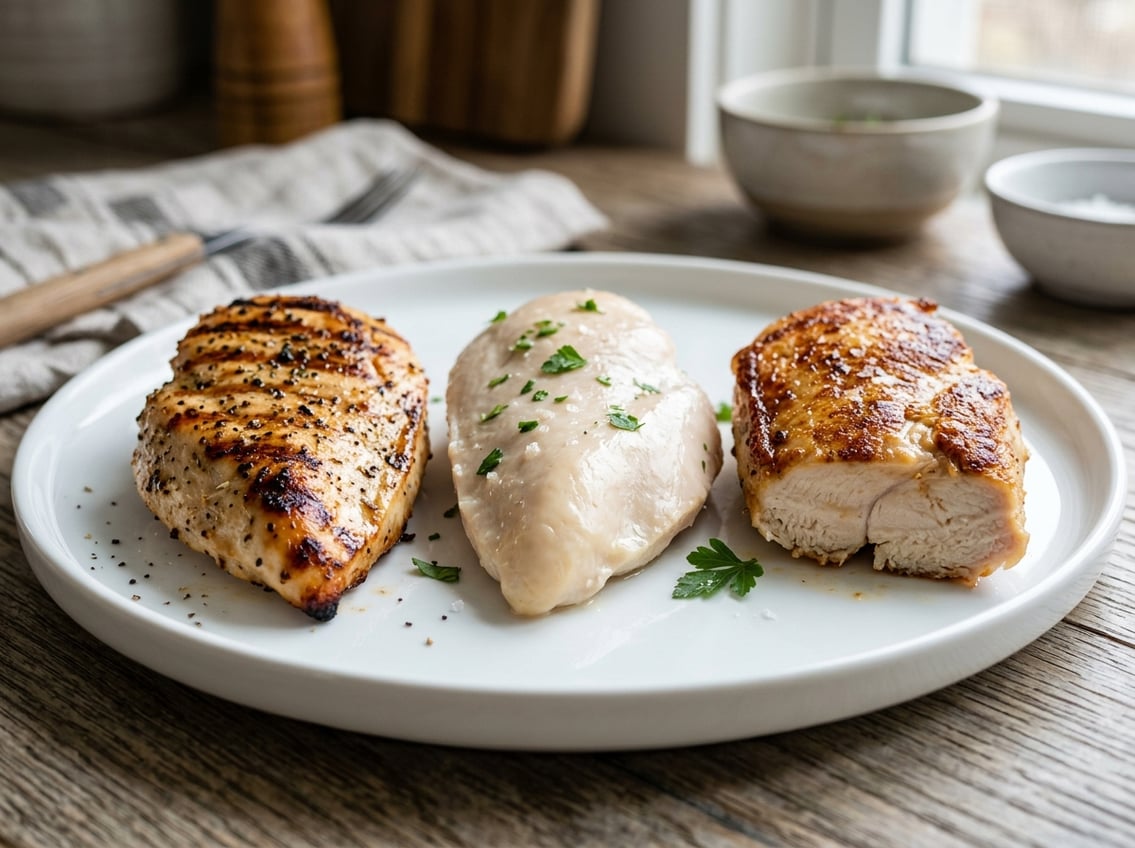
The cooking method changes the outside more than the inside.
A baked chicken breast may look pale and evenly browned, a grilled chicken breast may have char marks, and a poached chicken breast may look almost plain on the outside.
Baked Chicken Breast
A baked chicken breast usually looks light golden on the surface with a fully opaque center.
It often cooks evenly, so the color change from edge to center is smoother than with high-heat methods.
If you bake it too long, the inside may turn dry and stringy.
That is a sign of overcooked chicken, not just fully cooked chicken.
Grilled Chicken Breast
A grilled chicken breast often has dark grill marks and a deeper brown outside.
The inside should still be white or pale tan, with no raw pink center.
Grilling can create a strong contrast between the outside and inside, so the surface is not a reliable sign by itself.
A browned crust does not guarantee the middle is safe.
Poached Chicken Breast
A poached chicken breast usually looks the least browned.
The outside stays pale, and the flesh becomes opaque and tender as it cooks.
Because poaching uses gentle heat, the chicken may look softer and lighter than grilled or baked chicken breast.
A thermometer is the easiest way to confirm doneness.
Common Mistakes After Cooking
Mistakes after cooking can make chicken harder to judge and harder to store safely.
Watch for underdone centers, dry texture from overcooking, and unsafe handling of leftovers.
Signs It Is Still Underdone
If the center still looks pink, shiny, or translucent, it is likely undercooked chicken.
Soft texture, pink juices, and a cool center are other warning signs.
Do not rely on color alone if the chicken was marinated or smoked.
Use a thermometer to confirm the thickest part reaches 165°F.
How to Spot Dry or Overdone Meat
Overcooked chicken breast often looks very pale, shrinks a lot, and feels stringy or tough.
The juices may run clear, yet the meat can still be dry from too much heat or cooking time.
A firm texture is good, a hard or chalky texture is not.
How to Store Leftovers Safely
Place leftover cooked chicken in a shallow container and refrigerate it within 2 hours.
Cover the chicken and use it within 3 to 4 days. Freeze it if you need to keep it longer.
When you reheat leftover cooked chicken, heat it to 165°F.
Safe storage matters as much as proper cooking. Food safety continues after cooking ends.


