
How to Cook Chicken Breasts That Aren’t Dry
If you want to know how to cook chicken breasts that aren’t dry, start with heat control, even thickness, and a meat thermometer. Chicken breasts are lean, so a small timing error can push them from juicy to tough and chalky very fast.
You do not need fancy tools or complicated steps to make a tender chicken breast. A few small habits, from how you prep boneless skinless chicken breasts to when you slice them, make the biggest difference.
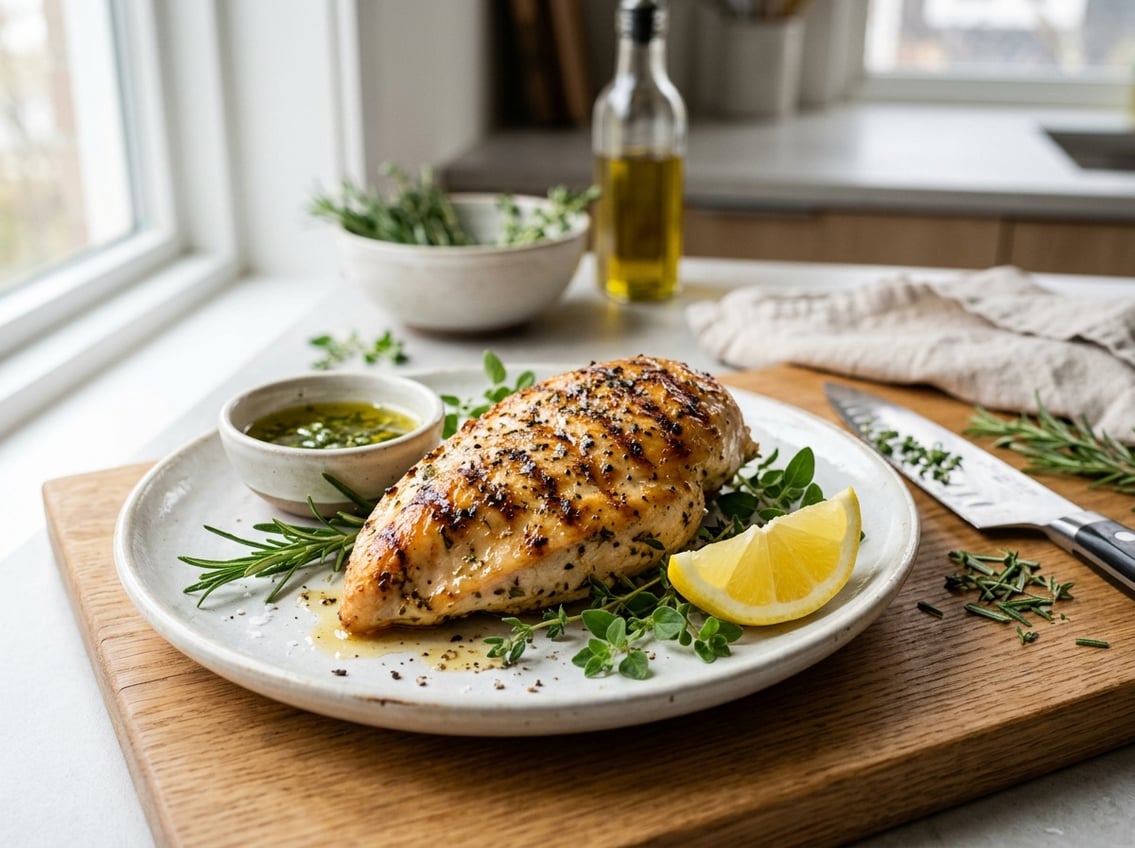
The Three Rules That Keep Chicken Juicy
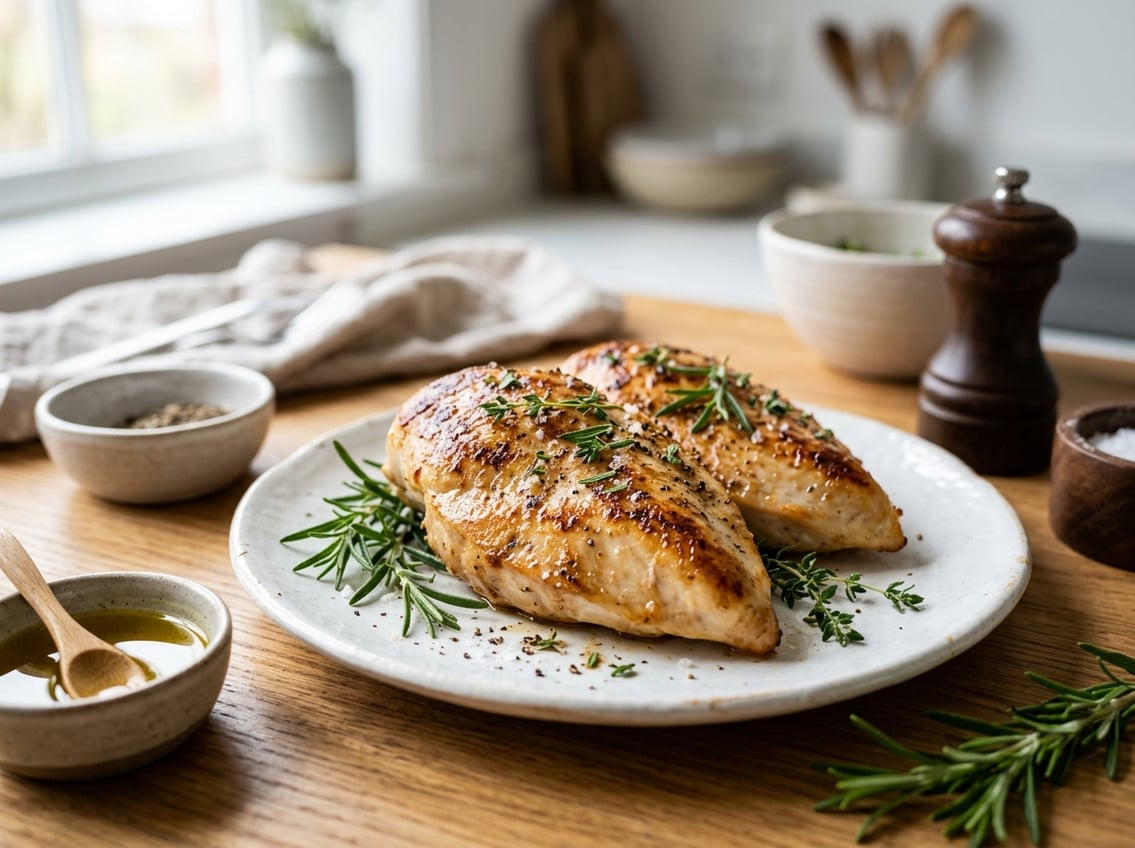
Juicy chicken breast depends on three basics: cook it to the right temperature, make the pieces even, and let the meat rest. These steps matter more than the exact cooking method you choose.
A seasoned chicken breast can still turn dry if the shape is uneven or if you slice it too soon.
Cook to Temperature, Not Time
Use a meat thermometer instead of guessing by minutes. Chicken breasts vary in size, so time alone is not a dependable guide.
Pull the chicken when the thickest part reaches 165°F. Let carryover heat finish the job for a safer result without drying out the center.
Pound to an Even Thickness
When one end is much thicker than the other, the thin part overcooks before the thick part is done. Pound chicken breast gently between sheets of plastic wrap or parchment until it is even.
This helps boneless skinless chicken cook at the same pace from edge to edge.
Rest Before Slicing
Rest cooked chicken for 5 to 10 minutes before cutting. During that time, the juices settle back into the meat instead of running onto the cutting board.
If you slice too early, even a well-cooked juicy chicken breast can seem dry.
Prep Steps That Improve Moisture and Flavor
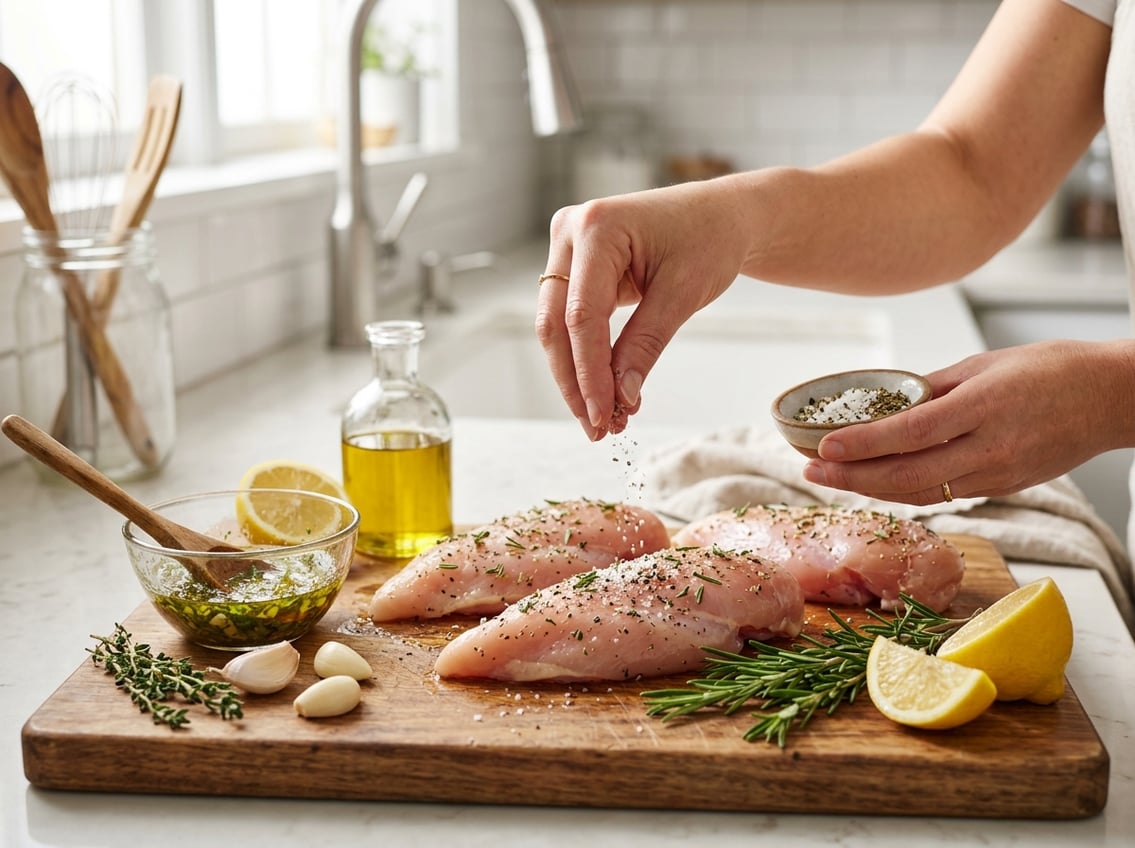
Good prep helps chicken hold onto moisture and taste better after cooking. Salt, time, and seasoning all play a role, especially with lean boneless skinless chicken breasts.
The right prep can make marinating chicken breasts more effective. It can turn plain chicken breasts into a seasoned chicken breast that works in salads, sandwiches, pasta, or rice bowls.
When to Brine for Better Retention
Brining helps chicken keep moisture during cooking. A simple saltwater brine is useful when your chicken breasts are large, very lean, or headed for high heat.
For a quick brine, use about 1/4 cup salt per 4 cups water and soak the chicken for 15 to 30 minutes. Pat dry before cooking, or skip the rinse if you prefer a stronger salt finish.
How Marinating Changes Texture and Taste
Marinating chicken adds flavor and can improve surface tenderness. Acid-based marinades, such as lemon juice or vinegar, should stay short so they do not make the outside mushy.
A mix of oil, salt, garlic, herbs, and a little acid works well for marinating. According to Simply Recipes, ahead-of-time seasoning is one of the most common ways chefs protect lean chicken from drying out.
Simple Seasoning That Works Across Meals
Use salt, black pepper, garlic powder, and paprika as a base. That mix fits almost any side dish and still tastes clean.
If you want a more versatile seasoned chicken breast, add dried thyme, Italian seasoning, or onion powder. Keep the coating light so the flavor supports the chicken instead of hiding it.
Best Cooking Methods for Reliable Results
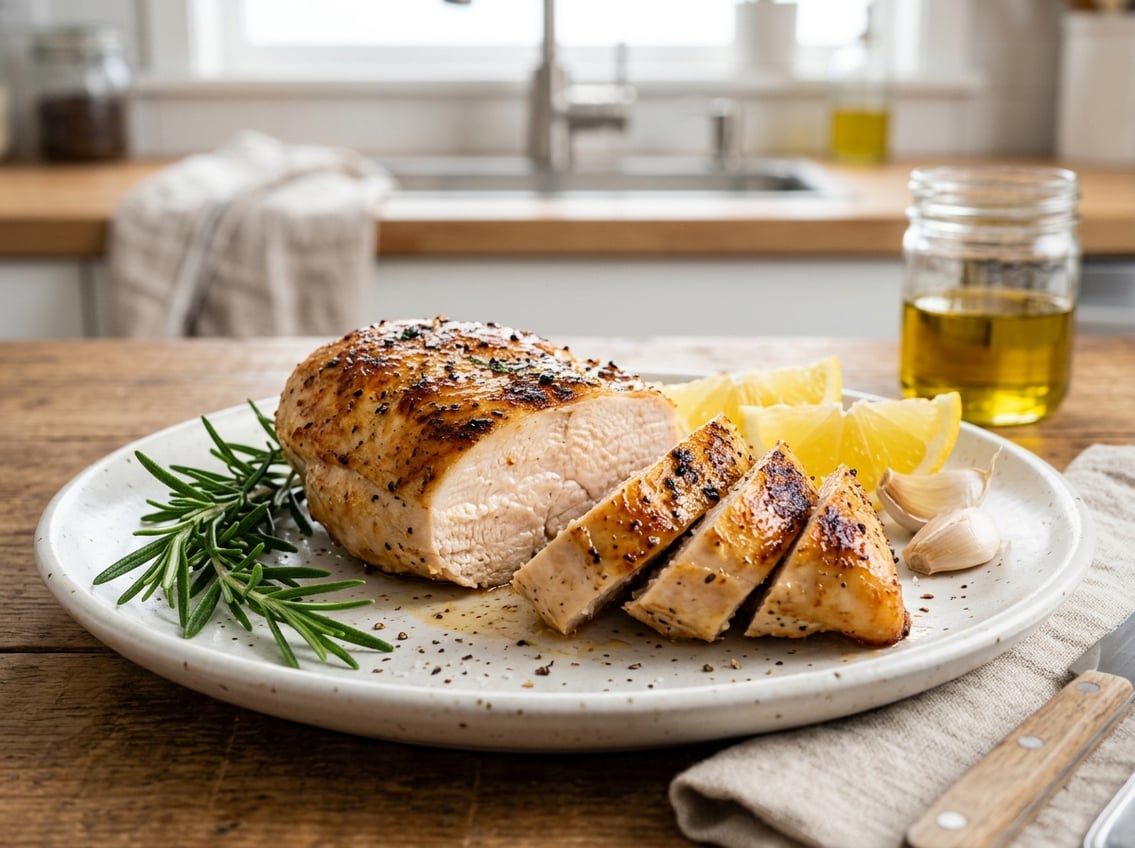
The best method depends on how much time you have and what texture you want. Baked chicken breast is a strong everyday choice, poaching gives the softest texture, and air fryer or grilled chicken can work well with the right timing.
A solid chicken breast recipe should match the cooking method to the meal.
Oven Roasting for Everyday Meals
If you want to bake chicken breasts with dependable results, use high heat and a short cook time. Bake chicken breasts at 425°F until they reach 165°F in the thickest part, as noted in May Eighty Five’s baked chicken breast guide.
Pat dry, season, oil lightly, and roast on a sheet pan so the outside can brown without steaming.
Poaching for Extra Tender Meat
Poaching chicken breasts gives you very soft meat that works well for shredded chicken, soups, and chicken salad. Keep the liquid at a gentle simmer, not a boil.
Boiling can make the outside stringy. Gentle heat keeps the meat tender and helps you avoid the rubbery texture that comes from rough cooking.
Air Fryer and Grilling Tradeoffs
An air fryer chicken breast cooks fast and can stay juicy if you do not overcook it. It is a good choice when you want browned edges and a quick weeknight dinner.
Grilled chicken adds flavor from direct heat, but it dries out faster than oven roasting if you leave it on too long. For both methods, thicker chicken needs more attention, and a thermometer matters more than grill marks.
Timing, Temperature, and Common Mistakes
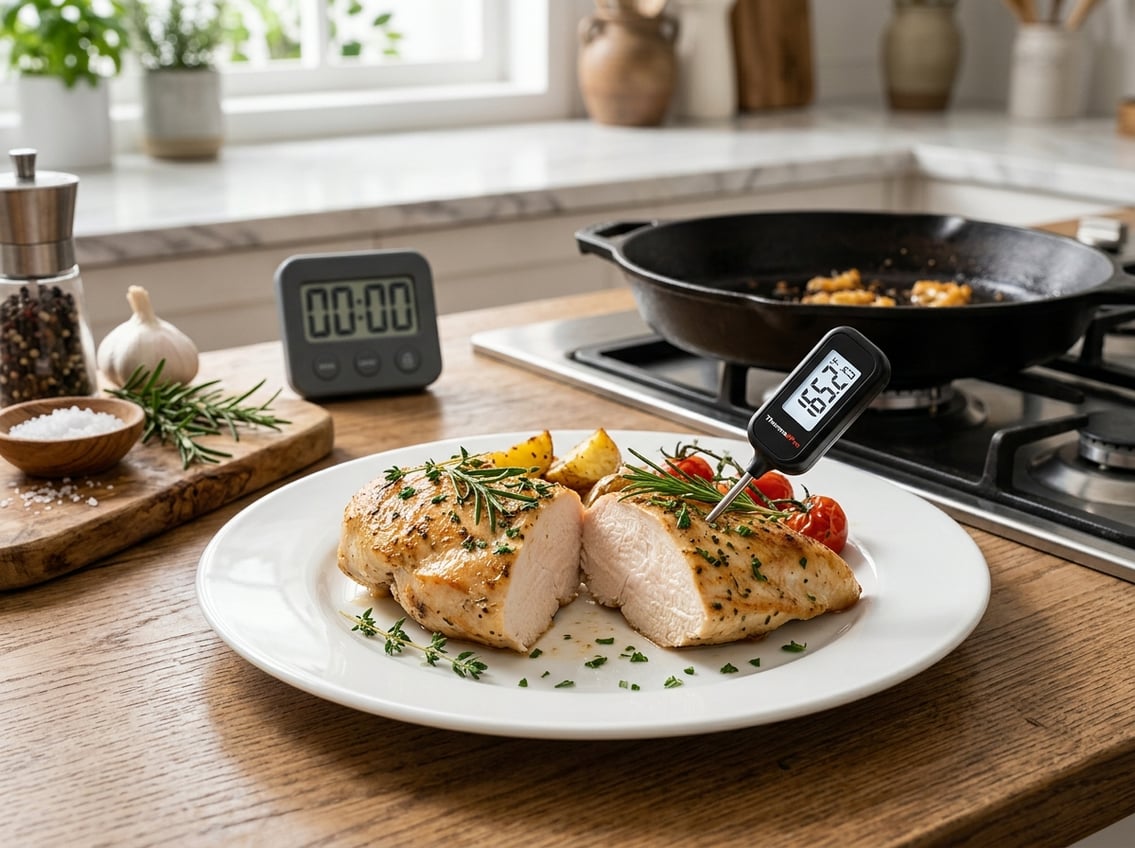
Dry chicken usually comes from a few predictable mistakes, not bad luck. The biggest issues are overcooking, uneven thickness, and skipping rest time.
Boneless skinless chicken breasts are especially sensitive because they have little fat.
Safe Internal Temperature and Carryover Cooking
The safe internal temperature for chicken is 165°F at the thickest part. Pull the chicken at that point to keep it juicy once the carryover heat settles.
If you wait much longer, the meat keeps losing moisture. Use a meat thermometer every time until the process feels automatic.
How Thickness Changes Cook Time
A thin cut cooks much faster than a thick one. That is why two boneless skinless chicken breasts in the same pan can finish at different times.
If one breast is much larger, start checking it early and remove each piece as it reaches temperature. Even cooking matters more than following a fixed minute count.
Why Dry Chicken Happens
Dry chicken usually comes from one of four problems: too much heat, too much time, uneven shape, or cutting too soon.
High heat is not the enemy. Too much heat for too long causes dryness.
Season well, cook by temperature, and rest before slicing for a tender chicken breast. These simple habits help prevent dry chicken.


