
Is It Safe to Eat Pink Chicken Breast? What to Know
You may notice that people often ask if it is safe to eat pink chicken breast. Pink chicken can be safe if it has reached a safe internal temperature, but pink color alone does not tell you that.
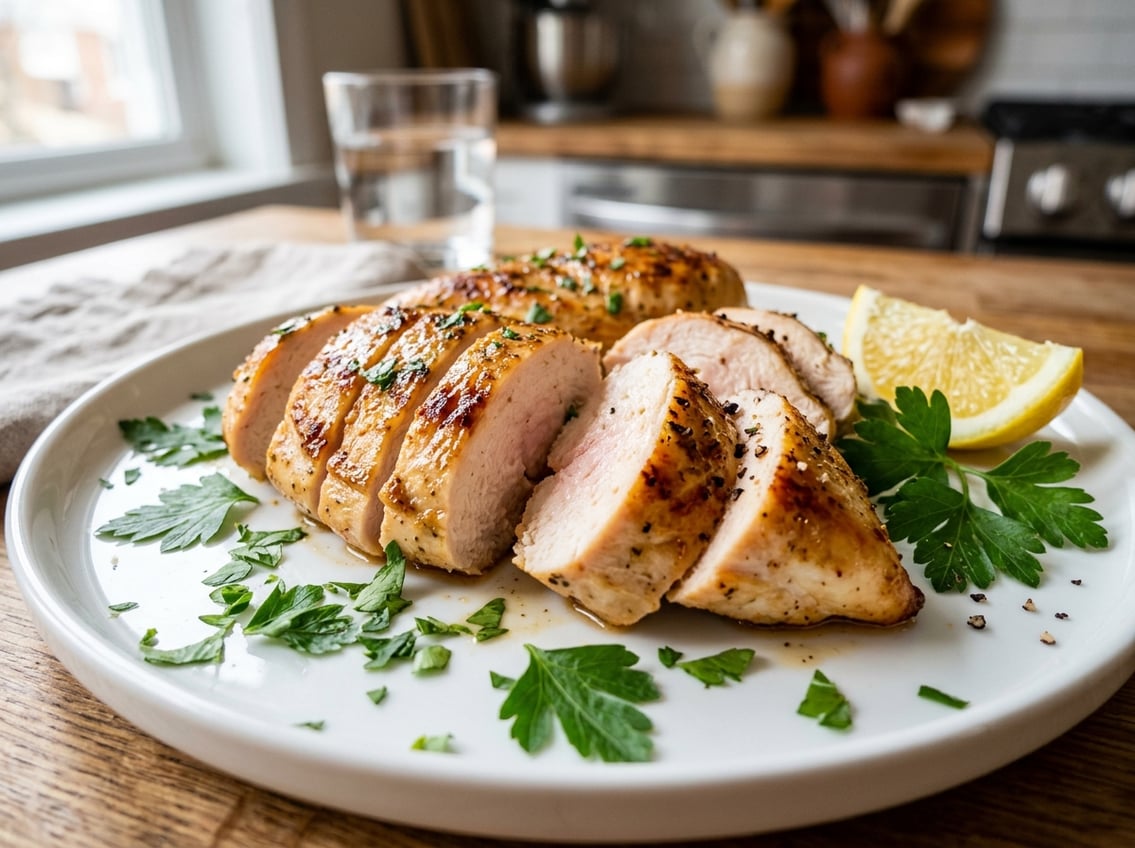
Use a food thermometer and check that the thickest part of the chicken breast reaches 165°F. If the chicken is still below that temperature, cook it longer.
Natural pigments, bone contact, smoking, or other cooking factors can cause pink chicken. Sometimes pink color signals real risk, so rely on temperature first and appearance second.
The Short Answer: When Pink Is Safe and When It Is Not
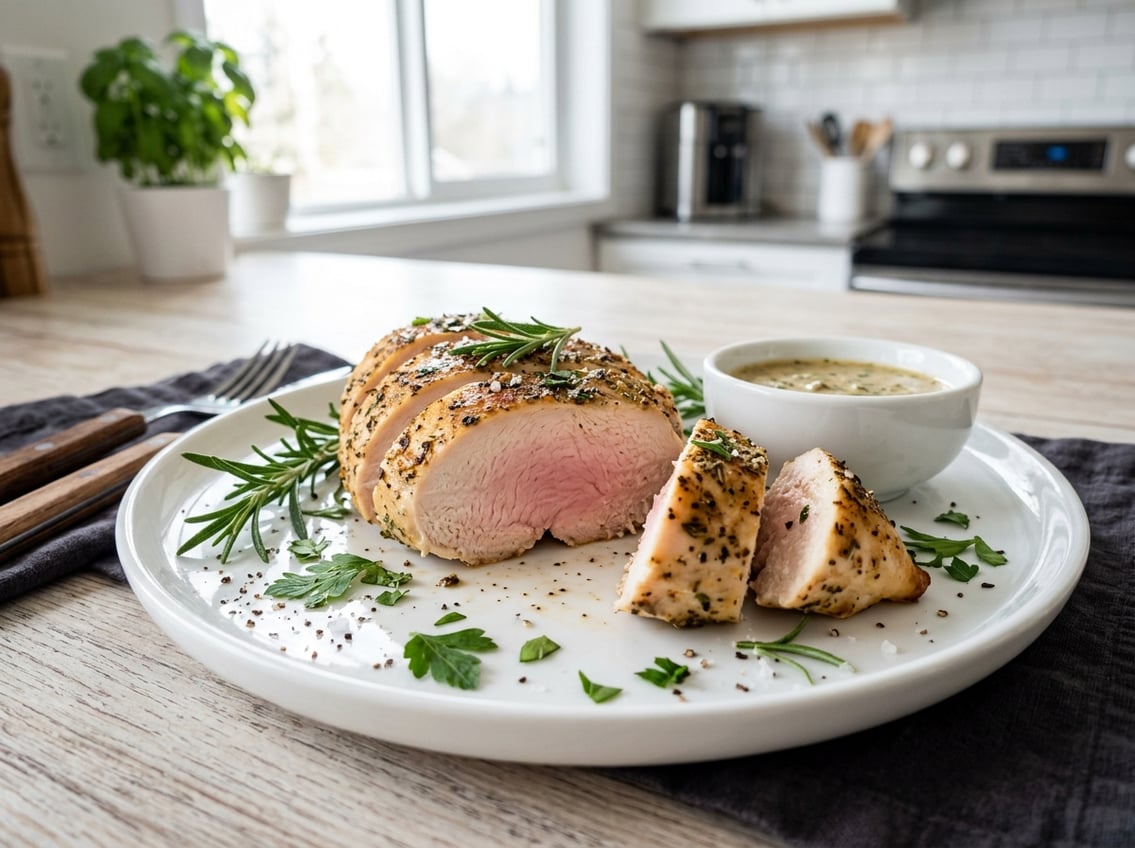
Color alone cannot tell you whether chicken is safe. A piece of chicken breast can look pale, white, or slightly pink and still be fully cooked, or it can look done and still be unsafe.
Why Color Alone Cannot Confirm Doneness
A food thermometer gives a more reliable result than checking color because meat color changes for many reasons. Some chicken stays pink near the bone or in certain cooking methods even after it is safe.
If you use a meat thermometer, you remove the guesswork. The USDA safe minimum for chicken breast is 165°F at the thickest part, and that is the number you should trust.
The Safe Internal Temperature for Chicken Breast
Check the center of the thickest part of the chicken breast with a food thermometer. Once the chicken breast reaches 165°F, harmful bacteria are killed.
Undercooked chicken can carry campylobacter and other germs linked to symptoms of food poisoning. If you feel unsure after checking the temperature, cook the chicken longer.
When Pink Chicken Signals Real Risk
Pink chicken is a concern when the inside has not reached 165°F, when the texture is soft and rubbery, or when the juices look cloudy and reddish. In those cases, the chicken is not safe yet.
If you notice nausea, vomiting, diarrhea, stomach cramps, or fever after eating chicken, those can be symptoms of food poisoning. Get medical advice if symptoms are severe or do not improve.
Why Cooked Chicken Breast Can Still Look Pink
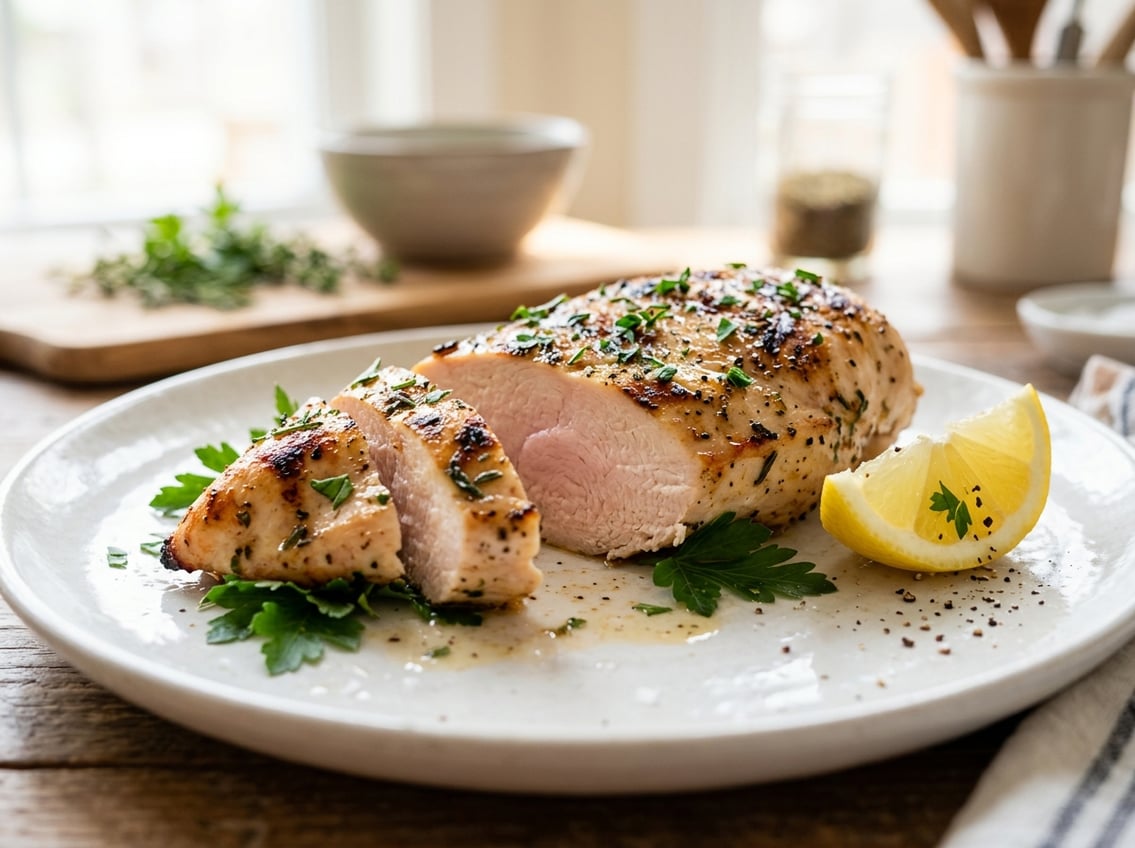
Cooked chicken breast can stay pink for reasons that have nothing to do with danger. Meat color depends on proteins, cooking method, and the chicken itself.
How Myoglobin Affects Meat Color
Myoglobin is a protein that helps give meat its color. In some chicken, it can leave a pink or rosy tint even after cooking.
A properly cooked breast may still look slightly pink if the myoglobin changes during heating.
Bone Marrow, Age, and Natural Pigment Changes
Chicken near the bone can look pink because pigments from the bone area may move into the meat during cooking. Younger birds can also show more color in the meat than older ones.
These natural changes can affect meat color without making the chicken unsafe. The key point is whether the center reached the right temperature.
Smoking, Oven Gases, and the Smoke Ring
Smoking can create a pink ring in chicken, often called a smoke ring. Oven gases can also affect the surface color of meat.
Some cooking methods and bird characteristics can leave a slight pink hue even when the chicken is fully cooked. In smoked chicken, the color change can be especially noticeable near the outer layer.
How to Check Chicken Breast Safely at Home
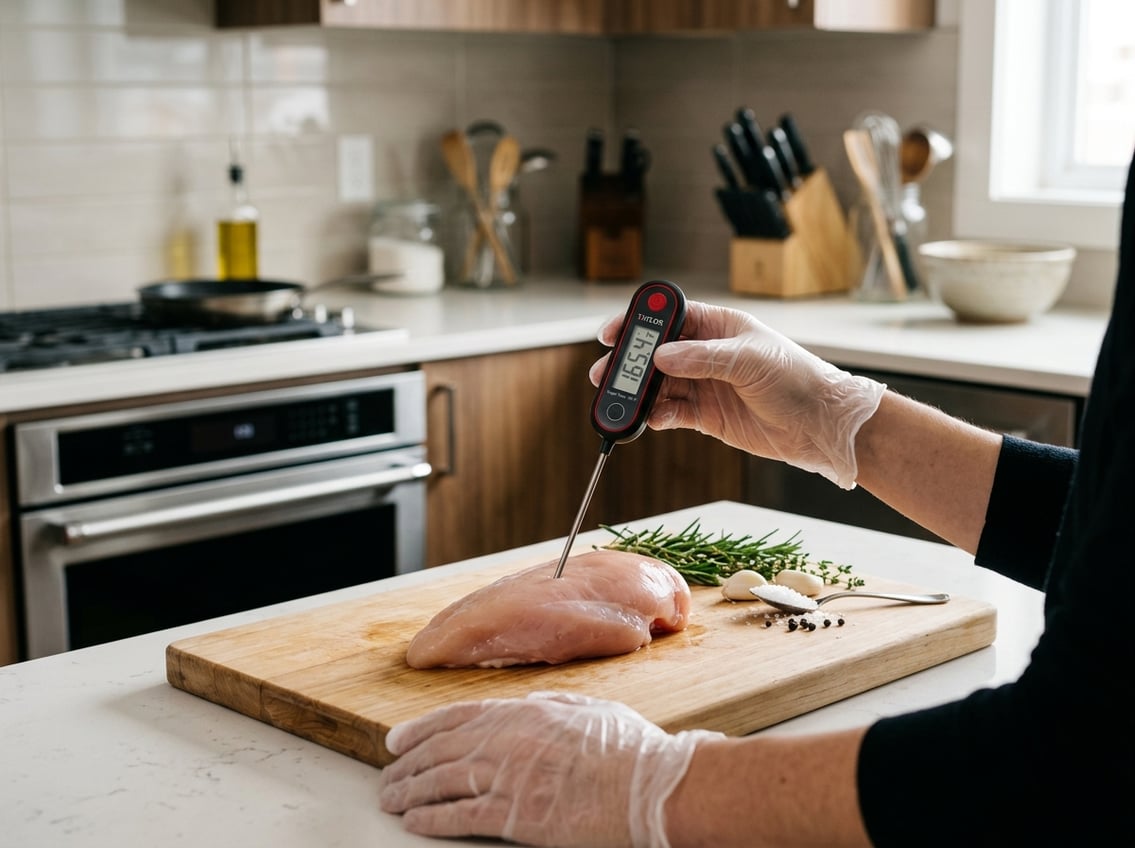
Start with the right tool and the right spot. Texture and juices can help, but they should support the thermometer, not replace it.
Where to Insert a Thermometer for an Accurate Reading
Insert the food thermometer into the thickest part of the breast. Avoid touching bone, because that can give you a false reading.
If the breast is uneven in size, check more than one spot. The thickest point should reach 165°F before you serve it.
Texture and Juices as Secondary Clues
Cooked chicken should feel firm, not spongy. Clear juices can be a helpful sign, though they are not as reliable as a thermometer.
If the center still feels soft or the juices look pink, keep cooking. Those signs can point to undercooked chicken.
What to Do If You Cut Into a Pink Center
If you slice into the breast and see pink inside, check the temperature right away. If it has not reached 165°F, return it to the heat.
Do not rely on resting time alone to fix clearly undercooked meat. Cook it longer, then recheck with your meat thermometer.
Storage, Handling, and Spoilage Signs to Watch For
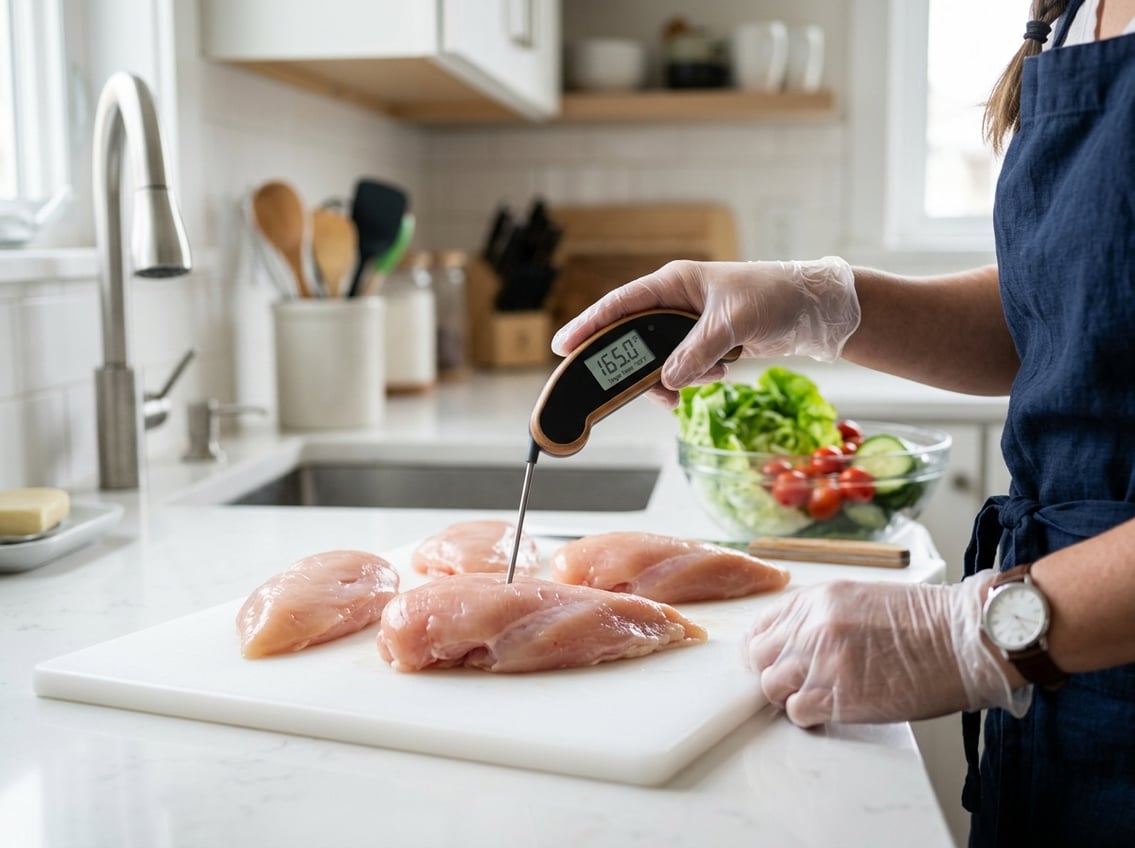
Safe chicken starts before cooking. Good handling lowers the chance of contamination, and proper storage helps you spot true spoilage more easily.
Safe Handling Practices Before Cooking
Keep raw chicken separate from ready-to-eat foods. Wash your hands, knives, cutting boards, and counters after handling raw chicken.
Handling raw chicken the wrong way can spread harmful bacteria around your kitchen. Clean surfaces quickly and avoid cross-contamination.
Freezing, Thawing, and Freezer Burn
Freeze chicken if you are not cooking it soon. Thaw it in the refrigerator, in cold water that you change often, or in the microwave if you plan to cook it right away.
Freezer burn can change the meat color and dry out the surface. It affects quality more than safety, unless the chicken has also been stored too long or thawed improperly.
Signs of Spoilage Versus Normal Color Changes
Fresh raw chicken often looks light pink and may have little odor.
Gray, green, or yellow color, a slimy or sticky feel, or a sour smell may indicate spoilage.
Normal pink color in raw chicken differs from these spoilage signs.
If the chicken looks or smells wrong, throw it out and do not taste it.


