
Which Is More Dry Chicken Breast or Thigh? Quick Answer
Which is more dry, chicken breast or thigh? Chicken breast is usually the drier cut, while chicken thigh stays more tender and juicy because it has more fat, more marbling, and more moisture support during cooking.
That difference matters in everyday cooking.
If you want a lean, mild chicken cut, chicken breast is a common choice.
If you want more flavor and a lower risk of dryness, chicken thigh usually performs better.
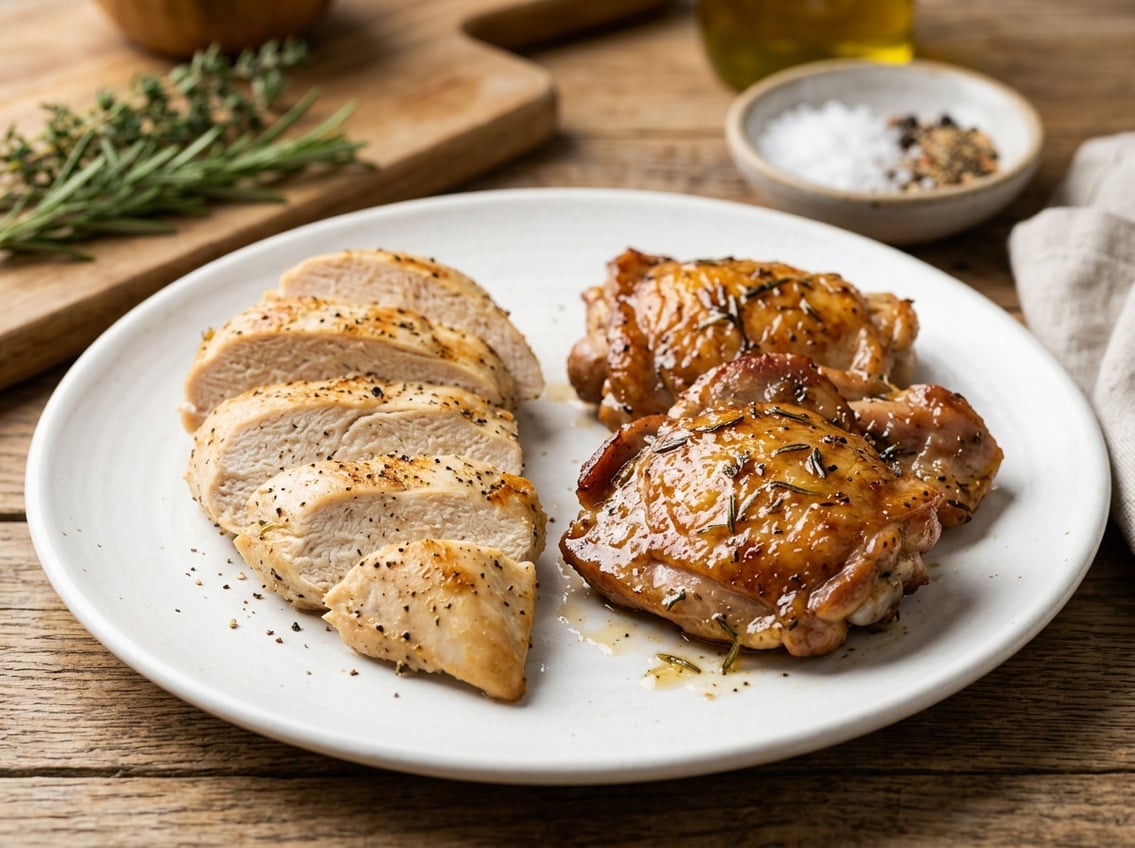
In a basic chicken breast vs chicken thigh comparison, the breast dries out more easily when heat runs too high or cooking goes too long.
Thigh meat is naturally richer, so you get more room for error and a softer bite.
Why One Cut Loses Moisture Faster
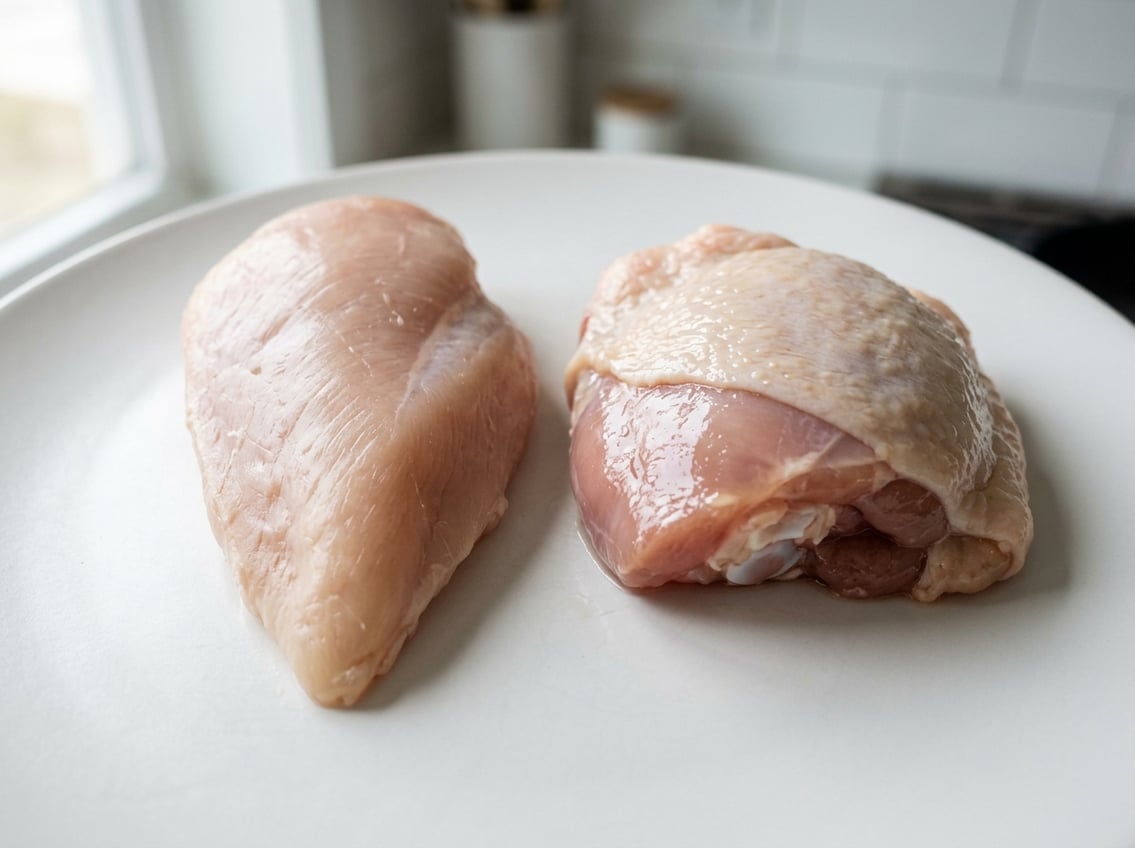
The main reason one cut dries faster is simple: it starts with less internal fat and less protective tissue.
Chicken breasts are lean white meat, while chicken thighs are darker and more forgiving during cooking.
That difference shows up in texture, moisture, and how the meat reacts to heat.
Skinless chicken thighs still keep more moisture than breasts, even though removing the skin lowers some of that protection.
How Fat Content Affects Juiciness
Fat helps meat feel moist because it melts during cooking and coats the fibers.
Chicken thighs usually have more fat content, intramuscular fat, and marbling than chicken breasts, so they lose less moisture as heat rises.
Chicken breasts are much leaner, which is good for a low-fat meal, yet that leanness makes them easier to overcook.
When the internal temperature climbs too far, the meat becomes firm, stringy, and dry.
White Meat vs Dark Meat
White meat and dark meat do not behave the same in the pan or oven.
Chicken breast is white meat, and chicken thigh is dark meat, which reflects differences in use, structure, and fat distribution.
Dark meat tends to stay moister because it contains more fat and more moisture-supporting tissue.
That is why thighs are more forgiving for roasting, braising, or longer cooking times.
Myoglobin, Collagen, and Connective Tissue
Chicken thighs have more myoglobin, which gives them a darker color and helps explain their richer taste.
They also contain more collagen and connective tissue, which break down during cooking and help keep the meat soft.
Chicken breasts have less collagen and less connective tissue, so they do not get the same moisture benefit.
That is a big reason chicken breasts can dry out faster than thighs, especially when cooked past the safe point.
Texture, Flavor, and Cooking Performance
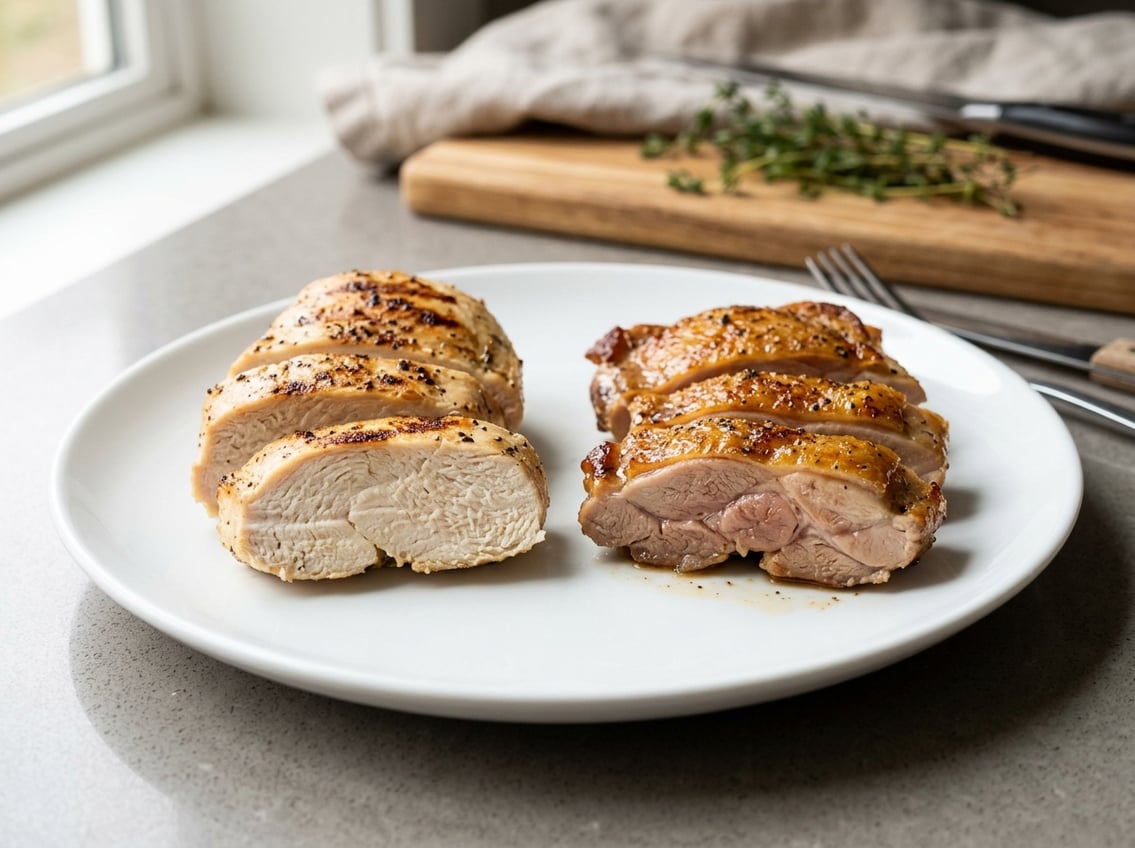
Texture and flavor often decide which cut works best in a recipe.
Chicken breast gives you a cleaner, milder taste, while chicken thigh brings stronger flavor and a softer, richer bite.
Your cooking method matters just as much as the cut itself.
Heat level, cook time, and whether you use skin-on chicken all change how tender and juicy the final result will be.
Why Chicken Breasts Can Turn Dry Quickly
Chicken breast has a low fat level and a tight structure, so it gives up moisture fast under high heat.
Grilled chicken breast can go dry quickly if you miss the timing by a few minutes.
The same thing happens with roasted chicken breast or pan-seared breast meat.
Once the juices leave, they do not return in the same way, even if you rest the meat after cooking.
Why Chicken Thighs Stay Tender and Juicy
Chicken thigh has more fat and more connective tissue, so it stays tender and juicy even when cooked a little longer.
That extra fat helps protect the meat from drying out.
Thighs also handle stronger seasoning well, because fat carries flavor.
In many chicken cuts, thigh meat gives you a deeper taste without much extra effort.
Best Cooking Methods for Each Cut
For chicken breast, use fast, careful methods.
Sautéing, gentle grilling, poaching, and oven cooking at moderate heat all work well if you watch temperature closely.
For chicken thigh, more flexible methods work best.
Roasting, braising, frying, and high-heat grilling all suit the cut, especially when you want a richer result.
According to a practical comparison from CyChicken, thighs hold moisture better while breasts need more precise timing.
Nutrition and Health Trade-Offs
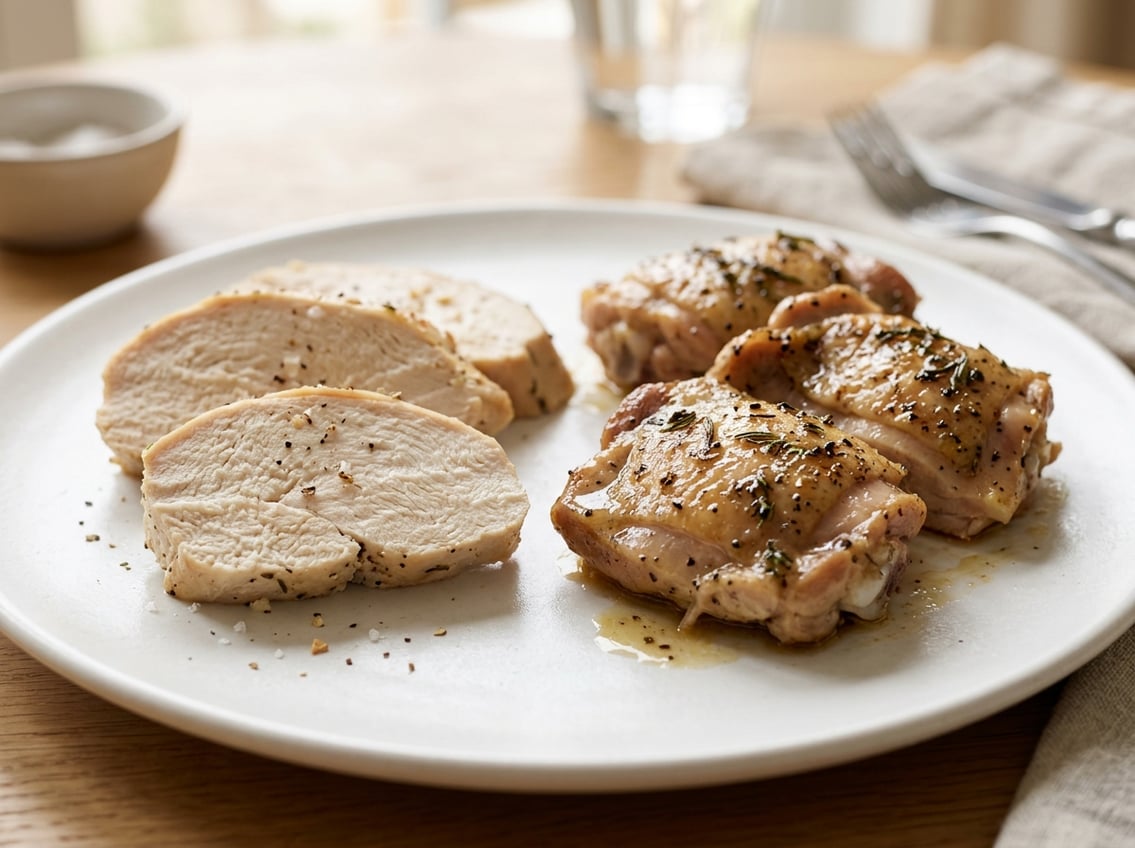
The nutrition comparison between chicken breast and chicken thigh is not just about dryness.
You are also choosing between a leaner cut with fewer calories and a richer cut with more fat and more flavor.
Both fit into a healthy diet.
Your best choice depends on your goals, your recipe, and how you want the meal to feel.
Protein Content, Calories, and Lean Protein
Chicken breast is known for higher protein content per calorie, which makes it a popular lean protein.
If you want a lower-fat meal, breast meat usually fits that goal better.
Chicken thigh still gives you plenty of protein, just with more calories and fat.
In a standard 3-ounce serving, a boneless, skinless breast is usually leaner than a thigh, as noted by Hartford HealthCare and other nutrition comparisons.
Micronutrients in Breast and Thigh
Chicken thigh usually brings more fat-soluble richness, while chicken breast stays simpler and leaner.
A chicken breast vs chicken thigh nutrition comparison often shows useful amounts of iron, zinc, vitamin B6, vitamin B3 or niacin, vitamin B12, vitamin B2, phosphorus, potassium, and choline in both cuts.
Thigh meat often has a slight edge in some nutrients tied to darker meat, while breast meat stays lower in fat.
If you want more detail on how these cuts differ nutritionally, this nutrition comparison explains the role of myoglobin and dark meat.
Weight Loss, Satiety, and Cholesterol Considerations
If your goal is weight loss, choose chicken breast because it gives you high protein with fewer calories.
Protein also helps with satiety. Both cuts can support appetite control.
If you are watching cholesterol or total fat, pick breast. If you care more about flavor, fullness, and a less dry texture, thigh may fit better in your meals.


