
Which Is More Lean Chicken Breast or Thigh? Quick Comparison
Chicken breast and chicken thigh both serve as lean protein choices, but they are not equally lean. Chicken breast is more lean, especially when you compare skinless cuts.
Chicken breast gives you fewer calories, less fat, and more protein per calorie. This makes it the leaner choice for most meals.
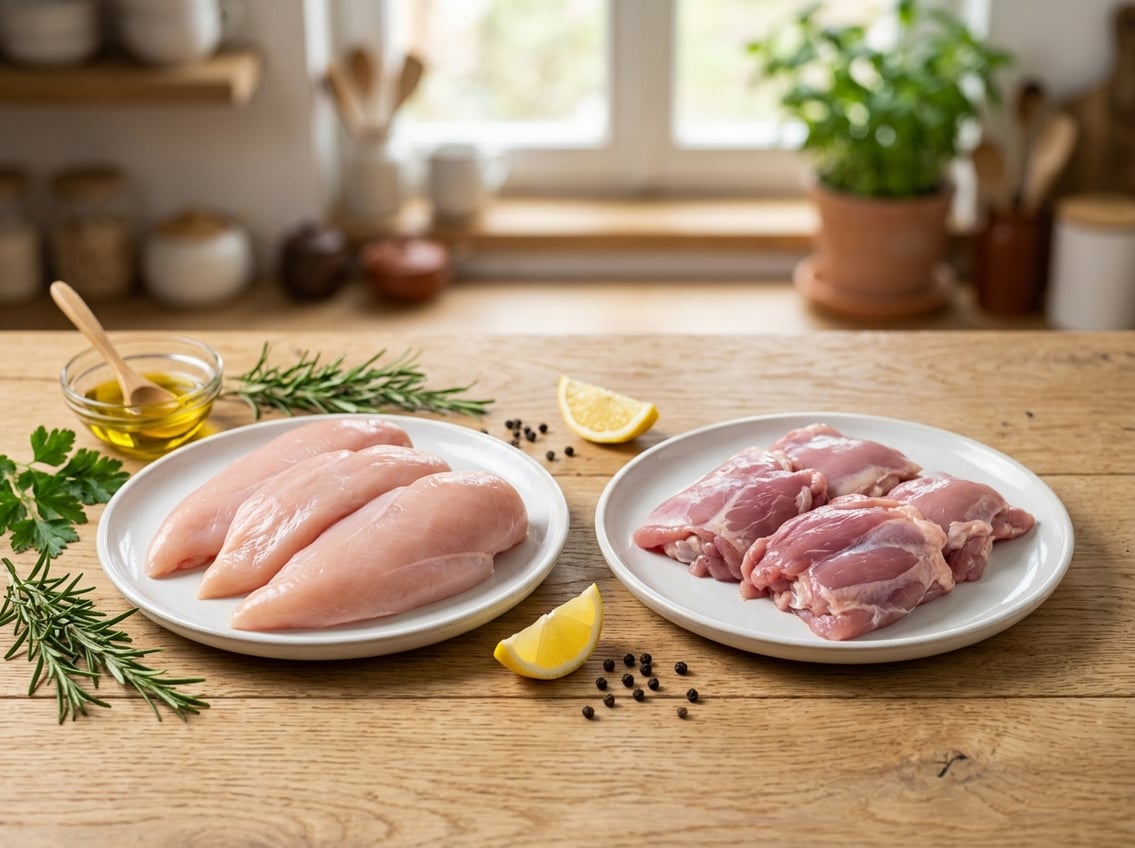
Chicken thigh still has a place in your kitchen. It brings more flavor, more juiciness, and a little more fat, which can work well when you want a richer meal.
The right choice depends on your nutrition goal, your cooking method, and how much calories-versus-flavor tradeoff you want.
Direct Answer: Which Cut Is Leaner

Chicken breast is the leaner cut in most nutrition comparisons. Skinless chicken breast has less fat and fewer calories than skinless chicken thighs, while also giving you more protein for each calorie.
Chicken breast works well for meal prep, weight control, or a high-protein plate with fewer calories. Chicken thighs provide strong animal protein, just with more natural fat.
Skinless Breast vs Skinless Thigh at a Glance
Here is the quick comparison based on cooked, skinless meat per 100 grams:
| Cut | Calories | Protein | Fat |
|---|---|---|---|
| Skinless chicken breast | 165 | 31 g | 3.6 g |
| Skinless chicken thigh | 209 | 26 g | 9.0 g |
Chicken breasts are leaner, and chicken thighs are richer and more calorie dense.
How Calories, Protein, and Fat Compare
Chicken breast gives you more protein per calorie, which is why many people choose it for lean protein meals. Chicken thigh gives you a little less protein and more fat, which raises the calorie count.
That extra fat changes both texture and taste. It also means chicken thighs usually feel more filling to some people.
Why Chicken Breast Is Usually the Leaner Choice
Chicken breast is white meat, so it naturally contains less fat than dark meat cuts like thighs. A recent chicken breast vs thigh nutrition comparison found that breast is lower in calories and higher in protein per calorie.
If you want the leanest option for everyday animal protein, chicken breast is the safer default.
Nutrition Differences That Matter Most
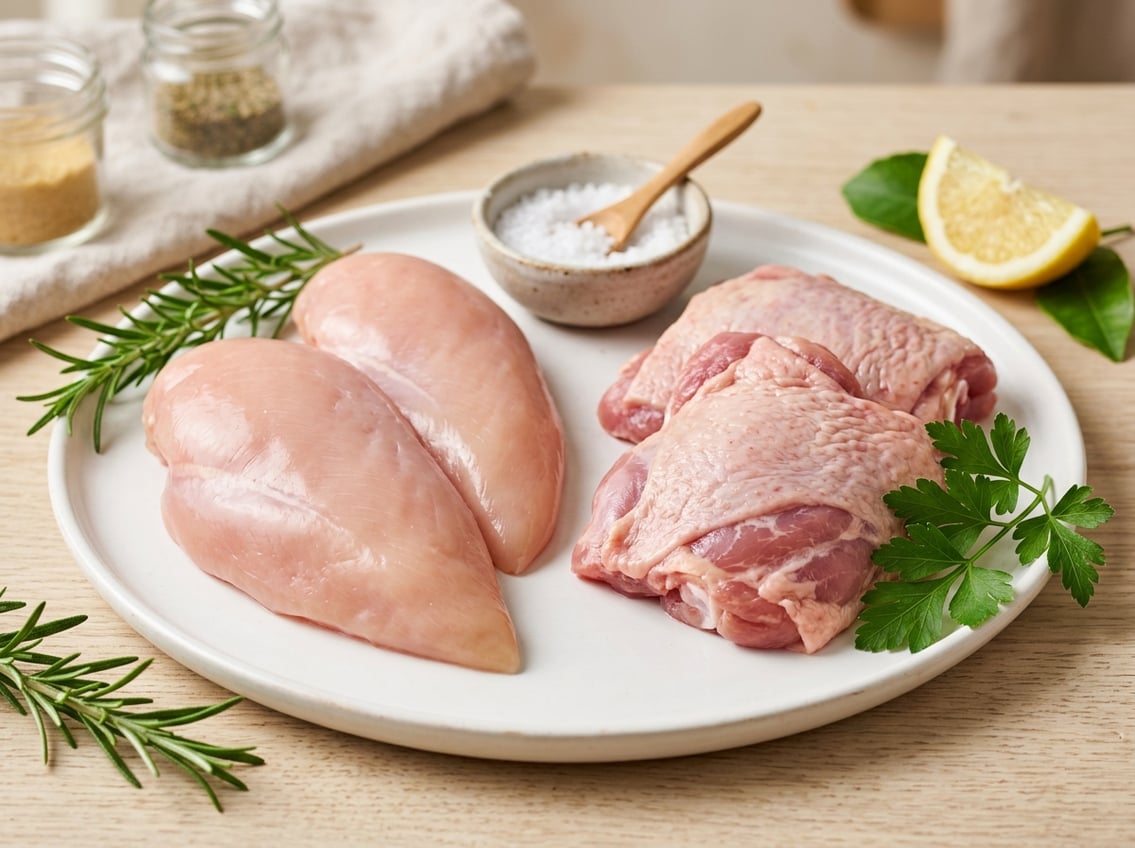
The biggest nutrition differences in breast vs thigh come down to protein density, fat, saturated fat, and a few minerals. Both cuts can fit a healthy diet, but they serve different goals.
Protein Per Serving and Per Calorie
Chicken breast is the better choice when your goal is more protein with fewer calories. A 100 gram serving of cooked, skinless breast gives about 31 grams of protein, while the same amount of thigh gives about 26 grams.
That difference matters when you are tracking macros or trying to keep meals lighter.
Fat Content, Saturated Fat, and Satiety
Chicken thigh has more total fat and more saturated fat than chicken breast. In the same 100 gram comparison, thigh has about 9.0 grams of fat and 2.6 grams of saturated fat, while breast has about 3.6 grams of fat and 1.0 gram of saturated fat.
That extra fat can help with fullness and flavor. It also makes thighs less lean, which matters if your plan is strict calorie control.
Vitamins and Minerals in White Meat and Dark Meat
Chicken thigh usually has more iron and zinc than chicken breast. Chicken breast still provides a strong source of animal protein and stays lower in fat.
If you want the leanest plate, breast wins. If you want a little more mineral density and richer taste, thigh has an edge.
Best Choice Based on Your Goal

Your best choice depends on what you want from the meal. If you care most about calories, protein, flavor, or cost, the better cut changes.
For Weight Loss and Calorie Control
Chicken breast is usually the better choice for weight loss because it gives you more protein with fewer calories. That can make it easier to stay within your daily calorie target without giving up a satisfying portion.
Chicken thighs can still fit, especially if you keep portions modest. Thighs can work for weight loss when portions are controlled, though breast is the leaner option for tighter calorie plans.
For Muscle Building and High-Protein Meals
Chicken breast is usually the better fit for muscle building if you want the most protein for the fewest calories. That makes it easier to raise protein intake without pushing calories too high.
Chicken thighs still work well in high-protein meals. They just bring more fat along with the protein.
For Flavor, Fullness, and Budget-Friendly Cooking
Chicken thighs are often the better choice when you want juicier texture, stronger flavor, and a more forgiving cut. They hold up well in recipes where moisture matters, such as roasting and slow cooking.
They can also be a smart budget choice in many stores. If you value taste and satisfaction more than leanness, thighs are a practical pick.
How Cooking Method Changes the Outcome

Cooking can change how lean your meal feels, even when you use the same cut. Added oil, skin, breading, and sauce can raise calories fast.
When Grilled or Roasted Breast Stays Lean
Grilled chicken breast stays one of the leanest ways to eat chicken. Grilling, roasting, baking, or air-frying with little added oil keeps the calorie count close to the meat itself.
The main risk is overcooking. Chicken breast dries out faster than thigh, so careful timing matters if you want a lean meal that still tastes good.
How to Cook Chicken Thighs Without Excess Fat
If you cook chicken thighs, trim visible fat and use simple methods like roasting, grilling, or braising with little added oil. Remove the skin if you want to cut fat and calories.
You can also control the portion size. That helps keep chicken thighs in the leaner range without losing all of their flavor.
Skin-On vs Skinless
Skinless chicken breast and skinless chicken thighs are the leanest options.
When you leave the skin on, the calorie and fat count increases.
Skin-on chicken thighs contain more fat than skinless thighs and are less lean than breast.
If you want to eat less fat, choose skinless chicken.


