
Which Is More Juicy Chicken Breast or Thigh? Quick Answer
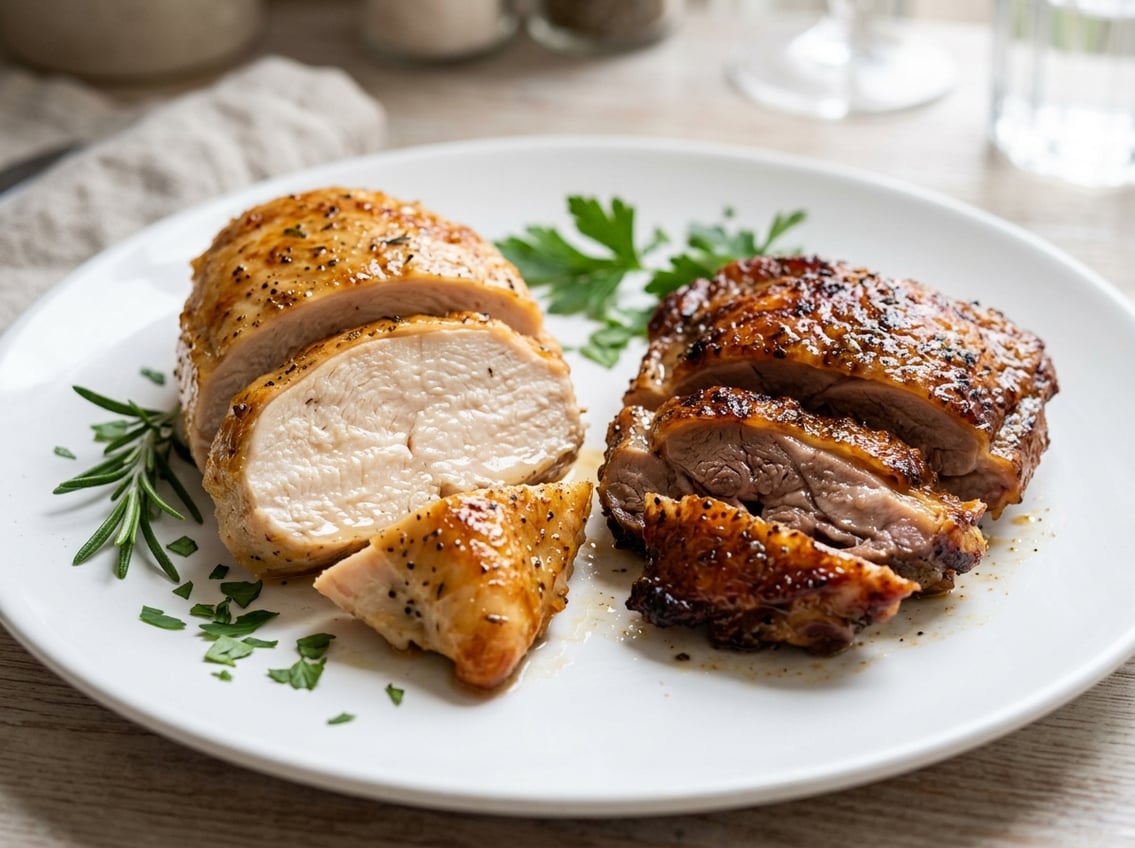
Chicken thigh is usually juicier. It has more fat and a darker, more forgiving muscle structure, so it stays moist longer during cooking than chicken breast.
Chicken breast can still be very good when you cook it carefully, especially if you want a lean, mild cut. Chicken thighs are usually the better choice when your main goal is flavor and texture that stay moist after heat.
The difference shows up in everyday cooking, from grilled chicken to roasted chicken and weeknight skillet meals.
What Makes One Cut Stay Juicier
Chicken breast and chicken thigh come from different parts of the bird, and that changes how they cook. Skinless chicken breast is lean and mild, while skinless chicken thigh has more fat and a richer flavor and texture.
The Pioneer Woman compared chicken thighs and chicken breasts and found that thighs are harder to dry out and work well in higher-heat cooking.
How Fat Content Affects Moisture Retention
Fat helps carry flavor and slows the feeling of dryness on your palate. Skinless chicken thigh still has more natural fat than skinless chicken breast, so it tends to taste juicier even after the meat is fully cooked.
Chicken breast has less fat, so it dries out faster if you push the temperature too high. That is why breast meat can go from tender to chalky in a short window.
Why Dark Meat Handles Heat Better Than White Meat
Chicken thigh is dark meat, and dark meat usually has more connective tissue and a different internal structure. That extra structure makes it more forgiving during roasting, braising, or grilling.
Chicken breast is white meat and cooks faster. That speed is useful, yet it also means you have a smaller margin for error if you want to keep it moist.
How Muscle Structure Changes Texture
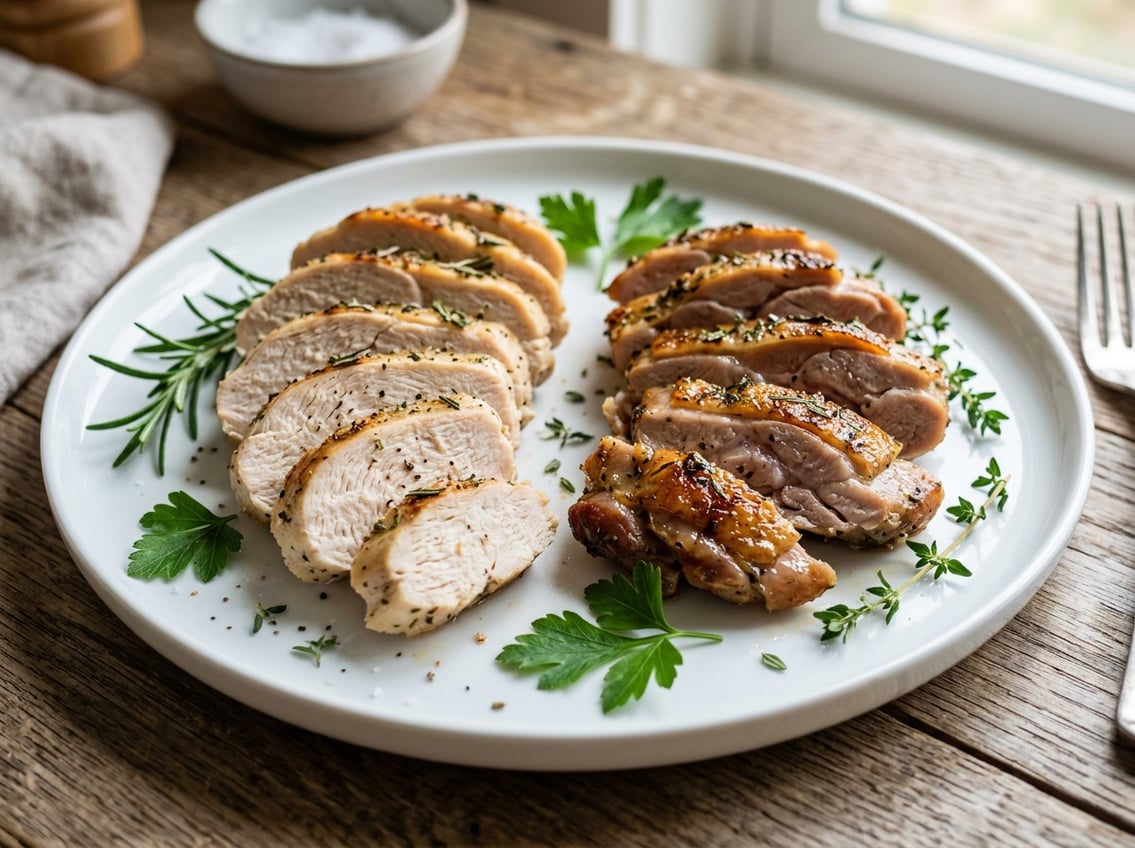
Chicken breasts are built for quick, clean slices and a mild bite. Chicken thighs have a looser, more muscular feel that stays softer after cooking.
Chicken thigh usually gives you more juicy texture, while chicken breast gives you a cleaner, leaner bite.
If you want a practical rule, thigh is safer for moisture, breast is safer for low-fat cooking.
Taste, Nutrition, and Everyday Trade-Offs
The choice is not just about juiciness. It also depends on how much protein you want, how many calories you want to eat, and how rich you want the meal to taste.
When Lean Protein Matters More Than Richness
If you care most about lean protein, chicken breast usually fits better. It has a cleaner flavor and less fat, which makes it easy to pair with sauces, grains, vegetables, and simple seasonings.
Chicken thigh gives you more richness, which can be a better fit when flavor matters as much as protein.
Calories, Fat, and Calorie Control
For calorie control, skinless chicken breast is usually the easier pick. The Pioneer Woman notes that a three-ounce serving of boneless, skinless breast has about 140 calories and 3 grams of fat, while the same amount of boneless, skinless thigh has about 170 calories and 9 grams of fat.
That difference matters if you are tracking meals closely. It does not make chicken thigh unhealthy, it just means it brings more fat and more calories with the extra juiciness.
Which Cut Fits Different Eating Goals
If your goal is lean protein, choose chicken breast more often. If your goal is a meal that feels richer and stays moist, chicken thigh is the better fit.
For many people, the best choice changes by meal. Chicken breasts work well for stricter calorie control, while chicken thighs work well for meals where taste and texture matter more than shaving off a few calories.
Best Uses in Real Cooking
Chicken thigh and chicken breast shine in different recipes, so the right choice depends on the cooking method. Heat level, cook time, and whether you keep the skin on all affect the result.
When Grilled Chicken Turns Out Better With Thighs
For grilled chicken, chicken thighs are often the easier win because they stay juicy under high heat. The Pioneer Woman notes that chicken thighs are ideal for grilling and other high-heat methods because they do not dry out as easily as chicken breasts.
That extra moisture helps if your grill runs hot or you need more time for char. Skin-on chicken thighs can be especially good because the skin helps protect the meat and adds flavor.
Why Roasted Chicken Breast and Roasted Chicken Thigh Cook Differently
Roasted chicken breast cooks faster and needs careful timing to avoid dryness. Roasted chicken thigh can take more heat and a bit more time, which makes it more forgiving in the oven.
If you want a simple meal with roasted chicken, thighs usually give you a wider comfort zone. Breast works well when you want a lighter result and can monitor the cook closely.
How to Choose the Right Cut for Common Recipes
Use chicken breast for dishes where you want a mild base, such as salads, sandwiches, and quick cutlet meals.
Use chicken thigh for braises, skillet dinners, and recipes where you want richer flavor and more juice.
Choose chicken breast for speed and leanness.
Choose chicken thigh for moisture and taste.
If a recipe needs a juicy finish after longer cooking, chicken thighs usually provide better results.


