
Should Chicken Breast Be Slimy? Safety Signs to Know
Should chicken breast be slimy? A little surface moisture can happen after opening or thawing, and that does not always mean the meat is bad.
A true slimy, sticky, or tacky coating can point to spoilage, so check texture, smell, color, and storage time together.
Slimy chicken breast should warn you something may be wrong, not suggest normal quality. Rely on smell, color, and storage conditions before deciding to cook it.
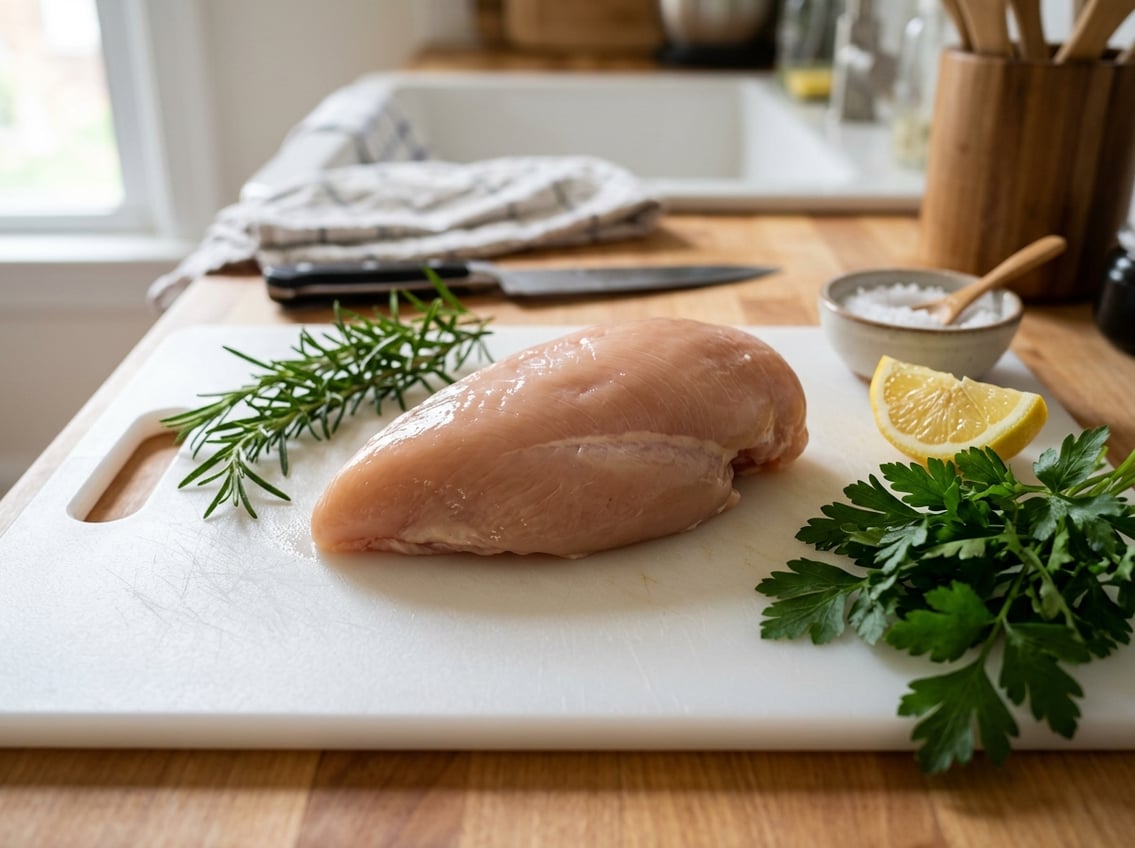
A raw chicken breast can feel moist, especially right after opening or thawing frozen meat.
It should not feel coated in a thick film or leave a slippery residue on your fingers.
If you are asking, “is slimy chicken safe” or “is slimy chicken safe to eat,” the answer depends on what else you notice.
Light moisture may be normal, while strong odor, off color, or a sticky film are common signs of spoiled chicken.
How to Judge Texture, Smell, and Color
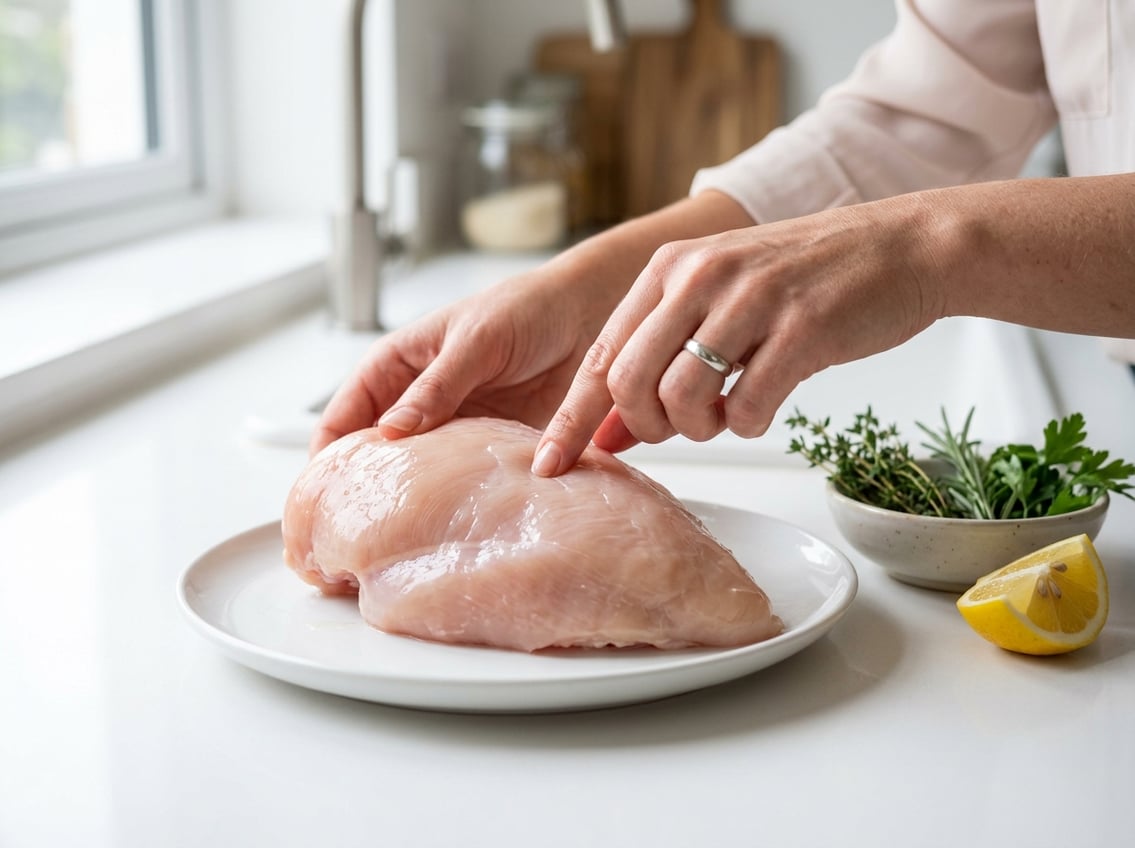
Good chicken texture, smell, and color work together.
One clue alone is not always enough, so check the full picture before you decide whether the chicken is spoiled.
What Fresh Chicken Texture Should Feel Like
Fresh raw chicken should feel moist and smooth, not sticky or slippery.
It should spring back a little when you touch it, rather than feeling gummy.
A very light film from packaging liquid can happen, especially with vacuum-sealed chicken.
That is different from a thick coating that stays on your fingers after you touch the meat.
When Slimy or Sticky Means Trouble
Slimy chicken that feels tacky, gummy, or slick warns you something may be wrong.
If the surface feels like it has a film, or if the slimy layer gets worse as it warms up, treat it as a possible sign of spoiled chicken.
A slimy texture is more concerning when it comes with a bad smell or discoloration.
According to How to Tell If Chicken Is Bad, check color, smell, and texture together.
Color Changes That Signal Spoiled Chicken
Raw chicken is usually pink to light pink.
Gray, green, yellow, or black areas are strong signs of spoiled chicken, and you should throw it away.
If the slime itself looks off-color, that is another red flag.
A green, yellow, or black sheen can point to harmful bacterial growth.
Why Odor Matters Alongside Texture
Spoiled chicken often gives off a sour, sulfur-like, or putrid odor.
A bad smell plus a slimy surface is a stronger warning than texture alone.
If the chicken smells normal but feels slightly wet, storage and thawing conditions may explain it.
If the smell is sour or strong, do not taste it to check.
What Causes Surface Slime
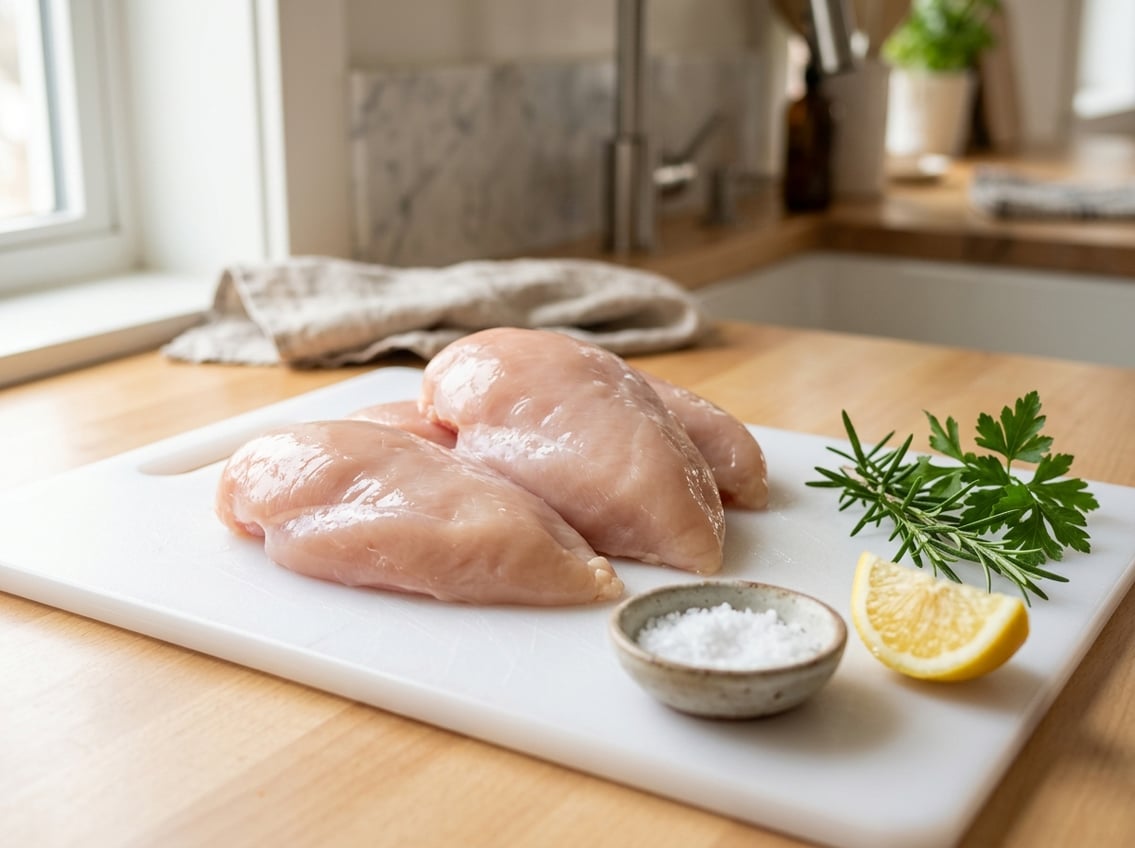
Surface slime can come from normal moisture, bacteria growth, or packaging liquid.
The cause matters because it affects how safe the meat is to handle and cook.
Normal Moisture After Opening or Thawing
When you open a package or thaw frozen chicken, liquid can collect on the surface.
That moisture can make the meat feel slick for a short time, especially if it sat in its own juices.
If you plan to freeze chicken, packaging it well before freezing helps limit ice crystals and texture changes later.
Moisture from thawing alone is not the same as a spoiled coating.
How Pseudomonas and Biofilm Form on Chicken
Bacteria such as pseudomonas can grow on raw poultry surfaces and produce a biofilm.
That film helps bacteria stick to the meat and can create the slippery feel you notice.
A biofilm does not always mean the chicken is immediately unsafe, but it often means the meat has been stored too long or not cold enough.
A recent guide from Cookindocs notes that slime can come from bacteria producing a protective layer on the surface.
Why Refrigerated Chicken Can Still Spoil
Cold temperatures slow bacteria growth, but they do not stop it.
Raw chicken can still spoil in the fridge if it sits too long, warms during handling, or was already close to the end of its safe life.
If the chicken breast has been in your fridge for several days and now feels slimy, treat it carefully.
Why Sliminess After Cooking Is Different
Cooked chicken should not feel slimy.
If chicken remains slippery after cooking to a safe internal temperature, discard it.
A cooked slimy texture can point to poor handling before cooking, contamination after cooking, or spoilage that cooking did not fix.
Do not try to save it.
When to Toss It and When Cooking Is Not Enough
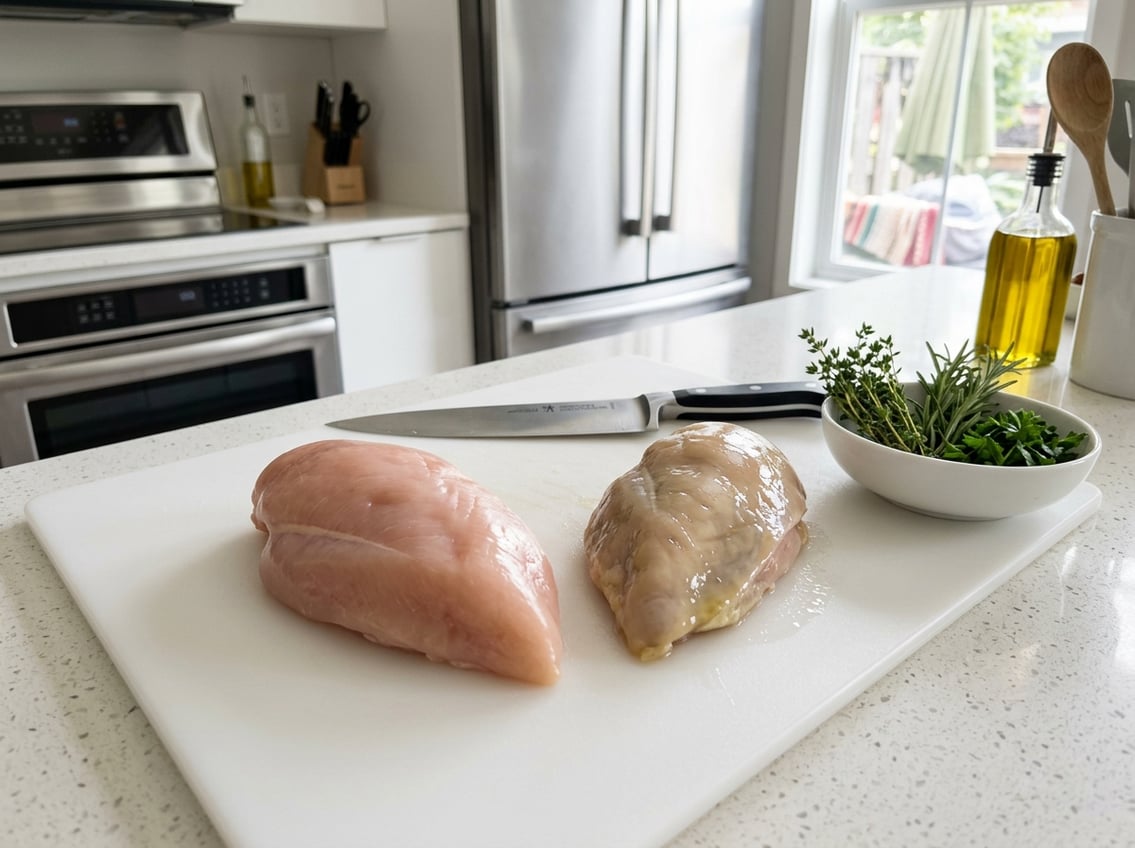
Some spoiled chicken smells bad and looks off before it causes illness, while some dangerous bacteria may not change the look or smell much at all.
A slimy surface can mean bacterial growth, and that makes the meat undesirable and possibly unsafe.
A normal-looking breast can still carry harmful germs, so appearance alone is not a guarantee.
Do not use sliminess as the only test.
A safe decision depends on smell, color, storage time, and how the chicken was handled.
Salmonella and Campylobacter Concerns
Raw chicken can carry salmonella and campylobacter, two common causes of foodborne illness in the U.S.
These germs can be present even when the meat looks fine.
Cooking chicken to 165°F kills these bacteria, but cooking does not fix heavy spoilage or poor handling.
If the chicken already smells foul or looks badly discolored, discard it.
Why Undercooked Chicken Adds Risk
Undercooked chicken raises the chance that harmful bacteria survive.
That risk is separate from whether the meat feels slimy.
If you are asking, “is slimy chicken safe to eat,” and the chicken also looks undercooked after cooking, throw it out.
Do not keep heating questionable meat in hopes that texture alone will improve.
A Simple Discard-or-Cook Decision Checklist
Use this quick check:
- Discard it if it smells sour, putrid, or sulfur-like.
- Discard it if the slime is green, yellow, black, or gray.
- Discard it if the chicken feels sticky after cooking.
- Cook it promptly only if it is mildly moist, still within safe fridge time, and has no bad smell or discoloration.
- When in doubt, throw it out.
Storage, Freezing, and Safe Handling
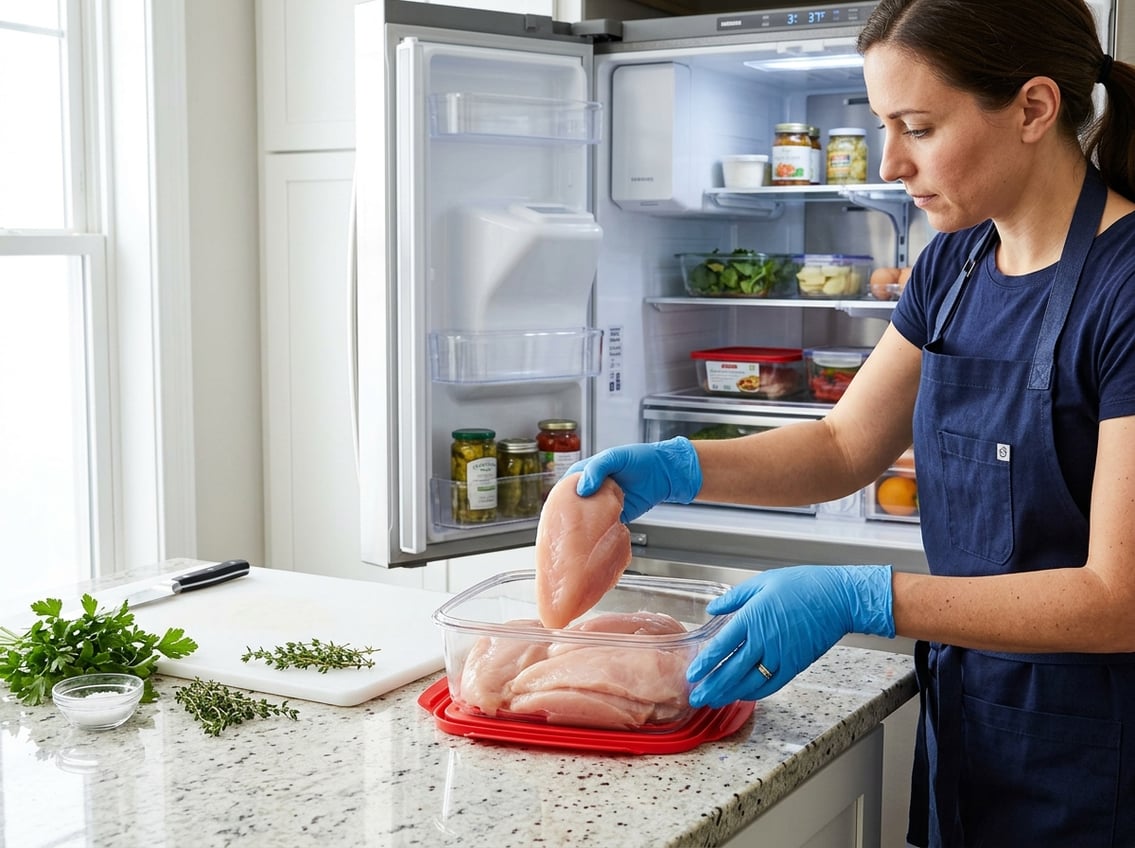
Good storage keeps chicken texture better and lowers the chance of spoiled chicken.
It also helps you avoid cross-contamination in your kitchen.
How Long Raw Chicken Keeps in the Fridge
Keep raw chicken at 40°F or below.
In a home fridge, use raw chicken breast within 1 to 2 days for best safety and quality.
If it has been longer than that, the chance of signs of spoiled chicken rises.
Date the package when you bring it home so you can track it easily.
Best Practices to Freeze Chicken Safely
If you will not use chicken soon, freeze chicken as soon as possible.
Wrap it tightly or place it in a sealed freezer bag to reduce air exposure and freezer burn.
Freezing helps preserve texture and safety, although it can still change the feel of the meat after thawing.
Label the package with the date so you know how long it has been stored.
Safe Thawing Methods That Protect Texture
Thaw chicken in the refrigerator, in cold water that you change regularly, or in the microwave if you cook it right away.
Never thaw raw chicken on the counter.
Counter thawing warms the surface too long and can create a slimy layer while also raising bacterial growth risk.
Refrigerator thawing gives you the most even texture.
How to Prevent Cross-Contamination
Keep raw chicken separate from ready-to-eat foods, cutting boards, and utensils.
Wash your hands, knives, and counters with hot soapy water after you touch raw meat.
Use one plate for raw chicken and a different clean plate for cooked chicken.


