
What Do Chicken Breasts Weigh? Size and Portion Guide
You may ask what chicken breasts weigh when planning dinner, shopping for groceries, or tracking portions. Chicken breast weight varies by cut, whether it is raw or cooked, and whether it still has the bone or skin attached.
Most grocery-store boneless, skinless chicken breasts in the U.S. weigh about 6 to 8 ounces each, with many averaging around 6 ounces. That estimate gives you a solid starting point for recipes, meal prep, and portion control.
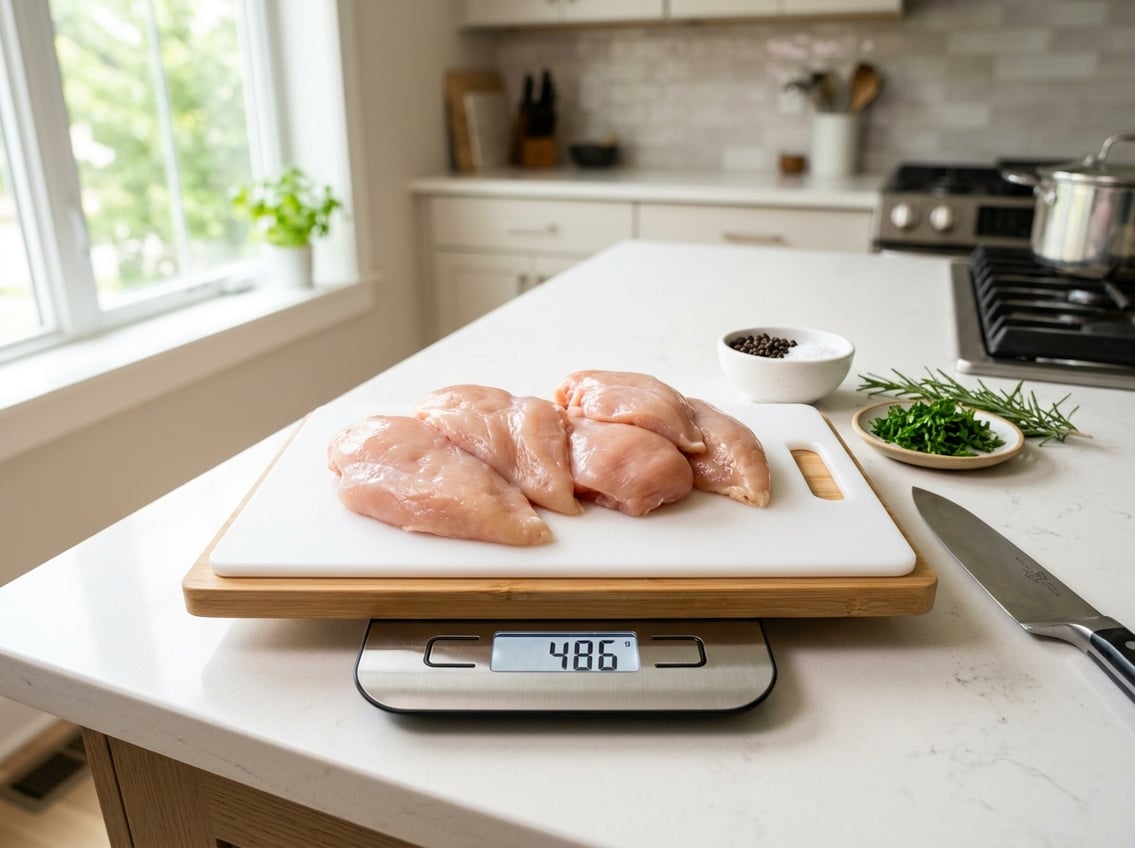
If you buy split chicken breasts, frozen chicken, or larger premium cuts, the numbers change. Cooking also changes the weight because chicken loses moisture as it heats, so a raw piece will not weigh the same on the plate.
Average Weight Ranges by Chicken Breast Type
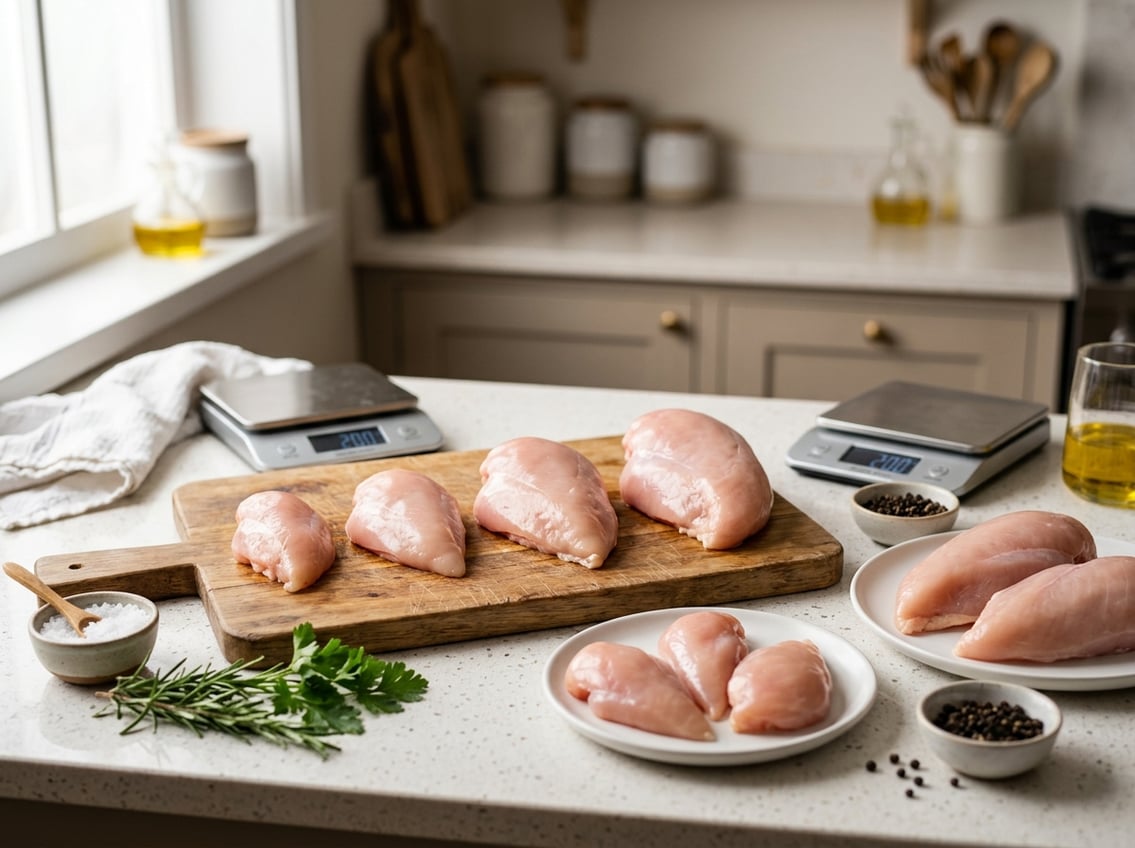
The average chicken breast weight depends on the cut you buy. Boneless pieces are the most common in U.S. stores, while bone-in and skin-on cuts usually weigh more because extra parts are included.
According to Greatist’s chicken breast weight guide, bone-in breasts are also called split chicken breasts, and the bones can make up about 20% of the total weight.
Boneless and Skinless Typical Sizes
A boneless chicken breast usually weighs about 5 to 10 ounces, with many standard supermarket pieces landing near 6 ounces. Smaller breasts may be closer to 4 ounces, while larger ones can reach 8 ounces or more.
Most recipes assume this cut when they ask for “chicken breast.” If you compare package labels, a pound of boneless breasts often gives you about 2 to 3 pieces.
Bone-In and Split Chicken Breasts
Split chicken breasts are bone-in chicken breasts. They weigh more than boneless breasts because the bone adds weight.
These cuts often cook with good moisture and flavor. Since the bone adds weight, a split breast may look large in the package even though the edible meat is closer to the amount you would get from a smaller boneless breast.
Skin-On vs. Skinless Differences
Skin-on breasts weigh a little more than skinless breasts because the skin adds extra mass. The difference is small compared with the bone, yet it still matters when you are aiming for exact portions.
If you remove the skin after cooking, the final edible weight drops a bit more. For most home cooking, skin affects texture and browning more than it affects portion planning.
Raw, Cooked, Frozen, and Thawed Weight Differences
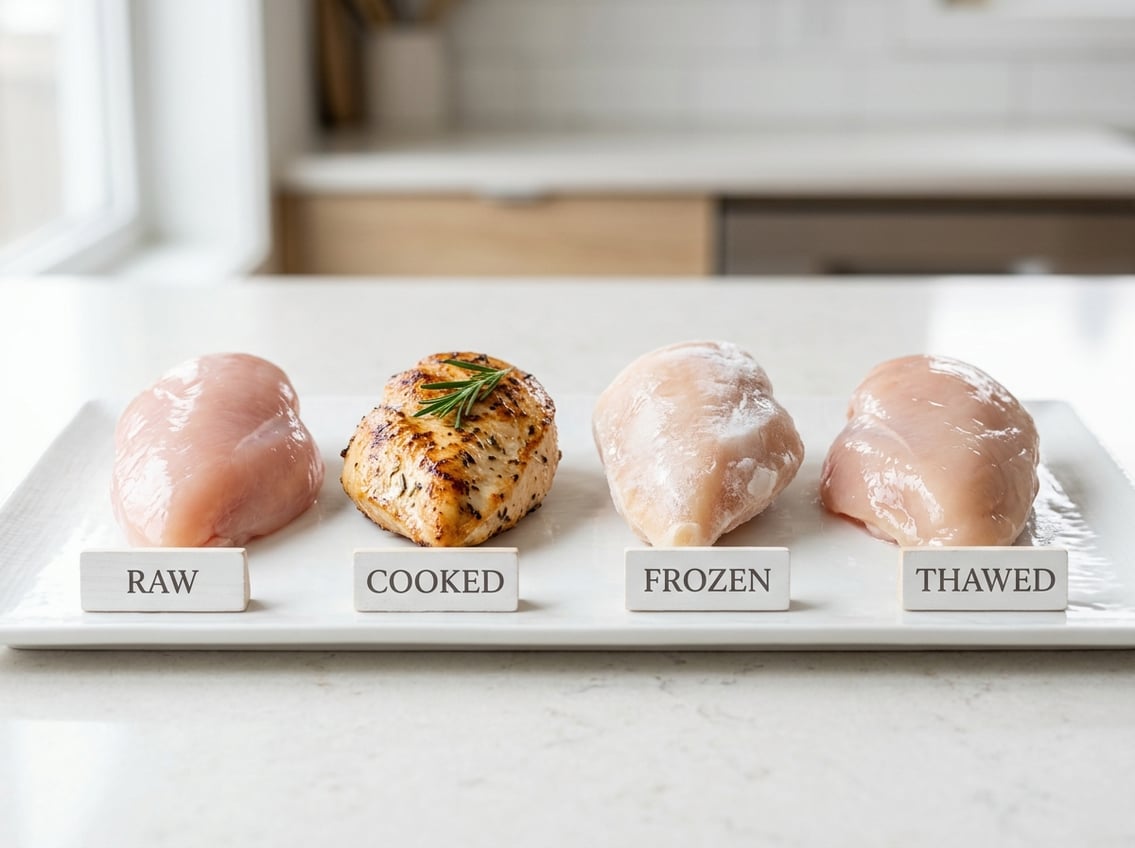
Chicken breast weight changes with temperature and moisture. Raw and thawed chicken are close in weight, while cooked chicken weighs less because water leaves the meat during heating.
Frozen pieces can appear heavier if they carry ice crystals or added coating.
Why Chicken Loses Weight During Cooking
Chicken breast loses water as it cooks. That moisture loss is the main reason the finished piece weighs less than it did in the package.
As Greatist’s comparison of chicken breast types notes, a raw breast can lose about 25% of its weight during cooking. Dry methods like roasting and grilling usually create more shrinkage than moist methods like braising or boiling.
Typical Cooked Weight After Shrinkage
A 6-ounce raw chicken breast often ends up around 4.5 ounces cooked. That is a useful estimate when you are trying to portion food for lunches or dinner plates.
If you need a cooked portion target, start with more raw chicken than your final serving size. A raw breast that looks large enough for one meal may shrink to a smaller serving after cooking.
When Frozen Chicken Weighs More
Frozen chicken can weigh a little more than thawed chicken if the package includes ice or a protective coating. Once thawed, that extra weight disappears.
If you buy fresh chicken and freeze it yourself, the weight stays close to the original raw weight. Pre-frozen chicken sold in stores may need thawing before you use package weight to estimate portions.
How to Estimate Portions and Shop Smarter

When you buy chicken breasts, package weight gives you the fastest way to estimate serving sizes. A quick division tells you how many ounces each breast may weigh, and that makes meal planning easier.
The key is to match the package count with the total weight printed on the label.
How Many Breasts Are in a Pound
A pound is 16 ounces, and chicken breasts usually fall around 2 to 3 pieces per pound. Smaller breasts can push that number higher, while larger breasts can bring it down.
For example, if a package has 4 breasts and weighs 1.2 pounds, each piece averages about 0.3 pounds, or 4.8 ounces. That kind of estimate is usually close enough for everyday cooking.
Using Package Weight to Estimate Each Piece
To estimate chicken breast weight, divide the package weight by the number of pieces. This works well when the breasts in the tray are fairly similar in size.
If the pieces look uneven, use the biggest breast as your guide and plan a little extra food. That is safer than assuming every breast will weigh the same.
Tips for Buying Chicken Breasts
Look at the total package weight, not just the number of breasts. Two packages with the same piece count can vary a lot in size.
If you need exact portions, choose packages with visible weights on the label and use a kitchen scale at home. That matters most for meal prep, calorie tracking, and recipes that depend on even cooking.
Using Weight for Meal Planning and Cooking
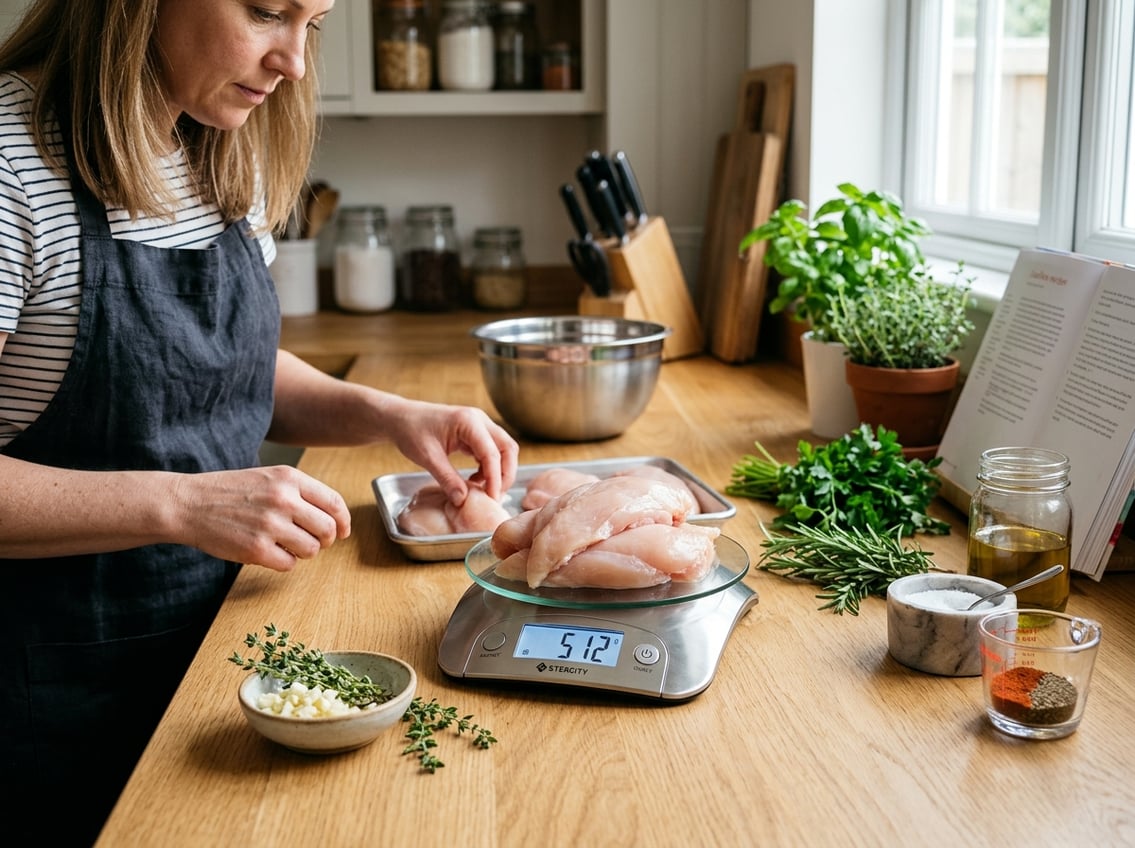
Chicken breast weight affects both serving size and cook time. A smaller breast cooks faster and works well for sliced dishes.
A larger piece holds up better for stuffing, grilling, or batch cooking. If you know how much a boneless chicken breast weighs, you can match the cut to the meal you want.
Matching Breast Size to Serving Goals
For a standard meal, one average boneless breast is often enough for one person. If the breast is large, it may serve one person with leftovers or two people when sliced.
If you need a specific protein target, weigh the raw chicken before cooking. That gives you a more accurate number than guessing after the meat shrinks.
Adjusting Cook Time for Small vs. Large Pieces
Smaller breasts cook faster and dry out sooner if you leave them in too long. Larger breasts need more time, and they often benefit from pounding to an even thickness.
Use internal temperature instead of size alone. That helps you avoid overcooking when the pieces in the package do not match.
Best Uses by Size in Chicken Breast Recipes
Smaller breasts work well in stir-fries, salads, sandwiches, and sliced pasta dishes.
Medium breasts fit most standard baked chicken breast recipes.
Large breasts suit stuffed chicken, grilled mains, or meal prep portions with a clear serving size. Choosing the right size helps chicken breast recipes cook more evenly and taste better.


