
What Does Chicken Breast Weigh by Type and Size
The weight of a chicken breast depends on the cut, size, and whether you look at raw or cooked meat.
A typical boneless, skinless chicken breast in the US often weighs about 6 to 8 ounces. Bone-in pieces and split chicken breasts weigh more because part of that weight is bone.
Chicken breast weight usually drops by about 25 percent during cooking. A 6-ounce raw breast will not stay 6 ounces on the plate.
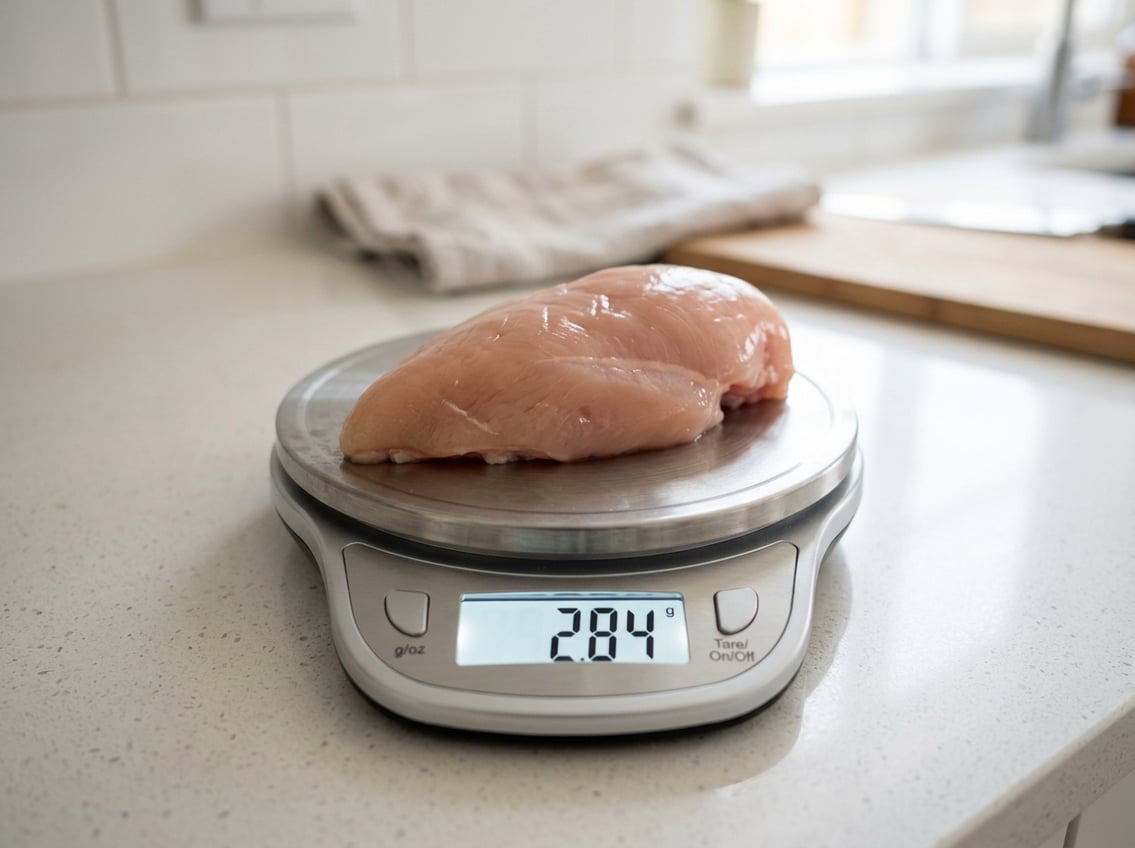
That difference matters for recipes, meal prep, and nutrition tracking.
The same chicken breast can look larger or smaller depending on whether it is boneless, bone-in, skin-on, frozen, or cooked.
Average Weights by Chicken Breast Type
Chicken breast weight changes a lot by cut. Grocery store packages do not always use the same size pieces.
A boneless breast is the easiest to estimate. Split chicken breasts include bone and often skin, which changes the total weight.
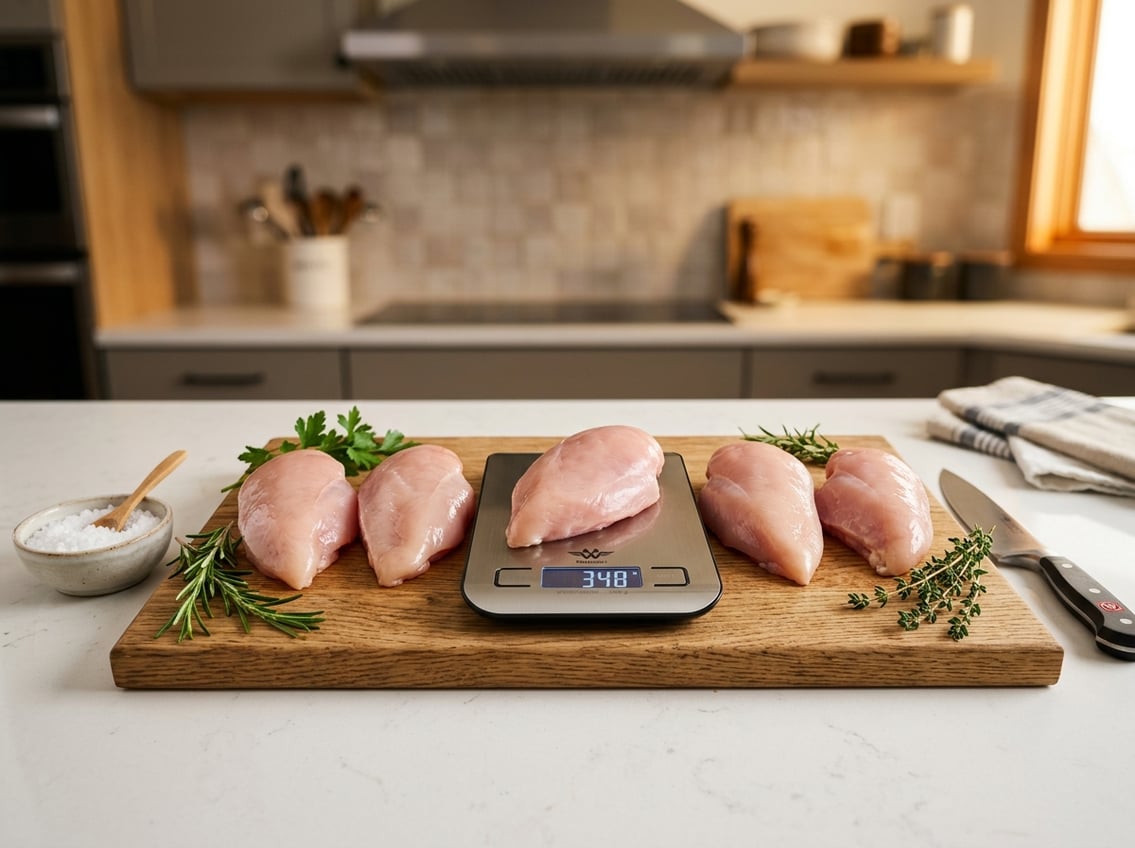
A typical boneless breast weighs about 6 to 8 ounces. Split chicken breasts weigh more because the bone adds weight.
According to Greatist’s breakdown of chicken breast weights, split breasts are commonly sold bone-in. Knowing what part of the weight is edible meat can help you plan better.
Boneless and Skinless Portions
Boneless, skinless chicken breasts are the most common supermarket cut in the US. They often weigh around 6 ounces each.
Smaller pieces can be closer to 4 or 5 ounces. Larger ones can reach 8 ounces or more.
If you buy family packs, you may see a wide range in the same tray. That variation is normal and is why package weight is a better guide than the number of pieces alone.
Bone-In and Skin-On Cuts
Bone-in, skin-on chicken breasts weigh more than boneless pieces because the bone and skin add mass. The bone can make up about 20 percent of the total weight, according to Greatist.
The edible portion is smaller than the package weight suggests. These cuts often stay moist during cooking and can cost less per pound.
If you are comparing prices, check whether the listed weight includes bone and skin. That changes the real amount of meat you get.
Split Chicken Breasts Explained
Butchers cut split chicken breasts away from the whole bird. Stores often sell them with the skin on and label them as split breasts.
Because the bone takes up space, split chicken breasts usually weigh more than boneless ones of similar meat size. If a recipe asks for a certain amount of meat, you may need to buy more package weight to account for the bone.
How Cooking Changes Portion Weight
Cooking changes chicken breast weight because water and some fat leave the meat. That shrinkage affects both portion size and nutrition math.
Raw and cooked weights are not equal.
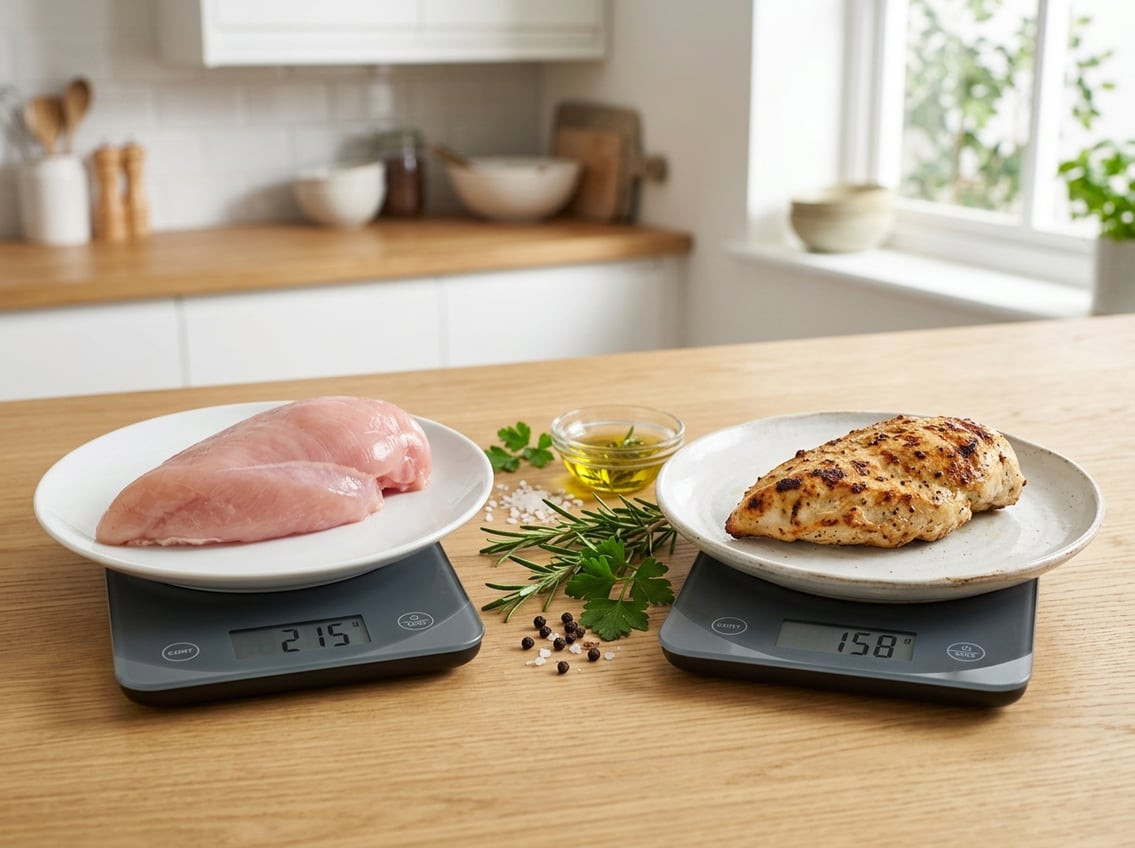
A raw breast usually loses about 25 percent of its weight during cooking, according to Greatist.
The exact loss depends on the method you use and how long you cook it.
Raw vs Cooked Weight Loss
Raw chicken is heavier because it still holds more water. After cooking, the same breast can weigh noticeably less even though the protein amount is still similar.
For example, a 6-ounce raw chicken breast may weigh about 4.5 ounces after cooking.
Why Grilled and Baked Pieces Shrink More
Grilling, roasting, and baking usually cause more shrinkage than moist methods. These methods drive off more water from the surface and inside the meat.
Boiling or braising tends to cause less shrinkage since moisture stays in the cooking environment. Gentler cooking usually gives you a slightly heavier finished portion.
How to Track Nutrition Accurately
If you track calories or protein closely, choose one method and stay consistent. Weigh the chicken raw if your nutrition facts are based on raw meat.
Weigh it cooked if your logging app uses cooked values. Avoid mixing raw weights with cooked nutrition data.
That mismatch can make your portions look larger or smaller than they really are.
How to Estimate and Measure Portions
You do not always need a scale to get close, especially for simple meals. Still, a scale gives you the most reliable answer when you want to know how much a chicken breast weighs.
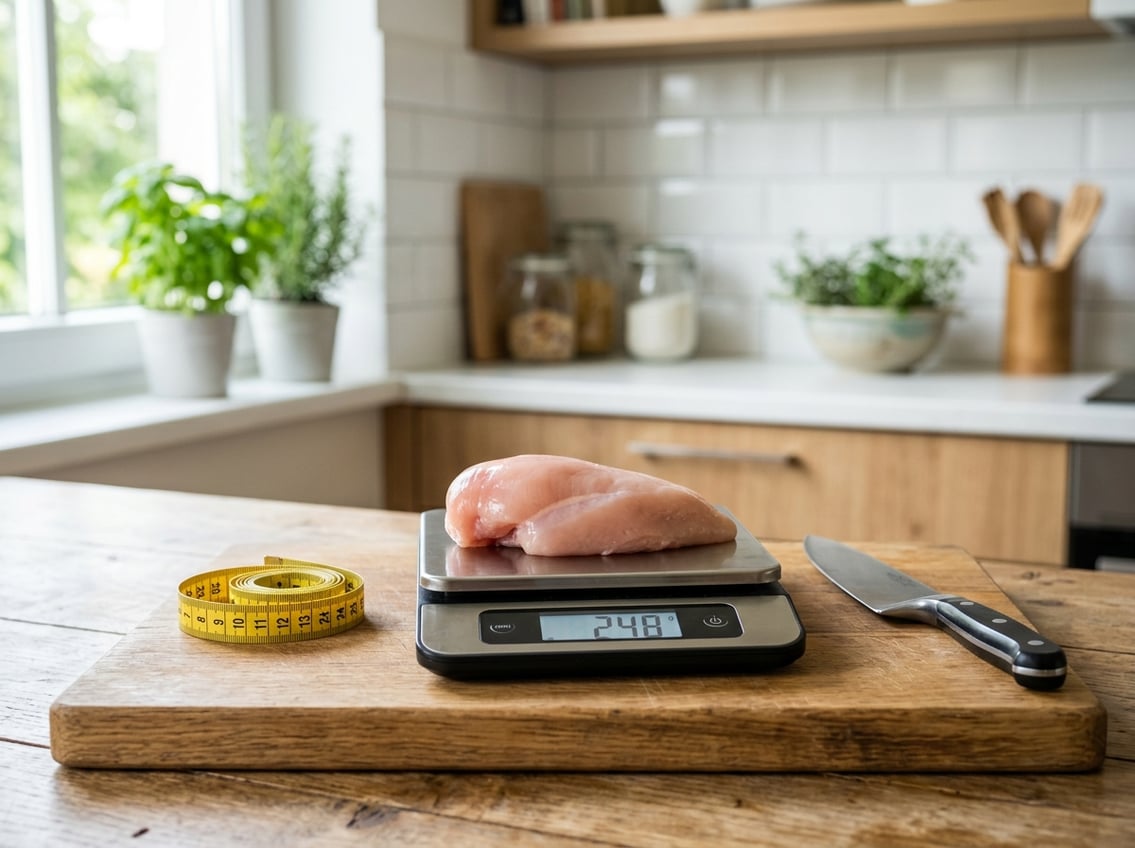
Simple estimation works well if you learn the common weight ranges and use package labels carefully. For meal prep, the total tray weight can also help you divide portions without guesswork.
Using a Kitchen Scale
A digital kitchen scale is the easiest way to measure chicken breast weight. Place the plate or bowl on the scale first, zero it out, then add the chicken.
If you are cooking several pieces, weigh each breast before cooking and write down the numbers. That gives you a more accurate portion size than guessing from appearance.
Visual Size Estimates Without a Scale
A medium boneless, skinless breast often looks about the size of your palm, not including fingers. Smaller pieces are usually around 4 to 5 ounces, while larger ones can be closer to 8 ounces or more.
Shape matters too. Thick, compact breasts can weigh more than flatter pieces that look larger on the plate.
Package Math for Multi-Pack Trays
Package labels show the total tray weight. This helps when you buy breasts together.
If a pack has 4 breasts and weighs 1.5 pounds, each breast averages about 6 ounces.
You will not get exact results, since pieces are rarely identical. This method gives you a practical estimate when you need to divide servings quickly.


