
What Happens If You Overcook Chicken Breast? Key Effects
If you overcook chicken breast, it loses moisture, turns tougher, and becomes less pleasant to eat. The meat can go from juicy and tender to dry in a fairly small window of extra heat.
You also see a change in texture, color, and flavor. Chicken breasts are especially easy to push past the point of ideal doneness because they are so lean.
That is why timing and temperature matter so much when you cook this cut.
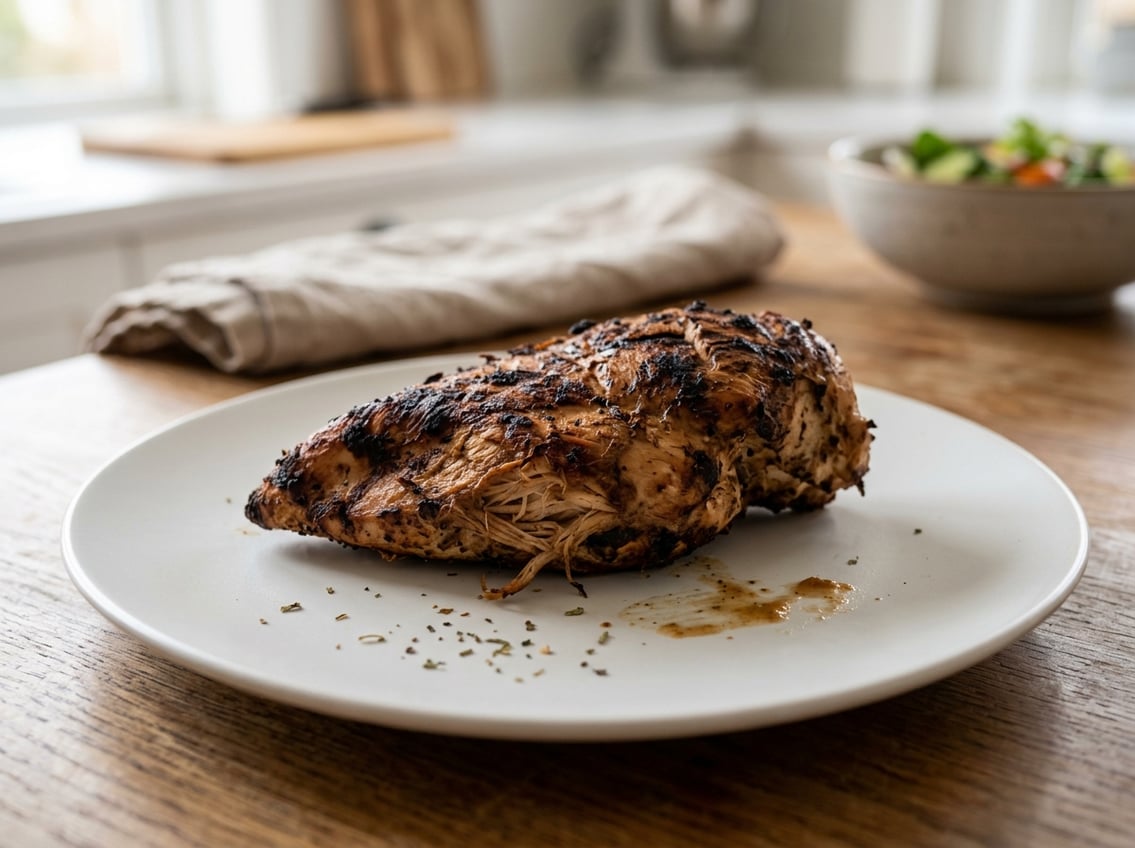
How Overcooking Changes Chicken Breast
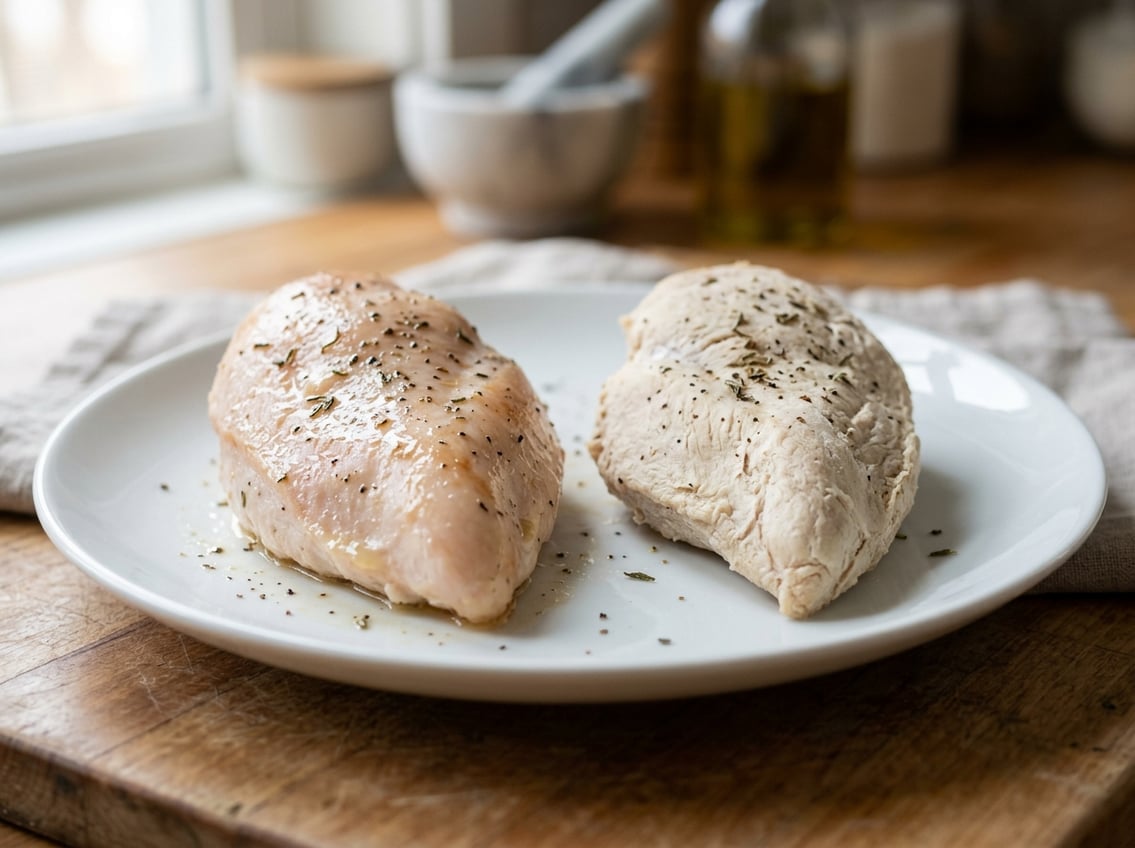
When you overcook chicken, the proteins tighten and squeeze out moisture. Overcooked chicken often feels stringy, rubbery, or chalky instead of tender.
Chicken breasts show this change fast because they have little fat to protect them. Even brief extra heat can turn a moist piece into dry chicken.
Why the Meat Turns Dry and Tough
As heat rises, muscle fibers contract more tightly. That pushes juices out of the meat, so the breast loses tenderness and becomes firm.
Overcooking chicken also changes the mouthfeel. The meat can resist your knife and feel chewy when you bite it.
How Texture, Color, and Juiciness Change
An overcooked chicken breast often looks paler and less glossy. The surface may seem pulled tight, and the inside can lose the juicy sheen you expect from properly cooked meat.
The texture changes clearly. What should feel moist becomes dense, stringy, and dry.
When Overcooked Chicken Becomes Harder to Enjoy
Once the meat is dry enough, sauces and seasoning do more of the work than the chicken itself. The flavor can seem muted because the lost moisture also takes away a lot of natural richness.
According to Chef’s Resource, overcooked chicken becomes dry and tough, which makes it less enjoyable to chew and eat.
How to Tell When You Have Gone Too Far
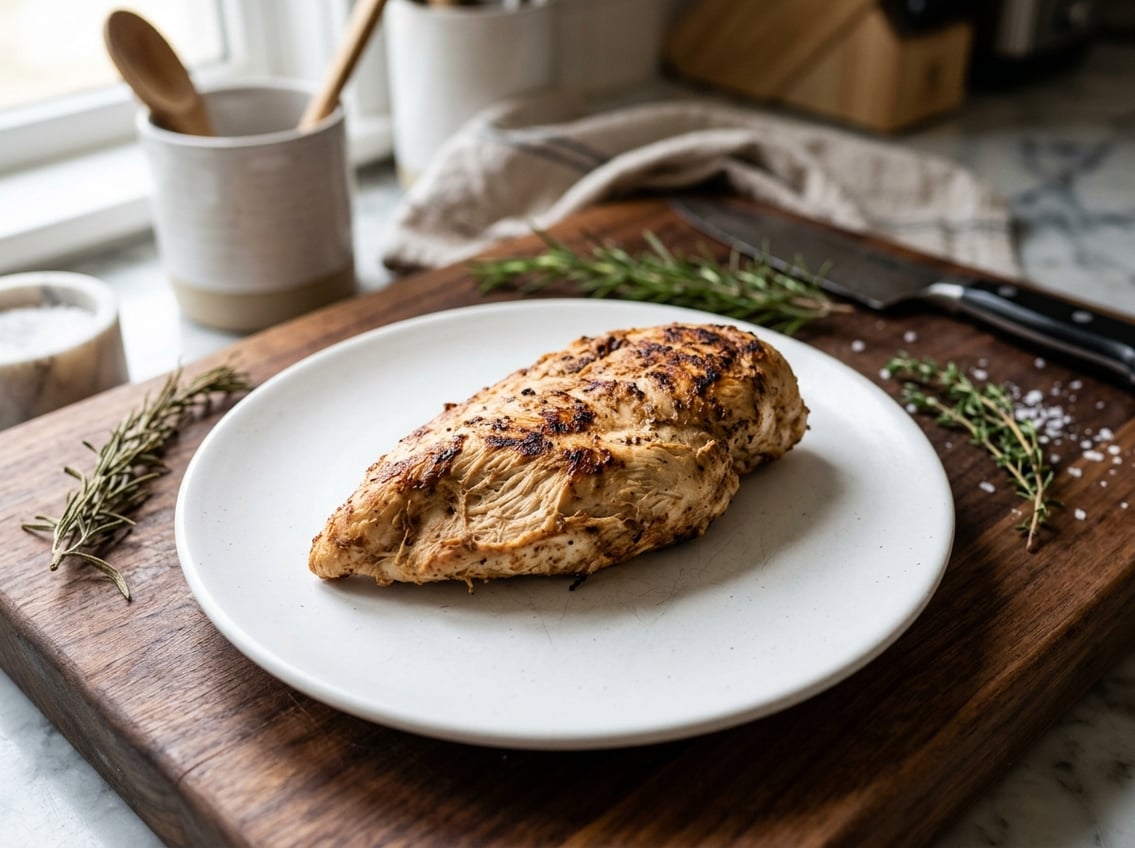
Temperature gives you the clearest signal, not guesswork. Visual clues can help, yet an accurate reading gives you the best chance to stop before the meat dries out.
Carryover heat matters too, because chicken keeps cooking after it leaves the pan or oven. The number you see at removal is not the final number.
The Internal Temperature Threshold to Watch
Chicken is safe to eat at 165°F, but pushing far past that point raises the risk of dry chicken. Some guides note that chicken breast is overcooked once it climbs beyond 165°F and becomes noticeably drier, such as BBQ Host’s temperature guide.
For best results, treat 165°F as the top end, then remove it before it climbs much higher.
Why Carryover Cooking Matters After Removal
Carryover cooking means the internal temperature keeps rising after heat is off. A thick breast can gain a few degrees while it rests, especially if it was cooked in a hot pan or oven.
If you wait until the center reaches a high number, the outer meat may already be overcooked by the time the breast rests. Removing it a little early helps protect moisture.
Using an Instant-Read Thermometer Correctly
Place the probe into the thickest part of the breast, not near bone or through a thin edge. Wait for the reading to settle before you decide the chicken is done.
An instant-read thermometer gives you a more reliable result than color alone. Use it near the end of cooking, then check a second spot if the breast is uneven in thickness.
Why Chicken Breast Overcooks So Easily
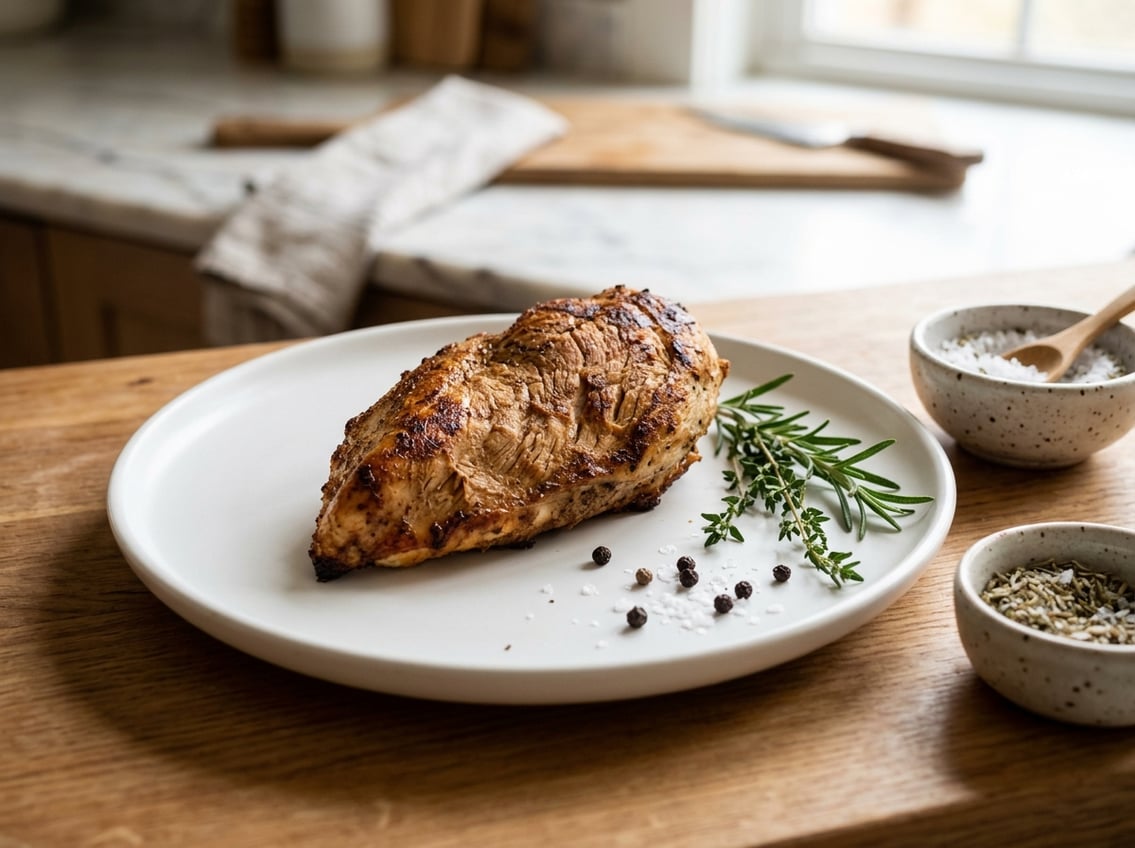
Chicken breasts are lean, so they have little extra fat to buffer heat. That makes them less forgiving than darker cuts when you cook them a little too long.
Small mistakes also add up quickly, especially with high heat or uneven thickness.
Why Lean Cuts Lose Moisture Fast
Breast meat has less fat and connective tissue than thighs or drumsticks. Once the proteins tighten, there is less internal moisture left to keep the meat tender.
That is why chicken breasts tend to dry out faster than more forgiving cuts. As noted by Taste of Home, thighs and other dark meat usually stay juicier longer because of their higher fat content.
Common Cooking Mistakes That Lead to Dry Results
Cooking on very high heat for too long is a common mistake. Leaving chicken in the oven after it has already reached doneness also dries it out.
Other problems include uneven pounding, skipping thermometer checks, and slicing the meat right after cooking.
How Starting Temperature and Pan Heat Affect Outcomes
A cold breast straight from the fridge takes longer to heat through, which can tempt you to keep it on the stove too long. A very hot pan can overbrown the outside before the inside is ready.
If the heat is too strong, you may remove the chicken late, only to find the outer layers already dry. A steadier temperature usually gives you more control and a better final texture.
How to Prevent or Rescue a Dry Result
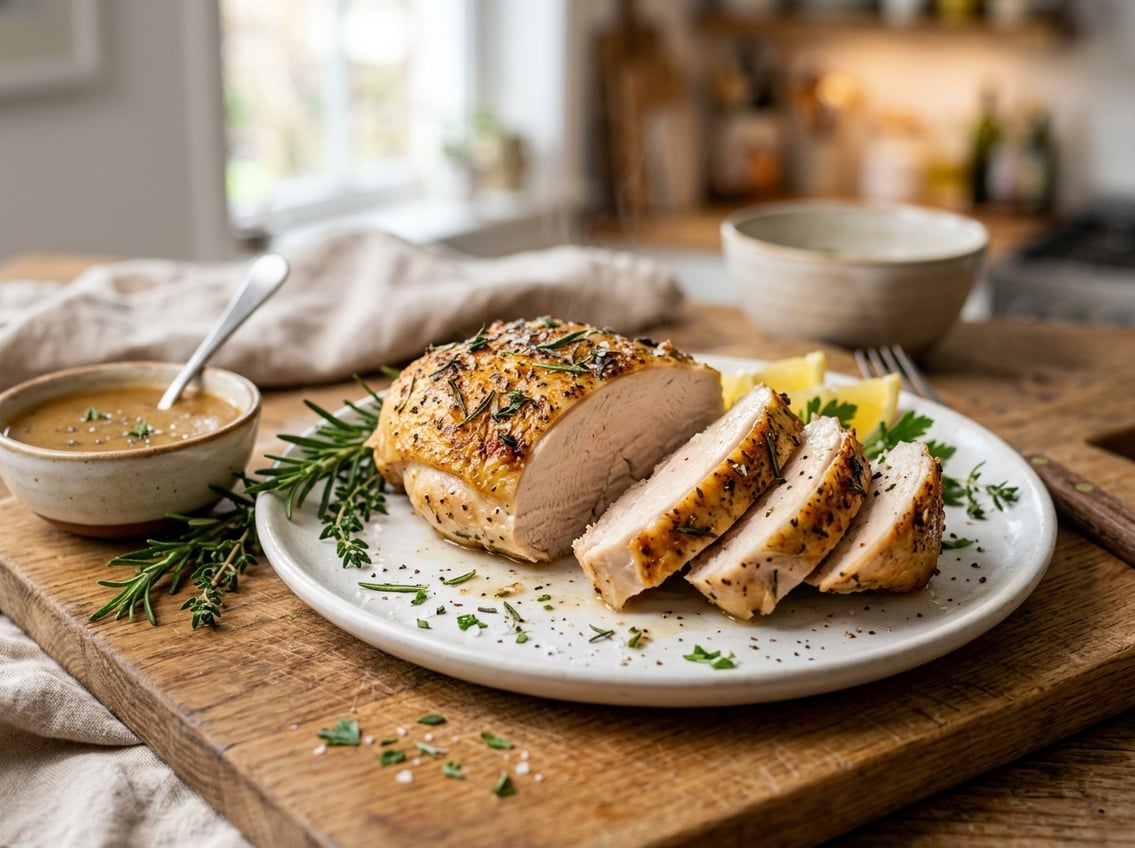
You can prevent most dry chicken breast problems with careful heat control and an accurate thermometer. If the meat is already overcooked, your best move is to add moisture and pair it with other ingredients.
Marinades, sauces, and chopped or shredded uses can help the meal feel less dry. The goal is to make it useful and pleasant.
Best Practices for Juicier Chicken Breast
Pat the chicken dry before cooking, then season it well. Cook it over moderate heat when possible, and pull it once it reaches the safe temperature range.
Let it rest for a few minutes before slicing. That short rest helps the juices settle instead of running out onto the cutting board.
How Marinating Chicken Can Help Retain Moisture
Marinating chicken can add flavor and help the surface stay more forgiving during cooking. Acidic or dairy-based marinades can also improve the eating quality of lean meat.
Keep in mind that marinating does not erase overcooking. It helps most when you use it before cooking, not after the meat is already dry.
Ways to Salvage Overcooked Chicken in Other Dishes
Slice overcooked chicken thin and add a sauce. Soups, casseroles, enchiladas, chicken salad, and grain bowls all help bring moisture back into the dish.
Chef’s Resource suggests using overcooked chicken in soups, stews, or sandwiches. You can also shred it and mix it with broth, yogurt-based dressings, or a pan sauce to soften the dry texture.


