
What Causes Chicken Breast to Be Tough? Common Reasons
Cooking mistakes, poor moisture control, or low-quality meat usually cause chicken breast to be tough.
Chicken breast is lean and dries out faster than fattier cuts. A small timing error can turn juicy chicken breast into tough or dry chicken breast.
You can prevent most tough chicken breast problems with correct heat, a meat thermometer, and simple prep steps like marinating or pounding.
If your chicken already feels tough, you can improve your results next time by changing how you cook it and by choosing better meat.
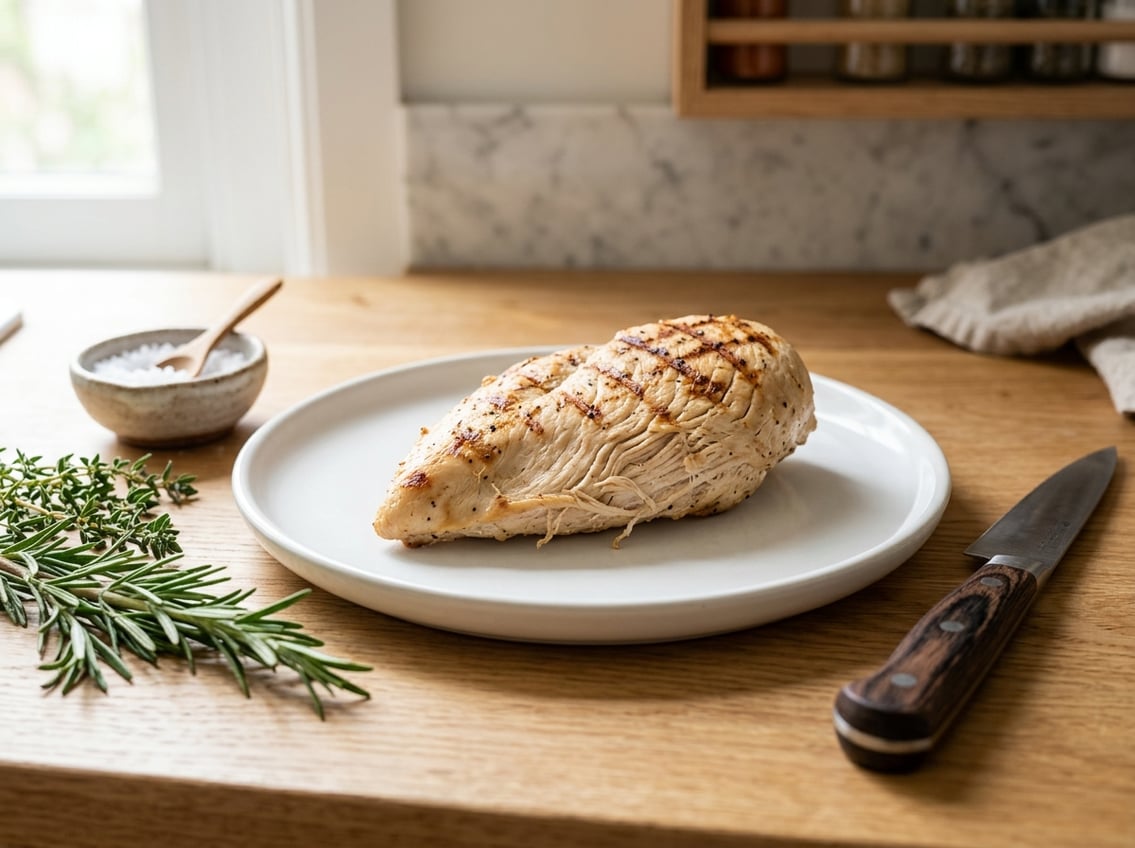
The Main Cooking Mistakes That Ruin Texture
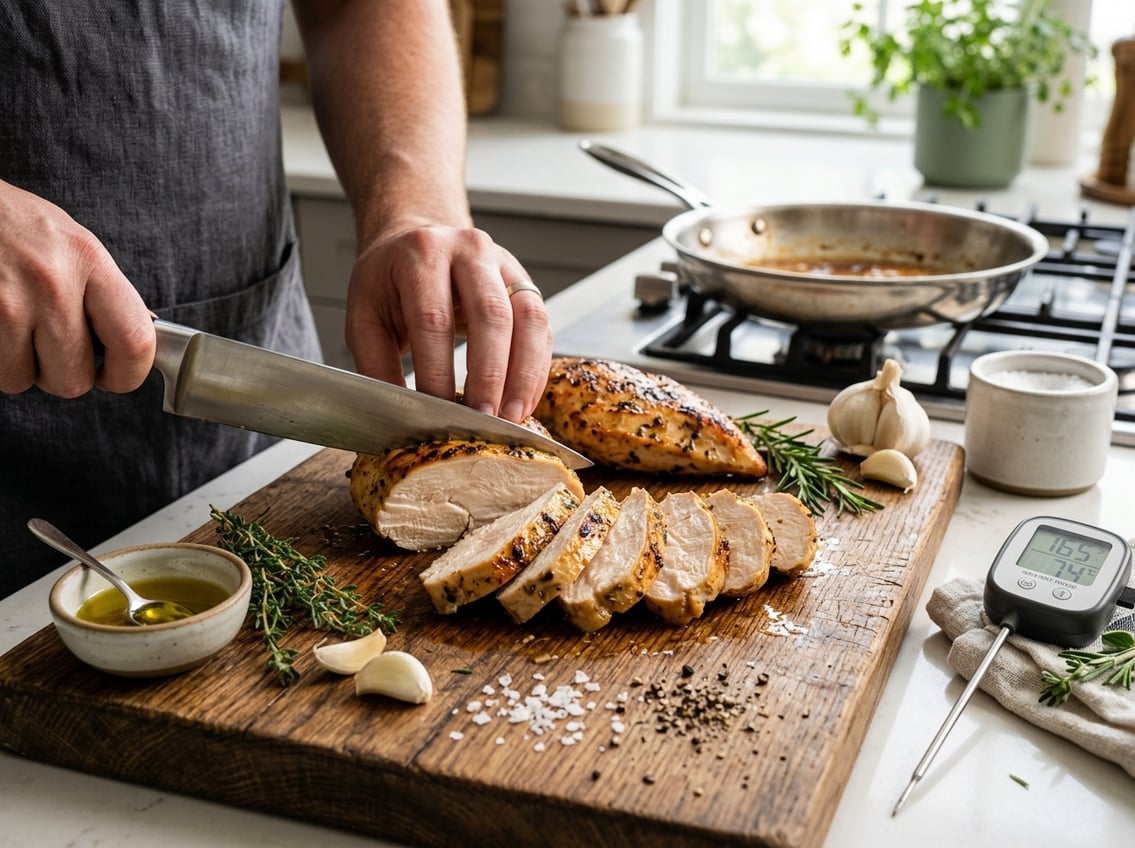
Most tough chicken starts in the pan, oven, or grill. Thin chicken breast can move from tender to dry very quickly if you miss the right temperature or cook it unevenly.
Overcooking and Moisture Loss
Overcooking causes dry, tough chicken. As the meat stays on heat too long, the proteins tighten and push out moisture, which leaves you with tough chicken breast.
Chicken breast should reach 165°F, according to Cooknight, but you should not cook it far beyond that point.
Undercooking and Rubbery Texture
Undercooked chicken can feel soft in a bad way, with a rubbery or unpleasant texture. The inside may still be unsafe, and the outside may not have set properly.
According to Cooknight, chicken breast should reach 165°F for safe eating.
High Heat and Uneven Cooking
Very high heat can sear the outside before the inside finishes cooking. That leaves you with dry edges, a pale center, and chicken that feels tough in some spots and soft in others.
Thicker pieces are especially at risk. If one side is much thicker than the other, the thin end can dry out long before the thick part is done.
Why Lean Meat Dries Out Fast
Chicken breast has very little fat compared with darker meat. It loses moisture faster during cooking.
Lean cuts need more control. Small changes in time, heat, and rest can decide whether you get tender chicken breast or a dry result.
How to Keep Chicken Breast Tender While Cooking
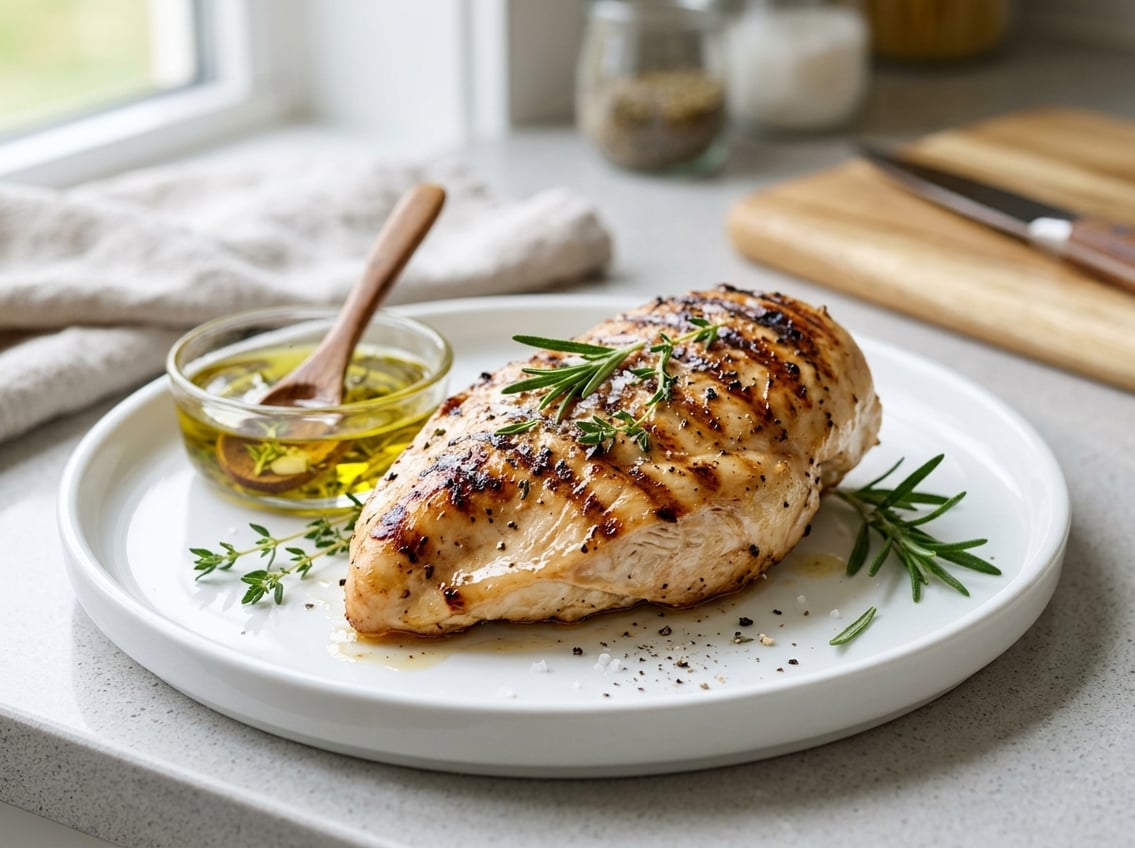
You can prevent most texture problems with a few simple habits. Temperature control, resting time, and basic prep steps help you make juicy chicken instead of tough meat.
Using a Meat Thermometer Correctly
A meat thermometer helps you stop guessing. Insert it into the thickest part of the breast and take the chicken off the heat when it reaches 165°F.
That habit helps you avoid both undercooked and overcooked chicken.
Carryover Cooking and Resting Time
Chicken keeps cooking for a few minutes after you remove it from heat. The center temperature can rise while the meat rests.
Let the chicken rest for several minutes before cutting it. Resting lets the juices settle and helps you keep a tender chicken breast.
Marinating Chicken for Better Moisture
Marinating chicken can improve both flavor and texture. A marinade with salt, oil, and mild acid can help the meat hold moisture and taste better after cooking.
As Cooknight explains, marinating chicken breast for at least 30 minutes can help tenderize it. For stronger results, marinate it longer in the refrigerator.
Pounding Chicken Breast to Even Thickness
Pounding chicken breast helps it cook evenly. When the meat has a similar thickness across the whole piece, the thin parts do not dry out before the thick parts finish.
Use a meat mallet and pound gently until the breast is even, not crushed. This step helps you cook a more tender chicken breast and reduces the chance that one end turns dry.
When the Problem Starts With the Chicken Itself
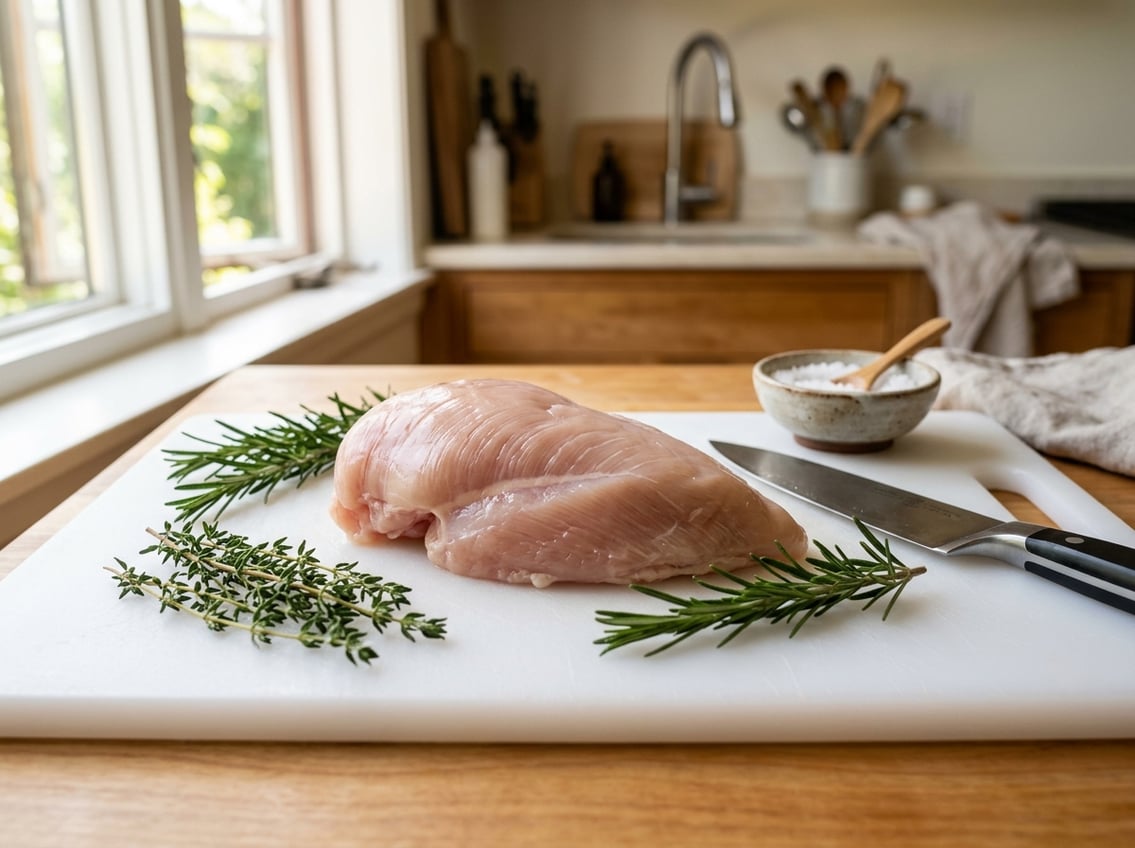
Sometimes the problem is not your technique. The breast itself may already be more likely to turn tough because of how it was raised, processed, or chilled.
Woody Breast Syndrome and Woody Breast
Woody breast syndrome is a quality issue that affects some chicken breast cuts. The meat can feel hard, dense, or unusually firm before you even cook it.
If your chicken breast seems strange to the touch, woody breast may be the reason your result is tough chicken breast. That texture issue starts in the meat, not just in your pan.
Poor Quality Chicken and Oversized Breasts
Poor quality chicken can lead to uneven texture, less moisture, and a more rubbery bite. Very large breasts can also be harder to cook evenly, which increases the chance of dry edges and a tough center.
Oversized pieces often need lower heat and more careful timing. If you buy giant breasts, you may notice that the outside cooks before the inside catches up.
Why Air-Chilled Chicken and Organic Chicken May Help
Air-chilled chicken may hold a firmer texture because producers process it differently than water-chilled chicken.
Organic chicken can also be a better choice for cooks who want more consistent quality, though it is not a guarantee of tenderness.
These options may reduce some of the problems that lead to tough chicken breast, especially when the meat starts with better structure.


