
Which Is Better Chicken Breast or Drumstick? Key Differences
Which is better, chicken breast or drumstick, depends on what you want from the meal. If you want the leanest protein source with the mildest taste, chicken breast usually wins.
If you want more flavor, more moisture, and better value, chicken drumstick is often the stronger pick.
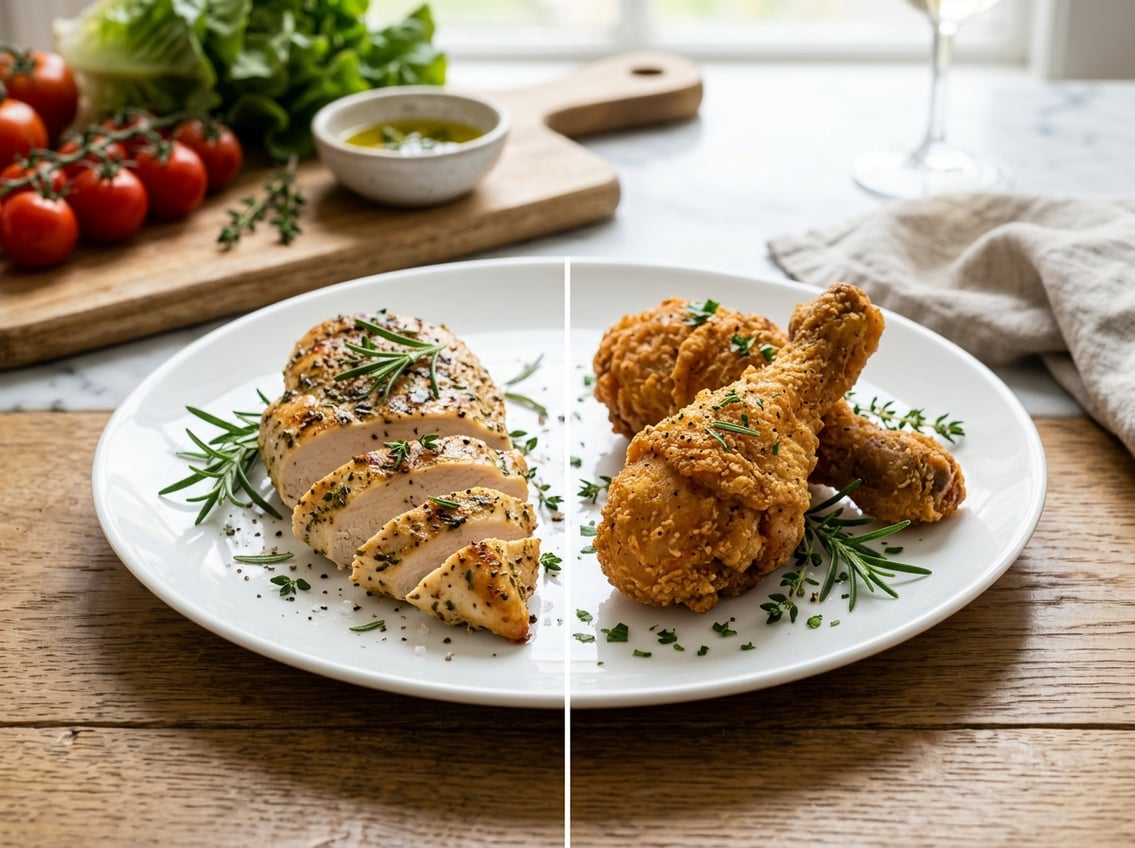
Chicken is one of the most flexible foods in the U.S. kitchen. The drumstick vs breast debate stays popular because the two cuts eat so differently.
The breast is lean, mild, and easy to slice. The drumstick brings richer flavor, darker meat, and a juicier bite.
Your best choice changes with the recipe. For salads, sandwiches, and quick meal prep, chicken breast is often the cleaner fit.
For roasting, family dinners, and dishes where taste matters more than low fat, chicken drumsticks often make more sense.
How Breast and Drumstick Differ at a Glance
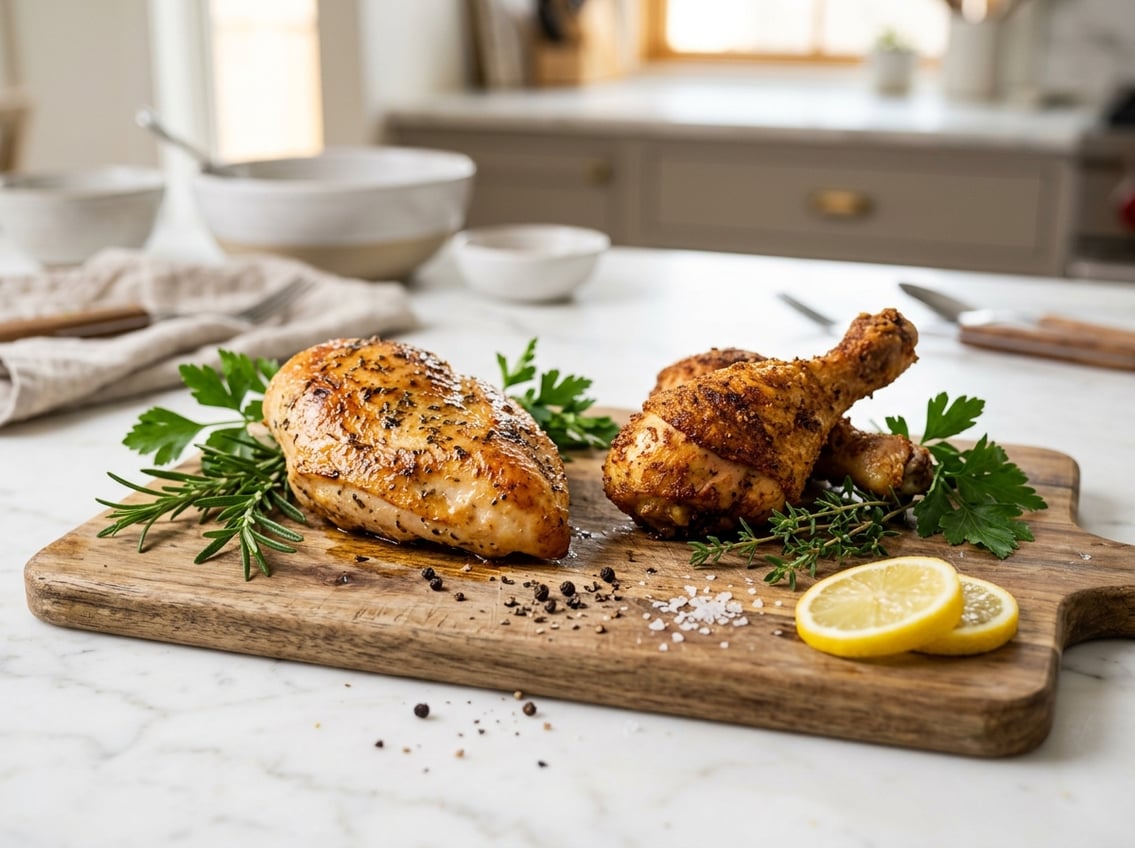
Chicken breast and chicken drumstick are both useful, but they are not built the same. The breast is white meat, while the drumstick is dark meat, and that difference shapes taste, texture, calories, and cooking time.
Chicken breasts are usually leaner, while drumsticks bring more fat, more flavor, and a little more tenderness from connective tissue and collagen.
Dark Meat vs White Meat
Chicken breast is white meat with a mild flavor and a firmer bite. Chicken drumstick is dark meat, which usually tastes richer and more savory because it has more fat and myoglobin.
White meat works well when you want a neutral protein base. Dark meat adds more built-in flavor.
Flavor Profiles and Overall Taste
Chicken breast has a clean, mild taste that takes well to sauces and seasoning. Chicken drumsticks have deeper flavor profiles, so they stand out even with simple salt, pepper, and garlic.
If you prefer chicken that tastes more like chicken, drumsticks often satisfy more. If you want a blank canvas for lighter dishes, breast is easier to work with.
Texture, Juiciness, and Connective Tissue
Chicken breast is lean and can turn dry if you cook it too long. Chicken drumstick has more connective tissue and collagen, which helps it stay juicy during slower cooking.
That extra structure gives drumsticks a softer, more tender bite after roasting or braising. Breast is firmer and cleaner to slice, which helps in cold dishes and fast meals.
Protein Content, Fat Content, and Calories
Both cuts are good protein options, but their nutritional profiles differ. Chicken breast usually has more lean protein per calorie, while drumsticks have more fat and slightly more calories.
If you want a lower-calorie protein source, breast is the easier choice. If you want a more satisfying cut that still delivers solid protein, drumsticks can work well.
Price and Everyday Value
In many U.S. stores, chicken drumsticks cost less than chicken breasts. That makes them a strong choice when you want a budget-friendly protein for roasting, soups, or batch cooking.
Chicken breasts can still offer value, especially when you want a boneless cut for fast use. For many households, the real question is not just which is better, but which cut fits the meal and the budget.
Nutrition and Health Trade-Offs
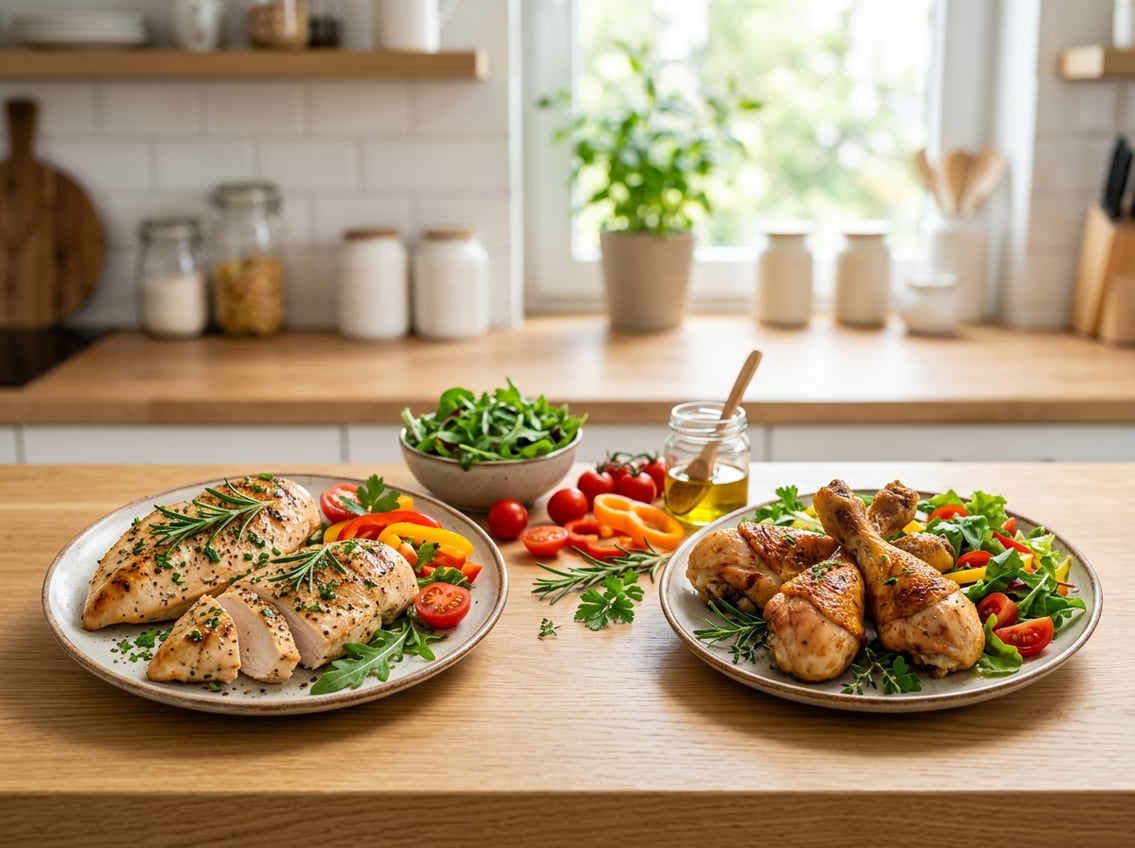
Your nutrition choice depends on what you want the chicken to do for your diet. Chicken breast is the classic lean choice, while drumsticks can offer more satisfaction and a stronger nutrient mix.
A lower-fat meal often points to breast, while a more filling plate can point to drumsticks.
When Chicken Breast Is the Better Lean Protein Option
Chicken breast is usually the better choice when you want lean protein with fewer calories and less fat. It fits weight-conscious meals, high-protein meal prep, and dishes where you want the chicken to stay light.
It also works well when the rest of the meal already has fat from cheese, dressing, or sauce. In that case, breast helps balance the plate.
When Drumsticks Offer More Satisfaction and Nutrient Density
Chicken drumsticks can feel more satisfying because they have more fat and a fuller taste. That can help you feel satisfied with a smaller serving, especially when the meal is simple.
Drumsticks also bring a strong nutrient profile for a dark-meat cut. They are a practical option when taste and budget matter as much as lower fat.
Niacin, Vitamin B6, Selenium, Iron, Zinc, and Phosphorus
Chicken breast is often noted for higher niacin, vitamin B6, and selenium than drumsticks. Those nutrients support energy use, immune function, and normal body processes.
Drumsticks provide useful amounts of iron, zinc, and phosphorus, along with protein and fat. That makes them a strong everyday protein source when you want a more nutrient-dense dark meat option.
How Skin and Cooking Method Change Nutrition
Skin changes the numbers fast. Chicken skin adds fat and calories, so skinless chicken breast stays leaner, while skin-on drumsticks become richer and more calorie-dense.
Cooking method matters too. Frying and heavy sauces raise calories, while roasting, grilling, poaching, and baking keep the meal lighter.
If you want the best nutritional comparison, look at both the cut and the way you cook it.
Best Cooking Methods for Each Cut
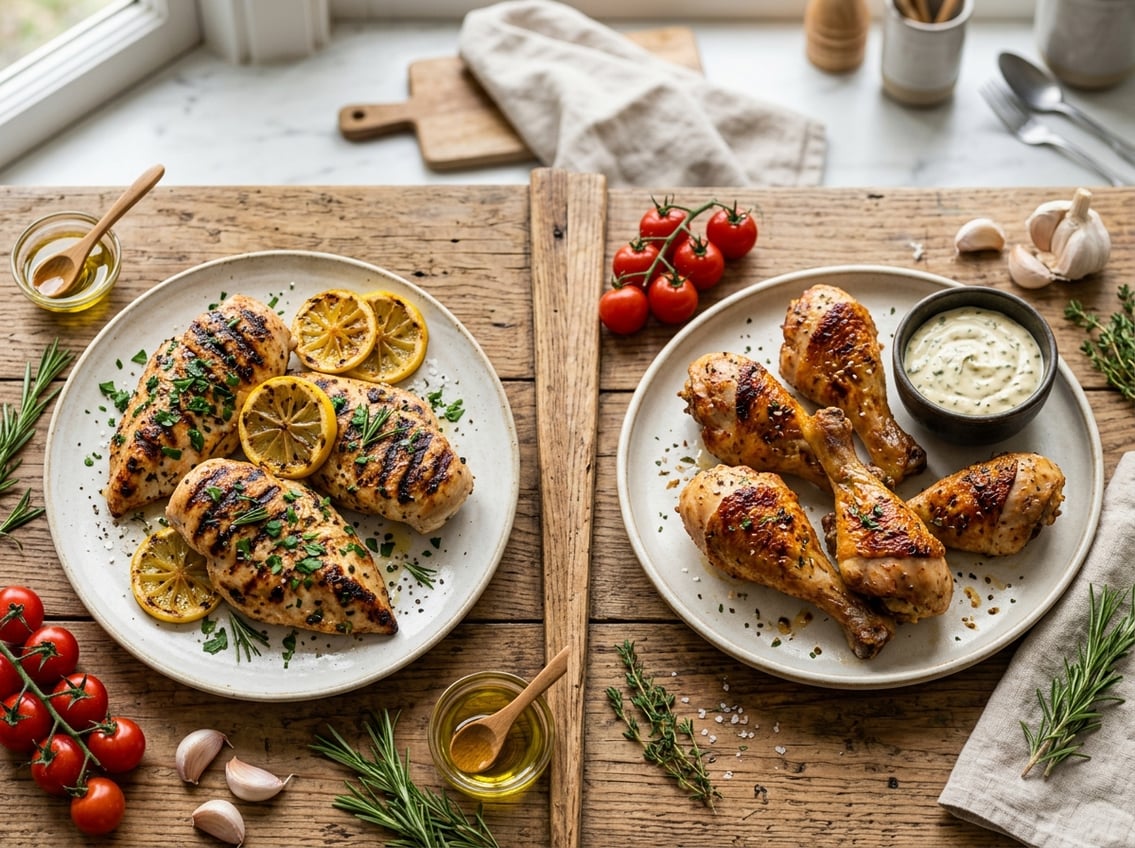
The right cooking technique can make either cut taste better and stay tender. Chicken drumsticks handle slower methods well, while chicken breasts work best with quick, careful cooking.
Your goal is simple: keep the breast moist and help the drumstick render its fat and collagen. That is what gives each cut the best texture.
Roasting and Grilling for Flavor
Roasting gives drumsticks deep flavor and crisp skin. Grilling works well for both cuts, especially when you want smoke and browned edges.
Breasts also roast and grill well, as long as you avoid overcooking. A thermometer helps, since a few extra degrees can dry them out.
Braising and Slow-Cooking for Tender Drumsticks
Braising and slow-cooking are strong choices for chicken drumsticks because the connective tissue breaks down over time. That process gives you tender meat that stays juicy.
These methods work especially well in saucy dishes or stews. They also fit busy meal planning because the chicken can cook while you handle the rest of the meal.
Poaching and Quick Cooking for Chicken Breasts
Poaching keeps chicken breasts moist and tender if you want a simple, low-fat result. Quick baking, pan-searing, and light grilling also work when you watch the cook time closely.
Breasts are easy to use in sliced dishes, since they cook quickly and cut cleanly. That helps for salads, wraps, and cold meal prep.
Marinade Tips for Better Moisture and Taste
A good marinade can improve both texture and flavor profiles. Use olive oil, acid, herbs, salt, and garlic for breasts, since they need help staying juicy and flavorful.
Drumsticks also benefit from marinade, especially before roasting or grilling. The extra time helps seasoning reach the meat and supports a better crust.
Meal Prep Ideas With Roasted Vegetables
Chicken breast pairs well with roasted vegetables in simple meal prep bowls. Drumsticks work too, especially when you want a less dry result after reheating.
Try carrots, broccoli, sweet potatoes, and onions for easy prep. A tray of chicken and vegetables gives you a flexible recipe base for lunches and dinners all week.
Choosing the Right Cut for Your Meal and Budget
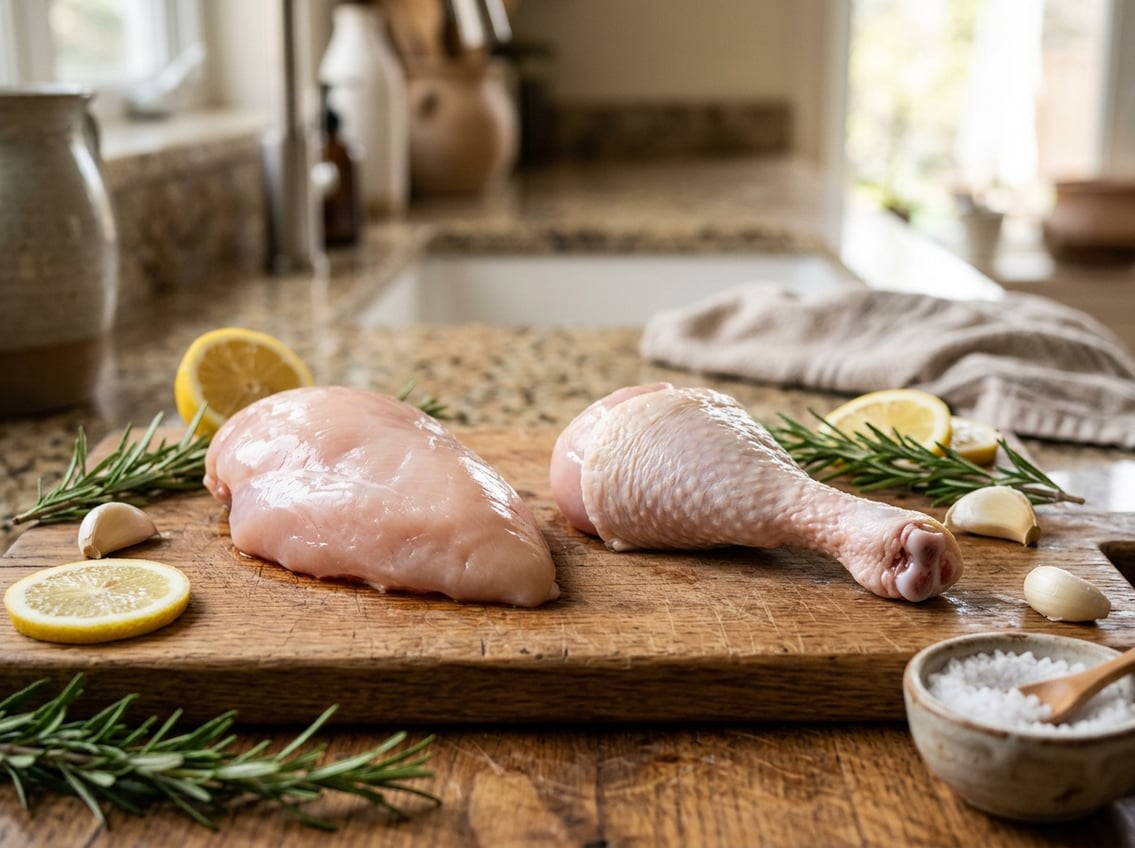
Your best choice depends on how you plan to serve the chicken, how much you want to spend, and how much flavor you want on the plate. For some meals, chicken breasts are the cleaner fit.
For others, chicken drumsticks bring better taste and value.
Think about the dish first, then the cut. That approach makes the drumstick vs breast choice easier.
Best Pick for Weeknight Recipes
Chicken breast works well for fast weeknight meals because it cooks quickly and fits many recipes. You can slice it for bowls, pasta, tacos, or simple pan meals.
Drumsticks also work on busy nights if you roast them in a single pan. They need less attention than breast once they are in the oven.
What Works Better for Stir-Fries, Salads, and Sandwiches
Chicken breast is usually the better fit for stir-fries, salads, and sandwiches. Its firm texture and mild taste make it easy to cut into strips or cubes.
You can use chopped drumstick meat in some recipes if you want more flavor. It just changes the texture and richness of the dish.
When Drumsticks Make More Sense for Family Meals
Drumsticks often make more sense for family dinners because they are affordable and easy to serve. They also work well with roasted vegetables and simple sides.
If you need a filling meal without spending too much, drumsticks are a practical protein source. Their rich taste can make a basic meal feel more complete.
How to Decide Based on Taste, Nutrition, and Cost
Choose chicken breast if you want lean protein and lower calories.
Chicken breast also offers a mild taste.
Choose chicken drumstick if you want more flavor and more moisture.
Many stores offer drumsticks at a better price.


