
How to Chicken Breast on Grill: Juicy, Even Results
You can master how to chicken breast on grill by controlling heat, thickness, and timing.
When you get those right, you get grilled chicken breast that stays juicy, cooks evenly, and shows clean grill marks.
The best results come from even thickness, a hot clean grill, and a thermometer set to 165°F at the thickest point.
That simple approach gives you perfect grilled chicken without guessing.
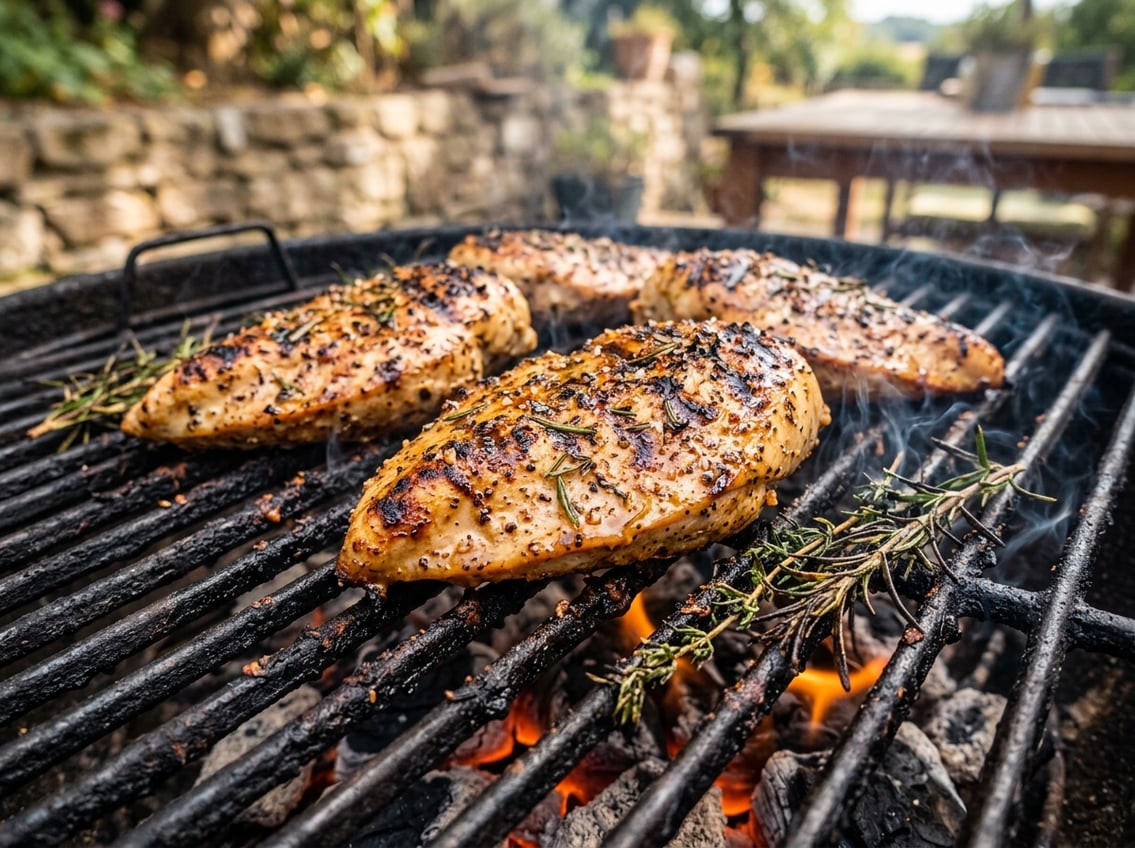
If you have struggled with dry or rubbery chicken, fix it with better prep, better heat control, and a shorter, more careful cook.
With the right method, you can make great grilled chicken for weeknights, cookouts, and meal prep.
Grill Setup and Exact Cook Time
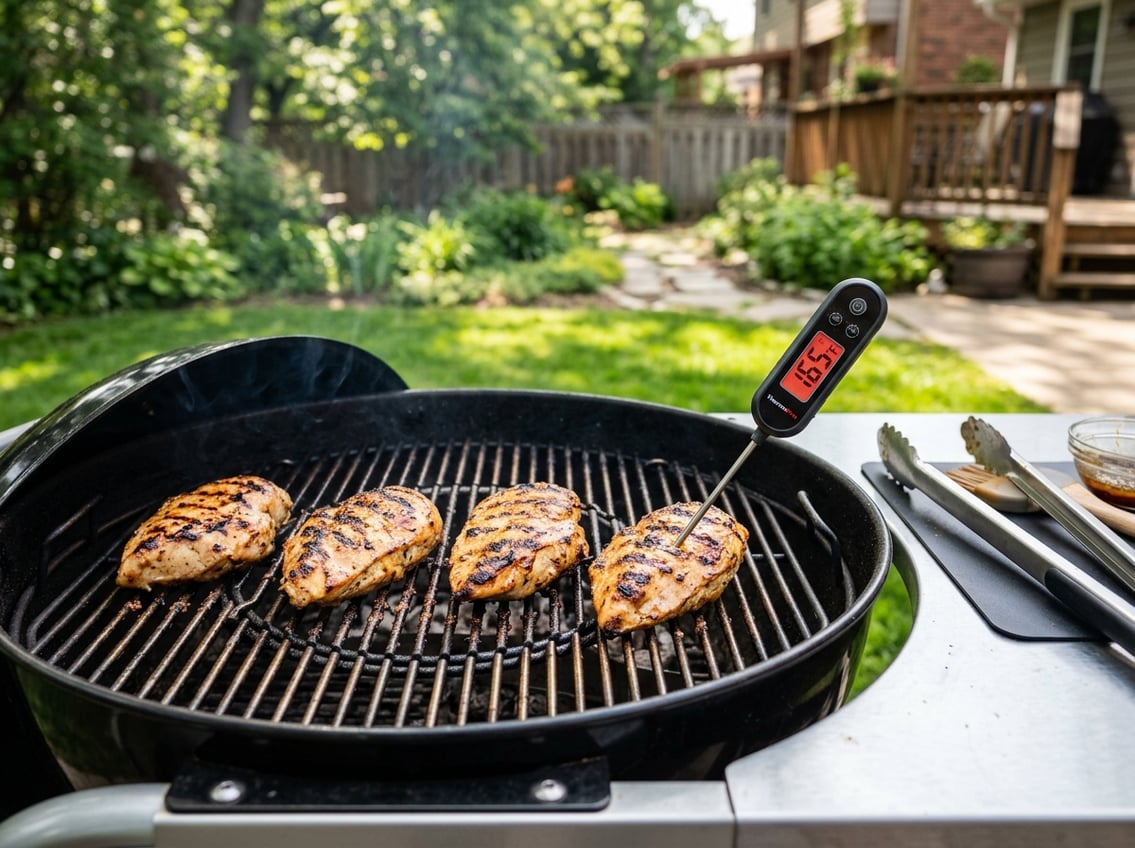
Start grilling chicken breasts once you fully preheat the grill and clean and lightly oil the grates.
A hot, steady surface helps you get grill marks and reduces sticking.
For timing and prep, Allrecipes recommends trimming, pounding, and marinating before the chicken hits the grill.
Best Grill Temperature for Even Cooking
Aim for medium-high heat, around 400°F to 450°F.
That range gives you enough heat for browning without burning the outside before the center cooks.
If your grill runs hot, keep one side cooler so you can move chicken as needed.
A two-zone setup gives you more control.
How Long to Cook Each Side
For boneless chicken breasts that are evenly thick, grill each side for about 3 to 5 minutes over direct heat.
Thicker pieces may need a few minutes more.
Small breasts cook fast, while large ones may need indirect heat to finish without drying out.
When to Use Direct and Indirect Heat
Start with direct heat to build color and grill marks.
Move the chicken to indirect heat if the outside browns too fast before the center is done.
This works well for larger breasts and for pieces that are thicker in the middle.
It helps you keep the outside from overcooking while the inside reaches temperature.
How to Check Doneness Without Drying It Out
Use an instant-read thermometer in the thickest part.
Pull the chicken when it reaches 165°F, then let it rest.
You can also check for firm, springy texture and clear juices, but a thermometer is the safest method.
Before grilling, clean the grates with a grill brush, then oil them lightly so the chicken releases more easily.
Prep the Chicken for Better Texture
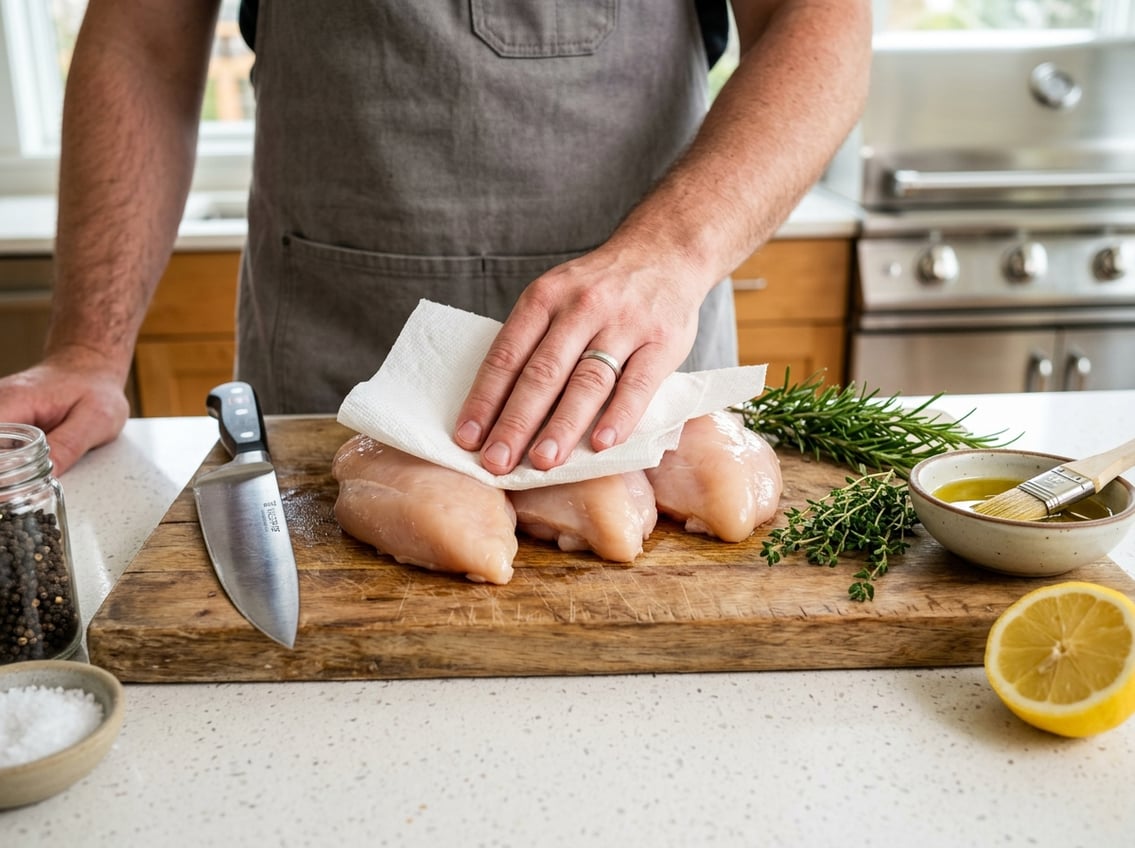
Good texture starts before the chicken reaches the grill.
Choosing the right cut and shaping it well makes a bigger difference than most seasonings.
Boneless skinless chicken breasts are the easiest choice for grilling.
They cook fast and slice well.
The goal is to make each chicken breast close to the same thickness so it cooks at the same rate.
Choosing Boneless Skinless Cuts
Boneless skinless chicken breasts are common, lean, and easy to season.
They are also the cut most likely to dry out if they are uneven or overcooked.
Choose pieces that are similar in size when you can.
That makes it easier to time how long to grill chicken breasts.
Why Even Thickness Matters
A thick end can stay underdone while a thin end turns dry.
Even thickness helps the whole piece finish at the same time.
This is one of the simplest ways to improve grilled chicken breast.
It makes the result more consistent and helps you get juicy grilled chicken breasts.
How to Pound Thicker Pieces Safely
Place the chicken between sheets of plastic wrap or in a zip-top bag.
Use a meat mallet or rolling pin to pound chicken breast to an even thickness.
Use firm, gentle taps instead of hard strikes.
You want the meat to flatten, not tear.
When Brining Helps More Than Marinating
Brining chicken breasts helps when you want extra moisture and simple flavor.
A short saltwater brine can be useful for plain grilled chicken or for very lean breasts.
Marinating chicken adds flavor and some moisture, especially with acid, oil, and salt.
A marinated chicken breast often tastes better right off the grill.
Brining can be a stronger choice when texture matters most.
Seasoning and Flavor Options
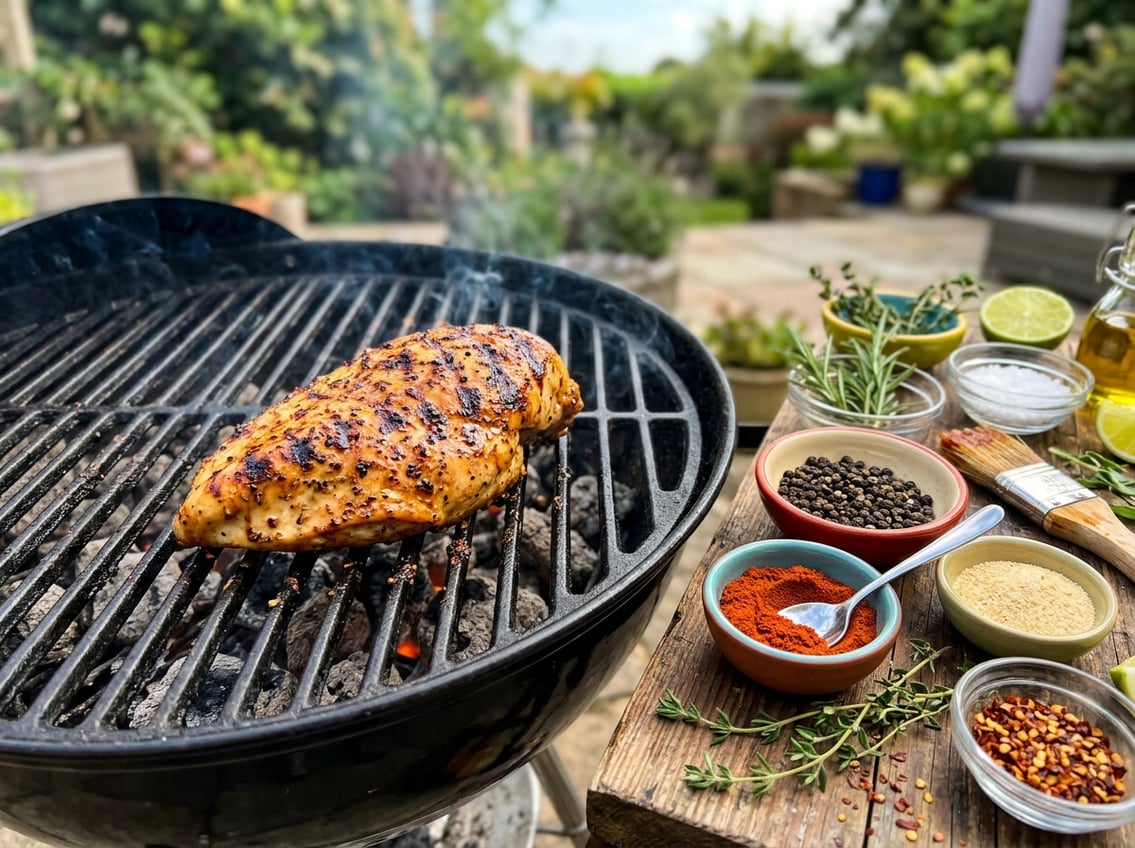
Seasoning should support the chicken, not hide it.
A good chicken marinade or dry rub gives you flavor without making the meat soggy or heavy.
For a balanced marinade idea, Allrecipes uses olive oil, Dijon, honey, soy sauce, lemon juice, garlic, and spices.
This shows the salt, acid, fat, and aromatics that work well together.
A Simple Chicken Marinade That Works
Mix olive oil, lemon juice, garlic, Dijon mustard, a little honey, salt, and black pepper.
That gives you acid, fat, and seasoning in one bowl.
Marinate chicken for at least 4 hours so the flavor soaks in.
Pat off extra marinade before grilling so the chicken cooks more evenly.
Dry Seasoning vs Marinade
Use dry seasoning when you want a faster meal and a stronger crust.
Salt, pepper, garlic powder, paprika, and onion powder are enough for solid grilled chicken.
Use a marinade when you want more flavor inside the meat.
The right choice depends on your time and the taste you want.
BBQ and Cilantro Lime Variations
For bbq chicken, brush on sauce near the end of cooking so the sugar does not burn.
That keeps the coating sticky instead of charred.
For cilantro lime chicken, use lime juice, oil, garlic, chopped cilantro, and salt.
This works well with grilled chicken served in tacos, bowls, or salads.
Serving Ideas and Common Mistakes
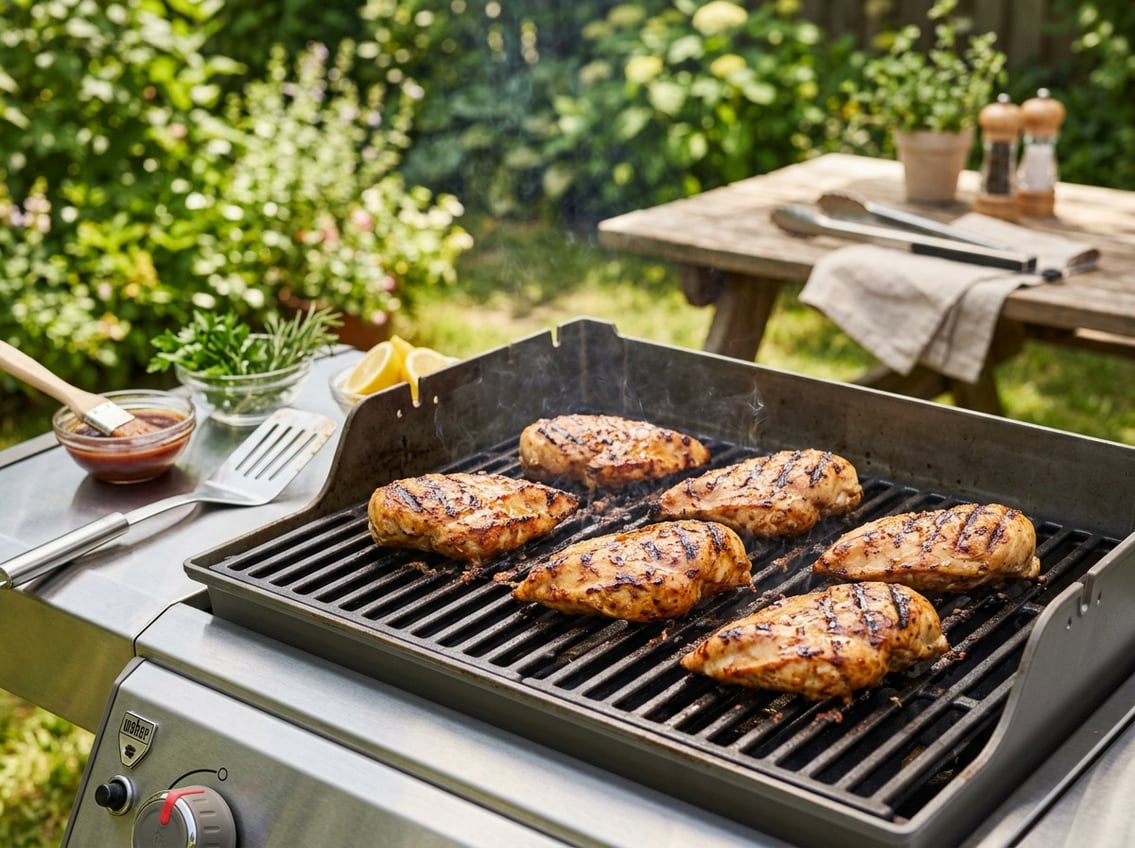
What you serve with grilled chicken matters as much as the cooking method.
Good sides add color, texture, and balance to a simple meal.
For serving ideas, Allrecipes suggests options like grilled corn salad, grilled romaine, and watermelon salad.
These fit both weeknight dinners and cookouts.
What to Serve at a Cookout or Weeknight Dinner
For a cookout, pair grilled chicken breast with grilled corn, potato salad, slaw, or baked beans.
For a lighter meal, use rice, green salad, or roasted vegetables.
Sliced grilled chicken breasts also work well in wraps, grain bowls, and pasta salad.
That makes leftover grilled chicken useful for more than one meal.
How Resting Keeps Chicken Juicy
Let the chicken rest for 5 to 10 minutes after grilling.
This gives the juices time to settle instead of running out when you cut it.
Slice too soon and even well-cooked chicken can seem dry.
Mistakes That Cause Sticking, Burning, or Dry Meat
A dirty grill, weak heat, or no oil on the grates can cause sticking.
Chicken can also tear if you try to move it before it naturally releases.
Overcooking, uneven thickness, or too much direct heat for too long usually dries out meat.
Use a thermometer, watch the color, and pull the chicken as soon as it reaches 165°F to keep it juicy.


