
Which Supermarket Sells the Best Chicken Breast? Top Picks
Which supermarket sells the best chicken breast often comes down to freshness, sourcing, and how the store handles its meat case.
You can find good supermarket chicken at several chains. The best choice usually gives you clear labeling, solid traceability, and consistent texture once cooked.
If you want the best chicken breast, focus on stores that offer strong quality standards, air-chilled processing, and dependable organic or antibiotic-free options.
That mix usually gives you better chicken flavor and fewer surprises when you cook it.
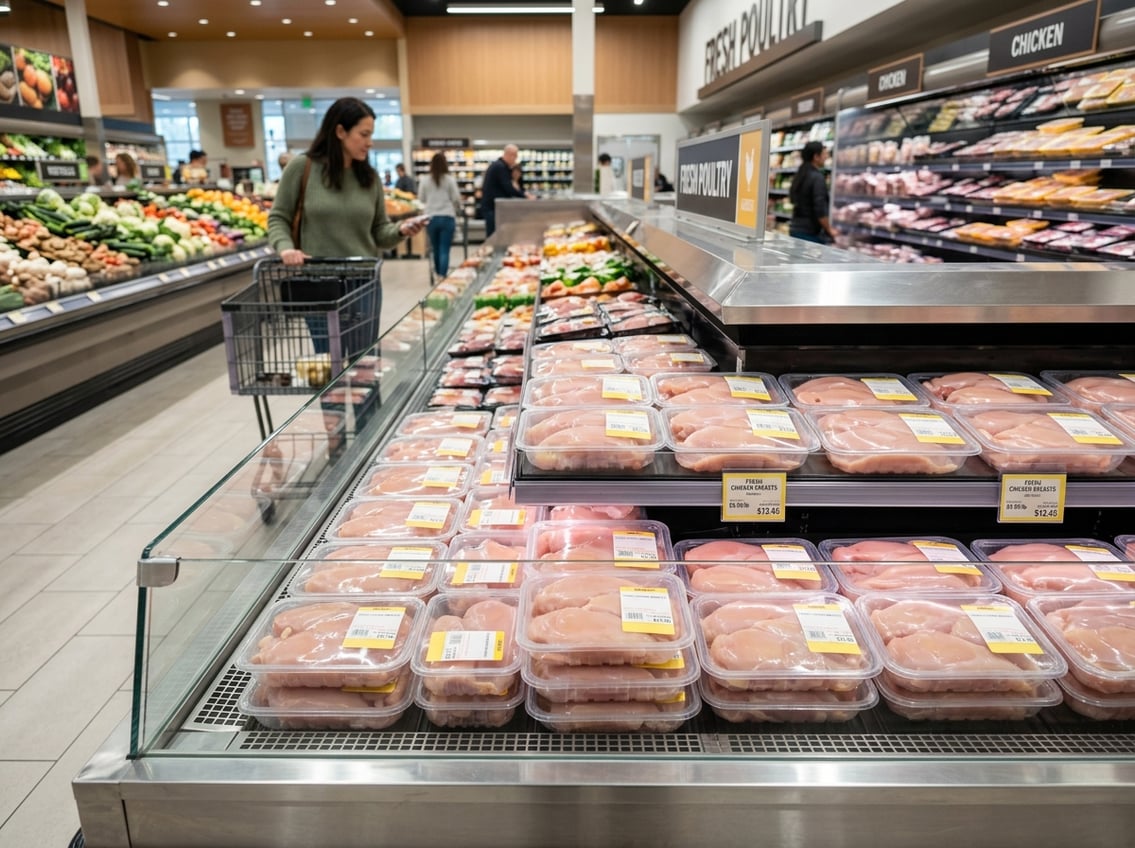
Top Supermarkets for Chicken Breast
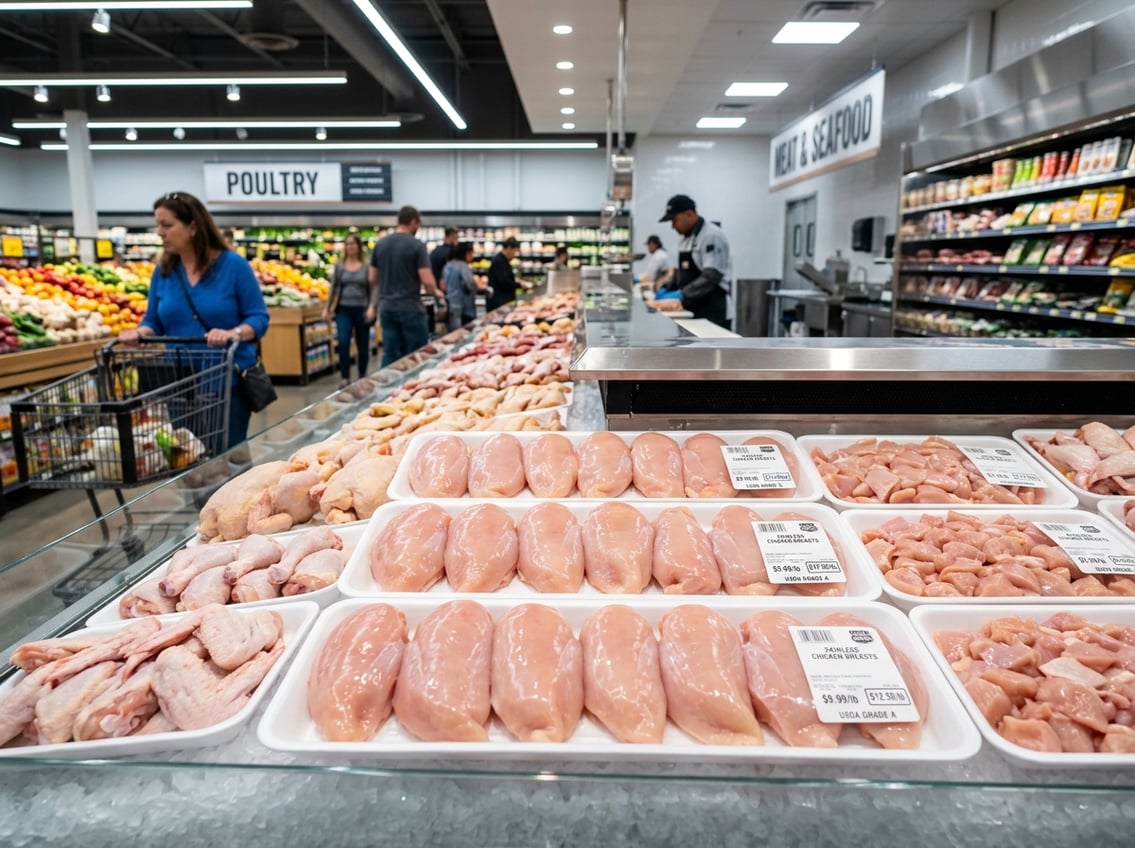
You can buy excellent chicken breast at several major U.S. supermarkets.
The best fit depends on whether you value standards, price, or convenience.
Professional butcher Judy Yao said that large chains often provide better variety, including organic chicken and air-chilled options.
These features help you shop with more confidence.
Whole Foods for Standards and Traceability
Whole Foods is a strong pick when you care about sourcing and quality control.
Yao highlighted Whole Foods as a store with a solid sourcing process and noted that it often carries Bell & Evans and antibiotic-free chicken.
You may pay more than at a discount chain.
You often get clearer choices in the meat case, which matters when you want the best chicken breast for simple cooking.
Publix for GreenWise Value and Convenience
Publix is a practical choice if you shop there often and want a middle-ground option.
Many shoppers look for GreenWise chicken or Publix rotisserie chicken for a familiar store brand with easy access and decent quality.
If you compare Publix rotisserie chicken with raw chicken breast, the value often depends on whether you want a ready meal or ingredients for several dinners.
GreenWise chicken and Publix rotisserie both make sense when convenience matters.
Costco for Bulk Buys and Kirkland Signature
Costco is one of the strongest picks if you buy in bulk and have freezer space.
Yao said that Costco’s six-pound packages of organic chicken breast can be a strong value, and Kirkland Signature often gives you lower per-pound pricing than many standard supermarkets.
Costco works well if you cook chicken breast often and want to stock up.
It is especially appealing for families or meal prep, since the large packs can reduce your cost over time.
Kroger and Simple Truth for Mid-Priced Options
Kroger works well when you want a broad, everyday selection without paying premium-store prices.
Yao’s price comparison found Kroger’s organic chicken breast competitive, and Simple Truth gives you a store-brand route into organic chicken breasts.
This is a useful lane if you want balance.
You may not get the same premium feel as Whole Foods, but you can still find solid chicken breast options for weeknight meals.
How to Judge Quality in the Meat Case
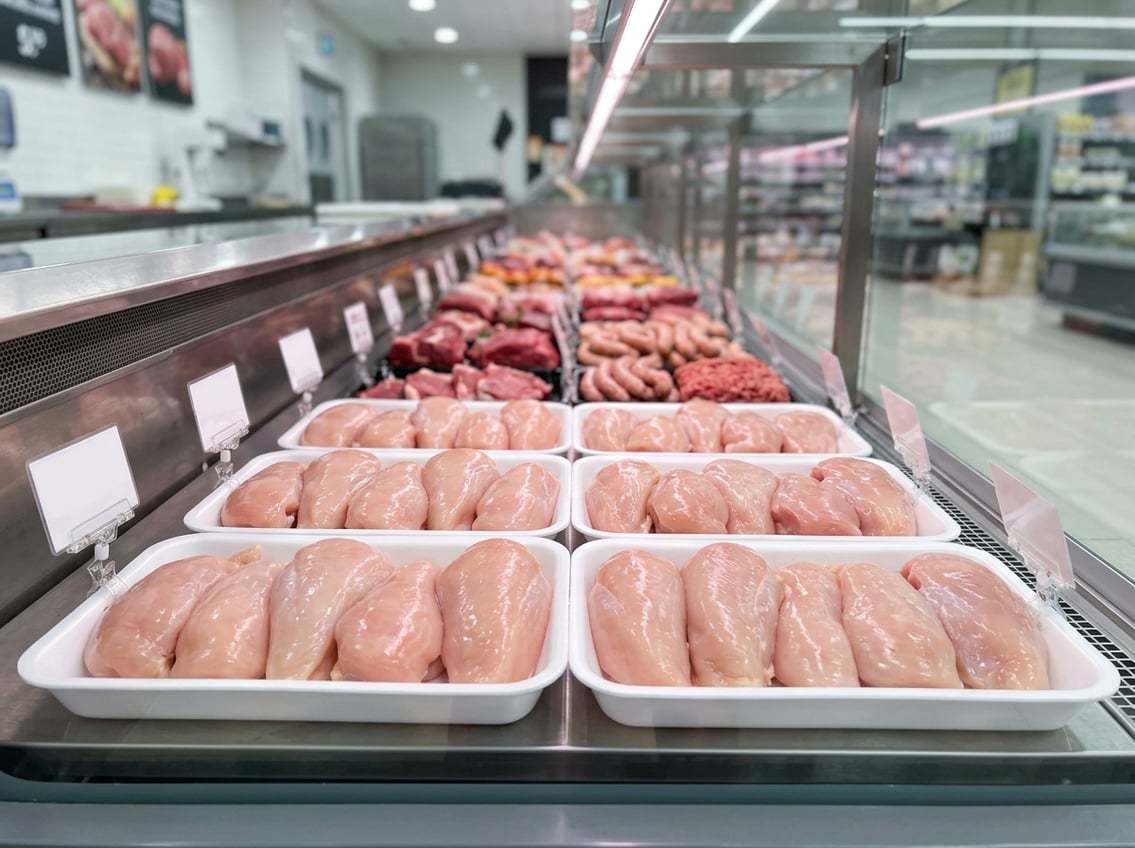
Quality starts with what you see in the package and the case.
Good chicken breast should look clean, smell neutral, and feel cold.
A wider range of labels can point to better processing and sourcing.
Freshness Signs in Chicken Breast and Chicken Thighs
Look for chicken breast with a light pink color and little visible liquid in the tray.
The same checks apply to chicken thighs, though thighs can handle a little more color variation because they contain more fat and connective tissue.
Avoid packages that look swollen, heavily wet, or discolored.
If you see a sell-by date that is very close and the package feels warm, choose another tray.
Why Air-Chilled Processing Changes Texture
Processors cool air-chilled chicken with cold air instead of soaking it in water.
That process can lead to a firmer texture and a cleaner taste, which is why many shoppers notice better chicken flavor with air-chilled products.
The Food & Wine report on grocery chicken says that air-chilled labeling can also suggest careful processing practices and a cleaner facility.
That is a useful quality signal.
How Feed Affects Taste, Including Corn-Fed Chicken
Feed matters more than many shoppers realize.
Organic chicken breasts must come from birds fed organic feed, and some shoppers prefer corn-fed chicken because feed can affect flavor and texture in subtle ways.
Natural chicken and heritage breed chicken can also taste different from standard supermarket chicken.
Those labels do not always tell you as much as organic or air-chilled claims.
If you want the best chicken breast, feed and processing both deserve attention.
What Chicken Labels Actually Mean
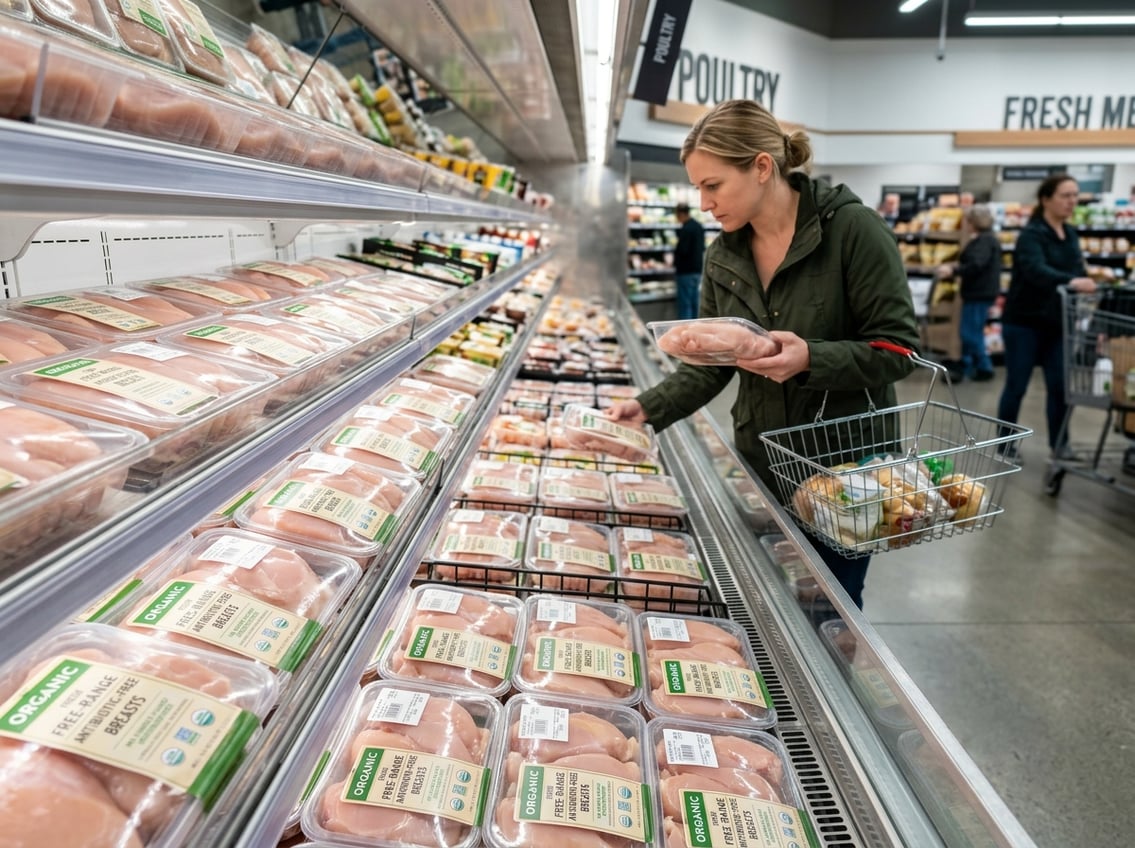
Chicken labels can help you compare products.
The most useful labels usually relate to feed, processing, and antibiotic use, not vague marketing language.
USDA Organic Versus Conventional Options
USDA organic chicken has stricter rules for feed and animal care than conventional chicken.
That makes it a strong choice if you want more reliable standards in the meat case.
Conventional chicken can still be safe and tasty.
Organic simply gives you a clearer baseline for chicken quality when you are comparing packages.
Free-Range, Cage-Free, and Animal Welfare Claims
Free-range chicken and cage-free chicken are not the same as organic chicken.
These labels often say something about access or housing, yet they do not always tell you much about overall chicken quality or chicken flavor.
Animal welfare claims can still matter if you care about how birds were raised.
Read them as part of the full label, not as a guarantee of better taste.
No Antibiotics Ever Versus Looser Marketing Terms
No antibiotics ever is a clearer claim than many softer terms like natural chicken.
The phrase “natural” mainly means no artificial colors or ingredients and minimal processing, according to poultry label guides from the Real Food Dietitians and the ACES poultry labeling guide.
That makes “natural” a weak stand-alone signal.
If you want better chicken breast, look for no antibiotics ever, organic certification, and air-chilled processing before you trust broader marketing language.
Best Brands and Ready-to-Eat Alternatives
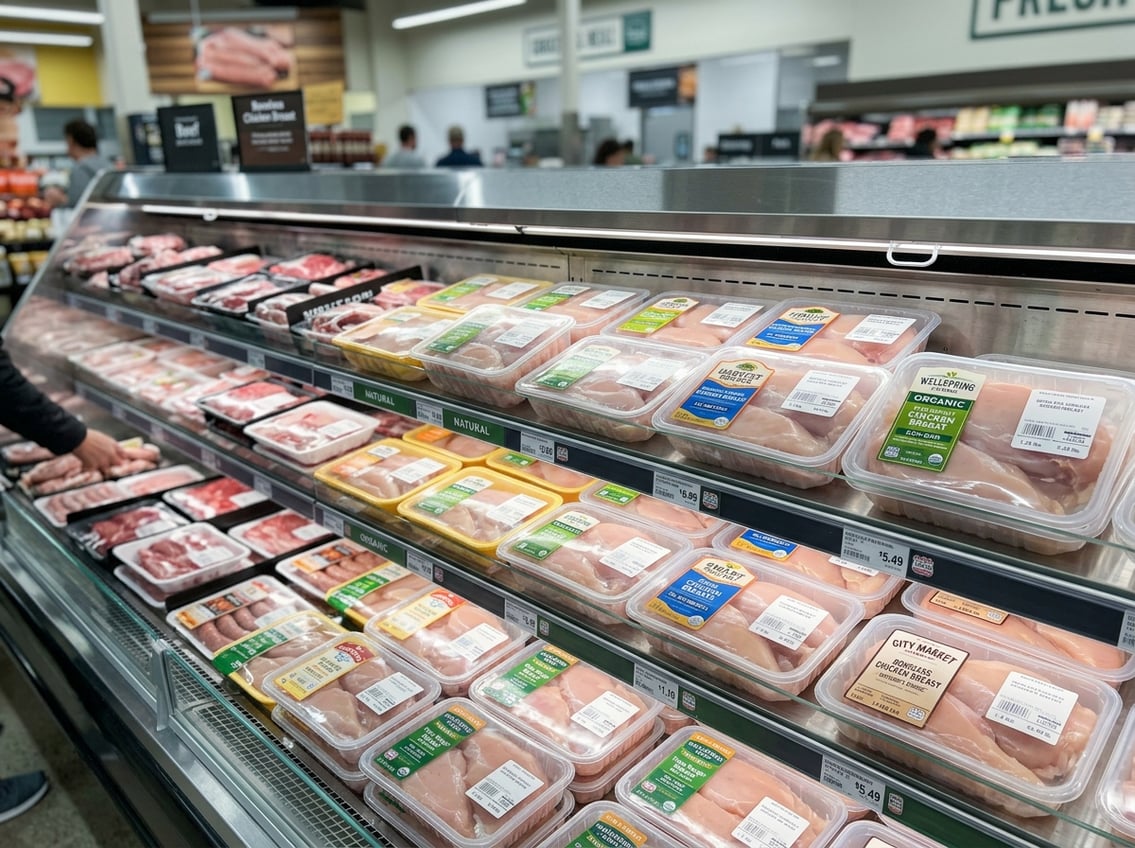
Brand choice matters when you want steady results at home.
Some brands focus on premium quality, while others are better for price, convenience, or ready-to-eat meals.
Bell & Evans, Perdue, and Tyson Compared
Shoppers often treat Bell & Evans as a premium supermarket chicken brand because of its quality standards and air-chilled reputation.
Perdue gives you a broad middle-market option, while Tyson usually competes more on availability and price than on premium chicken quality.
If you care most about chicken breast texture and flavor, Bell & Evans is usually the brand to check first.
If you want a more affordable, easy-to-find option, Perdue or Tyson may fit your budget better.
When Rotisserie Chicken Is the Better Buy
A good rotisserie chicken can beat raw chicken breast when you need dinner now.
It saves time, and if you are not cooking for a specific recipe, the convenience can outweigh the lower control over seasoning and sodium.
Recent taste tests have compared store-bought best rotisserie chicken options across multiple grocery chains.
Quality varies a lot by store, so your best choice depends on flavor, freshness, and how well the chicken is seasoned.
How Publix and Costco Stack Up for Prepared Chicken
Publix offers rotisserie chicken as a convenient choice for a quick meal, especially if you already shop there.
Costco provides its Kirkland Signature prepared chicken as a strong buy if you want value in a larger portion.
Raw chicken breast remains the best pick for cooking.
For convenience, both Publix and Costco give you dependable prepared chicken options at different price points.


