
What Is the Average Chicken Breast Weight? Size Guide
The average chicken breast weight in the U.S. is usually about 6 to 8 ounces raw for a boneless, skinless piece.
If you have ever asked how much does a chicken breast weigh, the number changes with the cut, size, bone, skin, and whether the meat is raw or cooked.
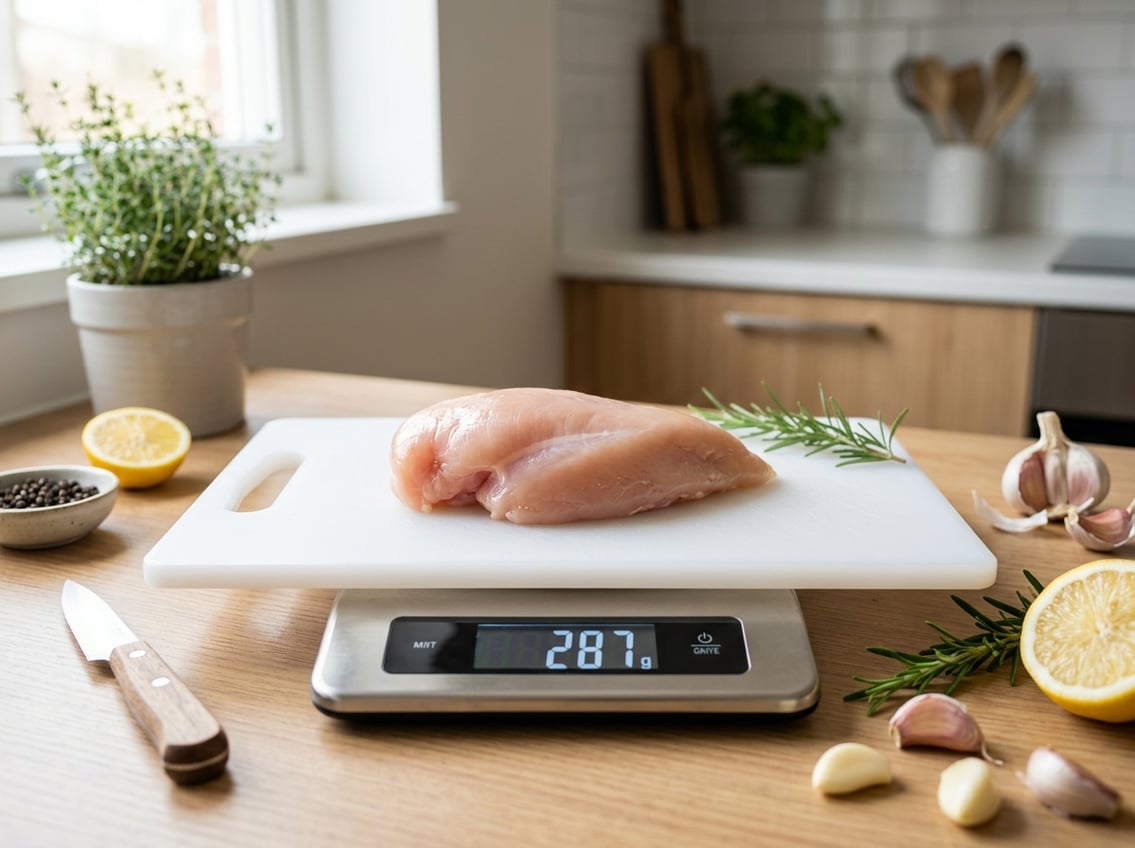
That range gives you a practical starting point for shopping, portioning, and recipe planning.
A smaller breast may weigh closer to 4 ounces, while a larger one can reach 10 ounces or more.
Typical Weight Ranges by Cut and Size
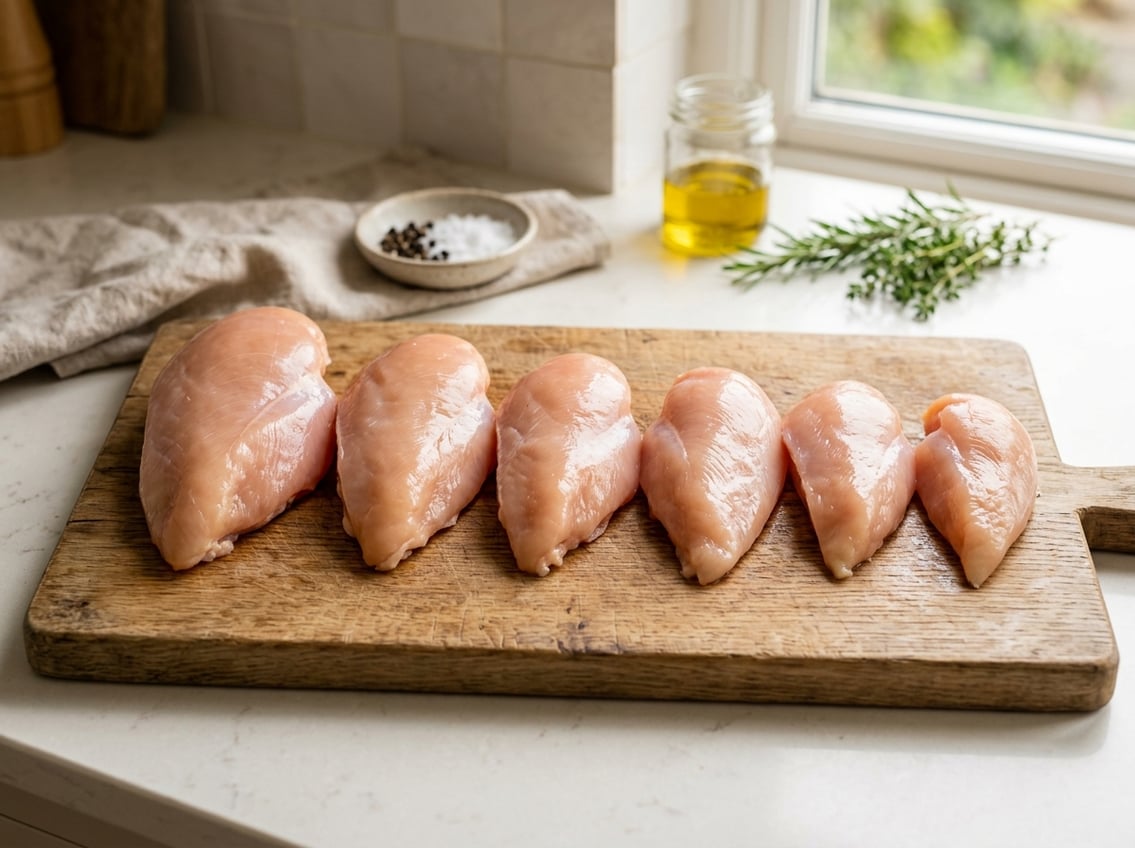
Chicken breast weight changes a lot by cut and by size.
A boneless piece is usually lighter than a bone-in piece, and smaller store packs often look very different from larger family-size breasts.
Most U.S. shoppers will see chicken breast sizes that fall into a few common ranges.
Boneless Skinless Pieces
Boneless, skinless breasts are the most common grocery-store option.
A typical raw piece weighs about 6 to 8 ounces, with some smaller pieces around 5 ounces and larger ones near 10 ounces.
Greatist notes that a 6-ounce raw breast can cook down to about 4.5 ounces, which matches the usual moisture loss during cooking.
Other portion guides, such as Chicken Breast Portions and Serving Sizes, provide similar ranges.
Bone-In and Skin-On Pieces
Bone-in breasts, often called split breasts, weigh more because the bone adds weight.
The bone can make up about 20% of the total weight, so a bone-in breast may look much larger than the amount of meat you actually get.
Skin-on pieces also weigh more than skinless ones, and the skin adds fat and water weight.
Small, Medium, and Large Chicken Breast Sizes
A practical size guide looks like this:
- Small: about 4 to 5 ounces raw
- Medium: about 6 to 8 ounces raw
- Large: about 9 to 10 ounces or more raw
These labels are not strict industry standards, but they are useful when you are shopping or portioning.
If you buy packaged breasts, you can use the total pack weight and the number of pieces to estimate each portion.
What Changes the Number on the Scale
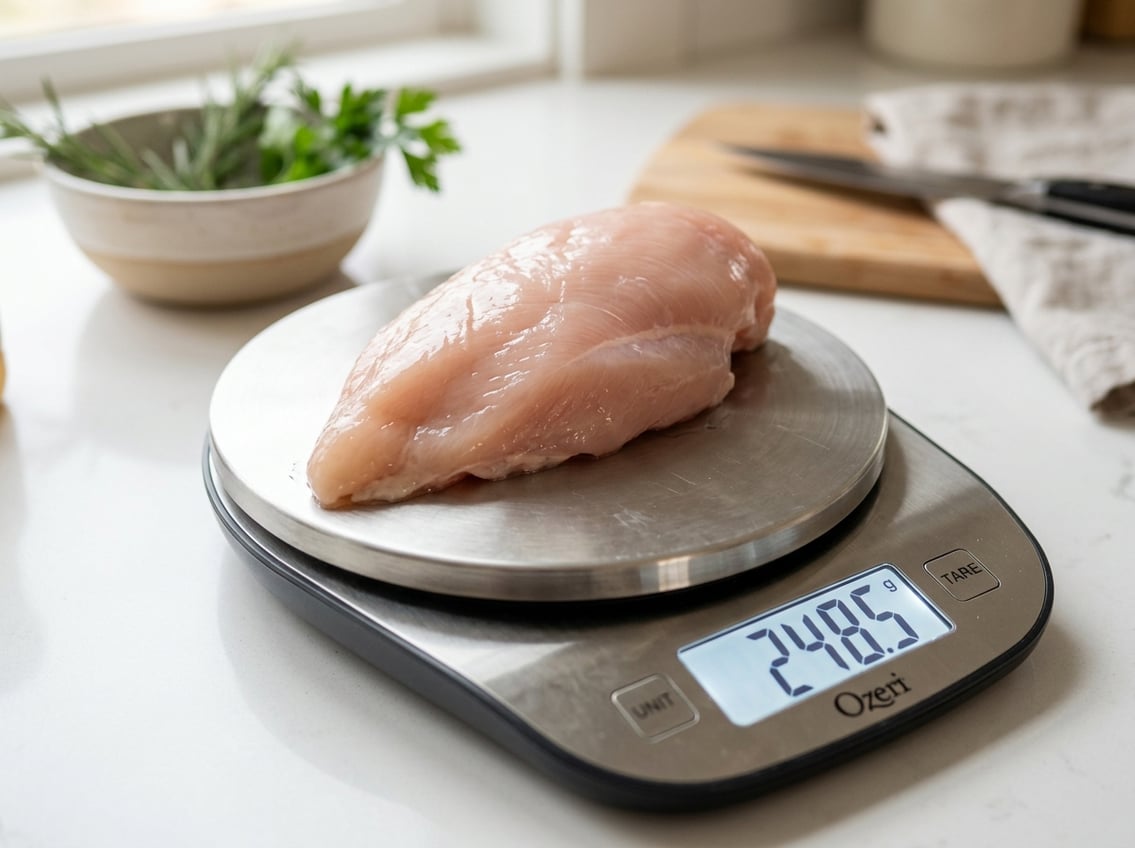
Several things affect chicken breast weight, even before you cook it.
The biggest differences come from moisture loss, bone and skin content, trimming, and whether the product is fresh, frozen, or enhanced with added solution.
Raw vs Cooked Weight Loss
Raw chicken breast loses weight during cooking because water and some fat cook off.
Greatist reports that a raw breast usually loses about 25% of its weight, so a 6-ounce raw piece may end up around 4.5 ounces cooked.
Grilling, roasting, and baking usually shrink the meat more than moist-heat methods like braising.
Bone, Skin, and Trimming Differences
Bone-in breasts weigh more than boneless ones because the bone is part of the total.
Skin-on pieces also weigh more than skinless pieces, and trimming off fat or uneven edges lowers the final number.
If you compare two packages, chicken breast sizes can look similar while still giving you very different amounts of edible meat.
Fresh, Frozen, and Added Solution Products
Fresh chicken breast and chicken that you freeze at home should weigh about the same before and after freezing.
Pre-frozen products can weigh more if they include ice glaze or a coating that prevents sticking.
The package weight may not equal pure meat weight.
Greatist explains that you should thaw these products before weighing if you want a more accurate number.
How to Estimate Portions and Buy the Right Pack
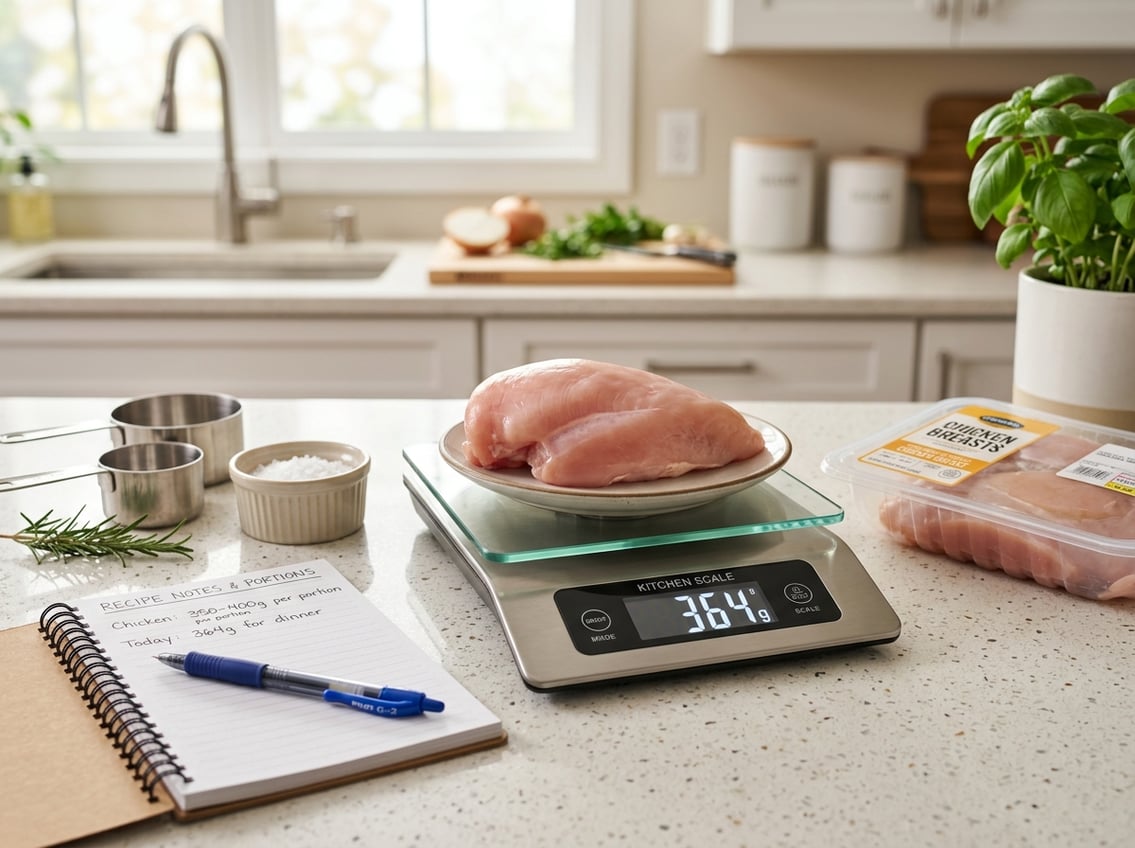
When you are buying chicken breast, pack size matters as much as piece size.
The label usually tells you the total weight, and you can divide by the number of breasts to estimate each portion.
How Many Breasts Are in a Pound
A pound equals 16 ounces.
Greatist notes that you usually get 2 to 3 chicken breasts per pound.
Smaller breasts may be closer to 4 per pound, while larger ones may be closer to 2 per pound.
A 4-pack that weighs 1.2 pounds means each breast is about 4.8 ounces.
Estimating Without a Kitchen Scale
If you do not have a scale, use the package label and the piece count.
A pack with 4 breasts at 2 pounds total means each piece averages about 8 ounces raw.
Visual size also helps, since a medium breast often looks about palm-sized and a large one looks noticeably thicker and wider.
Buying Chicken Breast for Recipes and Meal Prep
For most recipes, plan around 6 to 8 ounces raw per serving for a standard adult portion.
For meal prep, buy extra if you want leftovers or if the recipe needs cooked weight instead of raw weight.
Buy a little more than you think you need, since trimming and cooking loss will reduce the final amount.


