
Do Chicken Breast Have Fat? Nutrition and Calories
You may ask, do chicken breast have fat, and the short answer is yes, just not much.
Chicken breast is one of the leanest common meats, so most of its calories come from protein rather than fat.
If you choose skinless chicken breast and keep your portion size in check, you usually get a high-protein food with low total fat and low saturated fat.
That is why chicken breast often shows up in meal plans for weight control, fitness, and simple everyday eating.
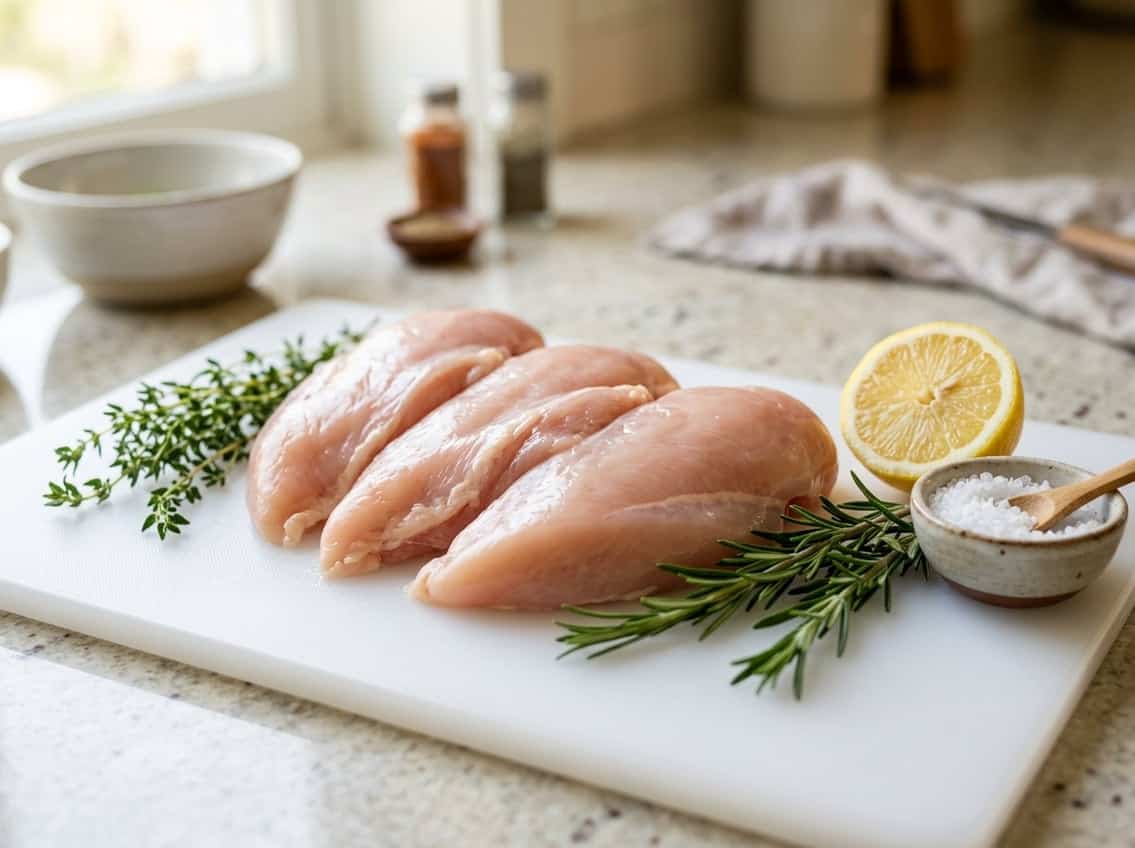
Serving size, skin, and cooking method all change chicken breast calories and nutrition facts.
A small grilled serving can stay very lean, while a larger chicken breast with skin or added oil can raise both calories and grams of fat fast.
How Much Fat Is in Chicken Breast?
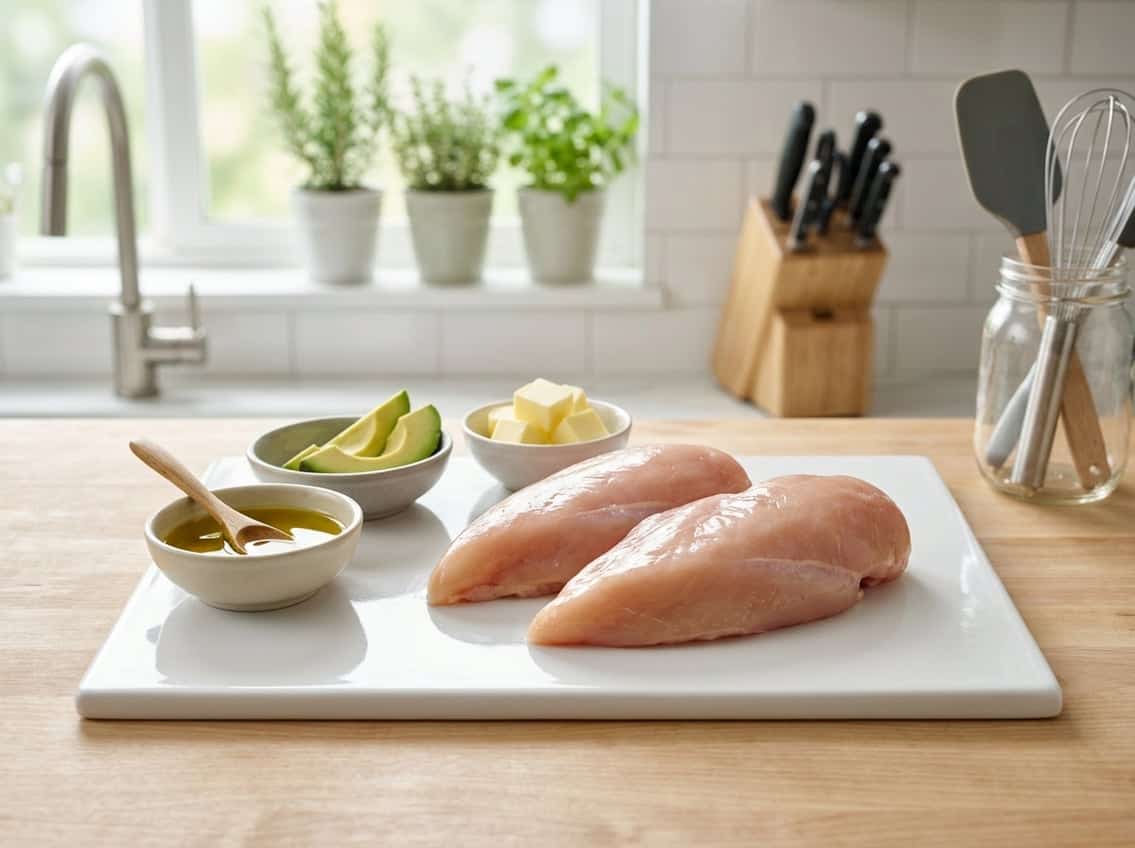
Skinless chicken breast is naturally low in fat, and the numbers stay modest in a standard serving size.
The exact total fat and calories change with the amount you eat, whether the chicken has skin, and how it is cooked.
Typical Total Fat and Calories per Serving
A common 3-ounce serving of skinless chicken breast has about 128 calories and 2.7 grams of fat, according to Chicken Breast Nutrition Facts.
Most of the calories come from protein, which is why chicken breast is often called a lean protein.
A similar serving also has low saturated fat.
That makes it a strong choice if you want a filling food without a lot of extra fat.
Skinless Chicken Breast vs Chicken Breast With Skin
Skinless chicken breast is the leaner option.
If you keep the skin on, the fat and calories rise because chicken skin adds extra fat before you even use cooking oil.
A 3-ounce roasted, broiled, or baked chicken breast with skin has about 166 calories and 6.6 grams of fat.
The skinless version has lower total fat and calories, as noted by Chicken Breast Nutrition Facts.
The difference is enough to matter if you track calories in chicken breast closely.
Why Portion Size Changes the Numbers
Serving size matters as much as the cut itself.
A large chicken breast can easily weigh more than a standard portion size, so your actual calories and grams of fat can be much higher than you expect.
Cooking also changes the numbers because water leaves the meat.
Raw weight and cooked weight do not match one to one, which can change how you read nutrition facts.
What Type of Fat Does It Contain?
Chicken breast is known for being a lean protein, yet it still contains several types of fat.
The total fat is low, and much of it comes from unsaturated fat rather than saturated fat.
Saturated Fat vs Unsaturated Fat in Chicken
Chicken breast contains some saturated fat, along with unsaturated fats.
In a skinless serving, the saturated fat stays low, which is one reason it fits well into many high-quality protein meal plans.
Most of the fat in chicken breast comes from unsaturated fat.
That gives you a protein-rich food without a large amount of the kind of fat people often try to limit.
Monounsaturated Fat, Polyunsaturated Fat, and Oleic Acid
Chicken contains both monounsaturated fat and polyunsaturated fat.
Monounsaturated fat includes oleic acid, which is also found in foods like olive oil.
These fats make up a small part of chicken breast’s total fat.
The exact mix can vary with the bird, feed, and preparation, but the cut still stays lean compared with many other animal proteins.
Omega 3 and Omega 6 in a Lean Protein Source
Chicken breast can contain small amounts of omega 3 and omega 6 fats.
These are polyunsaturated fats, and they appear in much smaller amounts than in fatty fish or plant oils.
It is not a major omega-3 food, yet it does contribute a little of both fat types.
How Cooking Methods Affect Fat and Calories
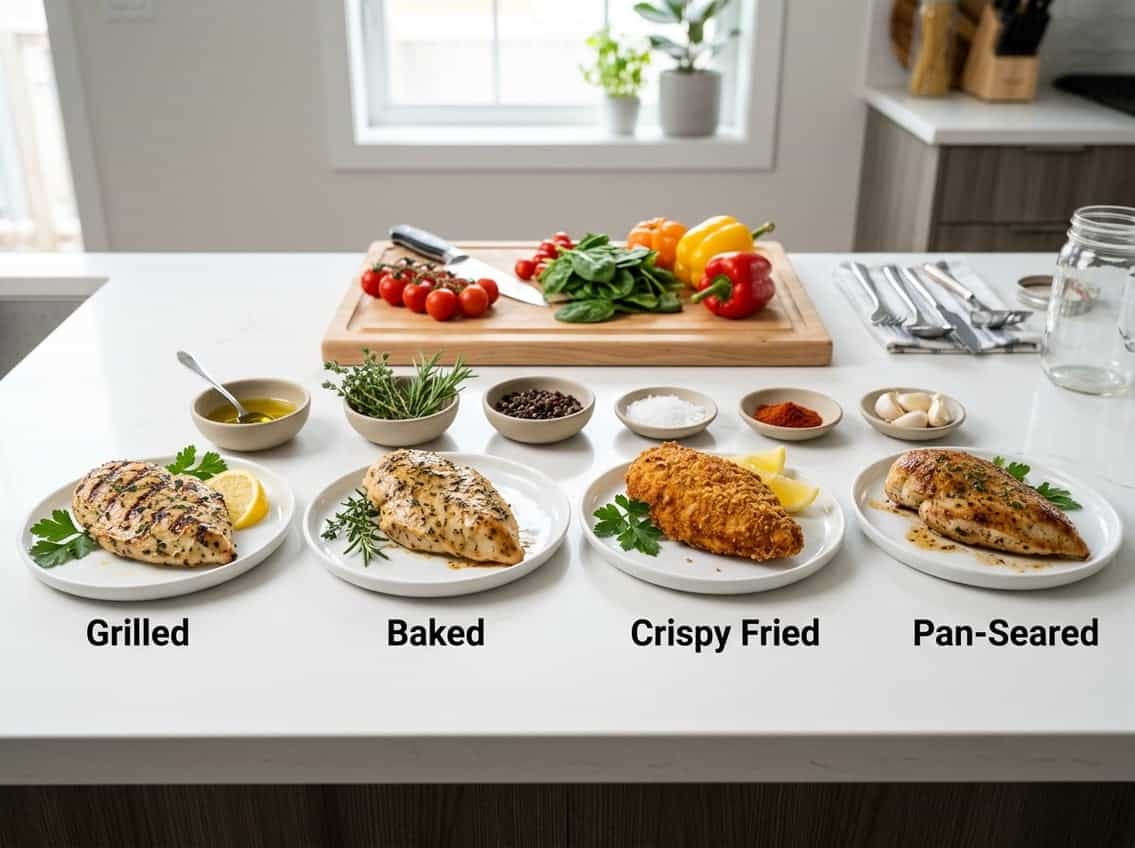
Cooking methods can keep chicken breast light or add a lot of extra calories.
Dry-heat methods usually keep total fat lower, while breading, frying, and oily sauces can raise both calories and saturated fat.
Grilled Chicken Breast and Baked Chicken Breast
Grilled chicken breast and baked chicken breast are usually the easiest ways to keep the meat lean.
A plain grilled or baked piece can stay close to the natural nutrition profile of the chicken.
According to Chicken Breast Fat and Cooking Facts, grilling is one of the best low-fat options because extra fat can drip away during cooking.
Baking also works well if you do not add much oil or butter.
Roasted Chicken Breast vs Fried Chicken Breast
Roasted chicken breast can still be fairly lean, especially when the skin is removed.
Fried chicken breast is a different story, since oil and breading add calories quickly.
Cooking raises the calorie count even when the weight stays the same on the plate.
A 100-gram serving of chicken breast can rise from about 165 calories raw to about 187 calories when fried, according to FoodStruct’s chicken breast nutrition data.
Added Oils, Breading, and Prepared Dishes Like Chicken Caesar Salad
Added oils can turn a lean chicken breast into a much richer meal.
Breading does the same, since it adds extra carbs and fat along with calories.
Prepared dishes can hide these changes.
A chicken caesar salad may still start with lean chicken, yet the dressing, croutons, cheese, and sometimes fried chicken can raise total fat and calories fast.
Protein, Micronutrients, and How It Compares With Other Cuts
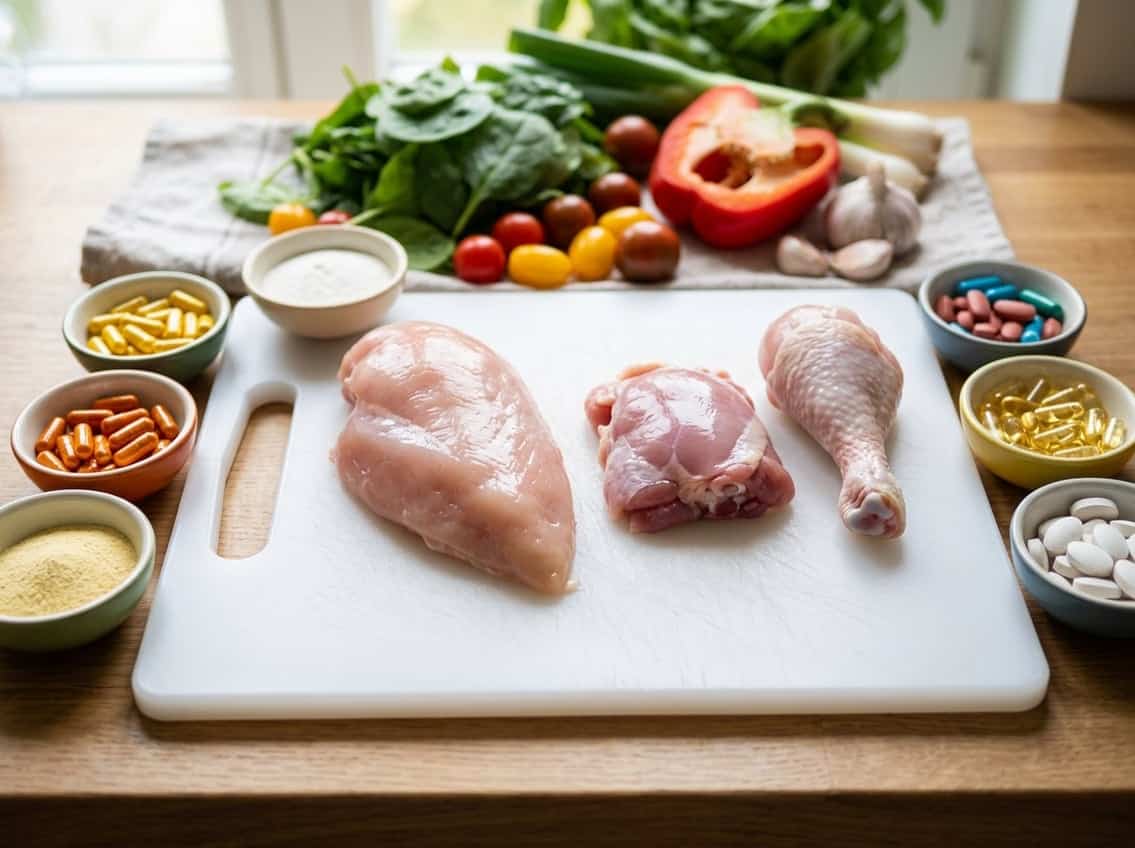
Chicken breast gives you more than low fat.
It is also a complete protein with a useful mix of amino acids and several important vitamins and minerals.
Complete Protein and Essential Amino Acids
Chicken breast is a complete protein, which means it provides all essential amino acids.
Those amino acids include tryptophan, histidine, leucine, lysine, methionine, threonine, valine, arginine, and glutamic acid.
Chicken breast is also considered high-quality protein because it gives your body the building blocks it uses for muscle repair and other body functions.
Vitamin B6, Vitamin B12, Choline, Selenium, Phosphorus, and Zinc
Chicken breast provides several b vitamins, including vitamin B6 and vitamin B12.
It also contains choline, selenium, phosphorus, and zinc, which help with energy use, nerve function, and normal body processes.
These nutrients make chicken breasts useful when you want a simple protein food with more than just protein.
The exact amounts vary by cut and preparation, yet the breast remains a practical nutrient-rich choice.
Chicken Breasts vs Chicken Thighs for Fat and Protein Needs
Chicken breasts are usually leaner than chicken thighs.
If your goal is lower fat and fewer calories, choose chicken breast.
Chicken thighs give you a richer taste and more fat.
This can help if you want a less lean cut or need more calories in your day.


