
What Does Chicken Breast Smell Like? Freshness Signs
Chicken breast smell can tell you a lot about freshness, but it does not tell you everything.
Fresh raw chicken usually has a very mild scent, sometimes nearly neutral. Spoiled chicken smells sour, sulfur-like, ammonia-like, or just plainly off.
Fresh chicken smells mild. Any strong or unpleasant odor is a warning sign you should check closely before cooking.
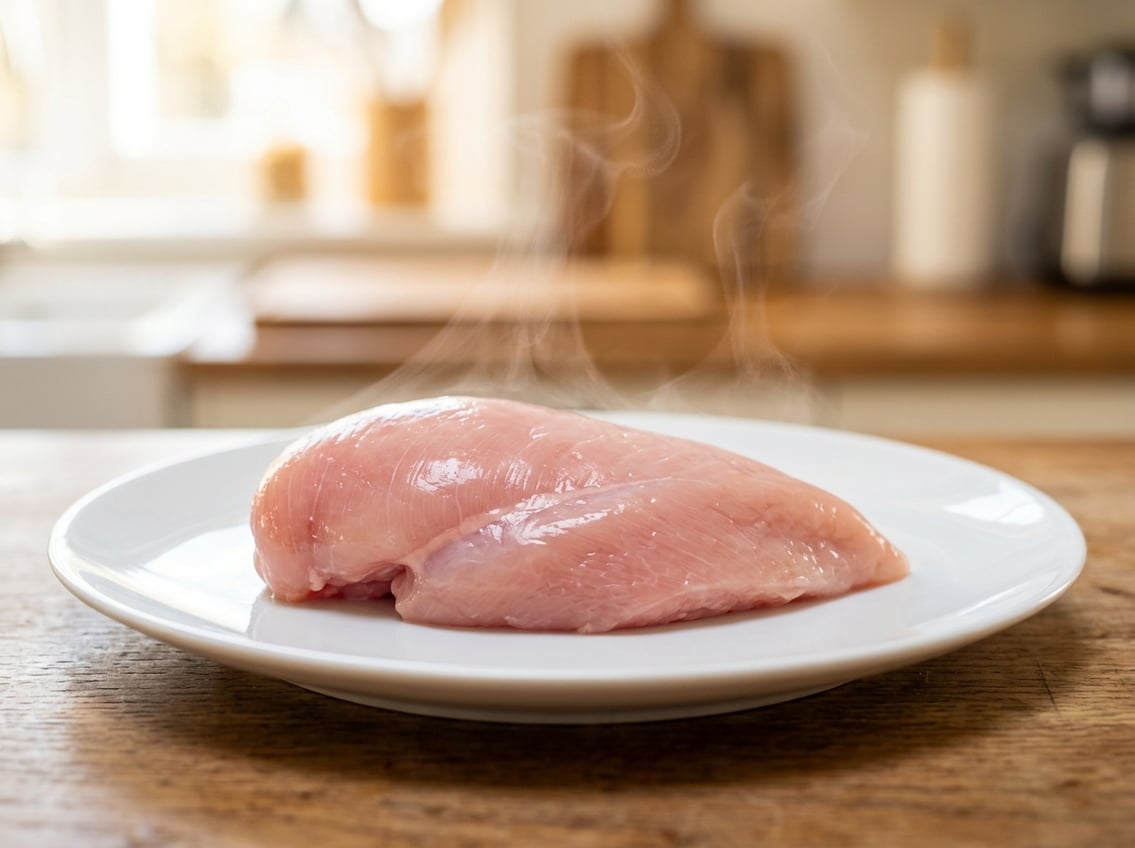
The smell of chicken breast changes with time, packaging, temperature, and storage.
Food safety matters here, because odor can be an early clue, a late clue, or sometimes a misleading one if the chicken was vacuum sealed or sitting in a tightly wrapped package.
What Fresh Chicken Breast Should Smell Like
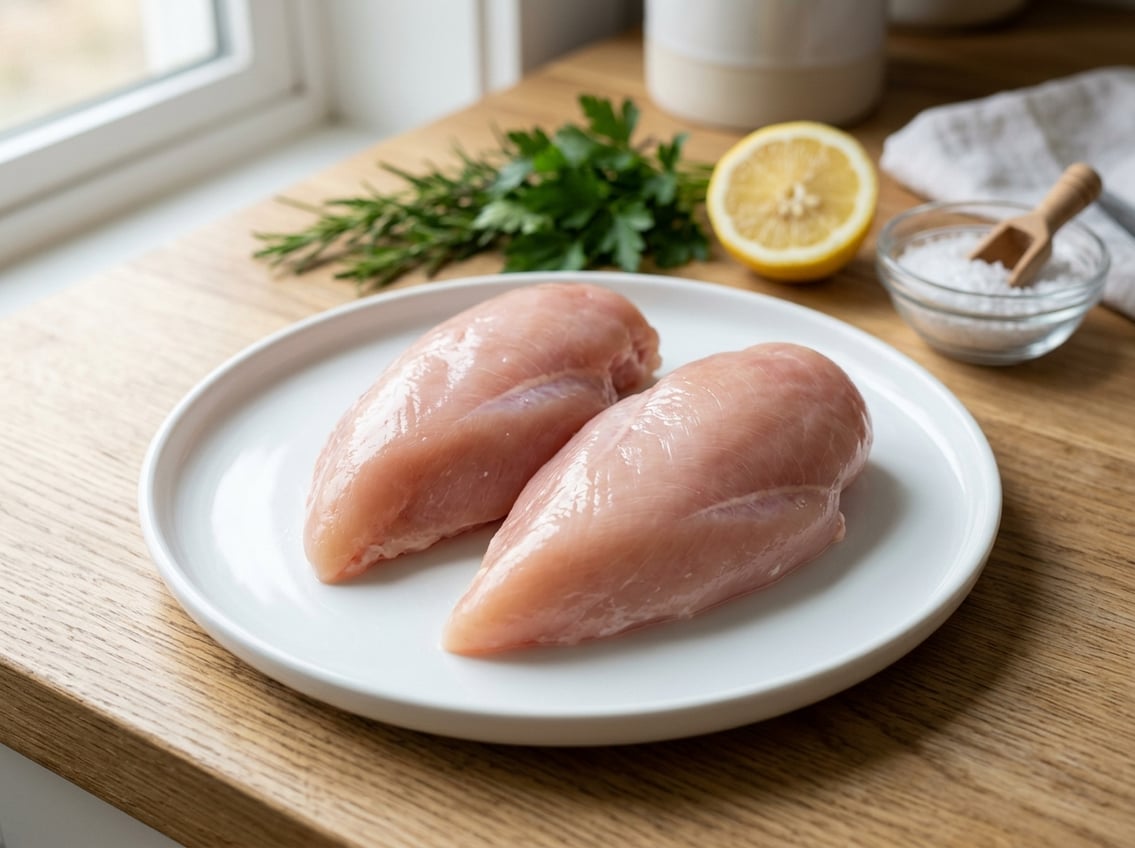
Fresh chicken should smell very mild, clean, and faint.
Some people describe the smell of chicken as slightly meaty, slightly metallic, or almost neutral.
The Mild Scent of Fresh Raw Chicken
Fresh raw chicken breast usually has little to no strong odor.
According to Cookindocs, a fresh piece can have a mild, slightly gamey scent, which comes from normal volatile compounds in the meat.
That light scent comes from natural chemistry, including volatile compounds such as dimethyl sulfide and other breakdown products of amino acids.
It should not smell sour, sharp, or rotten.
Why Some Chicken Smells Slightly Different
Different birds can smell a little different because of diet, processing, age, and storage.
A chicken breast from a vacuum-sealed package may smell a bit stronger at first, even when it is still safe.
That temporary odor often fades after you open the package and let the meat air out for a few minutes.
Fresh chicken smells should still stay mild, not pungent.
When Packaging Causes a Temporary Odor
Tight packaging can trap gases and moisture, which makes the smell seem stronger when you first open it.
Vacuum-sealed chicken may have a faint sulfur-like or eggy note that is not always a sign of spoilage.
If the odor goes away after a short time, the chicken may still be fine.
If it stays strong or gets worse, treat it as a food safety concern.
How to Tell When the Smell Signals Spoilage
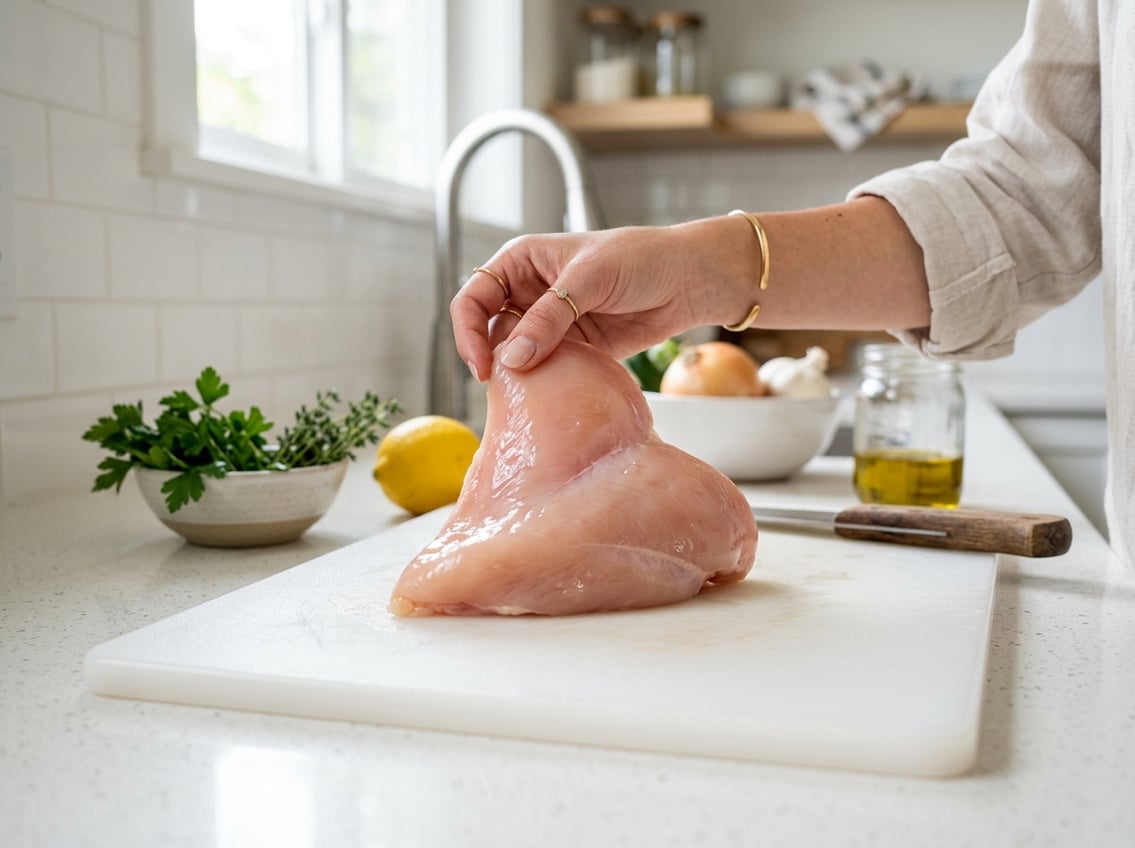
Spoiled chicken usually gives off a smell that is easy to notice once you know what to look for.
The odor is often sour, sulfur-like, or ammonia-like, and it may come with texture or color changes.
Sour, Sulfur, and Ammonia-Like Warning Signs
A sour smell is one of the clearest warning signs.
Some spoiled chicken also smells like rotten eggs or cleaning products, which points to bacterial activity and breakdown in the meat.
If the smell is strong enough that you recoil when you open the package, do not cook it.
That is a clear food safety red flag.
Texture, Slime, and Color Changes to Check
Smell should never be the only thing you check.
Spoiled chicken often feels sticky, slimy, or tacky, and the surface may look dull, gray, or greenish.
According to Cookindocs, slime on the surface is a clear spoilage sign.
If the chicken feels off, the smell is only confirming what your eyes and hands already found.
When to Throw It Out Instead of Cooking It
Throw out chicken breast if the odor is strong, sour, or ammonia-like, even if the date still looks acceptable.
The same is true if the meat is slimy, discolored, or has been stored improperly.
A brief rinse will not make spoiled chicken safe.
Cooking can kill many bacteria, yet it does not fix meat that has already broken down too far.
Why Chicken Develops Odors
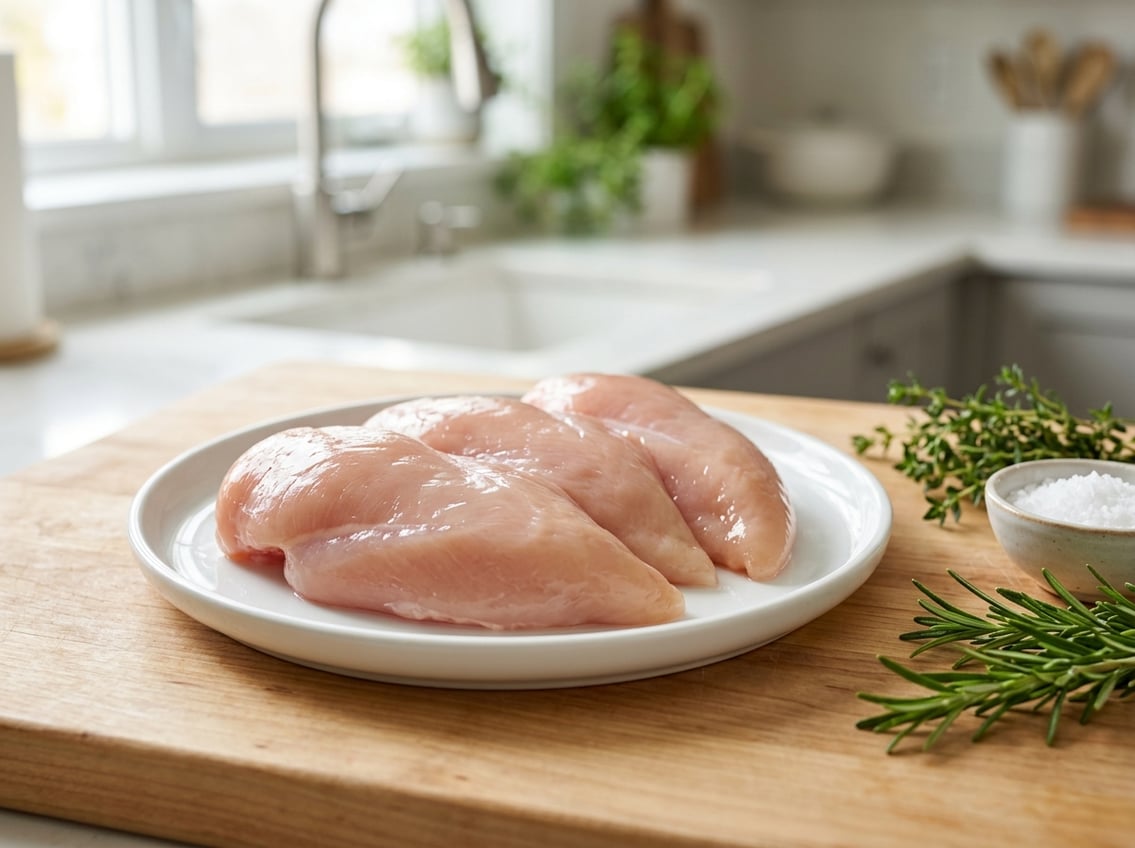
Chicken breast odor comes from normal meat chemistry, then changes as time passes.
Bacteria, oxygen, and enzymes all play a role, and seasonings can change how the smell seems to you.
Bacteria, Oxidation, and Enzymatic Breakdown
As chicken ages, bacteria grow and create new odors.
Oxidation and enzyme activity also change fats and proteins, which can create stronger smells.
Those changes produce volatile compounds, including dimethyl sulfide and other sulfur-related aromas.
Amino acids break down during this process, which is one reason the smell shifts from mild to unpleasant.
How Storage Time and Temperature Change Aroma
Warm temperatures speed up odor changes, while cold storage slows them down.
Chicken breast left too long in the refrigerator will usually smell stronger before it looks visibly spoiled.
Proper refrigeration matters as much as the date on the package.
Even fresh chicken can begin to smell off sooner if it sits above 40°F for too long.
How Seasonings and Herbs Affect Perception
Herbs and spices change how you notice chicken smell.
Strong seasonings like thyme and rosemary can mask mild odors, which makes the raw chicken seem fresher than it really is.
That can be useful for flavor, yet it can also hide early warning signs.
If the meat smells off before seasoning, do not assume the herbs have fixed the problem.
Safe Handling, Storage, and Cooking Decisions

Safe handling starts before cooking and continues after.
Good storage, careful thawing, and correct cooking temperatures all lower your food safety risk.
Refrigeration, Freezing, and Thawing Basics
Keep fresh chicken breast at 40°F or below.
If you are not cooking it soon, freezing is the better choice, since cold storage slows spoilage and odor growth.
Thaw chicken in the refrigerator, in cold water, or in the microwave if you plan to cook it right away.
Leaving it on the counter raises the risk of bacterial growth and strange smells.
Why Smell Should Not Be the Only Test
Your nose is useful, yet it is not perfect.
Some spoiled chicken smells only slightly wrong at first, while some vacuum-sealed chicken smells odd for a short time even when it is still safe.
Use smell with touch, color, and storage time.
If two or more signs seem off, the safest choice is to discard the chicken.
Cooking Temperature and Leftover Safety
Cook chicken breast until it reaches an internal temperature of 165°F. Cookindocs states that you can still cook chicken with a slight odor if it reaches that temperature.
Use a thermometer instead of guessing by color or texture. Cool and refrigerate leftovers quickly.
Eat leftovers within a safe time frame.


