
How Does Chicken Breast Weigh? Size, Raw vs Cooked
Most boneless, skinless chicken breasts in the U.S. weigh about 6 to 8 ounces raw. Bone-in cuts weigh more because of the bone and sometimes the skin.
The exact weight changes with the cut, the size of the bird, and whether you measure it raw or cooked. If you want accurate recipes or better calorie tracking, knowing the usual range helps.
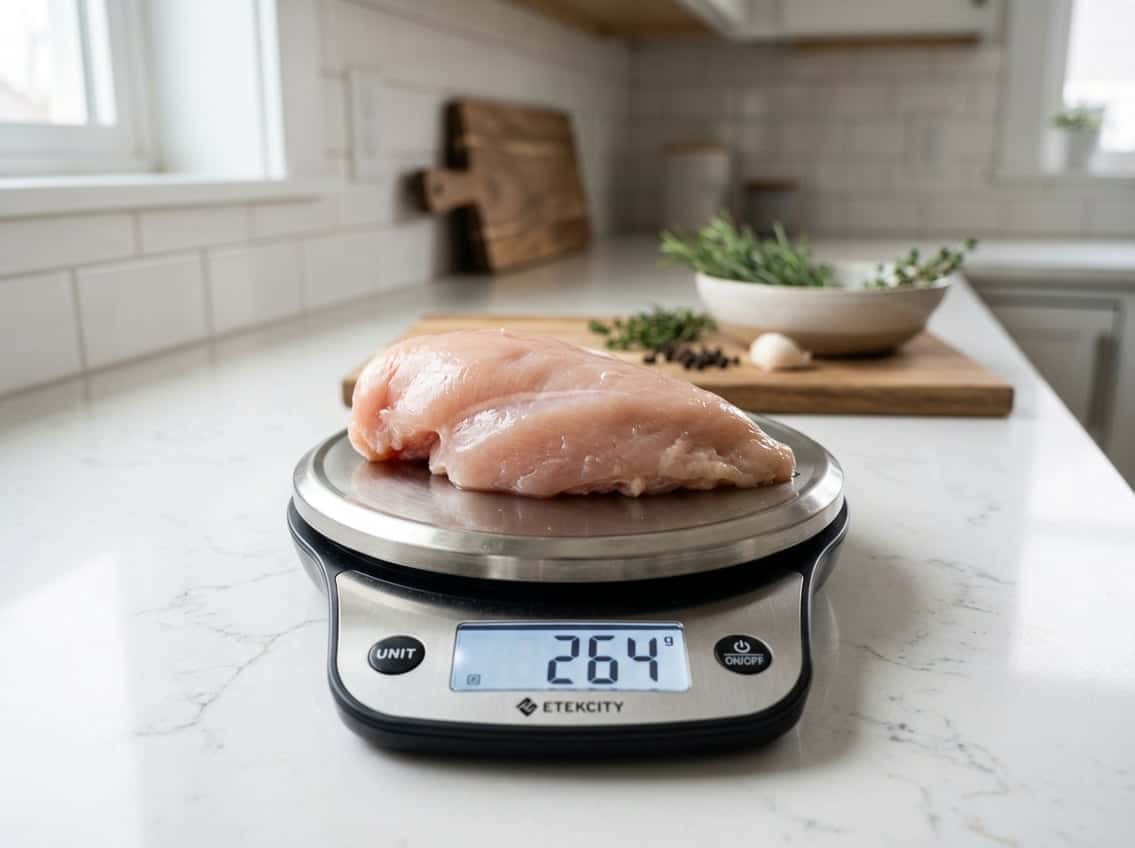
Chicken breast loses weight during cooking as water leaves the meat. For example, a breast that starts at 8 ounces raw may weigh closer to 5 to 6 ounces cooked, depending on cooking method and moisture content.
Average Weight by Chicken Breast Type
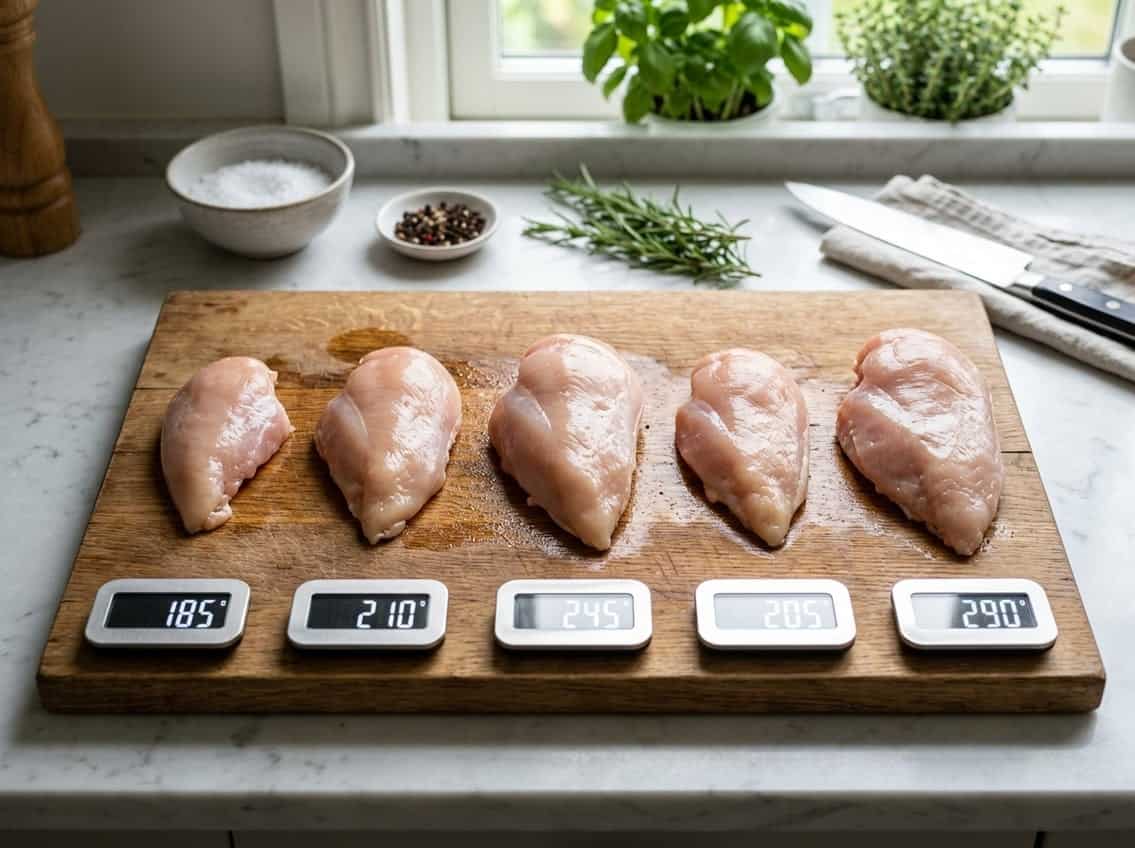
Chicken breast weight depends on the cut you buy. Split chicken breasts weigh more than boneless portions because they include bone and often skin.
For most common U.S. grocery store cuts, the numbers below are a useful guide.
Boneless Skinless Portions
A boneless, skinless chicken breast usually weighs about 6 to 8 ounces raw, or about 180 to 200 grams. Smaller pieces can be around 5 ounces, while larger ones may reach 9 ounces or more, as shown in chicken breast weight charts.
This is the most common cut for everyday recipes. You only weigh meat, not bone or skin, making portioning easier.
Bone-In and Skin-On Cuts
Bone-in, skin-on chicken breasts usually weigh more, often around 7 to 10 ounces or more per breast. The bone adds noticeable weight, and the skin adds a smaller amount.
If you compare one bone-in breast to one boneless breast, the extra weight comes from non-meat parts. The edible portion is lower in bone-in cuts.
Split Chicken Breasts Explained
Split chicken breasts are bone-in chicken breasts cut away from the whole bird, often sold with the skin on. They are usually larger than boneless portions.
Split chicken breasts are useful when you want more flavor and less cost per pound. According to Bake It With Love, bone-in breasts typically land in the 10 to 15 ounce range, depending on trimming and size.
What Changes the Weight Most
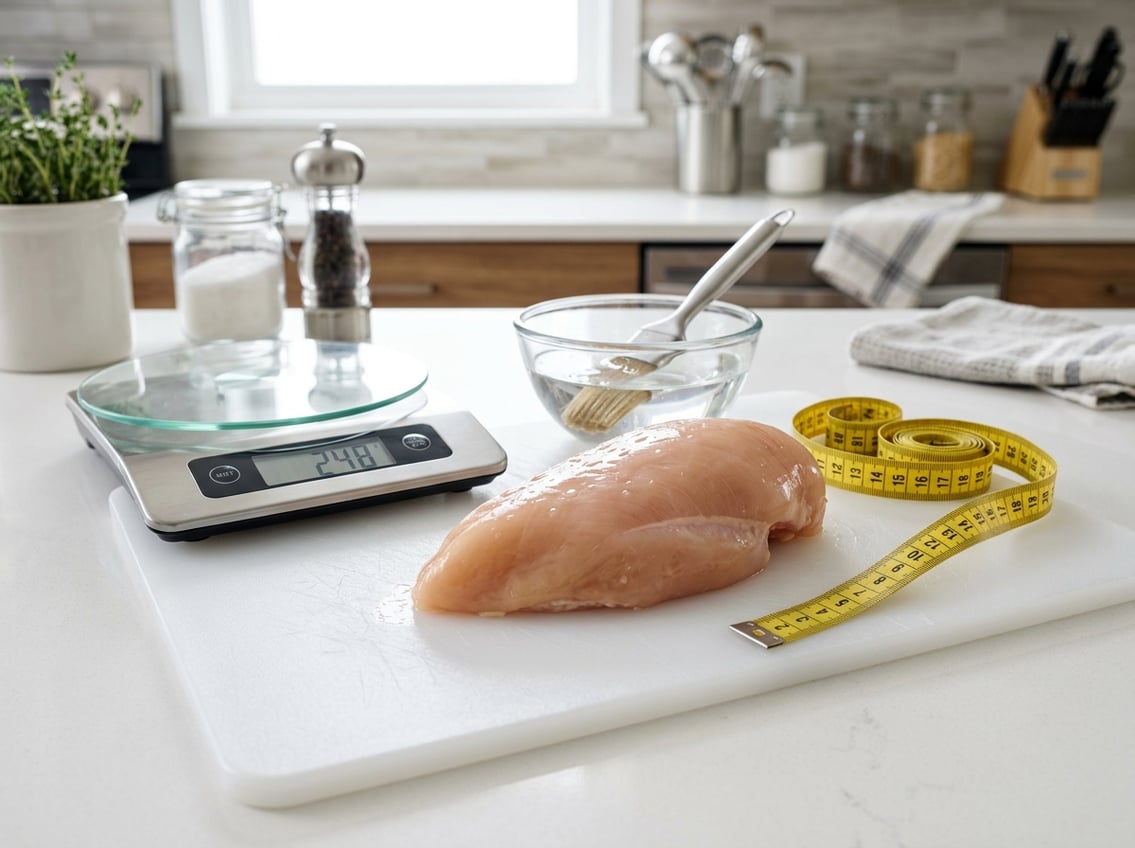
Water, bone, skin, and added moisture all affect chicken breast weight. The amount of bone and skin changes the number you see on the scale.
Cooking method matters too, since some methods dry the meat more than others. Two chicken breasts that start at the same raw weight may not finish at the same cooked weight.
Raw vs Cooked Weight Loss
Raw chicken breast usually weighs more than cooked chicken breast because water leaves during cooking. According to CookVio, raw chicken contains a lot of water, often around 70 to 75%.
A typical raw chicken breast can lose about 25% of its weight when cooked. Some chicken with added water can lose as much as 40%, according to Weigh School’s chicken breast weight guide.
Bone, Skin, and Water Content
Bone adds weight without adding edible meat, so bone-in cuts always weigh more than boneless ones. Skin also adds weight and fat, which raises both the total weight and the calorie count.
Water content is the biggest factor after bones and skin. Once heat pushes moisture out, the cooked breast weighs less even though the protein stays in the meat.
Frozen vs Thawed Differences
Frozen chicken can weigh a little more if surface ice is present or if the package includes ice crystals. Thawed chicken often weighs slightly less after drip loss, which is normal.
For the most accurate comparison, weigh chicken in the same state each time. If you track meals or recipes, use raw weight before cooking whenever possible.
How to Estimate and Measure Accurately
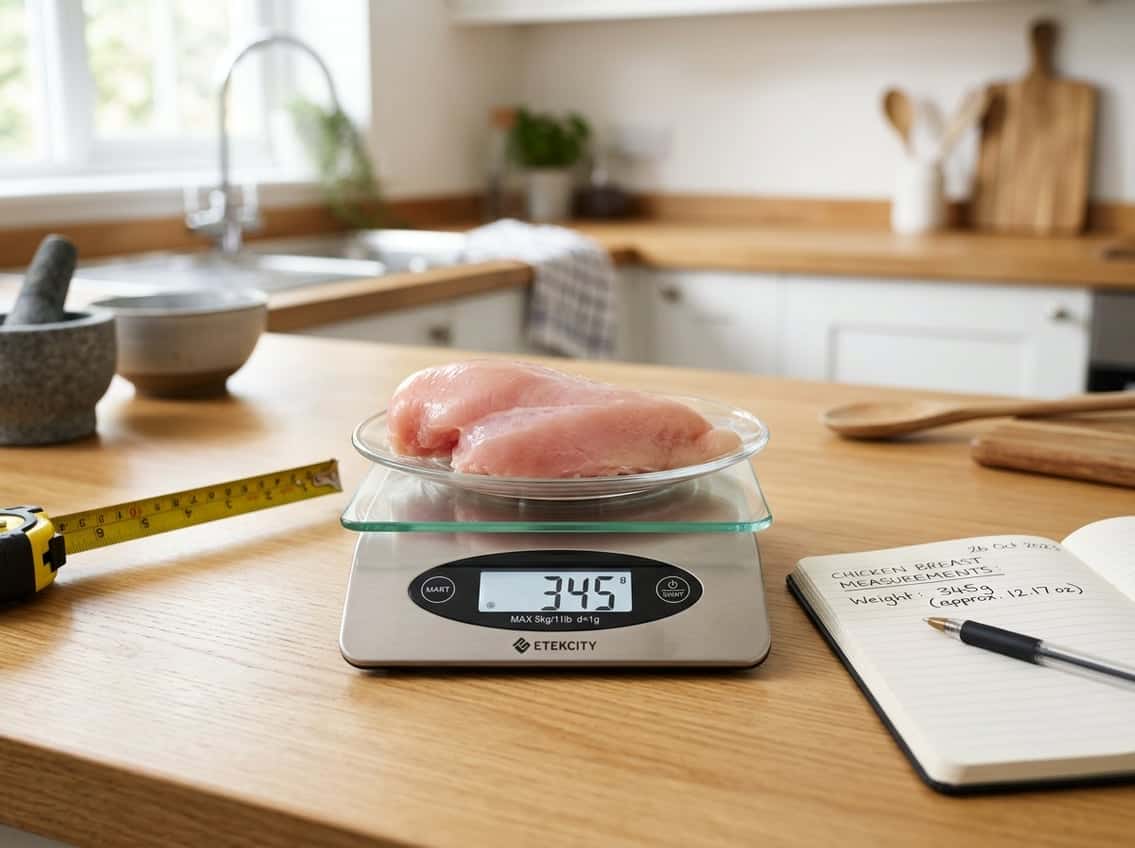
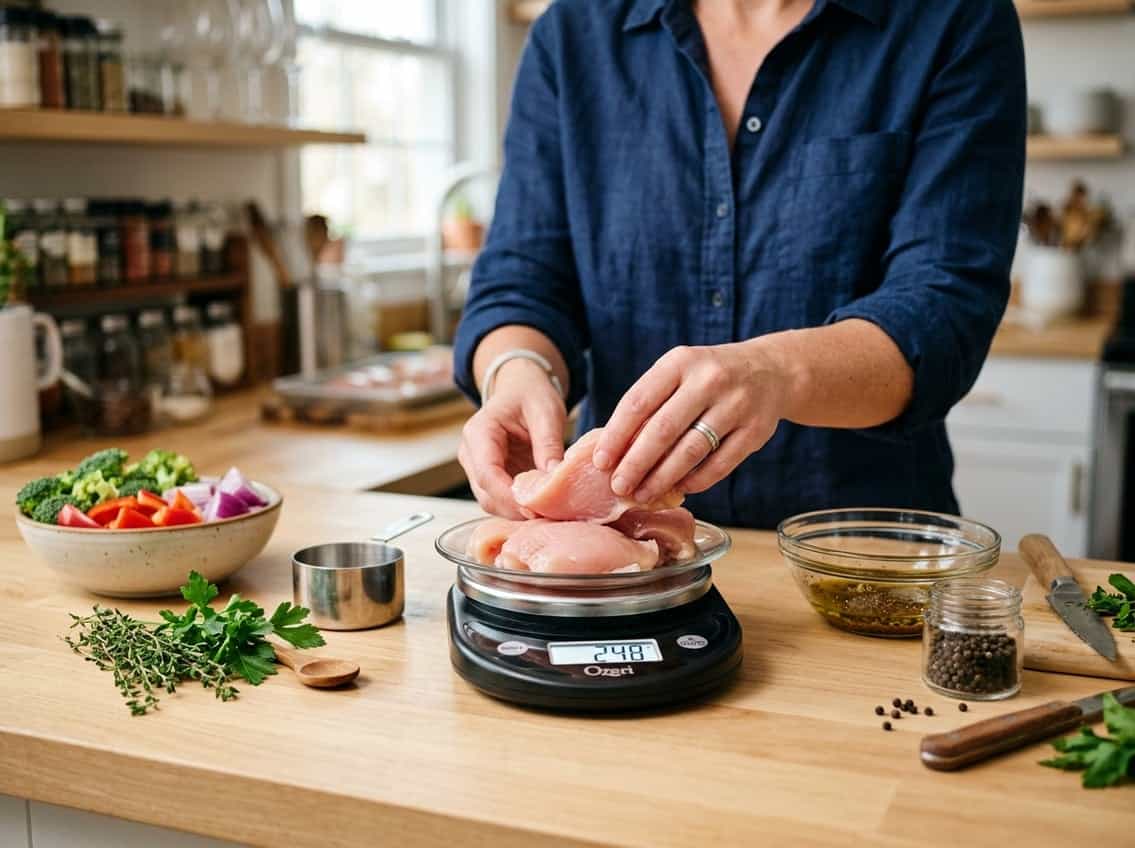
Weigh chicken on a kitchen scale before cooking for the most accurate measurement. If you do not have a scale, estimate by using package weight and common portion sizes.
Small differences matter less for a family dinner and more for meal prep or calorie counting. Knowing a few simple conversion rules helps.
Using Package Weight Per Breast
Many packages show the total weight, not the weight of each breast. If a 2-pound pack has 4 breasts, you can estimate about 8 ounces per breast, though the pieces may not be exact.
For better accuracy, divide the total package weight by the number of breasts in the pack. If the pieces are uneven, separate the larger and smaller ones instead of assuming each piece is identical.
Estimating Without a Kitchen Scale
A boneless, skinless breast that looks about palm-sized often lands near 6 to 8 ounces. Thicker pieces are usually heavier, while thin cutlets are lighter.
If you are cooking for a recipe, it is usually safer to buy a little extra. Leftovers can be saved.
Converting Grams, Ounces, and Pounds
These conversions are useful when a recipe uses different units:
- 1 ounce = 28 grams
- 4 ounces = 113 grams
- 8 ounces = 227 grams
- 1 pound = 16 ounces
- 1 pound = 454 grams
A breast listed at 190 grams is about 6.7 ounces. A breast listed at 220 grams is about 7.8 ounces, which is a common size for skin-on pieces in weight charts for chicken breast servings.
Buying the Right Amount for Meals
The right amount depends on the meal, the portion size you want, and whether you prefer convenience or lower cost. The cut also changes how much usable meat you get from the package.
If you are shopping for recipes or meal prep, a little planning saves money and waste. Split chicken breasts can be a smart value choice when you do not mind trimming or removing skin and bone.
Buying Chicken Breast for Recipes
Many recipes assume one medium boneless breast per serving, which is often about 6 to 8 ounces raw. If the recipe calls for pounds instead of pieces, use the total package weight and divide by the number of servings you need.
For recipes that need exact portions, weigh the chicken before cooking. This is the best way to match the recipe and the serving size.
Portion Planning for Meal Prep
A simple meal prep target is 4 to 6 ounces of raw boneless chicken per meal for many adults, depending on your appetite and nutrition goals. That usually cooks down to a smaller portion on the plate.
If you are prepping lunches for several days, buying by pound can be easier than buying by piece. A 2-pound package of boneless breasts often gives you around 4 to 5 servings, depending on size.
Choosing Value vs Convenience
Boneless, skinless chicken breast is the easiest to cook and portion.
Split chicken breasts often cost less per pound. You need to do extra trimming and get less predictable usable meat.
If you want speed, choose boneless and skinless.
If you want more value and do not mind the prep, split chicken breasts can stretch your grocery budget further.


