
Is Chicken Breast White Meat? Quick Science and Cooking Guide
Is chicken breast white meat? Yes, it is. Chicken breast is white meat because it has less myoglobin, a muscle protein that gives meat a darker color, and it comes from muscles used for short bursts of movement.
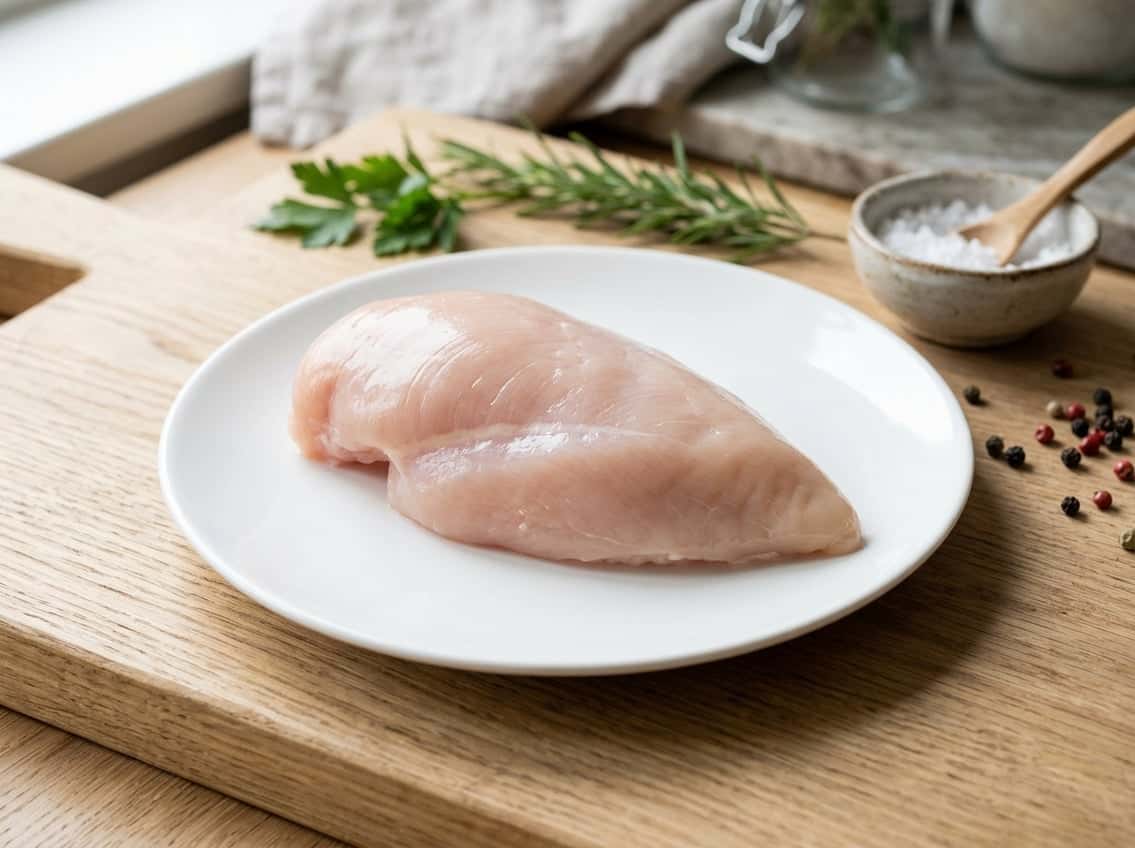
That matters in the kitchen and at the store. If you want lean protein with a mild flavor, chicken breast is one of the clearest white meat choices you can buy.
The label can feel confusing because chicken also has wings, thighs, and drumsticks, and those cuts do not all behave the same. Knowing how the bird is classified helps you pick the right cut for nutrition, taste, and cooking method.
The Short Answer and How Chicken Cuts Are Classified

Chicken meat usually falls into white meat and dark meat categories. Chicken breast is white meat, while chicken thighs are dark meat, and wings often sit closer to white meat in most food guides.
Why Breast Meat Counts as White Meat
Breast meat comes from muscles that handle short, quick movements. Those muscles use less oxygen storage, so they contain less myoglobin and stay lighter in color.
A recent guide from KitchPrep on chicken breast and white meat explains that breast muscle has little myoglobin and fits the white meat group. The breast looks pale both raw and cooked for this reason.
Where Wings Fit In
Many food guides group wings with white meat, although some people see them as a middle case. Chef’s Resource’s white meat chicken guide and Tatnuck Meat & Sea’s chicken cut guide place wings with the white meat side of the bird.
Wings can have a mix of muscle types depending on the exact part. If you are cooking for nutrition goals, the breast remains the clearest white meat choice.
How Dark Meat Differs From the Breast
Dark meat comes from more active muscles, mainly the thighs and drumsticks. Those muscles support standing and walking, so they carry more myoglobin and usually more fat.
Chicken thighs taste richer and stay juicier during long cooking. The breast is leaner, milder, and easier to dry out if overcooked.
Why the Breast Looks Pale
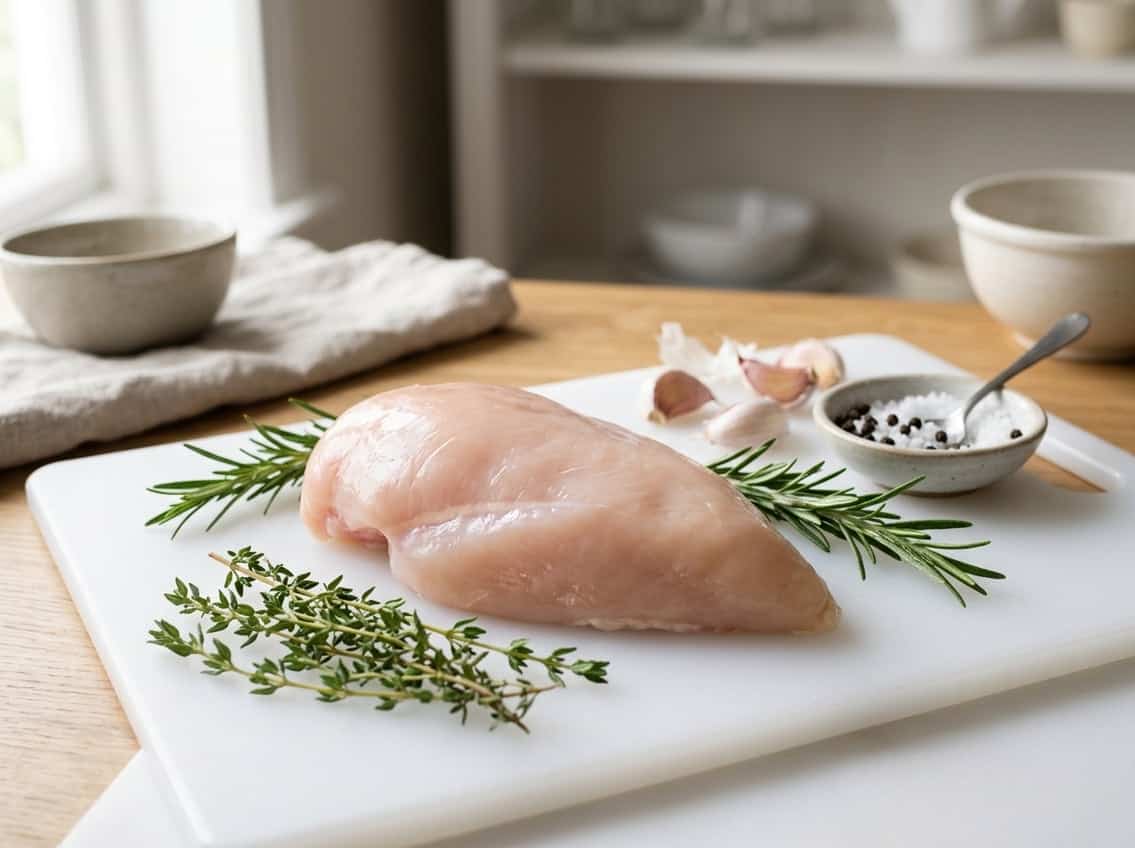
The pale look comes from the bird’s biology, not from processing. Muscle color depends on myoglobin, muscle use, and where the cut sits on the chicken.
Myoglobin and Meat Color
Myoglobin stores oxygen in muscle tissue. More myoglobin means a darker red or brown color, while less myoglobin means a lighter, whiter look.
Restonyc explains that chicken breast has very little myoglobin compared with thighs and legs. That lower level is the main reason the breast stays pale.
Chicken Anatomy and Muscle Composition
Chicken anatomy shapes meat color in a simple way. The breast does not do the heavy work that the legs do, so it has more fast-twitch fibers and less need for oxygen-rich storage.
Those muscle fibers support quick movement, not steady weight-bearing. Chicken breast tends to look light, while chicken thighs look deeper in color.
Why Active Muscles Turn Into Dark Meat
Muscles that work all day need more oxygen, so they develop more myoglobin. That extra myoglobin gives dark meat its deeper color and stronger flavor.
Chicken thighs move more, contain more myoglobin, and usually have a firmer, richer taste than breast meat.
Nutrition and Flavor Differences
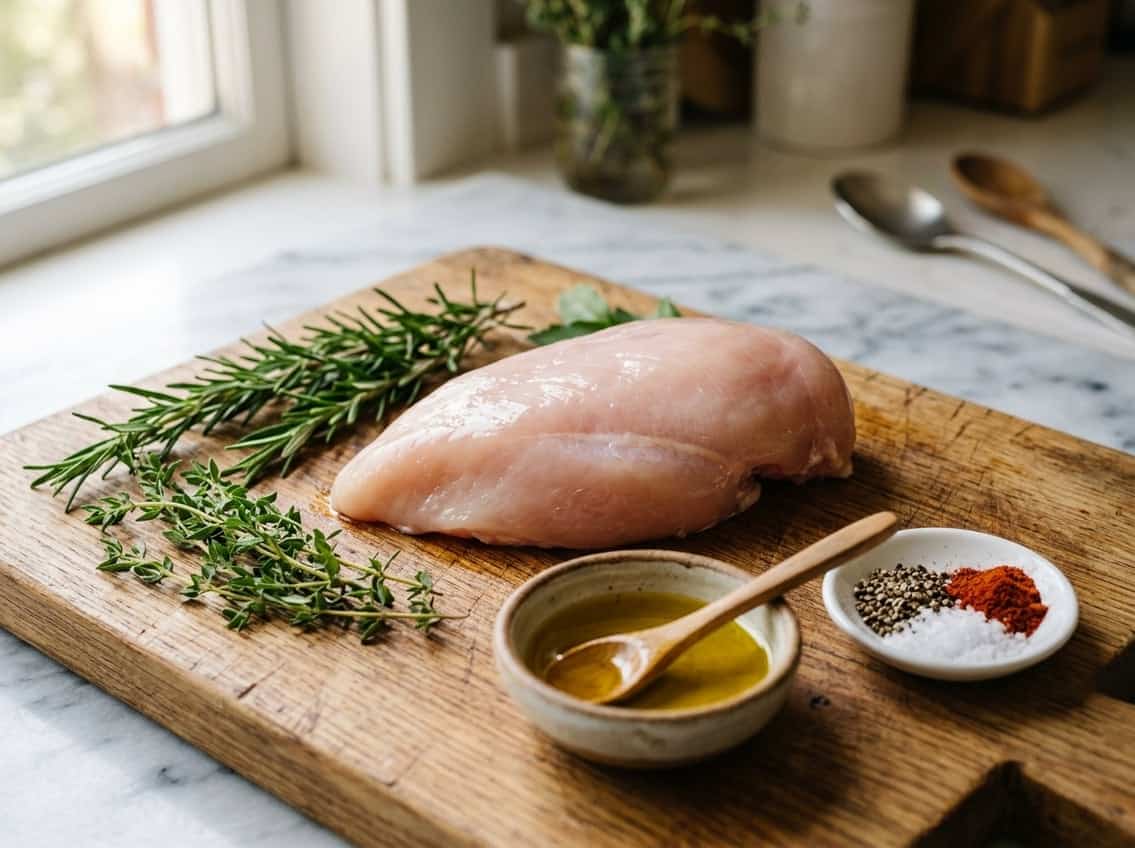
Chicken breast and chicken thighs both fit into a healthy diet, but they are not the same cut. The breast is leaner and lighter in flavor, while thighs are richer, a bit higher in fat, and usually more forgiving during cooking.
Why Chicken Breast Is Seen as Lean Protein
Chicken breast is often called a lean protein because it has less fat than many other animal proteins. Skinless breast is especially popular with people who want a high-protein meal without much added fat.
Many meal plans and fitness menus use breast meat as a default protein. It gives you a lot of protein per bite with a mild flavor that works in many dishes.
White Meat vs. Dark Meat Nutrition
White meat and dark meat both provide protein, vitamins, and minerals. Chicken breast usually has less fat and fewer calories than chicken thighs, while thighs tend to offer more iron and zinc.
KitchPrep’s chicken breast white meat nutrition guide shows that breast meat is leaner, and thigh meat is richer.
Texture, Juiciness, and Flavor Trade-Offs
Chicken breast has a firmer, cleaner texture and a mild taste. That makes it flexible, but you need to watch cooking time closely.
Chicken thighs are juicier and more flavorful because they contain more fat and connective tissue. If you want a stronger chicken taste and more forgiveness on the stove or grill, thighs usually have the edge.
Cooking Chicken Breast Without Drying It Out
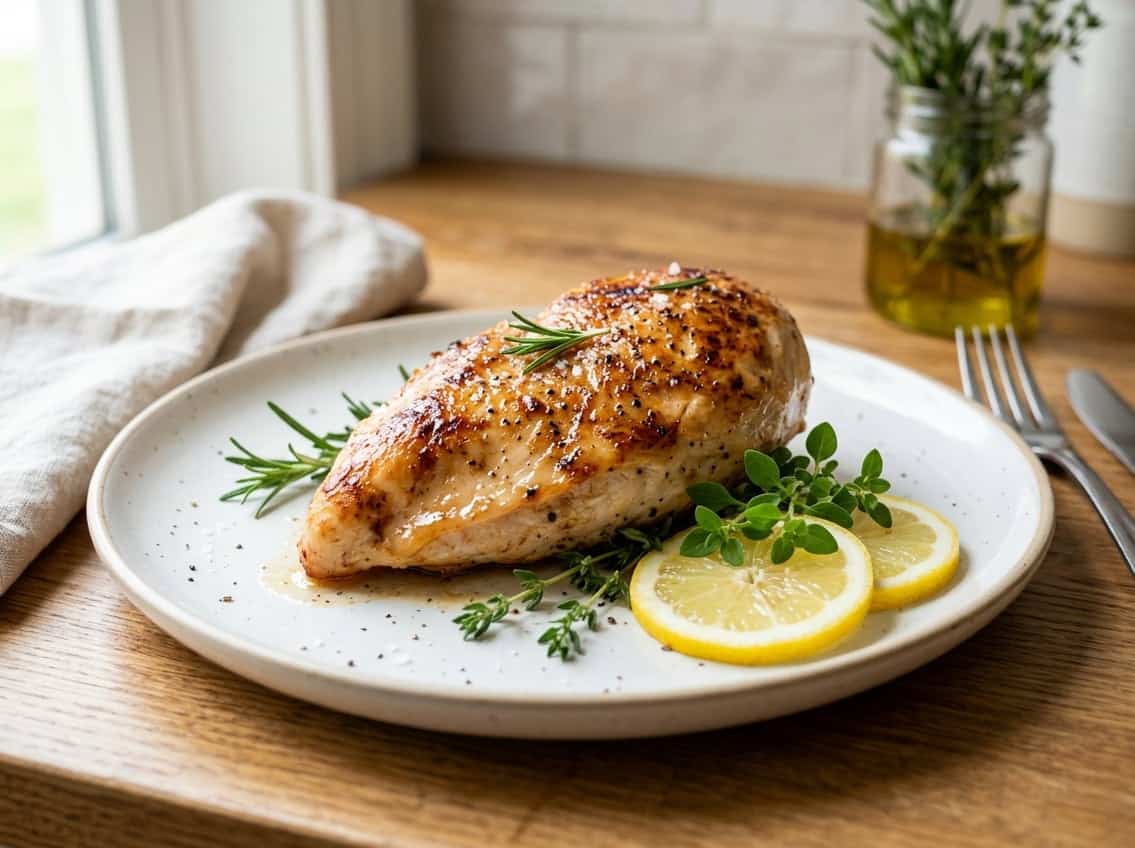
Cooking chicken breast well is mostly about control. The cut is lean, so a few extra minutes can change the texture fast.
Best Internal Temperature and Meat Thermometer Tips
Use a meat thermometer every time you cook chicken breast. The safe internal temperature for poultry is 165°F, and you should check the thickest part without touching bone.
Insert the thermometer from the side when you can, since that gives a more accurate reading in thick breasts. Pull the chicken off the heat as soon as it reaches temperature, then let it rest a few minutes so the juices settle.
Why Cooked Color Can Be Misleading
Cooked color does not always tell you if chicken breast is done. Meat color can stay slightly pink near the bone or turn white before it is fully safe, depending on heat, pH, and cooking method.
A thermometer gives you a better answer than color alone. That matters most with thicker breast pieces, where the outside can look done before the center reaches a safe temperature.
How Browning and the Maillard Reaction Affect Flavor
The Maillard reaction adds flavor when heat changes proteins and sugars on the surface of meat. This process creates a golden crust that tastes better than plain steamed chicken.
Dry the breast surface before searing. Use moderate oil and avoid crowding the pan.
These steps create more browning and better flavor. They also help white meat stay tender.


