
How Long Chicken Breast in Crock Pot: Timing Guide
When you cook chicken breast in a crock pot, it usually takes about 3 hours on LOW for boneless, skinless breasts in a single layer. On HIGH, it takes about 2 to 3 hours, depending on size and your slow cooker.
The safest finish point is 165°F in the thickest part of the meat.
If you want juicy slow cooker chicken breast, you need the right setup, a thermometer, and a short rest before slicing or shredding. This becomes even more important for meal prep, since dry chicken can ruin several meals.
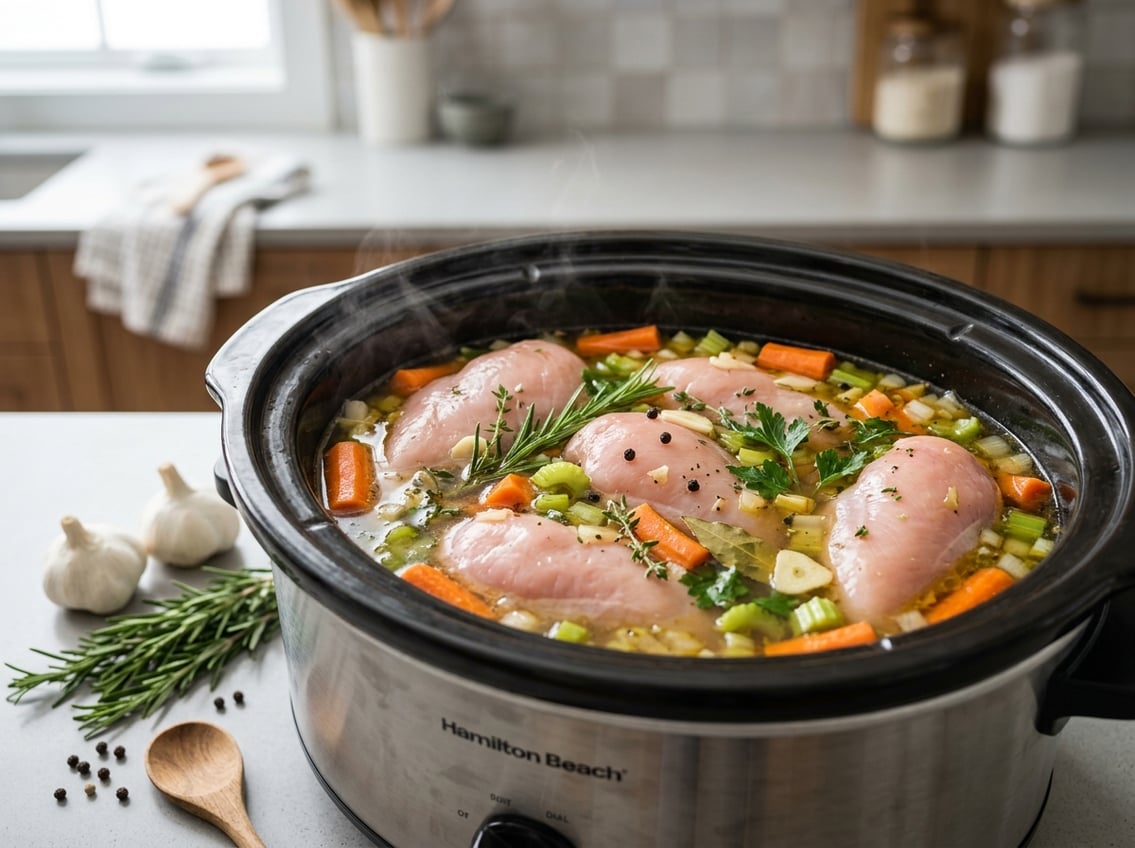
Slow cookers vary a lot, so people often search for the right timing. Chicken breast can turn tender and easy to shred, but it can also turn dry and stringy if you cook it too long.
Exact Timing by Setting and Chicken Size
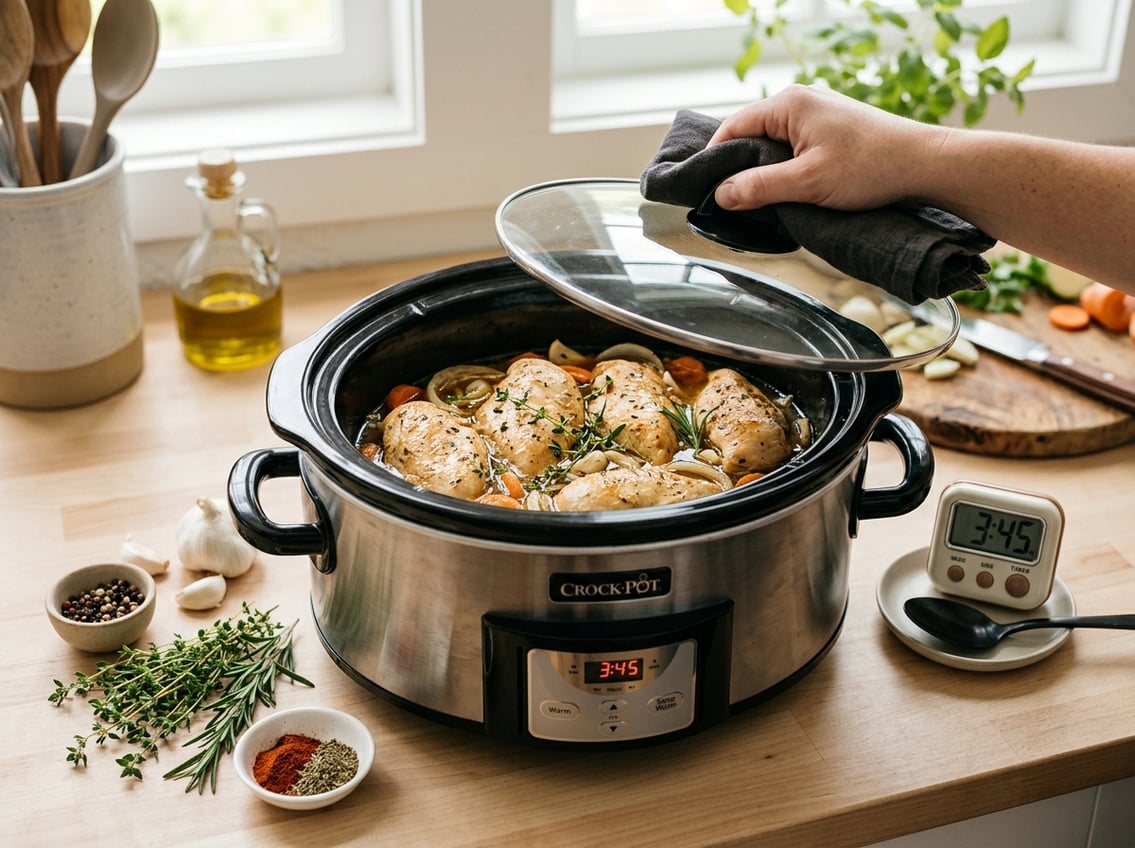
For most boneless chicken breasts, timing depends on the heat setting, the thickness of the pieces, and how many breasts you place in the pot. Start with a simple timing, then adjust based on size and thermometer readings.
Low vs High Cook Times
On LOW, most boneless chicken breasts take about 3 to 4 hours. On HIGH, they usually take about 2 to 3 hours.
Fifteen Spatulas recommends about 3 hours on low for a single layer until the chicken reaches 165°F. Lid lifting can add a lot of time, so keep the lid closed.
LOW gives you a wider safety margin and usually better texture. HIGH works when you need the meal done faster, but it gives you less room before the meat dries out.
Timing for Thin, Standard, and Thick Pieces
Thin breasts can finish closer to 2 to 2.5 hours on HIGH or about 3 hours on LOW. Standard breasts often fit the middle of the range.
Thick or oversized breasts may need closer to 3.5 to 4 hours on LOW.
If the pieces are different sizes in the same crock pot, the smaller ones can finish early. Check the thickest piece first, then keep cooking only until all pieces reach 165°F.
How Quantity Affects Total Time
When you keep the breasts in one layer and touching the pot, more chicken does not always mean a much longer cook time. A crowded pot slows the process because the pieces block heat flow.
If you stack chicken, plan for longer cooking and less even results. If you double the amount, expect some variation and check several pieces.
Start with the early end of the time range, then test with a thermometer.
How to Get Juicy Results Instead of Dry Chicken
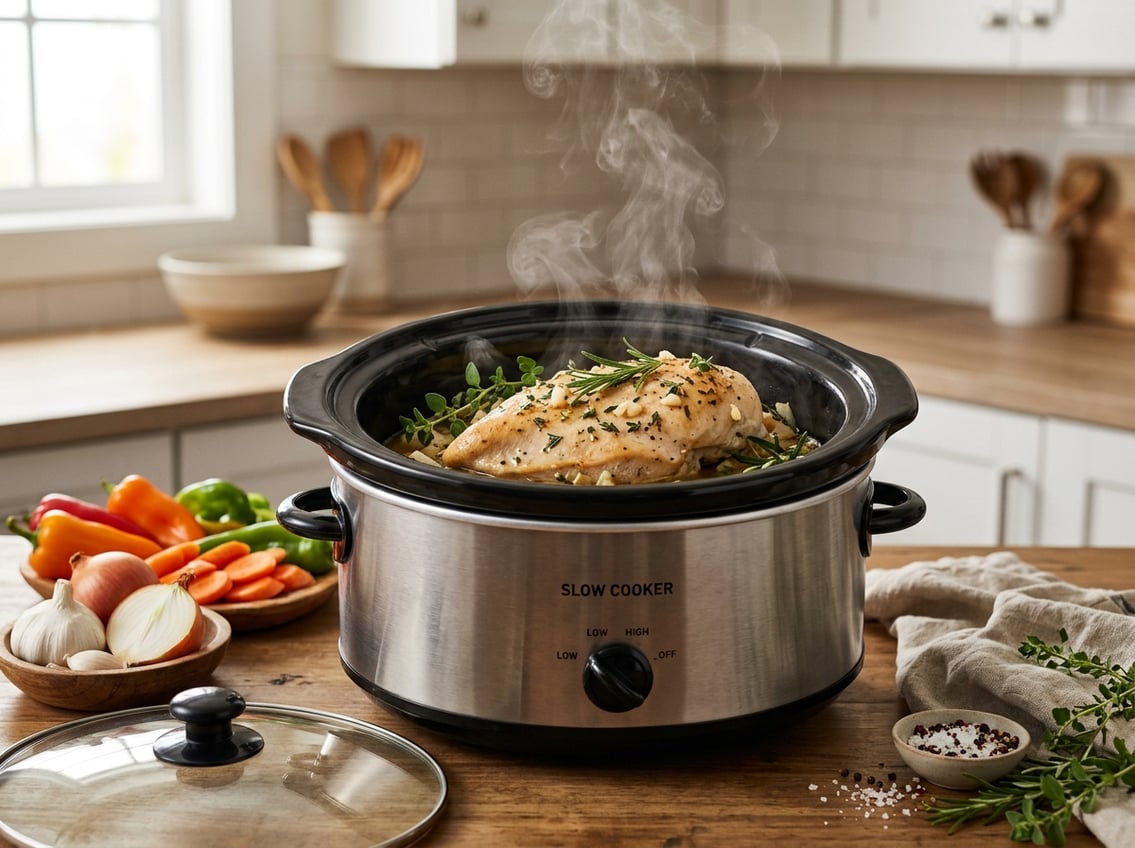
Steady heat, limited lid opening, and a short rest after cooking help keep slow cooker chicken breast juicy. Texture improves when you keep the meat in a single layer and avoid adding more moisture than the recipe needs.
Single-Layer Placement and Lid Rules
Place the breasts in a single layer so they cook evenly. This method works well for crock pot chicken breast without added liquid.
Keep the lid closed as much as possible. Each time you lift it, you lose heat and can add 30 to 60 minutes of extra cooking time.
When to Add Broth, Sauce, or No Liquid
You do not always need broth. When the chicken stays in a single layer and touches the bottom, seasoning alone usually works.
Add a little broth or sauce if you stack the chicken or want a specific flavor. A sauce can be good for certain recipes, but too much liquid can dilute seasoning and make the chicken taste flat.
Seasoning and Resting Before Slicing or Shredding
Season before cooking so the flavor soaks in. Salt, pepper, garlic powder, paprika, Italian seasoning, or taco seasoning all work well.
Let the chicken rest for at least 10 minutes before you slice or shred it. This helps keep the juices in the meat so your chicken stays moist.
Doneness, Safety, and Common Timing Mistakes
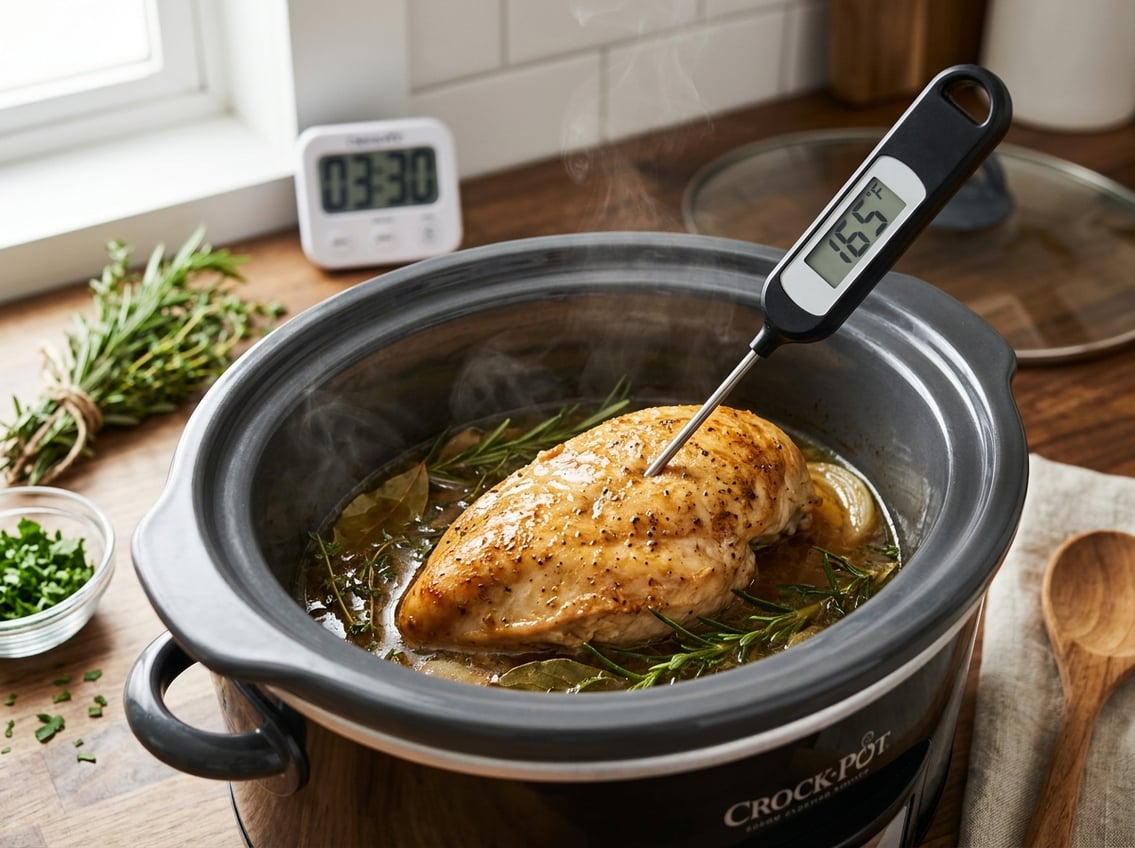
The most important part of cooking chicken is the final internal temperature. Chicken breast should reach 165°F in the thickest part, and a thermometer is the only reliable way to confirm that.
Why 165°F Matters
165°F is the safe endpoint for chicken breast because it means the meat is fully cooked. Overcooking is one of the most common reasons chicken turns dry, even in a crock pot.
Check the center of the thickest breast, not the edge. If one piece is thicker, it may need more time than the others.
Signs Chicken Is Overcooked or Undercooked
Overcooked chicken often looks stringy, pale, and dry. It may shred into very small fibers and feel firm even after resting.
Undercooked chicken can look glossy or translucent in the center and feel soft or rubbery. If you are unsure, keep cooking and check again after 15 to 20 minutes.
Mistakes That Make Cook Times Inconsistent
Lifting the lid, cooking frozen breasts directly, stacking pieces, and using very thick cuts without extra time can all make cook times inconsistent. Slow cooker brands also heat differently, so a recipe that works in one pot may finish sooner or later in another.
For predictable results, thaw the chicken first, keep it in one layer, and start checking temperature near the early end of the time range.
Best Ways to Use and Store Cooked Chicken
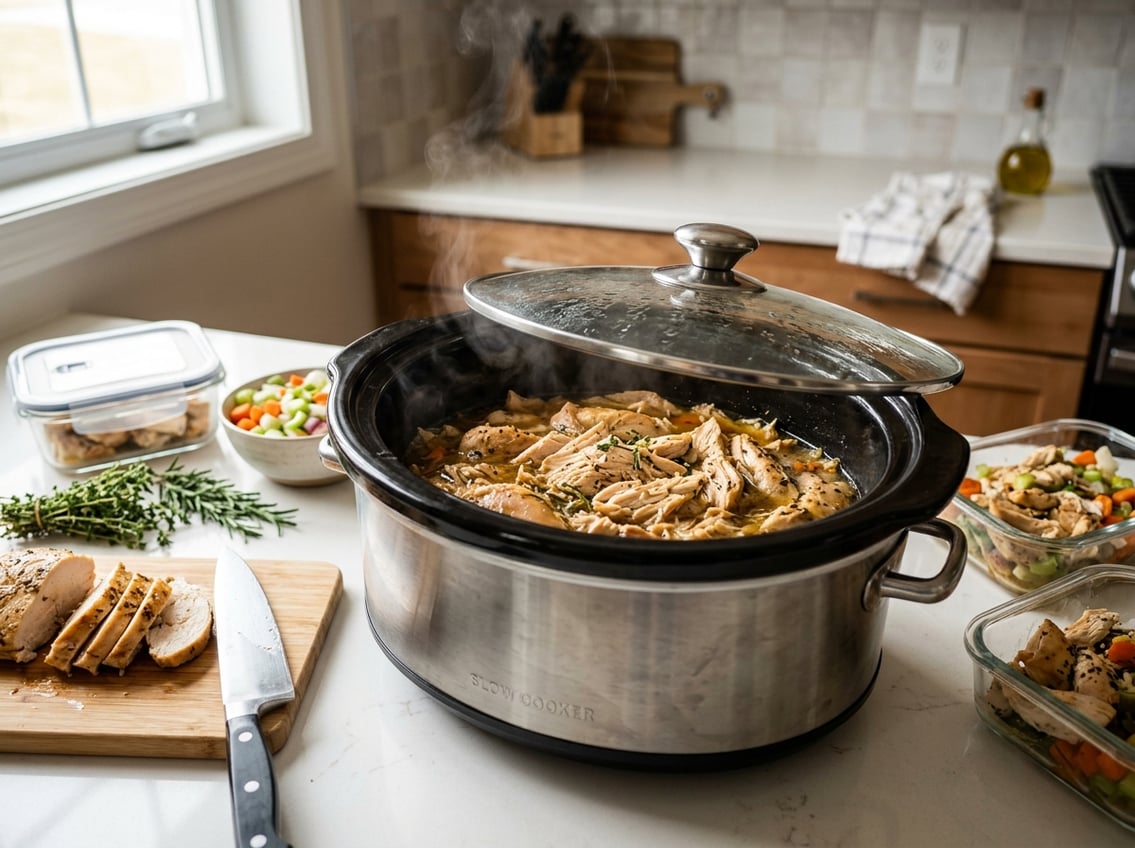
Cooked crockpot chicken works well in several meals during the week. The best cut style depends on how you plan to serve it.
Slice vs Shred for Different Meals
Slice the chicken when you want clean portions for rice bowls, sandwiches, or plated dinners. Shred it for tacos, soups, casseroles, enchiladas, or chicken salad.
If you want neat slices, rest the meat first, then cut across the grain.
Meal Prep, Fridge Storage, and Freezing
Cool the chicken before packing it for meal prep. Store it in airtight containers in the fridge for up to 5 days, or freeze it for longer storage.
For freezing, portion the meat into meal-sized containers or bags. Thaw it in the fridge overnight so it reheats more evenly and stays moist.
Easy Serving Ideas for Busy Weeknights
Use the chicken in wraps, quesadillas, salads, pasta, burrito bowls, or soup.
You can also mix it with barbecue sauce, buffalo sauce, pesto, or a simple pan sauce.
Keep a batch of boneless chicken breasts ready in the fridge.
This helps you build dinner in minutes on nights when you do not want to cook from scratch.


