
How Much Chicken Breast Is a Serving? Portion Guide
In most U.S. nutrition guidance, a standard serving is about 3 to 4 ounces of cooked boneless, skinless chicken breast. That is close to the size of a deck of cards or the palm of your hand.
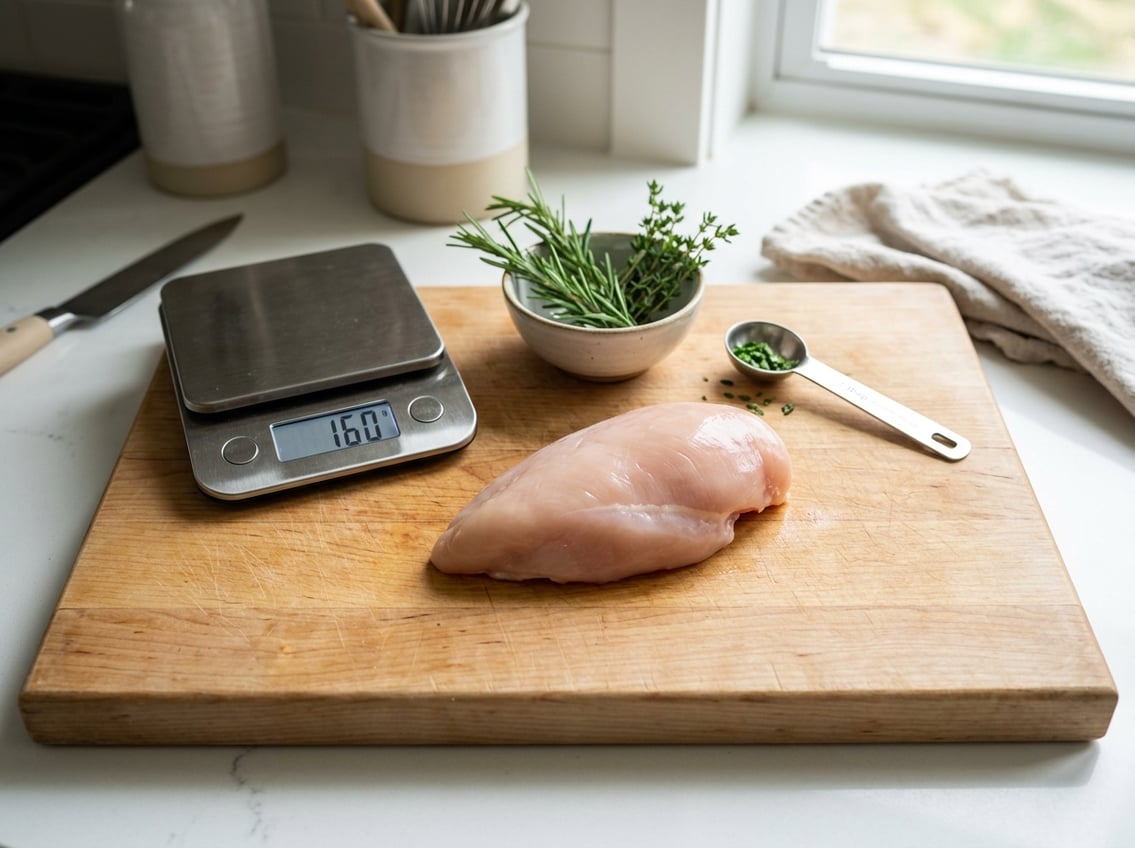
If you want a simple rule, plan on 3 to 4 ounces cooked per adult for a main dish. Then adjust up or down based on the meal.
Raw weight is usually higher than cooked weight because chicken loses water as it cooks. That difference matters when you shop, portion meals, or track protein.
A breast that looks large in the package may shrink enough to change how many servings it makes.
Standard Serving Size at a Glance
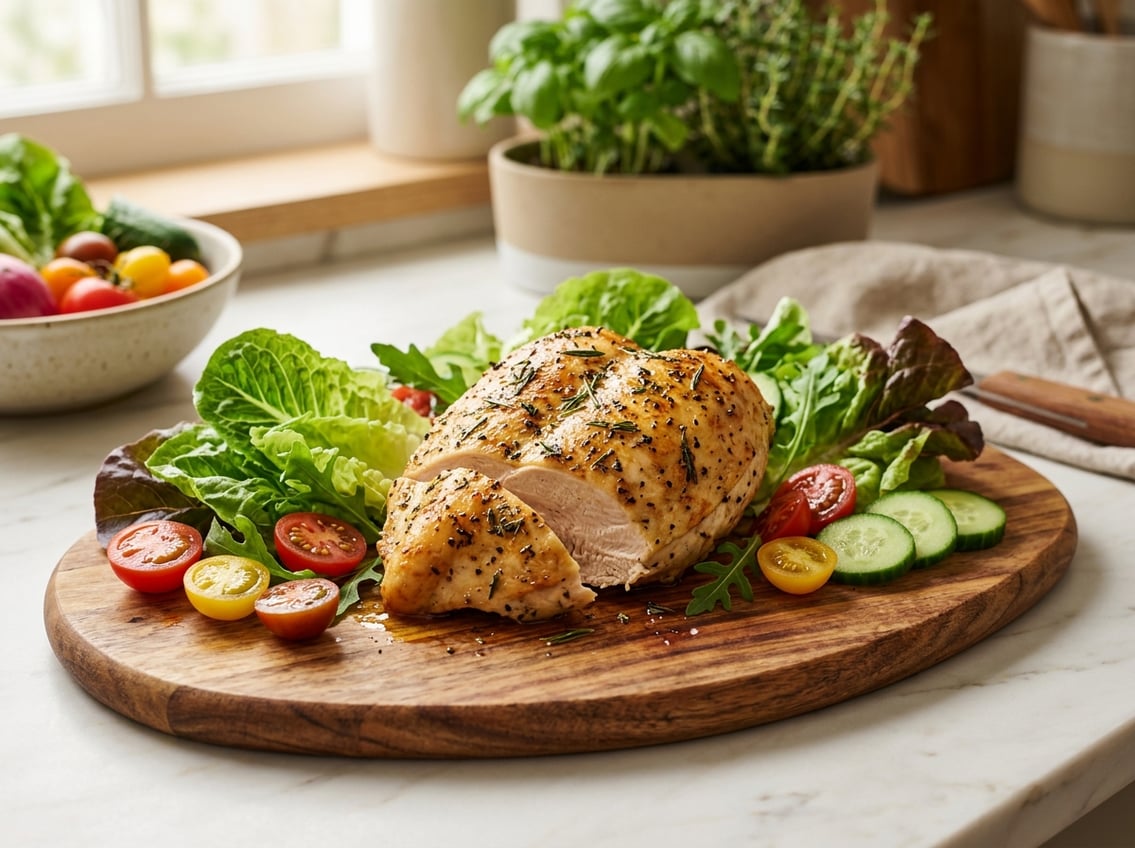
For most adults, how much chicken breast is a serving comes down to 3 to 4 ounces cooked, or about 85 to 115 grams. That amount lines up with common USDA-style portion guidance and works well for a balanced meal.
A serving size can look different depending on whether you measure raw or cooked meat. Raw chicken is heavier, and it loses moisture during cooking.
The same piece will weigh less after baking, grilling, or pan-cooking.
Cooked Ounces vs Raw Ounces
A 3-ounce cooked serving often starts as about 4 ounces raw. Chicken shrinks as water cooks out.
If you track food by weight, use one method consistently. Raw weights work best for shopping and meal prep.
Cooked weights work best when you portion food after cooking.
What One Breast Usually Weighs
A single boneless, skinless chicken breast in the U.S. often weighs about 6 to 8 ounces raw, according to a chicken breast portion guide from CyChicken. After cooking, that same breast may end up closer to 4 to 6 ounces, depending on size and cooking method.
One breast is often more than one serving. In many cases, one large breast can feed 1.5 to 2 people if your target is a standard portion.
Visual Portion Cues Without a Scale
A cooked chicken breast serving is usually about the size of your palm, not including fingers. Another quick guide is a deck of cards.
These cues are useful, but they are not exact. If you need precise portions for weight loss or nutrition tracking, weighing chicken gives you a better result.
Adjusting Portions for Real Meals
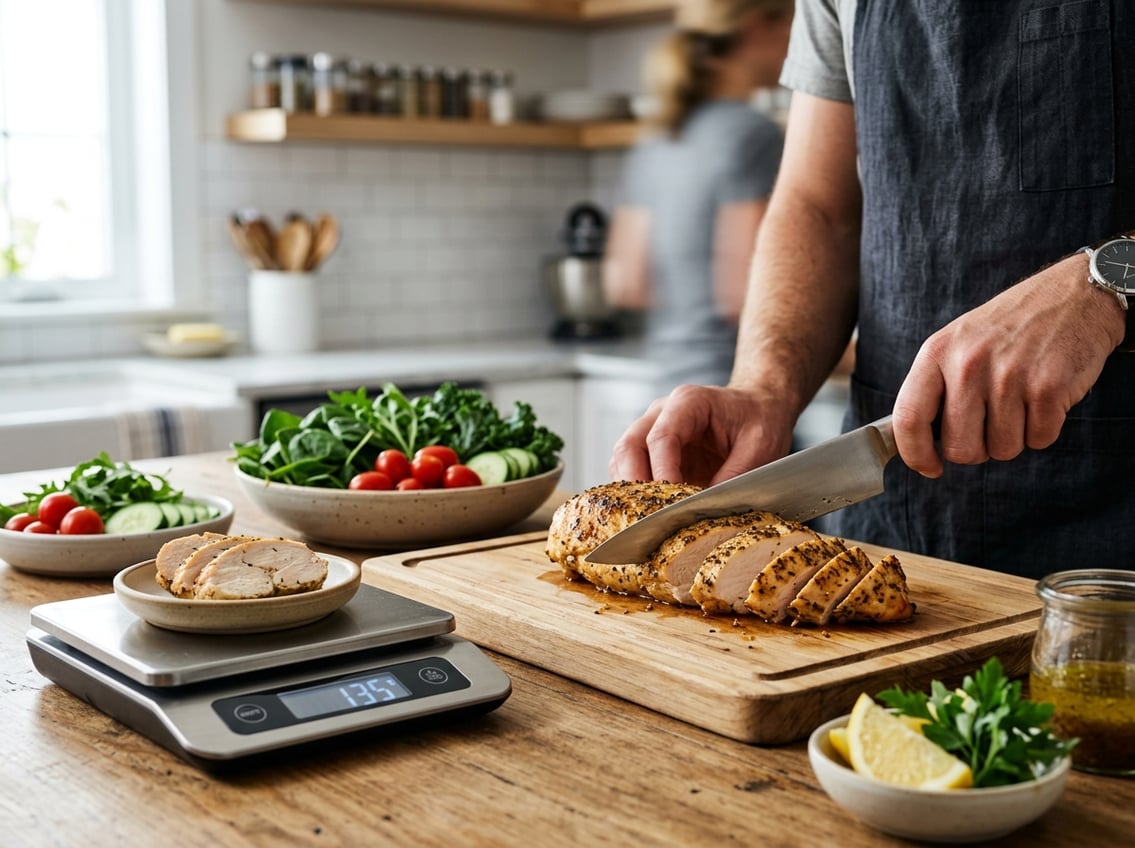
A standard serving is a starting point, not a fixed rule. Your portion changes based on the rest of the meal, the age of the eater, and whether chicken is the main protein or just one part of the dish.
Main Dish Portions for Adults
For a main plate, 4 to 6 ounces cooked is common when chicken is the center of the meal. If the meal includes hearty sides, 3 to 4 ounces may be enough.
A larger portion can make sense for active adults or people with higher protein needs. A smaller portion works well when the meal includes beans, cheese, eggs, or another strong protein source.
Serving Sizes for Children
Children usually need less chicken than adults, especially younger children. A good starting point is 1 to 3 ounces cooked, depending on age, appetite, and the rest of the meal.
Use smaller pieces and avoid oversized portions. You can always add more if the child is still hungry.
Smaller Amounts for Salads, Pasta, and Casseroles
When chicken is mixed into a dish, you often need less per person. For salads, pasta, stir-fries, and casseroles, 2 to 3 ounces cooked per serving often works well.
If the recipe is light on other protein, you may want to move closer to 4 ounces.
How to Buy and Measure the Right Amount
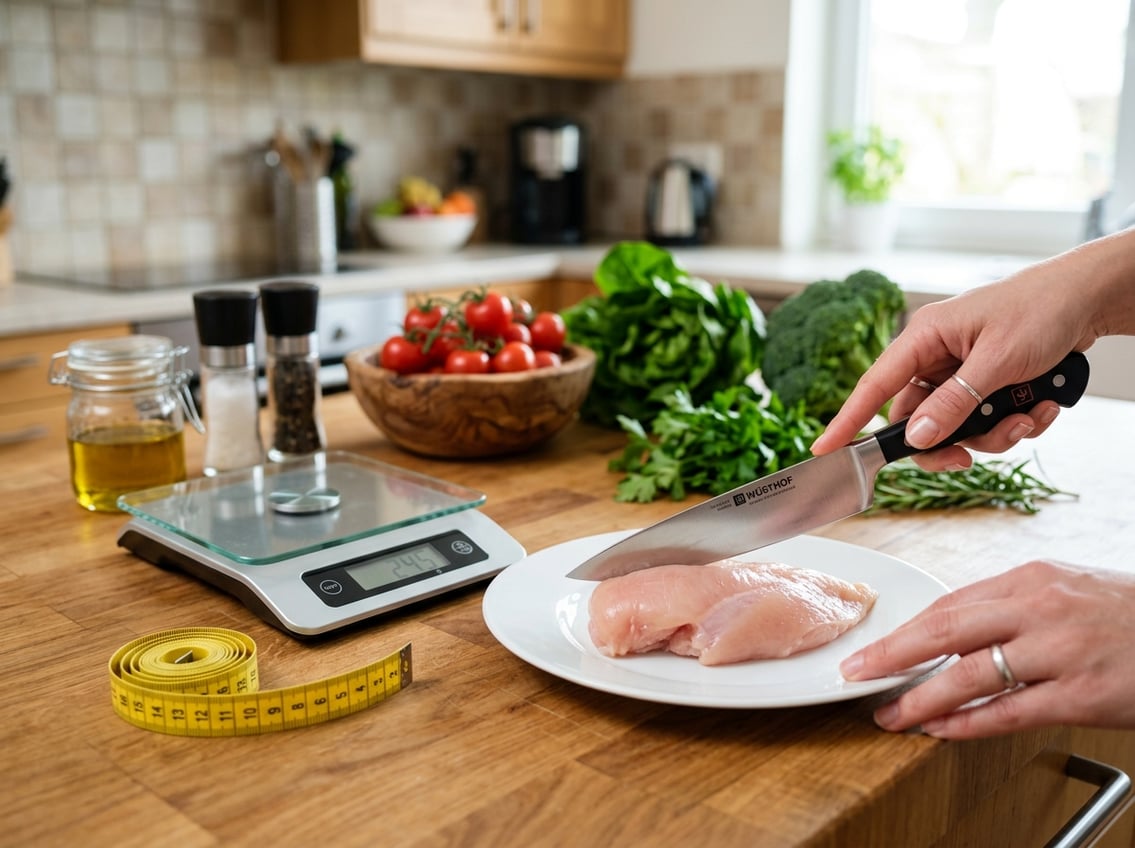
Chicken breast count can help with shopping, yet size varies a lot from package to package. Weight tells you more than the number of pieces.
Why Breast Count Can Be Misleading
Two packages with four breasts each can contain very different amounts of meat. One package may have small breasts, while another includes large ones that weigh much more.
“One breast per person” is not a reliable rule. Weight gives you a clearer way to match the amount of chicken to the number of people you are serving.
Using a Kitchen Scale for Accuracy
A digital kitchen scale is the most accurate tool for portioning chicken. Weigh raw chicken if you are planning meals ahead of time, or weigh cooked chicken if you are portioning leftovers.
If you want a quick reference, 4 ounces raw often yields about 3 ounces cooked. For precise tracking, set the scale to ounces or grams and use the same setting each time.
How Much to Purchase for Groups
For a dinner where chicken is the main protein, plan about 6 to 8 ounces raw per adult if you want a generous cooked portion. That helps cover cooking loss.
For a group of six adults, buying around 2.5 to 3 pounds of raw boneless, skinless chicken breast is a practical estimate. If you want leftovers, add extra.
If the menu includes several sides, you can buy less.
Nutrition and Cooking Factors That Affect Portions
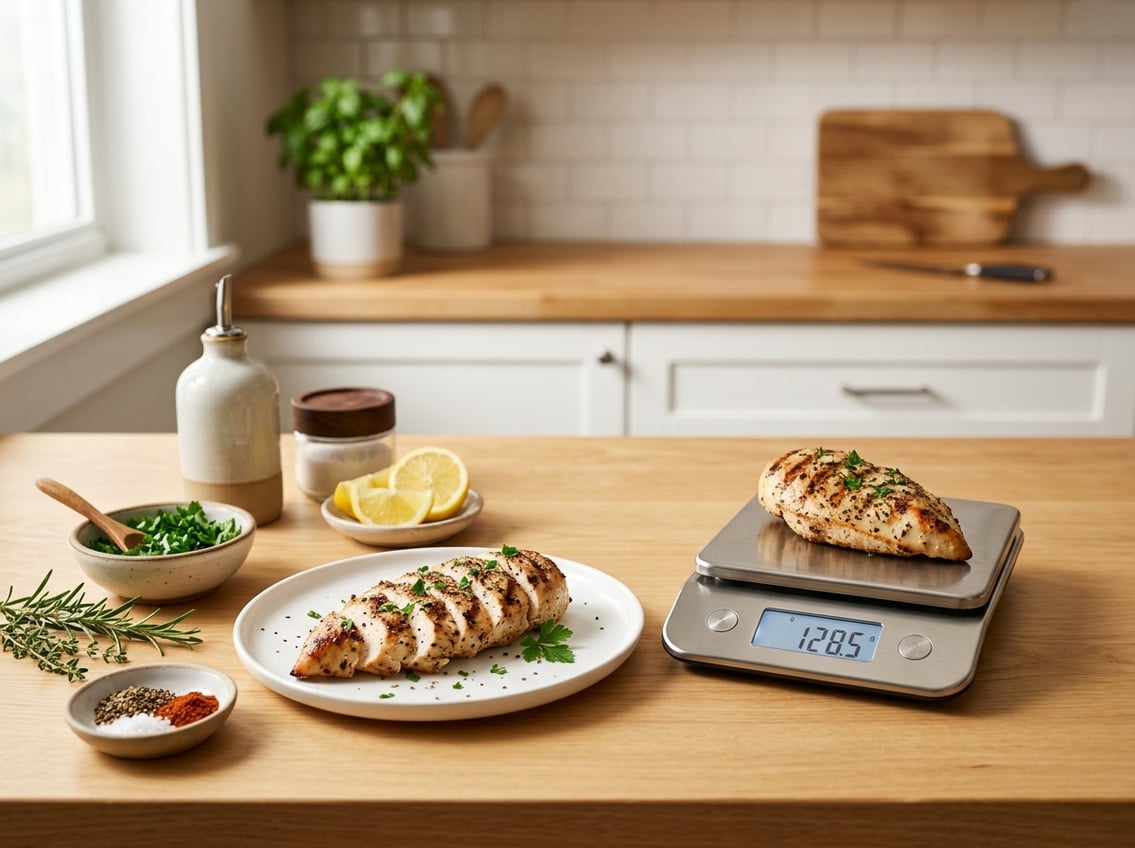
Chicken breast is a lean protein, so portion size matters for both calories and protein intake. Cooking method, moisture loss, and added ingredients can change the final numbers.
Protein and Calories Per Serving
A 3-ounce cooked chicken breast usually provides about 25 grams of protein and around 120 to 130 calories, depending on preparation. A larger 4-ounce cooked portion gives you more protein and more calories.
Breading, oil, butter, and sauce can raise the calorie total quickly. Grilled or baked chicken stays closer to the lean nutrition profile than fried chicken.
How Cooking Changes Weight and Yield
Chicken loses water during cooking, so the final weight is lower than the raw weight. That shrinkage is normal and depends on heat, time, and method.
High-heat cooking can reduce yield more than gentle cooking. If you want to compare recipes or track intake closely, weigh chicken before and after cooking so you can see the difference.
Safe Minimum Internal Temperature
The USDA recommends cooking chicken breast to a minimum internal temperature of 165°F for safe consumption.
Check the thickest part of the breast with a food thermometer for the most reliable result.
Do not rely on color alone. Sometimes a properly cooked chicken breast still appears slightly pink near the bone or in thicker areas, so always use temperature as your guide.


