
Is It Necessary to Brine Chicken Breast? When It Helps
Is it necessary to brine chicken breast? Not every time, but brining can make a clear difference when you want lean chicken to stay juicy and taste better after cooking.
Boneless skinless chicken breasts are so low in fat that they dry out fast if you cook them a little too long.
Brining helps most when you cook chicken breast quickly over high heat, or when the meat is especially thin and lean. A short brine can improve flavor, moisture retention, and texture without much extra work.
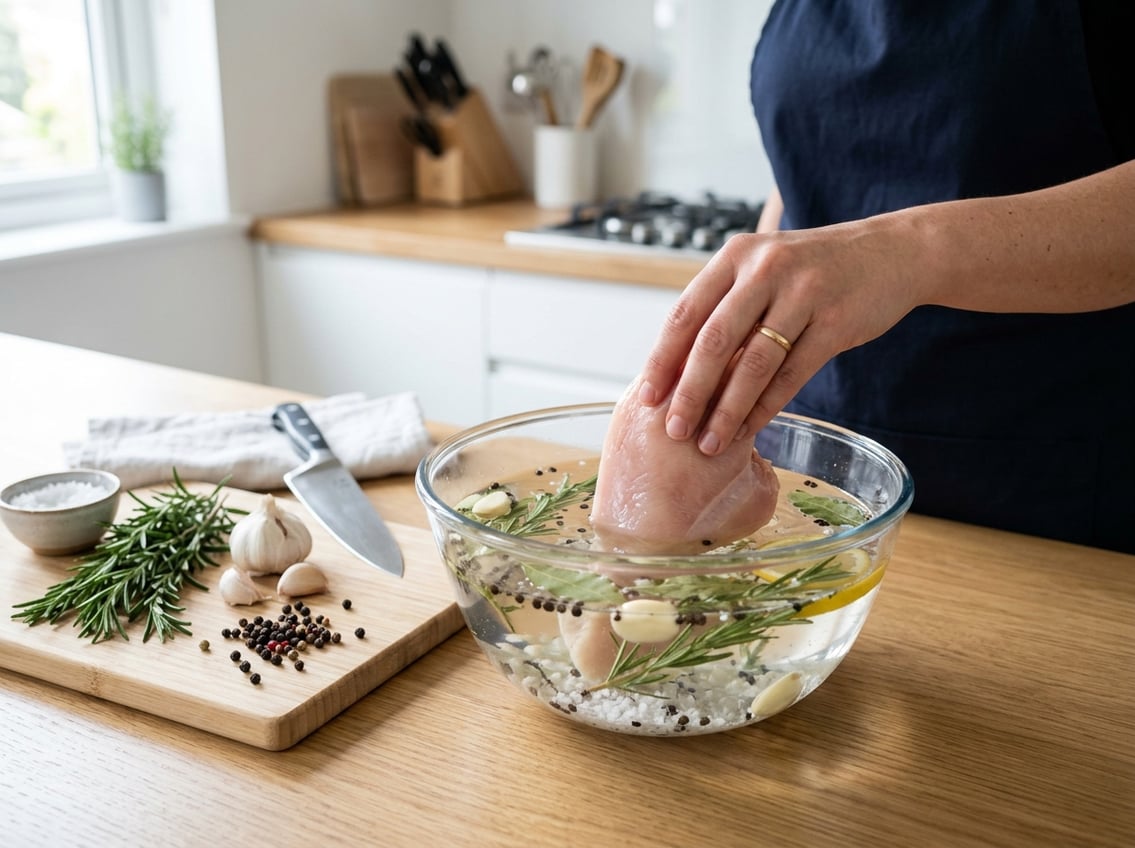
Brining chicken seasons the meat before cooking. It does not fix every problem, and it is not required for every recipe, but it is one of the most reliable ways to make chicken breast taste better with less guesswork.
When Brining Makes a Noticeable Difference

Brining chicken breast works best when the cut is lean, thin, and likely to cook fast. In those cases, a brine helps the meat hold onto moisture and improves seasoning from edge to center.
A good brine gives you a little margin for error. If you grill, pan-sear, or roast boneless skinless chicken breasts, a brief soak can reduce the chance of dry, bland meat.
Best Cases for Lean and Fast-Cooking Cuts
You get the most value from brining chicken breasts when you work with:
- Thin or uneven chicken breast pieces
- Boneless skinless chicken breasts
- High-heat cooking methods like grilling or pan searing
- Recipes with short cook times
Brined chicken often tastes more seasoned and stays juicier after cooking. Many cooks use a simple brine chicken breasts method before grilling or baking.
When Brining Is Optional or Unnecessary
Brining is less important if your recipe uses a moist cooking method, such as braising, poaching, or simmering in sauce. In those dishes, the chicken spends enough time in liquid that the texture benefit is smaller.
If you already use a salty marinade, seasoned sauce, or cook the chicken a long time in liquid, brining may add little. In that case, spend your effort on cook time, temperature control, and resting the meat.
Brining Chicken Breast vs Brining Chicken Thighs
Chicken thighs are naturally fattier and more forgiving than chicken breast. Brining chicken thighs can help, but they usually do not need it as much as breast meat.
With chicken breast, the main goal is moisture retention. With thighs, the main benefit is more even seasoning and a little extra insurance during longer cooks.
How Brining Works and Which Method to Choose

A brine solution changes the surface and inner structure of the meat enough to improve juiciness and seasoning. The method you choose depends on how much time you have and how much cleanup you want.
Wet brine, dry brine, and quick brine all work. The best choice is the one that fits your schedule and cooking style.
What a Brine Solution Does to Meat
A brine solution is usually salt mixed with water. Salt changes how muscle proteins behave, which affects moisture loss during cooking through protein denaturation and related changes in the meat structure.
Brining gives you more seasoned chicken that holds onto juices better. A basic chicken brine recipe can make a plain breast taste less flat and less dry.
Wet Brine vs Dry Brine
A wet brine uses water and salt, sometimes with sugar, herbs, or aromatics. Use this when you want even coverage and have time to chill the chicken in liquid.
A dry brine uses salt rubbed directly onto the meat. It is easier to store in the fridge, and it avoids the need for a large container. For many home cooks, a dry brine is the simplest way to brine on weeknights.
Quick Brine for Short Prep Windows
A quick brine is the best fit when you only have a short prep window. Even 20 to 30 minutes can help, as long as you do not leave the chicken in too long.
If you need a basic chicken brine fast, use cold water, salt, and a small container that fully covers the meat. A quick chicken brine recipe is often enough for dinner the same day.
Timing, Salt Ratios, and Mistakes to Avoid

Timing matters as much as salt. Too little time gives you little benefit, while too much can leave the texture odd or the seasoning too intense.
Keep your salt ratio steady and match the brining time to breast size for the safest results.
Recommended Brining Time by Breast Size
For most boneless skinless chicken breasts, a short brine works best. Thin breasts may only need 20 to 30 minutes, while thicker pieces can benefit from 1 to 2 hours, as noted in timing guides for chicken breast.
A simple rule works well:
- Thin breasts, 20 to 30 minutes
- Average breasts, 30 to 60 minutes
- Thick breasts, up to 2 hours
Longer brining times do not always mean better results. If you leave the meat too long, the texture can turn spongy or overly cured.
How Salt Type Changes the Recipe
Salt type changes volume, so measuring by spoon can be less accurate than measuring by weight. Diamond Crystal kosher salt is less dense than Morton kosher salt, so the same volume does not weigh the same.
One dependable starting point for a brine for chicken breasts is about 1/4 cup kosher salt per quart of water, or roughly 33 grams per 4 cups of water, as shown in a practical brine guide. If you use a different salt, adjust carefully.
How to Prevent Overly Salty or Spongy Results
The most common brining mistakes are using too much salt, brining too long, or forgetting that the chicken will absorb some seasoning from the brine itself. These mistakes can lead to overly salty chicken or a soft, strange texture.
To avoid that:
- Measure salt carefully
- Keep the chicken cold
- Stick to the recommended brining time
- Do not season heavily again before cooking
If you are not sure, start with a shorter brining time. You can always add more flavor after cooking, but you cannot remove excess salt from the meat.
What to Do After Brining

Once you remove the chicken from the brine, the next steps matter. You want the surface dry enough to brown well, and you want the cooking method to match the added salt in the meat.
The same logic works for other meats, including pork chops, where salting ahead can improve flavor and texture.
Prepping the Chicken Before Heat
After brining, pat the chicken dry with paper towels. This helps the surface brown instead of steaming.
If you wet brined the meat, skip extra salt on the outside or use only a light amount of other seasoning. The brine already did part of that work.
How to Cook Brined Chicken
You can grill, bake, or pan-sear brined chicken breast. The main goal is to avoid overcooking, since the meat will already be seasoned and more moisture-friendly than untreated chicken.
For how to cook brined chicken breast, dry the meat, add a little oil, and cook it until it reaches a safe internal temperature. Rest it for a few minutes before slicing so the juices stay in the meat.
Using the Same Logic for Other Meats
The same basic idea behind brining chicken also works for other lean cuts, including pork chops.
A short salt treatment helps these meats keep moisture during high-heat cooking.
Brining pork chops is common in home cooking.
This method is most helpful when the meat is lean and easy to dry out.


