
Chicken Breast or Thighs for Fajitas: Which Is Better?
When you choose chicken breast or thighs for fajitas, the better cut depends on what you want from the meal.
If you want lean, fast-cooking chicken with a mild flavor, chicken breast is the practical pick.
If you want juicier meat that is more forgiving on high heat, thighs are usually the better choice.
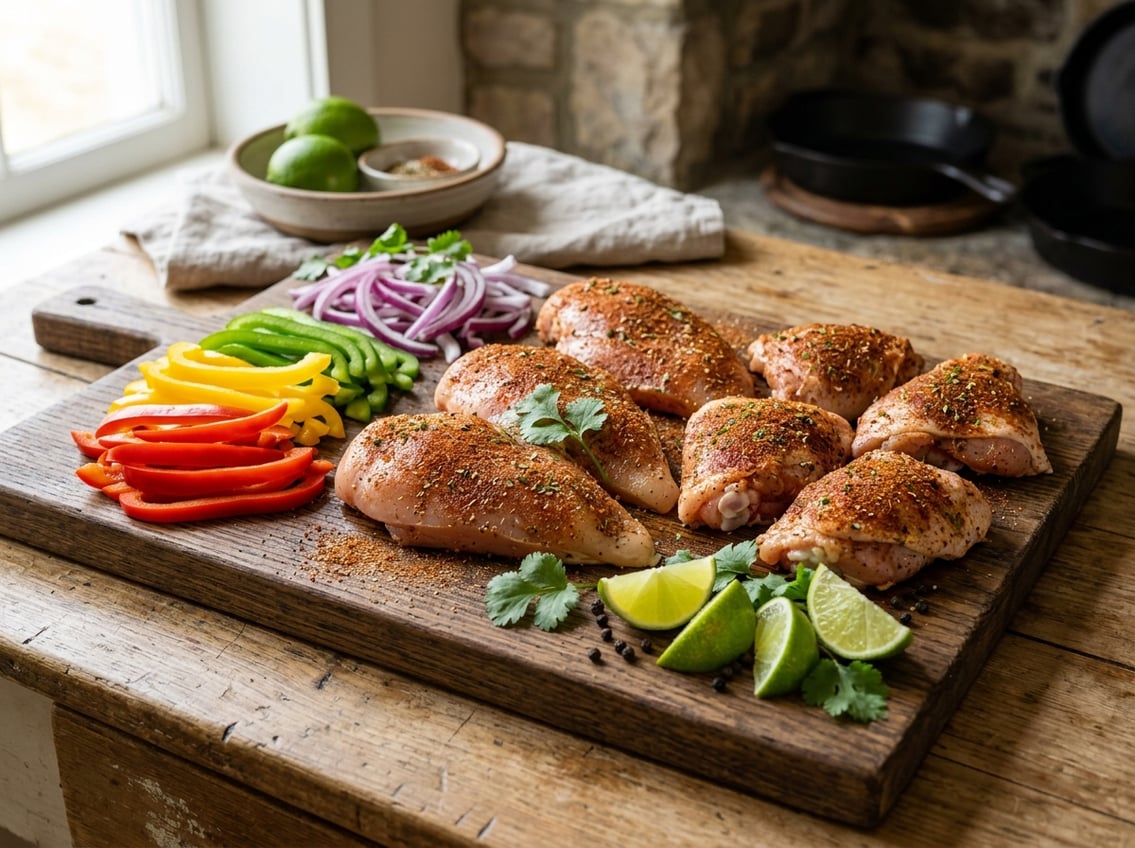
Chicken fajitas turn out best when the meat, peppers, and onions all cook at a similar pace.
Once you know how each cut behaves, you can build a fajita recipe that fits your time, taste, and texture goals.
The right choice also affects how your marinade works, how long you should cook, and how the chicken feels inside flour or corn tortillas.
The Quick Answer: When to Choose Each Cut
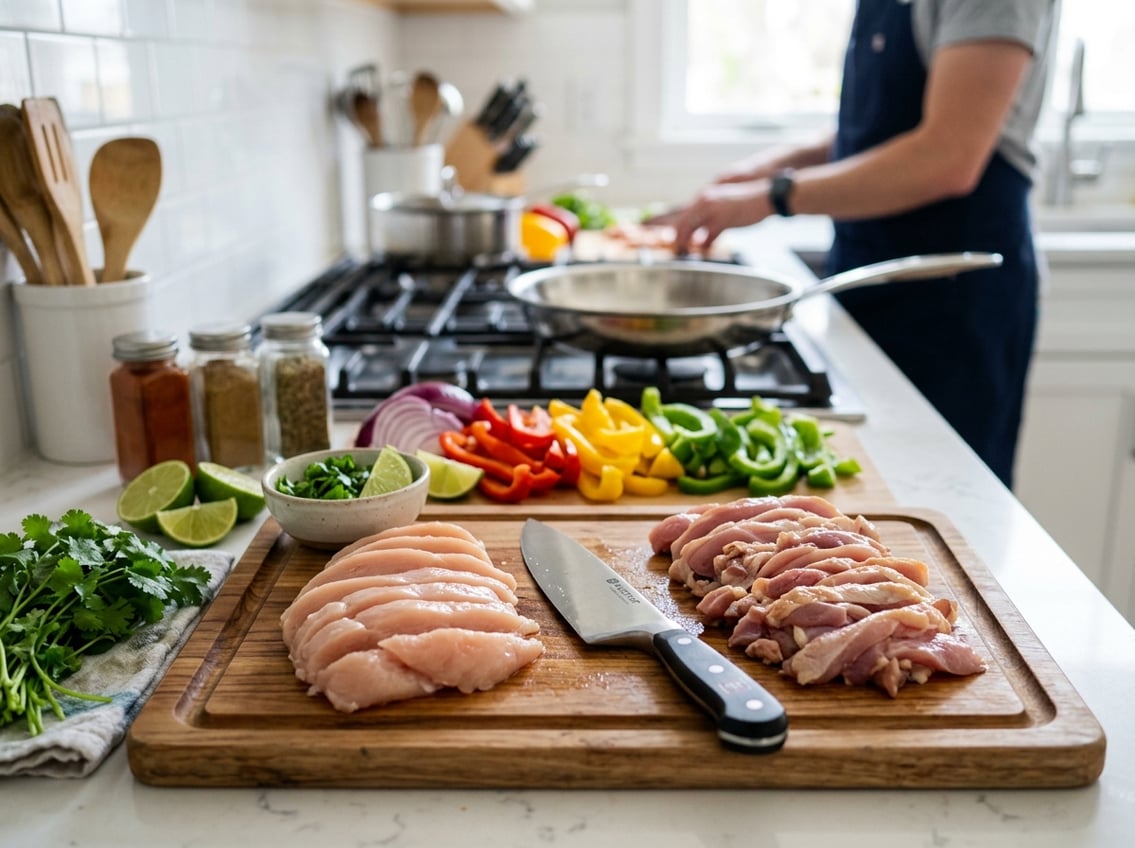
Chicken breasts work best when you want a leaner meal, a mild flavor, and quick cooking.
Boneless skinless chicken breasts also slice cleanly and fit well into easy weeknight fajitas.
Thighs are better when you want extra juiciness, richer flavor, and more forgiveness if you cook a little past the ideal point.
Why Chicken Breasts Work Best for Leaner, Faster Meals
Chicken breasts cook quickly and give you a lighter fajita filling.
They absorb flavor well from marinades and work nicely when you want a cleaner bite inside tortillas.
They are a smart choice if you prefer simple prep and a faster pan-sear.
For the best result, slice them evenly and avoid overcooking.
Why Thighs Win for Juiciness and Forgiveness
Chicken thighs stay moist more easily because they contain more fat and connective tissue.
That makes them a strong choice for marinated chicken cooked over high heat.
If you are worried about dry fajitas, thighs give you more room for error.
They also hold up well in a hot skillet and develop a deeper, more savory flavor.
Which Cut Delivers Better Texture in Tortillas
For tight, neat strips in tortillas, chicken breast has a firmer, cleaner texture.
For a softer, juicier bite, thighs usually feel better in warm tortillas.
If you want the filling to stay tender after you add peppers, onions, and toppings, thighs often win.
If you want lighter texture and less richness, breasts are the better fit.
How Cut Choice Changes Flavor, Marinade, and Seasoning
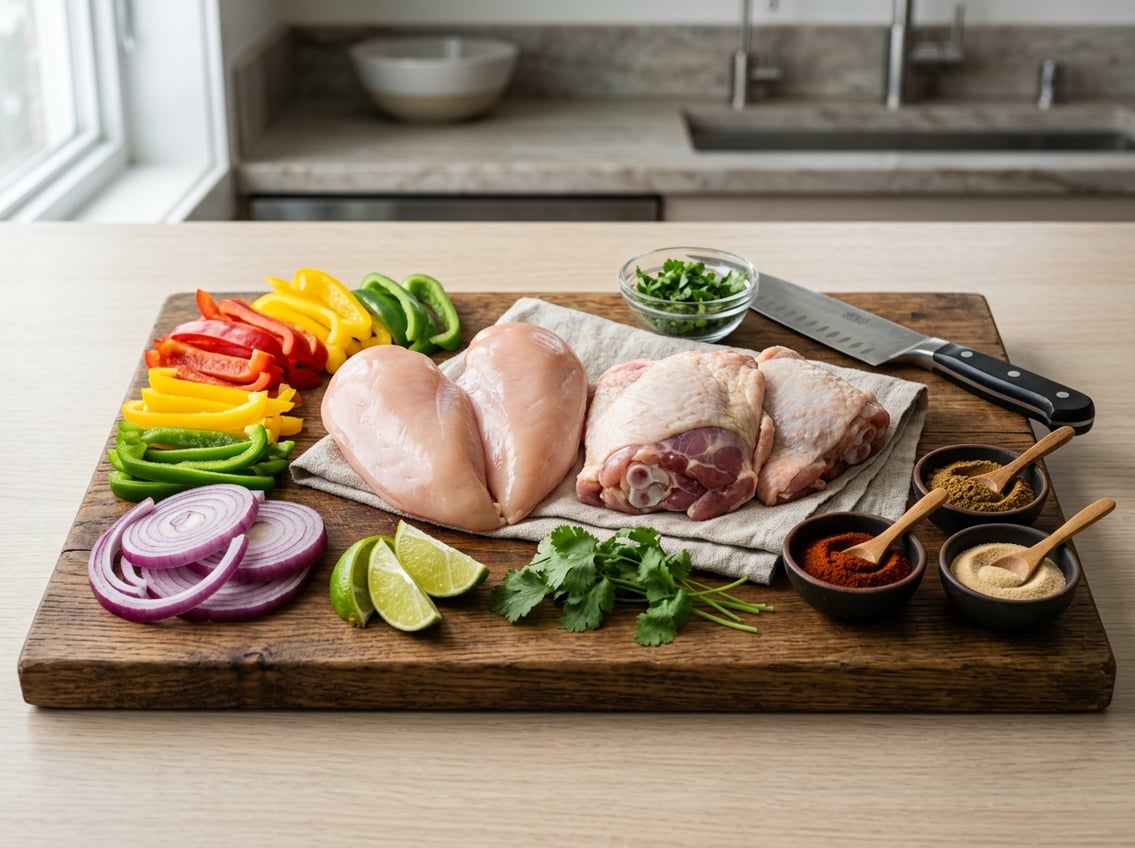
The cut changes how much flavor the chicken picks up and how long it can sit in a marinade.
Breast meat needs a shorter soak and careful timing, while thighs can handle more time and stronger seasoning.
Your choice also changes how bright citrus, spice, and oil taste in the finished dish.
Best Fajita Marinade Timing for Breasts vs Thighs
A fajita marinade with lime juice, oil, garlic, and spices works well for both cuts.
For breasts, shorter marinating is usually better, since too much acid can make the texture soft.
For thighs, a longer soak gives more time for flavor to settle in.
According to Chicken Thighs or Breast for Fajitas: The Essential Guide, thighs handle longer marinating and higher heat more easily than breasts.
That makes them a strong pick when you want a deeper fajita flavor.
Homemade Fajita Seasoning vs Store-Bought Blends
Homemade fajita seasoning gives you more control over salt and heat.
A simple mix of chili powder, ground cumin, and red pepper flakes lets you match the spice level to your taste.
Store-bought blends are useful when you want speed.
Homemade fajita seasoning usually tastes fresher, and it is easy to mix with vegetable oil or neutral oil for a dry rub or a quick marinade.
How Lime Juice, Chili Powder, and Ground Cumin Affect Each Cut
Lime juice brightens both cuts, but it stands out more on chicken breast because the meat is milder.
Chili powder and ground cumin add the most value when you want fajitas that taste bold without needing a long marinade.
If you use thighs, those spices blend into the richer meat flavor and create a deeper result.
If you use breasts, the same spices help the chicken taste fuller and less plain.
A small amount of red pepper flakes can add heat without overpowering the dish.
Best Cooking Methods for Tender, Sizzling Results
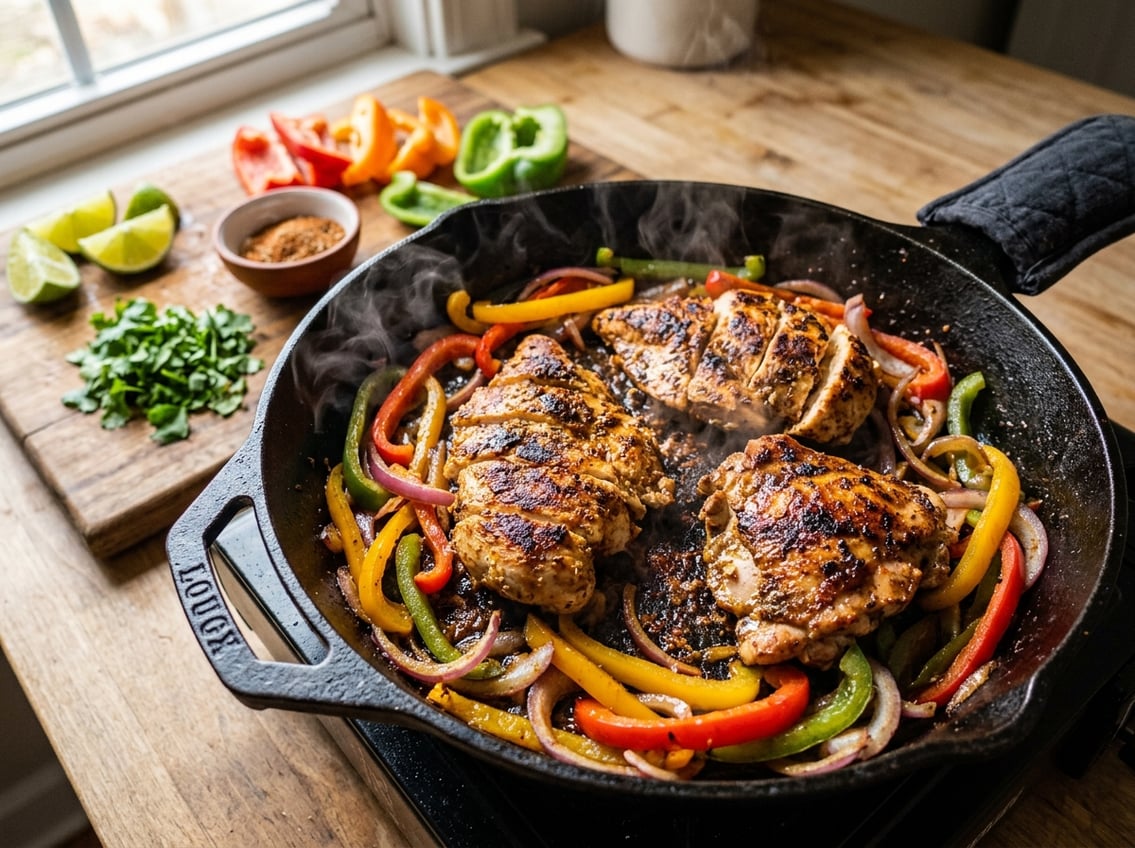
High heat creates easy chicken fajitas with good color and tender meat.
A skillet, grill, or broiler all work well if you keep the chicken in even pieces and avoid crowding the pan.
Bell peppers and onions should stay crisp-tender, not soggy.
Skillet Cooking With Bell Peppers and Onions
A heavy skillet works especially well for bell peppers and onions because it gives strong browning in a short time.
Use a little vegetable oil or neutral oil, then sear the chicken first and cook the sliced bell peppers and onion in the same pan.
That method builds flavor fast and fits a simple fajita recipe.
Keep the heat high so the vegetables char lightly instead of steaming.
Grilling and Broiling Differences by Cut
Grill breasts easily by pounding them to an even thickness first.
Thighs are more forgiving on the grill because they handle direct heat better and stay juicy longer.
Under a broiler, both cuts work well when sliced thin or cooked whole and sliced after resting.
Thighs usually keep a better texture if you want a deeper char.
How to Slice and Rest Chicken for Better Fajitas
Slice the chicken against the grain after cooking, or before cooking if you want thinner strips that cook quickly.
Resting the meat for a few minutes helps the juices stay in the chicken instead of running out on the cutting board.
This step matters most for breasts, which dry out faster.
It also improves the texture when you toss the slices with peppers and onions right before serving.
Serving Ideas, Variations, and Best Pairings
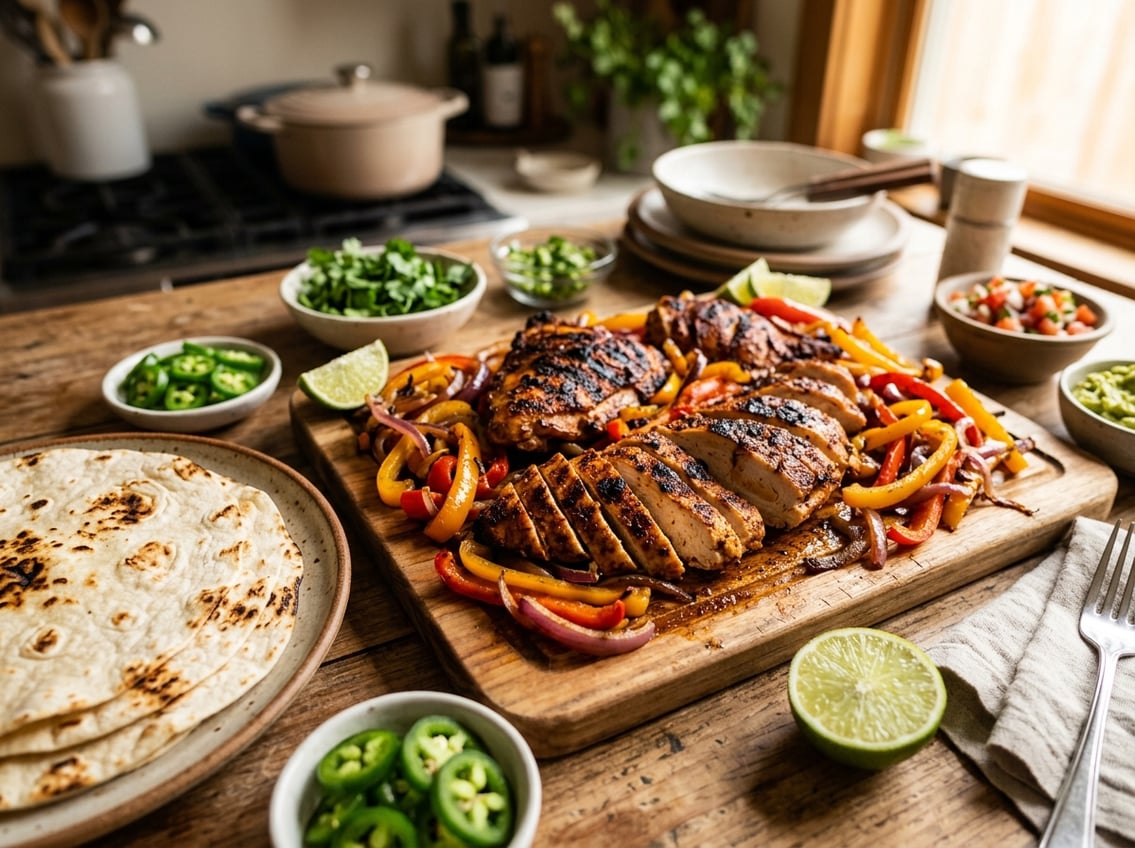
The final fajita plate works best when the tortillas are warm and the toppings add contrast.
Keep the filling hot, the tortillas soft, and the toppings fresh.
That balance matters whether you use a mild breast filling or juicier thighs.
Best Tortillas, Toppings, and Finishing Touches
Flour tortillas are the common choice for soft, flexible fajitas.
Corn tortillas work well too, especially if you want a more distinct corn flavor and a slightly firmer bite.
Always serve warm tortillas so they do not crack.
Good fajita toppings include sour cream, guacamole, pico de gallo, salsa verde, corn salsa, and lime wedges.
What to Serve Alongside Fajitas
Mexican rice and black beans make classic side pairings.
They balance the spice and help round out the meal.
You can also keep the side dishes simple if the fajitas already have plenty of toppings.
A bright salsa and a bowl of beans are often enough to finish the plate.
When to Use This Method for Steak or Shrimp Instead
You can use the same skillet method for steak fajitas and shrimp fajitas.
Steak cooks well with high heat and quick slicing.
Shrimp needs even less time in the pan, so cook it separately from the vegetables.
Once you know how to control the heat, you can switch proteins without changing the whole dish.


