What Do Chicken Breasts Look Like? Raw and Cooked Signs
Chicken breast appearance depends on whether it is raw, cooked, or partway through cooking.
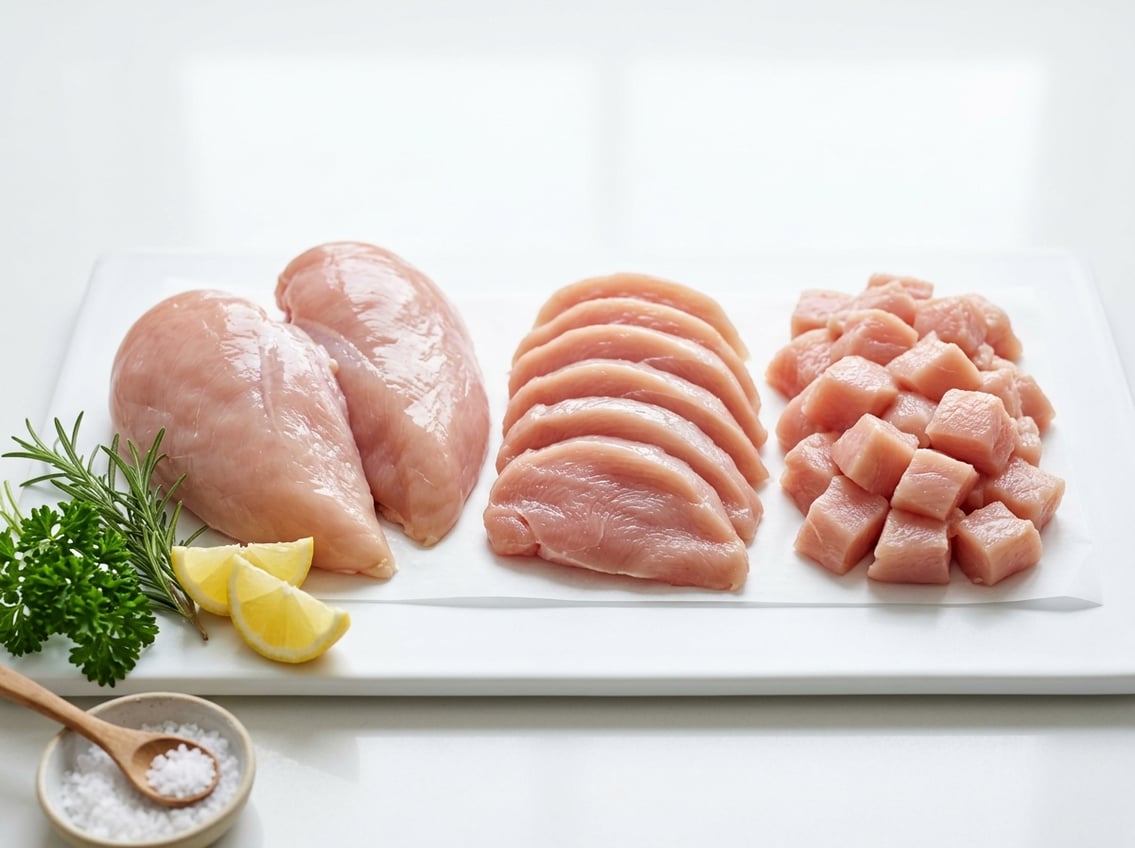
In the store, raw chicken breasts usually look pale pink, moist, and smooth.
On the plate, properly cooked chicken breast turns opaque, firm, and white or very light tan in the center.
Chicken breast is a common white meat in many chicken breast recipes, and its appearance changes depending on the cut and cooking method.
How to Recognize Raw Chicken at the Store
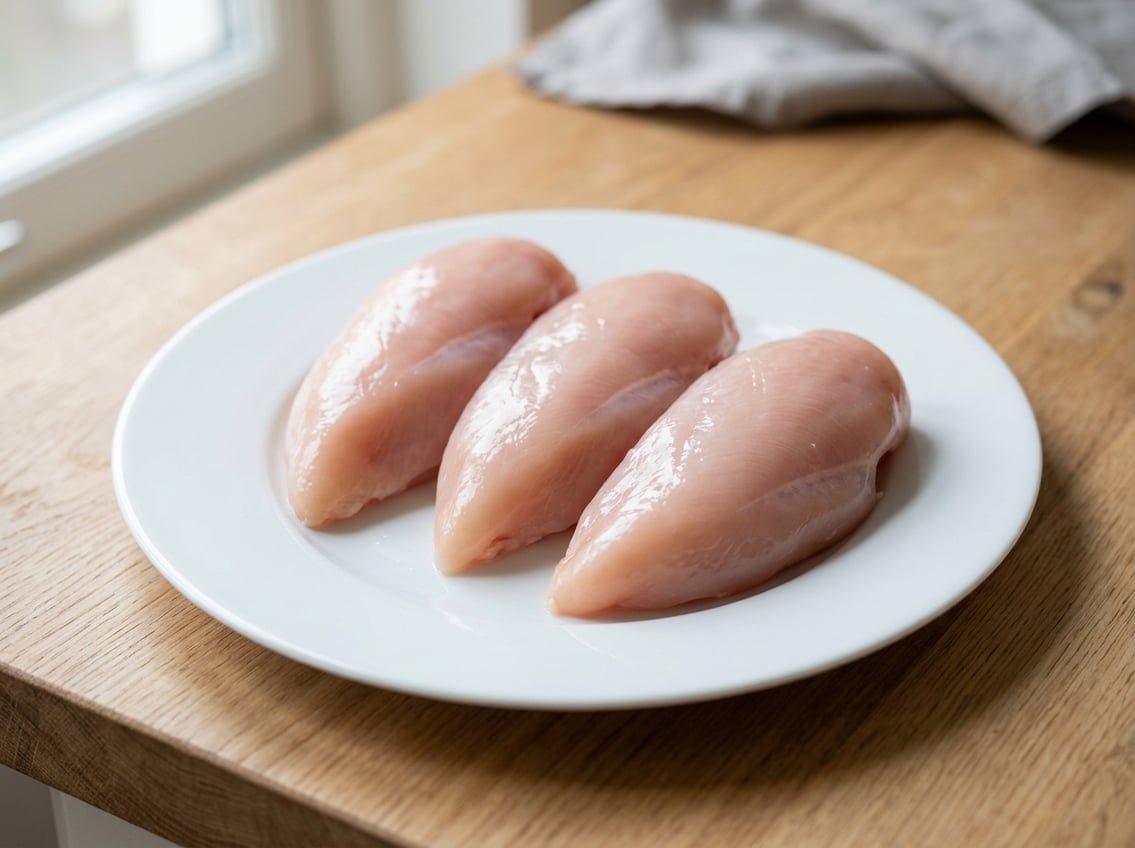
Raw chicken breast should look fresh, clean, and even in color.
The surface usually appears moist, not slimy, and the meat should seem plump rather than dried out.
Since chicken breasts are a type of white meat, the color is lighter than cuts like thighs.
Normal Color, Shape, and Surface Texture
A raw boneless skinless chicken breast is usually pale pink with a slight peach tone.
A skinless chicken breast and a skin-on chicken breast can look different on the outside because the skin changes the visible color and texture.
The flesh should look smooth and springy.
If the package lets you see the meat well, choose an even color with no gray patches or dry edges.
How Size and Packaging Can Change Appearance
Chicken breasts in U.S. stores vary in size.
Some are thick and wide, while others are smaller and more tapered.
Vacuum-sealed packs can make the meat look darker or tighter at first, which is not always a problem.
A larger breast may look less uniform than a small one, especially near the thicker end.
Tight packaging can press the meat into a compact shape, so the cut may seem flatter once you open it.
Red Flags That Suggest Spoilage or Poor Quality
Bad signs include a sour smell, a sticky or slimy surface, and dull gray or greenish color changes.
A package with excess cloudy liquid or swollen packaging is another warning sign.
The Daily Meal’s red flag guide recommends using visual checks when buying raw poultry, and foul odor is a major warning sign.
If the chicken looks off, feels tacky, or smells wrong, discard it.
What Properly Cooked Meat Should Show
A properly cooked chicken breast looks opaque through the center and feels firm with a little spring.
The meat should no longer look translucent or glossy in the middle.
Color alone does not guarantee doneness, since thickness and cooking method affect the final look.
You want the inside to be evenly cooked, with juices that run clear when you cut the meat.
Interior Color, Juices, and Texture
A finished chicken breast is usually white to light tan inside, with no raw pink center.
The texture should be juicy, not rubbery, and the meat should separate cleanly when sliced.
A slice from the thickest part should show the same color throughout.
If the center still looks shiny or slightly jelly-like, it needs more time.
How to Spot Undercooked and Overcooked Results
An undercooked chicken breast may still show pink, translucent, or soft areas in the middle.
The juices may look pink or cloudy, not clear.
An overcooked chicken breast often looks very pale, dry, and stringy.
The surface can look tight, and the meat may break apart in a crumbly way instead of staying juicy.
Why a Meat Thermometer Matters More Than Guesswork
A meat thermometer gives you a more reliable answer than color alone.
The USDA says poultry should reach 165°F (74°C).
A thick chicken breast can look done on the outside while the center is still unsafe.
Temperature checks help ensure safety.
How Appearance Changes by Cooking Method
The way you cook a chicken breast changes its color, crust, and moisture level.
Some methods create browning and a firm outer layer, while others leave the surface pale and soft.
Even when the chicken is fully cooked, it may not all look the same.
Baked and Roasted Results
A baked chicken breast usually looks pale golden on top, especially if you season it or brush it with oil.
A roasted chicken breast often has a slightly deeper brown color at the edges.
Both methods can leave the inside white and juicy.
If you use gentle heat and cover the pan, the outside may stay lighter than you expect.
Grilled and Fried Results
A grilled chicken breast often has dark grill marks and a browned surface.
The inside should still be opaque and moist.
A fried chicken breast usually looks the most deeply browned on the outside, especially if it has a breaded coating.
The crust can hide the inside, so slicing or using a thermometer is important.
Poached Results and Minimal Browning
A poached chicken breast often looks very plain.
It may stay pale on the outside because it cooks in liquid instead of dry heat.
This method gives you a smooth, uniform look with little to no browning.
The meat should still be fully opaque inside.
Common Cuts and Recipes That Affect Expectations
The way a breast is cut changes how it looks before and after cooking.
Thickness, skin, and bone can all change the shape, browning, and slice pattern.
Familiar dishes also set different expectations for color and texture.
Boneless Versus Bone-In and Skinless Versus Skin-On
A boneless skinless chicken breast looks smooth and simple, with no bone shape showing through.
A skin-on chicken breast looks fuller and may brown more deeply because the skin protects the meat.
A skinless chicken breast shows the meat directly, so any color change is easier to see.
Bone-in pieces can cook more unevenly, which changes how the final slice looks.
Why Thin Cutlets Look Different From Thick Portions
Thin pieces cook faster and often look more browned, especially on the edges.
Thick portions stay paler longer and may look slightly pink in the middle even when they are close to done.
If you pound the meat flat or slice it into cutlets, the breast will cook more evenly and look less bulky.
How Familiar Dishes Change the Final Look
A chicken breast recipe like chicken marsala browns the meat and covers it in sauce, so you see less of the chicken itself.
Chicken parmesan adds breading, sauce, and cheese, hiding the surface almost completely.
You cannot judge doneness by color alone in these dishes.
The shape, coating, and sauce all change how the chicken breast appears on the plate.