
Does Chicken Breast Need to Rest? What to Do After Cooking
You may wonder, does chicken breast need to rest after cooking? Yes, it does, and that short pause helps keep the meat juicier, more tender, and easier to slice.
When you cut too soon, the juices that cooking pushed outward spill onto the board instead of staying in the meat.
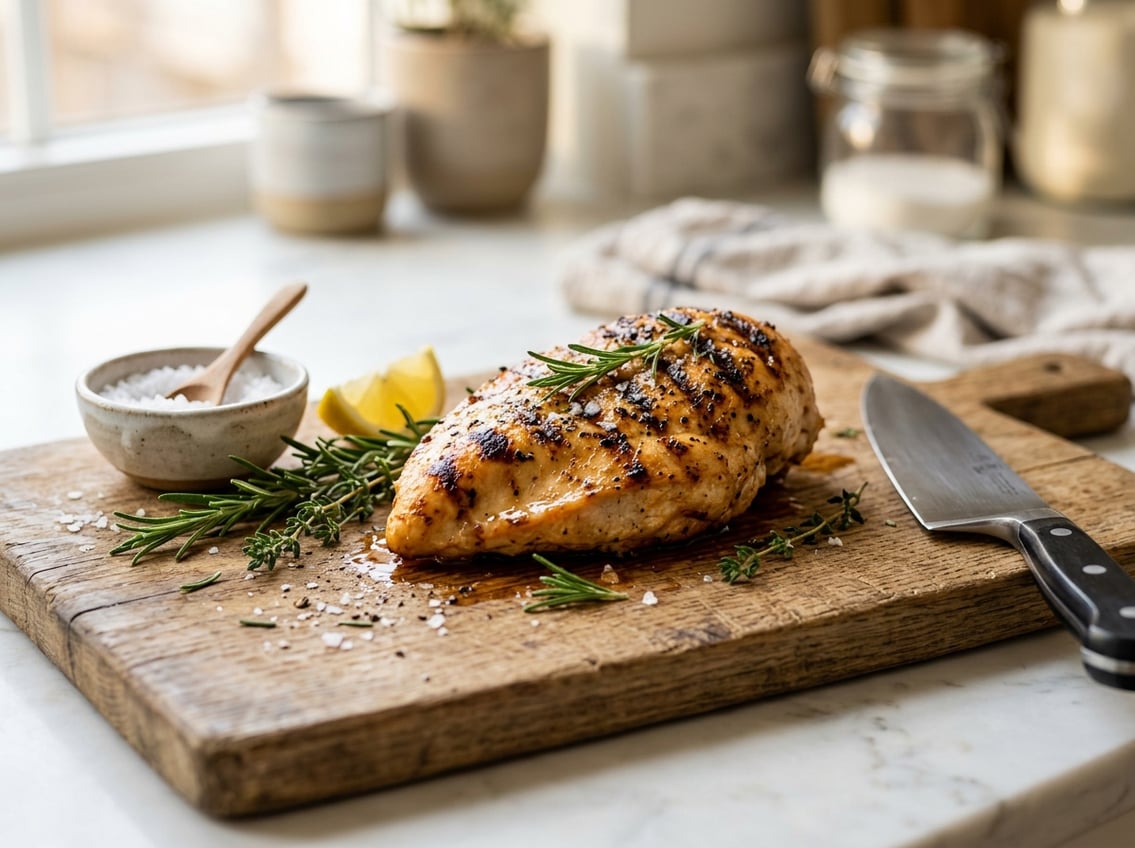
You do not need to rest chicken breast for long. In many cases, a few minutes improves texture and flavor without letting the meat cool too much.
Resting matters most when you want a moist result from a lean cut like chicken breast. It also helps the meat finish cooking gently after it comes off the heat for more even results.
When Resting Helps Most
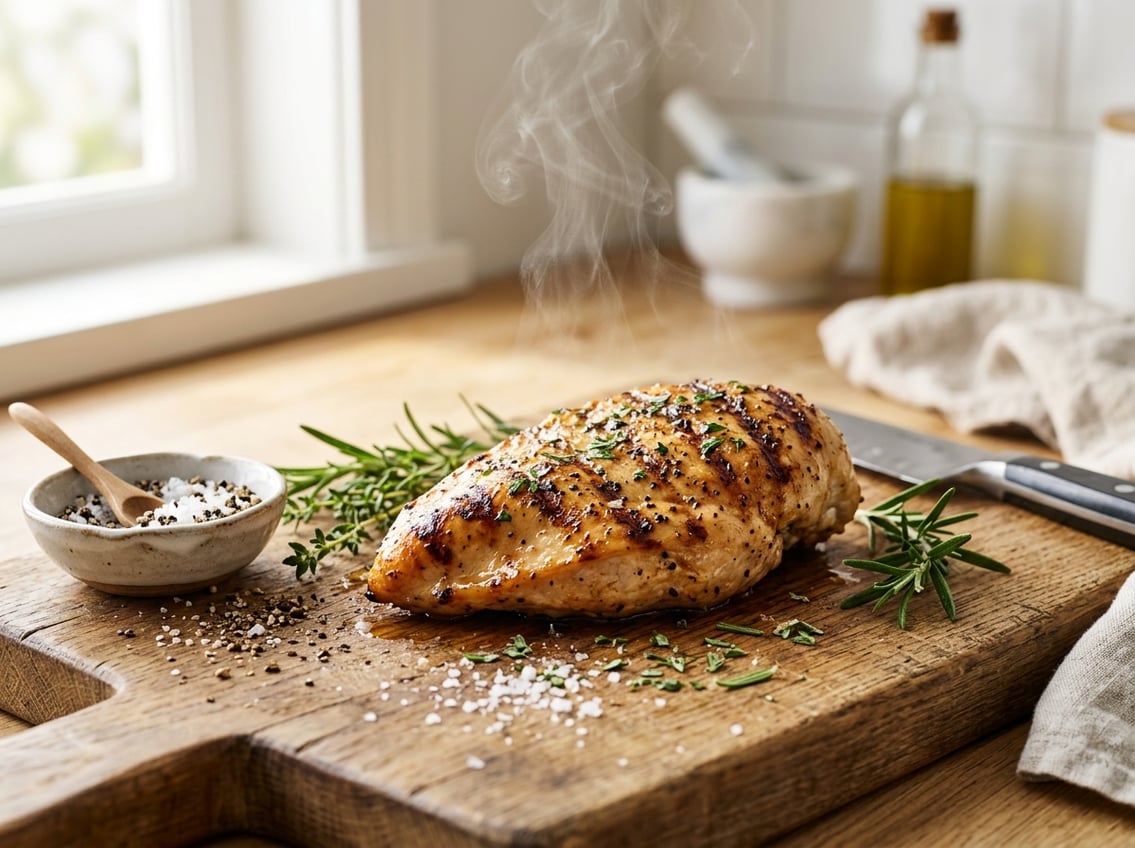
Resting chicken helps most when the meat is thick, cooked at high heat, or sliced for serving right away. You will notice juicier texture and less liquid loss on the cutting board.
If appearance and texture matter for your meal, resting helps the slices hold together better and stay moist.
Why Thick Breasts Benefit More Than Thin Cutlets
Thicker chicken breast pieces hold more heat in the center, so they keep cooking after you remove them from the pan or oven. Resting gives the temperature time to even out and reduces moisture loss.
Thin cutlets cool faster and need less time, so the benefit is smaller. They still gain from a brief rest, just not as much as a thick piece.
When a Short Rest Is Usually Enough
A short rest is usually enough for boneless chicken breast, especially if the pieces are average in size. Five to 10 minutes often lets juices settle.
If you cooked the breast to the right temperature and did not overcook it, a brief rest can make a clear difference.
Situations Where Resting Matters Less
Resting matters less when the chicken is already cut into small pieces or is going into a sauce or soup. In those cases, juice loss is less noticeable.
A quick rest still helps, but it is not as critical as it is for a whole chicken breast served on its own.
What Happens Inside the Meat
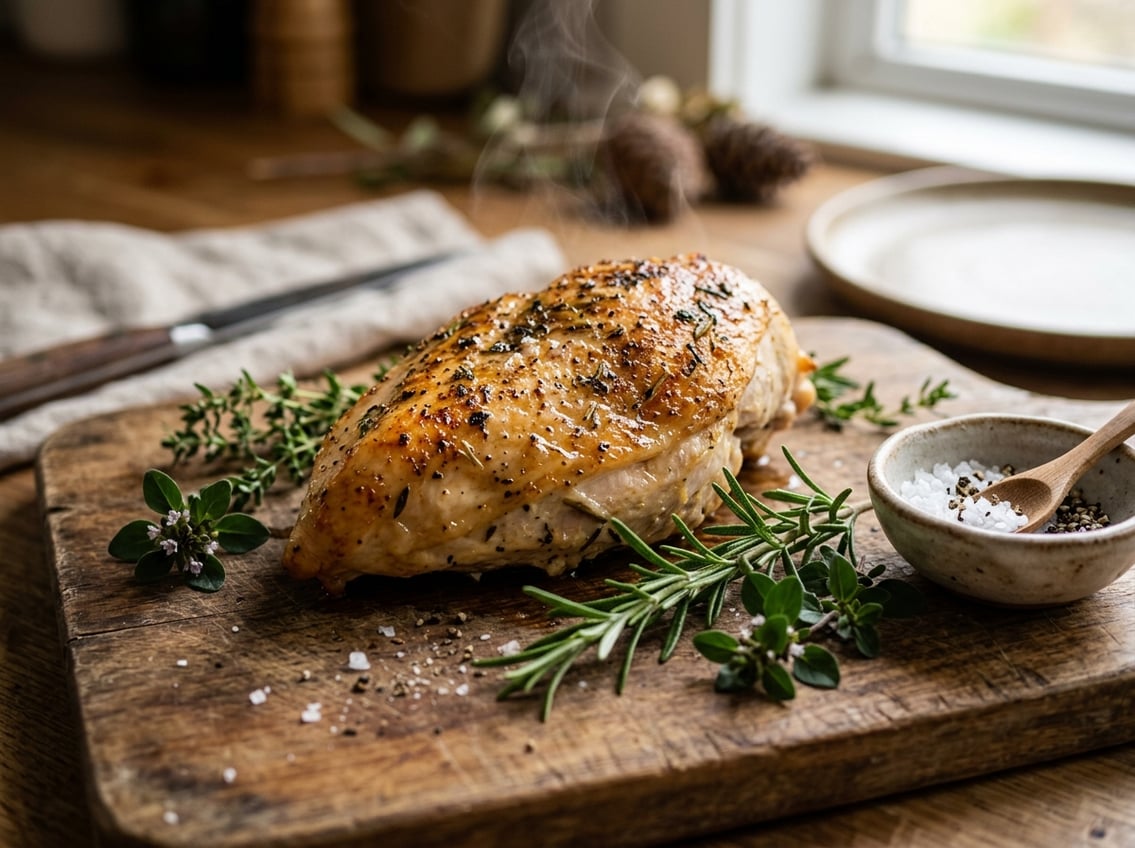
When chicken cooks, the muscle fibers tighten and push moisture toward the surface. Resting gives those fibers time to relax, which helps with carryover cooking and juice control.
The meat keeps more of its moisture, and the slices look cleaner when you cut them.
Carryover Cooking and Final Doneness
Carryover cooking happens after you remove the chicken from heat. The center keeps warming for a few minutes, which can bring the breast to its final safe temperature.
You can pull the chicken slightly early and let the rest finish the cooking gently. According to Should You Let Chicken Rest? Yes, Here’s Why It’s Critical for Juicy, some cooks remove chicken near 155°F and let it rise during rest for better juiciness.
Redistribution of Juices and Moisture Retention
As the meat cools a little, the juices spread back through the chicken breast instead of running out at the first slice. This helps the meat stay moist from edge to center.
You keep more moisture in the meat, so each slice tastes less dry.
Why Slicing Too Early Can Dry It Out
If you cut chicken breast right away, the pressure inside the meat releases at once. The juices spill out, and the slices can seem dry even if the chicken was cooked correctly.
A short rest limits that loss and gives the meat a chance to settle before you carve it.
How to Rest Chicken Breast Properly
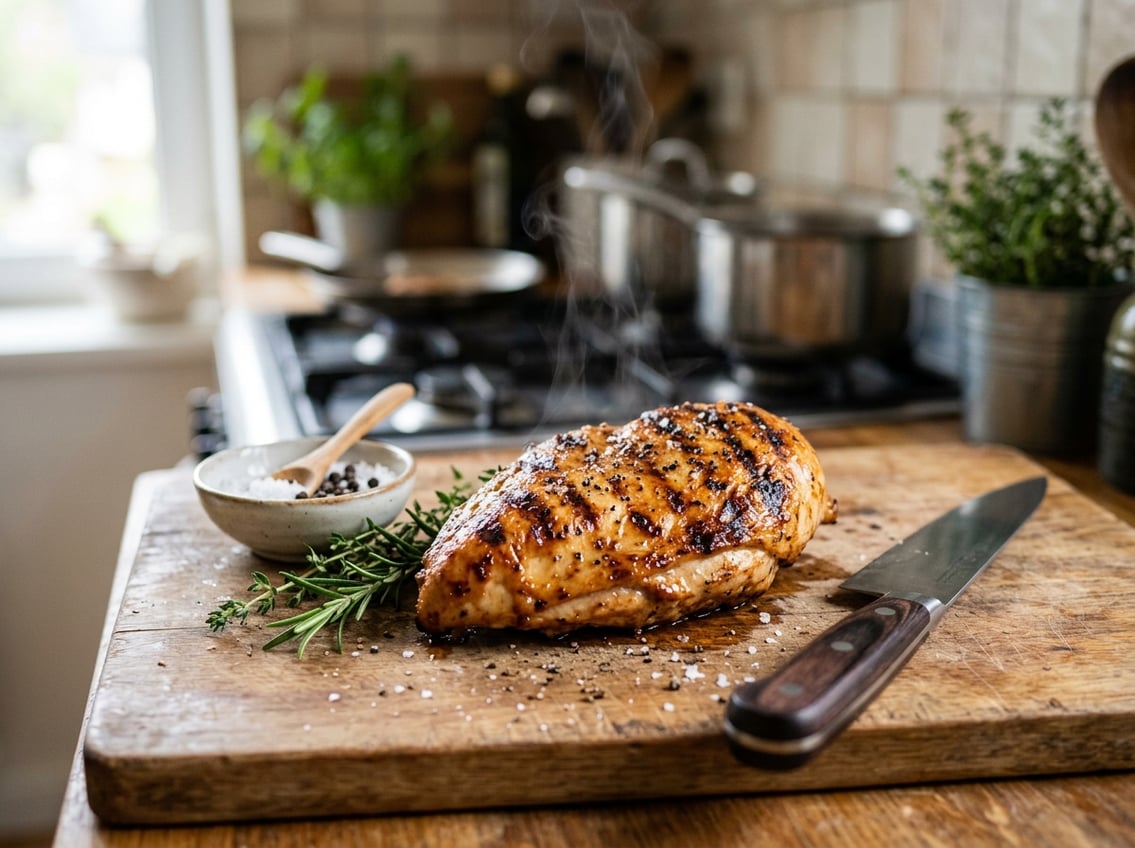
Resting chicken is simple. Give the meat a short pause, keep it loosely covered if needed, and avoid sealing in steam that can soften the surface.
A good setup keeps the meat warm enough to serve while letting excess steam escape.
How Long to Rest Based on Thickness
For most boneless chicken breast pieces, rest for 5 to 10 minutes. Thicker breasts may need closer to 10 minutes, while thinner cutlets can be ready sooner.
If you want a general rule, use the longer end for larger pieces and the shorter end for smaller ones. A recent guide from Juicy Chicken Every Time: The Secret Resting Step You Need to Know also notes that 5 to 10 minutes is a practical range, with longer times for larger breasts.
Whether to Tent With Foil or Leave Uncovered
You can tent with foil if you want to hold heat a little longer. Keep the foil loose, because tight wrapping traps steam and can soften the surface.
If you want the outside to stay firmer, leave the chicken uncovered for a brief rest. That works well when the kitchen is warm and the serving time is close.
Best Practices for Keeping It Warm Without Overcooking
Place the chicken breast on a warm plate or cutting board. Let it sit undisturbed.
Do not cover it tightly or put it back over direct heat.
If you need a longer hold, use very low heat or a warm oven for a short time. Avoid using a hot oven.


