
How Does Chicken Breast Look Like? Visual Cooking Guide
You can usually tell how chicken breast looks by checking three things: the center color, the juice, and the texture.
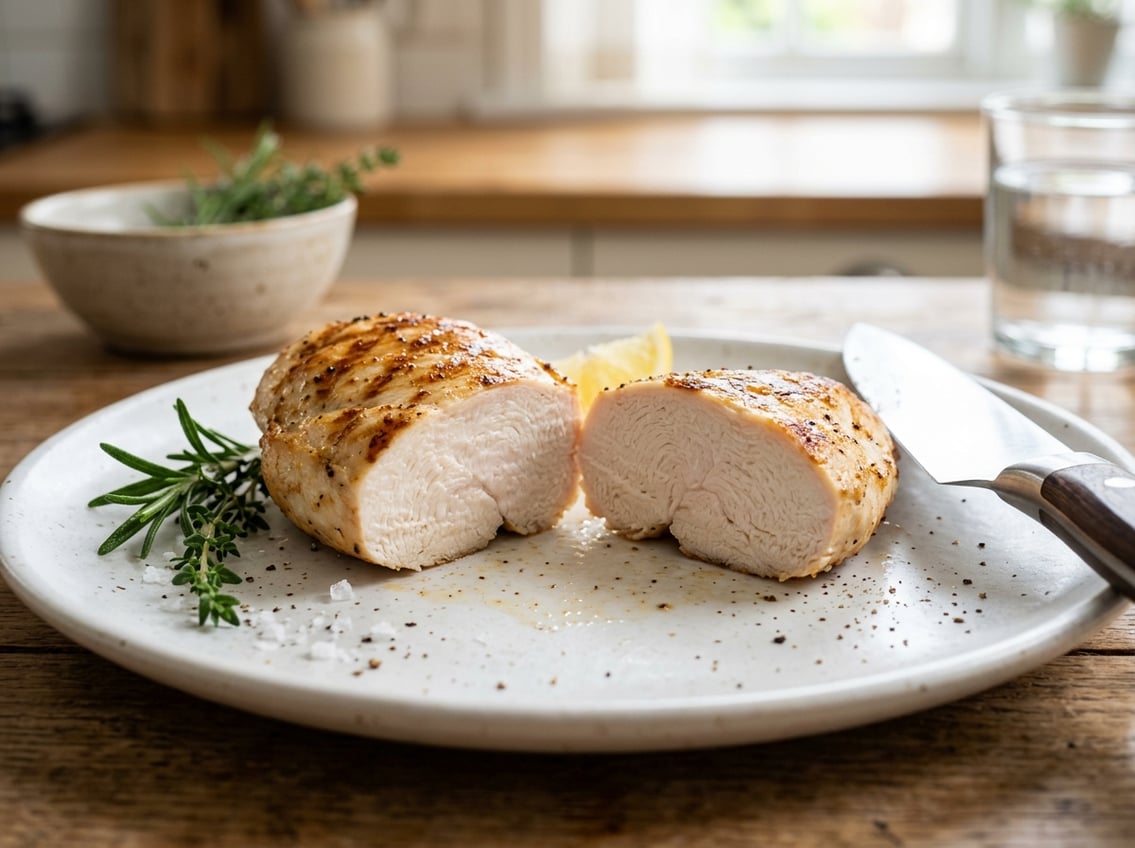
A properly cooked piece appears opaque through the thickest part and feels firm when sliced. It no longer looks glossy or raw in the middle.
Cooked chicken breast looks opaque and white in the center, with clear juices and a firm, not rubbery, texture.
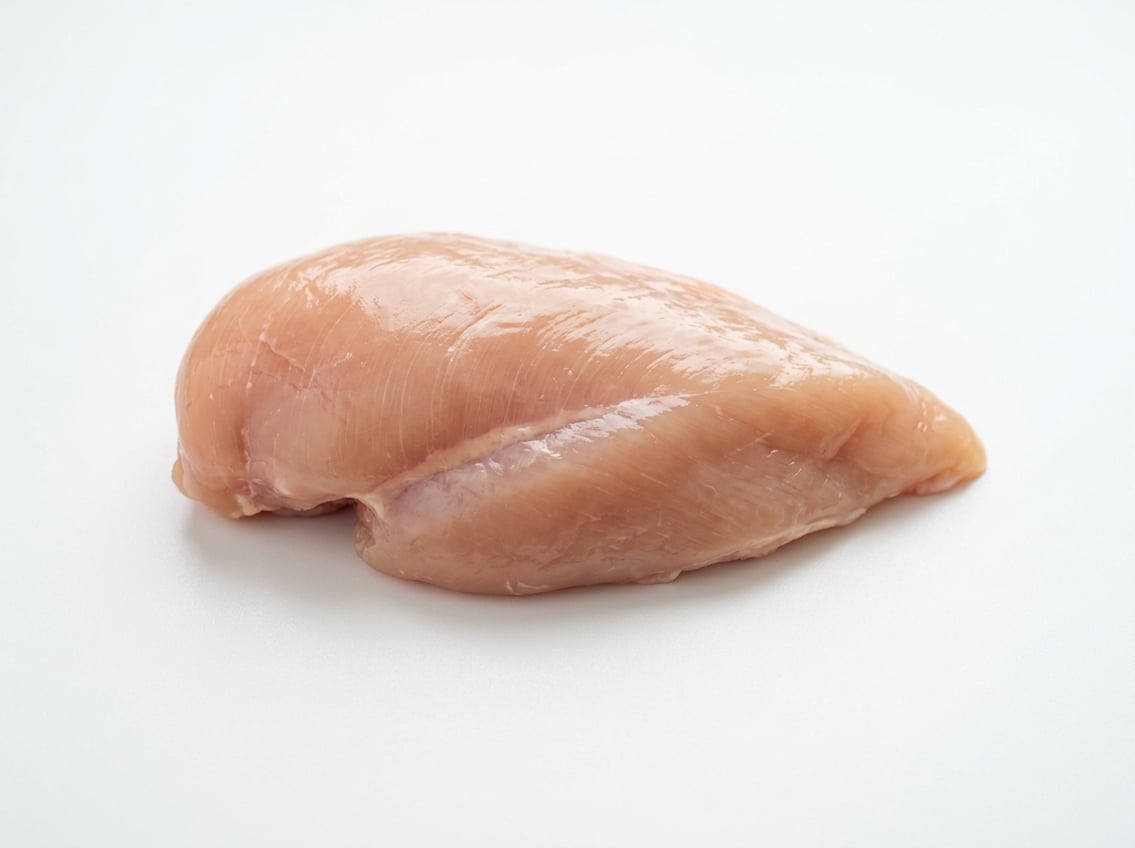
Raw chicken breast is glossy, pale pink, and a little translucent. Once it cooks, the appearance changes quickly.
What Properly Cooked Chicken Breast Looks Like
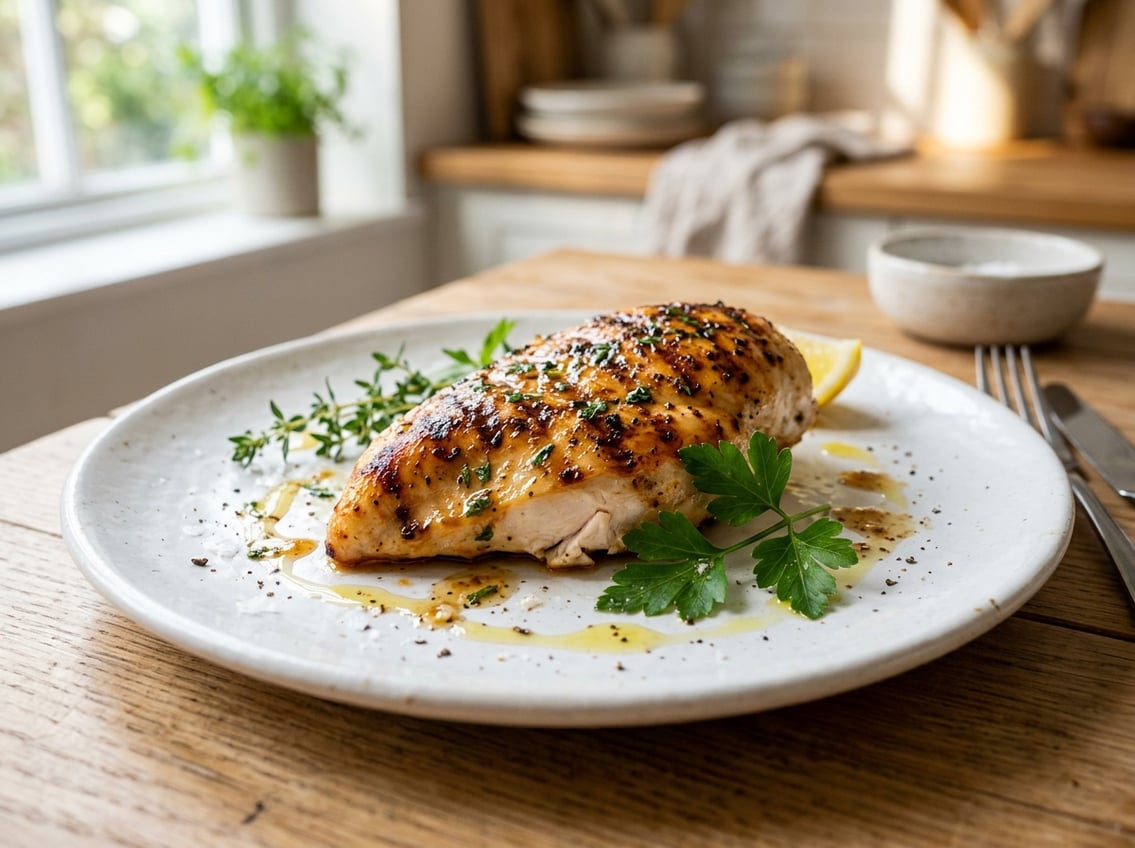
A cooked chicken breast looks pale white or light beige in the center, without shiny raw patches. The surface may be lightly browned from pan heat, the oven, or the grill.
In a guide to cooked chicken breast appearance, the key signs are a white, opaque center and clear juices.
Color and Opacity in the Center
The center should look opaque, not translucent.
If you cut into the thickest part, the meat should not have a wet, glassy look. A small amount of pale pink near the surface can happen from seasoning, smoke, or cooking method, but the middle should not look raw.
Clear Juices and Surface Appearance
When you press or slice the breast, clear juices should run out, not red or pink. The outside often appears dry enough to hold its shape, with light browning on seasoned or seared pieces.
A glossy, slippery surface usually signals undercooking.
Texture and Firmness When Sliced
Cooked chicken breast feels firm but still tender.
It should slice cleanly and separate in neat fibers, not pull apart in a soft or jelly-like way.
How to Tell If It Is Undercooked or Overdone
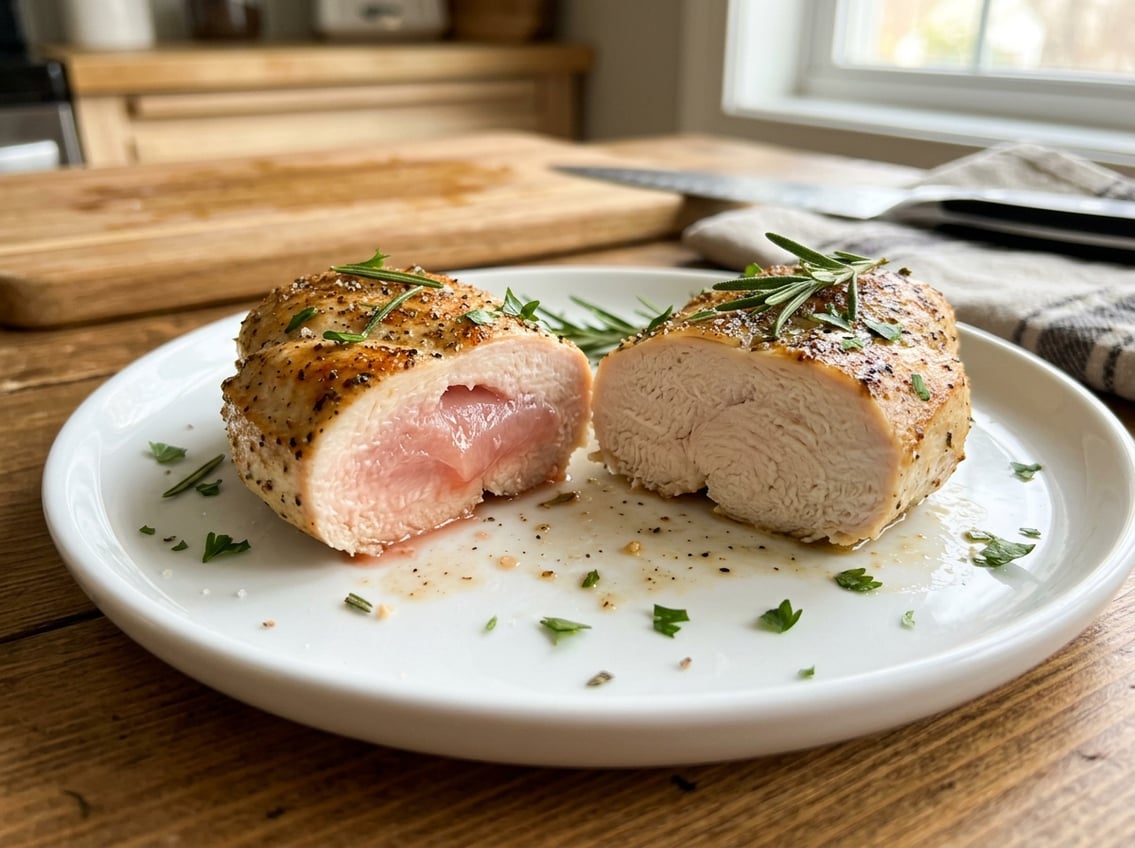
Color and feel give the biggest clues. Undercooked chicken breast looks wet and soft in the center.
Overcooked chicken breast turns dry, tight, and stringy.
Signs of Undercooked Meat
An undercooked chicken breast has a pink or translucent center.
The juices may look pink, and the meat can feel soft or rubbery when you press it.
If the texture has not formed yet, the meat may still feel slippery instead of firm.
Signs of Overcooked Meat
An overcooked chicken breast looks very pale and dry.
The slices may seem tight, crumbly, or stringy, and the surface can split apart easily.
The texture becomes noticeably tougher as moisture escapes.
Why Slight Pink Can Be Misleading
Slight pink does not always mean the chicken is unsafe, especially near the bone or after grilling and smoking.
Heat, seasoning, or the bird’s age can affect color. Color alone is not enough to confirm safety, so you should not rely on pinkness as your only clue.
The Safest Way to Check Doneness
A thermometer gives the most reliable answer.
Visual checks help, but they can miss hidden undercooked spots in a thick breast.
Using a Meat Thermometer Correctly
Use a meat thermometer to confirm doneness. The USDA recommends poultry reach 165°F, and temperature guidance for chicken is the standard safety check many cooks use.
Insert the thermometer into the thickest area and wait for a stable reading.
Where to Measure the Thickest Part
Place the probe in the center of the thickest part, not near the pan, bone, or edge.
A thin end may cook faster than the middle, so the center is the part that matters most. If the breast is uneven, check more than one spot.
Why Visual Cues Should Not Be the Only Test
Color changes with seasoning, cooking method, and lighting.
A browned outside can hide a raw center, and a pale outside can still be fully cooked. A thermometer gives the clearest answer when you want to avoid an undercooked chicken breast.
How Cooking Method Changes Appearance
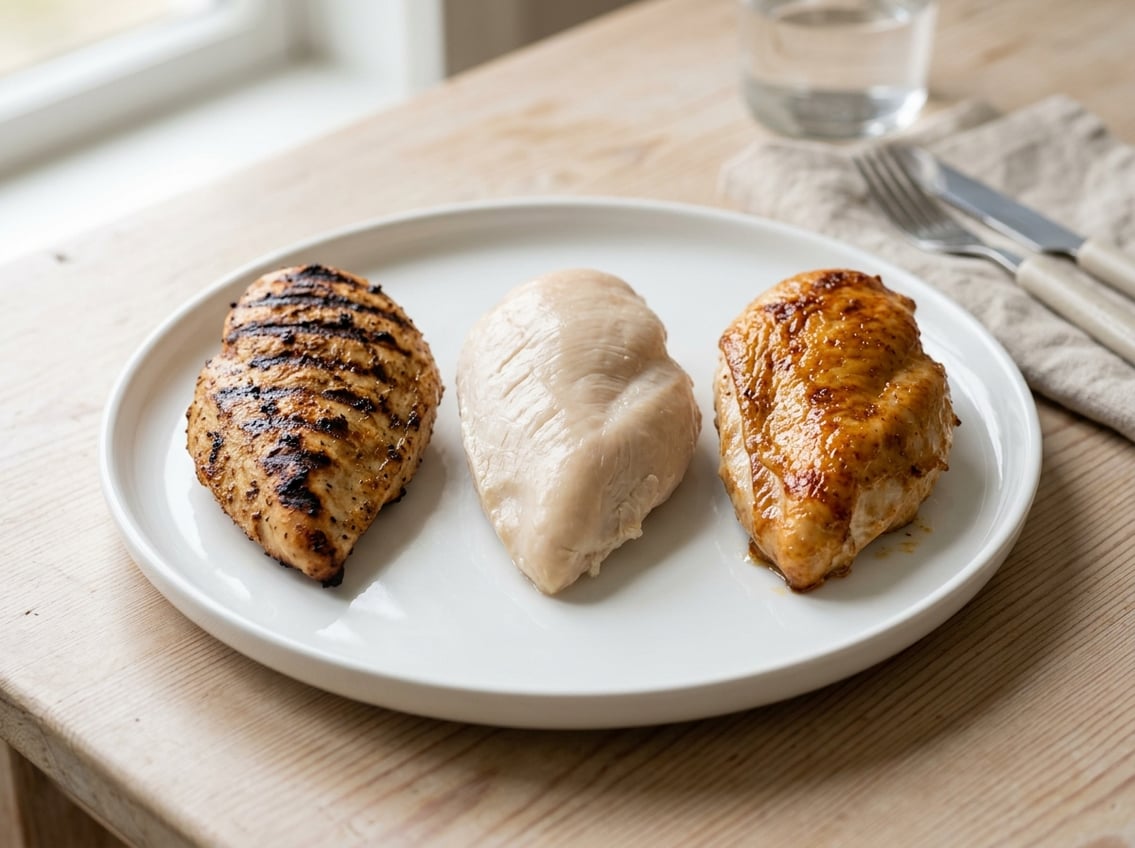
Different cooking methods change the look of chicken breast in clear ways.
Browning, dryness, grill marks, and surface sheen all shift depending on the heat and moisture around the meat.
Pan-Searing Chicken and Browning on the Outside
Pan-searing chicken creates a golden or deep brown crust.
The outside can look darker than baked chicken because of direct contact with hot oil and the pan. That browned surface does not mean the inside is done, so the center still needs a temperature check.
Baked and Grilled Results Compared
Baked chicken breast often looks lighter and more even in color.
Grilled chicken breast may show char marks, a drier surface, and some smoke color on the outside.
A recipe for baking or sautéing chicken breast can change appearance a lot, even when the meat is cooked to the same safe temperature.
Resting Time and Final Texture
Let the chicken breast rest after cooking so the juices settle back into the meat. If you slice it too early, the juices run out and the texture becomes drier.
After resting, cooked chicken breast feels juicier and more settled. It is also easier to slice cleanly.


