
Are Chicken Breasts or Thighs Cheaper? Cost Breakdown
If you are asking are chicken breasts or thighs cheaper, the short answer in the U.S. is usually thighs. Chicken breasts often cost more per pound because they are in higher demand, need more processing, and are sold in more convenient forms.
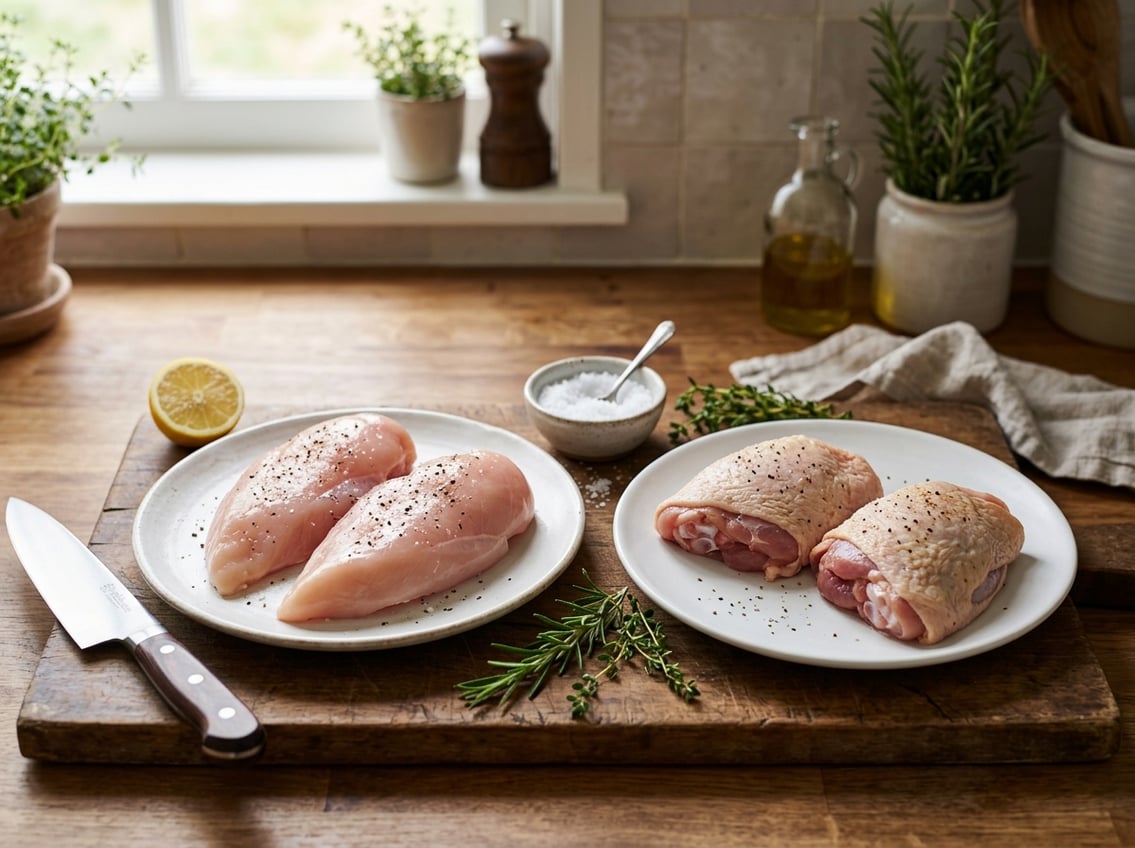
That price gap is not fixed. Sale pricing, pack size, and whether the meat is bone-in or boneless can flip the result on a given shopping trip.
Quick Price Answer
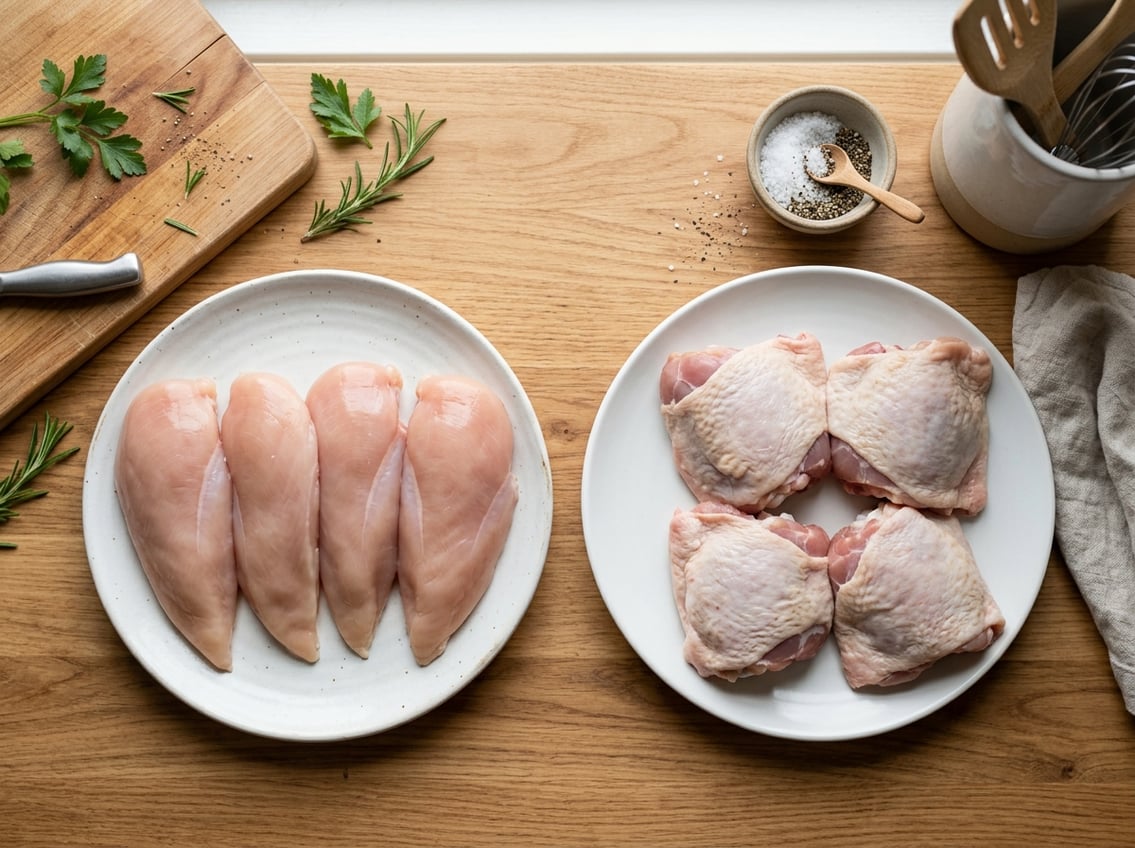
You usually pay less for chicken thighs than for chicken breasts in U.S. grocery stores. The gap is often largest when you compare bone-in thighs with boneless, skinless chicken breast.
Average Price Per Pound for Common Cuts
In many U.S. stores, bone-in thighs tend to be the low-cost option. Boneless, skinless chicken breast sits near the top of the price range.
Boneless, skinless chicken thighs often fall in the middle, since more processing raises the cost.
A useful rule is this:
- Bone-in thighs: usually cheapest
- Boneless, skinless thighs: often cheaper than breasts
- Boneless, skinless breasts: often the most expensive common cut
One pricing review notes that thighs historically sold for less because they had lower consumer demand and simpler processing.
When Breasts Can Cost Less on Sale
Stores can price chicken breast lower during promos, loss-leader sales, or bulk discount events. Retailers often push breast specials to draw shoppers in, especially on common meal prep weeks.
The answer to are chicken breasts or thighs cheaper can change by store and by week. If your store runs a sale on family packs of breast, the breast price may temporarily beat thighs.
Why Boneless and Skinless Packs Change the Math
Boneless and skinless packaging narrows the price gap because it adds labor and trimming costs. Thighs stay cheaper when sold bone-in and skin-on, while breasts get more expensive when sold as trimmed, ready-to-cook portions.
Convenience changes the comparison too. A boneless, skinless thigh may cost more than bone-in thighs, yet still stay below a similarly packaged chicken breast.
What Drives the Cost Gap
More than the bird itself drives the price difference. Consumer demand, extra labor, and the way poultry production is organized all affect what you pay at the store.
Retailers price chicken breasts and chicken thighs based on how easy they are to sell, cut, and package, not just by weight.
Consumer Demand for White Meat
Chicken breast has long been the most popular cut in the U.S. because many shoppers see it as lean, versatile, and easy to fit into meal plans. That demand lets stores charge more.
Thighs were often treated as a lower-value cut, especially when more dark meat went to export markets. As more shoppers cook with thighs, demand has risen and the price gap has narrowed in some stores, as noted by Cook Answers.
Processing and Deboning Costs
Breasts often cost more because they take more processing. Workers debone chicken breasts with more precision and labor than thighs, and that extra work raises processing costs.
Stores also sell breasts in more consumer-friendly packs, such as trimmed fillets or individually sized pieces. That adds packaging cost and handling time.
Thighs can move through the supply chain with less trimming, which keeps production costs lower.
How Poultry Production Affects Retail Pricing
Poultry producers and processors try to match feed, genetics, labor, and equipment to the cuts that shoppers want most. Not every part of the bird has the same market value.
White meat often gets a premium in retail markets, while dark meat has historically had weaker demand. Chicken breasts can carry more of the system’s cost. When supply tightens or demand shifts, the retail difference can change fast.
Which Cut Offers Better Overall Value
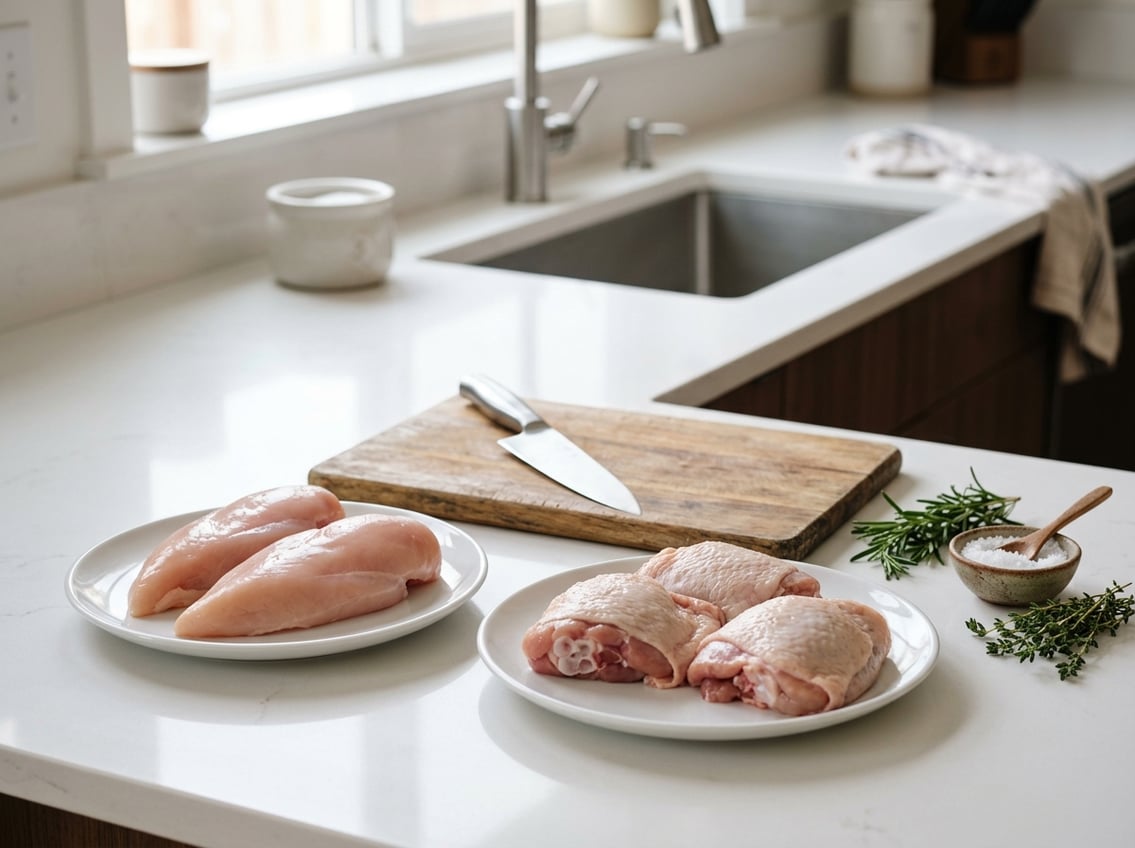
The better value depends on more than sticker price. You need to compare edible meat, taste, texture, and how the cut performs in your cooking method.
A lower price per pound does not always mean lower cost per meal. Trim loss, moisture loss, and cooking results all matter.
Cost Per Serving Versus Cost Per Pound
Chicken thighs often give you strong value per serving because they stay juicy and forgiving in the pan or oven. Bone-in thighs cost less per pound, yet you must account for bones and skin when you estimate how much meat you actually eat.
Chicken breast may cost more per pound, yet a lean breast can feel like better value if you want predictable protein with little fat. The right choice depends on how much edible meat you get from the package and how you plan to use it.
Flavor, Fat, and Cooking Performance
Chicken thighs usually taste richer because they have more fat and connective tissue. That extra fat helps them stay moist during roasting, braising, or pan-searing.
Chicken breast is leaner and milder. It works well when you want a simple protein base, though it dries out faster if you overcook it.
Protein Trade-Offs for Budget Shoppers
If your goal is maximum protein for the dollar, breasts often look attractive because they are lean and high in protein per ounce. Thighs usually give you a little less protein by weight, along with more fat and calories.
The Pioneer Woman notes that boneless, skinless breast is generally lower in calories and fat than boneless, skinless thigh. If you care most about price, thighs usually win. If you care most about lean protein, breasts can still make sense when they are on sale.
How to Spend Less at the Store
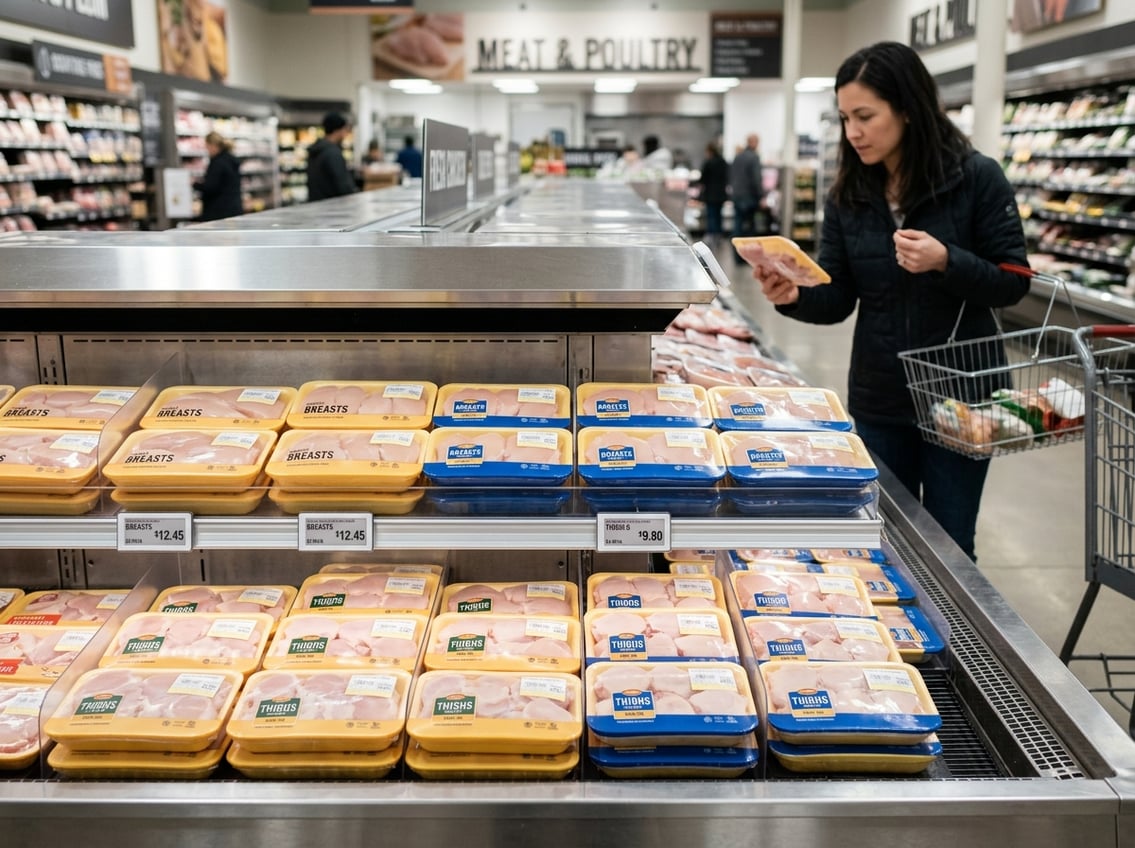
You can lower your chicken bill with a few simple habits. The biggest savings usually come from choosing less processed cuts, buying in larger packs, and comparing unit prices carefully.
Bone-In Versus Boneless Buying Tips
Bone-in thighs almost always cost less than boneless thighs or breasts. If you are willing to trim or debone at home, you can save money by doing some of the processing yourself.
Boneless, skinless chicken breasts cost more because of the extra labor involved. That labor is part of the retail price, along with the cleaner, more convenient format.
Bulk Packs, Freezing, and Timing Sales
Bulk packs usually lower your cost per pound, especially if you freeze what you do not cook right away. Sale cycles can also change the answer to are chicken breasts or thighs cheaper in a given week.
Watch the meat case when stores discount family packs, manager specials, or digital coupon items. If you have freezer space, stocking up during a good sale can beat the regular price on either cut.
What to Compare on the Label Before You Buy
Check the price per pound, not just the package price.
A smaller pack can look cheaper until you compare unit cost.
Also compare these details:
-
Bone-in or boneless
-
Skin-on or skinless
-
Fresh or frozen
-
Conventional, organic, or free-range
These details can change the price more than the cut name.
Processing costs affect both convenience and shelf price.
The most affordable choice is often the least processed cut that still fits your meal plan.


