
What Is Chicken Breast Injected With? Ingredients Explained
Processors often inject chicken breast with water, salt, and other ingredients to help it stay moist, taste better, and retain weight during processing.
If you wonder what chicken breast is injected with, it is usually a saltwater-style mix. Sometimes it also contains broth, phosphates, flavorings, and preservatives.

Injected chicken is not plain meat. The label and nutrition facts reveal a lot about sodium, moisture, and how it may cook.
In the U.S., people often call this process chicken injection, plumping, or enhancing. Many packages of injected chicken look normal at first glance, but the meat contains added solution.
What Added Solutions Usually Contain

Injected chicken usually contains a short list of added ingredients meant to keep the meat juicy and flavorful. The exact blend varies by brand, and labels do not always list every detail.
Water, Salt, and Chicken Broth
Water is usually the main ingredient in a chicken injection. Processors add salt for taste and preservation, and sometimes use chicken broth or stock to make the meat taste richer.
Water, salt, and broth are among the most common parts of these solutions. That combination helps the meat retain moisture during cooking.
Phosphates, Flavorings, and Preservatives
Processors often use phosphates in chicken injection because they help the meat hold onto water. They may add flavorings to make breast meat taste more savory, and preservatives to extend shelf life.
Some products use ingredients such as black pepper, natural flavors, or stabilizers. These additions, even in small amounts, affect taste, sodium, and texture.
Why Sodium Levels Can Vary So Much
Sodium varies widely because different brands use different formulas. A plain chicken breast is naturally low in sodium, while an injected chicken product may contain much more because of added salt solution.
If you are watching sodium, the label matters more than the appearance.
Why Chicken Breast Is Enhanced or Injected

Processors enhance chicken breast because it is very lean and can dry out during cooking. Chicken injection improves moisture, boosts flavor, and makes the product more consistent from package to package.
Moisture Retention and Tenderness
Breast meat has little fat, so it can become dry fast. Added solution helps the meat stay juicier and feel more tender after heating.
The extra moisture gives the cooked meat a softer bite and a more forgiving texture.
Flavor Boosting in Lean Breast Meat
Plain chicken breast can taste mild on its own. Injected chicken often tastes saltier or more savory because the solution includes seasoning or broth.
A poultry product with added flavorings may seem more satisfying before you add your own spices.
Weight, Yield, and Shelf-Life Considerations
Injection increases weight, which can improve yield for processors. More retained moisture means a heavier package, even if the actual meat amount has not changed much.
Preservatives and salt help the product last longer in the case. That is useful in retail settings, where shelf life and appearance matter.
How to Tell if Chicken Has Been Injected
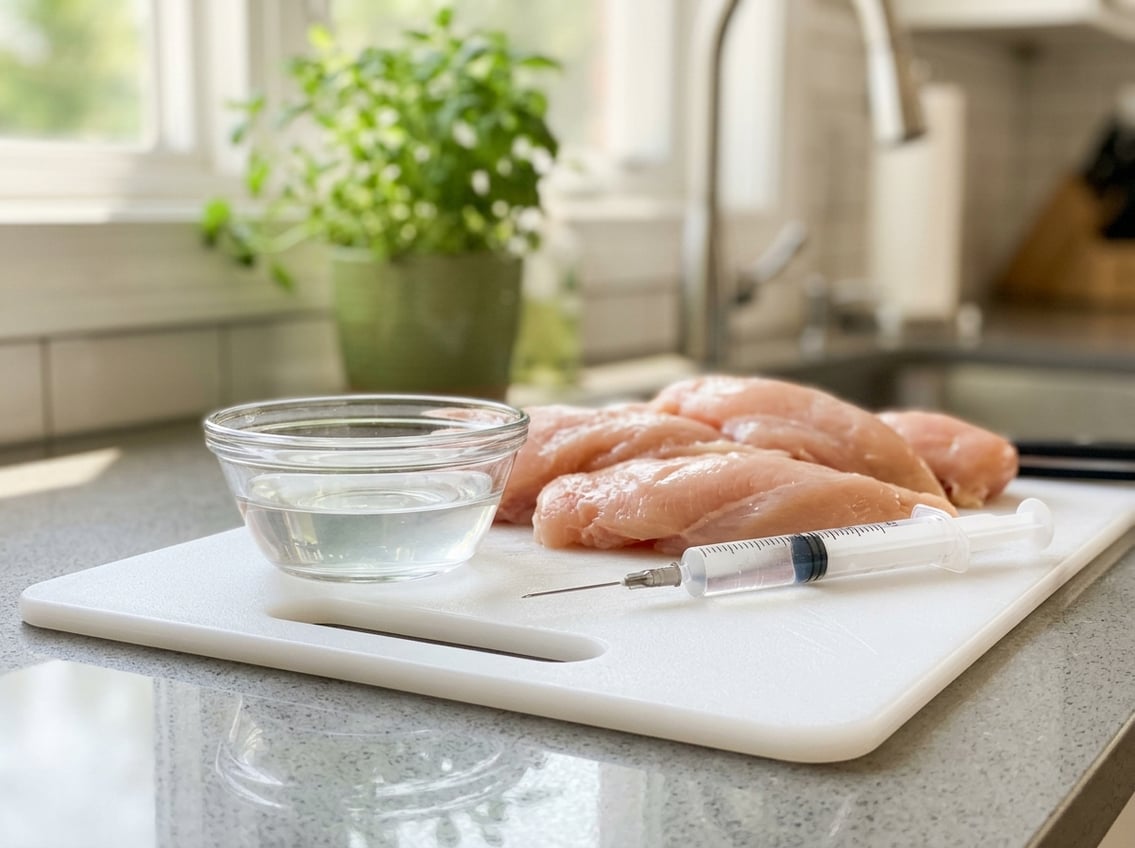
You can often spot injected chicken by reading the package closely. Labels, ingredient lists, and sodium numbers usually give the clearest clues.
Label Phrases to Look For
Look for terms like enhanced with, contains up to X% of a solution, or injected with. These phrases usually mean the meat has added liquid.
If the package says the chicken has been “marinated,” that can also point to added ingredients. The wording varies from brand to brand.
Ingredient List Red Flags
The ingredient list may include salt, water, chicken broth, phosphates, natural flavors, or preservatives. Those are common signs of injected chicken.
A package that lists only “chicken” is more likely to be plain, though you should still check the nutrition facts. Higher sodium is often a strong clue that the meat has been enhanced.
What It Means for Nutrition and Cooking
Injected chicken can have more sodium per serving than plain chicken. It may also lose less moisture in the oven or on the grill, so it often cooks more evenly.
That extra water can change browning. You may need to pat the meat dry before cooking if you want better searing.
Store-Bought Enhancement vs Homemade Injection
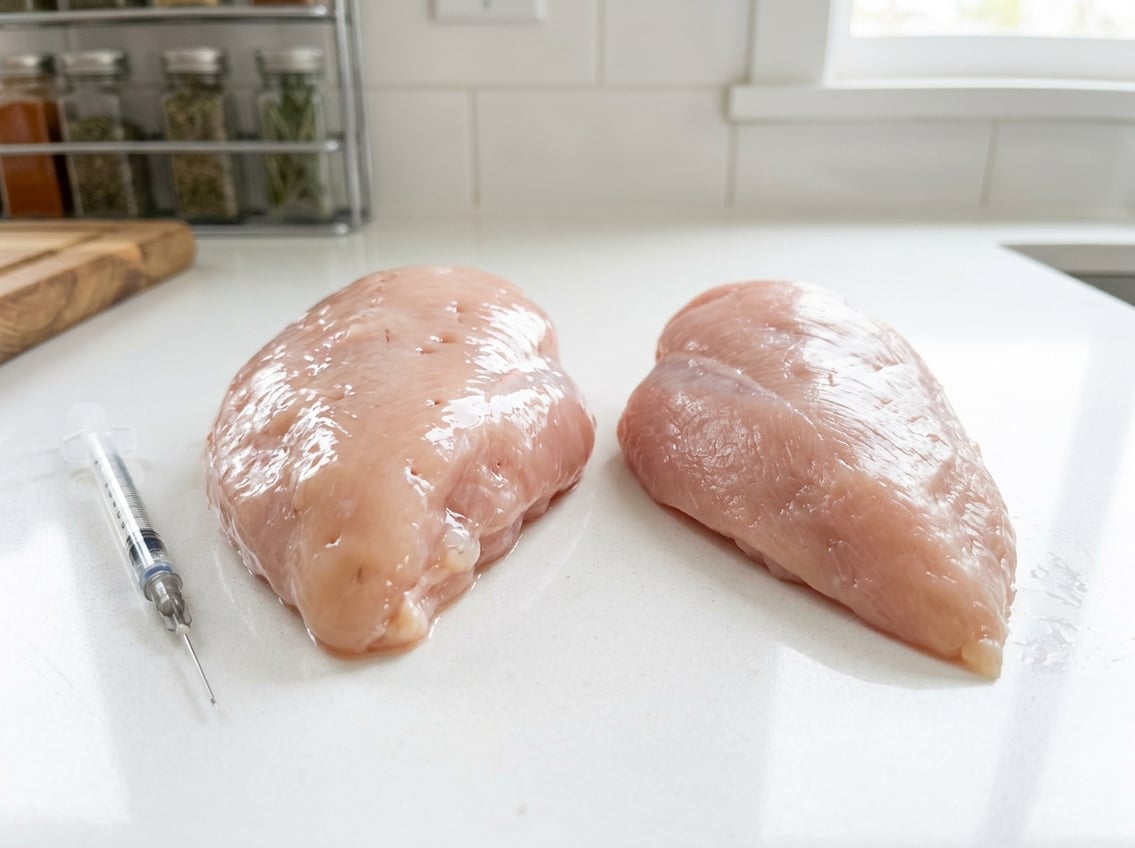
Store-bought enhancement happens during processing. Homemade injection is something you control at home.
If you inject a chicken at home, you choose the flavor, salt level, and added moisture yourself.
How to Inject a Chicken at Home
To inject a chicken at home, use a meat injector to place liquid directly into the meat. A simple injection marinade goes into the thickest parts of the breast, usually in small amounts at a time.
Keep the liquid cold and use clean equipment. Do not overfill the meat, or the liquid can leak back out while cooking.
Common Chicken Injection Marinade Ingredients
A basic chicken injection marinade often includes water, broth, melted butter, salt, garlic, and herbs. Some cooks add black pepper or a little citrus for more flavor.
A simple chicken injection recipe may also include a small amount of oil or seasoning paste. The goal is to add moisture without making the meat too salty.
Tools and Recipes for DIY Flavor
A meat injector looks like a large syringe with a sturdy needle. Manufacturers make versions for poultry, pork, and beef.
If you want to try injecting a chicken at home, start with a mild recipe. Test a small amount first.
Homemade injection gives you more control because you decide the ingredients. You don’t have to rely on what the processor uses.


