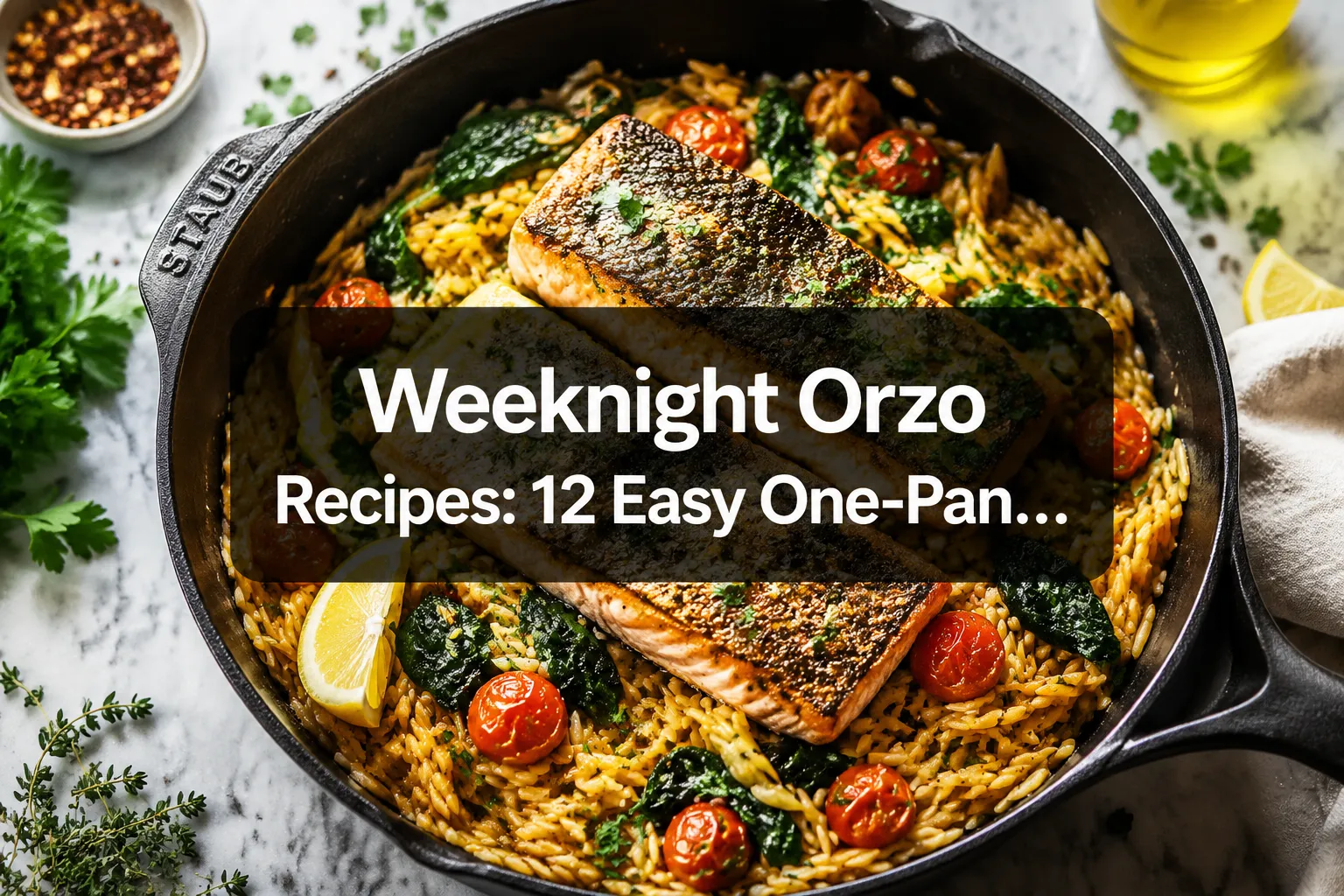
Weeknight Orzo Recipes: 12 Easy One-Pan Dinners with Salmon, Chicken, and Vegetables
Last updated: July 21, 2026
Quick Answer
Weeknight orzo recipes that cook in one pan combine protein, vegetables, and pasta in a single skillet, typically taking 25-30 minutes from start to finish. The orzo cooks directly in broth or stock alongside chicken, salmon, or vegetables, absorbing flavors while creating a creamy, risotto-like texture without the constant stirring. These dinners work because orzo’s small rice-shaped pasta cooks quickly and evenly, making them ideal for busy weeknights when you want a complete meal with minimal cleanup.
Key Takeaways
- One-pan orzo dinners cook the pasta directly in liquid alongside protein and vegetables, eliminating the need for separate pots and reducing cleanup time significantly.
- Orzo typically needs 2-2.5 cups of liquid per cup of dry pasta and takes 10-12 minutes to reach al dente when cooked in a skillet with other ingredients.
- Salmon stays moist in orzo recipes when added during the last 6-8 minutes of cooking and cooked skin-side down first to protect the delicate flesh.
- The best vegetables for one-pan orzo dishes include cherry tomatoes, spinach, asparagus, zucchini, and bell peppers because they cook quickly and release flavorful juices.
- Orzo differs from risotto in that it’s actual pasta (not rice), cooks faster, and doesn’t require constant stirring to achieve a creamy consistency.
- These recipes work well for meal prep when stored properly in airtight containers for 3-4 days, though the pasta will absorb more liquid over time.
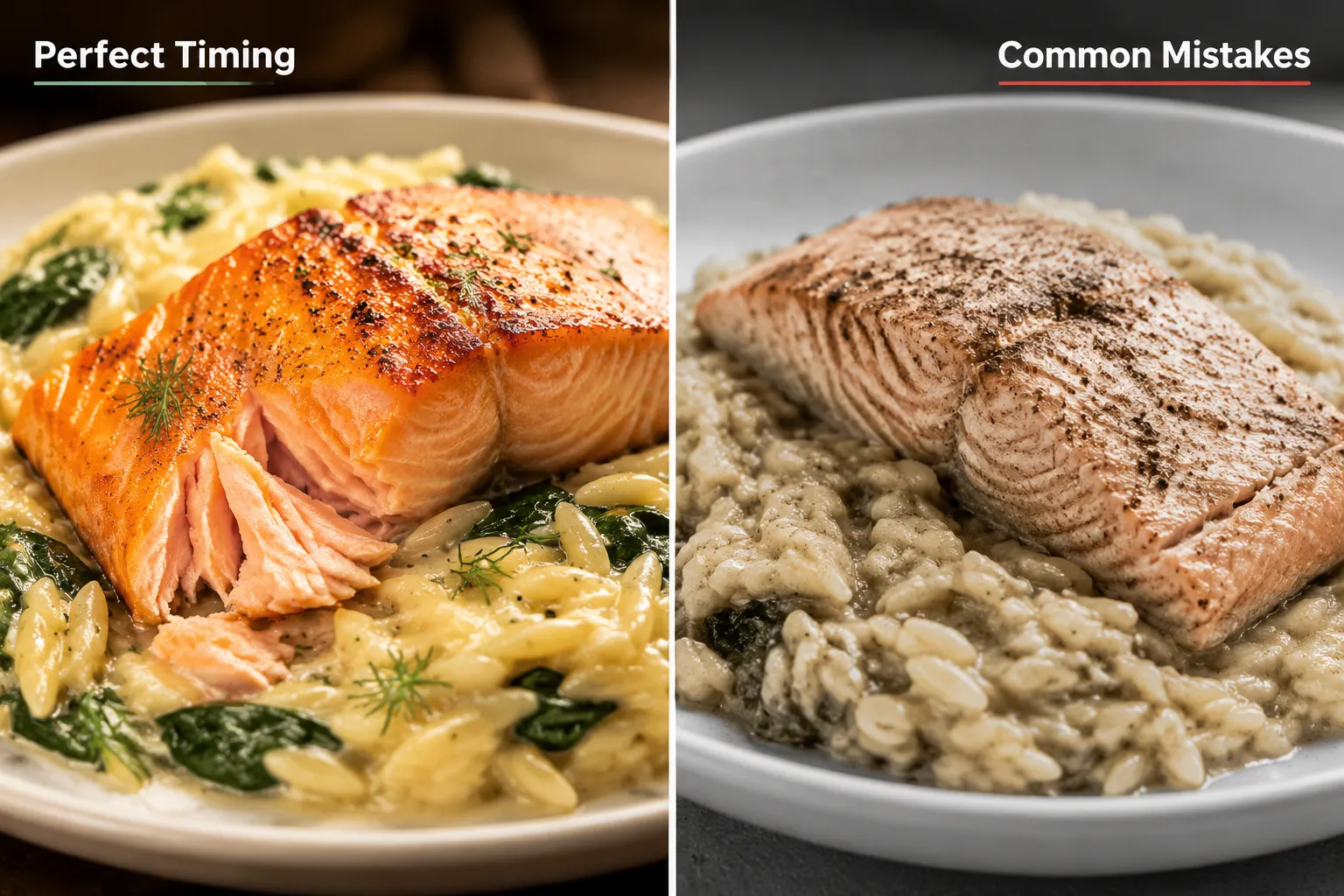
- Common mistakes include using too little liquid (resulting in undercooked pasta), adding protein too early (causing it to dry out), and not stirring occasionally (leading to stuck-on pasta).
- Substitute proteins easily with shrimp, turkey, tofu, chickpeas, or white beans while maintaining the same cooking method and timing.
- Make recipes dairy-free by using olive oil instead of butter and nutritional yeast instead of Parmesan, or gluten-free by swapping orzo for rice-shaped gluten-free pasta.
- Orzo recipes can be healthy weeknight options when balanced with lean proteins, plenty of vegetables, and controlled portions of added fats.
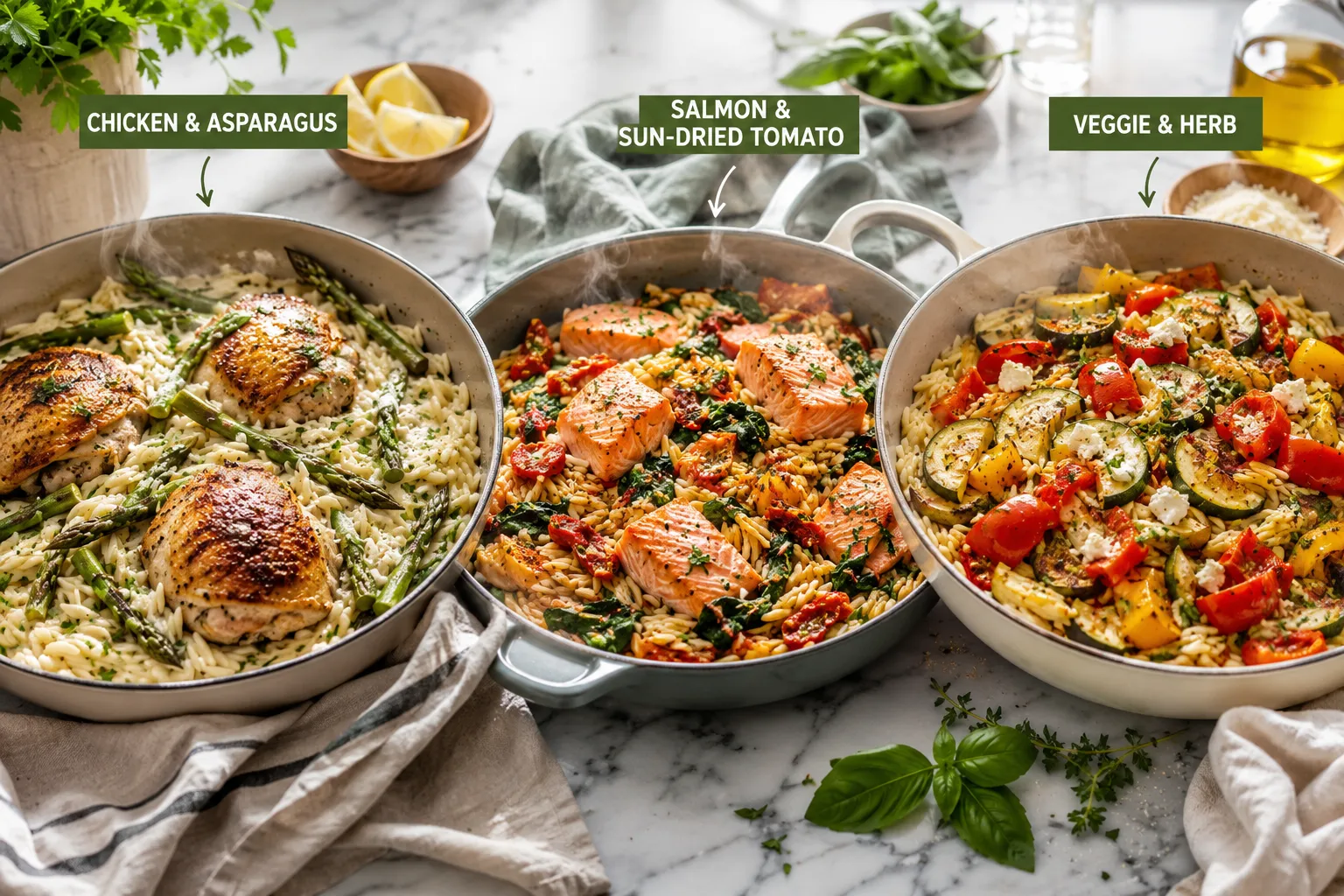
What Is Orzo Pasta and How Do You Cook It?
Orzo is a small, rice-shaped pasta made from wheat flour that originated in Italy (where it’s called “risoni”). Despite looking like a grain, it’s actual pasta that cooks in boiling water or directly in liquid within a dish. In one-pan dinners, orzo absorbs broth, stock, or sauce while cooking, creating a creamy texture similar to risotto but with less effort.
Basic orzo cooking guidelines:
- Boiling method: 8-10 minutes in salted water until al dente
- One-pan method: 10-12 minutes in 2-2.5 cups liquid per cup of dry orzo
- Texture goal: Tender but with a slight bite, not mushy
- Absorption rate: Orzo absorbs liquid quickly, so monitor closely
When cooking orzo in a skillet with other ingredients, stir every 2-3 minutes to prevent sticking and ensure even cooking. The pasta will continue to absorb liquid after you remove it from heat, so it’s better to err on the side of slightly more liquid than too little.
Choose orzo for one-pan dinners if you want a pasta that cooks quickly, absorbs flavors well, and creates a cohesive dish where all components meld together. It works particularly well when you’re aiming for a creamy, comforting meal without making a separate sauce.
How Long Does Orzo Take to Cook in a One-Pan Dinner?
Orzo takes 10-12 minutes to cook in a one-pan dinner when simmered in broth or stock with other ingredients. This timing assumes you’re using a medium-high heat that maintains a steady simmer, not a rolling boil. The total cooking time for the entire dish typically ranges from 25-30 minutes, including prep and the time needed to cook proteins and vegetables.
Timing breakdown for a typical one-pan orzo dinner:
- 0-5 minutes: Sauté aromatics (garlic, onions) and sear protein if needed
- 5-7 minutes: Add vegetables that need longer cooking (bell peppers, carrots)
- 7-19 minutes: Add orzo and liquid, simmer for 10-12 minutes
- 19-25 minutes: Add quick-cooking vegetables (spinach, peas) and finish cooking
- 25-30 minutes: Rest, garnish, and serve
The key is to add ingredients in stages based on their cooking times. Chicken thighs need 15-18 minutes total, salmon needs only 6-8 minutes, and delicate vegetables like spinach need just 1-2 minutes.
Common mistake: Adding all ingredients at once results in overcooked vegetables and unevenly cooked pasta. Instead, work backward from your desired finish time, adding each component when it has exactly the right amount of time left to cook perfectly.
Orzo vs Risotto: What’s the Difference?
Orzo is pasta shaped like rice, while risotto is an Italian rice dish made with short-grain Arborio rice. The main difference lies in the cooking method: risotto requires constant stirring and gradual addition of liquid to release the rice’s starch, creating creaminess, whereas orzo naturally creates a creamy texture when cooked in liquid without intensive stirring.
Key differences:
| Aspect | Orzo | Risotto |
|---|---|---|
| Base ingredient | Wheat pasta | Arborio or Carnaroli rice |
| Cooking time | 10-12 minutes | 18-25 minutes |
| Stirring required | Occasional (every 2-3 min) | Constant |
| Texture | Pasta-like with creamy sauce | Creamy with distinct rice grains |
| Effort level | Low to moderate | High |
Both dishes can achieve a similar creamy, comforting result, but orzo is significantly easier for weeknight cooking because it doesn’t demand your constant attention. The pasta releases enough starch on its own to create a cohesive, slightly creamy dish when cooked in broth.
Choose orzo over risotto when you want the comfort of a creamy rice-like dish but only have 30 minutes and don’t want to stand at the stove stirring continuously. For more high-protein comfort bowl ideas, orzo serves as an excellent base.
Can I Substitute Orzo with Rice or Couscous in These Recipes?
You can substitute orzo with rice or couscous, but you’ll need to adjust cooking times and liquid ratios. Rice typically needs 1.5-2 cups liquid per cup of grain and takes 15-20 minutes to cook, while couscous needs only 1:1 liquid ratio and 5 minutes of steaming off-heat. These substitutions change the dish’s texture and timing but can work in a pinch.
Substitution guidelines:
- White rice: Use 1.75 cups liquid per cup of rice, cook 15-18 minutes, results in fluffier, separate grains
- Brown rice: Use 2.25 cups liquid per cup of rice, cook 35-40 minutes (not ideal for quick weeknight dinners)
- Israeli (pearl) couscous: Use 1.5 cups liquid per cup of couscous, cook 8-10 minutes, creates similar texture to orzo
- Regular couscous: Use 1 cup liquid per cup of couscous, remove from heat and steam 5 minutes, much lighter texture
- Quinoa: Use 2 cups liquid per cup of quinoa, cook 15 minutes, adds protein and nutty flavor
The best substitute for orzo in one-pan dinners is Israeli couscous because it has a similar size, cooking time, and ability to absorb flavors while maintaining structure. Regular long-grain rice works but creates a different dish entirely, more like a pilaf than a creamy pasta dish.
Common mistake: Using the same liquid ratio as orzo when substituting rice or couscous leads to either soupy or undercooked results. Always adjust both liquid and cooking time based on your chosen grain.
What Are the Best Vegetables to Add to One-Pan Orzo Dishes?
The best vegetables for one-pan orzo dishes are those that cook quickly and release flavorful juices: cherry tomatoes, baby spinach, asparagus, zucchini, bell peppers, and frozen peas. These vegetables either cook in the same 10-12 minutes as orzo or can be added in the final minutes without disrupting the dish’s timing.
Vegetables by cooking time:
Add at the start (with orzo):
- Cherry or grape tomatoes (burst and create sauce)
- Diced bell peppers
- Thinly sliced zucchini or summer squash
- Frozen peas (can go in anytime)
Add in the final 3-4 minutes:
- Asparagus cut into 1-inch pieces
- Fresh or frozen green beans
- Broccoli florets (small pieces)
- Snap peas
Add in the final 1-2 minutes:
- Baby spinach or kale (wilts quickly)
- Fresh herbs (basil, parsley, dill)
- Arugula
Cherry tomatoes are particularly valuable because they burst during cooking, releasing their juices to create a natural sauce that enhances the orzo’s creaminess. Spinach adds nutrition and color without requiring any extra cooking time, just stir it in at the end and let residual heat wilt it.
Choose vegetables based on what’s in season and what flavors complement your protein. Salmon pairs beautifully with asparagus and dill, chicken works well with Mediterranean vegetables like tomatoes and bell peppers, and vegetarian versions shine with a mix of colorful vegetables. For more ideas on incorporating bright, fresh flavors, consider adding citrus zest or briny olives.
How to Keep Salmon from Drying Out in Orzo Recipes
Keep salmon moist in orzo recipes by adding it during the last 6-8 minutes of cooking, placing it skin-side down first, and covering the pan to trap steam. The salmon should be at room temperature before cooking, and you should avoid moving or flipping it more than once to preserve its delicate texture.
Step-by-step method for perfect salmon in one-pan orzo:
- Remove salmon from refrigerator 15 minutes before cooking to bring to room temperature
- Pat completely dry with paper towels and season with salt and pepper
- Cook orzo for 4-5 minutes first, until it’s halfway done
- Nestle salmon pieces skin-side down (or presentation-side up if skinless) into the orzo
- Cover the pan with a lid or foil to trap moisture
- Cook for 6-8 minutes without disturbing, until salmon reaches 125-130°F internal temperature
- Remove from heat and let rest 2 minutes, carryover cooking will bring it to 135°F
The key is that salmon continues cooking after you remove it from heat, so pulling it at 125-130°F ensures it won’t dry out. The orzo’s liquid and steam create a gentle cooking environment that’s much more forgiving than direct high heat.
Common mistakes to avoid:
- Adding salmon too early (it overcooks while orzo finishes)
- Cooking salmon straight from the refrigerator (uneven cooking)
- Flipping salmon multiple times (breaks apart the delicate flesh)
- Using too high heat (dries out the exterior before interior cooks)
For more guidance on cooking proteins to stay moist, the same principles of temperature control and resting time apply across different proteins.
Do I Need to Cook Orzo Separately or Can It Cook in the Same Pan?
You do not need to cook orzo separately, it cooks directly in the same pan with your protein and vegetables, absorbing the broth or stock you add. This one-pan method is the entire point of these recipes, saving you time, dishes, and creating better flavor because the orzo absorbs all the cooking juices from the other ingredients.
How the one-pan method works:
- Sauté aromatics (garlic, onions, shallots) in oil or butter
- Add orzo and toast for 1-2 minutes (optional but adds nutty flavor)
- Pour in liquid (broth, stock, or combination of stock and wine)
- Maintain a simmer and stir every 2-3 minutes
- Add proteins and vegetables at appropriate times based on their cooking needs
- Finish with fresh herbs and cheese if desired
The liquid-to-orzo ratio is critical: use 2 to 2.5 cups of liquid per cup of dry orzo. Start with 2 cups and add more if needed, you can always add liquid, but you can’t take it away. The orzo should be just covered with liquid when you start, and it will absorb most of it during cooking.
This method works best when you want a cohesive, creamy dish where all flavors meld together. It doesn’t work well if you prefer distinct, separate components on your plate, in that case, cook the orzo separately and serve it as a side.
Pro tip: If your orzo is nearly done but still has too much liquid, remove the lid and increase heat slightly for the last 2-3 minutes to evaporate excess moisture. If it’s nearly done but too dry, add liquid in 1/4-cup increments and stir gently.
Are One-Pan Orzo Recipes Good for Meal Prep?
One-pan orzo recipes work well for meal prep when stored properly, lasting 3-4 days in airtight containers in the refrigerator. The pasta will continue to absorb liquid as it sits, so these dishes often benefit from a splash of broth or water when reheating. They’re best for 3-4 day meal prep rather than full-week batches because the texture changes over time.
Meal prep guidelines:
Best practices:
- Cool completely before storing (prevents condensation and sogginess)
- Store in individual portions for easy reheating
- Keep a small container of extra broth to add when reheating
- Store delicate herbs separately and add fresh when serving
- Undercook orzo slightly (1-2 minutes less) if you know you’ll be reheating
Reheating methods:
- Microwave: 2-3 minutes on 70% power, stirring halfway, add 2 tablespoons liquid
- Stovetop: 5-7 minutes over medium-low heat with 1/4 cup added liquid, stirring frequently
- Oven: 20 minutes at 350°F covered with foil, add liquid before covering
Proteins that meal prep best with orzo:
- Chicken thighs (stay moist better than breasts)
- Salmon (though texture changes slightly)
- Chickpeas or white beans (actually improve in flavor)
- Shrimp (add fresh when reheating for best texture)
The dishes that meal prep best are those with robust vegetables like tomatoes, peppers, and zucchini rather than delicate greens. Spinach and arugula can become slimy after a few days, so consider adding them fresh when you reheat if possible.
Choose one-pan orzo for meal prep if you’re planning 3-4 days ahead and don’t mind a slightly softer pasta texture. For longer meal prep, consider other high-protein bowl options that hold their texture better over 5-7 days.
What Protein Can I Use Instead of Chicken or Salmon in Orzo?
You can substitute chicken or salmon with shrimp, turkey, tofu, chickpeas, white beans, Italian sausage, or ground meat while maintaining the same one-pan cooking method. Each protein requires slightly different timing and preparation, but the orzo cooking process remains the same.
Protein substitution guide:
Shrimp:
- Add during the last 3-4 minutes of cooking
- Cook until pink and opaque (145°F)
- Works best with Mediterranean or garlic-butter flavors
Ground turkey or chicken:
- Brown first, breaking into crumbles (5-7 minutes)
- Drain excess fat if needed
- Add orzo and liquid to the same pan
- Great for kid-friendly versions
Italian sausage:
- Remove from casings and brown (6-8 minutes)
- Adds significant flavor, reduce added salt
- Pairs well with tomatoes and peppers
Tofu (pressed and cubed):
- Pan-fry separately until golden (8-10 minutes)
- Add to orzo in the last 2-3 minutes to heat through
- Season aggressively as tofu absorbs flavors
Chickpeas or white beans:
- Add with the orzo at the beginning
- Use 1.5 cups cooked beans per 2 servings
- Boost flavor with extra garlic, lemon, and herbs
Leftover rotisserie chicken:
- Shred and add during the last 3 minutes
- Just needs to heat through, already cooked
- Excellent time-saver for busy weeknights
For more ideas on transforming leftover proteins, consider making extra orzo to repurpose into crispy cakes or wraps the next day.
Cooking time adjustments:
- Delicate proteins (shrimp, fish): Add in final 3-8 minutes
- Pre-cooked proteins (rotisserie chicken, canned beans): Add in final 2-3 minutes to heat
- Raw proteins (chicken thighs, sausage): Add early or brown first, then cook with orzo
Common Mistakes When Making One-Pan Orzo Dinners
The most common mistakes when making one-pan orzo dinners are using too little liquid (resulting in undercooked, crunchy pasta), adding protein too early (causing it to dry out), and not stirring occasionally (leading to stuck-on pasta at the bottom of the pan). These errors are easy to avoid once you understand the timing and ratios.
Top mistakes and how to fix them:
1. Insufficient liquid
- Problem: Orzo is crunchy or undercooked even after the suggested time
- Fix: Start with 2.5 cups liquid per cup of orzo; add more in 1/4-cup increments if needed
- Prevention: Keep extra warm broth nearby to add as needed
2. Adding delicate proteins too early
- Problem: Salmon or shrimp becomes rubbery and overcooked
- Fix: Add salmon in the last 6-8 minutes, shrimp in the last 3-4 minutes
- Prevention: Set a timer for when to add each ingredient
3. Not stirring enough
- Problem: Orzo sticks to the bottom and burns
- Fix: Stir every 2-3 minutes, scraping the bottom of the pan
- Prevention: Use a pan with a good nonstick surface or well-seasoned cast iron
4. Using high heat throughout
- Problem: Liquid evaporates too quickly, orzo cooks unevenly
- Fix: Reduce to medium or medium-low heat to maintain a gentle simmer
- Prevention: Adjust heat after adding liquid to achieve steady bubbling, not rapid boiling
5. Overcrowding the pan
- Problem: Ingredients steam instead of sauté, orzo cooks unevenly
- Fix: Use a 12-inch skillet for recipes serving 4; don’t double recipes in the same pan
- Prevention: Choose pan size based on volume, orzo needs room to expand
6. Skipping the rest time
- Problem: Dish is soupy or proteins are tough
- Fix: Let the dish rest off-heat for 2-3 minutes before serving
- Prevention: Build this into your timing, it allows orzo to absorb final liquid and proteins to finish cooking gently
Edge case: If you live at high altitude (above 3,000 feet), you may need to add 2-3 minutes to cooking time and slightly more liquid because water boils at a lower temperature.
How Much Liquid Do I Need for Orzo to Cook Properly?
You need 2 to 2.5 cups of liquid per cup of dry orzo for it to cook properly in a one-pan dinner. Start with 2 cups and add more if the orzo isn’t tender after 10 minutes. The exact amount depends on your pan size, heat level, and whether you’re using a lid, which traps moisture and reduces evaporation.
Liquid ratio guidelines:
- Minimum: 2 cups liquid per 1 cup dry orzo
- Ideal range: 2.25 cups for covered cooking, 2.5 cups for uncovered
- Maximum: 3 cups if you want a soupier, more risotto-like consistency
Best liquids to use:
- Chicken or vegetable broth (most common, adds flavor)
- Combination of broth and white wine (2:1 ratio, adds depth)
- Broth and lemon juice (adds brightness)
- Water (acceptable but less flavorful, season generously)
The type of liquid matters significantly for flavor. Water-cooked orzo tastes bland even with added salt, while broth-cooked orzo absorbs savory depth. For the best results, use low-sodium broth so you can control the salt level, especially since the liquid reduces during cooking and concentrates flavors.
Factors that affect liquid needs:
- Pan material: Cast iron retains heat and reduces evaporation; thin pans may need more liquid
- Lid usage: Covered cooking needs less liquid (2 cups), uncovered needs more (2.5 cups)
- Heat level: Higher heat evaporates liquid faster
- Altitude: Higher altitudes may require slightly more liquid and longer cooking time
- Desired consistency: Creamy and thick needs less liquid; soupy needs more
Pro tip: If you’re unsure, start with 2 cups of liquid and keep an additional cup of warm broth nearby. It’s much easier to add liquid than to fix overcooked, mushy orzo from too much liquid.
Are Orzo Recipes Healthy for Weeknight Dinners?
Orzo recipes can be healthy weeknight dinners when balanced with lean proteins, plenty of vegetables, and controlled portions of added fats. A typical serving provides complex carbohydrates, protein, fiber from vegetables, and can be adjusted to meet various nutritional goals. The healthiness depends entirely on your ingredient choices and portion sizes.
Nutritional profile of a balanced one-pan orzo dinner (per serving):
- Calories: 400-550 depending on protein and added fats
- Protein: 25-35g from chicken, salmon, or plant-based sources
- Carbohydrates: 45-55g primarily from orzo
- Fiber: 4-6g from vegetables and whole wheat orzo if used
- Fat: 12-20g from olive oil, salmon, or cheese
Ways to make orzo recipes healthier:
- Use whole wheat orzo for added fiber and nutrients (cooks the same way)
- Increase vegetable ratio to 2 cups vegetables per cup of dry orzo
- Choose lean proteins like chicken breast, white fish, or legumes
- Limit added fats to 1-2 tablespoons olive oil per recipe
- Use low-sodium broth to control sodium intake
- Skip or reduce cheese or use nutritional yeast for a dairy-free option
- Add leafy greens like spinach or kale for vitamins and minerals
Health benefits of one-pan orzo dinners:
- Complete meal in one dish ensures balanced nutrition
- Quick cooking preserves vegetable nutrients
- Portion control is easier with a single-pan serving
- Customizable for various dietary needs
- Less processed than many convenience meals
Compare with other options: A one-pan orzo dinner with salmon and vegetables is nutritionally comparable to other high-protein comfort bowls but offers more variety in texture and flavor profiles.
Choose orzo recipes for healthy weeknight dinners if you’re looking for a balanced meal that doesn’t feel like “diet food” and can be customized to your nutritional needs. They work well for families because you can adjust individual portions and add-ins based on preferences.
Can I Make Orzo Recipes Dairy-Free or Gluten-Free?
You can make orzo recipes dairy-free by substituting butter with olive oil and replacing Parmesan with nutritional yeast or dairy-free cheese alternatives. For gluten-free versions, swap regular orzo with rice-shaped gluten-free pasta made from corn, rice, or chickpeas, though cooking times may vary slightly.
Dairy-free substitutions:
- Instead of butter: Use olive oil, avocado oil, or vegan butter (1:1 ratio)
- Instead of Parmesan: Use nutritional yeast (2 tablespoons per 1/4 cup cheese), cashew parmesan, or omit entirely
- Instead of cream: Use full-fat coconut milk or cashew cream for creamy versions
- Instead of feta: Use dairy-free feta alternatives or marinated tofu cubes
Gluten-free substitutions:
- Gluten-free orzo: Brands like Jovial, Barilla, or Tinkyada make rice-shaped gluten-free pasta
- Cooking adjustment: May need 1-2 minutes less cooking time; check package directions
- Texture note: Gluten-free pasta can become mushy faster, so watch carefully
- Alternative grains: Use quinoa or Israeli couscous (if gluten-free certified) instead
Recipe adjustments for dietary restrictions:
For dairy-free:
- Add extra lemon juice or vinegar for the tangy flavor cheese provides
- Increase herbs and garlic to boost flavor
- Use miso paste for umami depth (1 teaspoon per serving)
For gluten-free:
- Reduce liquid slightly (start with 1.75 cups per cup of gluten-free pasta)
- Stir more gently to prevent breaking
- Don’t overcook, gluten-free pasta goes from perfect to mushy quickly
Both dairy-free and gluten-free:
- Focus on bold flavors from herbs, citrus, and aromatics
- Use high-quality broth for maximum flavor
- Consider adding Asian pantry ingredients like miso or tamari for depth
Many one-pan orzo recipes are naturally dairy-free or easily adapted, Mediterranean versions with olive oil, lemon, and herbs need no dairy at all. The gluten-free adaptation requires more attention to texture and timing but is completely achievable.
Why Is My Orzo Mushy or Undercooked?
Orzo becomes mushy when cooked too long, with too much liquid, or over high heat that breaks down the pasta’s structure. Undercooked orzo results from insufficient liquid, too low heat that doesn’t maintain a proper simmer, or not cooking long enough. Both problems are fixable once you understand the cause.
Mushy orzo causes and fixes:
Cause 1: Overcooking
- Problem: Cooked longer than 12-13 minutes
- Fix: Set a timer for 10 minutes and check for doneness
- Prevention: Start checking at 9 minutes; orzo should have a slight bite
Cause 2: Too much liquid
- Problem: Used more than 2.5 cups liquid per cup of orzo
- Fix: Next time, start with 2 cups and add more only if needed
- Prevention: Measure liquid carefully; don’t eyeball it
Cause 3: Continued cooking in residual heat
- Problem: Left orzo in hot pan too long after cooking
- Fix: Transfer to serving dish immediately or spread on a baking sheet to cool
- Prevention: Account for carryover cooking; remove from heat when slightly underdone
Undercooked orzo causes and fixes:
Cause 1: Insufficient liquid
- Problem: Liquid evaporated before orzo finished cooking
- Fix: Add 1/4 cup warm broth at a time and continue cooking
- Prevention: Keep extra broth warm and ready to add
Cause 2: Heat too low
- Problem: Liquid barely simmering, orzo cooking too slowly
- Fix: Increase heat to medium-high to maintain steady bubbling
- Prevention: Adjust heat after adding liquid to achieve consistent simmer
Cause 3: Not stirring enough
- Problem: Orzo stuck to bottom, not cooking evenly
- Fix: Stir immediately and add liquid to deglaze stuck bits
- Prevention: Stir every 2-3 minutes, scraping bottom of pan
Texture test: Properly cooked orzo should be tender but still have a slight firmness when you bite it (al dente). It should not be crunchy in the center or completely soft and falling apart. Taste a few pieces at the 9-minute mark to gauge doneness.
Edge case: If you’re reheating leftover orzo and it’s become too soft, there’s no fix for the texture, but you can repurpose it into crispy cakes or fritters where the soft texture becomes an asset.
12 Easy Weeknight Orzo Recipes with Salmon, Chicken, and Vegetables
Here are twelve practical one-pan orzo recipes that deliver complete dinners in 30 minutes or less. Each recipe serves 4 and uses the same basic technique with different flavor profiles and protein combinations.
1. Lemon Garlic Salmon Orzo with Asparagus
Ingredients: Salmon fillets, orzo, asparagus, garlic, lemon, chicken broth, olive oil, dill
Method: Sauté garlic, add orzo and toast 1 minute, add broth and asparagus pieces, simmer 5 minutes, nestle salmon on top, cover and cook 6-8 minutes, finish with lemon juice and fresh dill.
Why it works: The lemon brightens the rich salmon, and asparagus adds a spring-like freshness that complements both.
2. Mediterranean Chicken Orzo with Sun-Dried Tomatoes
Ingredients: Chicken thighs, orzo, sun-dried tomatoes, spinach, Kalamata olives, feta, oregano, chicken broth
Method: Brown chicken thighs 4 minutes per side, remove, add orzo and sun-dried tomatoes, add broth, return chicken, simmer 12 minutes, stir in spinach and olives, top with feta.
Why it works: Sun-dried tomatoes infuse the orzo with concentrated flavor, and the combination feels restaurant-quality with minimal effort.
3. Creamy Tuscan Chicken Orzo
Ingredients: Chicken breast, orzo, cherry tomatoes, spinach, garlic, heavy cream (or coconut milk), Parmesan, Italian seasoning, chicken broth
Method: Sauté diced chicken until golden, add garlic and tomatoes, add orzo and broth, simmer 10 minutes, stir in cream and spinach, finish with Parmesan.
Why it works: The cream creates a luscious sauce that coats every piece of orzo, and cherry tomatoes burst to add pops of acidity.
4. One-Pan Pesto Salmon Orzo
Ingredients: Salmon, orzo, cherry tomatoes, zucchini, pesto (store-bought or homemade), vegetable broth, pine nuts
Method: Add orzo, broth, and diced zucchini to pan, simmer 5 minutes, nestle salmon on top, cover and cook 6-8 minutes, stir in pesto and halved cherry tomatoes, top with toasted pine nuts.
Why it works: Pesto does the heavy lifting for flavor, making this one of the quickest and most foolproof recipes.
5. Cajun Chicken Orzo with Bell Peppers
Ingredients: Chicken breast, orzo, bell peppers (red, yellow, green), onion, Cajun seasoning, chicken broth, green onions
Method: Sauté diced chicken with Cajun seasoning, add diced peppers and onion, add orzo and broth, simmer 12 minutes stirring occasionally, garnish with sliced green onions.
Why it works: The Cajun spices create bold flavor without complicated ingredients, and colorful peppers make it visually appealing.
6. Greek Lemon Chicken Orzo
Ingredients: Chicken thighs, orzo, artichoke hearts, cherry tomatoes, lemon, oregano, feta, chicken broth, olive oil
Method: Brown chicken thighs, remove, sauté garlic, add orzo and broth, return chicken, add artichokes and tomatoes, simmer 12 minutes, finish with lemon juice and crumbled feta.
Why it works: The combination of lemon, oregano, and feta creates authentic Greek flavors that transport you to the Mediterranean.
7. Teriyaki Salmon Orzo with Edamame
Ingredients: Salmon, orzo, edamame, snap peas, teriyaki sauce, vegetable broth, sesame seeds, green onions
Method: Combine orzo, broth, and edamame, simmer 5 minutes, add snap peas and salmon, cover and cook 6-8 minutes, drizzle with teriyaki sauce, garnish with sesame seeds and green onions.
Why it works: The Asian-inspired flavors offer a welcome change from Italian-style orzo, and edamame adds protein and texture. For more Asian ingredient inspiration, consider adding miso or yuzu.
8. Spinach and Feta Chicken Orzo
Ingredients: Chicken breast, orzo, spinach, feta, garlic, lemon, dill, chicken broth, olive oil
Method: Sauté diced chicken, add garlic, add orzo and broth, simmer 10 minutes, stir in massive handfuls of spinach until wilted, add crumbled feta and lemon juice, garnish with fresh dill.
Why it works: This is one of the healthiest versions, packed with greens, and the feta adds creaminess without heavy cream.
9. Tomato Basil Orzo with White Beans
Ingredients: Orzo, white beans, cherry tomatoes, garlic, fresh basil, vegetable broth, Parmesan, olive oil
Method: Sauté garlic, add orzo and broth, add cherry tomatoes and drained white beans, simmer 12 minutes, stir in torn fresh basil and Parmesan.
Why it works: This vegetarian version is budget-friendly, protein-rich from the beans, and tastes like summer even in winter.
10. Lemon Herb Chicken Orzo with Zucchini
Ingredients: Chicken thighs, orzo, zucchini, lemon, fresh herbs (parsley, thyme, rosemary), chicken broth, olive oil
Method: Brown chicken thighs, remove, add diced zucchini and sauté 2 minutes, add orzo and broth, return chicken, add lemon slices on top, simmer 12 minutes, finish with fresh herbs.
Why it works: The combination of herbs creates a bright, fresh flavor that works year-round, and zucchini adds vegetables without overpowering.
11. Spicy Sausage and Pepper Orzo
Ingredients: Italian sausage, orzo, bell peppers, onion, crushed tomatoes, red pepper flakes, chicken broth, Parmesan
Method: Remove sausage from casings and brown, breaking into crumbles, add diced peppers and onion, add orzo, crushed tomatoes, broth, and red pepper flakes, simmer 12 minutes, top with Parmesan.
Why it works: The sausage provides so much flavor that you need minimal other seasonings, and the slight heat makes it satisfying.
12. Garlic Butter Shrimp Orzo with Peas
Ingredients: Shrimp, orzo, frozen peas, garlic, butter, lemon, Parmesan, white wine, seafood or vegetable broth
Method: Sauté garlic in butter, add orzo, deglaze with white wine, add broth, simmer 8 minutes, add frozen peas and raw shrimp, cook 3-4 minutes until shrimp are pink, finish with lemon and Parmesan.
Why it works: This is the fastest version because shrimp cook so quickly, and the garlic butter sauce is irresistible.
Customization tips across all recipes:
- Swap proteins based on what’s on sale or in your freezer
- Use whatever vegetables are in season or need to be used up
- Adjust spice levels to your family’s preferences
- Make any recipe dairy-free or gluten-free using the substitutions outlined earlier
- Double the vegetables for a lighter, more nutrient-dense meal
For additional protein cooking guidance, check out our guides on cooking chicken breast to stay moist and comparing chicken breast versus salmon for health.
Frequently Asked Questions
Can I freeze one-pan orzo dinners?
Yes, but the texture changes significantly. Freeze in airtight containers for up to 2 months. Thaw overnight in the refrigerator and reheat with added liquid. The orzo will be softer than fresh, so this works best for recipes with robust flavors and sauces that mask texture changes.
What size pan do I need for orzo recipes?
Use a 12-inch skillet with a lid for recipes serving 4 people. A 10-inch pan works for 2 servings. The pan should be large enough that the orzo can spread in a relatively even layer, overcrowding leads to uneven cooking.
Can I use chicken breast instead of thighs?
Yes, but chicken breast dries out more easily. Cut into smaller pieces, add during the last 8-10 minutes of cooking, and remove the pan from heat as soon as the chicken reaches 160°F (it will coast to 165°F). For best results, see our guide on keeping chicken breast moist.
Do I have to use fresh herbs or will dried work?
Dried herbs work fine but use one-third the amount (1 teaspoon dried equals 1 tablespoon fresh). Add dried herbs early with the orzo so they have time to rehydrate and release flavor. Add fresh herbs at the end for brightness.
Can I make orzo recipes in an Instant Pot?
Yes, use the sauté function to brown proteins and aromatics, then add orzo and liquid (reduce liquid to 1.75 cups per cup of orzo), seal, and cook on high pressure for 4 minutes with quick release. The texture will be slightly softer than stovetop versions.
How do I prevent the bottom from burning?
Use medium or medium-low heat to maintain a gentle simmer, stir every 2-3 minutes, and make sure you have enough liquid. A heavy-bottomed pan distributes heat more evenly and reduces burning risk.
Can I add wine to orzo recipes?
Yes, white wine adds depth. Use 1/2 cup wine and reduce the broth by 1/2 cup. Add the wine after sautéing aromatics, let it simmer for 1-2 minutes to cook off the alcohol, then add the remaining liquid and orzo.
What’s the best way to reheat leftover orzo?
Stovetop is best: add 2-3 tablespoons of broth or water, heat over medium-low, stirring frequently until warmed through. Microwave works but add liquid and use 70% power to prevent drying out.
Can I use whole wheat orzo?
Yes, whole wheat orzo cooks the same way as regular orzo and adds fiber and nutrients. The flavor is slightly nuttier and the color is darker, but the cooking time and liquid ratio remain the same.
How do I know when salmon is done in orzo?
Salmon is done when it flakes easily with a fork and reaches 125-130°F in the thickest part. It will continue cooking after you remove it from heat, reaching the safe temperature of 135°F. The flesh should be opaque and slightly translucent in the very center.
Can I make these recipes vegetarian?
Absolutely. Replace chicken or salmon with chickpeas, white beans, tofu, or extra vegetables. Use vegetable broth instead of chicken broth. Add nutritional yeast for a savory, umami flavor that replaces some of what meat provides.
Why does my orzo stick together?
Orzo sticks when there’s not enough liquid or when it’s not stirred frequently enough. Stir every 2-3 minutes and make sure the orzo is covered with liquid throughout cooking. A splash of olive oil at the end can help separate the grains.
Conclusion
Weeknight orzo recipes that cook in one pan solve the eternal dinner dilemma: how to get a complete, satisfying meal on the table in 30 minutes without creating a mountain of dishes. By cooking the pasta directly in broth alongside proteins and vegetables, you create layers of flavor that separate components simply can’t match. The orzo absorbs every bit of seasoning, every drop of cooking juice, and every aromatic note, resulting in a cohesive dish that tastes like it took hours.
The beauty of these recipes lies in their flexibility. Start with the basic technique, sauté aromatics, add orzo and liquid, layer in proteins and vegetables based on cooking time, and you can create endless variations based on what’s in your pantry, what’s on sale, or what flavors you’re craving. Mediterranean one night, Asian-inspired the next, comfort-food creamy the night after that.
Your next steps:
- Choose one recipe from the twelve options above that matches ingredients you already have or can easily get
- Gather your ingredients and measure your liquid carefully, this is the key to success
- Set up your workspace with a 12-inch skillet, wooden spoon, and timer
- Cook your first one-pan orzo dinner following the timing guidelines for each ingredient
- Make notes on what you’d adjust next time, more vegetables, different protein, spicier seasoning
- Experiment with variations once you’ve mastered the basic technique
The most important thing to remember is that these recipes are forgiving. If your orzo needs more liquid, add it. If your salmon needs another minute, give it that time. The goal isn’t perfection, it’s a delicious dinner that brings you to the table without stress, cleanup, or complicated techniques.
Start tonight with whichever recipe speaks to you, and you’ll quickly understand why one-pan orzo dinners have become a weeknight staple for busy home cooks in 2026.
SEO Meta Title: Weeknight Orzo Recipes: 12 Easy One-Pan Dinners Guide


