
Pickle Brine Recipes: 10 Smart Ways to Use Leftover Brine in Marinades, Dressings, and Cocktails
Last updated: June 20, 2026
Americans throw away approximately 40% of their food, and that includes jars of tangy, flavorful pickle brine that could transform weeknight dinners, salads, and cocktails. Leftover pickle brine is a ready-made seasoning blend packed with vinegar, salt, and spices that can replace multiple ingredients in your kitchen. Instead of pouring it down the drain, you can use it to tenderize chicken, brighten potato salad, or add a savory kick to your next martini.
Key Takeaways
- Pickle brine contains vinegar, salt, and spices that make it a versatile seasoning for marinades, dressings, and drinks
- Dill pickle brine and bread-and-butter brine work differently: dill is savory, bread-and-butter is sweet
- Leftover brine lasts 2-3 months refrigerated in a sealed container if kept clean and free of food particles
- You can reuse brine once for quick refrigerator pickles, but not for shelf-stable canning
- Chicken, pork, and vegetables benefit most from pickle brine marinades due to the acid and salt content
- Pickle juice is safe to drink after the pickles are gone, and some people use it for hydration or hangover relief
- Freezing brine in ice cube trays extends its life and makes it easy to add to recipes in small amounts
- Avoid using moldy or cloudy brine, which indicates spoilage
- Sweet brines work better in dressings and cocktails, while dill brines excel in savory marinades
- Store-bought pickle brands like Claussen, Mt. Olive, and Vlasic produce high-quality reusable brine
What Is Pickle Brine and Why Shouldn’t You Throw It Away?
Pickle brine is the liquid left in the jar after you’ve eaten all the pickles. It’s typically made from vinegar, water, salt, and sugar, plus spices like dill, garlic, mustard seed, or peppercorns. [1][2] This combination creates a tangy, salty, and often slightly sweet liquid that has already done the work of balancing flavors for you.
Throwing away pickle brine wastes a ready-made seasoning that can replace vinegar, salt, and spices in dozens of recipes. The acidity helps tenderize meat, the salt seasons food deeply, and the spices add complexity without extra prep. Because the brine has already been heated and dissolved during the pickling process, it’s shelf-stable in the fridge and ready to use immediately.
Why it matters for home cooks:
- Saves money by replacing multiple pantry ingredients
- Reduces food waste in your kitchen
- Adds instant flavor to recipes that would otherwise need multiple steps
- Works as a marinade, dressing base, or cocktail ingredient without modification
Can You Reuse Pickle Juice to Make More Pickles?
Yes, you can reuse pickle brine once to make a fresh batch of quick refrigerator pickles, but the brine will be weaker the second time. The first batch of vegetables absorbs some of the salt, sugar, and spices, so the leftover liquid has less seasoning power. [2][4]
To reuse brine for pickling, bring it back to a simmer and taste it. If it’s too mild, add a tablespoon of vinegar, a teaspoon of salt, or a pinch of sugar to restore the balance. Pour the hot brine over fresh cucumber slices, onions, or radishes, then refrigerate. These second-batch pickles will be ready to eat in 1-2 days and will keep for 2-3 weeks. [2][4]
Important limits:
- Only reuse brine for refrigerator pickles, never for shelf-stable canning
- Don’t reuse brine more than once, as the acidity and salt levels drop too low for safe preservation
- Strain out any vegetable particles before reusing to prevent spoilage
Pickle Brine vs Vinegar for Salad Dressing
Pickle brine can replace part or all of the vinegar in salad dressings, and it brings salt and spice along with the acidity. A basic vinaigrette uses 3 parts oil to 1 part acid, so you can substitute pickle brine for the vinegar and skip adding extra salt. [1][4]
Dill pickle brine works best in savory dressings for potato salad, coleslaw, or grain bowls. Bread-and-butter pickle brine, which is sweeter, pairs well with spinach salads, slaws, or any recipe that benefits from a hint of sugar. [1][4]
Quick pickle brine vinaigrette:
- 3 tablespoons olive oil
- 1 tablespoon dill pickle brine
- 1 teaspoon Dijon mustard
- Black pepper to taste
Whisk together and toss with greens, cucumbers, and tomatoes. The brine’s garlic and dill flavors come through without needing fresh herbs.
Choose pickle brine over plain vinegar when:
- You want a more complex flavor without chopping garlic or herbs
- You’re making a creamy dressing and need both acid and salt
- You’re dressing a hearty salad like potato or pasta that can handle bold seasoning
How to Use Pickle Juice as a Meat Marinade
Pickle brine works as a marinade because it contains both acid and salt, which tenderize and season meat at the same time. The vinegar breaks down muscle fibers, while the salt penetrates deeply to add flavor. [1][2][4]
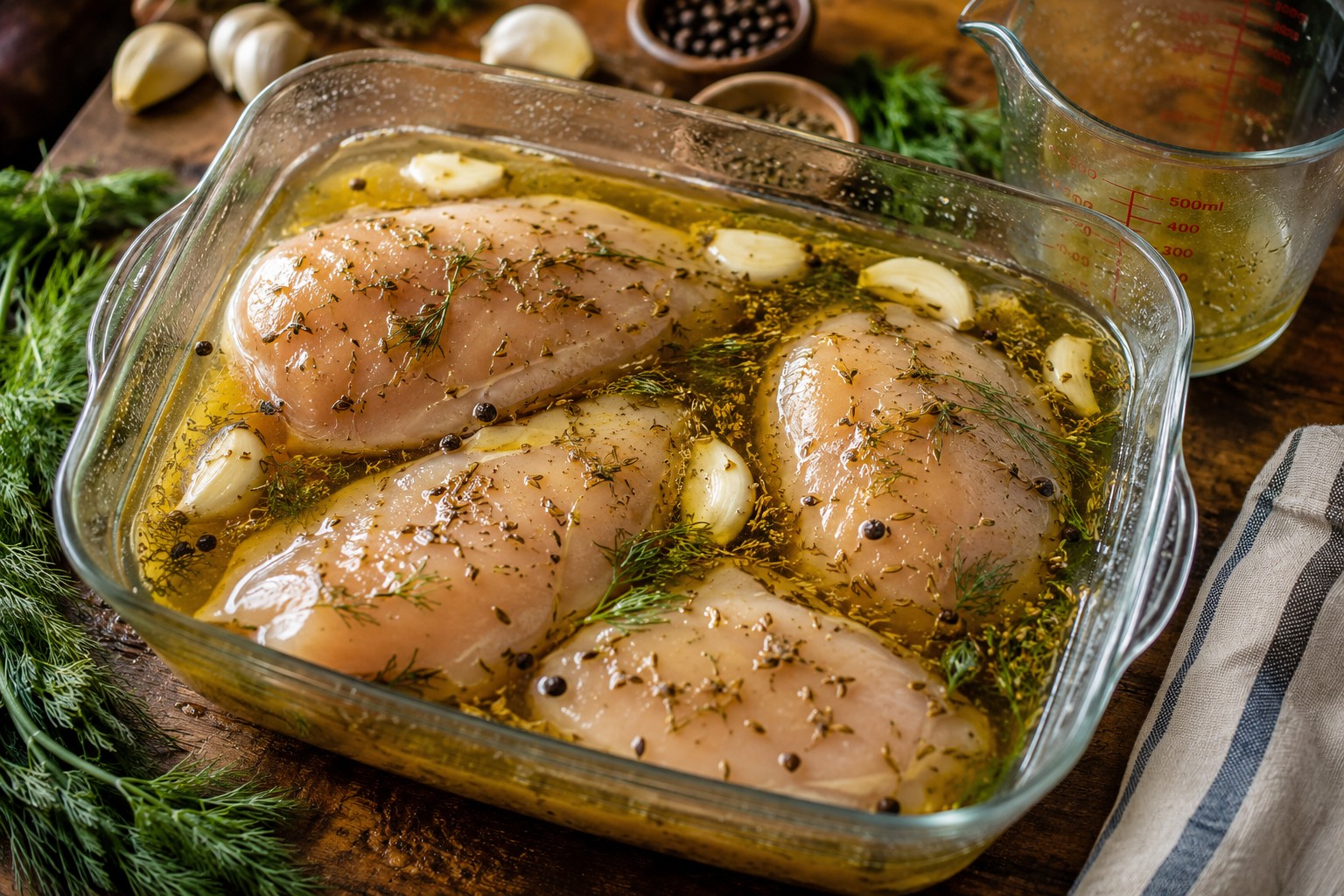
For chicken breast, submerge the meat in dill pickle brine for 2-4 hours in the refrigerator. The result is juicy, well-seasoned chicken that stays moist during cooking. This method works especially well if you plan to grill, bake, or cook chicken in an air fryer.
Pickle brine marinade for chicken:
- 1 cup dill pickle brine
- 2 tablespoons olive oil
- 1 teaspoon black pepper
- 1 pound chicken breast or thighs
Combine in a zip-top bag, refrigerate for 2-4 hours, then cook as desired. The brine seasons the meat all the way through, so you won’t need to add salt during cooking.
Best meats for pickle brine marinades:
- Chicken breast and thighs (2-4 hours)
- Pork chops (2-3 hours)
- Firm fish like salmon (30-60 minutes)
- Beef for stir-fry or kebabs (1-2 hours)
Don’t marinate longer than recommended, as the acid can make the texture mushy. For more tips on keeping chicken moist, see our guide on how to keep chicken breast moist.
Pickle Brine for Brining Chicken Before Frying
Brining chicken in pickle brine before frying adds flavor and helps the meat stay juicy under high heat. The salt in the brine changes the protein structure, allowing the chicken to hold more moisture during cooking. [2][4]
To brine chicken for frying, submerge the pieces in cold pickle brine for 2-4 hours in the refrigerator. Remove the chicken, pat it dry, and proceed with your usual breading and frying method. The pickle flavor will be subtle but noticeable, especially if you use dill brine.
Pickle brine for fried chicken:
- 2 cups dill pickle brine
- 1 cup cold water
- 2 pounds chicken pieces
Combine in a large bowl, add chicken, cover, and refrigerate. After brining, rinse the chicken briefly under cold water if the brine tastes very salty, then dry thoroughly before breading.
Why this works better than plain saltwater:
- The vinegar tenderizes the meat slightly, making it more tender
- The spices in the brine add background flavor to the chicken
- The salt level is already balanced, so you don’t have to measure
For more on cooking chicken breast to the right temperature, check our detailed guide.
Pickle Brine Cocktail Recipes: Dirty Martini and Beyond
Pickle brine adds a savory, salty edge to cocktails, especially drinks that already feature olives or pickled garnishes. The most popular use is in a dirty martini, where a splash of brine replaces or complements olive brine. [4]

Pickle brine dirty martini:
- 2 ounces vodka or gin
- ½ ounce dry vermouth
- ½ ounce dill pickle brine
- Ice
- Pickled spear or olive for garnish
Shake with ice, strain into a chilled glass, and garnish. The pickle brine makes the drink more savory and less sweet than a traditional martini.
Other cocktails that work with pickle brine:
- Bloody Mary: Replace some of the tomato juice with pickle brine for extra tang
- Michelada: Add a tablespoon of pickle brine to beer, lime, and hot sauce
- Pickle-back shot: Sip pickle brine as a chaser after whiskey
Choose dill brine for cocktails if you want a savory, herbal note. Bread-and-butter brine works in sweeter drinks but can taste out of place in a martini.
Is Pickle Juice Safe to Drink After the Pickles Are Gone?
Yes, pickle juice is safe to drink straight from the jar as long as the brine hasn’t developed mold, cloudiness, or an off smell. The high acidity and salt content prevent most harmful bacteria from growing. [2][4]
Some people drink pickle juice for hydration after exercise because it contains sodium and small amounts of potassium. Others use it as a folk remedy for muscle cramps or hangovers, though scientific evidence for these benefits is limited.
When pickle juice is safe to drink:
- The jar has been refrigerated continuously
- The liquid is clear and smells like pickles
- No mold or film is visible on the surface
- The brine hasn’t been sitting open for more than a few days
When to throw it out:
- Cloudy or murky appearance
- Mold or white film on the surface
- Sour or rotten smell that’s different from vinegar
- The jar was left at room temperature for more than 2 hours
How Long Does Leftover Pickle Brine Last in the Fridge?
Leftover pickle brine lasts 2-3 months in the refrigerator if stored in a sealed container and kept free of food particles. The vinegar and salt act as natural preservatives, but the brine will gradually lose flavor and potency over time. [2][4]
To maximize shelf life, transfer the brine to a clean glass jar or bottle with a tight lid. Avoid dipping dirty utensils into the brine, as this can introduce bacteria or mold spores.
Signs your brine is still good:
- Clear or slightly cloudy liquid (some cloudiness is normal)
- Strong vinegar and spice smell
- No visible mold or film
- Tastes salty and tangy
Signs your brine has gone bad:
- Thick cloudiness or sediment
- Mold on the surface
- Sour or rotten smell
- Slimy texture
If you’re not sure, taste a small amount. If it tastes off or flat, discard it.
Can I Use Bread and Butter Pickle Juice the Same Way as Dill?
Bread and butter pickle brine is sweeter than dill brine, so it works better in recipes that benefit from a hint of sugar. Use it in slaws, fruit salads, or sweet-and-sour marinades, but avoid it in savory applications like brining chicken for frying. [1][4]
Best uses for bread and butter brine:
- Coleslaw dressing (mix with mayo and a pinch of celery seed)
- Glaze for roasted carrots or sweet potatoes
- Marinade for pork chops or salmon
- Sweet cocktails or mocktails
Best uses for dill brine:
- Chicken or pork marinades
- Potato salad or deviled eggs
- Dirty martinis or Bloody Marys
- Quick-pickled onions or cucumbers
If a recipe calls for dill brine and you only have bread and butter, add a pinch of salt and a few drops of vinegar to balance the sweetness.
Does Pickle Brine Go Bad or Get Moldy?
Yes, pickle brine can go bad if it’s contaminated with food particles, left open at room temperature, or stored for too long. Mold appears as white or green spots on the surface, and the brine may smell sour or rotten instead of tangy. [2][4]
To prevent spoilage, always use clean utensils when handling brine, keep it refrigerated, and store it in a sealed container. If you see any mold, discard the entire jar—don’t try to skim it off.
Common causes of spoilage:
- Vegetable particles left in the brine
- Jar left open or loosely covered
- Cross-contamination from dirty spoons or hands
- Storage at room temperature for more than a few hours
How to keep brine fresh longer:
- Strain out any solids before storing
- Use a clean glass jar with a tight lid
- Refrigerate immediately after opening
- Label the jar with the date so you know how old it is
Pickle Juice for Hangovers: Does It Actually Work?
Pickle juice is a popular folk remedy for hangovers, but scientific evidence is limited. The sodium and small amounts of potassium in the brine may help with rehydration, and the vinegar might settle an upset stomach, but it won’t cure a hangover on its own. [4]
If you want to try it, drink 2-4 ounces of pickle juice along with plenty of water. The salt can help your body retain fluids, which is useful if you’re dehydrated from alcohol. However, plain water, electrolyte drinks, and food are more reliable ways to recover.
Why people think it works:
- The salt helps with rehydration
- The sour taste may reduce nausea
- The ritual of drinking something strong can feel restorative
Why it’s not a cure:
- Hangovers are caused by dehydration, inflammation, and toxin buildup—pickle juice only addresses dehydration
- The sodium content is helpful but not enough to replace lost fluids
- No studies prove pickle juice is more effective than water or sports drinks
Best Store-Bought Pickle Brands for Reusing the Brine
Not all store-bought pickle brines are created equal. Brands that use simple ingredients—vinegar, water, salt, and spices—produce the best brine for reuse. Avoid pickles with artificial flavors, preservatives, or high-fructose corn syrup, as these can taste off in marinades and dressings. [1][4]
Top brands for reusable brine:
- Claussen: Refrigerated pickles with clean, dill-forward brine
- Mt. Olive: Wide variety of flavors, including dill and bread-and-butter
- Vlasic: Widely available and consistent quality
- Bubbies: Fermented pickles with probiotic-rich brine (different flavor profile)
What to look for on the label:
- Short ingredient list (vinegar, water, salt, spices)
- No artificial colors or flavors
- Refrigerated pickles tend to have fresher-tasting brine than shelf-stable jars
If you want the most control over flavor, consider making your own quick pickles using a simple brine recipe. [1][2][4]
Can You Freeze Pickle Brine for Later Use?
Yes, you can freeze pickle brine in ice cube trays or small containers for up to 6 months. Freezing doesn’t harm the flavor or acidity, and it makes it easy to add small amounts to recipes without thawing a full jar. [4]
To freeze brine, pour it into ice cube trays and freeze until solid. Transfer the cubes to a zip-top bag and label with the date and type of brine (dill or bread-and-butter). Each cube is about 2 tablespoons, which is perfect for adding to marinades, dressings, or soups.
Best uses for frozen pickle brine cubes:
- Drop one cube into a pot of soup or stew for acidity
- Add to a marinade or salad dressing
- Toss with roasted vegetables before serving
- Use in a Bloody Mary or dirty martini
Thawing tips:
- Let cubes thaw in the fridge overnight for dressings
- Add frozen cubes directly to hot dishes like soups or sauces
- Microwave for 10-15 seconds if you need liquid brine quickly
What Not to Do with Leftover Pickle Juice
While pickle brine is versatile, there are a few uses that don’t work well. Avoid using it in delicate recipes where the strong vinegar flavor will overpower other ingredients, and don’t try to use it for shelf-stable canning without a tested recipe. [2][4]
Don’t use pickle brine for:
- Baking: The acidity can interfere with leavening and create off flavors
- Delicate fish: The strong flavor can overwhelm mild fish like tilapia or sole
- Canning new vegetables for shelf storage: The acidity and salt levels may not be safe without testing
- Sweetened desserts: The savory, salty flavor doesn’t belong in cakes or cookies
Do use pickle brine for:
- Savory marinades and dressings
- Quick refrigerator pickles
- Cocktails and savory drinks
- Seasoning roasted vegetables or grains
If you’re experimenting with a new recipe, start with a small amount of brine and taste as you go. It’s easier to add more than to fix an overly tangy dish.
10 Smart Ways to Use Leftover Pickle Brine in Marinades, Dressings, and Cocktails
Here’s a quick reference list of the best ways to use leftover pickle brine, based on the methods covered in this article:
- Chicken marinade: Soak chicken breast or thighs in dill brine for 2-4 hours before grilling or baking
- Salad dressing: Replace vinegar in vinaigrettes with pickle brine for instant flavor
- Dirty martini: Add ½ ounce of dill brine to vodka or gin for a savory cocktail
- Potato salad: Mix pickle brine with mayo, mustard, and celery for a tangy dressing
- Quick-pickled onions: Simmer brine, pour over sliced red onions, and refrigerate
- Deviled eggs: Add a teaspoon of pickle brine to the yolk mixture for extra tang
- Coleslaw: Use bread-and-butter brine in place of sugar and vinegar
- Bloody Mary: Replace some tomato juice with dill brine for a briny kick
- Roasted vegetables: Toss vegetables with a tablespoon of brine before roasting
- Grain salads: Drizzle pickle brine over quinoa, farro, or rice for a bright finish
Each of these uses takes advantage of the brine’s acidity, salt, and spice, saving you time and reducing waste.
Conclusion
Leftover pickle brine is one of the most underused ingredients in the kitchen. Instead of pouring it down the drain, you can use it to marinate chicken, brighten salads, or add a savory punch to cocktails. The brine’s combination of vinegar, salt, and spices makes it a ready-made seasoning that works in dozens of recipes.
Start by keeping a jar of leftover brine in your fridge and experimenting with one or two of the methods in this article. Try marinating chicken breast for your next dinner, or mix a tablespoon into your favorite salad dressing. Once you see how much flavor it adds, you’ll never throw away pickle brine again.
Next steps:
- Save your next jar of pickle brine and label it with the date
- Try one of the 10 uses listed above this week
- Experiment with both dill and bread-and-butter brines to see which you prefer
- Freeze extra brine in ice cube trays for easy portioning
FAQ
Can you reuse pickle brine to make new pickles?
Yes, you can reuse pickle brine once for quick refrigerator pickles. Bring it to a simmer, taste it, and add more vinegar or salt if needed. Don’t reuse it for shelf-stable canning.
How long does pickle brine last in the fridge?
Leftover pickle brine lasts 2-3 months in a sealed container in the refrigerator. Discard it if you see mold, cloudiness, or an off smell.
Is it safe to drink pickle juice straight from the jar?
Yes, as long as the brine is clear, smells like pickles, and has been refrigerated. The high acidity and salt prevent harmful bacteria from growing.
Can I use bread and butter pickle juice for chicken marinade?
Bread and butter brine is sweeter than dill brine, so it works better for pork or salmon. For chicken, dill brine is a better choice unless you want a sweet-and-sour flavor.
Does pickle brine go bad?
Yes, pickle brine can develop mold or spoil if contaminated with food particles or left at room temperature. Always store it in a clean, sealed container in the fridge.
Can you freeze pickle brine?
Yes, freeze pickle brine in ice cube trays for up to 6 months. Each cube is about 2 tablespoons, perfect for adding to recipes.
What’s the difference between dill and bread and butter pickle brine?
Dill brine is savory and herbal, best for marinades and cocktails. Bread and butter brine is sweet, better for slaws and glazes.
Can I use pickle brine instead of vinegar in recipes?
Yes, pickle brine can replace vinegar in most recipes. It adds salt and spices along with acidity, so adjust your seasoning accordingly.
Does pickle juice help with hangovers?
Pickle juice may help with rehydration due to its sodium content, but it’s not a cure. Water and electrolyte drinks are more effective.
What are the best store-bought pickles for reusing brine?
Claussen, Mt. Olive, and Vlasic produce high-quality brine with simple ingredients. Look for brands with short ingredient lists and no artificial flavors.
Can I use pickle brine for canning vegetables?
Only use pickle brine for quick refrigerator pickles, not for shelf-stable canning. The acidity and salt levels may not be safe without a tested recipe.
How do I know if pickle brine has gone bad?
Discard brine if it’s cloudy, has mold on the surface, smells sour or rotten, or tastes flat. Clear, tangy brine is still good to use.
References
[1] Best Pickles Recipe – https://cookieandkate.com/best-pickles-recipe/
[2] How To Make Dill Pickles Cooking Lessons From The Kitchn 193350 – https://www.thekitchn.com/how-to-make-dill-pickles-cooking-lessons-from-the-kitchn-193350
[3] Overnight Homemade Pickles Recipe – https://snappygourmet.com/overnight-homemade-pickles-recipe/
[4] Quick Pickle Brine – https://www.thespicehouse.com/blogs/recipes/quick-pickle-brine
[5] Basic Pickling Brine – https://www.vtfoodbank.org/vtf-recipes/basic-pickling-brine/
[6] Watch – https://www.youtube.com/watch?v=EpY9fFOHJGo
[7] Create Unique Pickling Brines Zmrz1908zsta – https://www.motherearthnews.com/real-food/create-unique-pickling-brines-zmrz1908zsta/