Spring Produce Recipes That Don’t Feel Boring: Asparagus, Peas, Radishes, and Snap-Sweet Combinations
Last updated: June 19, 2026
Spring vegetables don’t have to mean the same steamed asparagus or bland pea side dish every year. The key to making asparagus, peas, radishes, and snap peas exciting is using bold techniques like charring, smashing, shaving, and pairing them with punchy dressings that add acid, fat, and crunch. When you treat spring produce with the same creativity you’d give to heartier vegetables, you unlock combinations that feel fresh but never dull.
Key Takeaways
- Char asparagus instead of roasting for deeper, caramelized flavor with crispy tips
- Smash radishes with olive oil and salt to mellow their bite and create creamy texture
- Blanch and shock peas and snap peas in ice water to preserve bright color and crisp texture
- Layer textures by combining raw, cooked, and crunchy elements in one dish
- Use acid-forward dressings with lemon, vinegar, or Dijon to prevent spring vegetables from tasting flat
- Add fat and protein through nuts, cheese, avocado, or chickpeas to make salads more satisfying
- Cut vegetables to similar sizes so they cook evenly and look intentional
- Dry blanched vegetables thoroughly before dressing so vinaigrettes cling properly
- Shave radishes paper-thin for salads or blend them into vinaigrettes for peppery punch
- Combine sweet and savory by pairing peas with mint, basil, or dill for balanced flavor
What Are Some Creative Ways to Cook Asparagus Besides Roasting?
Asparagus becomes far more interesting when you char it on high heat, grill it until the tips crisp, or blanch and shock it for salads. Charring in a cast-iron skillet or on a grill creates caramelized edges and a smoky flavor that roasting can’t match. Blanching for 1-2 minutes in boiling salted water, then plunging into ice water, preserves the bright green color and crisp-tender texture that works beautifully in cold dishes.
Try these techniques:
- Char in a dry skillet: Heat a cast-iron pan until smoking, add trimmed asparagus, and cook without moving for 2-3 minutes per side until blackened in spots
- Grill whole spears: Toss with olive oil and salt, grill over direct heat for 3-4 minutes, turning once
- Shave raw: Use a vegetable peeler to create thin ribbons for salads, dressed with lemon and olive oil
- Marinate after cooking: Blanch asparagus, then toss with soy sauce, sesame oil, and chili flakes while still warm
- Sauté with garlic and anchovies: Cook in olive oil with smashed garlic and anchovy paste for umami depth
Common mistake: Overcrowding the pan when charring. Asparagus needs space to caramelize rather than steam, so work in batches if necessary.
How to Make Fresh Peas Taste Interesting Not Bland
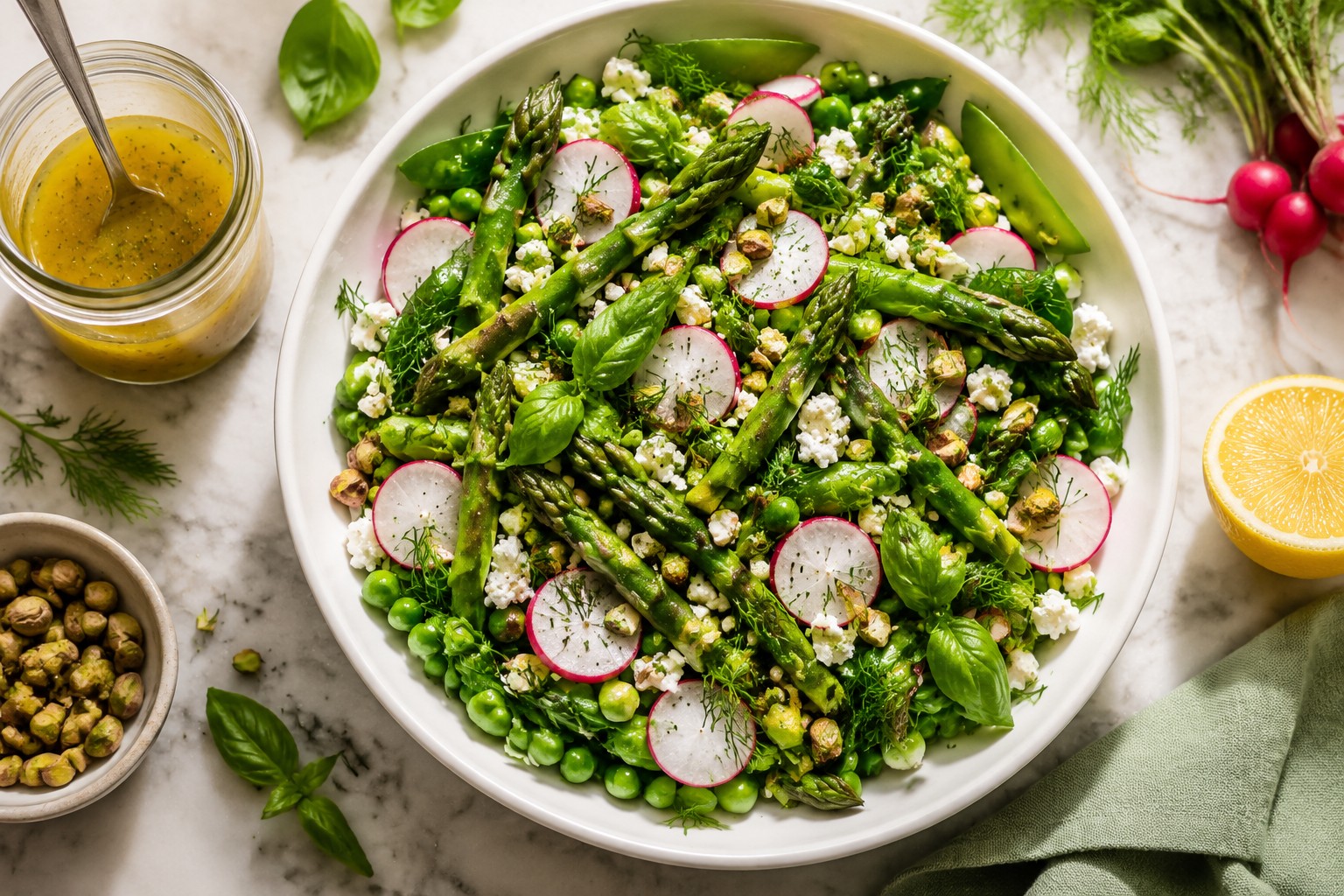
Fresh peas need fat, acid, and herbs to taste vibrant instead of flat. Toss blanched peas with butter and mint, dress them with lemon vinaigrette and shaved Parmesan, or mash them with olive oil and garlic for a bright spread. The natural sweetness of peas becomes more complex when balanced with sharp or savory elements.
Flavor boosters for peas:
- Mint and lemon: Classic pairing that highlights sweetness without adding sugar
- Butter and black pepper: Simple but effective for bringing out creamy texture
- Parmesan and basil: Adds umami and herbal notes
- Chili flakes and olive oil: Creates sweet-spicy contrast
- Miso paste: Stir into warm peas for savory depth
Quick technique: Blanch peas for 1 minute, shock in ice water, then toss with any of the above combinations. The brief cooking softens them just enough while preserving their snap.
Choose mashed peas if you want a spread for toast or a base for grain bowls. Choose whole blanched peas if you want texture in salads or side dishes.
What Flavors Pair Well With Radishes in Recipes?
Radishes pair best with butter, salt, citrus, and fresh herbs because these ingredients mellow their peppery bite and highlight their crisp texture. Butter and flaky salt is a classic French combination that softens the sharpness. Lemon juice, lime, or vinegar adds brightness that complements the radish’s natural spice. Dill, parsley, and cilantro provide herbal balance.
Winning radish pairings:
- Butter and sea salt: Spread softened butter on radish slices and sprinkle with flaky salt
- Lime and cilantro: Toss sliced radishes with lime juice, cilantro, and a pinch of cumin
- Honey and vinegar: Quick-pickle radishes in equal parts vinegar and honey for sweet-tart crunch
- Tahini and lemon: Drizzle tahini sauce over roasted or smashed radishes
- Soy sauce and sesame: Marinate thinly sliced radishes in soy, rice vinegar, and sesame oil
Edge case: If you find radishes too spicy raw, roast them at 425°F for 20 minutes. Roasting transforms their flavor from sharp to sweet and mellow, similar to roasted turnips.
Asparagus vs Snap Peas Which Is Better for Salads?
Snap peas are better for salads when you want maximum crunch and sweetness without any prep, while asparagus is better when you want a more substantial, savory base that holds up to heavier dressings. Snap peas can be eaten raw and stay crisp for hours after dressing. Asparagus needs blanching or charring first and works best in salads where it’s the star vegetable rather than a supporting player.
Choose snap peas when:
- You want zero cooking and instant crunch
- The salad has delicate greens or light vinaigrette
- You need a vegetable that stays crisp in meal prep
- You’re adding other cooked vegetables and want textural contrast
Choose asparagus when:
- You want a heartier, more filling salad
- The dressing is rich or creamy
- You’re building a warm or room-temperature salad
- You want a vegetable that can be the main component
Pro tip: Use both. Blanch asparagus and raw snap peas together in the same salad for layered texture and complementary flavors.
Easy Spring Vegetable Recipes Under 30 Minutes
The fastest spring vegetable recipes rely on blanching, quick sautéing, or serving raw with bold dressings. A spring salad with blanched asparagus, peas, snap peas, and shaved radishes takes 15 minutes start to finish. Charred asparagus with lemon and Parmesan takes 10 minutes. These recipes work because spring vegetables cook quickly and taste best with minimal intervention.
Three 15-minute spring recipes:
1. Blanched Spring Salad
- Blanch asparagus and peas for 2 minutes, shock in ice water
- Toss with raw snap peas, sliced radishes, olive oil, lemon juice, and fresh dill
- Top with toasted walnuts and crumbled feta
2. Charred Asparagus with Anchovy Butter
- Char asparagus in a hot skillet for 6 minutes total
- Melt butter with minced anchovy and garlic
- Pour over asparagus and finish with lemon zest
3. Smashed Radish and Pea Toast
- Blanch peas, then mash with olive oil and mint
- Smash radishes with the flat of a knife, toss with salt
- Spread pea mash on toast, top with smashed radishes and flaky salt
Time-saving tip: Blanch all your spring vegetables at once in the same pot of boiling water, removing each as it’s done. Asparagus takes 2 minutes, snap peas 1 minute, and peas 1 minute.
If you’re looking for protein to pair with these vegetables, check out our guide on what is the best way to cook chicken breast for a salad for perfectly tender additions.
Why Do My Spring Vegetables Always Taste Boring?
Spring vegetables taste boring when they’re overcooked, under-seasoned, or served without enough fat and acid. Mushy asparagus, gray peas, and limp radishes lose their natural appeal. The fix is to cook vegetables briefly, season aggressively with salt, and always add a fat source (butter, olive oil, nuts, cheese) plus an acid (lemon, vinegar, yogurt) to create balanced flavor.
Common boring-vegetable mistakes:
- Boiling instead of blanching: Boiling for too long turns vegetables mushy and washes out flavor
- No salt in the cooking water: Vegetables need seasoning from the inside out
- Skipping the ice bath: Without shocking, vegetables continue cooking and turn drab
- Using only one flavor note: Spring vegetables need both richness and brightness
- Serving them plain: Even the best vegetables need a finishing touch
The fix: Salt your blanching water generously (it should taste like seawater), cook vegetables just until crisp-tender, shock immediately in ice water, dry thoroughly, then dress with both fat and acid plus fresh herbs.
What Can I Do With Radishes If I Don’t Like Them Raw?
Roast radishes at 425°F for 20-25 minutes to transform their sharp bite into mild, sweet flavor similar to roasted turnips, or smash them and sauté with butter and garlic for a creamy texture. Roasting caramelizes their natural sugars and softens their peppery edge. Smashing breaks down their cell structure, making them absorb flavors better and creating a more tender bite.
Three ways to cook radishes:
Roasted radishes:
- Halve radishes, toss with olive oil and salt
- Roast at 425°F for 20-25 minutes until golden and tender
- Finish with butter and fresh thyme
Smashed and sautéed:
- Smash whole radishes with the flat of a knife
- Sauté in butter with garlic for 5-7 minutes
- Season with salt and lemon juice
Quick-pickled:
- Slice radishes thin, pack in a jar
- Pour over hot mixture of equal parts vinegar and water with sugar and salt
- Ready in 30 minutes, keeps for 2 weeks
Flavor note: Cooked radishes lose most of their spiciness and develop a mild, slightly sweet flavor that works well in stir-fries, grain bowls, and as a side dish.
Are Snap Peas and Sugar Snap Peas the Same Thing for Recipes?
Yes, snap peas and sugar snap peas are the same vegetable and can be used interchangeably in recipes. Both terms refer to the edible-pod pea variety that’s eaten whole, with a crisp texture and sweet flavor. Snow peas are different—they’re flat with smaller peas inside, while snap peas are plump and rounded.
What to know:
- Snap peas = sugar snap peas: Same vegetable, different common names
- Snow peas ≠ snap peas: Snow peas are flat and more delicate
- Both are eaten whole: No need to shell either variety
- Snap peas are sweeter: They have more developed peas inside the pod
In recipes: If a recipe calls for sugar snap peas, use snap peas. If it calls for snow peas, you can substitute snap peas but expect a crunchier, sweeter result.
Spring Produce Recipes for People Who Don’t Like Vegetables
The key for vegetable skeptics is to add substantial amounts of fat, protein, and crunch so the vegetables become part of a more complete dish rather than the sole focus. Build grain bowls with quinoa, add grilled chicken or chickpeas, use creamy dressings, and include nuts or seeds for texture. When spring vegetables are supporting players alongside ingredients you already enjoy, they’re easier to appreciate.
Vegetable-skeptic-friendly spring recipes:
Spring Quinoa Bowl:
- Base of cooked quinoa
- Blanched asparagus and peas (just a handful)
- Grilled chicken or roasted chickpeas
- Avocado slices
- Tahini dressing
- Toasted sunflower seeds
Creamy Spring Pasta:
- Short pasta with cream or butter sauce
- Small amount of blanched peas and snap peas
- Parmesan cheese and lemon zest
- Crispy breadcrumbs on top
Spring Chicken Salad:
- Shredded rotisserie chicken as the base
- Chopped blanched asparagus (small pieces)
- Sliced radishes for crunch
- Creamy mayo-based dressing
- Served on bread or crackers
Strategy: Start with a 3:1 ratio of “safe” ingredients to vegetables, then gradually increase the vegetable proportion as your palate adjusts.
For perfectly cooked chicken to pair with spring vegetables, see our guide on how to cook chicken breast step by step for juicy results.
Common Mistakes When Cooking Asparagus That Make It Mushy
Overcooking is the main culprit, but cooking asparagus in too much water, not shocking it after blanching, and using low heat when you want caramelization also create mushy results. Asparagus should be crisp-tender, not soft. Thick spears need 3-4 minutes of cooking, thin spears need 1-2 minutes, and both need immediate cooling if you’re not serving them hot.
Mistakes that create mushy asparagus:
- Boiling instead of blanching: Submerging in gently boiling water for too long
- No ice bath: Asparagus continues cooking from residual heat
- Steaming for too long: Steam cooks more slowly than boiling water
- Roasting at low temperature: 350°F creates limp asparagus; use 425°F or higher
- Not trimming woody ends: Tough ends never become tender, only mushier
The fix for each method:
- Blanching: 1-2 minutes for thin spears, 2-3 for thick, then straight into ice water
- Roasting: 425°F for 12-15 minutes, checking at 10 minutes
- Grilling: High direct heat for 3-4 minutes total, turning once
- Sautéing: High heat, 4-5 minutes, don’t cover the pan
Test for doneness: Asparagus should bend slightly when picked up by the middle but not flop over. It should pierce easily with a fork but still have resistance.
How to Combine Asparagus Peas and Radishes in One Dish
The best way to combine these three vegetables is to blanch the asparagus and peas together, shock them in ice water, then toss with raw sliced radishes and a bright vinaigrette. This method preserves the distinct texture of each vegetable while creating a cohesive dish. The asparagus provides substance, the peas add sweetness, and the radishes contribute peppery crunch.
Master spring vegetable salad formula:
Base vegetables:
- 1 bunch asparagus, trimmed and cut into 2-inch pieces
- 1 cup fresh or frozen peas
- 1 cup snap peas, trimmed
- 6-8 radishes, thinly sliced
Cooking method:
- Bring a large pot of salted water to boil
- Add asparagus, cook 2 minutes
- Add peas and snap peas, cook 1 more minute
- Drain and immediately plunge into ice water
- Drain again and dry thoroughly on towels
Dressing (choose one):
- Lemon vinaigrette: 3 parts olive oil, 1 part lemon juice, Dijon mustard, salt, pepper
- Herb dressing: olive oil, white wine vinegar, minced shallot, fresh dill and mint
- Creamy option: Greek yogurt, lemon juice, garlic, olive oil
Finishing touches:
- Crumbled feta or goat cheese
- Toasted nuts (pistachios, walnuts, or almonds)
- Fresh herbs (mint, dill, basil, or parsley)
- Flaky sea salt
Serving options: Serve immediately as a side dish, or refrigerate for up to 2 days for meal prep. The vegetables stay crisp if properly dried before dressing.
What to Do With Leftover Spring Vegetables Before They Go Bad
Turn leftover spring vegetables into quick-pickles, blend them into soups, or chop and add to grain bowls and frittatas within 3-4 days of purchase. Asparagus and snap peas last 3-5 days in the fridge when stored in a damp paper towel inside a plastic bag. Radishes last up to 2 weeks. Peas should be used within 2-3 days or blanched and frozen.
Quick rescue recipes:
Spring vegetable frittata:
- Sauté leftover asparagus, peas, and radishes
- Pour beaten eggs over vegetables
- Bake at 375°F for 15-20 minutes
Blended spring soup:
- Sauté onion and garlic
- Add leftover vegetables and broth
- Simmer 10 minutes, blend until smooth
- Finish with cream and herbs
Grain bowl base:
- Chop all leftover vegetables small
- Toss with cooked quinoa or farro
- Add protein and dressing
- Eat cold or warm
Quick pickle:
- Slice radishes and blanched asparagus
- Cover with hot vinegar, water, sugar, and salt mixture
- Ready in 1 hour, keeps 2 weeks refrigerated
Freezing tip: Blanch asparagus and peas for 2 minutes, shock in ice water, dry thoroughly, then freeze in a single layer on a baking sheet before transferring to freezer bags. They’ll keep for 6 months and work well in cooked dishes (not salads).
Are Spring Vegetable Recipes Good for Meal Prep?
Spring vegetable recipes are excellent for meal prep when you keep components separate and assemble just before eating, or when you use cooking methods that maintain texture for 3-4 days. Blanched and shocked vegetables stay crisp in the fridge for several days if stored properly. Grain bowls, pasta salads, and frittatas with spring vegetables hold up well, but delicate raw salads should be assembled fresh.
Best spring meal prep strategies:
Component prep (best for salads):
- Blanch and shock vegetables Sunday night
- Store in airtight containers with paper towels to absorb moisture
- Keep dressing separate
- Assemble each morning or right before eating
Fully assembled dishes (best for bowls and baked items):
- Spring quinoa bowls last 4 days assembled
- Frittatas with spring vegetables last 5 days
- Pasta salads with blanched vegetables last 3 days
- Roasted vegetable mixes last 4 days
What doesn’t work:
- Raw radish salads get watery after 1 day
- Dressed asparagus salads get soggy after 2 days
- Peas lose their bright color after 3 days even when properly stored
Storage tip: Store blanched vegetables in glass containers with a paper towel on the bottom and top to absorb excess moisture. This keeps them crisp for up to 4 days.
For meal prep with protein, our guide on what is the best way to cook chicken breast to keep it moist offers techniques that work perfectly alongside spring vegetables.
Unexpected Ingredient Pairings With Asparagus and Peas
Asparagus pairs surprisingly well with anchovies, miso, and tahini, while peas shine with mint, coconut, and curry spices. These combinations move beyond the typical lemon-butter treatment and create more complex, interesting flavors. Anchovies add umami depth to asparagus without tasting fishy. Miso creates a savory-sweet glaze. Tahini provides creamy richness. Peas with coconut milk and curry become a quick Indian-inspired side dish.
Unexpected asparagus pairings:
- Asparagus + anchovy + garlic: Sauté asparagus in olive oil with smashed garlic and anchovy paste
- Asparagus + miso + sesame: Toss roasted asparagus with miso butter and toasted sesame seeds
- Asparagus + tahini + lemon: Drizzle tahini sauce over charred asparagus
- Asparagus + soy + ginger: Marinate blanched asparagus in soy sauce, rice vinegar, and grated ginger
- Asparagus + bacon + egg: Top asparagus with crispy bacon and a soft-boiled egg
Unexpected pea pairings:
- Peas + coconut + curry: Simmer peas in coconut milk with curry powder and lime
- Peas + ricotta + lemon: Blend peas with ricotta for a creamy pasta sauce
- Peas + pancetta + cream: Classic Italian combination for pasta or risotto
- Peas + wasabi + soy: Toss blanched peas with wasabi paste and soy sauce
- Peas + feta + dill: Mash peas with feta and dill for a spread
Why these work: Each pairing balances the natural sweetness of spring vegetables with savory, spicy, or tangy elements that prevent them from tasting one-dimensional.
Spring Produce Recipes That Don’t Feel Boring: Building Your Own Combinations
The formula for exciting spring produce recipes is simple: pick a cooking method that adds texture (char, blanch, or raw), add a bold dressing with both fat and acid, include at least one crunchy element, and finish with fresh herbs. This framework works whether you’re making a salad, a grain bowl, or a side dish.
The formula:
1. Choose your cooking method:
- Char for smoky depth
- Blanch and shock for bright color and crisp texture
- Raw for maximum crunch
- Roast for caramelization
2. Pick your fat:
- Olive oil
- Butter
- Tahini
- Avocado
- Nuts or seeds
- Cheese
3. Add your acid:
- Lemon juice
- Vinegar (white wine, red wine, or rice)
- Yogurt
- Pickled elements
4. Include crunch:
- Toasted nuts
- Seeds
- Crispy chickpeas
- Breadcrumbs
- Raw radishes
5. Finish with herbs:
- Mint
- Dill
- Basil
- Parsley
- Cilantro
Example combinations:
- Charred asparagus + olive oil + lemon + pistachios + mint
- Blanched peas + butter + vinegar + breadcrumbs + dill
- Raw snap peas + tahini + lime + sesame seeds + cilantro
- Roasted radishes + avocado + yogurt + walnuts + parsley
The key: Don’t rely on just one or two elements. Layer multiple flavors and textures to create dishes that feel complete and satisfying rather than like an afterthought side of vegetables.
FAQ
How long should I blanch asparagus for salads? Blanch asparagus for 2-3 minutes for thick spears or 1-2 minutes for thin spears, then immediately transfer to ice water. The asparagus should be bright green and crisp-tender, not soft. Test by piercing with a fork—it should have slight resistance.
Can I use frozen peas instead of fresh in spring recipes? Yes, frozen peas work well and are often sweeter than fresh because they’re frozen at peak ripeness. Blanch frozen peas for just 1 minute since they’re already partially cooked. They’re best in cooked dishes and grain bowls rather than raw salads.
Why do my radishes taste too spicy? Radishes become more peppery as they age or when grown in hot weather. To mellow the spice, soak sliced radishes in ice water for 30 minutes, roast them at 425°F for 20 minutes, or quick-pickle them in vinegar and sugar.
How do I keep blanched vegetables from getting soggy? Shock blanched vegetables immediately in ice water to stop cooking, then drain thoroughly and dry on clean kitchen towels or paper towels. Store in containers with paper towels to absorb any remaining moisture. Don’t dress them until just before serving.
What’s the difference between snap peas and snow peas? Snap peas are plump and rounded with fully developed peas inside, eaten whole with a sweet, crunchy texture. Snow peas are flat with tiny peas inside and a more delicate texture. Both are edible-pod peas but snap peas are sweeter and crunchier.
Can I make spring vegetable salads ahead of time? Yes, but keep components separate. Blanch and shock vegetables up to 3 days ahead, store in airtight containers with paper towels, and keep dressing separate. Assemble within a few hours of serving for best texture and color.
How do I trim asparagus properly? Hold each spear near the bottom and bend gently—it will snap naturally at the point where the tender part meets the woody end. Alternatively, cut off the bottom 1-2 inches. Save woody ends for vegetable stock.
What herbs go best with spring vegetables? Mint, dill, basil, and parsley are the top choices. Mint pairs especially well with peas, dill complements asparagus, basil works with everything, and parsley adds fresh flavor without overpowering. Use a combination for more complex flavor.
How long do spring vegetables last in the fridge? Asparagus lasts 3-5 days stored upright in a jar with 1 inch of water or wrapped in damp paper towels. Snap peas last 3-5 days in a plastic bag. Fresh peas should be used within 2-3 days. Radishes last up to 2 weeks in the crisper drawer.
Can I roast all spring vegetables together? Not at the same time, because they cook at different rates. Asparagus takes 12-15 minutes at 425°F, snap peas take 8-10 minutes, and radishes take 20-25 minutes. Roast radishes first, add asparagus halfway through, and add snap peas in the last 10 minutes.
What’s the best way to add protein to spring vegetable dishes? Grilled chicken, hard-boiled eggs, chickpeas, feta cheese, or grilled salmon all work well. For chicken, see our guide on what is the best way to cook chicken breast to keep it tender. For plant-based options, roasted chickpeas or white beans add protein and texture.
Why does my asparagus turn gray after cooking? Asparagus turns gray when overcooked or not shocked in ice water after blanching. The chlorophyll breaks down with prolonged heat exposure. Always blanch briefly and shock immediately in ice water to preserve the bright green color.
Conclusion
Spring produce recipes stop feeling boring when you move beyond basic steaming and embrace techniques like charring, smashing, and shaving that add texture and depth. The key is treating asparagus, peas, radishes, and snap peas with the same creativity you’d give to any other ingredient—layering bold dressings, adding crunch through nuts and seeds, and balancing sweetness with acid and fat.
Start with one new technique this week: char your asparagus instead of roasting it, smash radishes with butter and salt, or build a grain bowl with blanched vegetables and a punchy vinaigrette. Keep components separate for meal prep, dry blanched vegetables thoroughly before dressing, and don’t be afraid to experiment with unexpected pairings like miso, tahini, or anchovies.
Spring vegetables are only in season for a few months each year. Make the most of them by creating combinations that feel fresh, exciting, and worth looking forward to—not just another obligation to eat your vegetables.
SEO Meta Title: Spring Produce Recipes: Asparagus, Peas, Radishes Guide


