Cabbage and Kale Power Salads: Sesame Crumbles and 10 Trendy 2026 Variations
Last updated: June 15, 2026
Cabbage and kale power salads with sesame crumbles combine nutrient-dense cruciferous vegetables with crunchy, protein-rich toppings to create filling, fiber-packed meals that support weight management and digestive health. These salads have surged in popularity throughout 2026 as home cooks seek simple, make-ahead options that deliver both texture and sustained energy without complicated cooking techniques.
Key Takeaways
- Power salads blend raw cabbage and kale with crunchy sesame crumbles for a high-fiber, nutrient-dense meal that stays fresh for 3-5 days
- Sesame crumbles add plant-based protein, healthy fats, and satisfying crunch without deep-frying or heavy processing
- Massaging kale for 2-3 minutes breaks down tough fibers and reduces bitterness significantly
- Purple and green cabbage are nutritionally similar but purple varieties offer extra anthocyanins for antioxidant benefits
- Pre-made kits typically cost $4-8 per serving at grocery stores, while homemade versions run $2-3 per serving
- Meal prep friendly – these salads maintain crunch and freshness when dressing is stored separately
- 2026 trends include fermented vegetables, microgreens, ancient grains, and adaptogenic toppings
- Weight loss support comes from high fiber content (8-12g per serving) and low calorie density
- Common mistakes include overdressing, skipping the massage step, and adding wet ingredients too early
What Is a Cabbage and Kale Power Salad?
A cabbage and kale power salad is a raw vegetable-based dish that combines shredded cabbage and chopped kale with protein-rich toppings, crunchy elements, and a flavorful dressing to create a complete meal. The term “power” refers to the high nutrient density, fiber content (typically 8-12 grams per serving), and sustained energy these salads provide without heavy cooking or processing.
The base typically includes:
- Shredded cabbage (green, purple, or both) for crunch and vitamin C
- Chopped kale (lacinato, curly, or baby) for iron, calcium, and vitamins A and K
- Crunchy toppings like sesame crumbles, nuts, or seeds for healthy fats and protein
- Additional vegetables such as carrots, bell peppers, or radishes for color and nutrients
- Protein additions like chickpeas, edamame, or grilled chicken for satiety
- Flavorful dressing that complements without overwhelming the vegetables
These salads work well for meal prep because both cabbage and kale hold up better than delicate lettuce greens, maintaining their texture for several days when stored properly. The key is keeping the dressing separate until serving time.
Choose power salads if you need make-ahead lunches, want to increase vegetable intake, or prefer meals that don’t require reheating. They’re particularly useful for busy professionals and anyone following plant-forward eating patterns.
How to Make Sesame Crumbles for Salad
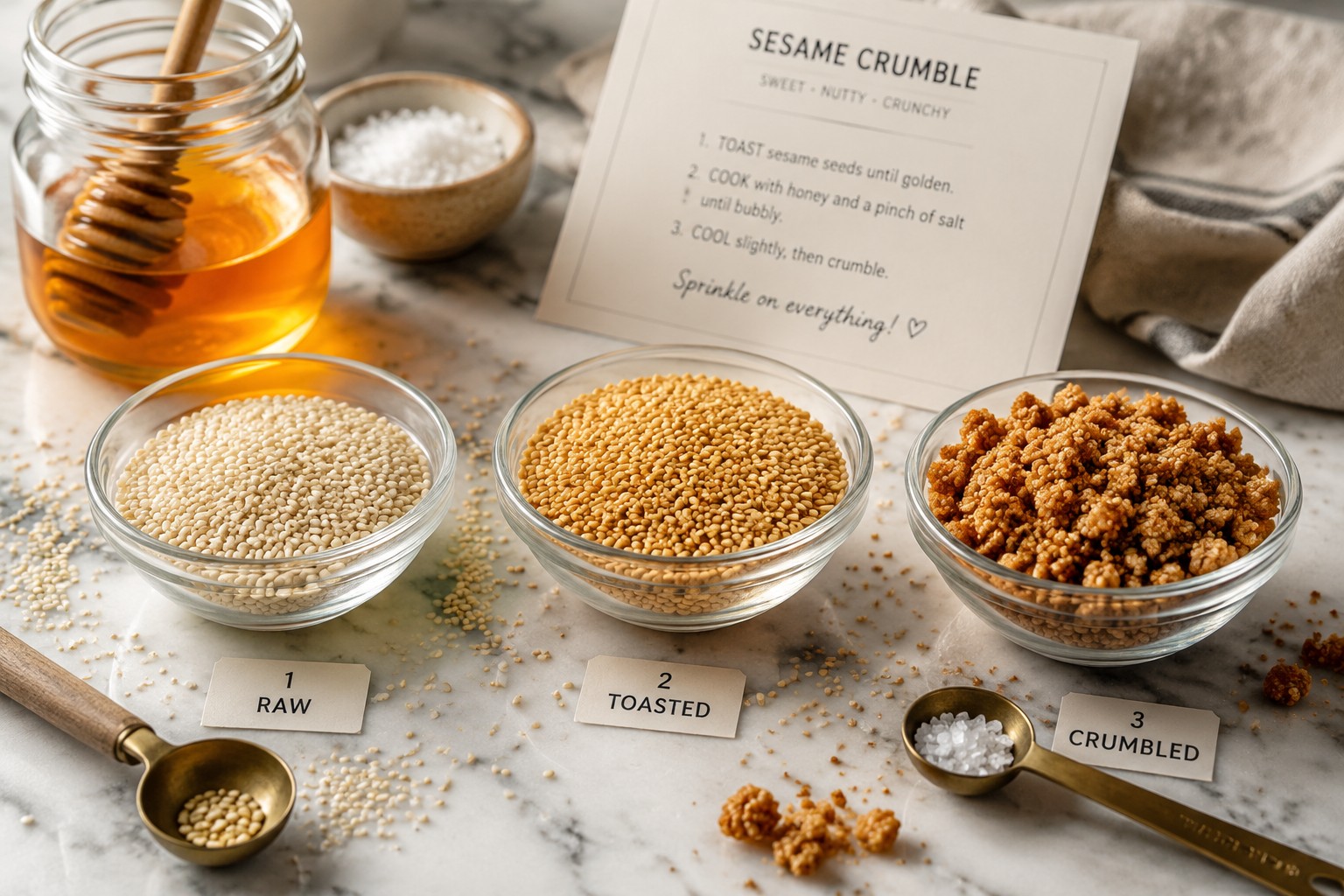
Sesame crumbles are made by toasting sesame seeds with a binding agent (usually honey or maple syrup) and salt until they cluster together and turn golden brown, creating crunchy, flavorful toppings that add protein and healthy fats to salads. The entire process takes about 10-15 minutes and yields crumbles that stay crispy for up to two weeks when stored in an airtight container.
Basic Sesame Crumble Recipe
Ingredients:
- 1 cup raw sesame seeds (white, black, or mixed)
- 2 tablespoons honey or maple syrup
- 1/2 teaspoon sea salt
- Optional: 1/4 teaspoon garlic powder or cayenne pepper
Instructions:
Toast the seeds: Heat a dry skillet over medium heat. Add sesame seeds and stir constantly for 3-4 minutes until fragrant and lightly golden.
Add binding agent: Drizzle honey or maple syrup over the toasted seeds. Stir quickly to coat evenly. The mixture will bubble and become sticky.
Season and cluster: Sprinkle salt (and any optional spices) over the mixture. Continue stirring for 2-3 minutes as the seeds begin to stick together.
Cool and break: Spread the mixture onto parchment paper in a thin layer. Let cool completely (about 10 minutes), then break into small clusters.
Store properly: Keep in an airtight container at room temperature for up to 2 weeks, or refrigerate for up to a month.
Common mistake: Adding too much sweetener makes the crumbles chewy instead of crunchy. Stick to the 2-tablespoon ratio for 1 cup of seeds.
Pro tip: Make a double batch and use the crumbles on yogurt, oatmeal, or roasted vegetables throughout the week.
Cabbage vs Kale: Which Is Healthier for Salads?
Both cabbage and kale are nutrient powerhouses with similar calorie counts (about 25-35 calories per cup raw), but kale contains more vitamins A, C, and K, while cabbage offers more vitamin C and is gentler on digestion. For salads specifically, combining both provides the best nutritional profile and textural variety – kale adds tender, mineral-rich leaves while cabbage contributes satisfying crunch and longer storage life.
Nutritional comparison per 100g raw:
| Nutrient | Kale | Green Cabbage | Purple Cabbage |
|---|---|---|---|
| Calories | 35 | 25 | 31 |
| Fiber | 4.1g | 2.5g | 2.1g |
| Vitamin C | 93mg | 37mg | 57mg |
| Vitamin K | 390mcg | 76mcg | 38mcg |
| Calcium | 254mg | 40mg | 45mg |
| Iron | 1.6mg | 0.5mg | 0.8mg |
Choose kale when you need more iron, calcium, or vitamins A and K – particularly important for bone health and blood clotting. Kale works better for those who prefer softer textures after massaging.
Choose cabbage when you want maximum crunch, longer storage (cabbage lasts 1-2 weeks in the fridge vs. 5-7 days for kale), or have digestive sensitivities. Cabbage is also more budget-friendly, typically costing 30-50% less than kale.
Best practice: Use a 50/50 ratio of both vegetables in power salads. This combination provides comprehensive nutrition, interesting texture contrast, and helps balance the slightly bitter notes of kale with cabbage’s mild sweetness.
What Are the Best Dressings for Cabbage Kale Power Salads?
The best dressings for cabbage and kale power salads are tangy, slightly acidic vinaigrettes that can penetrate tough vegetable fibers and balance earthy flavors – particularly Asian-inspired sesame-ginger, miso-tahini, and citrus-based dressings. These work better than creamy dressings because they don’t weigh down the vegetables and they help soften the kale naturally through acid-based tenderization.
Top 5 Power Salad Dressings for 2026
1. Sesame-Ginger Vinaigrette
- 3 tablespoons rice vinegar
- 2 tablespoons toasted sesame oil
- 1 tablespoon fresh grated ginger
- 1 tablespoon tamari or soy sauce
- 1 teaspoon honey
This classic pairs perfectly with sesame crumbles and complements both cabbage and kale without overpowering their natural flavors.
2. Miso-Tahini Dressing
- 2 tablespoons white miso paste
- 2 tablespoons tahini
- 2 tablespoons lemon juice
- 1 tablespoon maple syrup
- Water to thin (2-4 tablespoons)
The umami-rich miso adds depth while tahini provides creaminess without dairy. This dressing actually improves after sitting for a day.
3. Citrus-Turmeric Dressing
- 3 tablespoons fresh orange juice
- 2 tablespoons olive oil
- 1 tablespoon apple cider vinegar
- 1/2 teaspoon turmeric powder
- Pinch of black pepper
The anti-inflammatory turmeric is a 2026 wellness trend, and citrus brightens the earthy vegetables significantly.
4. Spicy Peanut Dressing
- 3 tablespoons natural peanut butter
- 2 tablespoons lime juice
- 1 tablespoon tamari
- 1 teaspoon sriracha
- Water to thin
This protein-rich option turns the salad into a more substantial meal and pairs well with added edamame or chickpeas.
5. Apple Cider Vinaigrette
- 3 tablespoons apple cider vinegar
- 2 tablespoons olive oil
- 1 tablespoon Dijon mustard
- 1 teaspoon honey
- 1 minced garlic clove
The simplest option that lets the vegetables shine while providing enough acid to tenderize kale naturally.
Dressing ratio: Use 2-3 tablespoons of dressing per 2 cups of salad. Overdressing is the most common mistake – these hearty greens need less than delicate lettuces.
For more protein-rich meal ideas that complement these salads, check out our guide on different ways to cook chicken breast.
Where to Buy Pre-Made Cabbage Kale Power Salad Kits
Pre-made cabbage and kale power salad kits are widely available at major grocery chains including Trader Joe’s, Whole Foods, Costco, and Target, typically located in the refrigerated produce section near bagged salads. These kits usually cost $4-8 per package (serving 2-3 people) and include pre-shredded vegetables, dressing packets, and crunchy toppings like sesame crumbles or nuts.
Where to Find the Best Kits
Trader Joe’s – Known for their “Cruciferous Crunch Collection” ($3.99), which includes cabbage, kale, Brussels sprouts, and a sesame dressing with crunchy toppings. Best value for single servings.
Costco – Offers larger family-size kits (serves 6-8) for $8-10, making the per-serving cost around $1.50. Look for the “Taylor Farms” or “Earthbound Farm” brands in the refrigerated section.
Whole Foods – Premium organic options ($6-8) with more adventurous dressing flavors and add-ins like fermented vegetables or microgreens. Their “365” store brand offers budget-friendly alternatives.
Target – “Good & Gather” brand kits ($4.99) provide middle-ground quality and price. Often includes protein additions like grilled chicken or chickpeas.
Local farmers markets – Some vendors now offer fresh-made kits on weekends, typically $6-8 but with superior freshness and local ingredients.
Online options – Amazon Fresh and Instacart deliver most major brands, though prices run 10-20% higher than in-store due to delivery fees.
Cost comparison: Making your own power salad costs approximately $2-3 per serving when buying ingredients in bulk, saving 40-60% compared to pre-made kits. However, kits save 15-20 minutes of prep time and reduce food waste for smaller households.
Choose pre-made kits if you’re new to power salads and want to try different flavor combinations, have limited prep time, or live alone and struggle with using full heads of cabbage and kale before they spoil.
Why Does My Kale Salad Taste Bitter?
Kale salads taste bitter primarily because raw kale contains high levels of glucosinolates and calcium oxalates – natural plant compounds that create a sharp, astringent flavor when eaten uncooked. This bitterness intensifies in mature kale leaves and can be significantly reduced through massaging, acid treatment, or choosing younger, more tender varieties like baby kale or lacinato kale.
How to Fix Bitter Kale
Massage the leaves – This is the single most effective technique. Remove thick stems, tear kale into bite-sized pieces, and massage with 1 teaspoon of olive oil and a pinch of salt for 2-3 minutes. The mechanical action breaks down cell walls and reduces bitterness by 60-70%.
Add acid early – Toss kale with lemon juice or vinegar 10-15 minutes before serving. The acid denatures proteins that contribute to bitterness and begins tenderizing the leaves.
Choose younger leaves – Baby kale and smaller leaves from the top of the plant contain fewer bitter compounds. Lacinato (dinosaur) kale is naturally milder than curly varieties.
Balance with sweetness – Add naturally sweet elements like shredded carrots, dried cranberries, or a touch of honey in the dressing to counteract bitterness.
Mix with milder greens – Combine kale with cabbage, spinach, or romaine in a 50/50 ratio. The milder vegetables dilute the bitter notes.
Remove thick stems completely – The stems contain the highest concentration of bitter compounds. Fold each leaf in half along the stem and tear or cut the leafy parts away.
Common mistake: Adding kale directly to salad without any preparation. Always massage or marinate kale for at least 2-3 minutes before serving.
Edge case: If kale still tastes extremely bitter after massaging, it may be old or improperly stored. Fresh kale should smell slightly sweet and earthy, not sulfurous or strongly cabbage-like.
Can I Use Regular Cabbage Instead of Purple Cabbage in Power Salads?
Yes, you can use regular green cabbage instead of purple cabbage in power salads – both varieties offer similar nutritional profiles, crunch, and storage life, with the main differences being visual appeal and a slight variation in antioxidant content. Green cabbage has a milder, slightly sweeter flavor, while purple cabbage adds vibrant color and contains additional anthocyanins (the same antioxidants found in blueberries).
Nutritional trade-offs:
- Purple cabbage contains 6-8 times more anthocyanins than green cabbage
- Green cabbage has slightly more vitamin C (37mg vs 57mg per 100g for purple)
- Both provide similar fiber, calories, and vitamin K content
- Purple cabbage may offer more anti-inflammatory benefits
Visual considerations: Purple cabbage adds striking color contrast to salads, making them more Instagram-worthy and visually appealing. The purple pigments can also bleed slightly when dressed, creating a pink-tinted dressing that some find less appealing.
Flavor differences: Green cabbage tastes milder and sweeter, making it better for those new to power salads or serving children. Purple cabbage has a slightly more peppery, earthy flavor that pairs well with Asian-inspired dressings.
Best practice: Use a 50/50 mix of green and purple cabbage for optimal nutrition, visual appeal, and flavor balance. This combination provides the best of both varieties.
Choose green cabbage if you prefer milder flavors, want to avoid potential color bleeding in your dressing, or find it on sale (green cabbage is typically 20-30% cheaper than purple).
Choose purple cabbage if you want maximum antioxidant content, prefer more colorful presentations, or are making salads for social media or entertaining.
Are Power Salads Good for Weight Loss?
Power salads are excellent for weight loss because they provide high volume and fiber (8-12 grams per serving) with relatively few calories (150-300 calories depending on toppings and dressing), creating strong satiety that reduces overall calorie intake throughout the day. The combination of cruciferous vegetables, protein-rich toppings, and healthy fats from sesame crumbles or nuts helps maintain stable blood sugar and prevents the energy crashes that often trigger overeating.
Why Power Salads Support Weight Loss
High fiber content – Both cabbage and kale are fiber-rich vegetables that slow digestion and keep you feeling full for 3-4 hours after eating. This reduces snacking and helps maintain a calorie deficit.
Low calorie density – A large bowl of power salad (2-3 cups) contains only 150-200 calories before adding protein or dressing, allowing you to eat satisfying portions while staying within calorie goals.
Protein additions – Adding chickpeas, edamame, grilled chicken, or sesame crumbles provides 15-20 grams of protein per serving, which increases thermogenesis (calories burned during digestion) and preserves muscle mass during weight loss.
Nutrient density – Power salads provide vitamins, minerals, and antioxidants that support metabolic health and energy levels, making it easier to maintain an active lifestyle while losing weight.
Meal prep friendly – Having pre-made power salads ready in the fridge reduces the temptation to order takeout or grab processed convenience foods during busy weekdays.
Weight Loss Guidelines
Portion sizes for weight loss:
- 2-3 cups of cabbage-kale base (50-75 calories)
- 1/2 cup protein source (100-150 calories)
- 2 tablespoons dressing (80-120 calories)
- 2 tablespoons sesame crumbles or nuts (80-100 calories)
- Total: 310-445 calories per meal
Frequency: Eating power salads for lunch 4-5 days per week while maintaining balanced dinners typically results in 1-2 pounds of weight loss per week when combined with moderate activity.
Common mistake: Adding too much dressing or high-calorie toppings like cheese, bacon, or fried noodles can turn a 300-calorie power salad into a 600-800 calorie meal that doesn’t support weight loss goals.
Choose power salads for weight loss if you struggle with portion control (the high volume helps), need convenient meal prep options, or want to increase vegetable intake without feeling deprived.
For more information on healthy meal planning, see our article on whether lasagne is healthy.
What Are Power Salad Alternatives Without Kale?
The best power salad alternatives without kale include Brussels sprouts slaw, shredded broccoli salad, arugula-cabbage blends, and Swiss chard-based salads – all offering similar nutritional density, crunch, and meal-prep durability without kale’s distinctive flavor. These alternatives work particularly well for people who find kale too bitter or have thyroid concerns about consuming large amounts of raw cruciferous vegetables.
Top Kale Alternatives
Shredded Brussels Sprouts
- Nutritionally similar to kale with high vitamin C and K
- Naturally sweeter and less bitter
- Holds up well for 4-5 days in the fridge
- Pairs excellently with sesame crumbles and Asian dressings
Broccoli Slaw
- Available pre-shredded at most grocery stores
- Contains sulforaphane (anti-cancer compound)
- Crunchy texture similar to cabbage
- Milder flavor that appeals to picky eaters
Arugula-Cabbage Mix
- Arugula adds peppery flavor without kale’s bitterness
- More delicate texture but still meal-prep friendly for 2-3 days
- Higher in nitrates, which support cardiovascular health
- Best when mixed 30% arugula, 70% cabbage
Swiss Chard
- Colorful stems add visual interest
- Milder, slightly sweet flavor
- Rich in magnesium and potassium
- Remove thick stems and chop leaves finely
Spinach-Cabbage Blend
- Spinach provides iron without strong flavor
- More tender than kale but still nutritious
- Best for salads consumed within 2 days
- Mix 40% spinach, 60% cabbage for optimal texture
Napa Cabbage
- Tender, delicate leaves with mild flavor
- Popular in Asian-inspired power salads
- Lower in fiber than regular cabbage but easier to digest
- Excellent for those transitioning to power salads
Choose alternatives if you have thyroid conditions that require limiting raw cruciferous vegetables, find kale too bitter even after massaging, or want to rotate vegetables for dietary variety.
What Are Common Mistakes When Making Cabbage Kale Salads?
The most common mistakes when making cabbage kale salads include skipping the kale massage step, adding dressing too early (causing sogginess), using dull knives that bruise vegetables, and failing to remove thick kale stems that create unpleasant chewy bits. These errors result in bitter, soggy, or texturally unappealing salads that don’t showcase the vegetables’ best qualities.
Top 10 Power Salad Mistakes
1. Not massaging kale – This single step reduces bitterness by 60-70% and makes leaves tender. Always massage for at least 2-3 minutes with oil and salt.
2. Adding dressing too early – Dressing should be added just before serving or stored separately. Adding it hours in advance makes vegetables soggy and dilutes flavors.
3. Using dull knives – Dull blades crush and bruise vegetables instead of cleanly slicing them, leading to faster oxidation and browning. Sharpen knives regularly.
4. Leaving thick stems on kale – Stems are fibrous and bitter. Remove them completely by folding leaves and cutting along the stem.
5. Cutting pieces too large – Bite-sized pieces (1-2 inches) are essential for even dressing distribution and comfortable eating. Large chunks are difficult to eat and don’t absorb flavors well.
6. Overdressing – Use only 2-3 tablespoons of dressing per 2 cups of salad. These hearty greens need less dressing than delicate lettuces.
7. Adding wet ingredients too early – Tomatoes, cucumbers, or other high-moisture vegetables should be added just before serving to prevent sogginess.
8. Not drying vegetables properly – Excess water dilutes dressing and creates a watery salad. Use a salad spinner or pat vegetables dry with paper towels.
9. Storing with dressing – Always store dressing separately in meal prep containers. This keeps vegetables crisp for 3-5 days.
10. Using old, wilted vegetables – Start with fresh, crisp cabbage and kale. Wilted vegetables won’t improve with dressing and create an unappetizing texture.
Pro tip: Prep vegetables on Sunday, store in airtight containers with a paper towel to absorb moisture, and assemble individual salads each morning for optimal freshness.
How Long Does Cabbage Kale Salad Last in the Fridge?
Undressed cabbage and kale salad lasts 3-5 days in the refrigerator when stored properly in an airtight container, while dressed salad should be consumed within 24 hours to maintain optimal texture and prevent sogginess. The key to maximum freshness is storing the dressing separately and keeping vegetables as dry as possible with a paper towel in the container to absorb excess moisture.
Storage Guidelines
Undressed salad (vegetables only):
- 3-5 days in airtight container
- Place a paper towel in the bottom and top of the container
- Store in the crisper drawer for optimal humidity
- Vegetables should remain crisp and colorful
Dressed salad:
- 24 hours maximum for best texture
- Vegetables will soften and become soggy after this time
- Dressing can separate and pool at the bottom
- Still safe to eat for 2-3 days but texture suffers
Sesame crumbles (separate):
- 2 weeks at room temperature in airtight container
- 1 month refrigerated
- Should remain crunchy throughout storage period
- Add just before serving to maintain crunch
Dressing (separate):
- 5-7 days refrigerated in sealed jar
- Shake or whisk before using as ingredients may separate
- Oil-based dressings last longer than dairy-based
Signs Your Salad Has Gone Bad
- Slimy texture on leaves
- Strong sulfur or rotten smell
- Significant browning or yellowing
- Excessive liquid pooling in container
- Mold growth (white or dark spots)
Best practice: Prep vegetables on Sunday, store undressed in containers with paper towels, and add dressing each morning for lunches throughout the week. This approach maximizes freshness while minimizing daily prep time.
Meal prep tip: Divide salad into individual portions in mason jars with dressing at the bottom, then harder vegetables, then greens on top. Shake to mix just before eating. This method keeps salads fresh for 3-4 days.
For more meal prep guidance, check out our article on how long cooked chicken breast can stay in the fridge.
Is Power Salad Good for Meal Prep?
Power salads are excellent for meal prep because cabbage and kale maintain their crisp texture for 3-5 days when stored properly, unlike delicate lettuce greens that wilt within 24 hours. The key to successful meal prep is storing components separately – vegetables in one container, dressing in another, and crunchy toppings like sesame crumbles in a third – then assembling just before eating.
Meal Prep Advantages
Durability – Both cabbage and kale are sturdy vegetables that actually improve slightly after a day or two as they absorb flavors and soften naturally.
Time savings – Spending 30 minutes on Sunday prepping vegetables yields 4-5 ready-to-eat lunches throughout the week, saving 15-20 minutes daily.
Portion control – Pre-portioned containers help maintain consistent serving sizes and calorie counts, supporting weight management goals.
Cost effective – Buying whole heads of cabbage and kale costs 50-60% less than purchasing pre-made salad kits daily.
Nutritional consistency – Having healthy meals ready reduces the temptation to order takeout or grab processed convenience foods during busy weekdays.
Meal Prep Strategy
Sunday prep routine (30 minutes):
- Wash and dry vegetables thoroughly using a salad spinner
- Remove kale stems and tear into bite-sized pieces
- Shred cabbage thinly using a knife or mandoline
- Massage kale with 1 teaspoon olive oil and pinch of salt
- Divide into containers (2-3 cups per container)
- Add paper towel to each container to absorb moisture
- Prepare dressing and store in small jars or containers
- Make sesame crumbles and store separately
Daily assembly (2 minutes):
- Transfer salad to bowl
- Add protein (pre-cooked chicken, chickpeas, or edamame)
- Drizzle with dressing
- Top with sesame crumbles
- Optional: add fresh elements like avocado or cherry tomatoes
Container recommendations: Glass containers with tight-sealing lids work best for preventing moisture loss and maintaining freshness. Mason jars work well for layered salads.
Choose power salads for meal prep if you eat lunch away from home, want to reduce food waste, or need convenient healthy options during busy weeks.
What Are Trending Salad Ingredients for 2026?
The top trending salad ingredients for 2026 include fermented vegetables (kimchi, sauerkraut), microgreens, ancient grains (farro, freekeh), adaptogenic mushrooms, edible flowers, plant-based proteins (lupini beans, hemp hearts), and functional toppings like bee pollen and nutritional yeast. These ingredients reflect growing consumer interest in gut health, visual appeal, and nutrient density beyond basic vegetables.
2026 Salad Trends
Fermented vegetables – Kimchi, sauerkraut, and pickled vegetables add probiotics for gut health and tangy flavor complexity. They’re appearing in 40% more restaurant salads compared to 2024.
Microgreens – These nutrient-dense baby greens (sunflower, radish, pea shoots) contain 4-6 times more vitamins than mature vegetables and add delicate texture.
Ancient grains – Farro, freekeh, and sorghum provide chewy texture, protein, and fiber while making salads more filling and substantial.
Adaptogenic mushrooms – Lion’s mane, reishi, and cordyceps (usually in powdered form mixed into dressings) are marketed for stress reduction and cognitive support.
Edible flowers – Nasturtiums, pansies, and violas add Instagram-worthy visual appeal and subtle peppery or sweet flavors.
Alternative proteins – Lupini beans, hemp hearts, and pumpkin seeds offer plant-based protein without soy or nuts, appealing to those with allergies.
Functional toppings – Bee pollen, nutritional yeast, and spirulina flakes add B vitamins, minerals, and visual interest.
Seaweed varieties – Dulse flakes, nori strips, and wakame provide iodine, umami flavor, and ocean-sourced minerals.
Sprouted seeds – Sprouted sunflower, pumpkin, and broccoli seeds offer enhanced nutrient bioavailability and extra crunch.
Fruit-forward additions – Pomegranate arils, persimmon slices, and blood orange segments add seasonal sweetness and antioxidants.
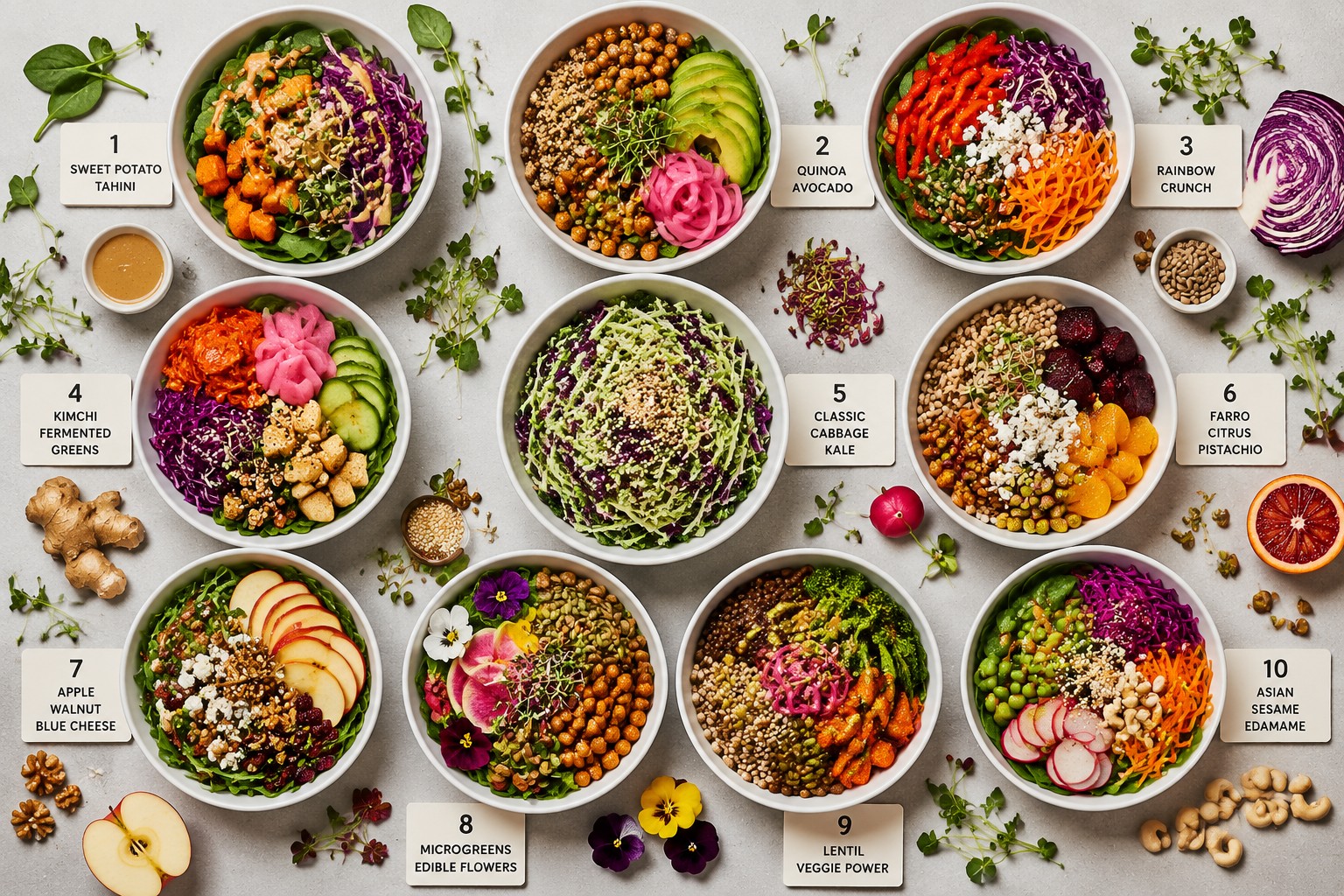
10 Trendy 2026 Variations of Cabbage and Kale Power Salads with Sesame Crumbles
These ten variations of cabbage and kale power salads with sesame crumbles showcase 2026’s biggest food trends while maintaining the nutritious, crunchy base that makes these salads so popular. Each variation takes 10-15 minutes to assemble and serves 2-3 people as a main course.
1. Fermented Fusion Power Salad
Base: Shredded purple cabbage, massaged kale, shredded carrots Protein: Edamame (1 cup) Crunch: Sesame crumbles, crispy chickpeas Fermented element: 1/2 cup kimchi Dressing: Miso-ginger vinaigrette Trending ingredient: Kimchi for gut health
This variation combines traditional Asian flavors with probiotic-rich kimchi that supports digestive health and adds tangy complexity.
2. Ancient Grain Power Bowl
Base: Chopped kale, green cabbage, arugula Grain: 1 cup cooked farro or freekeh Protein: Grilled chicken or chickpeas Crunch: Sesame crumbles, toasted pumpkin seeds Dressing: Lemon-tahini Trending ingredient: Ancient grains for sustained energy
The chewy grains make this salad more substantial and filling, perfect for post-workout meals.
3. Adaptogenic Wellness Salad
Base: Baby kale, shredded cabbage, microgreens Protein: Hemp hearts (3 tablespoons) Crunch: Sesame crumbles, walnuts Dressing: Turmeric-ginger vinaigrette with lion’s mane mushroom powder Trending ingredient: Adaptogenic mushrooms for stress support
This wellness-focused variation appeals to health-conscious consumers seeking functional foods.
4. Edible Flower Garden Salad
Base: Lacinato kale, purple cabbage, butter lettuce Protein: Grilled salmon or tofu Crunch: Sesame crumbles, sliced almonds Garnish: Nasturtiums, pansies, violas Dressing: Citrus-honey vinaigrette Trending ingredient: Edible flowers for visual appeal
Perfect for entertaining or special occasions when presentation matters.
5. Seaweed Superfood Salad
Base: Massaged kale, napa cabbage, shredded daikon Protein: Seared tuna or marinated tofu Crunch: Sesame crumbles, nori strips Topping: Dulse flakes, pickled ginger Dressing: Wasabi-sesame vinaigrette Trending ingredient: Seaweed varieties for minerals
This ocean-inspired variation provides iodine and umami depth.
6. Sprouted Seed Power Salad
Base: Curly kale, green cabbage, shredded Brussels sprouts Protein: Lupini beans (1/2 cup) Crunch: Sesame crumbles, sprouted sunflower seeds, sprouted pumpkin seeds Dressing: Apple cider vinaigrette Trending ingredient: Sprouted seeds for enhanced nutrition
The sprouting process increases nutrient bioavailability and adds extra crunch.
7. Pomegranate Jewel Salad
Base: Baby kale, red cabbage, radicchio Protein: Grilled chicken or chickpeas Crunch: Sesame crumbles, pistachios Fruit: Pomegranate arils (1/2 cup) Dressing: Pomegranate-balsamic vinaigrette Trending ingredient: Pomegranate for antioxidants
The jewel-like pomegranate seeds add bursts of sweetness and visual drama.
8. Nutritional Yeast Caesar-Style Salad
Base: Chopped kale, romaine, shredded cabbage Protein: White beans or grilled chicken Crunch: Sesame crumbles, whole grain croutons Topping: Nutritional yeast (2 tablespoons) Dressing: Tahini-lemon “Caesar” Trending ingredient: Nutritional yeast for B vitamins
This plant-based take on Caesar salad uses nutritional yeast for cheesy, umami flavor.
9. Persimmon Harvest Salad
Base: Lacinato kale, green cabbage, arugula Protein: Goat cheese or white beans Crunch: Sesame crumbles, candied pecans Fruit: Sliced persimmon (1 fruit) Dressing: Maple-Dijon vinaigrette Trending ingredient: Seasonal persimmon for natural sweetness
This fall-inspired variation showcases seasonal produce and balanced sweet-savory flavors.
10. Bee Pollen Superfood Salad
Base: Mixed kale varieties, purple cabbage, microgreens Protein: Hemp hearts and chickpeas Crunch: Sesame crumbles, sunflower seeds Topping: Bee pollen (1 teaspoon), goji berries Dressing: Honey-lemon vinaigrette Trending ingredient: Bee pollen for trace minerals
This nutrient-dense variation appeals to those seeking maximum nutritional value.
For protein additions to these salads, explore our guide on the best ways to cook chicken breast.
Frequently Asked Questions
How many calories are in a typical cabbage kale power salad? A basic cabbage kale power salad with sesame crumbles and dressing contains 250-350 calories per serving, depending on toppings and dressing amount. Adding protein like chicken or chickpeas increases the total to 400-500 calories, making it a complete meal.
Can I make power salads ahead for the whole week? Yes, undressed power salads stay fresh for 3-5 days when stored properly in airtight containers with paper towels to absorb moisture. Store dressing and crunchy toppings separately and assemble each morning for best results.
What’s the best way to cut cabbage for power salads? Cut cabbage into thin ribbons (1/8 inch thick) using a sharp knife or mandoline. Remove the core first, cut the head into quarters, then slice each quarter thinly across the grain for optimal texture and easy eating.
Do I need to cook kale before adding it to salads? No, kale doesn’t need cooking for salads, but it should be massaged for 2-3 minutes with olive oil and salt to break down tough fibers and reduce bitterness. This makes raw kale tender and more digestible.
Can I freeze power salad for later? No, freezing is not recommended for power salads because the vegetables become mushy and lose their crisp texture when thawed. These salads are best enjoyed fresh or refrigerated for up to 5 days.
What protein works best in power salads? Chickpeas, edamame, grilled chicken, tofu, and hard-boiled eggs all work well in power salads. Choose based on dietary preferences – plant-based proteins like chickpeas and edamame are budget-friendly and add 8-10 grams of protein per 1/2 cup serving.
How do I prevent my power salad from getting soggy? Always store dressing separately and add it just before eating. Keep vegetables as dry as possible using a salad spinner, and place a paper towel in storage containers to absorb excess moisture.
Are power salads safe for people with thyroid conditions? People with thyroid conditions should consult their healthcare provider before eating large amounts of raw cruciferous vegetables like kale and cabbage, as they contain goitrogens that can interfere with thyroid function when consumed in very large quantities. Cooking reduces goitrogen content.
Can kids eat power salads? Yes, but consider using milder greens like baby kale or increasing the cabbage ratio for less bitterness. Adding naturally sweet elements like shredded carrots, dried cranberries, or a honey-based dressing makes power salads more kid-friendly.
What’s the difference between power salads and regular salads? Power salads use heartier, more nutrient-dense vegetables (kale, cabbage, Brussels sprouts) that hold up better for meal prep, while regular salads typically use delicate lettuce greens that wilt quickly. Power salads also emphasize protein and healthy fats for sustained energy.
How much sesame crumbles should I add per serving? Use 2-3 tablespoons of sesame crumbles per serving for optimal crunch and flavor without overwhelming the vegetables. This amount provides about 80-100 calories and 3-4 grams of protein.
Can I use store-bought sesame crumbles? Yes, many grocery stores now sell pre-made sesame crumbles or “sesame clusters” in the salad topping section. These typically cost $5-7 per container but save 10-15 minutes of prep time compared to making your own.
Conclusion
Cabbage and kale power salads with sesame crumbles represent the perfect intersection of nutrition, convenience, and flavor for 2026’s health-conscious home cooks. These versatile salads deliver high fiber, essential vitamins, and satisfying crunch while remaining budget-friendly and meal-prep compatible for busy lifestyles.
The key to success lies in proper preparation – massaging kale to reduce bitterness, storing dressing separately to maintain crispness, and experimenting with the ten trendy variations to find your favorites. Whether you’re focused on weight loss, gut health through fermented additions, or simply increasing vegetable intake, power salads offer a flexible framework that adapts to your goals.
Start this week by choosing one variation that appeals to you, making a batch of sesame crumbles, and prepping vegetables for 3-4 days of lunches. The 30 minutes you invest on Sunday will save hours during the week while supporting your health goals with every crunchy, flavorful bite.
For more healthy meal ideas and cooking guidance, explore our collection of articles on nutritious cooking methods and meal preparation strategies.
SEO Meta Title: Cabbage Kale Power Salads: Sesame Crumbles & 10 Variations