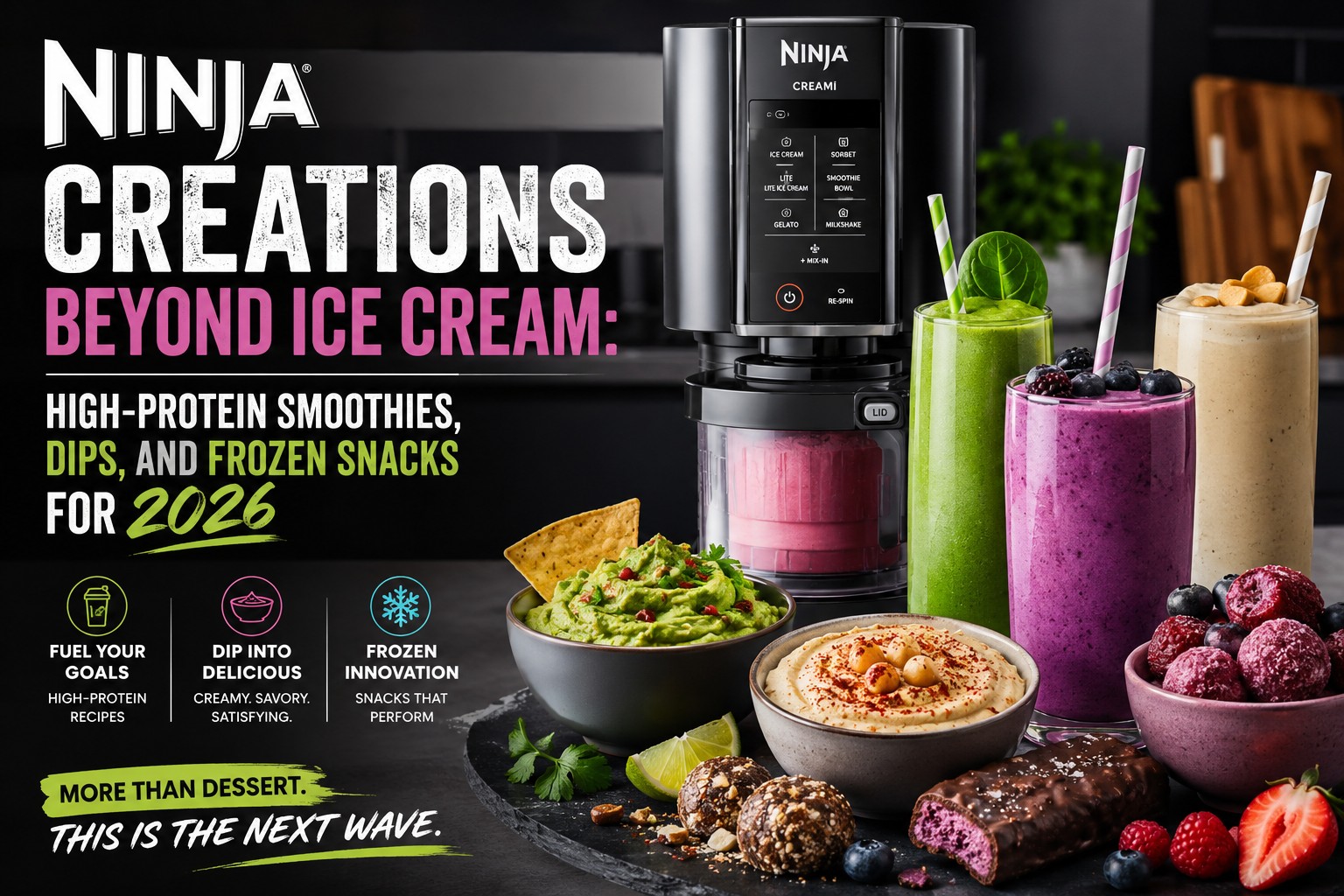
Ninja Creations Beyond Ice Cream: High-Protein Smoothies, Dips, and Frozen Snacks for 2026
{“cover”:”Professional landscape format (1536×1024) hero image featuring bold text overlay ‘Ninja Creations Beyond Ice Cream: High-Protein Smoothies, Dips, and Frozen Snacks for 2026’ in extra large 72pt white sans-serif font with dark shadow, centered in upper third. Background shows modern kitchen countertop with Ninja CREAMi machine surrounded by colorful high-protein smoothie bowls, frozen protein pops on sticks, creamy dip in bowl with vegetables, and protein-packed frozen snack bites arranged artfully. Color scheme: vibrant purple, white, fresh green accents. High contrast, magazine cover quality, editorial food photography style with natural lighting and appetizing composition.”,”content”:[“Detailed landscape format (1536×1024) image showing close-up overhead view of Ninja CREAMi machine with transparent pint container filled with layered high-protein smoothie mixture in bright pink and purple hues, surrounded by ingredients including protein powder scoop, fresh berries, Greek yogurt bowl, almond milk carton, and measuring spoons on white marble countertop. Clean, bright food photography style with soft natural lighting, shallow depth of field focusing on the creamy texture inside the container, professional kitchen aesthetic with recipe card visible in corner.”,”Detailed landscape format (1536×1024) image displaying step-by-step troubleshooting guide for protein smoothies with split-screen comparison showing grainy icy texture on left labeled ‘Common Mistake’ versus smooth creamy texture on right labeled ‘Perfect Result’. Center shows hands holding Ninja CREAMi pint with proper protein powder ratio measurements, thermometer showing ideal freezing temperature, and visual guide to correct blending consistency. Infographic-style layout with arrows, text callouts, and professional food styling on clean white background with blue and green accent colors.”]”}
Last updated: June 16, 2026
The Ninja CREAMi can transform frozen protein mixtures into creamy smoothie bowls, frozen protein pops, and even thick dips that rival traditional ice cream in texture. With the 2026 Ninja Swirl platform, you can create high-protein frozen snacks that taste indulgent but pack 20-30 grams of protein per serving, making it a versatile tool for meal prep and healthy snacking beyond traditional desserts.
Key Takeaways
- The Ninja CREAMi and Ninja Swirl platforms can make high-protein smoothie bowls, frozen protein shakes, and thick dips using protein powder and frozen bases
- Proper protein powder selection (casein or blended formulas) prevents icy, grainy textures in frozen creations
- The machine works by shaving and churning frozen bases into creamy textures, similar to soft-serve consistency
- High-protein frozen snacks made in the Ninja CREAMi can be meal-prepped and stored for up to 2 weeks in the freezer
- Common mistakes include using too much protein powder (over 2 scoops per pint), not freezing bases for the full 24 hours, and choosing whey isolate over casein
- The device costs $249-$349 in 2026, making it worthwhile if you regularly make protein-rich frozen treats or want to avoid added sugars in store-bought options
- You can create frozen yogurt bark, protein bites, and even thick hummus-like dips by adjusting liquid ratios and freezing times
What Is the Ninja CREAMi and Can You Make More Than Just Ice Cream?
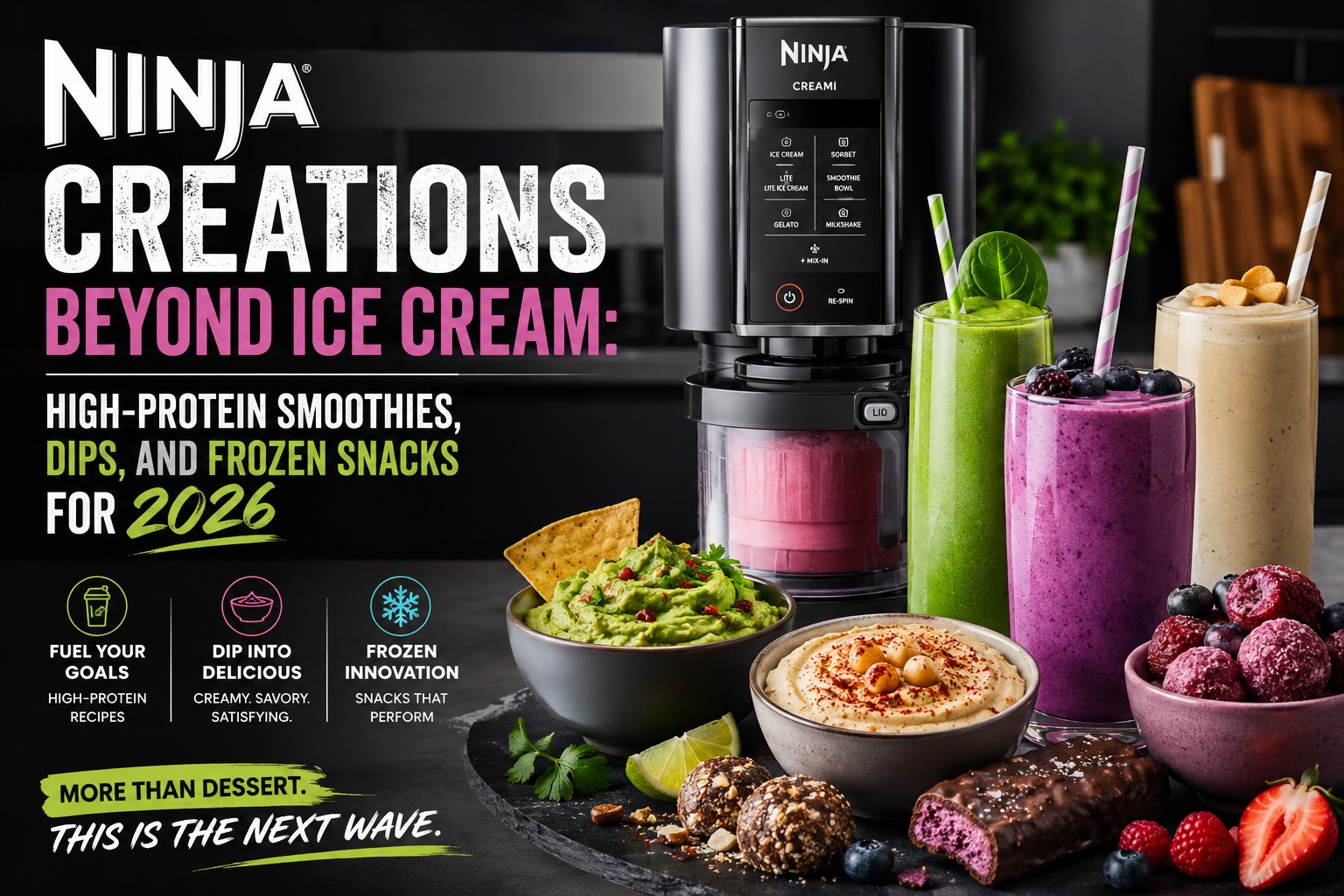
The Ninja CREAMi is a countertop appliance that transforms frozen bases into creamy, soft-serve-style treats by shaving and churning them with a specialized blade system. Beyond traditional ice cream, the machine excels at making high-protein smoothie bowls, frozen protein shakes, custards, frozen yogurt, non-dairy desserts, and even thick dips when you adjust ingredient ratios.
The 2026 Ninja Swirl model represents the latest evolution of this platform, officially marketed by SharkNinja as capable of producing both hard scoops and soft-serve textures. The key difference from a traditional blender is that the CREAMi works on completely frozen bases, creating a texture that’s smoother and more dessert-like than what you’d get from blending frozen ingredients in real-time.
What makes it versatile for protein snacks:
- The blade system can handle dense, protein-rich frozen mixtures without overheating
- Multiple texture settings (smoothie bowl, gelato, sorbet, lite ice cream) let you control final consistency
- Pint-sized containers make portion control and meal prep straightforward
- The machine can re-spin previously frozen creations to restore texture after storage
Choose the CREAMi over a regular blender if you want true soft-serve texture, plan to make frozen treats in advance for meal prep, or need consistent results with high-protein recipes. Stick with a blender if you prefer fresh smoothies consumed immediately or don’t have freezer space for 24-hour prep.
How to Make High-Protein Smoothie Bowls in Ninja CREAMi
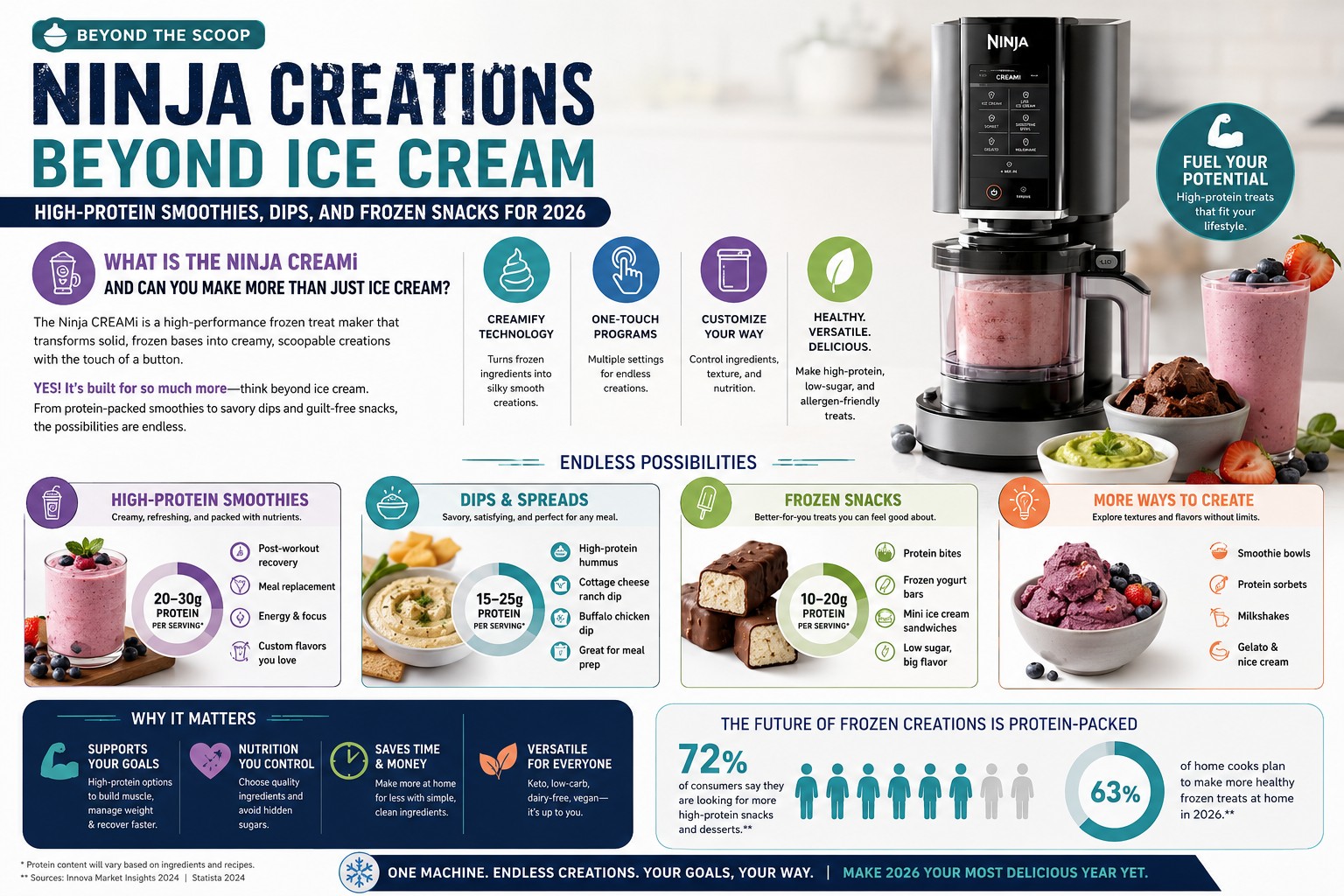
High-protein smoothie bowls in the Ninja CREAMi start with a frozen base of protein powder, Greek yogurt or cottage cheese, fruit, and minimal liquid, frozen for 24 hours before processing on the smoothie bowl setting. The result is a thick, spoonable texture with 25-35 grams of protein per serving that you can top with granola, nuts, or fresh fruit.
Basic high-protein smoothie bowl formula:
- Combine 1 cup Greek yogurt (or 1 cup cottage cheese for extra protein)
- Add 1 scoop (25-30g) casein or blended protein powder
- Mix in ½ cup frozen fruit (berries, mango, or banana)
- Add 2-4 tablespoons milk or almond milk (just enough to blend ingredients)
- Pour into CREAMi pint container and freeze flat for 24 hours
- Process on “Smoothie Bowl” setting
- If texture is too icy, add 1 tablespoon milk and re-spin
Protein and texture tips:
- Casein protein creates creamier results than whey isolate because it absorbs liquid differently when frozen
- Greek yogurt with 5% fat works better than fat-free versions for smooth texture
- Freeze bases completely flat (not tilted) to ensure even processing
- Let the container sit at room temperature for 5 minutes before processing if it’s been frozen longer than 24 hours
Common mistake: Adding too much liquid initially. Start with minimal liquid and add more during re-spin if needed. Excess liquid creates an icy, crystallized texture rather than creamy smoothness.
For a complete protein boost similar to what you’d get from chicken breast, aim for 30-35 grams of protein per bowl by combining Greek yogurt and protein powder.
Ninja CREAMi Frozen Protein Shake Recipes
Frozen protein shakes in the Ninja CREAMi are made by blending protein powder with milk, frozen fruit, and optional nut butter, then freezing and processing on the “Lite Ice Cream” or “Sorbet” setting to create a thick, milkshake-like consistency. These frozen shakes contain 20-30 grams of protein and can be stored in the freezer for up to two weeks.
Classic chocolate frozen protein shake:
- 1 scoop chocolate casein protein powder
- 1 cup unsweetened almond milk
- 1 tablespoon cocoa powder
- 1 tablespoon peanut butter
- ½ frozen banana
- Freeze 24 hours, process on “Lite Ice Cream” setting
Vanilla berry frozen shake:
- 1 scoop vanilla protein powder
- ¾ cup Greek yogurt
- ¼ cup milk
- ½ cup frozen mixed berries
- 1 teaspoon honey (optional)
- Freeze 24 hours, process on “Smoothie Bowl” setting for thicker texture
Coffee protein shake:
- 1 scoop vanilla or unflavored protein powder
- ¾ cup cold brew coffee
- ¼ cup milk or cream
- 1 tablespoon maple syrup
- Freeze 24 hours, process on “Lite Ice Cream” setting
Decision rule: Use the “Lite Ice Cream” setting for drinkable consistency and “Smoothie Bowl” for spoonable thickness. If you want to drink your shake immediately after processing, add an extra 2-3 tablespoons of liquid before the final spin.
The frozen format means you can prep multiple protein shakes on Sunday and have grab-and-go options throughout the week, similar to meal-prepping chicken breast portions for easy protein access.
Can You Make Hummus or Dips in a Ninja CREAMi?
The Ninja CREAMi is not officially designed for savory dips like hummus, but some users have successfully made thick, frozen yogurt-based dips by freezing Greek yogurt with herbs and spices, then processing on the “Gelato” setting. Traditional hummus requires a food processor because chickpeas need to be blended while warm or at room temperature for proper texture.
What works for frozen dips in the CREAMi:
- Greek yogurt-based dips with herbs (dill, garlic, chives)
- Frozen tzatziki-style dips
- High-protein cream cheese-based spreads
- Frozen avocado-based dips (though texture can be grainy)
What doesn’t work:
- Traditional hummus (chickpeas don’t process well when frozen solid)
- Nut-based dips that require heat or soaking
- Salsa or chunky dips (the blade system is designed for smooth textures)
Frozen Greek yogurt herb dip recipe:
- Mix 2 cups full-fat Greek yogurt with 2 tablespoons olive oil
- Add minced garlic, fresh dill, lemon juice, salt, and pepper
- Freeze in CREAMi pint for 24 hours
- Process on “Gelato” setting
- Serve immediately or refreeze for firmer texture
Edge case: If you want a hummus-like protein dip, blend chickpeas in a food processor first, then fold in a small amount of CREAMi-processed Greek yogurt for extra creaminess. Don’t attempt to process raw chickpeas in the CREAMi.
For most savory applications, a traditional food processor or blender remains the better tool. The CREAMi excels at sweet and protein-forward frozen applications rather than room-temperature savory spreads.
Ninja CREAMi vs Regular Blender for Protein Smoothies
The Ninja CREAMi creates thicker, dessert-like frozen protein smoothies with a soft-serve texture, while regular blenders produce drinkable smoothies meant for immediate consumption. Choose the CREAMi if you want meal-prep-friendly frozen treats with ice cream consistency; choose a blender if you prefer fresh smoothies you can drink right away without 24-hour freezing.
Ninja CREAMi advantages:
- Produces true soft-serve texture that’s spoonable and dense
- Allows batch prep and freezer storage for up to 2 weeks
- Better at incorporating protein powder without clumping
- Creates consistent results with high-protein, low-liquid ratios
- Can re-spin previously frozen treats to restore texture
Regular blender advantages:
- Immediate results (no 24-hour freeze time)
- Better for hot smoothies or room-temperature drinks
- More versatile for non-frozen recipes (soups, sauces, nut butters)
- Lower cost ($50-$150 vs $249-$349)
- Easier to clean (no specialized pint containers)
Texture comparison:
| Feature | Ninja CREAMi | Regular Blender |
|---|---|---|
| Texture | Soft-serve, thick, spoonable | Drinkable, liquid to thick shake |
| Prep time | 24+ hours (freezing required) | 2-5 minutes (immediate) |
| Protein capacity | 30-40g per serving (dense) | 20-30g per serving (diluted) |
| Storage | 2 weeks frozen | Consume within 24 hours |
| Best for | Dessert-style protein treats | Fresh breakfast smoothies |
Common mistake: Buying a CREAMi expecting it to replace a blender for daily fresh smoothies. The CREAMi is a specialized frozen dessert maker, not a general-purpose blender. If you want both fresh smoothies and frozen protein treats, you’ll likely need both appliances.
The CREAMi makes sense if you already meal-prep other proteins like chicken breast and want the same convenience for frozen snacks.
Best Protein Powder to Use in Ninja CREAMi Without It Getting Icy
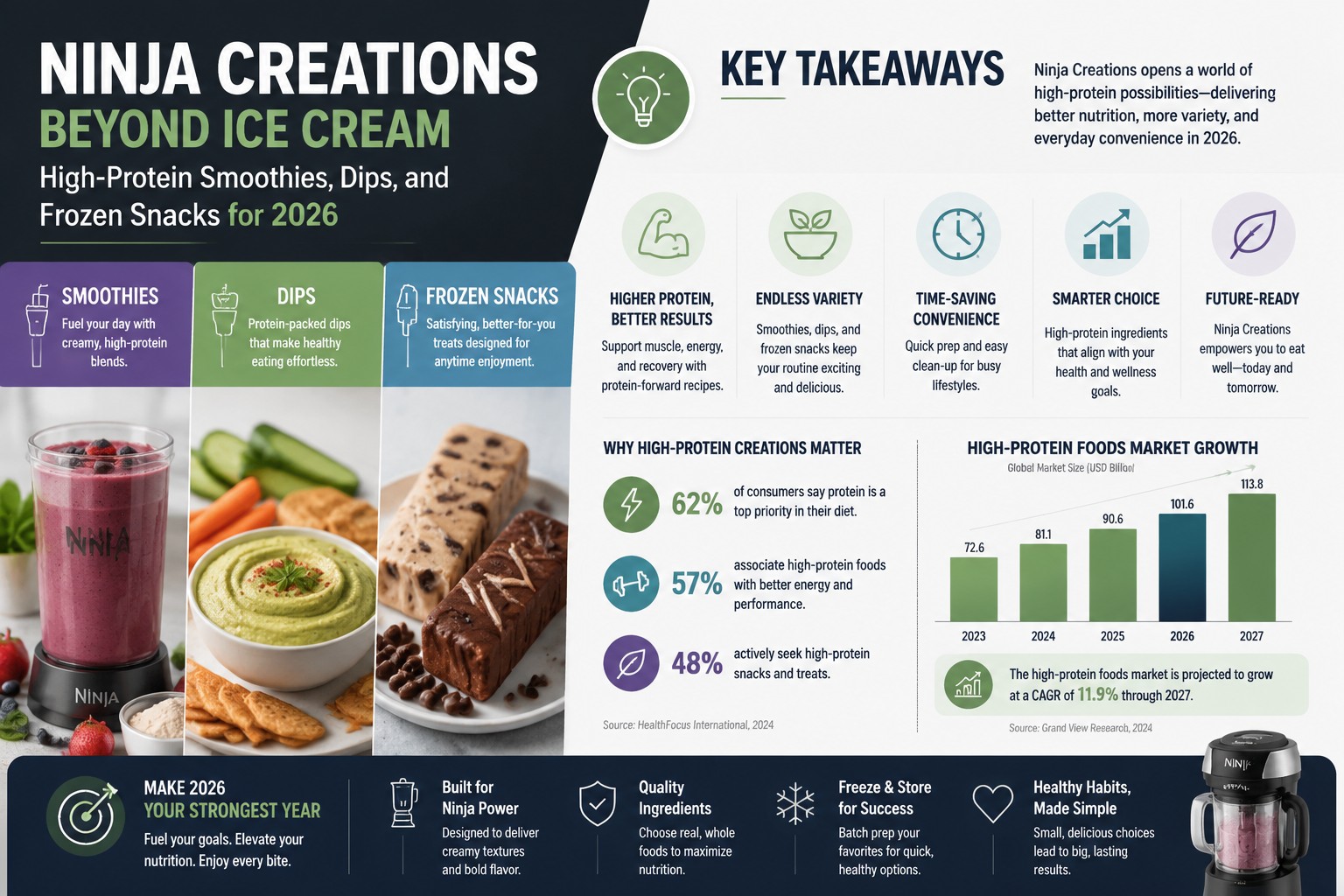
Casein protein powder and blended protein formulas (casein + whey) produce the creamiest results in the Ninja CREAMi because they absorb liquid slowly and create a denser frozen structure. Whey isolate tends to create icy, crystallized textures because it doesn’t bind water as effectively when frozen.
Protein powder ranking for CREAMi texture:
- Casein protein (best) – slow-absorbing, creates thick, creamy texture
- Blended protein (casein + whey mix) – good balance of texture and mixability
- Whey concentrate (acceptable) – works if combined with Greek yogurt or cream
- Whey isolate (worst) – often produces icy, grainy results
- Plant-based protein (variable) – pea protein works better than rice protein; add fat source
Why casein works better:
- Casein forms micelles (protein clusters) that trap water molecules, preventing ice crystal formation
- It has a thicker consistency when mixed with liquid, even before freezing
- The slow-digesting nature means it stays creamy during the freeze-thaw-spin cycle
Specific product characteristics to look for:
- Protein content: 20-25g per scoop (not ultra-concentrated isolates)
- Added ingredients: Formulas with small amounts of gums (xanthan, guar) improve texture
- Fat content: 2-5g fat per serving helps creaminess
- Avoid: Protein powders with added fiber (over 5g per serving) which can create grittiness
Texture rescue tips:
- If you only have whey isolate, add 2 tablespoons heavy cream or full-fat coconut milk to your base
- Mix protein powder with a small amount of liquid first to create a paste, then add remaining liquid
- Use 1-1.5 scoops maximum per pint; more protein doesn’t always mean better texture
Edge case: Collagen protein powder creates a unique jelly-like texture that some people enjoy, but it won’t give you traditional ice cream consistency. Use it only if you specifically want that texture.
Why Is My Ninja CREAMi Protein Smoothie Coming Out Grainy?
Grainy protein smoothies in the Ninja CREAMi result from using too much protein powder (over 2 scoops per pint), insufficient fat in the base, or not freezing the mixture for a full 24 hours. The graininess comes from protein particles that don’t fully dissolve and ice crystals that form when the liquid-to-solid ratio is off.
Top causes and fixes:
1. Too much protein powder
- Problem: Over 2 scoops per pint creates protein clumps
- Fix: Use 1-1.5 scoops maximum; get additional protein from Greek yogurt or cottage cheese instead
2. Wrong protein type
- Problem: Whey isolate doesn’t bind water well when frozen
- Fix: Switch to casein or add 3 tablespoons Greek yogurt to whey-based recipes
3. Not enough fat
- Problem: Fat-free bases freeze into hard ice crystals
- Fix: Add 1-2 tablespoons heavy cream, coconut cream, or nut butter
4. Insufficient freezing time
- Problem: Partially frozen bases don’t process evenly
- Fix: Freeze for full 24 hours; if frozen longer than 48 hours, let sit 5 minutes before processing
5. Too much liquid
- Problem: Excess liquid creates ice crystals rather than creamy texture
- Fix: Start with minimal liquid (¼ cup or less); add more during re-spin if needed
6. Protein powder not fully dissolved
- Problem: Dry powder clumps before freezing
- Fix: Blend base ingredients thoroughly before freezing, or mix protein powder with small amount of liquid first
The re-spin technique:
If your smoothie comes out grainy, add 1-2 tablespoons of heavy cream or full-fat milk, then run the “Re-spin” function. This often rescues grainy texture by adding fat and redistributing moisture.
Common mistake: Assuming more protein powder equals better results. The CREAMi has a protein saturation point around 35-40g per pint. Beyond that, you’re just adding graininess without nutritional benefit.
What Frozen Snacks Can You Make in Ninja CREAMi Besides Ice Cream?
Beyond ice cream, the Ninja CREAMi can make frozen yogurt bark, protein popsicles, frozen protein bites, gelato-style custards, sorbet, frozen coffee drinks, and thick frozen puddings. The machine excels at any frozen treat that benefits from a creamy, churned texture rather than solid ice block consistency.
High-protein frozen snack ideas:
Frozen yogurt bark
- Spread Greek yogurt mixed with protein powder on a parchment-lined tray
- Add toppings (nuts, dark chocolate chips, berries)
- Freeze flat, then break into pieces
- Process pieces in CREAMi on “Sorbet” setting for creamy bark bites
Protein popsicles
- Make standard protein shake mixture
- Pour into popsicle molds and freeze
- Pop out and process in CREAMi for soft-serve texture, then refreeze in molds
Frozen protein bites
- Mix protein powder, nut butter, honey, and oats
- Roll into balls and freeze
- Process in CREAMi with small amount of milk for creamy protein “ice cream bites”
Frozen cottage cheese dessert
- Blend cottage cheese with vanilla, sweetener, and fruit
- Freeze in CREAMi pint
- Process on “Gelato” setting for high-protein, low-sugar dessert (30g+ protein per serving)
Frozen coffee protein treat
- Mix cold brew, protein powder, and cream
- Freeze and process for protein-packed frozen coffee
- Top with whipped cream for dessert-style snack
Frozen pudding
- Make sugar-free pudding with extra protein powder
- Freeze in CREAMi pint
- Process on “Gelato” setting for thick, creamy texture
Meal prep strategy: Make 3-4 different flavors on Sunday, store in CREAMi pints in the freezer, and rotate through them during the week. Each pint provides 2-3 servings depending on portion size.
Similar to meal-prepping chicken breast, batch-making frozen protein snacks ensures you always have healthy options ready.
Is Ninja CREAMi Worth It If You Only Want to Make Healthy Protein Snacks?
The Ninja CREAMi is worth the $249-$349 investment if you regularly consume protein snacks (3+ times per week), want to avoid added sugars in store-bought frozen treats, or struggle to meet daily protein goals through regular meals. It’s not worth it if you only occasionally eat frozen desserts or don’t have freezer space for 24-hour prep.
Calculate your break-even point:
- CREAMi cost: $249-$349 (2026 pricing)
- Store-bought high-protein ice cream: $6-$8 per pint
- Homemade CREAMi protein treat: $2-$3 per pint (ingredients only)
- Savings per pint: $4-$5
- Break-even: 50-70 pints (roughly 6-9 months at 2 pints per week)
You should buy it if:
- You currently spend $20+ per month on protein bars, shakes, or frozen treats
- You have specific dietary needs (low sugar, dairy-free, high protein) that make store-bought options expensive
- You meal-prep other foods and have freezer space
- You want portion-controlled desserts that fit macro goals
- You struggle to hit 100g+ protein daily and need creative options
Skip it if:
- You only want frozen treats occasionally (once a month or less)
- You don’t have freezer space for 24-hour prep
- You’re satisfied with fresh protein shakes from a blender
- You don’t mind the sugar content in regular ice cream
- You’re on a tight budget and can’t justify $250+ for a single-purpose appliance
Alternative consideration: If you’re unsure, start by making protein ice cream in regular ice cube trays and blending in a food processor. If you find yourself doing this weekly, the CREAMi will save time and improve texture.
Edge case: If you have multiple people in your household eating high-protein snacks, the value increases significantly. A family of four can easily make 4-6 pints per week, reaching break-even in 3-4 months.
Ninja CREAMi Recipes for Meal Prep High Protein 2026
High-protein Ninja CREAMi meal prep in 2026 focuses on making 4-6 pints at once with 25-35 grams of protein per serving, using shelf-stable ingredients that freeze well and maintain texture for up to two weeks. The most efficient approach is choosing 2-3 base flavors and varying toppings rather than making six completely different recipes.
Weekly meal prep formula:
Sunday prep session (90 minutes total):
- Make 2 pints chocolate protein base
- Make 2 pints vanilla berry base
- Make 2 pints coffee protein base
- Label with date and flavor
- Freeze flat for 24 hours
Monday evening:
- Process first pint, divide into 2-3 servings
- Store processed servings in small containers
- Servings stay creamy for 3-4 days in freezer
Efficient base recipes:
Chocolate protein base (makes 2 pints)
- 2 cups Greek yogurt
- 2 scoops chocolate casein protein
- 2 tablespoons cocoa powder
- 4 tablespoons milk
- 2 tablespoons honey
- Divide between two pints, freeze
Vanilla berry base (makes 2 pints)
- 1.5 cups cottage cheese
- 1 cup frozen mixed berries
- 2 scoops vanilla protein powder
- 4 tablespoons almond milk
- Divide and freeze
Coffee protein base (makes 2 pints)
- 1.5 cups cold brew coffee
- 1 cup Greek yogurt
- 2 scoops vanilla protein powder
- 2 tablespoons maple syrup
- Divide and freeze
Topping prep:
- Portion out nuts, granola, dark chocolate chips, fresh berries in small containers
- Add toppings after processing for texture variety
Storage tips:
- Processed CREAMi treats stay creamy for 3-4 days in freezer
- Unprocessed frozen bases last 2 weeks
- Label each pint with date and protein content
- Process pints as needed rather than all at once
Macro tracking: Each base recipe provides approximately 60-70g protein per pint (30-35g per serving if split in half). This makes it easy to track macros alongside other meal-prepped proteins like chicken breast.
Can You Make Frozen Yogurt Bark or Protein Bites in Ninja CREAMi?
You can make frozen yogurt bark and protein bites in the Ninja CREAMi by freezing the bark or bites first, then processing them in the machine to create a creamy, soft-serve texture rather than hard frozen pieces. This technique transforms crunchy frozen bark into smooth, scoopable frozen yogurt and turns dense protein bites into creamy protein ice cream.
Frozen yogurt bark method:
- Mix 2 cups Greek yogurt with 1 scoop protein powder and sweetener
- Spread ½-inch thick on parchment-lined baking sheet
- Top with berries, nuts, dark chocolate chips
- Freeze for 4 hours until solid
- Break into pieces and pack into CREAMi pint
- Add 2-3 tablespoons milk
- Process on “Sorbet” or “Lite Ice Cream” setting
- Result: creamy frozen yogurt with mix-in pieces
Protein bite transformation:
- Make standard protein bites (protein powder, nut butter, oats, honey)
- Roll into small balls and freeze solid
- Place 8-10 bites in CREAMi pint
- Add ¼ cup milk or cream
- Process on “Lite Ice Cream” setting
- Result: cookie dough-style protein ice cream
Why this works:
The CREAMi blade system breaks down frozen solids and incorporates air, transforming hard frozen items into creamy textures. The key is adding enough liquid (2-4 tablespoons) to help the blade process the frozen pieces without creating a solid block.
Texture variations:
- For chunkier texture: Use “Mix-in” setting after initial processing to keep some pieces intact
- For smooth texture: Process on “Gelato” setting and re-spin once
- For soft-serve: Add extra 2 tablespoons liquid before processing
Common mistake: Not adding any liquid when processing pre-frozen bark or bites. The machine needs some liquid to create the churning action that produces creamy texture.
This technique is especially useful if you’ve already made protein bites or frozen yogurt bark and want to repurpose them into a different texture for variety.
Common Mistakes When Making Protein Smoothies in Ninja CREAMi
The most common mistakes when making protein smoothies in the Ninja CREAMi are using too much liquid (over ½ cup per pint), not freezing bases completely flat for 24 hours, and choosing whey isolate protein powder instead of casein. These errors result in icy, grainy textures instead of creamy, soft-serve consistency.
Top 8 mistakes and solutions:
1. Adding too much liquid
- Mistake: Using 1+ cups liquid per pint
- Fix: Start with ¼ cup or less; add more during re-spin
- Why it matters: Excess liquid freezes into ice crystals
2. Wrong freezing position
- Mistake: Freezing pints tilted or on their side
- Fix: Freeze completely flat on level freezer shelf
- Why it matters: Uneven freezing creates texture inconsistencies
3. Not freezing long enough
- Mistake: Processing after only 12-18 hours
- Fix: Wait full 24 hours minimum
- Why it matters: Partially frozen bases don’t process evenly
4. Using whey isolate exclusively
- Mistake: Choosing whey isolate for “pure protein”
- Fix: Use casein or blend whey with Greek yogurt
- Why it matters: Whey isolate doesn’t bind water when frozen
5. Overfilling the pint
- Mistake: Filling above the max fill line
- Fix: Leave ½ inch space at top
- Why it matters: Mixture expands when frozen and during processing
6. Not using the re-spin function
- Mistake: Accepting grainy first-spin results
- Fix: Add 1-2 tablespoons cream and re-spin
- Why it matters: Re-spinning redistributes moisture and improves texture
7. Processing straight from deep freeze
- Mistake: Processing pints frozen at 0°F or below for multiple days
- Fix: Let sit at room temperature for 5 minutes before processing
- Why it matters: Extremely cold bases can strain the motor and create uneven texture
8. Skipping the mix-in step
- Mistake: Adding toppings before freezing
- Fix: Add nuts, chocolate chips, etc. using “Mix-in” function after processing
- Why it matters: Pre-frozen mix-ins can damage the blade or create hard chunks
Troubleshooting decision tree:
- Grainy texture → Add fat (cream, nut butter) and re-spin
- Icy texture → Reduce liquid in next batch by 2 tablespoons
- Too soft → Freeze longer or reduce liquid
- Too hard → Add 1 tablespoon liquid and re-spin
- Motor struggling → Let pint warm for 5 minutes, ensure not overfilled
Ninja CREAMi Alternatives for Making Frozen Protein Snacks
The main alternatives to the Ninja CREAMi for making frozen protein snacks are the Cuisinart Ice Cream Maker ($70-$100), the Yonanas Frozen Treat Maker ($40-$50), and the traditional food processor method using frozen protein mixtures. Each alternative has different texture results, prep requirements, and price points compared to the CREAMi’s $249-$349 cost.
Alternative comparison:
Cuisinart Ice Cream Maker
- Cost: $70-$100
- Method: Churns liquid mixture as it freezes (requires pre-frozen bowl)
- Texture: Soft-serve to hard ice cream
- Pros: Lower cost, larger batch sizes (1.5-2 quarts)
- Cons: Requires 12-24 hour bowl pre-freeze, can’t process already-frozen bases
- Best for: Making large batches for families
Yonanas Frozen Treat Maker
- Cost: $40-$50
- Method: Pushes frozen fruit through blade to create soft-serve texture
- Texture: Sorbet-like, fruit-forward
- Pros: Very affordable, immediate results (no 24-hour freeze)
- Cons: Limited to fruit-based recipes, lower protein capacity, less creamy
- Best for: Fruit-only frozen treats, budget-conscious buyers
Food processor method
- Cost: $0 (if you already own one)
- Method: Freeze protein mixture in ice cube trays, then pulse in food processor
- Texture: Grainy to smooth depending on technique
- Pros: No additional equipment needed, flexible batch sizes
- Cons: Labor-intensive, inconsistent texture, difficult to get truly creamy results
- Best for: Testing recipes before buying dedicated equipment
High-powered blender (Vitamix, Blendtec)
- Cost: $300-$500
- Method: Blend frozen protein mixture with tamper tool
- Texture: Thick shake to soft-serve
- Pros: Multi-purpose appliance, immediate results
- Cons: Expensive, requires strong motor, texture not as creamy as CREAMi
- Best for: People who want one appliance for multiple uses
Comparison table:
| Feature | Ninja CREAMi | Cuisinart | Yonanas | Food Processor |
|---|---|---|---|---|
| Cost | $249-$349 | $70-$100 | $40-$50 | $0 (if owned) |
| Texture quality | Excellent | Good | Fair | Variable |
| Protein capacity | High (30-40g) | High | Low (5-10g) | Medium |
| Prep time | 24 hours | 12-24 hours | Immediate | 4-6 hours |
| Ease of use | Easy | Moderate | Very easy | Difficult |
Decision guide:
- Choose CREAMi if: You want the best texture, make protein treats 3+ times per week, have freezer space
- Choose Cuisinart if: You want lower cost, make large batches, don’t mind bowl pre-freezing
- Choose Yonanas if: You primarily want fruit-based treats, need immediate results, on tight budget
- Choose food processor if: You want to test the concept before investing, already own one
The CREAMi remains the best option specifically for high-protein frozen snacks because it handles dense, protein-rich mixtures better than alternatives designed primarily for fruit or traditional ice cream bases.
How Long Do Ninja CREAMi Protein Smoothies Last in Freezer?
Unprocessed Ninja CREAMi protein smoothie bases last up to 2 weeks in the freezer when stored in sealed pint containers, while processed (already spun) protein smoothies maintain optimal texture for 3-4 days before ice crystals begin forming. For best results, process pints as needed rather than processing multiple servings at once.
Storage timeline:
Unprocessed frozen bases:
- Week 1: Optimal texture and flavor
- Week 2: Still good, may need 5-minute thaw before processing
- Week 3-4: Safe to eat but texture may be slightly grainy
- Beyond 4 weeks: Freezer burn risk, flavor degradation
Processed (spun) smoothies:
- Days 1-3: Creamy texture maintained
- Days 4-7: Ice crystals start forming, re-spin recommended
- Beyond 7 days: Becomes icy, loses creamy texture
Storage best practices:
- Label everything: Write date and flavor on each pint
- Store in back of freezer: Avoid temperature fluctuations from door opening
- Use airtight lids: Prevent freezer burn and odor absorption
- Process in batches: Make 4-6 bases, process one every 2-3 days
- Re-spin if needed: If texture degrades, add 1 tablespoon liquid and re-spin
Signs your frozen base has gone bad:
- Freezer burn (white, dry patches on surface)
- Off smell when thawed
- Separated liquid and solids that don’t reincorporate
- Visible ice crystals throughout (not just on surface)
Meal prep strategy:
Make bases on Sunday, process first pint on Monday, second on Wednesday, third on Friday. This ensures you always have fresh-textured protein smoothies without daily prep work.
Common mistake: Processing all pints at once and expecting them to stay creamy for a week. Processed smoothies lose texture faster than unprocessed bases, so process on-demand for best results.
This storage approach works similarly to freezing cooked chicken breast for meal prep—batch prep the base, then finish as needed for optimal texture and convenience.
Frequently Asked Questions
Can you use the Ninja CREAMi every day? Yes, you can use the Ninja CREAMi daily as long as you have pre-frozen bases ready. The machine itself has no daily use limitations, but you’ll need to plan 24 hours ahead by freezing new bases each day to maintain a rotation.
Does protein powder ruin the Ninja CREAMi texture? Protein powder doesn’t ruin texture if you use casein or blended formulas at 1-1.5 scoops per pint and include fat sources like Greek yogurt or cream. Whey isolate and excessive amounts (over 2 scoops) can create grainy texture.
How much protein can you fit in one Ninja CREAMi pint? You can fit 30-40 grams of protein per pint by combining 1 scoop protein powder (25g) with Greek yogurt or cottage cheese (15g). Going beyond 40g typically results in grainy texture and doesn’t improve nutritional value.
Can you make sugar-free protein ice cream in the Ninja CREAMi? Yes, sugar-free protein ice cream works well using stevia, monk fruit, or erythritol as sweeteners. The texture may be slightly less creamy than sugar-based versions, so add 1-2 tablespoons of cream or nut butter to compensate.
Is the Ninja CREAMi loud? The Ninja CREAMi operates at approximately 85-90 decibels during the spin cycle, similar to a blender or garbage disposal. The cycle lasts 2-3 minutes, so while it’s loud, the noise is brief.
Can you make vegan high-protein smoothies in the Ninja CREAMi? Yes, vegan high-protein smoothies work using coconut cream, cashew milk, and plant-based protein powder. Pea protein creates better texture than rice or hemp protein. Add 2 tablespoons coconut cream for creaminess.
Do you need to clean the Ninja CREAMi after every use? Yes, clean the blade assembly and pint container after each use to prevent protein buildup and bacterial growth. The parts are dishwasher-safe, but hand-washing the blade immediately after use prevents residue from hardening.
Can you make keto protein ice cream in the Ninja CREAMi? Yes, keto protein ice cream works well using heavy cream, MCT oil, low-carb protein powder, and sugar-free sweeteners. Aim for 70-80% fat content for best texture and to maintain ketosis.
How many servings does one Ninja CREAMi pint make? One CREAMi pint makes 2-3 servings depending on portion size. A full pint is approximately 16 ounces, so typical servings are 5-8 ounces each (roughly ½ to ¾ cup).
Can you use frozen fruit directly in the Ninja CREAMi? Yes, frozen fruit works well in CREAMi recipes. Use ½ to 1 cup frozen fruit per pint, combined with protein powder and liquid base. The fruit adds natural sweetness and improves texture.
Does the Ninja CREAMi work with collagen protein? Collagen protein works in the CREAMi but creates a slightly different texture—more jelly-like than traditional ice cream. Mix collagen with casein protein (50/50 ratio) for better texture while still getting collagen benefits.
Can you make protein smoothies without Greek yogurt in the Ninja CREAMi? Yes, you can use cottage cheese, silken tofu, coconut cream, or cashew cream instead of Greek yogurt. Each creates slightly different texture, but all work well with protein powder for high-protein frozen treats.
Conclusion
Ninja Creations Beyond Ice Cream: High-Protein Smoothies, Dips, and Frozen Snacks for 2026 represents a practical shift in how home cooks approach protein intake through frozen treats. The Ninja CREAMi and Ninja Swirl platforms excel at transforming protein-rich bases into creamy, dessert-like snacks that fit macro goals without sacrificing texture or taste.
The key to success lies in understanding the fundamentals: use casein or blended protein powders, keep liquid minimal (¼ cup or less initially), freeze bases completely flat for 24 hours, and incorporate fat sources like Greek yogurt or cream for smooth texture. Avoid common mistakes like using too much whey isolate, overfilling pints, or processing partially frozen bases.
Your next steps:
- Start with one base recipe (chocolate or vanilla) to test your technique before investing in multiple ingredients
- Track your results by noting protein powder type, liquid amounts, and texture outcomes
- Establish a meal prep routine by making 3-4 bases on Sunday for the week ahead
- Calculate your break-even point to determine if the $249-$349 investment makes financial sense for your protein consumption habits
- Experiment with variations once you master basic recipes, trying different protein sources like cottage cheese or plant-based options
For those serious about hitting daily protein targets while enjoying dessert-like treats, the Ninja CREAMi offers a legitimate solution that bridges the gap between nutrition and indulgence. The 2026 platform improvements make it more versatile than ever, though the core value remains the same: consistent, creamy, high-protein frozen snacks you can make at home for a fraction of store-bought costs.
Whether you’re meal-prepping protein alongside chicken breast portions or simply looking for better-tasting ways to increase protein intake, mastering the CREAMi technique provides a sustainable, enjoyable approach to nutrition-focused frozen treats.
SEO Meta Title: Ninja CREAMi High-Protein Smoothies & Frozen Snacks 2026