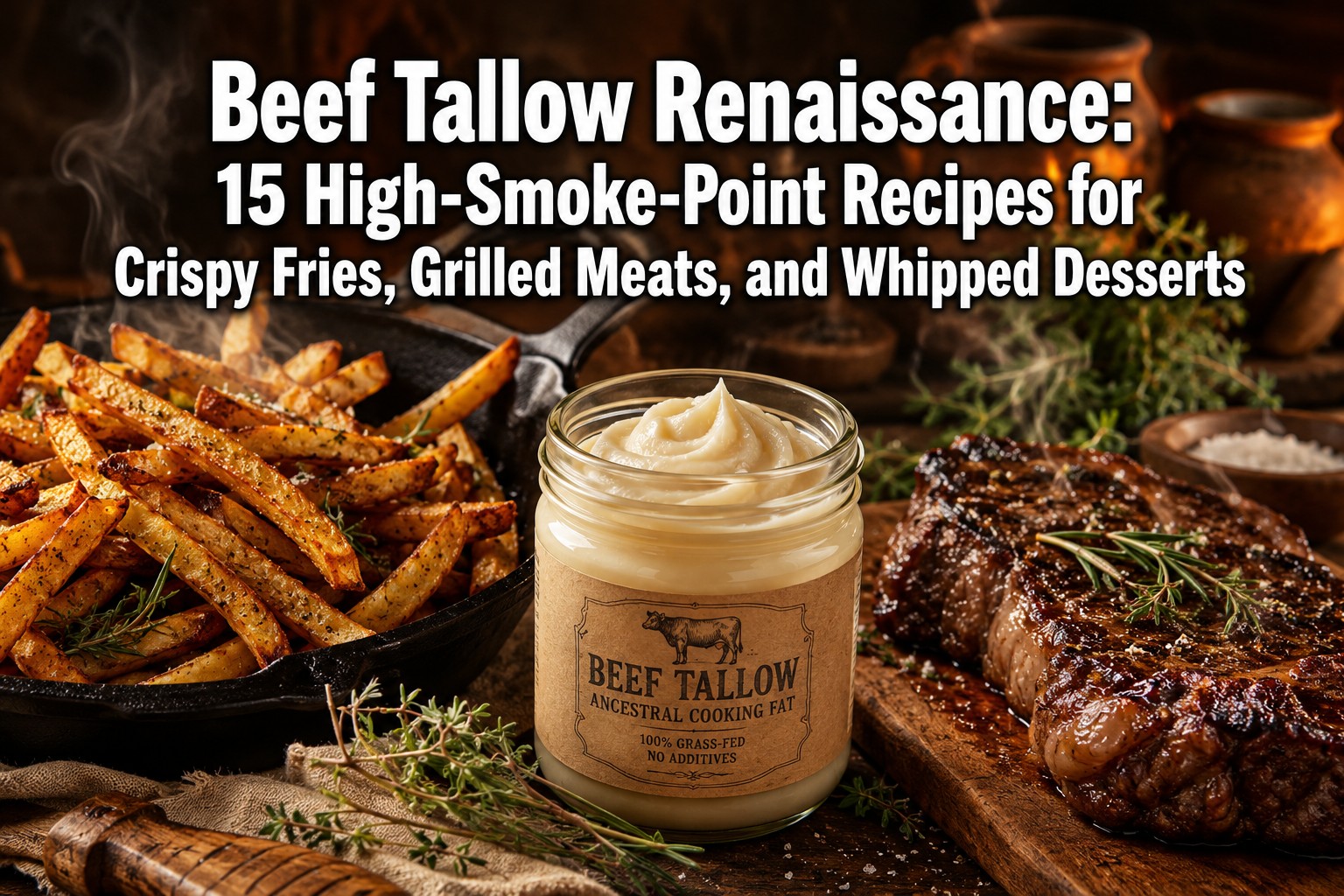
Beef Tallow Renaissance: 15 High-Smoke-Point Recipes for Crispy Fries, Grilled Meats, and Whipped Desserts
Last updated: June 17, 2026
Whole Foods named beef tallow one of 2026’s top food trends, and restaurants across the country are bringing this traditional cooking fat back to their menus. The Beef Tallow Renaissance: 15 High-Smoke-Point Recipes for Crispy Fries, Grilled Meats, and Whipped Desserts represents a shift away from processed seed oils toward ancestral fats that home cooks and chefs recognize and trust. With a 400°F smoke point and the ability to create restaurant-quality crispiness, beef tallow is proving it’s more than nostalgia—it’s a performance ingredient for high-heat cooking.
Key Takeaways
- Beef tallow has a 400°F smoke point, making it ideal for frying, searing, and roasting without burning or smoking
- The global tallow market is projected to add $11 billion between 2026 and 2036, with beef tallow holding 42% of product segment share
- Whipped and herb-infused varieties are driving consumer interest beyond basic rendered fat
- Tallow creates crispier fries and better browning than most vegetable oils due to its saturated fat structure
- It’s safe for dairy allergies because it contains no milk proteins (it’s rendered beef fat, not a dairy product)
- Proper storage in an airtight container keeps tallow fresh for 12-18 months at room temperature
- You can reuse tallow 3-5 times after frying if you strain and store it correctly
- Keto and carnivore dieters favor tallow for its zero-carb profile and saturated fat content
- Common beginner mistakes include using too much, not preheating it properly, and storing it incorrectly
What Is Beef Tallow and Why Is It Making a Comeback?
Beef tallow is rendered beef fat—the purified cooking fat that results from slowly heating beef suet (the hard fat around kidneys and loins) until it melts and the impurities separate. It’s been used for centuries in traditional cooking but fell out of favor in the 1980s and 1990s when health authorities warned against saturated fats and restaurants switched to vegetable oils.
The 2026 comeback is driven by three factors:
- Ancestral and traditional food movements that emphasize minimally processed ingredients consumers can recognize
- Performance advantages in high-heat cooking, especially for achieving crispy textures in fries, roasted vegetables, and seared meats
- Changing dietary guidance that has softened warnings about saturated fat, with some federal sources now recognizing tallow as part of a balanced diet
Major ingredient suppliers like Cargill now offer branded tallow blends for foodservice, and Whole Foods highlighted “whipped and herb-infused beef tallow” in its 2026 trend forecast. This isn’t just a home-cooking fad—it’s a market shift with restaurant adoption and industrial backing.
Choose tallow if you want a stable, high-smoke-point fat for frying or roasting that delivers better browning and crispiness than most seed oils. Avoid it if you’re looking for a neutral-flavored fat; tallow has a mild beefy, savory note that works well in savory dishes but may not suit all applications.
Beef Tallow vs Vegetable Oil for Frying: Which Is Healthier?
Beef tallow and vegetable oil differ significantly in fat composition, smoke point, and health effects. Tallow is roughly 50% saturated fat, 42% monounsaturated fat, and 4% polyunsaturated fat, while most vegetable oils (like soybean or canola) are higher in polyunsaturated fats, which are more prone to oxidation at high heat.
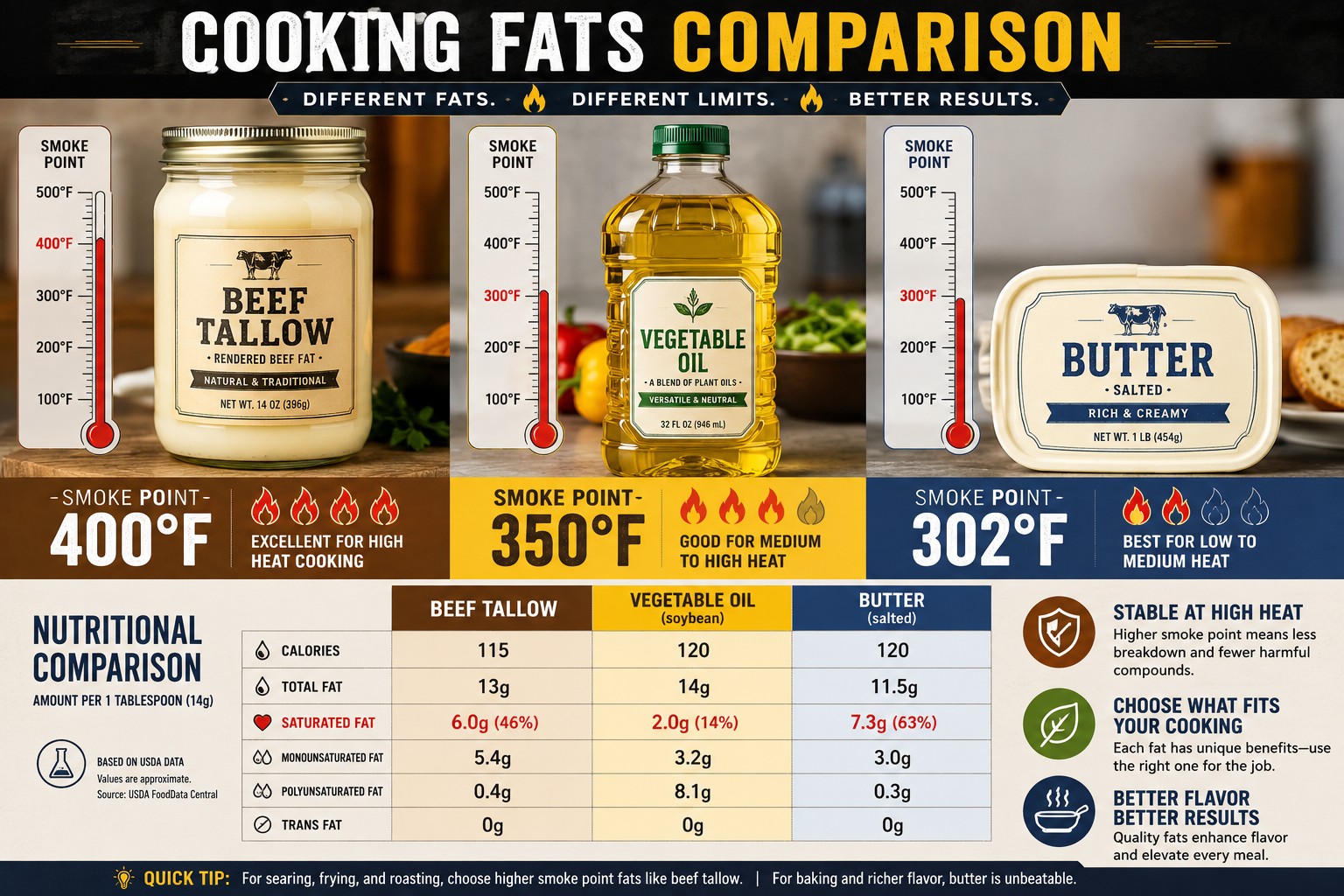
Key differences:
| Factor | Beef Tallow | Vegetable Oil (Soybean/Canola) |
|---|---|---|
| Smoke Point | 400°F | 350-375°F |
| Saturated Fat | ~50% | 7-15% |
| Polyunsaturated Fat | ~4% | 28-60% |
| Oxidative Stability | High (less prone to breakdown) | Lower (oxidizes faster at high heat) |
| Flavor | Mild beefy, savory | Neutral |
| Reusability | 3-5 times | 1-2 times |
Health considerations:
- Saturated fat debate: Federal dietary guidance in 2026 has softened restrictions on saturated fat, but medical consensus remains mixed. Tallow is high in saturated fat, which some experts link to higher LDL cholesterol, while others argue it’s less inflammatory than highly processed seed oils.
- Oxidation and inflammation: Polyunsaturated fats in vegetable oils can form harmful compounds when heated repeatedly. Tallow’s lower polyunsaturated content makes it more stable for frying.
- Nutrient content: Tallow contains fat-soluble vitamins A, D, E, and K2 (if from grass-fed beef), which are absent or minimal in refined vegetable oils.
Common mistake: Assuming all vegetable oils are “healthier” by default. Refined seed oils heated to high temperatures can produce oxidized lipids, which some researchers consider more problematic than the saturated fat in tallow.
Choose tallow for frying if you prioritize heat stability, reusability, and minimal processing. Choose vegetable oil if you need a neutral flavor or are following a diet that strictly limits saturated fat.
What Is the Smoke Point of Beef Tallow Compared to Other Cooking Fats?
Beef tallow has a smoke point of approximately 400°F (204°C), which places it in the high-heat cooking category alongside refined avocado oil and ghee. This makes it suitable for deep frying, pan-searing, roasting, and grilling without breaking down or producing smoke.
Smoke point comparison:
- Beef tallow: 400°F
- Ghee (clarified butter): 450°F
- Avocado oil (refined): 520°F
- Canola oil: 400°F
- Vegetable shortening: 360°F
- Butter: 302°F
- Extra virgin olive oil: 375°F
- Coconut oil (refined): 400°F
Why smoke point matters: When a fat exceeds its smoke point, it begins to break down, releasing free radicals, acrolein (a toxic compound), and smoke. This degrades flavor, creates off-odors, and can produce harmful byproducts.
Practical application: Tallow’s 400°F smoke point is ideal for:
- Deep frying french fries (typically 350-375°F)
- Searing steaks in a cast iron skillet (400-450°F surface temp)
- Roasting vegetables at 425°F
- Grilling chicken breast or other meats at high heat
Edge case: If you’re cooking above 425°F (like wok cooking or very high-heat searing), ghee or refined avocado oil may be better choices. For most home cooking, tallow’s smoke point is more than sufficient.
Where Can I Buy Beef Tallow for Cooking?
You can buy beef tallow at butcher shops, specialty grocery stores like Whole Foods, online retailers (Amazon, Thrive Market, US Wellness Meats), and some conventional supermarkets in the baking or meat section. It’s sold in jars, tubs, or blocks, either shelf-stable or refrigerated.
Best sources:
- Local butcher shops: Often sell fresh-rendered tallow by the pound; ask if they have suet you can render yourself for even lower cost
- Whole Foods and natural grocers: Stock jarred tallow in the cooking oils section, often from grass-fed beef
- Online specialty retailers: US Wellness Meats, Fatworks, and Epic Provisions offer grass-fed, pasture-raised options
- Amazon: Wide selection, including bulk sizes and flavored varieties (herb-infused, garlic tallow)
- Conventional supermarkets: Some Kroger, Safeway, and Walmart locations carry tallow near lard or in the meat department
What to look for:
- Grass-fed vs. grain-fed: Grass-fed tallow has a better omega-3 to omega-6 ratio and higher vitamin K2 content, but it costs more
- Rendered vs. suet: Pre-rendered tallow is ready to use; suet (raw fat) requires rendering at home but is cheaper
- Packaging: Shelf-stable jars are convenient; refrigerated tubs may be fresher but require cold storage
DIY option: Buy beef suet from a butcher (often $1-3 per pound) and render it yourself by slow-cooking it in a crockpot or oven at 250°F for 3-4 hours, then straining. This is the most economical route if you use tallow frequently.
How Much Does Beef Tallow Cost Per Pound?
Beef tallow typically costs $5 to $15 per pound depending on quality, sourcing, and whether it’s pre-rendered or raw suet. Grass-fed, pasture-raised tallow from specialty brands runs $12-15 per pound, while conventional grain-fed tallow or raw suet costs $3-6 per pound.
Price breakdown:
- Raw beef suet (for home rendering): $1-3 per pound at butcher shops
- Conventional pre-rendered tallow: $5-8 per pound at grocery stores or online
- Grass-fed pre-rendered tallow: $12-15 per pound from specialty retailers
- Flavored or whipped tallow: $15-20 per pound for artisan herb-infused or whipped varieties
Cost comparison to other fats:
- Butter: $4-6 per pound
- Coconut oil: $6-10 per pound
- Vegetable oil: $3-5 per gallon (~$0.40 per pound)
- Ghee: $10-15 per pound
Value consideration: Tallow is reusable 3-5 times for frying, which lowers the effective cost per use. If you fry with vegetable oil once and discard it, tallow’s higher upfront cost is offset by reusability.
Budget tip: Render your own tallow from suet to cut costs by 60-80%. A slow cooker, fine-mesh strainer, and cheesecloth are the only tools you need.
Can I Use Beef Tallow If I’m Trying to Lose Weight?
Yes, you can use beef tallow while losing weight, but portion control is critical because tallow is calorie-dense at approximately 115 calories per tablespoon (similar to all fats and oils). Tallow fits into low-carb, keto, and carnivore diets, which some people find effective for weight loss, but it won’t cause fat loss on its own—total calorie intake and expenditure determine weight change.
Key points:
- Calorie density: All fats contain ~9 calories per gram, so tallow, butter, and vegetable oil are equally caloric by weight
- Satiety: Some dieters report that meals cooked in tallow or other animal fats feel more satisfying, which may reduce overall calorie intake
- Keto and low-carb compatibility: Tallow is zero-carb and fits macros for ketogenic diets, which can support weight loss in some individuals
- No magic fat-burning properties: Eating tallow does not directly increase fat oxidation or metabolism; weight loss still requires a calorie deficit
Choose tallow if you’re following a low-carb or keto diet and want a stable cooking fat that aligns with your macros. Measure portions carefully—it’s easy to add hundreds of extra calories when frying or roasting with any fat.
Common mistake: Assuming “ancestral” or “natural” fats are automatically better for weight loss. Tallow is a tool, not a shortcut; total diet quality and calorie balance matter more than fat source.
How Do You Make Whipped Beef Tallow Desserts?
Whipped beef tallow desserts are made by rendering beef tallow, cooling it to semi-solid consistency, then whipping it with a hand mixer or stand mixer until light and fluffy. You can sweeten it with honey, maple syrup, or stevia and flavor it with vanilla, cocoa, cinnamon, or citrus zest to create a spreadable, butter-like dessert topping or frosting.
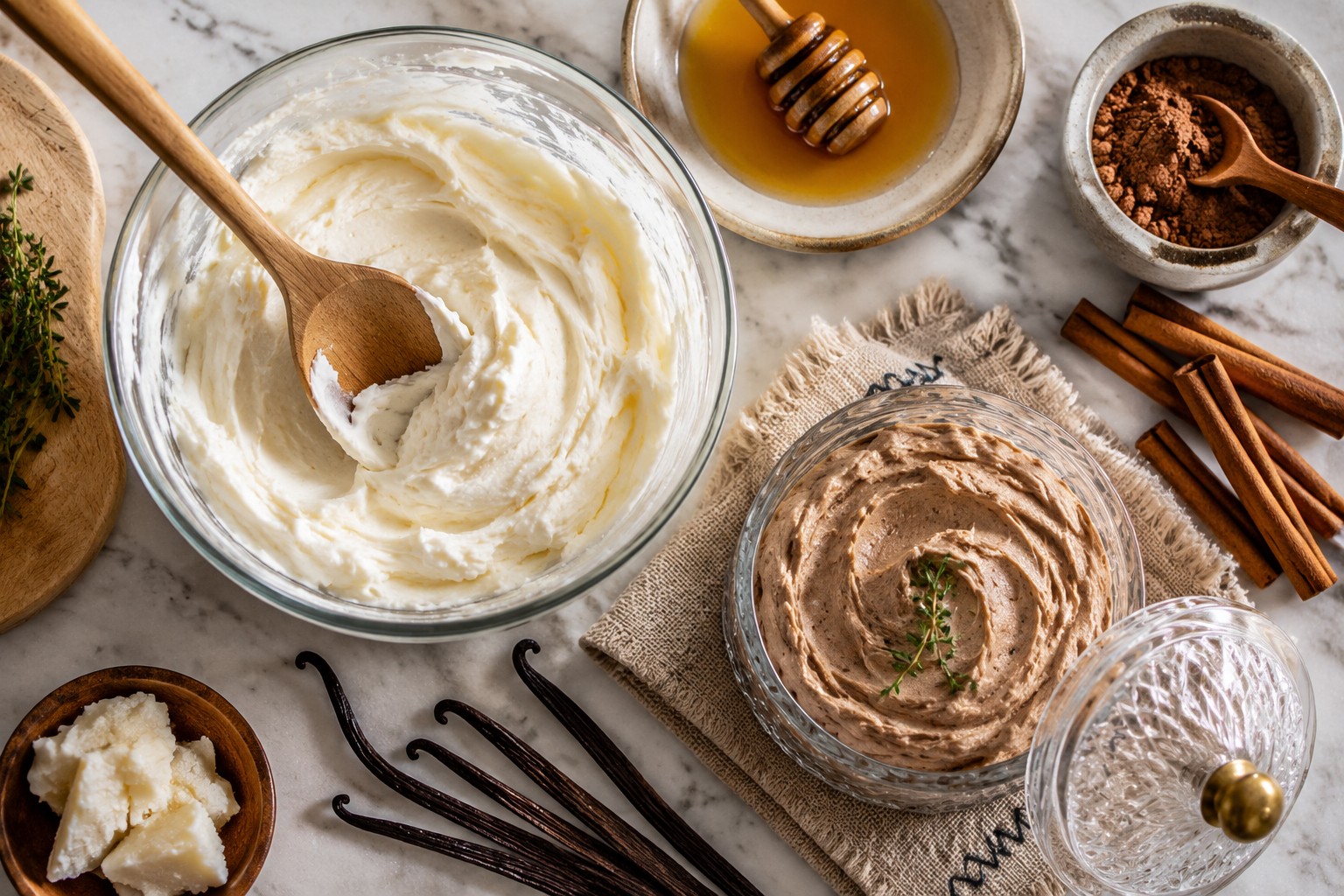
Basic whipped tallow recipe:
- Render or melt tallow: Start with 1 cup of rendered beef tallow (liquid)
- Cool to semi-solid: Refrigerate until it reaches a soft, scoopable consistency (not fully hard)—about 30-45 minutes
- Whip: Use a hand mixer on medium-high speed for 3-5 minutes until fluffy and pale
- Sweeten and flavor: Add 2-3 tablespoons honey or maple syrup, 1 teaspoon vanilla extract, and a pinch of sea salt; whip for another minute
- Chill and serve: Transfer to a jar and refrigerate; it will firm up but remain spreadable
Flavor variations:
- Chocolate whipped tallow: Add 2 tablespoons cocoa powder and 3 tablespoons honey
- Cinnamon maple: Add 1 teaspoon cinnamon and 3 tablespoons maple syrup
- Vanilla bean: Scrape seeds from 1 vanilla bean into the mixture
- Citrus zest: Add lemon or orange zest for a bright, tangy note
Uses:
- Spread on keto bread, pancakes, or waffles
- Frosting for low-carb cakes or cupcakes
- Dollop on roasted sweet potatoes or squash
- Mix into coffee for a creamy, frothy drink (similar to bulletproof coffee)
Texture tip: For the fluffiest result, whip the tallow when it’s just starting to solidify but still soft. If it’s too cold and hard, it won’t incorporate air well; if it’s too warm, it won’t hold peaks.
Does Beef Tallow Make Fries Crispier Than Other Oils?
Yes, beef tallow typically produces crispier fries than most vegetable oils because its high saturated fat content creates a firmer, more stable crust during frying. Saturated fats solidify at higher temperatures than polyunsaturated fats, which helps form a crisp, golden exterior that stays crunchy longer after frying.
Why tallow creates superior crispiness:
- Saturated fat structure: Tallow’s ~50% saturated fat content forms a more rigid coating on the fry surface, reducing moisture migration and sogginess
- High smoke point: At 400°F, tallow can handle the 350-375°F frying temperature without breaking down, maintaining consistent heat transfer
- Flavor enhancement: Tallow adds a subtle savory, umami note that complements the potato’s natural flavor
- Lower moisture content: Tallow has virtually no water (unlike butter), so it doesn’t steam the fries or create splatter
Comparison to other frying fats:
- Vegetable oil: Produces good crispiness but fries may soften faster as they cool
- Peanut oil: Excellent crispiness and neutral flavor; comparable to tallow
- Lard (pork fat): Similar performance to tallow with a slightly different flavor profile
- Duck fat: Premium crispiness and flavor but more expensive
Pro tip for perfect tallow fries:
- Cut potatoes into uniform sticks and soak in cold water for 30 minutes to remove excess starch
- Pat completely dry with paper towels
- Fry in two stages: first at 325°F for 4-5 minutes (blanching), then rest 5 minutes, then fry again at 375°F for 2-3 minutes until golden and crisp
- Season immediately after the second fry while still hot
Edge case: If you’re frying at very high volumes or for extended periods, peanut oil may be more economical than tallow, but tallow delivers better flavor and texture for home cooking.
Is Beef Tallow Safe for People with Dairy Allergies?
Yes, beef tallow is completely safe for people with dairy allergies because it contains no milk proteins, lactose, or any dairy-derived ingredients. Tallow is rendered beef fat, not a dairy product, so it poses no risk for individuals with milk allergies or lactose intolerance.
Why the confusion exists:
- Similar appearance: Solid tallow looks like butter or cream, leading some to assume it’s dairy-based
- Culinary substitution: Tallow is often used as a butter replacement in cooking, which can create confusion about its origin
- Labeling: Some products may be processed in facilities that also handle dairy, so always check labels if you have severe allergies
Allergen profile:
- Dairy-free: No casein, whey, lactose, or milk proteins
- Gluten-free: Pure tallow contains no gluten
- Soy-free: No soy derivatives (unlike some vegetable oils)
- Nut-free: No tree nuts or peanuts
Important note: If you have a beef allergy (rare but possible), avoid tallow. Some individuals with alpha-gal syndrome (a tick-borne allergy to mammalian meat) may also react to beef tallow.
Cross-contamination risk: If you’re buying flavored or whipped tallow products, check ingredient lists carefully. Some artisan varieties may include butter, cream, or cheese for flavor, which would make them unsuitable for dairy-free diets.
What Are the Best Alternatives to Beef Tallow for High-Heat Cooking?
The best alternatives to beef tallow for high-heat cooking are ghee (clarified butter), refined avocado oil, lard (pork fat), and duck fat, all of which have smoke points above 375°F and provide good flavor and browning. Choose based on your dietary preferences, flavor goals, and budget.
Top alternatives:
- Ghee (clarified butter): 450°F smoke point, rich buttery flavor, lactose-free, excellent for searing and roasting
- Refined avocado oil: 520°F smoke point, neutral flavor, plant-based, ideal for very high-heat cooking
- Lard (pork fat): 370-400°F smoke point, similar performance to tallow, slightly sweeter flavor
- Duck fat: 375°F smoke point, premium flavor, excellent for fries and roasted vegetables, more expensive
- Coconut oil (refined): 400°F smoke point, neutral flavor (refined version), plant-based, suitable for frying
Decision matrix:
- Choose ghee if you want rich flavor and don’t mind dairy-derived fat (it’s lactose-free but not vegan)
- Choose avocado oil if you need the highest smoke point or prefer plant-based fats
- Choose lard if you want tallow-like performance at a lower cost
- Choose duck fat if you’re cooking a special meal and want premium flavor
- Choose refined coconut oil if you’re vegan or vegetarian and need high-heat stability
Budget consideration: Lard is typically the most economical alternative at $3-6 per pound, while duck fat is the most expensive at $15-25 per pound.
Flavor note: If you’re cooking chicken breast at high heat, ghee or avocado oil may be better choices than tallow to avoid overpowering the mild chicken flavor.
Common Mistakes When Cooking with Beef Tallow for the First Time
The most common mistakes when cooking with beef tallow are using too much (it’s more concentrated than oil), not preheating it properly (leading to uneven cooking), and storing it incorrectly (causing rancidity or off-flavors). New users also often expect a strong beef flavor, but properly rendered tallow is mild and savory, not gamey.
Top beginner mistakes:
- Over-applying tallow: Use 25-30% less tallow than you would vegetable oil; it coats more effectively due to its viscosity
- Frying at the wrong temperature: Tallow needs to reach 350-375°F for frying; too low and food absorbs excess fat, too high and it burns
- Not straining after use: Failing to strain out food particles before storing leads to faster spoilage and off-flavors
- Storing in a warm location: Even though tallow is shelf-stable, heat accelerates rancidity; store in a cool, dark place
- Expecting neutral flavor: Tallow has a mild beefy, savory note; it’s not as neutral as refined vegetable oil
- Using low-quality tallow: Poorly rendered or grain-fed tallow can have a stronger, less pleasant flavor than grass-fed varieties
- Not drying food before frying: Moisture causes dangerous splattering when it hits hot tallow; pat food completely dry first
How to avoid these mistakes:
- Measure carefully: Start with 1-2 tablespoons for pan-frying; you can always add more
- Use a thermometer: Monitor oil temperature with a deep-fry or instant-read thermometer
- Strain and store properly: Pour cooled tallow through a fine-mesh strainer or cheesecloth into a clean jar after each use
- Test flavor first: Try tallow in a simple application (like roasted potatoes) before using it in delicate dishes
Edge case: If you’re using tallow for grilled meats, brush it on during the last few minutes of cooking rather than at the start to prevent flare-ups from dripping fat.
Can You Reuse Beef Tallow After Frying?
Yes, you can reuse beef tallow 3-5 times after frying if you strain it properly, store it in an airtight container, and monitor it for signs of degradation (dark color, off-smell, or excessive foaming). Tallow’s high saturated fat content makes it more stable and reusable than most vegetable oils.
How to reuse tallow safely:
- Cool completely: Let tallow cool to room temperature after frying (30-60 minutes)
- Strain thoroughly: Pour through a fine-mesh strainer lined with cheesecloth or a coffee filter to remove food particles and sediment
- Store in an airtight container: Use a glass jar or food-grade plastic container with a tight lid
- Label with date and use count: Track how many times you’ve reused it
- Store in a cool, dark place: Room temperature is fine for 1-2 weeks; refrigerate for longer storage
Signs tallow has degraded and should be discarded:
- Dark brown or black color (fresh tallow is cream to light tan)
- Rancid or sour smell (should smell mildly beefy and clean)
- Excessive foaming when heated (indicates breakdown of fat molecules)
- Sticky or gummy texture when solid
Best practices:
- Fry similar foods: Reuse tallow for the same type of food (e.g., fries, then fries again) to avoid flavor transfer
- Don’t mix with other fats: Keep tallow separate from vegetable oil or lard to maintain quality
- Refresh with new tallow: Add 25% fresh tallow to the reused batch to extend its life
Comparison to vegetable oil: Most vegetable oils should only be reused 1-2 times due to higher polyunsaturated fat content, which oxidizes faster. Tallow’s stability gives it a significant reusability advantage.
Is Beef Tallow Good for Keto and Carnivore Diets?
Yes, beef tallow is excellent for keto and carnivore diets because it’s zero-carb, high in saturated fat, and derived from animal sources, making it ideal for both dietary frameworks. Tallow provides concentrated energy without affecting blood sugar or insulin levels, and it aligns with the ancestral, animal-based philosophy of both diets.
Why tallow fits keto:
- Zero carbohydrates: Won’t impact ketosis or daily carb limits
- High fat content: Helps meet the 70-80% fat macro target for ketogenic diets
- Stable for cooking: High smoke point makes it suitable for keto-friendly frying and roasting
- Nutrient-dense: Contains fat-soluble vitamins A, D, E, and K2 (especially from grass-fed beef)
Why tallow fits carnivore:
- Animal-derived: Aligns with the carnivore diet’s focus on animal products only
- Minimal processing: Rendered tallow is a simple, traditional food with no additives
- Supports satiety: High-fat content helps maintain energy on a meat-only diet
- Traditional use: Historically used in nose-to-tail eating practices
Practical applications:
- Fry chicken thighs or other meats for crispy skin
- Roast low-carb vegetables like Brussels sprouts or cauliflower
- Add to ground beef for juicier burgers or meatballs
- Use in place of butter for dairy-free keto cooking
Macro profile (per tablespoon):
- Calories: 115
- Fat: 13g (saturated: 6.5g, monounsaturated: 5.5g, polyunsaturated: 0.5g)
- Carbohydrates: 0g
- Protein: 0g
Note: While tallow fits both diets, total calorie intake still matters for weight management. Track portions if you’re using tallow liberally in cooking.
How to Store Beef Tallow So It Doesn’t Go Rancid
Store beef tallow in an airtight glass jar or food-grade plastic container in a cool, dark place at room temperature for up to 12 months, or refrigerate for 18-24 months. Proper storage prevents oxidation, rancidity, and off-flavors by limiting exposure to light, air, and heat.
Best storage practices:
- Use airtight containers: Mason jars, glass containers with rubber seals, or food-grade plastic tubs with tight lids
- Keep away from light: Store in a pantry, cupboard, or drawer; light accelerates oxidation
- Avoid heat sources: Don’t store near the stove, oven, or in direct sunlight
- Use clean utensils: Always use a clean, dry spoon to scoop tallow; moisture and food particles introduce bacteria
- Consider refrigeration: While not required, refrigeration extends shelf life and is recommended if you live in a warm climate
Shelf life:
- Room temperature (65-75°F): 12-18 months in an airtight container
- Refrigerated (35-40°F): 18-24 months
- Frozen: 2-3 years (though texture may change slightly upon thawing)
Signs of rancidity:
- Sour or paint-like smell (fresh tallow smells mildly beefy and clean)
- Yellow or brown discoloration (should be cream to light tan)
- Bitter or off-taste when used in cooking
- Mold growth (rare but possible if moisture is introduced)
Pro tip: Divide tallow into smaller portions (1-cup jars) rather than storing it all in one large container. This minimizes air exposure each time you open it and extends overall freshness.
Freezing option: Freeze tallow in ice cube trays for pre-portioned amounts (about 2 tablespoons per cube). Pop out cubes as needed and store in a freezer bag for up to 3 years.
Beef Tallow Renaissance: 15 High-Smoke-Point Recipes for Crispy Fries, Grilled Meats, and Whipped Desserts
The Beef Tallow Renaissance: 15 High-Smoke-Point Recipes for Crispy Fries, Grilled Meats, and Whipped Desserts brings together traditional cooking techniques with modern flavor profiles. These recipes showcase tallow’s versatility across savory and sweet applications, from classic bistro fries to herb-infused spreads and whipped dessert toppings.
Crispy Fries and Sides (Recipes 1-5)
1. Classic Bistro Fries Double-fry russet potatoes in 375°F tallow: blanch at 325°F for 5 minutes, rest, then fry at 375°F for 3 minutes until golden. Season with sea salt and fresh herbs.
2. Tallow-Roasted Brussels Sprouts Toss halved Brussels sprouts with melted tallow, garlic, and balsamic vinegar. Roast at 425°F for 25 minutes until crispy and caramelized.
3. Crispy Smashed Potatoes Boil baby potatoes until tender, smash flat, brush with tallow, and roast at 450°F for 20 minutes. Top with sour cream and chives.
4. Tallow-Fried Onion Rings Dip thick onion rings in buttermilk, dredge in seasoned flour, and fry in 375°F tallow for 2-3 minutes until golden and crispy.
5. Roasted Root Vegetables Toss carrots, parsnips, and turnips with tallow, thyme, and black pepper. Roast at 400°F for 35-40 minutes, stirring halfway.
Grilled and Seared Meats (Recipes 6-10)
6. Tallow-Basted Ribeye Steak Sear ribeye in a cast iron skillet with tallow at high heat for 3-4 minutes per side. Baste with melted tallow, garlic, and rosemary during the last minute. Similar techniques work well when cooking chicken breast step by step.
7. Herb-Infused Tallow Burgers Mix ground beef with melted herb-infused tallow (rosemary, thyme, garlic) before forming patties. Grill over high heat for 4-5 minutes per side.
8. Tallow-Grilled Chicken Thighs Brush chicken thighs with melted tallow and grill over medium-high heat for 6-7 minutes per side until internal temperature reaches 165°F.
9. Birria Quesadillas with Tallow Fry corn tortillas in tallow until crispy, fill with braised beef birria and cheese, fold, and fry again until golden. Serve with consommé for dipping.
10. Tallow-Seared Pork Chops Sear thick-cut pork chops in tallow over high heat for 4 minutes per side, then finish in a 375°F oven for 8-10 minutes.
Whipped Desserts and Spreads (Recipes 11-15)
11. Vanilla Honey Whipped Tallow Whip semi-solid tallow with honey, vanilla extract, and sea salt until fluffy. Spread on keto bread or pancakes.
12. Chocolate Whipped Tallow Frosting Whip tallow with cocoa powder, maple syrup, and vanilla until light and airy. Use as frosting for low-carb cakes or cupcakes.
13. Cinnamon Maple Tallow Spread Whip tallow with cinnamon, maple syrup, and a pinch of nutmeg. Serve on roasted sweet potatoes or squash.
14. Herb-Infused Savory Tallow Melt tallow with fresh rosemary, thyme, garlic, and black pepper. Cool, then whip until spreadable. Use on grilled meats or vegetables.
15. Citrus Zest Whipped Tallow Whip tallow with lemon or orange zest, honey, and vanilla. Dollop on fresh berries or use as a butter substitute in baking.
Pro tip: When preparing any of these recipes, remember that tallow solidifies at room temperature, so work with it while it’s warm for easier mixing and coating. For the best way to cook chicken breast in an air fryer, brush tallow on the chicken before air frying for extra crispiness.
Frequently Asked Questions
What does beef tallow taste like? Beef tallow has a mild, savory, slightly beefy flavor that’s much subtler than you might expect. Properly rendered tallow is not gamey or overpowering; it adds a rich, umami note to foods without dominating other flavors.
Can vegetarians or vegans use beef tallow? No, beef tallow is an animal product derived from beef fat, so it’s not suitable for vegetarian or vegan diets. Plant-based alternatives include refined coconut oil, avocado oil, or vegetable shortening.
Does beef tallow need to be refrigerated? No, beef tallow does not require refrigeration and can be stored at room temperature in an airtight container for 12-18 months. Refrigeration extends shelf life to 18-24 months but is optional.
Is grass-fed tallow better than grain-fed? Grass-fed tallow typically has a better omega-3 to omega-6 ratio, higher vitamin K2 content, and a cleaner flavor profile than grain-fed tallow. However, both are suitable for cooking; grass-fed is a premium option if your budget allows.
Can I use beef tallow in baking? Yes, beef tallow can replace butter or shortening in baking at a 1:1 ratio. It works especially well in savory baked goods like biscuits, pie crusts, and cornbread, though it may add a subtle savory note to sweet recipes.
How do I render beef tallow at home? Cut beef suet into small pieces, place in a slow cooker or oven-safe pot, and cook at 250°F for 3-4 hours until fat is fully melted. Strain through cheesecloth into a clean jar and let cool. The result is pure, rendered tallow.
Is beef tallow inflammatory? Current research is mixed. Some studies suggest saturated fats like tallow may be less inflammatory than highly processed seed oils, while others link high saturated fat intake to increased inflammation markers. Individual response varies; monitor how your body reacts.
Can I use beef tallow for skincare? Yes, many people use grass-fed beef tallow as a natural moisturizer because it’s rich in vitamins A, D, E, and K and has a fatty acid profile similar to human skin. However, this article focuses on culinary uses.
What’s the difference between tallow and lard? Tallow is rendered beef fat, while lard is rendered pork fat. Both have similar smoke points and cooking properties, but tallow has a slightly more savory flavor and lard is a bit sweeter.
Does beef tallow go bad? Yes, beef tallow can go rancid if exposed to air, light, or heat for extended periods. Properly stored tallow lasts 12-18 months at room temperature or up to 2 years refrigerated. Discard if it smells sour or looks discolored.
Can I mix beef tallow with other cooking fats? Yes, you can blend tallow with butter, lard, or vegetable oils to adjust flavor, smoke point, or cost. A 50/50 tallow-butter blend is popular for sautéing and adds both richness and browning.
Is beef tallow paleo-friendly? Yes, beef tallow is considered paleo-friendly because it’s a minimally processed, traditional fat that humans have consumed for thousands of years. It aligns with the paleo diet’s emphasis on whole, ancestral foods.
Conclusion
The Beef Tallow Renaissance: 15 High-Smoke-Point Recipes for Crispy Fries, Grilled Meats, and Whipped Desserts represents more than a nostalgic return to traditional cooking—it’s a practical shift toward stable, flavorful fats that deliver superior results in high-heat applications. With a 400°F smoke point, reusability up to five times, and the ability to create restaurant-quality crispiness, tallow has earned its place back in modern kitchens.
Whether you’re frying the crispiest french fries you’ve ever made, searing a perfectly crusted steak, or whipping up a honey-vanilla dessert spread, tallow offers versatility that few other fats can match. The key is understanding how to store it properly (airtight, cool, and dark), when to use it (high-heat cooking, savory applications, and keto-friendly recipes), and how to avoid common beginner mistakes (over-applying, not preheating, and poor storage).
Next steps:
- Start simple: Buy a jar of grass-fed tallow or render your own from suet
- Try the bistro fries recipe to experience tallow’s crispiness advantage firsthand
- Experiment with whipped varieties by adding honey, vanilla, or herbs to create custom spreads
- Track your results: Note how tallow performs compared to your usual cooking fats
- Store properly: Use airtight containers and keep tallow away from heat and light
The tallow renaissance isn’t just a trend—it’s a rediscovery of a cooking fat that delivers measurable performance benefits. Give it a try in your next high-heat recipe and taste the difference for yourself.
SEO Meta Title: Beef Tallow Renaissance: 15 Recipes for Fries & Desserts


