
What Is the Easiest Way to Cook Chicken Thighs: Quick Techniques and Tips
You want an easy, reliable way to cook chicken thighs that gives juicy meat and crispy skin with minimal fuss.
Pan-sear the skin on bone-in, skin-on thighs over high heat, then finish them in a moderate oven. This method gives you crisp skin and tender, flavorful meat with just a few steps.
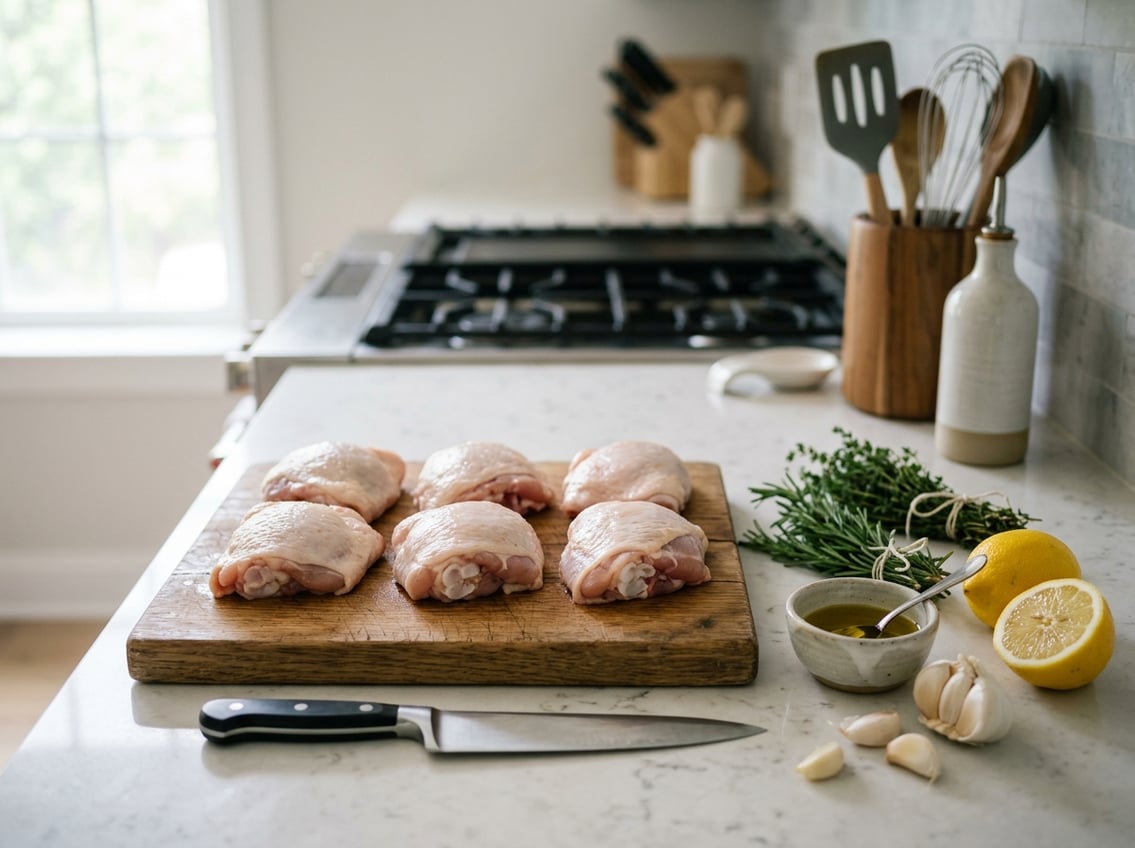
This post shows how to choose the right thighs, a foolproof oven-finishing routine, quick seasoning ideas, and faster alternatives if you’re pressed for time.
You’ll find clear timing, safe target temperatures, and simple tweaks so you can cook great chicken thighs whether you’re feeding yourself or a crowd.
Choosing the Right Type of Chicken Thighs
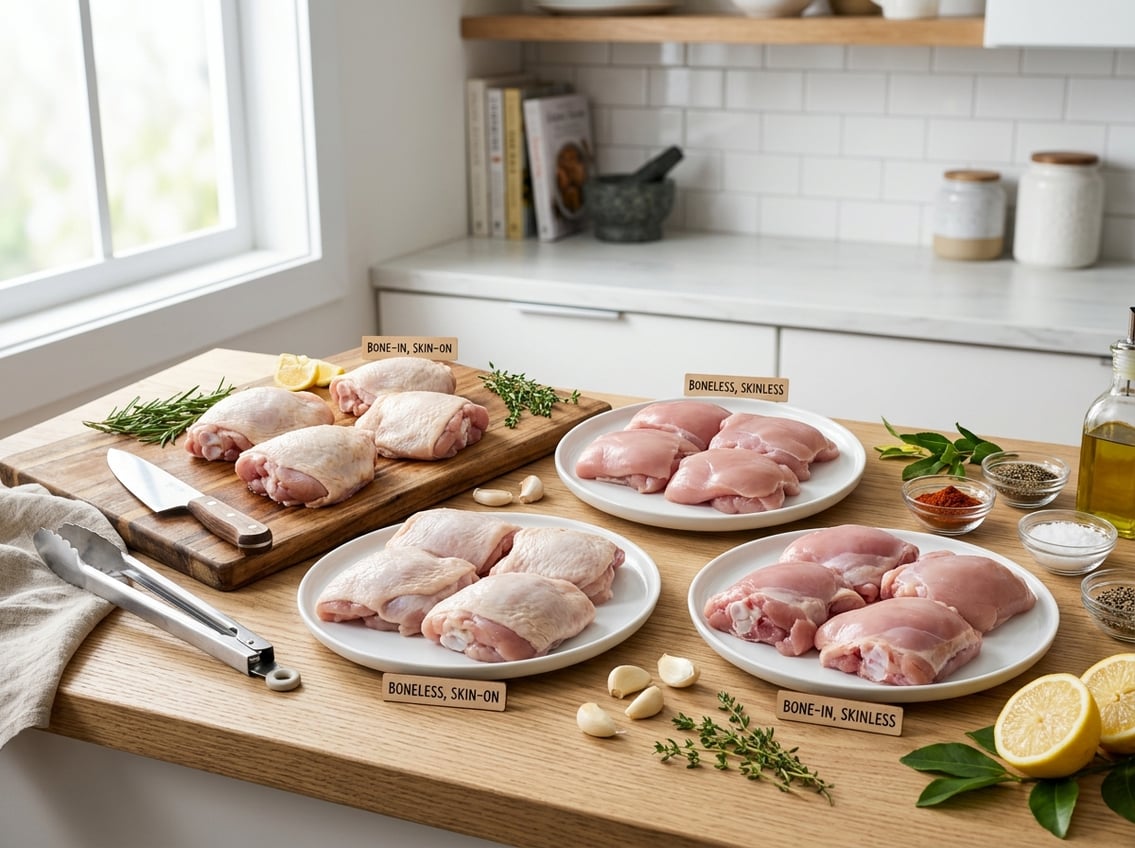
Pick thighs that match your time, texture, and cleanup needs.
Your choice between bone-in/boneless and skin-on/skinless affects cook time, flavor, and how you’ll use the finished dish.
Bone-In vs. Boneless
Bone-in chicken thighs take longer to cook because the bone absorbs heat, but they release more flavor and retain moisture during long or high-heat cooking.
Expect roughly 5–10 extra minutes in the oven or on the grill compared with boneless pieces, and account for this when timing side dishes.
Boneless chicken thighs cook faster and are easier to slice or shred.
They work best for quick pan-searing, stir-fries, or skewers where uniform thickness matters.
If you want minimal fuss and faster resting times, choose boneless thighs.
If you plan to shred for tacos, stews, or salads, bone-in thighs give richer stock when simmered, while boneless thighs save time and require less trimming after cooking.
Skin-On vs. Skinless
Skin-on chicken thighs deliver crisp, brown skin and extra fat that bastes the meat as it cooks.
Use skin-on for oven roasting, pan-searing then oven-finishing, or air-frying when you want a crunchy exterior and juicier interior.
Skinless chicken thighs reduce surface fat and shorten crisping steps, making them better for braises, curries, or low-fat preparations.
They also absorb marinades more directly, which is useful when you want intense seasoning throughout the meat.
If you want crispy skin, leave it on and cook at higher heat.
If you need less mess and lower fat, or plan to shred the meat into saucy dishes, pick skinless thighs.
Best Uses for Each Type
Bone-in, skin-on thighs excel for roasting, grilling, and slow-cooked dishes where appearance and pan juices matter.
They brown well and pair with roasted vegetables or rice dishes that use the pan sauce.
Boneless, skinless thighs suit quick sautés, stir-fries, sandwiches, and recipes that call for even pieces or fast weeknight cooking.
They’re easier to marinate, quicker to cook, and simpler to portion.
Bone-in, skinless thighs are a middle ground: they keep moisture from the bone but reduce surface fat.
Use them when you want juiciness without crisped skin—ideal for braises and slow simmering.
Match the thigh type to your recipe: prioritize flavor retention (bone-in, skin-on), speed and ease (boneless, skinless), or moisture with less fat (bone-in, skinless).
Simple Oven-Baking Methods
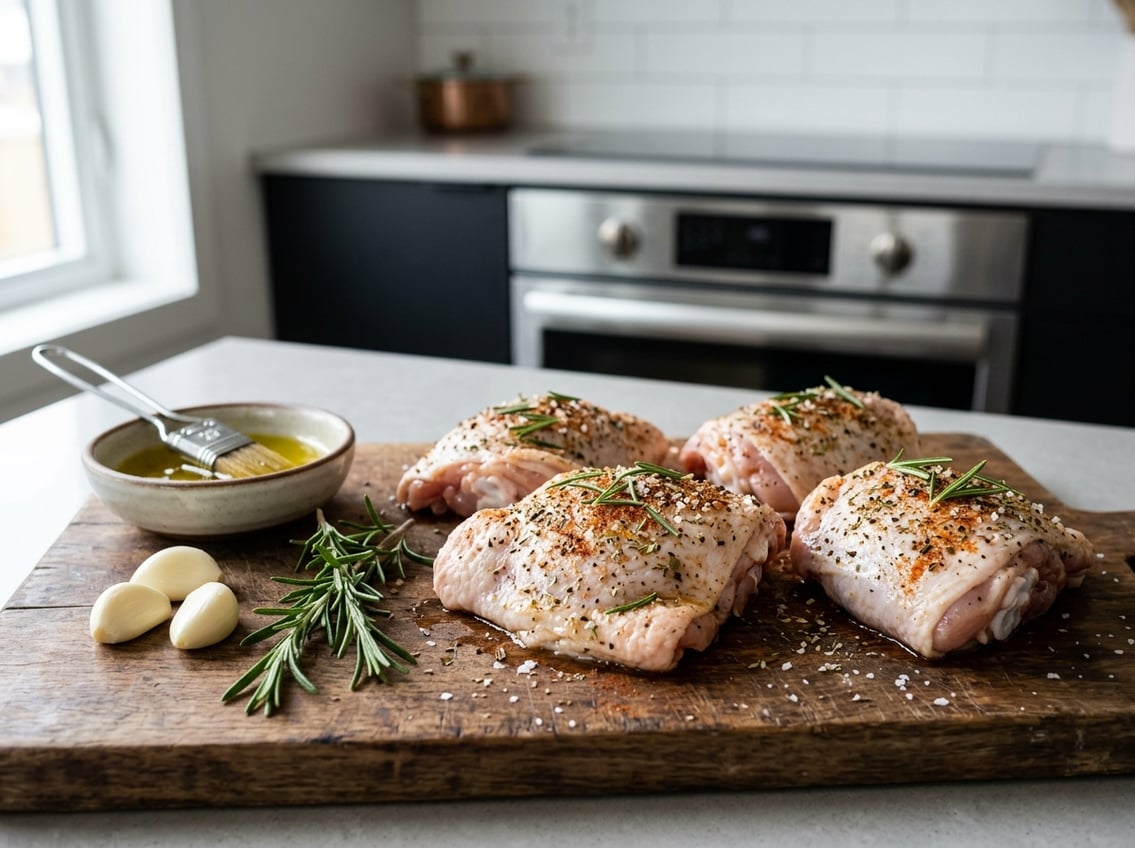
Baking chicken thighs gives you crispy skin and tender, juicy meat with minimal hands-on time.
Focus on proper seasoning, the right oven temperature, and a quick sear if you want extra-crisp skin.
Step-by-Step: How to Bake Chicken Thighs
Preheat your oven to the target temperature (see Time and Temperature Guidelines).
Pat thighs dry with paper towels to remove surface moisture; this helps the skin crisp and prevents steaming.
Season both sides with salt and pepper and any aromatics you like—garlic powder, smoked paprika, and thyme work well.
Arrange bone-in, skin-on thighs skin-side up on a rimmed baking sheet or in a cast-iron skillet so air circulates around each piece.
Optional: heat a heavy skillet over medium-high, add a little oil, and sear skin-side down 3–5 minutes until golden.
Transfer the skillet or baking sheet to the oven and bake until the internal temperature reaches your target (use a probe thermometer in the thickest part, not touching bone).
Let rest 5 minutes uncovered before serving.
Time and Temperature Guidelines
Use these baseline oven temps and times for bone-in, skin-on thighs:
- 425°F (218°C): 25–35 minutes for crisp skin and faster cooking.
- 400°F (204°C): 30–40 minutes for steady, even cooking.
- 350°F (177°C): 40–50 minutes for gentler cooking and very tender meat.
For boneless thighs, subtract about 5–10 minutes from each range.
Aim for an internal temperature of 175°F (79°C) if you prefer very tender, connective-tissue-broken-down thighs; 165–170°F (74–77°C) yields safe, slightly firmer meat.
Always check temperature at the thickest part.
Tips for Juicy, Tender Results
Dry the skin and don’t overcrowd the pan.
Space between thighs lets hot air crisp the skin and cook evenly.
Use bone-in, skin-on thighs when possible; the bone preserves moisture and improves flavor.
If you want extra flavor and tenderness, marinate or brine for 30 minutes to overnight.
Use a meat thermometer for accuracy.
After baking, rest thighs uncovered 5 minutes to let juices redistribute.
Easy Flavor Variations and Seasonings
Pick a simple approach and one or two bold flavors.
Use salt, acid, and fat as your base, then layer herbs, spices, or a glaze to turn a basic chicken thighs recipe into a distinct dish.
Classic Herb and Spice Rubs
Start with a dry rub to get crispy, well-seasoned skin.
Mix 1 tbsp kosher salt, 1 tsp black pepper, 1 tsp paprika, 1 tsp garlic powder, and 1 tsp onion powder.
Add 1–2 tsp dried herbs—thyme or oregano works well—and rub evenly under and over the skin.
Pat the thighs dry before applying oil and rub; that helps the skin crisp in the oven.
Bake at 400°F on a rimmed sheet for 30–40 minutes for bone-in, or about 20–30 minutes for boneless, until internal temp reaches 165°F.
Rest 5 minutes before serving.
For variation, swap smoked paprika for sweet paprika, or add ½ tsp cayenne for heat.
The method stays the same whether you use a sheet pan or a baking dish.
Baked BBQ Chicken Thighs
Use a simple two-step method: sear or bake the seasoned thighs until nearly done, then brush with BBQ sauce and finish under the broiler or in the oven for a sticky glaze.
Season first with 1 tsp salt, 1 tsp smoked paprika, ½ tsp garlic powder, and ½ tsp black pepper.
If you prefer baked bbq chicken thighs without searing, bake at 400°F for 25–35 minutes, brush sauce on during the last 5–8 minutes, and broil 1–2 minutes to caramelize.
Use a high-quality sauce or mix ketchup, brown sugar, apple cider vinegar, and a dash of Worcestershire for a quick homemade glaze.
Serve these bbq chicken thighs with coleslaw or roasted potatoes.
The glaze clings best when applied late so it doesn’t burn while the meat reaches safe temperature.
Greek Lemon Chicken Inspiration
Aim for bright citrus notes and herb freshness.
Combine juice and zest of one lemon, 3 tbsp olive oil, 3 minced garlic cloves, 1 tsp dried oregano, ½ tsp salt, and ¼ tsp black pepper.
Marinate thighs for 30 minutes to 2 hours for more flavor.
Bake skin-side up at 400°F, spooning pan juices over the thighs once during cooking.
Add halved lemon slices and a few sprigs of fresh oregano or thyme to the pan for aroma.
For a finished touch, sprinkle chopped parsley and a light drizzle of extra lemon juice before serving.
This Greek lemon chicken approach pairs well with roasted vegetables or a simple rice pilaf.
The acid in the lemon brightens the rich thigh meat without drying it out if you follow proper cooking times.
Other Fast Cooking Methods
These options focus on quick high-heat approaches and one gentle wet-heat method.
Each method below gives clear timing, temperature cues, and small technique tips so you can get juicy meat and crisp skin without extra fuss.
Grilling Chicken Thighs
Grill bone-in, skin-on thighs over two-zone heat.
Start skin-side down over direct high heat (about 450–500°F) for 4–6 minutes to brown and crisp the skin.
Move the thighs to indirect heat, cover, and finish for 10–15 minutes until they reach 165°F in the thickest part.
Use a thermometer to avoid overcooking.
For charcoal, you get a light smoky flavor.
Gas grills work faster and more predictably.
Keep the lid closed when finishing to stabilize temperature.
Rest the thighs 5 minutes before serving so juices redistribute.
If you want extra crispness, finish briefly over direct heat for 1–2 minutes per side.
Air Fryer and Skillet Options
For an air fryer, arrange skin-side up in a single layer and cook at 400°F for 18–24 minutes, flipping halfway.
This yields very crisp skin fast, but check for dryness at 18 minutes and remove at 165°F.
For a skillet method: pat thighs dry, season, then sear skin-side down in a hot cast-iron skillet with 1 tbsp oil for 6–8 minutes until deeply browned.
Transfer the skillet to a 425°F oven for 8–12 minutes until 165°F.
The skillet gives superior browning and retains juices because the meat cooks in rendered fat.
Both methods work well for weeknight meals.
Choose air fryer for speed and cleanup, skillet for flavor and texture.
How to Poach or Broil
Poaching gives fast, hands-off cooking for boneless thighs.
Simmer gently in a shallow pan with 1–2 cups chicken stock or seasoned water at 160–180°F (small bubbles) for 10–12 minutes until 165°F.
This keeps meat very moist but won’t crisp skin, making it best for shredding or salads.
Broiling crisps skin quickly without long cook times.
Place bone-in thighs on a foil-lined sheet, broil 6–8 inches from heat at high broil for 6–10 minutes per side, watching closely to avoid burning.
You can combine methods: poach to finish cooking, then broil 1–2 minutes to crisp skin.
Use broiling when you need the best way to cook chicken thighs with minimal time.
Best Practices for Perfect Results
Focus on temperature, timing, and minimal handling to get juicy meat and crisp skin.
Salt, a hot pan or oven, and an instant-read thermometer give the most reliable outcomes.
Checking Doneness Safely
Use an instant-read thermometer to confirm chicken thighs reach 165°F (74°C) at the thickest part, avoiding bone contact.
Insert the probe from the side into the meatiest area; if you hit bone the reading will be falsely high or low.
Check temperature toward the end of the recommended cook time.
For oven-roasted thighs that’s usually 20–30 minutes at 400–425°F.
For skillet-then-oven methods check after the oven step.
If the thigh is a few degrees below target, return it to heat rather than cutting it open.
Allow thighs to rest 5–10 minutes after cooking.
Resting evens internal temperature and lets juices redistribute so your chicken thigh recipe stays moist when you slice or serve.
Storing and Reheating Leftovers
Cool cooked thighs to room temperature no longer than two hours, then refrigerate in an airtight container up to 3–4 days.
For longer storage, freeze portions in vacuum-seal or freezer-safe bags for up to 3 months.
Label with date and cooking method.
Reheat gently to preserve texture.
In the oven, warm at 325°F covered for 10–15 minutes until internal temperature reaches 165°F.
Use a skillet over medium-low heat with a splash of oil and a lid to re-crisp skin without drying meat.
For microwave reheating, cover and use short intervals, checking temperature frequently.
Thaw frozen thighs overnight in the fridge before reheating.
If you plan to use leftovers in salads or tacos, slice cold or room temperature to preserve tenderness.
Using Leftover Chicken Thighs
Leftover chicken thighs work well in many recipes because they stay moist. Shred or chop cooled meat for quick uses.
Toss the meat into warmed tomato sauce for pasta. Fold it into fried rice or layer it into enchiladas for added richness.
For salads and sandwiches, slice the meat against the grain for tender pieces. Toss with a vinaigrette or mayonnaise-based dressing to add moisture.
Reheat whole thighs briefly in a hot skillet to restore crisp skin. Serve them on grain bowls or with roasted vegetables.
Use leftover bones and trimmings to make a small stock. Simmer them with onion, carrot, celery, and herbs for 1 to 2 hours, then strain.


