
How Long Can Chicken Thighs Stay in the Fridge Cooked: Safe Storage and Freshness Tips
You can safely keep cooked chicken thighs in the refrigerator for about 3 to 4 days when you store them properly.
Store cooked thighs in shallow airtight containers or wrap them tightly to preserve quality and reduce the risk of foodborne illness.
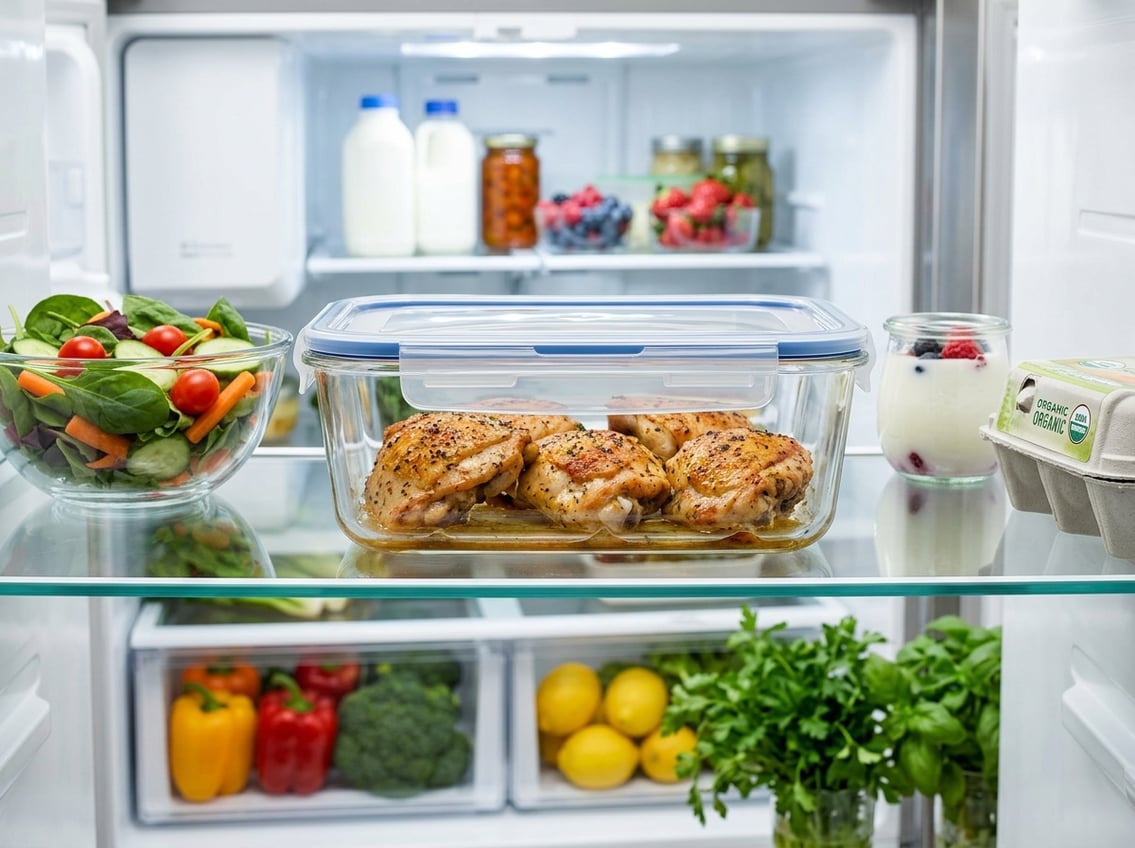
Chill chicken thighs promptly, keep your fridge at or below 40°F (4°C), and separate leftovers from raw foods.
Safe Storage Duration for Cooked Chicken Thighs
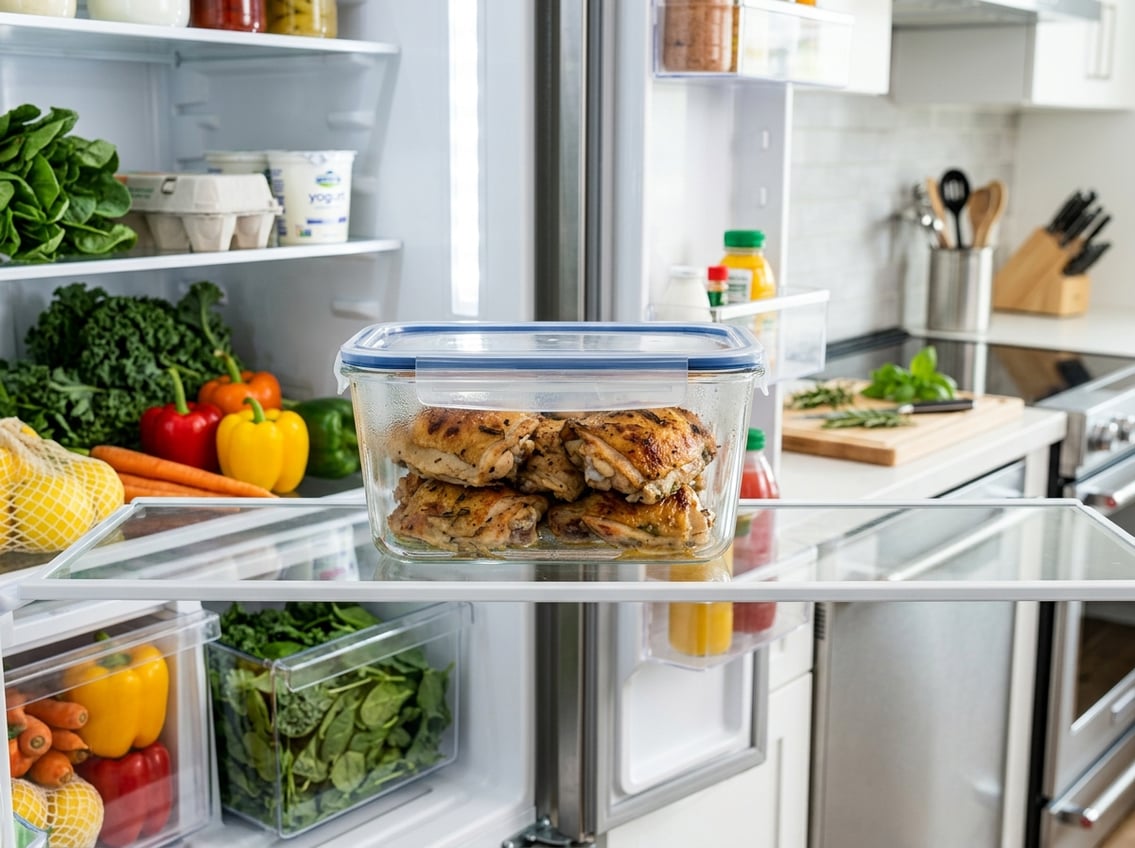
Cooked chicken thighs stay safe and maintain quality only for a limited time in a refrigerator.
Proper cooling, airtight storage, and refrigerator temperature determine how long the meat remains usable.
Recommended Fridge Time
Store cooked chicken thighs in the refrigerator at 40°F (4°C) or below and use them within 3–4 days for best safety and quality.
Place the thighs in shallow, airtight containers or wrap them tightly with foil or plastic wrap within two hours of cooking.
Label the container with the date so you know exactly how long they’ve been stored.
If your fridge temperature occasionally rises above 40°F, use the shorter end of the window (3 days).
Freeze any thighs you won’t eat within this period; frozen cooked thighs keep quality for about 4 months.
Storage Differences: Raw vs. Cooked Thighs
Raw chicken thighs last only 1–2 days in the refrigerator because raw poultry can carry pathogens like Salmonella and Campylobacter that multiply quickly at refrigerator temperatures.
Cook or freeze raw thighs within that 1–2 day window to stay safe.
Cooked chicken thighs are safe for 3–4 days because cooking reduces bacterial load but does not sterilize the meat.
If cooked thighs sat out longer than two hours before refrigerating, discard them.
Keep cooked thighs above any raw meats in the fridge to avoid cross-contamination.
Reheat leftovers to a safe temperature when serving, at 165°F (74°C), and discard any chicken that smells sour, looks slimy, or has dull discoloration.
Best Practices for Refrigerating Cooked Chicken Thighs
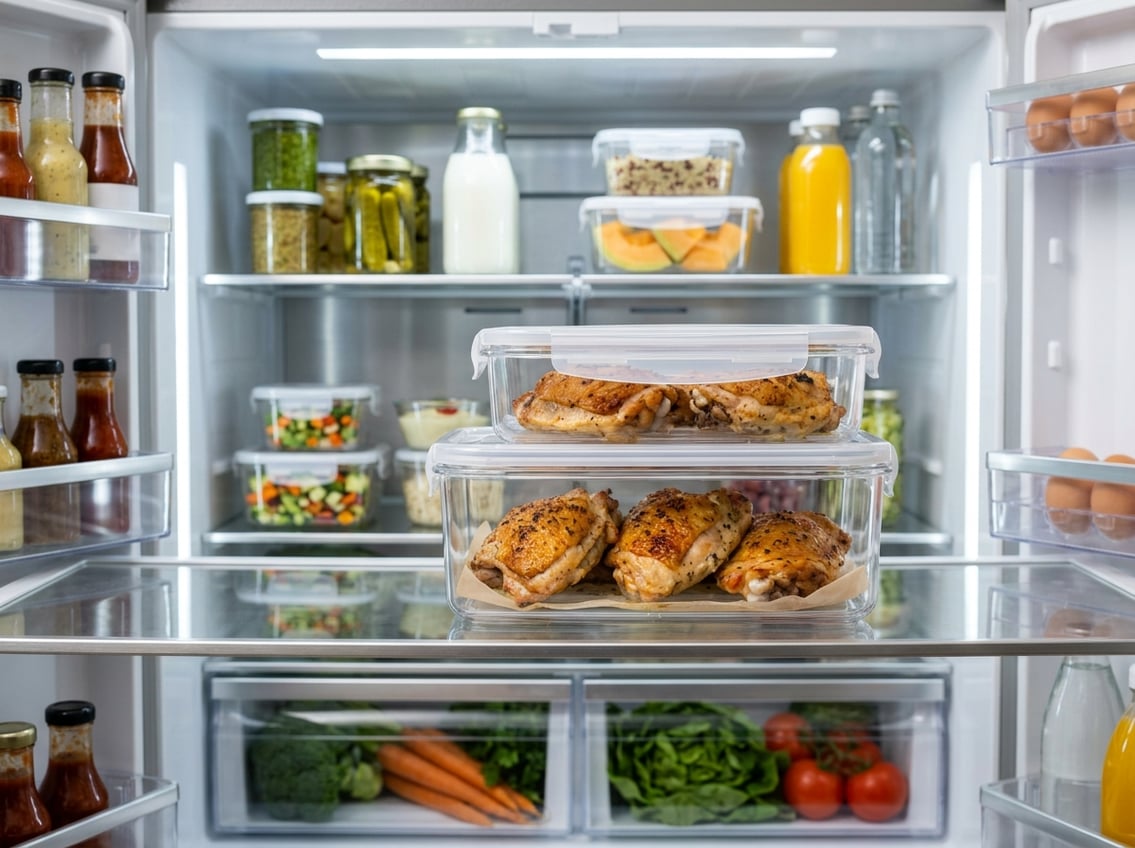
Store cooked chicken thighs in airtight packaging and label portions with dates.
Keep them on a middle or upper shelf where the temperature stays at or below 40°F (4°C).
Use a refrigerator thermometer to verify fridge temperature and move chicken to the freezer if you won’t eat it within a few days.
Airtight Containers and Sealing Methods
Use shallow, airtight containers or heavy-duty resealable bags to cool and store chicken thighs.
Shallow containers let heat escape quickly, reducing time in the temperature danger zone.
Leave lids slightly ajar until the meat stops steaming, then seal tightly.
Remove as much air as possible from bags before sealing to slow oxidation and guard against freezer burn if you later freeze portions.
Choose reusable containers with silicone gaskets and locking tabs for a tight seal.
For longer storage, vacuum sealing removes air more effectively than manual compression and preserves quality.
Always cool to refrigerator temperature within two hours of cooking to limit bacterial growth.
Labeling and Portioning
Label each package with the cooking date and planned use-by date.
Write the date in a visible spot on the lid or bag with a permanent marker.
Portion the thighs into meal-sized servings before refrigerating so you only open what you need.
Smaller portions cool faster and reduce repeated exposure to warmer air.
If you plan to freeze some portions for later, label them with both cook date and freezer-safe date.
Use within 3–4 months for best quality.
Ideal Refrigerator Placement
Place cooked chicken thighs on a middle or upper shelf away from raw meats to avoid cross-contamination.
Raw meat should always sit on the lowest shelf or in a dedicated drawer.
Keep cooked items higher and on a stable, sealed tray to catch any leaks.
Keep cooked chicken toward the back of the fridge where temperature is most consistent.
Use a refrigerator thermometer to confirm the compartment stays at or below 40°F (4°C).
Avoid storing cooked chicken in the door; frequent opening causes temperature swings that shorten shelf life.
Recognizing Spoilage in Refrigerated Chicken Thighs
Check for noticeable changes in smell, color, and texture before you eat leftover or stored cooked chicken thighs.
Trust your senses—any sour odor, greenish tint, or slimy feel means you should discard the meat.
Odor and Color Changes
A sharp sour or putrid smell signals bacterial growth.
Fresh cooked thighs usually have a mild, savory scent; anything acrid, ammonia-like, or rotten indicates spoilage.
Look at color closely.
Cooked meat should remain a uniform light-to-medium brown or white depending on seasoning.
Green, gray, or brownish-black spots, or an overall dull, faded appearance, shows deterioration.
If packaging contains liquid that looks cloudy, bloody, or unusually dark, treat the chicken as unsafe.
Texture and Surface Signs
Feel the surface with clean hands.
Cooked chicken thighs that are still good will be moist but not slimy.
A tacky, slippery, or gelatinous film on the surface is a reliable sign of bacterial or mold activity; throw it out.
Check firmness as well.
Over time in the fridge, meat can become dry, stringy, or mushy.
Dry edges from freezer-thaw cycles or fridge dehydration affect quality, but sliminess and softness indicate safety risks.
Always reheat only thoroughly; reheating won’t make truly spoiled chicken safe.
Freezing Cooked Chicken Thighs for Extended Storage
Freezing cooked chicken thighs lets you keep cooked portions for months while preserving safety and usable quality.
Pack, seal, and label each package; remove air and keep the freezer at 0°F (-18°C) or colder.
Preparing Chicken Thighs for the Freezer
Cool cooked thighs to room temperature within two hours, then chill them in the refrigerator before freezing to reduce ice crystal formation.
Trim excess sauce or large pools of liquid that can concentrate salt and change texture when frozen.
Portion the thighs into meal-sized servings so you thaw only what you need.
Use shallow containers or single-layer baking sheets to pre-freeze pieces for 1–2 hours.
This prevents them from sticking together and makes later packing easier.
Wrap each portion tightly with plastic wrap or butcher paper, then place inside a heavy-duty freezer bag or airtight container.
Squeeze out as much air as possible, or use a vacuum sealer if you have one.
Label each package with the date and contents.
Avoiding Freezer Burn
Freezer burn happens when air reaches the surface and dehydrates the meat.
Prevent it by removing air: double-wrap with a layer that seals (plastic wrap or vacuum bag) and an outer layer that protects (foil or rigid container).
Keep consistent freezer temperature at 0°F (-18°C) or lower to slow moisture migration.
Store packages away from the freezer door where temperature fluctuates most.
Use older packages first.
If you spot small dry patches after thawing, trim them away and use the rest in soups, stews, or sauces where moisture and seasoning help compensate for any loss of texture.
How Long to Freeze Cooked Chicken Thighs
Cooked chicken frozen at 0°F (-18°C) remains safe indefinitely, but quality declines over time.
For best flavor and texture, use cooked chicken thighs within 3–4 months.
If you froze thighs with sauce or gravy, they may hold moisture slightly better and stay acceptable up to 4 months.
Plain roasted or grilled thighs can start losing juiciness after about 3 months.
Always check thawed chicken for off-odors, odd colors, or slimy texture; discard if anything seems off.
Reheat thawed chicken to an internal temperature of 165°F (74°C) before eating.
Safe Thawing and Reheating Methods
Keep chicken at safe temperatures while thawing and when reheating.
Use the fridge, cold water, or microwave for thawing, and always reheat to at least 165°F (74°C).
Handle cooked thighs gently to avoid drying and to prevent bacterial growth.
Thawing Chicken Thighs Safely
Thaw chicken thighs in the refrigerator whenever you can.
Place sealed thighs on a plate or tray on the bottom shelf to catch drips.
Allow about 24 hours for every 1–2 pounds (thicker pieces may take longer).
If you need faster thawing, use the cold-water method.
Keep thighs in a leak-proof bag and submerge in cold water, changing the water every 30 minutes.
Cook the chicken immediately after cold-water thawing.
If you use the microwave defrost setting, remove any packaging and rotate or flip pieces frequently so thawing is even.
Cook microwave-thawed thighs right away because partial heating can create warm spots where bacteria grow.
Never Thaw Chicken at Room Temperature
Never leave chicken thighs out on the counter, in hot water, or in direct sunlight to thaw.
Temperatures between 40°F and 140°F (4°C–60°C) sit in the “danger zone” where bacteria multiply rapidly.
Even a couple of hours at room temperature can allow unsafe bacterial growth, so discard any poultry left out more than 2 hours (1 hour above 90°F/32°C).
If you discover thighs partially thawed on the counter, treat them as unsafe unless they were kept below 40°F the whole time.
Always follow refrigerator, cold-water, or microwave methods instead.
Reheat Cooked Chicken Thighs
Reheat cooked chicken thighs to an internal temperature of 165°F (74°C) measured with a food thermometer.
This temperature ensures any surviving bacteria are killed.
Reheat once; avoid repeated reheating which raises food-safety risks and degrades texture.
Use these reheating methods:
- Oven: 325–350°F (160–175°C) covered in foil for even heat; add a splash of broth to retain moisture.
- Stovetop: low-medium heat in a covered pan with a little liquid; turn often until 165°F.
- Microwave: cover and rotate, checking temperature in the thickest part; let stand 1–2 minutes to equalize.
Store leftovers in shallow, airtight containers and chill within two hours of cooking to keep reheating safe and effective.
Refreezing and Food Safety Considerations
Cooked chicken thighs can be refrozen safely in specific circumstances.
Controlling temperature and time limits reduces bacterial risk and preserves quality.
Can You Refreeze Chicken Thighs?
You can refreeze cooked chicken thighs if you thawed them in the refrigerator and never let them rise above 40°F (4°C).
If the thighs sat at room temperature longer than two hours (one hour above 90°F/32°C), discard them.
Refreezing affects texture and moisture; expect drier meat after thawing again.
Package tightly in airtight, freezer-grade bags or vacuum-seal to limit freezer burn and label with the date.
For best quality, use refrozen cooked thighs within 2–4 months.
If you already reheated the thighs to a safe internal temperature (165°F/74°C), cool them rapidly to refrigerator temperature within two hours before freezing.
Limiting Bacterial Growth
Cool cooked thighs promptly.
Transfer them to shallow containers and refrigerate within two hours of cooking.
This step keeps the meat out of the 40 to 140°F (4 to 60°C) danger zone.
Bacteria multiply quickly in that temperature range.
Store cooked thighs on the coldest shelf.
Use them within three to four days if refrigerated.
If you plan to freeze, do so within that three to four day window.
This helps reduce risk.
When reheating, heat the thighs to an internal temperature of 165°F (74°C).
Check the temperature with a probe thermometer.
Avoid repeatedly thawing and reheating the same portion.
Each cycle increases bacterial and quality risks.


