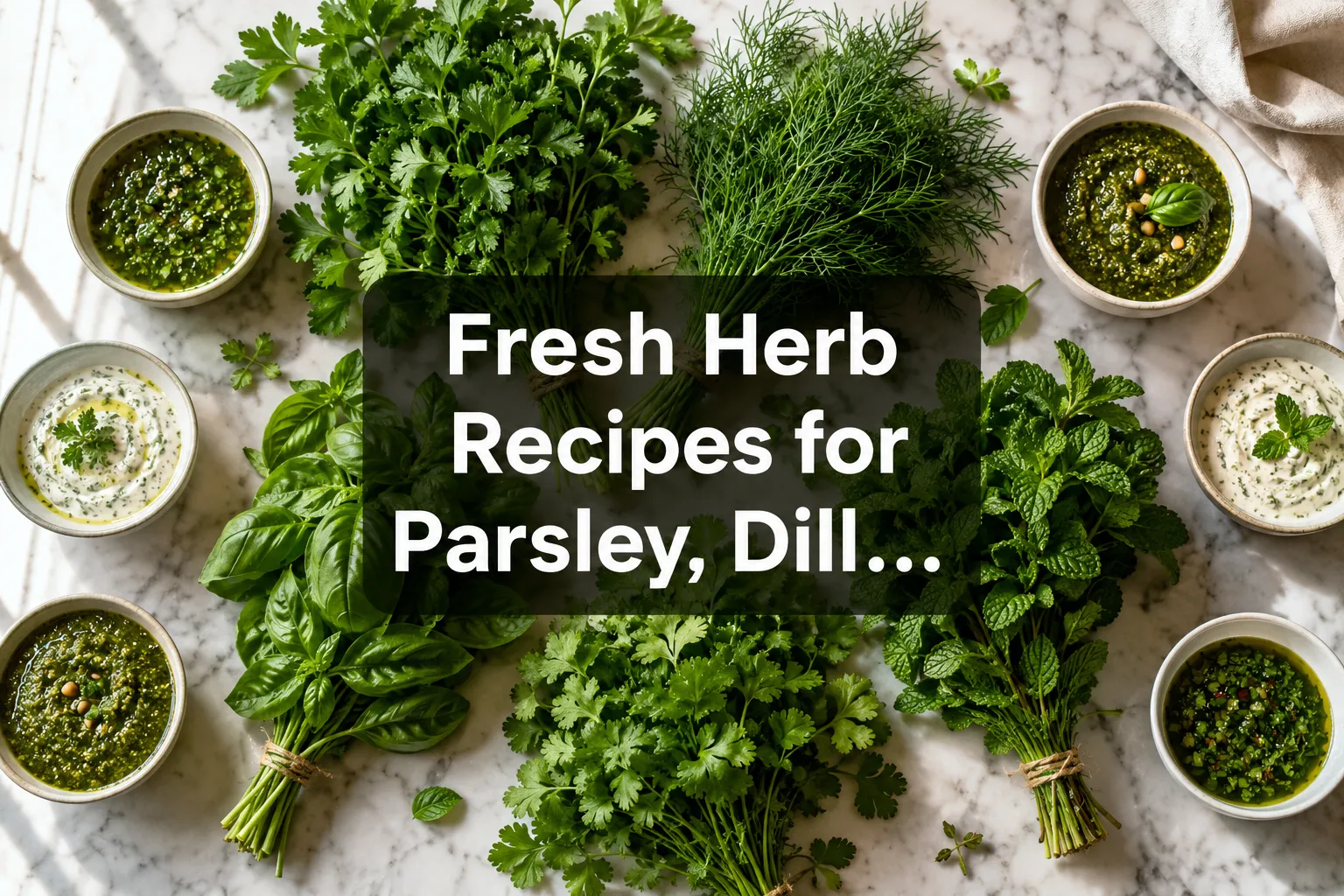
Fresh Herb Recipes for Parsley, Dill, Mint, Cilantro, and Basil
Last updated: July 18, 2026
Most home cooks treat fresh herbs as a finishing touch, a sprinkle here, a garnish there, then watch the rest of the bunch wilt in the crisper drawer. Fresh herb recipes for parsley, dill, mint, cilantro, and basil flip that script by making herbs the main ingredient in sauces, dressings, dips, and salads that use up entire bunches before they spoil. These recipes deliver bold flavor, reduce waste, and transform inexpensive herb bundles into restaurant-quality dishes.
Key Takeaways
- Use herbs as main ingredients in sauces like chimichurri, pesto, and green goddess dressing to consume entire bunches quickly
- Fresh herbs deliver 3-4 times more flavor than dried equivalents and work best when added raw or at the end of cooking
- Proper storage extends shelf life by 1-2 weeks: basil in water at room temperature, other herbs wrapped in damp towels in the fridge
- Cilantro’s soapy taste affects 10-15% of people due to genetics; parsley makes the best substitute in most recipes
- Freezing herbs in oil or water preserves flavor for 3-6 months and works especially well for mint, basil, and cilantro
- Beginner-friendly herbs include basil, parsley, and mint because they’re versatile, forgiving, and pair with many cuisines
- Common mistakes include cooking delicate herbs too long, using woody stems, and not washing/drying properly before use
- Cost comparison: Fresh herbs cost more per ounce but deliver superior flavor in raw applications where dried herbs fall flat
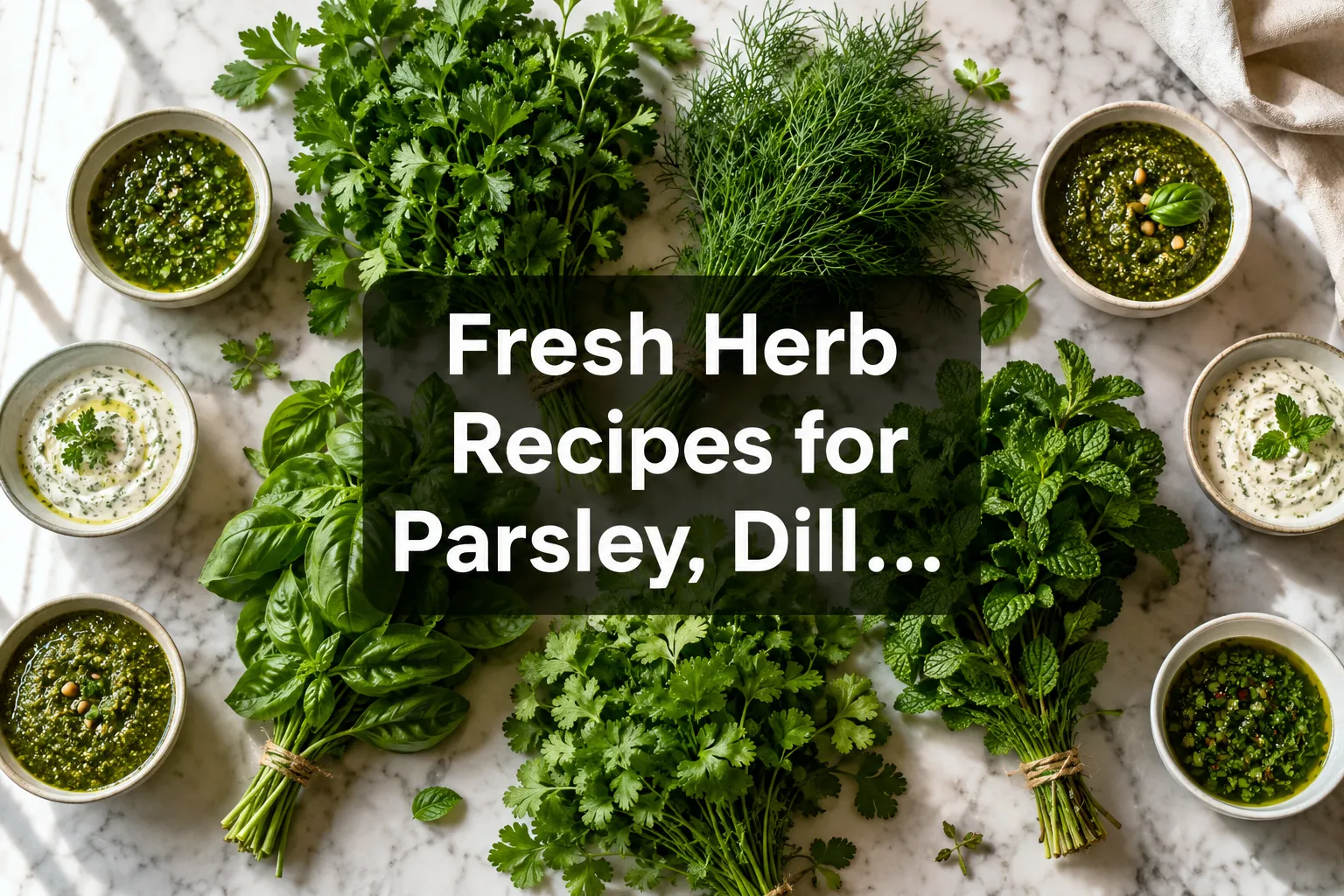
What Are the Best Ways to Use Fresh Parsley in Cooking?
Fresh parsley shines when used in large quantities as a main ingredient rather than a garnish. The two varieties, flat-leaf (Italian) and curly, both work well, though flat-leaf offers a more robust, peppery flavor that stands up to bold ingredients.
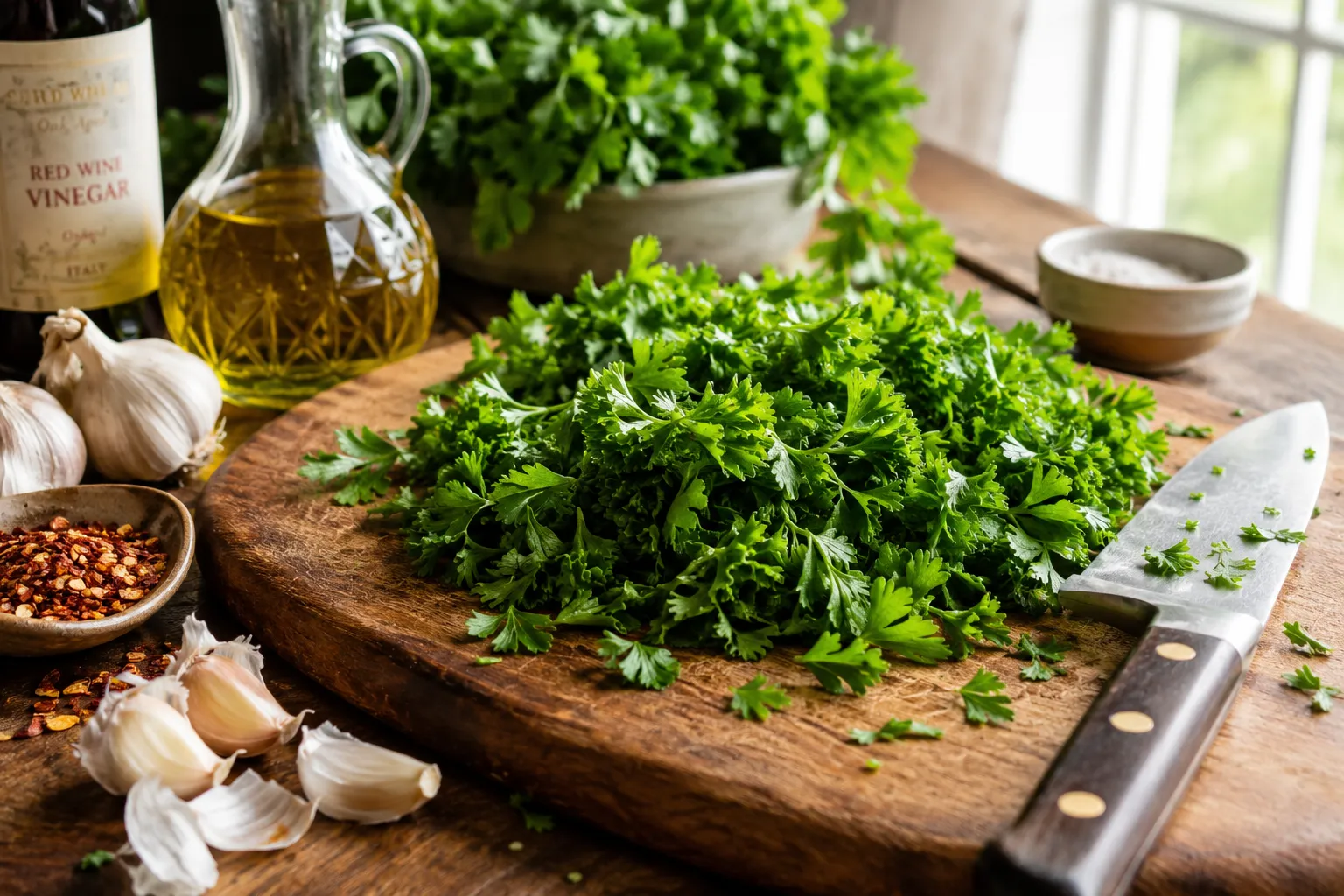
Chimichurri sauce is the ultimate parsley showcase, combining 2 cups of packed parsley leaves with garlic, red wine vinegar, olive oil, and red pepper flakes. This Argentine condiment uses an entire bunch and pairs beautifully with grilled meats, roasted vegetables, or as a marinade. The key is chopping parsley finely but not pulverizing it, you want texture.
Tabbouleh salad flips the traditional grain-to-herb ratio, using 3-4 cups of chopped parsley to just 1/4 cup of bulgur wheat. The parsley becomes the salad base, mixed with diced tomatoes, cucumber, lemon juice, and olive oil. This Lebanese dish is refreshing, nutrient-dense, and uses up parsley faster than any other recipe.
Green goddess dressing blends parsley with anchovies, garlic, lemon, and mayonnaise or Greek yogurt for a creamy, herb-forward sauce. Use 1 cup of parsley leaves and serve over salads, as a dip for vegetables, or drizzled on grain bowls. For more inspiration, check out our creamy green goddess dips and spreads.
Common mistake: Using only parsley stems in stocks and discarding the leaves. While stems add flavor to broths, the leaves contain more nutrients and flavor compounds. Save a handful of stems for stock, but prioritize using the leaves in fresh applications.
How to Store Fresh Basil So It Doesn’t Turn Black
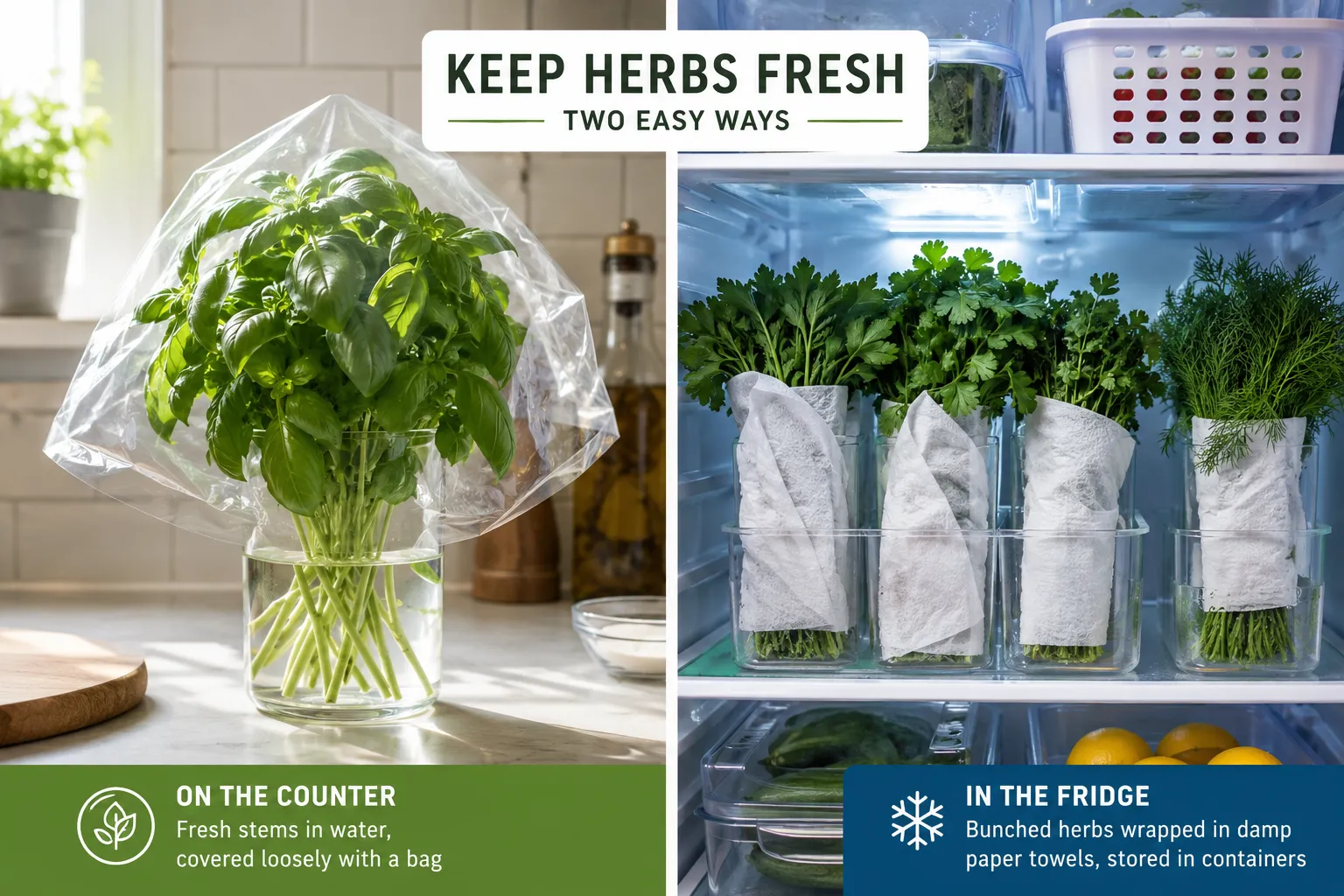
Fresh basil turns black when exposed to cold temperatures below 50°F or when bruised during storage. Unlike most herbs, basil is a warm-weather plant that suffers damage in typical refrigerator conditions (35-40°F).
The best storage method treats basil like cut flowers: trim the stems, place the bunch in a glass of water (stems submerged, leaves above), and keep it on your kitchen counter away from direct sunlight. Cover loosely with a plastic bag if your kitchen is very dry. This method keeps basil vibrant green for 5-7 days.
Alternative refrigerator method (if you must): Wrap unwashed basil loosely in barely damp paper towels, place in a plastic bag with a few air holes, and store in the warmest part of your fridge (usually the door or top shelf). Check daily and replace damp towels if they become wet. This extends life to 3-5 days but risks some browning.
For longer preservation, make basil pesto or freeze leaves in oil. Pesto uses 2-4 cups of basil leaves blended with pine nuts, Parmesan, garlic, and olive oil, a classic way to preserve an entire plant’s harvest. Store in an airtight container with a thin layer of olive oil on top to prevent oxidation.
Why basil blackens: The herb contains polyphenol oxidase enzymes that react with oxygen when cells are damaged by cold or bruising, similar to how apples brown when cut. Keeping basil warm and handling it gently prevents this enzymatic reaction.
Easy Recipes That Use a Lot of Fresh Cilantro
Cilantro-heavy recipes are common in Latin American, Asian, and Middle Eastern cuisines where the herb serves as a primary flavor component rather than an accent.
Cilantro-lime rice uses 1 cup of chopped cilantro stirred into 4 cups of cooked rice with lime juice, zest, and a touch of oil. This side dish pairs with Mexican, Thai, or Indian mains and uses up a substantial bunch quickly. The cilantro stays bright green when added after cooking, preserving its fresh, citrusy notes.
Cilantro chutney (also called green chutney or hari chutney) blends 2-3 cups of cilantro leaves and tender stems with green chilies, ginger, lime juice, and a pinch of sugar. This Indian condiment is intensely flavored, keeps for a week refrigerated, and works as a sandwich spread, dip, or marinade base.
Thai-style cilantro salad makes cilantro the star by tossing whole leaves and stems with shallots, lime juice, fish sauce, toasted rice powder, and chilies. Use 3-4 cups of cilantro for a bold, herbaceous salad that pairs with grilled meats or serves as a fresh counterpoint to rich curries.
Cilantro pesto swaps traditional basil for cilantro, using 2 cups of leaves blended with pepitas (pumpkin seeds), lime juice, garlic, and olive oil. This variation offers a brighter, more citrus-forward flavor than Italian pesto and works beautifully on pasta, grilled fish, or as a marinade for chicken.
Quick tip: Don’t discard cilantro stems. The tender upper stems contain as much flavor as the leaves and add pleasant texture when chopped finely. Only remove the thick, woody bottom portions.
What Dishes Go Well with Fresh Dill?
Fresh dill’s feathery leaves and distinctive anise-like flavor pair naturally with fish, potatoes, cucumbers, and dairy-based dishes, making it a staple in Scandinavian, Eastern European, and Mediterranean cooking.
Dill sauce for salmon combines 1 cup of chopped dill with sour cream or Greek yogurt, lemon juice, Dijon mustard, and a touch of honey. This creamy sauce uses an entire bunch of dill and complements any preparation of salmon, grilled, baked, or poached. The acidity cuts through the fish’s richness while dill’s flavor enhances the natural taste.
Cucumber-dill salad layers thinly sliced cucumbers with 3/4 cup of fresh dill, white vinegar, sugar, and salt for a refreshing side dish that’s popular across Eastern Europe. The dill’s bright flavor prevents the salad from tasting flat, and the recipe scales easily to use multiple bunches.
Dill pickle dip blends cream cheese, sour cream, chopped pickles, and 1/2 cup of fresh dill for a tangy, herb-forward dip that’s perfect for vegetables or crackers. Fresh dill adds complexity that dried dill can’t match, making this a standout appetizer.
Potato-dill soup uses 1 cup of chopped dill stirred into a creamy potato base at the end of cooking. The herb’s flavor remains bright and fresh when added off-heat, transforming a simple soup into something restaurant-worthy.
Pairing principle: Dill works best with ingredients that have mild, clean flavors (fish, potatoes, cucumbers, yogurt) where its distinctive taste can shine without competing. It clashes with strong, earthy flavors like beef or mushrooms.
Can You Substitute Mint for Basil in Recipes?
Mint and basil are not interchangeable in most recipes because they belong to different flavor families despite both being in the mint botanical family. Basil offers sweet, slightly peppery notes with hints of anise, while mint delivers cool, menthol-forward flavor with a sharp finish.
When substitution works: In Southeast Asian dishes like Vietnamese spring rolls or Thai salads where both herbs are traditionally used together, you can increase mint and reduce basil without dramatically changing the dish. The fresh, bright quality remains even if the specific flavor profile shifts.
When substitution fails: Italian pesto made with mint instead of basil tastes medicinal and clashes with Parmesan and garlic. Similarly, mint in tomato-based pasta sauces or on pizza creates an odd, toothpaste-like flavor that doesn’t complement the other ingredients.
Better substitutions for basil: If you’re out of basil, try flat-leaf parsley (for bulk and color), cilantro (for brightness in Asian dishes), or a combination of parsley and a tiny amount of mint (for complexity). These options better approximate basil’s role without overwhelming the dish.
Better substitutions for mint: If a recipe calls for mint and you don’t have it, try basil only in Southeast Asian applications. For Middle Eastern dishes like tabbouleh or yogurt sauces, use a combination of parsley and a squeeze of lemon to mimic mint’s brightness without the menthol.
Rule of thumb: Substitute within cuisine families. Herbs that appear together in traditional dishes (like mint and cilantro in Vietnamese food) can often replace each other in small amounts. Herbs from different culinary traditions (like mint in Italian food) rarely work.
How Much Fresh Herb Equals Dried in a Recipe?
Fresh herbs contain 70-80% water, making them much less concentrated than dried herbs. The standard conversion ratio is 3:1 fresh to dried,use three times as much fresh herb as dried, or one-third as much dried as fresh.
Practical conversion: If a recipe calls for 1 tablespoon of dried basil, use 3 tablespoons (1/4 cup) of fresh chopped basil. Conversely, if you have 1 cup of fresh parsley and want to substitute dried, use approximately 1/3 cup dried.
Why the ratio varies: Delicate herbs like basil, cilantro, and dill lose more flavor when dried, so you might need a 4:1 or even 5:1 ratio to match the fresh herb’s impact. Hardy herbs like rosemary, thyme, and oregano retain more flavor when dried, making a 2:1 ratio sometimes sufficient.
Measurement tips:
- Always measure fresh herbs after chopping, not before
- Pack the measuring cup lightly, don’t compress the herbs
- Remove thick stems before measuring (they add volume but little flavor)
- Dried herbs should be measured by gently spooning into the measuring spoon, not packing
When not to substitute: Fresh herbs added raw (in salads, as garnish, in pesto) cannot be replaced with dried herbs. Dried herbs taste dusty and unpleasant without cooking. Only substitute dried for fresh in cooked applications where heat will rehydrate and bloom the dried herbs’ flavors.
Timing adjustment: Add dried herbs early in cooking (they need 20-30 minutes to rehydrate and release flavor). Add fresh herbs at the end or just before serving to preserve their bright, volatile flavor compounds.
Why Does My Fresh Cilantro Taste Like Soap?
Cilantro tastes like soap to approximately 10-15% of people due to genetic variations in olfactory receptor genes, particularly OR6A2. This gene detects aldehydes, organic compounds found in both cilantro and soap, and some people’s versions are more sensitive to these molecules.
The science: Cilantro contains several aldehyde compounds (including E-2-decenal and decanal) that give it a fresh, citrusy aroma to most people. For those with certain OR6A2 gene variants, these same compounds trigger the perception of soap or metal. This isn’t a preference or acquired taste, it’s a fundamental difference in how the brain processes the herb’s chemical signature.
Geographic patterns: The “cilantro tastes like soap” trait appears more frequently in European populations (14-21%) and less often in South Asian, Middle Eastern, and Latin American populations (3-7%), likely due to both genetic factors and cultural exposure during childhood when taste preferences form.
Workarounds if you’re affected:
- Crush or cook cilantro: Heat and bruising break down some aldehyde compounds, reducing the soapy taste. Cilantro cooked in curries or stir-fries may be more tolerable.
- Use only leaves, not stems: Stems contain higher concentrations of the offending compounds.
- Substitute parsley: Flat-leaf parsley provides similar color and fresh flavor without aldehydes. It won’t taste identical but works in most applications.
- Try cilantro in combination: Some people find cilantro tolerable when mixed with lime juice, which masks some of the soapy notes.
Can you overcome it?: Some evidence suggests repeated exposure can reduce the soapy perception over time, but this doesn’t work for everyone. If cilantro genuinely tastes like soap to you, there’s no reason to force it, use parsley or culantro (a related herb with similar flavor but different chemical profile) instead.
What Are the Best Herbs for Beginners Who Are New to Cooking?
Beginner cooks should start with basil, parsley, and mint because these three herbs are versatile, forgiving, widely available, and pair with many cuisines without requiring specialized knowledge.
Basil is the most beginner-friendly herb because it’s hard to use too much, and its sweet, slightly peppery flavor complements tomatoes, mozzarella, pasta, chicken, and vegetables. Start with simple applications: torn over pizza, stirred into pasta, or layered in caprese salad. Basil teaches you how fresh herbs transform simple dishes without requiring precise measurements or technique.
Parsley (flat-leaf variety) serves as a universal brightener that improves almost any savory dish. It’s mild enough that you can’t overpower a dish, making it perfect for learning how much fresh herb to use. Add it to soups, grain salads, roasted vegetables, or scrambled eggs. Parsley also helps you understand the difference between cooking herbs (which lose flavor) and finishing with fresh herbs (which stay vibrant).
Mint introduces you to bold, distinctive herb flavor in a controlled way. Use it in sweet applications (fruit salads, desserts, drinks) where its strong flavor is expected, then gradually try it in savory dishes like yogurt sauces or grain salads. Mint teaches you about flavor balance and when a little goes a long way.
Why not cilantro or dill first?: Both have polarizing flavors that work best within specific cuisines. Cilantro’s soapy taste affects many people, and dill’s anise notes don’t pair as universally. Master basil, parsley, and mint first, then expand to more specialized herbs once you understand how to balance fresh herb flavors.
Beginner mistakes to avoid:
- Adding delicate herbs too early (they lose flavor and color)
- Not washing herbs (grit and dirt ruin texture)
- Using too little (fresh herbs need volume to impact flavor)
- Storing incorrectly (wilted herbs are unusable)
Can You Freeze Fresh Mint and Basil for Later Use?
Yes, freezing fresh mint and basil preserves their flavor for 3-6 months, though the texture changes significantly. Frozen herbs work best in cooked applications, smoothies, and blended sauces where texture doesn’t matter.
Oil-freezing method (best for basil): Chop basil leaves and pack them into ice cube trays, filling each compartment about 2/3 full. Cover with olive oil and freeze. Once solid, pop out the cubes and store in a freezer bag. Each cube contains approximately 2 tablespoons of basil and 1 tablespoon of oil, perfect for sautés, soups, or pasta dishes. This method prevents oxidation and keeps basil bright green.
Water-freezing method (best for mint): Chop mint leaves and place them in ice cube trays with water. Freeze, then transfer cubes to freezer bags. Use these cubes in smoothies, iced tea, cocktails, or anywhere you’d use fresh mint in a blended or liquid application. The water method works better for mint because you often want to dilute mint’s strong flavor anyway.
Whole-leaf freezing (fastest but lowest quality): Wash and thoroughly dry leaves, spread them on a baking sheet, freeze until solid, then transfer to freezer bags. This method is quick but results in mushy, darkened herbs that only work in cooked dishes where appearance doesn’t matter.
What doesn’t work: Freezing basil or mint in plain air without oil or water causes rapid oxidation, turning leaves black and destroying flavor. Always use a protective medium (oil, water, or vacuum-sealed bags).
Texture reality: Frozen herbs become limp and dark when thawed. They’re unusable as garnish or in fresh applications like salads. Think of frozen herbs as a cooking ingredient, not a fresh herb replacement. For more ideas on using preserved ingredients efficiently, explore our smart blender mastery guide.
What to Do with Too Much Fresh Parsley from the Garden?
When your garden produces more parsley than you can use fresh, transform it into concentrated sauces, compound butters, and frozen preparations that extend its life by weeks or months.
Parsley pesto uses 3-4 cups of parsley leaves blended with walnuts or almonds, Parmesan, garlic, lemon juice, and olive oil. This variation is more affordable than basil pesto, equally delicious, and uses massive quantities of parsley. Store in jars with a thin oil layer on top (refrigerated for 1 week) or freeze in ice cube trays for 6 months.
Herb butter combines 2 cups of finely chopped parsley with 1 pound of softened butter, garlic, lemon zest, and salt. Roll the mixture into logs using parchment paper, refrigerate for 1 week, or freeze for 3 months. Slice off rounds to melt over steak, fish, vegetables, or bread. This technique works for any herb surplus.
Parsley soup (Portuguese caldo verde style) uses 4-6 cups of parsley as the main green, simmered with potatoes, onions, and broth, then partially blended for a chunky, herb-forward soup. This preparation uses an enormous amount of parsley and freezes beautifully for up to 3 months.
Dried parsley (last resort): Wash and thoroughly dry parsley, remove leaves from stems, and spread on baking sheets. Dry in a 180°F oven for 2-3 hours or use a dehydrator. Store in airtight containers. While dried parsley has less flavor than fresh, it’s better than composting excess harvest and works fine in cooked applications.
Preservation priority: Use fresh parsley first in raw applications (tabbouleh, chimichurri, salads), then make sauces and butters, and only dry as a last resort. Each preservation method reduces flavor, so prioritize techniques that maintain the most character.
Are Fresh Herbs Worth the Extra Cost Compared to Dried?
Fresh herbs cost significantly more per ounce than dried, often 5-10 times as much, but deliver superior flavor in raw applications and finishing touches where dried herbs fail completely. The value depends entirely on how you plan to use them.
When fresh herbs are worth it:
- Raw applications: Salads, pesto, chimichurri, garnishes, and fresh salsas require fresh herbs. Dried herbs taste dusty and unpleasant without cooking.
- Finishing dishes: Adding fresh herbs in the last minute of cooking or just before serving preserves volatile flavor compounds that make dishes taste restaurant-quality.
- Herb-forward recipes: When herbs are the main ingredient (like in the fresh herb recipes for parsley, dill, mint, cilantro, and basil featured here), fresh is non-negotiable.
When dried herbs are smarter:
- Long-cooked dishes: Soups, stews, braises, and sauces that simmer for 30+ minutes work fine with dried herbs, which release flavor slowly over time.
- Pantry convenience: Dried herbs last 1-2 years and are always available, making them practical for spontaneous cooking.
- Budget cooking: If you’re making a large batch of chili or tomato sauce, dried oregano and basil cost pennies compared to multiple bunches of fresh.
Cost-benefit calculation: A bunch of fresh basil ($2-4) yields about 2 cups of leaves and lasts 5-7 days. A jar of dried basil ($4-6) contains the equivalent of 6-8 cups of fresh basil and lasts a year. For cooked applications, dried wins on cost. For fresh applications, there’s no substitute.
Money-saving strategies:
- Grow your own herbs (basil, parsley, and mint are easy in pots)
- Buy herbs at farmers’ markets (often cheaper and fresher than supermarkets)
- Use stems in stocks and broths (don’t waste any part)
- Freeze excess immediately (prevents waste)
- Choose recipes that use entire bunches (like these fresh herb recipes for parsley, dill, mint, cilantro, and basil)
What Are Common Mistakes When Cooking with Fresh Cilantro and Basil?
The most common mistakes with fresh cilantro and basil involve timing, temperature, and preparation, errors that destroy these delicate herbs’ flavor and appearance.
Mistake 1: Adding herbs too early. Basil and cilantro contain volatile oils that evaporate rapidly when heated. Adding them at the beginning of cooking results in brown, flavorless herbs. Instead, add them in the final 30 seconds of cooking or stir them in after removing the pan from heat. This preserves their bright color and fresh flavor.
Mistake 2: Not washing properly. Fresh herbs often harbor dirt, sand, and insects, especially cilantro. Rinse herbs in a bowl of cold water, swish gently, lift out (leaving debris behind), and repeat until the water is clear. Skip this step and you’ll bite into gritty, unpleasant herbs.
Mistake 3: Not drying after washing. Wet herbs don’t chop cleanly, dilute dressings and sauces, and spoil faster in storage. Use a salad spinner or roll herbs in clean kitchen towels to remove excess moisture before using or storing.
Mistake 4: Refrigerating basil. As covered earlier, basil is cold-sensitive and turns black in typical refrigerator temperatures. Keep it at room temperature in water like cut flowers. This mistake alone ruins more basil than any other error.
Mistake 5: Using woody stems. The thick, bottom stems of cilantro and basil are tough and bitter. Remove them before chopping. However, the tender upper stems of cilantro contain excellent flavor and should be used, just avoid the thick, woody portions.
Mistake 6: Chopping too far in advance. Cutting herbs damages cell walls, triggering oxidation that turns them brown and reduces flavor. Chop herbs just before using, or store chopped herbs in an airtight container with a damp paper towel for no more than a few hours.
Mistake 7: Using dull knives. A dull knife crushes herbs instead of cutting them cleanly, causing bruising, browning, and flavor loss. Use a sharp chef’s knife and a gentle rocking motion for clean cuts that preserve herb quality.
Which Fresh Herbs Should Not Be Cooked and Added Raw Instead?
Delicate herbs with high concentrations of volatile oils lose most of their flavor and appeal when cooked, making them best suited for raw applications or last-second additions.
Herbs that must be added raw or at the very end:
Basil loses its sweet, aromatic quality within 30-60 seconds of high heat. The leaves turn black, and the flavor becomes bitter and vegetal. Always add basil to hot dishes after removing from heat, or use it raw in salads, pesto, and as garnish. The only exception is when making infused oils or sauces where you’re intentionally extracting flavor through gentle, prolonged heat.
Cilantro becomes bitter and loses its distinctive citrus-like flavor when cooked for more than a minute. In most cuisines that use cilantro heavily (Mexican, Thai, Vietnamese, Indian), it’s added raw as a garnish or stirred in at the very end. The stems can tolerate slightly more cooking than leaves but still benefit from minimal heat exposure.
Mint turns muddy and medicinal when cooked for extended periods. Use it raw in salads, drinks, and yogurt sauces, or add it to hot dishes in the final seconds. The exception is mint tea, where gentle steeping (not boiling) extracts flavor without destroying it.
Dill loses its delicate anise-like flavor quickly when heated. Add it to hot dishes after cooking or use it raw in salads, dressings, and cold sauces. Scandinavian cooking sometimes includes dill in cooked dishes, but always in the final moments.
Parsley is more heat-tolerant than other delicate herbs but still tastes best when added raw or in the last minute of cooking. Long cooking turns it dark green and reduces its bright, fresh flavor to a generic “green” taste.
Herbs that can be cooked: Rosemary, thyme, oregano, sage, and bay leaves have lower water content and more stable flavor compounds that withstand and even improve with cooking. These hardy herbs should be added early in cooking to release their flavors.
The science: Volatile oils (like linalool in basil and cilantro) evaporate at relatively low temperatures (150-200°F). Once these compounds vaporize, the herb loses its characteristic flavor. Hardy herbs contain different compounds (like carvacrol in oregano) that are more heat-stable and require cooking to become palatable.
Difference Between Cooking with Fresh Herbs vs Dried Herbs
Fresh and dried herbs serve different culinary purposes because the drying process fundamentally changes their flavor profile, concentration, and ideal applications.
Flavor differences: Fresh herbs taste bright, vibrant, and multi-dimensional with grassy, floral, or citrus notes alongside their primary flavor. Dried herbs taste more concentrated, earthy, and one-dimensional, the subtle complexity disappears, leaving only the dominant flavor compound. For example, fresh basil has sweet, peppery, and slightly minty notes, while dried basil tastes primarily of concentrated basil flavor without the nuance.
Concentration: Dried herbs are 3-4 times more concentrated than fresh because removing water concentrates the remaining flavor compounds. This is why recipes call for much less dried herb than fresh. However, this concentration comes with trade-offs, some volatile compounds evaporate during drying, so dried herbs never taste exactly like fresh, just more intense.
When to use fresh:
- Raw applications (salads, garnishes, pesto, fresh salsas)
- Finishing touches added at the end of cooking
- Recipes where herbs are the star ingredient
- Dishes that benefit from bright, complex flavors
- Cold preparations (dressings, dips, herb butters)
When to use dried:
- Long-cooked dishes (soups, stews, braises, slow-cooker meals)
- Dry rubs and spice blends
- Dishes where herbs play a supporting role
- When fresh herbs aren’t available or practical
- Recipes that need consistent, year-round flavor
Timing differences: Add dried herbs early in cooking (they need 20-30 minutes to rehydrate and bloom). Add fresh herbs at the end or after cooking (heat destroys their delicate flavors). This timing difference is crucial, using fresh herbs like dried herbs (adding them early) results in brown, flavorless disappointment.
Texture differences: Fresh herbs add texture and visual appeal to dishes, you can see and feel them. Dried herbs essentially disappear into dishes, providing flavor without textural presence. This makes fresh herbs essential for dishes where appearance matters.
Storage and shelf life: Fresh herbs last 3-10 days depending on type and storage method. Dried herbs last 1-2 years in airtight containers away from light and heat. This practical difference makes dried herbs more convenient for occasional use.
Can you mix them?: Yes, and this is often ideal. Use dried herbs for the base flavor in cooked dishes, then finish with fresh herbs for brightness and visual appeal. For example, add dried oregano to tomato sauce while it simmers, then top the finished pasta with fresh basil.
FAQ
How long do fresh herbs last in the refrigerator? Most fresh herbs last 5-10 days when stored properly wrapped in damp paper towels in the crisper drawer. Basil is the exception and should be kept at room temperature in water, where it lasts 5-7 days. Heartier herbs like rosemary and thyme last up to 2 weeks refrigerated.
Can I use herb stems or should I discard them? Use tender upper stems of cilantro and parsley, they contain as much flavor as leaves. Discard thick, woody bottom stems. For basil, dill, and mint, stems are more fibrous and work better in stocks or infusions rather than eaten directly.
What’s the best way to chop fresh herbs without bruising them? Use a very sharp knife and a gentle rocking motion rather than pressing down hard. Alternatively, stack leaves, roll them into a tight cylinder, and slice crosswise into thin ribbons (chiffonade). Never use a food processor for delicate herbs, it bruises and darkens them.
Can I substitute dried herbs for fresh in pesto or chimichurri? No. These sauces require fresh herbs because they’re not cooked and the herbs are the primary ingredient. Dried herbs taste dusty and unpleasant in raw applications. There’s no workaround, you need fresh herbs for these recipes.
Why do my fresh herbs wilt so quickly after buying them? Herbs wilt from moisture loss or cold damage. Store them properly immediately after purchase: hardy herbs in damp towels in the fridge, basil at room temperature in water. Don’t leave herbs in plastic bags or produce drawers without protection.
How do I wash fresh herbs without damaging them? Fill a bowl with cold water, submerge herbs, swish gently, and lift out (leaving debris behind). Repeat until water is clear. Dry thoroughly in a salad spinner or rolled in towels. Never run herbs under hard tap water, it bruises delicate leaves.
Can I grow these herbs indoors year-round? Basil, parsley, and mint grow well indoors with 6-8 hours of bright light (south-facing window or grow lights). Cilantro and dill are more challenging indoors because they bolt quickly and need cooler temperatures. Start with basil for easiest indoor success.
What’s the best way to measure fresh herbs for recipes? Measure after chopping, not before. Pack the measuring cup lightly without compressing. Remove thick stems before measuring. For whole leaves (like basil for pesto), pack gently and measure by volume, not weight, unless the recipe specifies otherwise.
Are organic fresh herbs worth the extra cost? For herbs you eat raw in large quantities (like in these fresh herb recipes for parsley, dill, mint, cilantro, and basil), organic reduces pesticide exposure. For herbs used in small amounts as garnish, the difference is minimal. Prioritize organic for cilantro and parsley, which are often heavily sprayed.
Can I revive wilted fresh herbs? Sometimes. Trim the stems and submerge the entire bunch in ice water for 30-60 minutes. This rehydrates slightly wilted herbs. Severely wilted or slimy herbs are beyond saving. Prevention through proper storage is more effective than revival attempts.
What herbs pair well together in recipes? Classic combinations include basil-parsley-oregano (Italian), cilantro-mint-basil (Southeast Asian), dill-parsley-chives (European), and mint-cilantro-parsley (Middle Eastern). These combinations appear together in traditional cuisines because their flavors complement rather than compete.
Should I remove herb leaves from stems before storing? No. Leaves stay fresher attached to stems during storage. Remove leaves from stems only when you’re ready to use them. The stems help maintain moisture and structure during storage.
Conclusion
Fresh herb recipes for parsley, dill, mint, cilantro, and basil transform these ingredients from afterthoughts into main attractions, helping home cooks use entire bunches before they spoil. By making herbs the foundation of sauces, dressings, dips, and salads, you’ll reduce waste, save money, and discover how restaurant-quality flavor comes from using fresh herbs generously rather than sparingly.
Start with one herb-forward recipe this week, chimichurri for parsley, cucumber-dill salad, mint chutney, cilantro-lime rice, or basil pesto. Store your herbs properly using the methods outlined above, and experiment with freezing techniques to preserve surplus. As you build confidence, try combining herbs in unexpected ways and adapting these techniques to whatever’s abundant in your garden or on sale at the market.
The key insight is simple: fresh herbs deliver maximum impact when used in volume, added at the right moment, and stored correctly. Master these fundamentals, and you’ll never watch another bunch wilt unused in your refrigerator again.
SEO Meta Title: Fresh Herb Recipes: Parsley, Dill, Mint, Cilantro, Basil


