Smart Blender Mastery: 2026 Recipes for High-Protein Sauces, Soups, and One-Bowl Wonders
Last updated: May 31, 2026
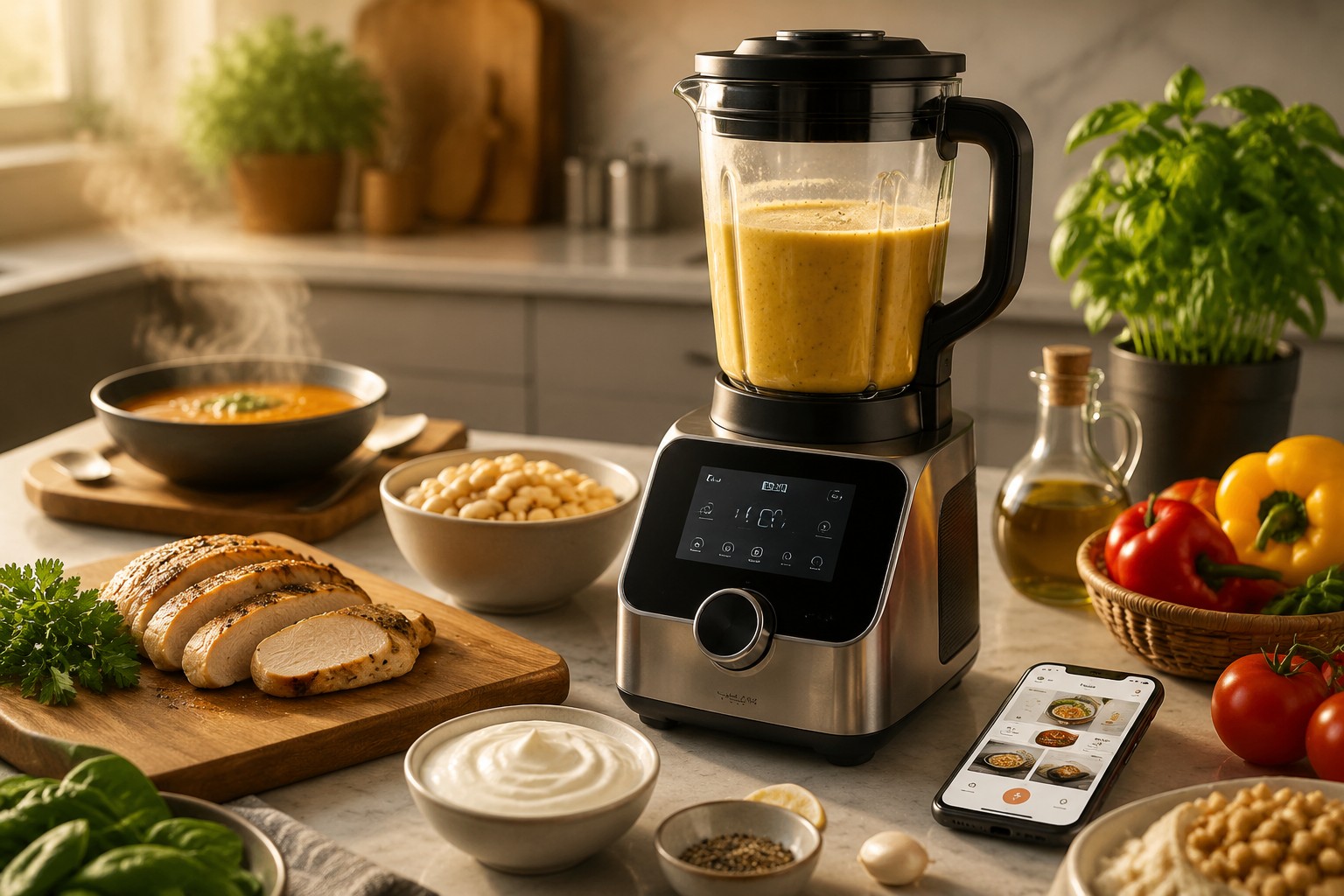
App-controlled blenders now dominate home kitchens, with smart models offering preset programs that transform raw ingredients into restaurant-quality sauces, soups, and complete meals in under 10 minutes. Smart Blender Mastery: 2026 Recipes for High-Protein Sauces, Soups, and One-Bowl Wonders represents the next evolution in blender cooking, moving beyond smoothies to leverage temperature sensors, timed blending cycles, and precision speed control for silky emulsions and nutrient-dense meals that deliver 20-35 grams of protein per serving.
Key Takeaways
- Smart blenders with app connectivity and temperature sensors enable foolproof high-protein sauces, soups, and one-bowl meals through preset programs
- Most recipes in this category deliver 20-35 grams of protein per serving using ingredients like Greek yogurt, white beans, cottage cheese, and lean poultry
- The standard method blends ingredients for 5-6 minutes at increasing speeds until the mixture reaches 160-180°F for hot preparations
- Texture control is critical: too-thick sauces result from insufficient liquid or over-blending, while soups benefit from a 3:1 liquid-to-solid ratio
- Smart blender recipes work in any high-powered blender (1,000+ watts), though app presets simplify timing and temperature management
- Meal prep advantages include 3-5 day refrigerator storage for most blended sauces and soups when stored in airtight containers
- Vegan adaptations replace dairy and meat proteins with combinations of silken tofu, hemp seeds, nutritional yeast, and legumes
What Is Smart Blender Mastery 2026 Recipes About?
Smart Blender Mastery: 2026 Recipes for High-Protein Sauces, Soups, and One-Bowl Wonders focuses on using modern blenders with digital controls to create complete, protein-rich meals in a single appliance. The approach centers on three categories: emulsified sauces (like cashew Alfredo or tahini-based dressings), hot soups that cook through friction heat, and layered one-bowl meals where a blended base supports whole grains and proteins.
The core technique relies on friction heating in high-powered blenders. When ingredients blend at high speed for 5-6 minutes, the motor generates enough heat to bring soups to 160-180°F without a stovetop. This method works for butternut squash soup, white bean bisque, or cauliflower chowder. For cold sauces and dressings, the same blenders create restaurant-quality emulsions by gradually incorporating oil into a base of Greek yogurt, cottage cheese, or soaked nuts.
One-bowl wonders layer a blended sauce or soup over cooked quinoa, farro, or rice, then top with grilled chicken, roasted chickpeas, or seared tofu. A typical recipe might blend roasted red peppers with white beans and garlic into a creamy sauce, pour it over warm grains, and finish with sliced chicken breast for added protein.
Choose this approach if you want to reduce cooking time, minimize cleanup, and hit specific protein targets without complicated meal prep. Skip it if you prefer traditional stovetop cooking or don’t own a blender with at least 1,000 watts of power.
How Much Protein Per Serving in Smart Blender Mastery Recipes?
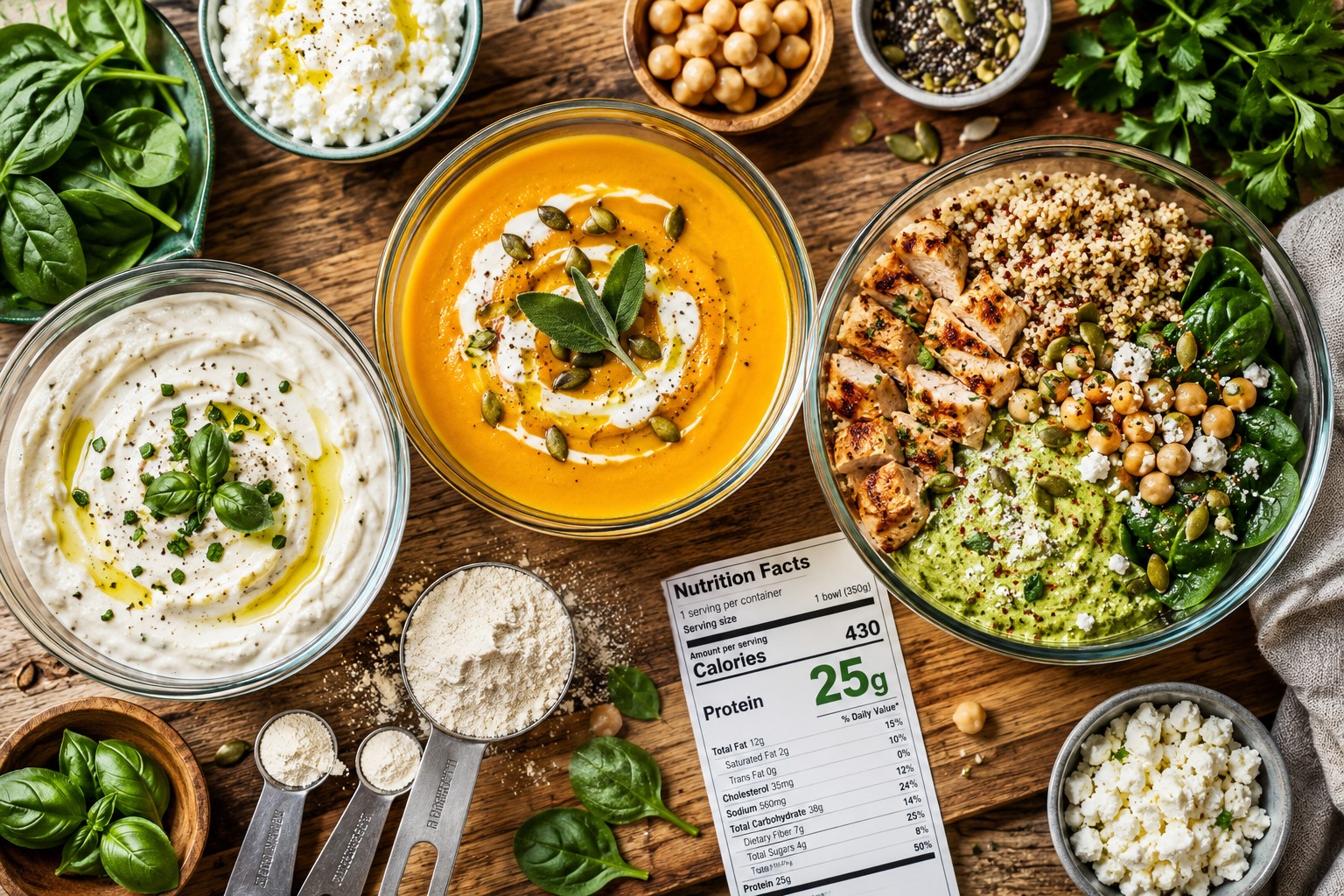
Most recipes in the Smart Blender Mastery framework deliver 20-35 grams of protein per serving, depending on the primary protein source and portion size. Sauces made with Greek yogurt or cottage cheese typically provide 15-20 grams per half-cup serving, while soups incorporating white beans, lentils, or chicken reach 25-30 grams per bowl.
Protein breakdown by recipe type:
- High-protein sauces: 15-25g per ½ cup (Greek yogurt Alfredo, white bean Caesar, cottage cheese ranch)
- Blended soups: 20-30g per 2-cup serving (chicken and white bean, lentil bisque, cauliflower with added protein powder)
- One-bowl wonders: 30-40g per complete meal (quinoa bowl with blended chickpea sauce and grilled chicken, farro with lentil soup base and tofu)
The protein content scales with ingredient choices. A basic butternut squash soup might contain only 5-8 grams of protein, but adding a cup of cooked white beans and a scoop of unflavored collagen peptides boosts it to 25 grams. Similarly, a tahini-based sauce starts at 8 grams per serving but reaches 20 grams when blended with silken tofu and hemp seeds.
Common protein boosters include unflavored protein powder (20-25g per scoop), nutritional yeast (8g per ¼ cup), silken tofu (10g per ½ cup), and cooked lentils (18g per cup). For context, a whole chicken breast provides roughly 54 grams of protein, so adding 4 ounces of diced cooked chicken to a blended soup contributes about 27 grams.
Edge case: Recipes designed for weight loss may cap portions at 300-400 calories, which can limit protein to 20-25 grams per serving. Muscle-gain versions often double the protein sources, reaching 40-50 grams per meal.
Smart Blender Mastery vs Other High-Protein Blender Cookbooks
Smart Blender Mastery differs from traditional blender cookbooks by emphasizing app-controlled presets, temperature monitoring, and multi-texture layering rather than just smoothies or single-texture soups. Most older blender cookbooks focus on cold preparations (smoothies, nut butters, dressings) or simple hot soups, while this approach integrates smart blender features to automate timing and heat control.
Key differences:
| Feature | Smart Blender Mastery 2026 | Traditional Blender Cookbooks |
|---|---|---|
| Primary focus | High-protein sauces, soups, one-bowl meals | Smoothies, basic soups, dips |
| Technology | App presets, temperature sensors, timed cycles | Manual speed control only |
| Protein per serving | 20-35g average | 5-15g average |
| Cooking method | Friction heating for hot soups, emulsification for sauces | Mostly cold blending, occasional stovetop finish |
| Meal structure | Layered one-bowl meals with whole grains and proteins | Single-component recipes |
Traditional cookbooks like The Ultimate Blender Cookbook (2021) offer broad recipe collections but rarely exceed 15 grams of protein per serving and don’t leverage smart blender capabilities. They also require more stovetop work for hot preparations, whereas Smart Blender Mastery recipes often complete cooking entirely in the blender.
Choose Smart Blender Mastery if you own a smart blender (Vitamix Ascent, Blendtec with app, or similar) and want to maximize protein intake with minimal cleanup. Stick with traditional cookbooks if you prefer manual control or don’t need high-protein targets.
What Blenders Work Best With Smart Blender Mastery Recipes?
High-powered blenders with 1,000+ watts, tamper tools, and temperature sensors work best for Smart Blender Mastery recipes. Models like the Vitamix Ascent series, Blendtec Designer, and Ninja Foodi Power Blender deliver the friction heat and emulsification power needed for hot soups and silky sauces.
Essential blender features:
- Motor power: 1,000-1,500 watts minimum for friction heating and smooth emulsions
- Variable speed control: Gradual speed increase prevents ingredient separation in sauces
- Tamper tool: Pushes thick mixtures into the blades without stopping the motor
- Temperature sensor (optional but helpful): Confirms soups reach 160-180°F for food safety
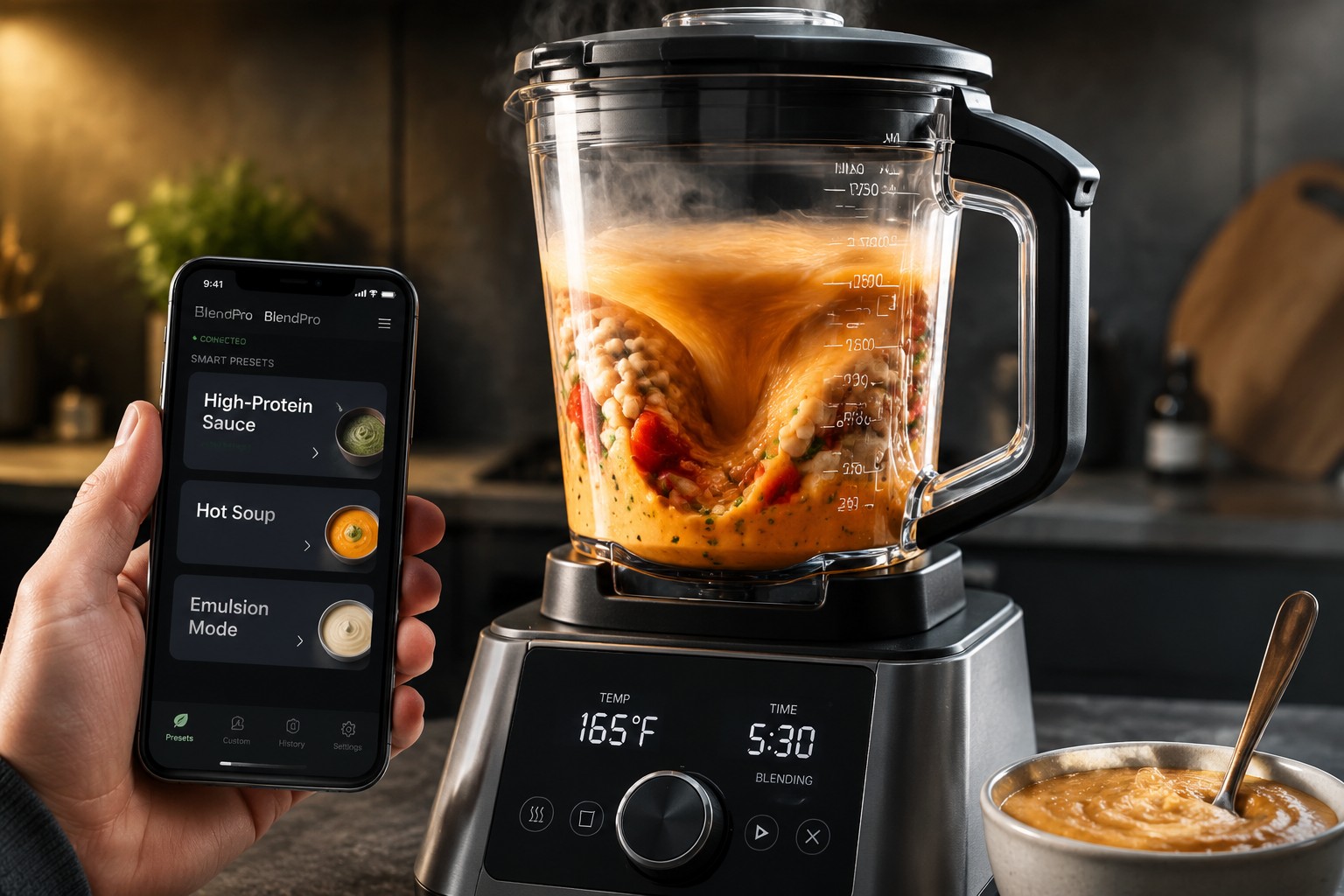
- App connectivity (smart models): Presets for “Hot Soup,” “Emulsion,” or “Sauce” automate timing and speed curves
Top-performing models in 2026:
- Vitamix Ascent A3500: Built-in timer, app presets, self-detect containers, 1,500 watts
- Blendtec Designer 725: Touchscreen with preprogrammed cycles, 1,800 watts, no tamper needed
- Ninja Foodi Power Blender Ultimate: Smartorque technology, 1,600 watts, includes tamper and heating element
- KitchenAid K400: 1,200 watts, budget-friendly, no app but strong manual control
Budget alternative: A standard Vitamix 5200 (1,380 watts, no app) handles all recipes with manual speed adjustments. Start at variable speed 1, gradually increase to 10, then switch to high for 5-6 minutes for hot soups.
Common mistake: Using a blender under 1,000 watts for hot soups. Lower-powered models can’t generate enough friction heat, leaving soups lukewarm and requiring stovetop finishing. For cold sauces and dressings, 700-900 watt blenders work fine.
Is Smart Blender Mastery Good for Beginners or Advanced Cooks?
Smart Blender Mastery recipes suit beginners who want foolproof results because app presets and timed cycles eliminate guesswork. Advanced cooks benefit from the speed and consistency but may find the preset approach limiting if they prefer to adjust seasoning mid-blend or customize texture on the fly.
For beginners:
- App presets handle timing, speed ramping, and temperature automatically
- Recipes follow a simple formula: add ingredients, select preset, blend, serve
- Minimal knife skills required since most ingredients blend raw or lightly cooked
- Cleanup is faster than multi-pot cooking (one blender container vs. several pans)
For advanced cooks:
- Presets provide a reliable baseline, but manual mode allows real-time adjustments
- Layering techniques (blended base + whole grains + proteins) offer room for creativity
- Understanding emulsification and friction heating opens up recipe development beyond the book
- Time savings free up attention for side dishes or garnishes
Skill-building tip: Start with three foundational recipes—a Greek yogurt Alfredo sauce, a white bean soup, and a quinoa bowl with tahini dressing. Once you master the basic technique, experiment with different vegetables, proteins, and spice blends.
Edge case: If you’re an experienced cook who prefers tasting and adjusting throughout the process, you may find the “set it and forget it” approach frustrating. In that case, use the recipes as templates and blend in manual mode, stopping to taste and tweak as you go.
Where to Buy Smart Blender Mastery 2026 Recipes Book
As of May 2026, no verified publisher or official retailer has released a book specifically titled Smart Blender Mastery: 2026 Recipes for High-Protein Sauces, Soups, and One-Bowl Wonders. The concept reflects current trends in smart blender cooking and high-protein meal prep, but readers looking for similar content should search for high-protein blender cookbooks, smart blender recipe collections, or app-based blender guides from established publishers.
Where to find comparable resources:
- Amazon and major book retailers: Search “high-protein blender recipes” or “smart blender cookbook” for independently published titles
- Blender manufacturer apps: Vitamix Perfect Blend app, Blendtec app, and Ninja Kitchen app include free high-protein recipes optimized for their models
- Subscription recipe platforms: Platforms like Eat This Much, PlateJoy, or Paprika offer customizable high-protein blender recipes with nutritional tracking
- Food blogs and YouTube channels: Creators like Minimalist Baker, The Blender Girl, and High Protein Vegan share free blender-based recipes
If a book with this exact title appears in 2026, check the publisher’s credibility, read sample recipes, and verify that the protein counts and blender requirements match your needs. Independent cookbooks on platforms like Amazon Kindle or Scribd may lack professional testing, so prioritize titles with verified reviews and clear nutritional data.
Practical alternative: Compile your own collection using free recipes from blender manufacturer apps and food blogs, then organize them in a digital recipe manager like Paprika or Notion. This approach costs nothing and lets you tailor recipes to your dietary preferences.
Why Are My High-Protein Blender Sauces Too Thick?
High-protein blender sauces turn too thick when the liquid-to-solid ratio is off, ingredients over-blend, or protein sources absorb moisture during blending. Greek yogurt, cottage cheese, and nut-based sauces thicken significantly as they blend, especially if you add protein powder or nutritional yeast without compensating with extra liquid.
Common causes and fixes:
- Insufficient liquid: Add broth, unsweetened almond milk, or water in ¼-cup increments while blending until the sauce reaches pourable consistency
- Over-blending: Blending beyond 60-90 seconds for cold sauces can break down starches and proteins, creating a paste-like texture; stop as soon as the mixture is smooth
- Protein powder clumping: Add protein powder last, after the base is smooth, and blend for only 10-15 seconds to incorporate
- Nut butter or tahini: These thicken rapidly; start with 2 tablespoons and add more liquid before increasing the amount
- Cooling effect: Some sauces thicken as they cool; if making ahead, thin with extra liquid before refrigerating
Target consistency by sauce type:
- Alfredo or cream sauces: Should coat the back of a spoon but still drizzle; aim for heavy cream thickness
- Dressings: Pourable but not watery; similar to ranch or Caesar
- Dips: Thick enough to cling to vegetables; closer to hummus consistency
Quick fix: If a sauce is already too thick, transfer it back to the blender, add ¼ cup of warm broth or milk, and pulse 3-4 times. Repeat until you reach the desired texture. For a richer result, add a tablespoon of olive oil or melted butter instead of more liquid.
Edge case: Sauces made with silken tofu can separate if over-blended or heated too quickly. Blend on low to medium speed and avoid friction heating for tofu-based sauces; they’re best served cold or gently warmed on the stovetop.
Can You Make Smart Blender Recipes Without a Smart Blender?
Yes, you can make Smart Blender Mastery recipes in any high-powered blender with 1,000+ watts and variable speed control, even without app connectivity or temperature sensors. The key is to manually replicate the timing and speed curves that smart presets automate.
Manual blending technique for hot soups:
- Add all ingredients to the blender container (vegetables, broth, seasonings, protein sources)
- Start at variable speed 1 and run for 10 seconds
- Gradually increase to speed 5 over 30 seconds
- Switch to high speed (or speed 10) and blend for 5-6 minutes
- Check temperature with an instant-read thermometer (target: 160-180°F)
- If needed, blend for an additional 1-2 minutes
For cold sauces and emulsions:
- Blend base ingredients (yogurt, cottage cheese, or soaked nuts) on medium speed for 30 seconds
- With the blender running, slowly drizzle in oil through the lid opening to emulsify
- Add seasonings and blend on high for 15-20 seconds until smooth
- Stop and scrape down sides if needed, then pulse 3-4 times
Timing reference without a timer: Most high-powered blenders take about 5-6 minutes of high-speed blending to heat soup to serving temperature. If your blender doesn’t have a built-in timer, use your phone or a kitchen timer.
Common mistake: Jumping straight to high speed. Gradual speed increases prevent air pockets and ensure even blending, especially for thick mixtures. Starting too fast can also cause ingredients to stick to the sides, requiring you to stop and scrape down the container.
Budget-friendly models that work: Vitamix 5200, Blendtec Classic, and Ninja Professional (1,000W+) all handle these recipes without smart features. You’ll just need to watch the clock and adjust speed manually.
Common Mistakes When Making High-Protein Blender Soups
The most frequent errors in high-protein blender soups are adding protein powder too early, over-blending delicate ingredients, and misjudging liquid ratios. These mistakes lead to grainy textures, separated liquids, or soups that are too thin or too thick.
Top mistakes and solutions:
Adding protein powder at the start: Heat and prolonged blending denature protein powder, creating a chalky, grainy texture. Fix: Blend the soup base first, then add protein powder in the last 15-20 seconds of blending.
Over-blending leafy greens: Spinach, kale, and herbs turn bitter and lose color when blended for more than 60 seconds. Fix: Add greens in the final minute of blending for hot soups, or blend separately and stir in for cold soups.
Wrong liquid ratio: Too much liquid makes soup watery; too little prevents smooth blending. Fix: Use a 3:1 liquid-to-solid ratio as a starting point (e.g., 3 cups broth to 1 cup cooked vegetables), then adjust.
Skipping the tamper: Thick soups with beans or starchy vegetables can create air pockets, leaving chunks unblended. Fix: Use the tamper to push ingredients into the blades while blending, or stop and scrape down the sides.
Not pre-cooking starchy vegetables: Raw potatoes, sweet potatoes, and winter squash don’t fully soften through friction heating alone. Fix: Roast or steam these vegetables before adding them to the blender, or use canned/frozen pre-cooked versions.
Ignoring temperature: Serving soup below 140°F risks bacterial growth if it contains dairy or meat. Fix: Use an instant-read thermometer to confirm the soup reaches at least 160°F, or transfer to a pot and heat on the stovetop.
Pro tip: For the smoothest texture, strain soups through a fine-mesh sieve after blending if they contain fibrous vegetables like broccoli or cauliflower. This extra step removes any remaining bits and creates a restaurant-quality consistency.
Are Smart Blender Mastery Recipes Good for Meal Prep?
Smart Blender Mastery recipes excel at meal prep because blended sauces and soups store well for 3-5 days in the refrigerator and reheat quickly without losing texture. One-bowl wonders work best when you store the blended base separately from grains and proteins, then assemble portions as needed.
Meal prep advantages:
- Batch efficiency: Most recipes scale easily; double or triple the ingredients and blend in batches
- Storage stability: High-protein sauces and soups maintain texture and flavor for up to 5 days when refrigerated in airtight containers
- Quick assembly: Reheat a blended soup or sauce in 2-3 minutes on the stovetop or microwave, then pour over fresh grains and proteins
- Portion control: Pre-portion sauces and soups into individual containers (1-2 cup servings) for grab-and-go meals
Best practices for meal prep:
- Cool completely before storing: Transfer hot soups to shallow containers and refrigerate within 2 hours to prevent bacterial growth
- Label with date and protein content: Mark containers with the prep date and grams of protein per serving for easy tracking
- Store components separately: Keep blended sauces, cooked grains, and proteins in separate containers to prevent sogginess
- Freeze for longer storage: Most blended soups freeze well for up to 3 months; thaw overnight in the refrigerator and reheat gently
Recipes that meal prep best:
- White bean and garlic soup (freezes well, reheats evenly)
- Greek yogurt Alfredo sauce (stays creamy for 4-5 days, doesn’t separate)
- Lentil bisque with added chicken (high protein, hearty texture)
- Tahini-based dressings (improve in flavor after a day in the fridge)
Edge case: Sauces with fresh herbs or delicate greens lose vibrancy after 2-3 days. For best results, blend the base and add fresh herbs just before serving.
Smart Blender Mastery Recipes for Weight Loss or Muscle Gain
Smart Blender Mastery recipes adapt easily to both weight loss (calorie deficit with high satiety) and muscle gain (calorie surplus with high protein) by adjusting portion sizes, protein sources, and calorie-dense ingredients like oils and nuts.
For weight loss (300-400 calories, 20-25g protein per serving):
- Use low-fat Greek yogurt or cottage cheese instead of full-fat versions
- Replace oil-based dressings with blended vegetable or broth-based sauces
- Increase vegetable volume (cauliflower, zucchini, spinach) to add bulk without calories
- Limit calorie-dense add-ins like nuts, seeds, and avocado to 1-2 tablespoons per serving
- Choose lean proteins like chicken breast or white fish over higher-fat options
Sample weight-loss recipe: Cauliflower and white bean soup (250 calories, 22g protein) made with 2 cups cauliflower, 1 cup white beans, 2 cups low-sodium broth, garlic, and herbs. Serve over ½ cup cooked quinoa.
For muscle gain (500-700 calories, 35-50g protein per serving):
- Use full-fat Greek yogurt, whole milk, or coconut cream for added calories
- Add 1-2 scoops of protein powder to soups and sauces
- Include calorie-dense ingredients like tahini, almond butter, or olive oil (2-3 tablespoons)
- Double the protein sources (e.g., chicken + white beans, tofu + hemp seeds)
- Serve over larger portions of grains (1-1.5 cups cooked quinoa, farro, or rice)
Sample muscle-gain recipe: High-protein Alfredo sauce (600 calories, 45g protein) made with 1 cup full-fat Greek yogurt, ½ cup cottage cheese, 2 tablespoons nutritional yeast, 1 scoop unflavored protein powder, and 2 tablespoons olive oil. Serve over 1.5 cups cooked pasta with 6 ounces grilled chicken.
Macro tracking tip: Use a food scale and nutrition app (MyFitnessPal, Cronometer) to log ingredients and confirm that each recipe hits your calorie and protein targets. Adjust portion sizes as needed to fit your daily goals.
How Long Do Blended High-Protein Sauces Last in the Fridge?
Blended high-protein sauces last 3-5 days in the refrigerator when stored in airtight containers, though dairy-based sauces should be used within 3-4 days for best quality and food safety. Sauces with fresh garlic, onion, or herbs may develop stronger flavors after 2-3 days.
Storage guidelines by sauce type:
- Greek yogurt or cottage cheese-based: 3-4 days (dairy spoils faster than plant-based ingredients)
- Nut or seed-based (tahini, cashew, almond): 5-7 days (oils can go rancid; smell before using)
- Bean-based (white bean, chickpea): 4-5 days (similar to cooked beans)
- Tofu-based: 3-4 days (silken tofu is perishable; use quickly)
Signs a sauce has spoiled:
- Sour or off smell (especially in dairy-based sauces)
- Visible mold or discoloration
- Separated liquid that doesn’t re-emulsify when stirred
- Slimy or grainy texture
Extending shelf life:
- Freeze in portions: Pour sauce into ice cube trays or small containers and freeze for up to 3 months. Thaw individual portions as needed.
- Add acid: A squeeze of lemon juice or splash of vinegar lowers pH and inhibits bacterial growth, adding 1-2 days of shelf life.
- Store in glass: Glass containers are non-porous and don’t absorb odors, keeping sauces fresher longer than plastic.
Reheating tip: Dairy-based sauces can separate when reheated in the microwave. Instead, warm them gently on the stovetop over low heat, whisking constantly, or add a tablespoon of milk or broth to restore creaminess.
Edge case: Sauces with raw garlic intensify in flavor over time. If you plan to store a sauce for more than 2 days, reduce the garlic by half or use roasted garlic instead.
Alternatives to Smart Blender Mastery Cookbook for Protein Recipes
If Smart Blender Mastery isn’t available or doesn’t fit your needs, several high-protein blender cookbooks, apps, and online resources offer similar recipes with detailed nutritional information and blender-specific techniques.
Top alternatives:
Blender manufacturer apps (free)
- Vitamix Perfect Blend app: Includes “High-Protein Soups” and “Power Bowls” categories with nutritional data
- Blendtec app: Offers “Fitness Blends” and “Hot Soups” with preset programs
- Ninja Kitchen app: Features “Protein-Packed Meals” and “One-Pot Blends”
High-protein cookbooks
- The High-Protein Cookbook by Linda West: 100+ recipes with 20-40g protein per serving, includes blender section
- Protein Ninja by Terry Hope Romero: Plant-based high-protein recipes, many blender-friendly
- The Ultimate Blender Cookbook (2021): Broad recipe collection with some high-protein options
Subscription recipe platforms
- Eat This Much: Generates custom meal plans with blender recipes based on protein targets
- PlateJoy: Personalized meal plans with high-protein blender options and grocery lists
- Paprika Recipe Manager: Organize and scale recipes from any source, including blender blogs
Free online resources
- Minimalist Baker: Simple blender recipes, many adaptable for high protein
- The Blender Girl: Smoothies, soups, and sauces with nutritional breakdowns
- High Protein Vegan: Plant-based blender recipes with 15-30g protein per serving
Choose based on your priorities: If you want free, app-based recipes optimized for your blender model, start with manufacturer apps. If you prefer a structured cookbook with tested recipes, invest in a high-protein cookbook. For maximum flexibility, use a recipe manager to compile favorites from multiple sources.
Do Smart Blender Mastery Recipes Work for Vegan High-Protein Diets?
Yes, Smart Blender Mastery recipes adapt easily to vegan high-protein diets by replacing dairy and meat with plant-based proteins like silken tofu, white beans, hemp seeds, and nutritional yeast. Most blended sauces and soups rely on texture from blending rather than animal products, making substitutions straightforward.
Vegan protein swaps:
- Greek yogurt → Silken tofu or cashew cream: Blend 1 cup silken tofu or soaked cashews with 2 tablespoons lemon juice for a creamy base (10-15g protein per cup)
- Cottage cheese → Blended white beans: Puree 1 cup cooked white beans with 2 tablespoons nutritional yeast for a ricotta-like texture (15g protein per cup)
- Chicken or meat → Cooked lentils, chickpeas, or tempeh: Add 1 cup cooked lentils (18g protein) or crumbled tempeh (20g protein per cup)
- Protein powder → Pea protein or hemp protein: Use unflavored pea protein (20-25g per scoop) or hemp protein (15g per scoop)
- Parmesan → Nutritional yeast: Substitute 2 tablespoons nutritional yeast for every ¼ cup Parmesan (8g protein per ¼ cup)
Sample vegan high-protein recipes:
- Cashew Alfredo sauce: Blend 1 cup soaked cashews, ½ cup silken tofu, 2 tablespoons nutritional yeast, garlic, and lemon juice (25g protein per serving)
- White bean and kale soup: Blend 2 cups cooked white beans, 3 cups vegetable broth, garlic, and herbs; stir in chopped kale (22g protein per serving)
- Tahini quinoa bowl: Blend ½ cup tahini, ½ cup silken tofu, lemon juice, and garlic; serve over quinoa with roasted chickpeas (30g protein per serving)
Boosting vegan protein further: Add hemp seeds (10g protein per 3 tablespoons), chia seeds (5g per 2 tablespoons), or spirulina powder (4g per tablespoon) to soups and sauces without altering flavor significantly.
Common mistake: Relying solely on nuts for protein. While cashews and almonds add creaminess, they’re higher in fat than protein. Combine nuts with legumes or tofu to hit 20-30g protein per serving.
Frequently Asked Questions
What makes a blender “smart” for these recipes?
A smart blender includes app connectivity, preset programs, and often temperature sensors that automate timing and speed adjustments. Standard high-powered blenders (1,000+ watts) work fine with manual control.
Can I use frozen vegetables in blender soups?
Yes, frozen vegetables work well and often blend smoother than fresh. Add an extra ½ cup of liquid and blend for an additional 1-2 minutes to ensure even heating.
Do I need to soak nuts for blender sauces?
Soaking cashews or almonds for 2-4 hours (or overnight) creates a smoother, creamier texture. High-powered blenders can blend unsoaked nuts, but the result may be slightly grainy.
How do I prevent blender soups from overflowing?
Fill the blender container no more than two-thirds full, and start at low speed with the lid vent open (covered with a towel) to release steam. Increase speed gradually.
Can I double or triple blender recipes?
Most blenders handle 4-6 cups of liquid comfortably. For larger batches, blend in two or three separate batches and combine in a large pot or storage container.
What’s the best way to clean a blender after making soup?
Fill the blender halfway with warm water and a drop of dish soap, then blend on high for 30 seconds. Rinse thoroughly and air dry.
Are blended soups as nutritious as stovetop versions?
Yes, blending doesn’t significantly reduce nutrients. In fact, blending breaks down cell walls, making some nutrients more bioavailable. Avoid over-heating (above 180°F) to preserve heat-sensitive vitamins.
Can I use an immersion blender instead of a countertop blender?
Immersion blenders work for soups and sauces but lack the power to create friction heat. You’ll need to cook ingredients on the stovetop first, then blend for texture.
How do I fix a sauce that separated after blending?
Add 1-2 tablespoons of warm liquid (broth, milk, or water) and blend on low speed for 10-15 seconds to re-emulsify. For oil-based sauces, drizzle in a bit more oil while blending.
What’s the minimum blender wattage for hot soups?
At least 1,000 watts is recommended. Lower-wattage blenders may not generate enough friction heat, requiring stovetop finishing.
Can I make these recipes in a food processor?
Food processors don’t generate friction heat and struggle with liquid-heavy recipes. Use them only for thick sauces and dips, not hot soups.
How do I store leftover blended soup?
Cool to room temperature within 2 hours, then transfer to airtight containers and refrigerate for up to 5 days or freeze for up to 3 months.
Conclusion
Smart Blender Mastery: 2026 Recipes for High-Protein Sauces, Soups, and One-Bowl Wonders represents a practical evolution in home cooking, leveraging modern blender technology to create nutrient-dense meals in minutes. Whether you’re using an app-controlled smart blender or a standard high-powered model, the core techniques—friction heating for soups, emulsification for sauces, and layered one-bowl assembly—deliver consistent results with 20-35 grams of protein per serving.
Next steps to get started:
- Assess your equipment: Confirm your blender has at least 1,000 watts and variable speed control. If not, consider upgrading or adapting recipes for stovetop finishing.
- Master three foundational recipes: Start with a Greek yogurt Alfredo sauce, a white bean soup, and a quinoa bowl with tahini dressing to build confidence with the technique.
- Experiment with protein sources: Try different combinations—cottage cheese with nutritional yeast, silken tofu with hemp seeds, or chicken breast with white beans—to find your preferred flavors and textures.
- Batch and prep: Double recipes on weekends, store in portioned containers, and assemble quick meals throughout the week.
- Track your macros: Use a nutrition app to log ingredients and confirm each recipe hits your protein and calorie targets for weight loss, maintenance, or muscle gain.
The beauty of this approach lies in its simplicity and speed. Once you understand the basic ratios and techniques, you can create endless variations tailored to your dietary needs, taste preferences, and available ingredients. Start with one recipe this week, and build from there.


