
How to Cook with Cottage Cheese: 12 High-Protein Recipes Beyond Breakfast
Last updated: May 16, 2026
Quick Answer
Cottage cheese works in far more than breakfast bowls and toast. Blend it into creamy pasta sauces, whip it for dips, fold it into pancake batter, or layer it in savory casseroles to add 15-30 grams of protein per serving without the diet-food taste. The key is treating cottage cheese as a versatile base ingredient—like Greek yogurt or ricotta—that can be blended smooth, baked, or mixed into both sweet and savory dishes throughout the day.
Key Takeaways
- Cottage cheese blends smooth when processed in a high-speed blender or food processor, making it ideal for creamy sauces, dips, and dressings that don’t taste like diet food
- Savory applications deliver 25-40+ grams of protein per serving when cottage cheese replaces cream, ricotta, or mayo in pasta, wraps, casseroles, and baked dishes
- Blending cottage cheese into sauces hides the texture completely, allowing you to boost protein in comfort foods like mac and cheese, Alfredo, and marinara without changing the familiar taste
- Cottage cheese works as a structural ingredient in pancakes, muffins, and baked goods, adding moisture and protein while keeping recipes tender
- Choose full-fat cottage cheese for creamier results in cooked dishes; low-fat versions can separate or become grainy when heated
- Whipped cottage cheese makes an excellent high-protein base for dips, spreads, and dessert mousses when blended with seasonings or sweeteners
- Cottage cheese pairs well with bold flavors like sun-dried tomatoes, roasted red peppers, garlic, herbs, and spices that complement its mild tang
- Most cottage cheese recipes beyond breakfast are meal-prep friendly and reheat well, making them practical for weeknight dinners and lunch prep
What Makes Cottage Cheese Work in Savory Cooking?
Cottage cheese functions as a high-protein substitute for cream, ricotta, sour cream, and mayonnaise in savory recipes because it blends smooth and carries flavors well. When processed in a blender or food processor, the curds break down into a creamy base that mimics the texture of dairy-based sauces without the extra fat or calories. One cup of low-fat cottage cheese provides roughly 24 grams of protein compared to heavy cream’s 5 grams, making it a practical swap for anyone tracking macros or looking to increase protein intake without adding meat.
Why cottage cheese works better than you’d expect:
- Mild flavor profile means it won’t overpower other ingredients; it takes on the taste of whatever you blend it with (garlic, herbs, spices, tomatoes)
- High moisture content keeps baked dishes and casseroles from drying out, similar to how ricotta functions in lasagna
- Casein protein provides a creamy mouthfeel and helps sauces cling to pasta, vegetables, and grains
- Tangy finish adds depth to rich dishes, cutting through heavy flavors the way sour cream or buttermilk would
Choose full-fat cottage cheese if you’re making hot dishes like baked pasta, casseroles, or cream sauces—the extra fat prevents separation and curdling under heat. Choose low-fat or fat-free cottage cheese if you’re making cold applications like dips, spreads, or smoothies where texture stays stable.
Common mistake: Adding cottage cheese directly to a hot pan without blending first. The curds will stay chunky and the texture will be grainy. Always blend cottage cheese smooth before stirring it into hot sauces or soups.
How Do You Blend Cottage Cheese for Smooth Sauces and Dips?
Blend cottage cheese in a high-speed blender or food processor for 30-60 seconds until completely smooth and creamy, scraping down the sides halfway through. The goal is to break down all visible curds so the final texture resembles Greek yogurt or sour cream. For thicker dips and spreads, blend cottage cheese alone or with a tablespoon of liquid (water, milk, or olive oil). For thinner sauces, add more liquid and seasonings directly to the blender.
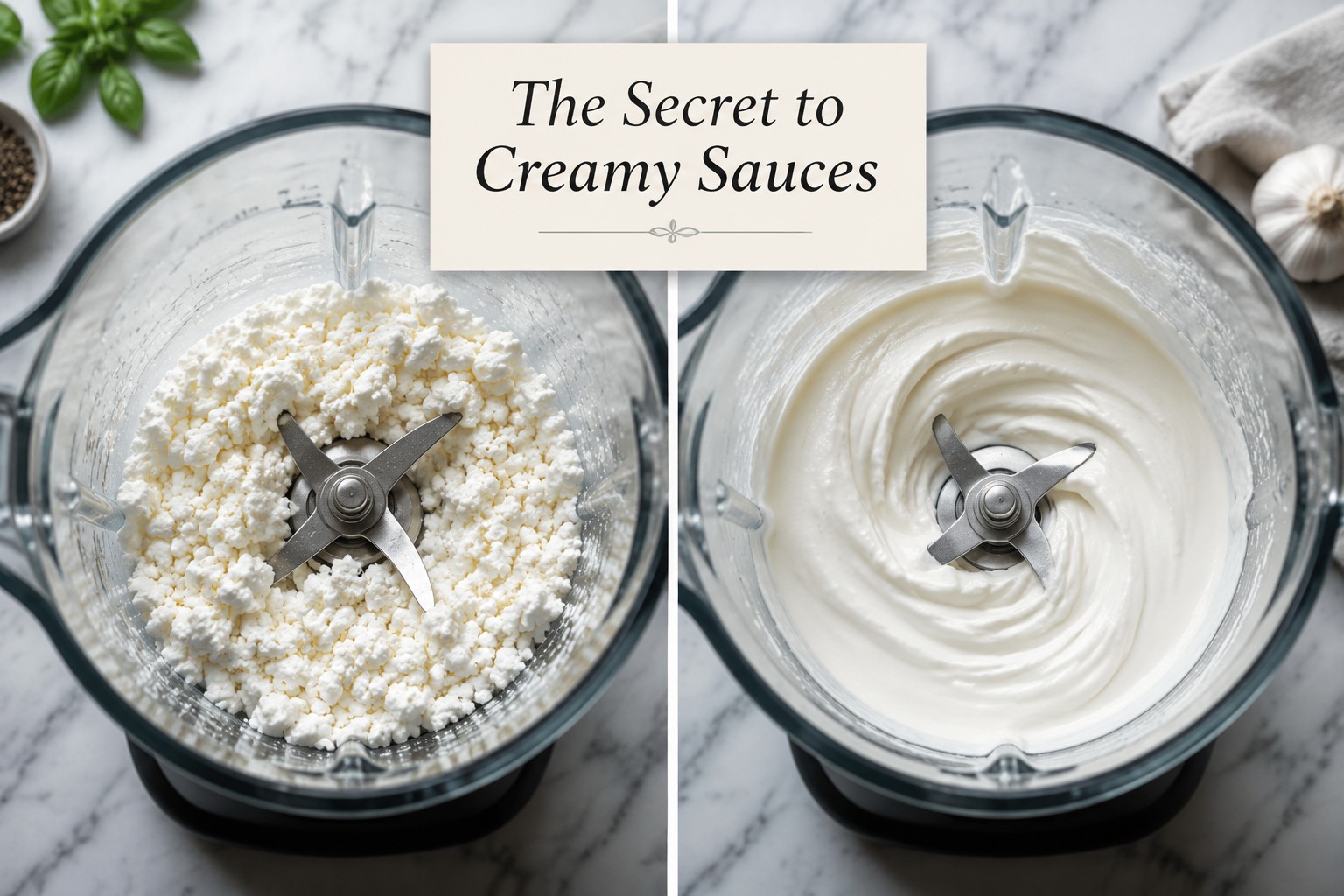
Step-by-step blending process:
- Start with room-temperature cottage cheese (cold cottage cheese takes longer to blend and may stay grainy)
- Add cottage cheese to blender first, then layer liquids and seasonings on top
- Blend on high for 30 seconds, stop, scrape down sides with a spatula
- Blend another 20-30 seconds until no visible curds remain and the mixture looks glossy
- Taste and adjust seasoning, salt, or acidity (lemon juice or vinegar) before using
For creamy pasta sauces: Blend 1 cup cottage cheese with ¼ cup pasta water, 2 cloves garlic, 2 tablespoons parmesan, and a pinch of salt. Toss with hot pasta immediately.
For savory dips: Blend 1 cup cottage cheese with 1 tablespoon olive oil, 1 teaspoon lemon juice, fresh herbs (dill, chives, parsley), garlic powder, and salt to taste. Chill for 30 minutes before serving.
For dessert mousse: Blend 1 cup cottage cheese with 2 tablespoons honey or maple syrup, 1 teaspoon vanilla extract, and a pinch of cinnamon. Top with fresh berries.
Edge case: If your blender isn’t powerful enough to break down the curds completely, press the cottage cheese through a fine-mesh strainer before blending, or use a food processor and blend in two batches for better results.
What Are the Best High-Protein Cottage Cheese Pasta Recipes?
Cottage cheese pasta recipes deliver 25-40 grams of protein per serving by blending cottage cheese into creamy sauces that coat noodles like traditional Alfredo or marinara. The most popular versions include creamy red pepper pasta, cottage cheese mac and cheese, and Tuscan-style pasta with sun-dried tomatoes and spinach. These recipes work because the blended cottage cheese mimics the richness of heavy cream while adding significantly more protein and less fat.
Top cottage cheese pasta applications:
- Creamy red pepper pasta: Blend cottage cheese with roasted red peppers, parmesan, and garlic for a tangy, protein-rich sauce that pairs well with pappardelle or rigatoni [3]
- Cottage cheese mac and cheese: Mix blended cottage cheese with sharp cheddar, mustard powder, and a splash of milk for a high-protein version that tastes like the boxed kind but with 30+ grams of protein per serving [5]
- Tuscan Marry Me Chicken pasta: Blend cottage cheese into a sun-dried tomato cream sauce with garlic, spinach, and Italian herbs; toss with chicken and pasta for up to 61 grams of protein per serving [2]
- Cottage cheese Alfredo: Blend cottage cheese with parmesan, butter, garlic, and pasta water for a lighter Alfredo that still coats fettuccine perfectly
- Cottage cheese marinara bake: Layer cooked pasta with marinara, blended cottage cheese, mozzarella, and ground turkey or beef for a lasagna-style casserole with 38 grams of protein per serving [4]
Pro tip: Reserve ½ cup of pasta cooking water before draining. The starchy water helps cottage cheese sauces emulsify and cling to noodles better than plain water or milk.
Choose this method if you want comfort-food pasta dishes that don’t feel like diet food. The blended cottage cheese creates a creamy, indulgent texture that satisfies cravings while hitting high protein targets. For more high-protein dinner ideas, see our guide to easy weeknight chicken recipes.
How to Cook with Cottage Cheese: 12 High-Protein Recipes Beyond Breakfast
Here are twelve practical, high-protein cottage cheese recipes that work for lunch, dinner, snacks, and dessert—none of them require you to eat cottage cheese plain or on toast.
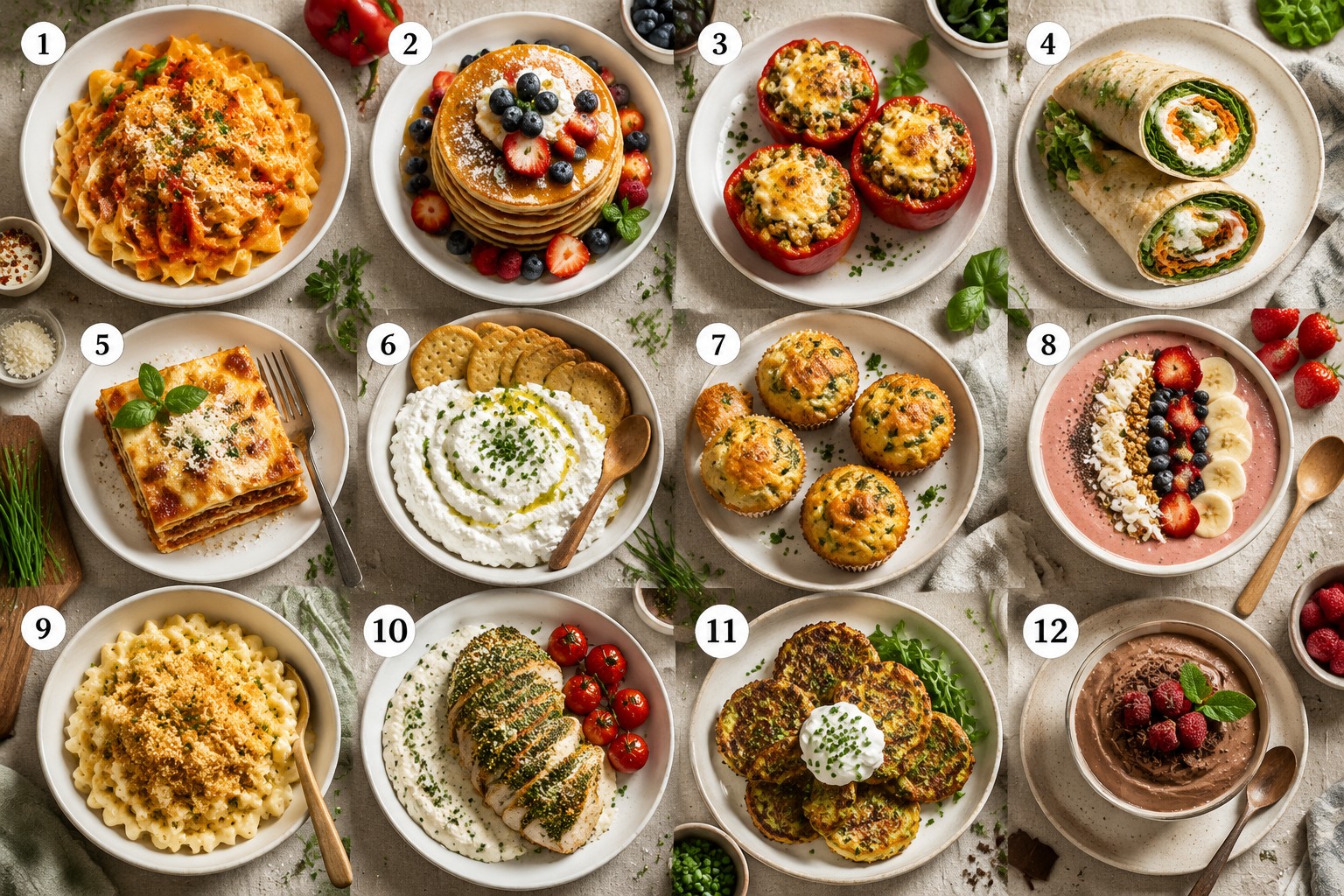
1. High-Protein Cottage Cheese Wraps (30g protein)
Spread ½ cup blended cottage cheese on a whole-wheat tortilla, layer with deli turkey, spinach, shredded carrots, and cucumber. Roll tightly and slice in half. The cottage cheese acts as a creamy, protein-rich base that replaces mayo or hummus [4].
2. Creamy Cottage Cheese Pasta with Ground Turkey (38g protein)
Cook 8 oz pasta. Brown 1 lb ground turkey with garlic and Italian seasoning. Stir in 1 cup marinara and ¾ cup blended cottage cheese. Toss with pasta and top with parmesan [4].
3. Whipped Cottage Cheese Taco Lasagna (27g protein)
Layer corn tortillas with seasoned ground beef, black beans, salsa, and a mixture of blended cottage cheese and taco seasoning. Top with shredded cheese and bake at 375°F for 25 minutes [4].
4. Cottage Cheese Protein Pancakes (24g protein per serving)
Blend 1 cup cottage cheese, 2 eggs, ½ cup oats, 1 teaspoon vanilla, and 1 teaspoon baking powder. Cook on a griddle like regular pancakes. Serve with fresh berries and a drizzle of maple syrup [3].
5. Tuscan Marry Me Chicken with Cottage Cheese Sauce (61g protein)
Sear chicken breasts, then simmer in a sauce made from blended cottage cheese, sun-dried tomatoes, garlic, spinach, and Italian herbs. Serve over pasta or rice [2].
6. Cottage Cheese Mac and Cheese (35g protein)
Cook elbow macaroni. Blend 1½ cups cottage cheese with ½ cup shredded sharp cheddar, ¼ cup milk, 1 teaspoon mustard powder, and salt. Toss with hot pasta and bake with breadcrumb topping for 15 minutes at 350°F [5].
7. High-Protein Cottage Cheese Dip (15g protein per ½ cup)
Blend 1 cup cottage cheese with 2 tablespoons olive oil, 1 clove garlic, fresh dill, lemon juice, and salt. Serve with raw vegetables, pita chips, or crackers [5].
8. Cottage Cheese Stuffed Peppers (31g protein)
Mix cottage cheese with cooked quinoa, black beans, corn, and taco seasoning. Stuff into halved bell peppers, top with shredded cheese, and bake at 375°F for 30 minutes [4].
9. Creamy Red Pepper Cottage Cheese Pasta (42g protein)
Blend cottage cheese with roasted red peppers, parmesan, and garlic. Toss with pappardelle and top with balsamic ground beef [3].
10. Cottage Cheese Egg Bake (28g protein per slice)
Whisk 8 eggs with 1 cup cottage cheese, diced vegetables (peppers, onions, spinach), and shredded cheese. Pour into a greased baking dish and bake at 350°F for 35-40 minutes [2].
11. Cottage Cheese Protein Muffins (8g protein per muffin)
Mix 1 cup cottage cheese, 2 eggs, 1 cup flour, ¼ cup honey, 1 teaspoon baking powder, and ½ cup blueberries. Bake in muffin tins at 375°F for 18-20 minutes [6].
12. Cottage Cheese Chocolate Mousse (20g protein)
Blend 1 cup cottage cheese with 2 tablespoons cocoa powder, 2 tablespoons maple syrup, and 1 teaspoon vanilla. Chill for 1 hour and top with whipped cream and berries [5].
Meal-prep tip: Recipes 1, 2, 3, 5, 8, and 10 all store well in the fridge for 3-4 days and reheat without separating, making them ideal for batch cooking on Sundays.
What Are the Best Cottage Cheese Substitutes in Recipes?
Cottage cheese can replace ricotta, cream cheese, sour cream, Greek yogurt, and mayonnaise in most recipes with minor adjustments. The best substitute depends on whether the recipe is hot or cold, and whether you need the cottage cheese to melt, bind, or add creaminess.
| Original Ingredient | Cottage Cheese Swap | Adjustment Needed | Best Use Case |
|---|---|---|---|
| Ricotta (1 cup) | 1 cup blended cottage cheese | None | Lasagna, stuffed shells, baked pasta |
| Cream cheese (8 oz) | 1 cup blended cottage cheese + 2 tbsp butter | Blend smooth; add butter for richness | Dips, spreads, cheesecake filling |
| Sour cream (1 cup) | 1 cup blended cottage cheese + 1 tbsp lemon juice | Add acid to mimic tang | Tacos, baked potatoes, dips |
| Greek yogurt (1 cup) | 1 cup cottage cheese (blended or not) | Blend for smooth texture | Smoothies, parfaits, marinades |
| Mayonnaise (½ cup) | ½ cup blended cottage cheese + 1 tsp Dijon mustard | Add mustard for depth | Wraps, sandwiches, salads |
Choose cottage cheese over ricotta if you want more protein (24g vs. 14g per cup) and a tangier flavor. Ricotta is sweeter and creamier, so cottage cheese works best in savory applications.
Choose cottage cheese over Greek yogurt if you want a thicker, creamier base that won’t water down when mixed with other ingredients. Greek yogurt is thinner and more acidic, so it’s better for marinades and dressings.
Common mistake: Substituting cottage cheese 1:1 for cream cheese in frosting or no-bake cheesecakes without adding a stabilizer. Cottage cheese has more moisture, so the final product will be softer and may not set properly. Add 1-2 tablespoons of cornstarch or gelatin to help it firm up.
How Do You Prevent Cottage Cheese from Separating in Hot Dishes?
Prevent cottage cheese from separating in hot dishes by blending it smooth before adding it to heat, using full-fat cottage cheese, and stirring it into sauces off the heat or at the very end of cooking. Cottage cheese can curdle or become grainy when exposed to high heat for too long because the proteins coagulate and squeeze out moisture, similar to what happens when you overheat milk.
Best practices to avoid separation:
- Blend cottage cheese completely smooth before adding to hot dishes—this distributes the proteins evenly and prevents clumping
- Use full-fat cottage cheese (4% milkfat) in cooked recipes; the extra fat acts as a buffer and keeps the sauce creamy under heat
- Add cottage cheese off the heat or during the last 2-3 minutes of cooking; stir gently to incorporate without boiling
- Temper the cottage cheese by mixing a few tablespoons of hot sauce into the blended cottage cheese first, then stir the warmed mixture back into the pan
- Add a stabilizer like a tablespoon of cornstarch or flour to the blended cottage cheese if you’re baking or simmering for more than 10 minutes
Example: When making cottage cheese Alfredo, cook your pasta and set aside. In the same pot (off the heat), add blended cottage cheese, parmesan, butter, and pasta water. Stir until smooth, then add the pasta back in. The residual heat will warm the sauce without curdling it.
Edge case: If your cottage cheese sauce does separate, blend it again with an immersion blender or whisk in a tablespoon of cold butter to re-emulsify the fats and proteins.
What Are the Nutritional Benefits of Cooking with Cottage Cheese?
Cooking with cottage cheese adds 10-15 grams of complete protein per half-cup serving, along with calcium, B vitamins, and probiotics (in cultured varieties), while keeping calories and fat lower than traditional cream-based ingredients. One cup of low-fat cottage cheese contains roughly 180 calories and 24 grams of protein, compared to one cup of heavy cream at 800 calories and 5 grams of protein, making it a practical swap for anyone focused on muscle maintenance, weight management, or simply eating more protein throughout the day.
Key nutritional advantages:
- Complete protein source: Cottage cheese contains all nine essential amino acids, making it comparable to meat, eggs, and Greek yogurt for muscle repair and satiety
- High in casein protein: Casein digests slowly, keeping you full longer and providing a steady release of amino acids—ideal for meals that need to hold you over for hours
- Rich in calcium and phosphorus: One cup provides 10-15% of daily calcium needs, supporting bone health and muscle function
- Lower in lactose than milk: The culturing process breaks down some lactose, making cottage cheese easier to digest for people with mild lactose sensitivity
- Probiotic potential: Some brands add live active cultures (check the label for “contains live and active cultures”), which support gut health
Comparison: Cottage cheese vs. other high-protein ingredients
- Cottage cheese (1 cup): ~180 calories, 24g protein, 5g fat, 8g carbs
- Greek yogurt (1 cup): ~150 calories, 20g protein, 4g fat, 9g carbs
- Ricotta cheese (1 cup): ~340 calories, 14g protein, 24g fat, 13g carbs
- Chicken breast (4 oz): ~140 calories, 26g protein, 3g fat, 0g carbs
Choose cottage cheese if you want a dairy-based protein source that works in both sweet and savory recipes without the density of meat or the thinness of yogurt. For more on protein-rich meal planning, see our guide to chicken breast protein by serving size.
Can You Use Cottage Cheese in Baking and Desserts?
Yes, cottage cheese works in baking and desserts when blended smooth and used as a substitute for ricotta, cream cheese, or sour cream in recipes like cheesecake, muffins, pancakes, and protein brownies. The high protein and moisture content keep baked goods tender and add structure without making them dense or heavy. Cottage cheese also adds a subtle tang that balances sweetness in desserts, similar to how buttermilk or yogurt function in cakes.
Best cottage cheese baking applications:
- Protein muffins and quick breads: Replace half the oil or butter with blended cottage cheese to add moisture and protein without changing the texture
- Cheesecake filling: Blend cottage cheese with cream cheese (50/50 ratio) for a lighter, high-protein cheesecake that still sets firm
- Pancakes and waffles: Blend cottage cheese directly into the batter for fluffy, protein-packed breakfast items that don’t need protein powder
- Brownies and blondies: Swirl blended cottage cheese into brownie batter before baking for a marbled, fudgy texture with extra protein
- Dessert mousse: Blend cottage cheese with cocoa powder, sweetener, and vanilla for a high-protein chocolate mousse that tastes like pudding
Pro tip: When baking with cottage cheese, reduce the liquid in the recipe by 2-3 tablespoons to account for the extra moisture. Cottage cheese has a higher water content than cream cheese or ricotta, so your batter may be thinner than expected.
Common mistake: Using cottage cheese straight from the container without blending in dessert recipes. The curds will stay visible and create an uneven texture. Always blend cottage cheese smooth for baking unless the recipe specifically calls for a chunky texture (like in some rustic muffins).
How Long Does Cooked Cottage Cheese Last in the Fridge?
Cooked cottage cheese dishes last 3-4 days in the fridge when stored in airtight containers, similar to other cooked dairy-based meals like lasagna or mac and cheese. The shelf life depends on the other ingredients in the dish—recipes with fresh vegetables or raw eggs will spoil faster than those with only cooked proteins and pasta. Always cool cooked cottage cheese dishes to room temperature before refrigerating to prevent condensation and bacterial growth.
Storage best practices:
- Cool dishes completely (within 2 hours of cooking) before sealing and refrigerating
- Use airtight glass or plastic containers to prevent the cottage cheese from absorbing fridge odors
- Label with the date so you know when to use or discard leftovers
- Reheat only once to maintain texture and food safety; cottage cheese can separate if reheated multiple times
- Freeze for up to 2 months if you won’t eat leftovers within 4 days, though the texture may be slightly grainier after thawing
Reheating tips:
- Microwave: Heat in 30-second intervals, stirring between each, until warmed through. Add a splash of milk or water if the sauce looks dry.
- Stovetop: Reheat in a covered pan over low heat, stirring occasionally. Add a tablespoon of butter or olive oil to refresh the sauce.
- Oven: Cover with foil and reheat at 350°F for 15-20 minutes for casseroles and baked dishes.
Edge case: If your cottage cheese dish separates or looks watery after reheating, stir in a tablespoon of cream cheese or a teaspoon of cornstarch slurry (cornstarch mixed with cold water) to bring the sauce back together.
What Are Common Mistakes When Cooking with Cottage Cheese?
The most common mistakes when cooking with cottage cheese are not blending it smooth before adding to recipes, using low-fat cottage cheese in hot dishes where it separates, and adding it to boiling liquids where the proteins curdle. These errors result in grainy textures, watery sauces, and dishes that taste more like diet food than comfort food.
Top mistakes and how to avoid them:
Using cottage cheese straight from the container in sauces
Fix: Always blend cottage cheese smooth in a blender or food processor before stirring into hot dishes. The curds won’t break down on their own.Choosing fat-free cottage cheese for baked or cooked recipes
Fix: Use full-fat (4% milkfat) cottage cheese in hot applications. The extra fat prevents separation and keeps sauces creamy under heat.Adding cottage cheese to boiling liquids
Fix: Remove the pan from heat before stirring in cottage cheese, or add it during the last 2-3 minutes of cooking over low heat. High heat causes the proteins to curdle.Not seasoning cottage cheese enough
Fix: Cottage cheese is mild and needs bold flavors to shine. Add garlic, herbs, lemon juice, salt, and pepper generously. Taste and adjust before serving.Expecting cottage cheese to melt like mozzarella or cheddar
Fix: Cottage cheese softens and becomes creamy when heated, but it won’t stretch or brown like melting cheeses. Use it as a base and top with shredded cheese if you want a melted, golden finish.Not draining excess liquid from cottage cheese
Fix: If your cottage cheese looks watery in the container, drain it through a fine-mesh strainer for 5 minutes before using. Excess liquid can make sauces and dips too thin.
Pro tip: If you’re new to cooking with cottage cheese, start with cold applications like dips and spreads where texture is easier to control, then move on to baked dishes and sauces once you’re comfortable blending and seasoning.
Conclusion
Cottage cheese has earned its place far beyond breakfast bowls and avocado toast. When blended smooth, it transforms into a creamy, high-protein base for pasta sauces, dips, casseroles, and even desserts—delivering 25-40 grams of protein per serving without the diet-food taste. The key is treating cottage cheese like any other versatile dairy ingredient: blend it for smooth applications, use full-fat versions in hot dishes, and season boldly to let the flavors shine.
Your next steps:
- Start with one recipe from the list above that fits your current meal-prep routine—wraps and pasta dishes are the easiest entry points
- Invest in a high-speed blender or food processor if you don’t already own one; smooth cottage cheese is the foundation of every successful recipe
- Experiment with substitutions in recipes you already make—swap cottage cheese for ricotta in lasagna, sour cream in tacos, or mayo in wraps
- Batch-cook cottage cheese meals on Sundays for easy weeknight dinners that reheat well and keep you full for hours
Cottage cheese isn’t a trend—it’s a practical, protein-rich ingredient that works in the meals you’re already making. The only difference is that now your pasta, wraps, and casseroles will keep you satisfied longer and help you hit your protein goals without adding extra meat or protein powder. For more high-protein meal ideas, explore our collection of easy chicken breast recipes and protein-focused dinner guides.
FAQ
Can you cook cottage cheese on the stove?
Yes, but add it off the heat or during the last 2-3 minutes of cooking over low heat. Blend it smooth first and use full-fat cottage cheese to prevent separation. High heat causes the proteins to curdle and the sauce to become grainy.
Does cottage cheese taste good in pasta?
Yes, when blended smooth and mixed with bold flavors like garlic, parmesan, sun-dried tomatoes, or roasted red peppers. The cottage cheese creates a creamy sauce similar to Alfredo but with more protein and less fat. The mild tang complements savory ingredients well.
Can you freeze meals made with cottage cheese?
Yes, cottage cheese dishes freeze for up to 2 months, though the texture may be slightly grainier after thawing. Baked casseroles and pasta dishes freeze better than sauces or dips. Thaw in the fridge overnight and reheat gently, stirring in a splash of milk or cream to restore creaminess.
What’s the best cottage cheese for cooking?
Full-fat (4% milkfat) cottage cheese works best for hot dishes because the extra fat prevents separation and keeps sauces creamy. For cold applications like dips and smoothies, low-fat or fat-free cottage cheese works fine. Look for brands with minimal ingredients and no added gums or stabilizers for the cleanest flavor.
Can you substitute cottage cheese for ricotta in lasagna?
Yes, blend cottage cheese smooth and use it 1:1 in place of ricotta. Cottage cheese has more protein (24g vs. 14g per cup) and a tangier flavor, but the texture is nearly identical when blended. You won’t taste the difference in a layered, baked dish like lasagna.
How do you make cottage cheese not taste like cottage cheese?
Blend it smooth and season it boldly. Add garlic, herbs, lemon juice, parmesan, or spices to mask the mild dairy flavor. When mixed with strong ingredients like sun-dried tomatoes, roasted peppers, or marinara, cottage cheese takes on those flavors and becomes undetectable.
Is cottage cheese good for weight loss?
Yes, cottage cheese is high in protein (24g per cup) and low in calories (180 per cup for low-fat versions), which helps with satiety and muscle maintenance during weight loss. The casein protein digests slowly, keeping you full longer and reducing the urge to snack between meals.
Can you use cottage cheese instead of cream cheese in dips?
Yes, blend cottage cheese smooth and add 1-2 tablespoons of butter or olive oil to mimic the richness of cream cheese. The texture will be slightly thinner, so chill the dip for 30 minutes before serving to let it firm up. Add extra seasonings to compensate for cottage cheese’s milder flavor.
Does cottage cheese melt when baked?
Cottage cheese softens and becomes creamy when baked, but it doesn’t melt and stretch like mozzarella or cheddar. It works best as a base layer in casseroles or mixed into sauces. Top dishes with shredded cheese if you want a melted, golden finish.
Can you eat cottage cheese every day?
Yes, cottage cheese is safe to eat daily as part of a balanced diet. It provides complete protein, calcium, and B vitamins. If you’re watching sodium, choose low-sodium varieties (some brands contain 400-500mg per serving). People with lactose intolerance should start with small amounts to test tolerance.
What’s the difference between cottage cheese and ricotta in recipes?
Cottage cheese has larger curds, more protein, and a tangier flavor than ricotta. Ricotta is smoother, sweeter, and creamier. When blended, cottage cheese mimics ricotta’s texture and works in the same recipes (lasagna, stuffed shells, baked pasta), but with more protein and a slightly sharper taste.
Can you use cottage cheese in smoothies?
Yes, cottage cheese adds 10-15 grams of protein per half-cup and creates a thick, creamy texture similar to Greek yogurt. Blend it with frozen fruit, milk, and a sweetener for a high-protein smoothie. The flavor is mild and blends well with berries, bananas, and cocoa powder.
References
[1] High Protein Cottage Cheese Recipes – https://fitfoodiefinds.com/high-protein-cottage-cheese-recipes/
[2] High Protein Cottage Cheese Recipes – https://joytothefood.com/high-protein-cottage-cheese-recipes/
[3] High Protein Cottage Cheese Recipes – https://masonfit.com/high-protein-cottage-cheese-recipes/
[4] High Protein Cottage Cheese Recipes – https://www.nourishmovelove.com/high-protein-cottage-cheese-recipes/
[5] Cottage Cheese Recipes – https://www.eatingbirdfood.com/cottage-cheese-recipes/
[6] High Protein Cottage Cheese Recipes – https://plaineverything.com/high-protein-cottage-cheese-recipes/


