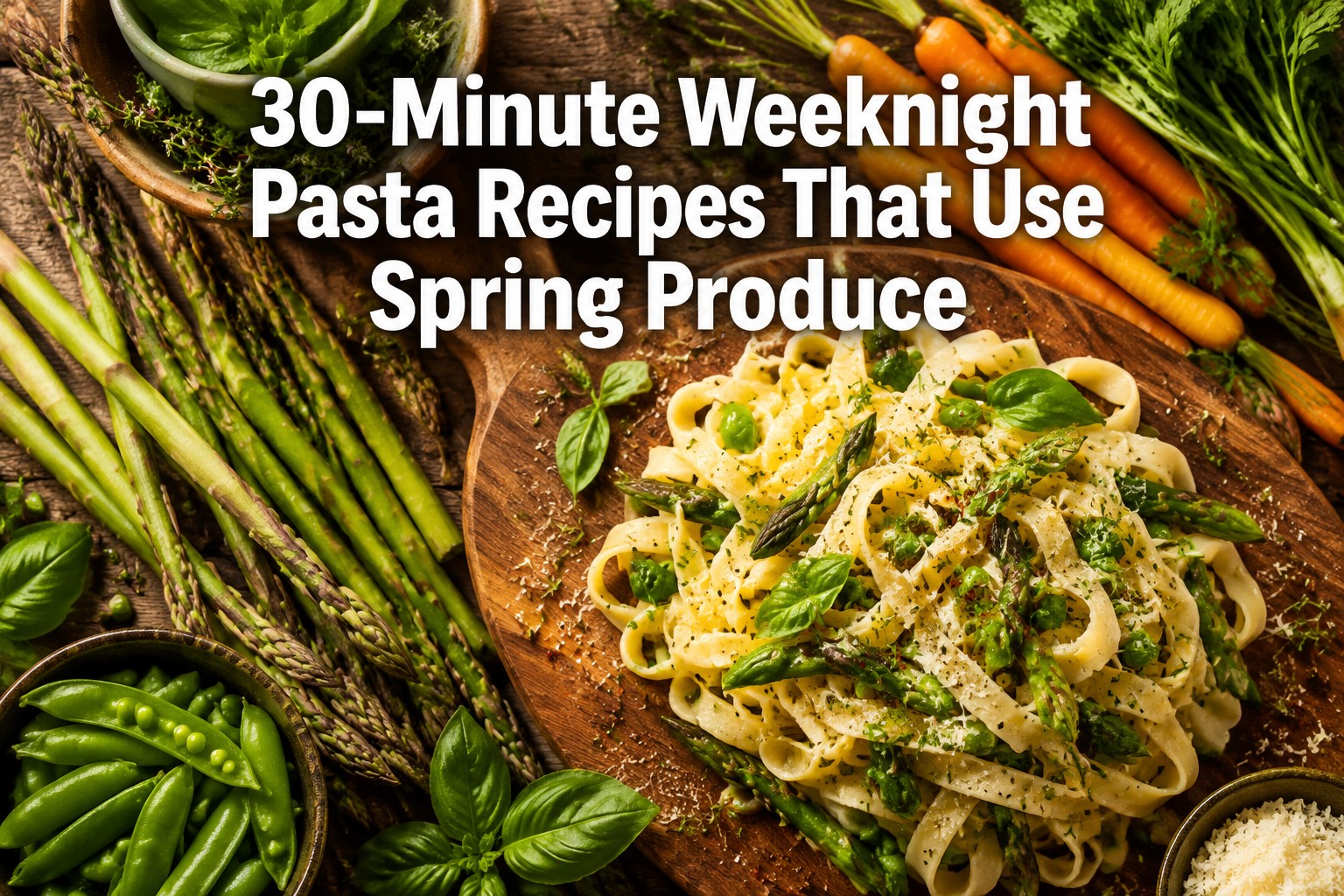
30-Minute Weeknight Pasta Recipes That Use Spring Produce
Last updated: May 15, 2026
Quick Answer
30-minute weeknight pasta recipes that use spring produce combine fast-cooking seasonal vegetables like asparagus, peas, snap peas, and spinach with simple pasta shapes and light sauces. These dishes prioritize bright, fresh flavors over heavy cream-based preparations, using lemon, herbs, and quick-cooking proteins to create satisfying dinners in half an hour or less. The key is choosing vegetables that cook quickly and sauces that come together while the pasta boils.
Key Takeaways
- Spring vegetables cook fast: Asparagus, peas, snap peas, and spinach need only 3-5 minutes, making them ideal for 30-minute pasta dishes
- Light sauces work best: Lemon-butter, olive oil-garlic, and lightened cream sauces keep spring pasta bright instead of heavy
- Pasta water is your friend: Reserve 1 cup of starchy pasta water to create silky sauces without extra cream
- One-pot methods save time: Many spring pasta recipes cook vegetables in the same pot as pasta during the final minutes
- Fresh herbs matter: Basil, tarragon, mint, and parsley add brightness that dried herbs can’t match in quick spring dishes
- Protein is optional but quick: Rotisserie chicken, shrimp, bacon, or prosciutto add substance without extending cook time
- Seasonal timing matters: Peak spring produce (March-May) delivers the best flavor and texture for these recipes
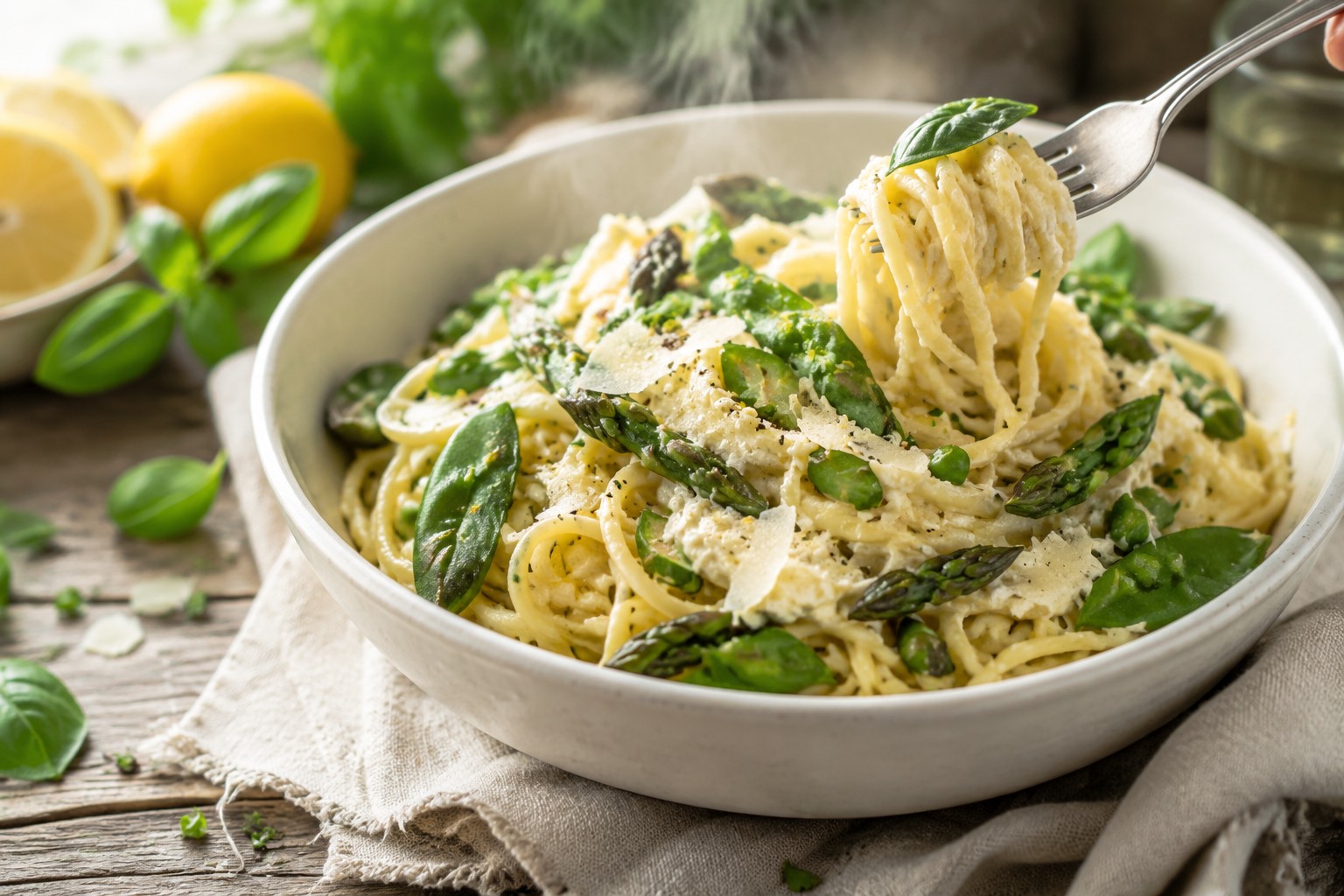
What Makes Spring Pasta Different from Other Seasonal Pasta Dishes?
Spring pasta emphasizes fresh, tender vegetables that cook quickly and light sauces that don’t mask delicate flavors. Unlike winter pasta dishes that rely on roasted vegetables and heavy cream sauces, spring preparations use bright citrus, fresh herbs, and vegetables that need minimal cooking time.
The defining spring vegetables for pasta include asparagus, English peas, snap peas, baby carrots, artichokes, spinach, and ramps [2]. These ingredients share two important qualities: they’re at peak freshness from March through May, and they cook in under 10 minutes, making them perfect for weeknight meals.
Key differences in spring pasta preparation:
- Sauce style: Lemon-based, olive oil emulsions, or lightened cream instead of heavy béchamel or tomato-based sauces
- Cooking method: Quick sautés or blanching rather than long roasting or braising
- Herb selection: Fresh basil, tarragon, mint, and chives replace dried Italian seasonings
- Texture goal: Crisp-tender vegetables that maintain their bright color and snap
Choose spring pasta when you want a lighter meal that still feels substantial, or when you’re cooking for guests but don’t want to spend hours in the kitchen. Avoid heavy cheese-baked preparations that work better in fall and winter.
Which Spring Vegetables Work Best in 30-Minute Weeknight Pasta Recipes?
Asparagus, peas (both English and snap), and spinach are the top three spring vegetables for quick pasta because they cook in 3-5 minutes and pair well with simple sauces. These vegetables can be added directly to boiling pasta water during the final minutes of cooking, eliminating extra pots and saving time.
Best spring vegetables for fast pasta (ranked by cooking time):
- Spinach (1-2 minutes): Wilts instantly when tossed with hot pasta; adds color and nutrients without changing texture
- Snap peas (3 minutes): Stay crisp-tender; slice on the diagonal for better sauce coverage
- English peas (3-4 minutes): Sweet and tender; frozen peas work just as well as fresh for weeknight cooking
- Asparagus (4-5 minutes): Cut into 1-inch pieces for even cooking; tips cook faster than stems
- Baby carrots (5-6 minutes): Slice thin or shave with a vegetable peeler for faster cooking
- Artichoke hearts (2 minutes if using jarred): Pre-cooked versions just need warming; fresh artichokes take too long for weeknight meals
Common mistake: Adding vegetables too early causes them to overcook and lose their bright color. For asparagus and snap peas, add them to the pasta pot during the last 4 minutes of cooking. For spinach, simply toss with the hot drained pasta.
Smart shortcut: Buy pre-trimmed asparagus or pre-shelled peas to save 5-10 minutes of prep time. The slight cost increase is worth it on busy weeknights.
How Do You Build a Quick Spring Pasta Sauce in Under 10 Minutes?
The fastest spring pasta sauces use pasta cooking water, butter or olive oil, and aromatics to create an emulsion while the pasta finishes cooking. This method requires no separate sauce pan and comes together in the time it takes to drain the pasta.
Basic spring pasta sauce formula:
- Start with fat: 3-4 tablespoons butter or olive oil in a large skillet over medium heat
- Add aromatics: 2-3 minced garlic cloves or 1 sliced shallot (cook 1 minute until fragrant)
- Add acid: Juice and zest of 1 lemon or 2 tablespoons white wine
- Emulsify: Add 1/2 cup reserved pasta water and whisk to combine
- Finish: Toss in drained pasta and vegetables, adding more pasta water as needed for silky texture
Three quick spring sauce variations:
- Lemon-herb butter: Butter + garlic + lemon + fresh basil or tarragon + parmesan
- Garlic-white wine: Olive oil + garlic + white wine + red pepper flakes + parsley
- Light cream: Butter + shallots + 1/4 cup cream + lemon + peas + mint
The starchy pasta water is crucial because it contains dissolved starch that helps oil and water combine into a smooth sauce. Without it, your sauce will separate and feel greasy instead of silky.
Choose the lemon-herb butter sauce if you want the brightest, lightest option that lets vegetable flavors shine. Choose the light cream sauce if you want something more substantial that still feels appropriate for spring.
What Are the Fastest 30-Minute Weeknight Pasta Recipes That Use Spring Produce?
Snap pea and basil pasta with white sauce takes just 20 minutes and requires only one pot for both pasta and vegetables [3]. The recipe uses fresh basil, snap peas, garlic, and a light cream sauce, with optional rotisserie chicken for added protein.
Five proven 30-minute spring pasta recipes:
1. Bacon, Asparagus, and Lemon Cheesy Pasta (30 minutes) [1]
- Cook bacon first, use rendered fat for sauce base
- Add asparagus pieces during last 4 minutes of pasta cooking
- Toss with lemon zest, parmesan, and reserved pasta water
- Best for: When you want something substantial that still tastes like spring
2. Lemon Ricotta Pasta with Prosciutto (20 minutes) [1]
- Mix ricotta with lemon zest and pasta water while pasta cooks
- Tear prosciutto and add to hot pasta (it crisps slightly from residual heat)
- Finish with fresh basil and black pepper
- Best for: Elegant weeknight dinners that feel special
3. Creamy Vegetable Pasta (30 minutes) [4]
- Sauté snap peas, asparagus, and baby carrots in olive oil
- Add garlic and light cream, simmer 3 minutes
- Toss with pasta, fresh herbs, and parmesan
- Best for: Using up multiple spring vegetables at once
4. Pasta Primavera (30 minutes) [1]
- Classic Italian “springtime” pasta with multiple vegetables
- Quick-cook asparagus, peas, and carrots in pasta water
- Toss with butter, garlic, lemon, and fresh herbs
- Best for: Traditional spring pasta that everyone recognizes
5. Spinach Artichoke Pasta (25 minutes) [1]
- Use jarred artichoke hearts (pre-cooked) to save time
- Wilt fresh spinach in garlic and olive oil
- Add cream cheese for quick creamy texture
- Best for: When you want familiar flavors in pasta form
Common mistake: Overcrowding the pan when sautéing vegetables. If your skillet isn’t large enough for all vegetables in a single layer, cook them in batches or use the pasta pot method instead.
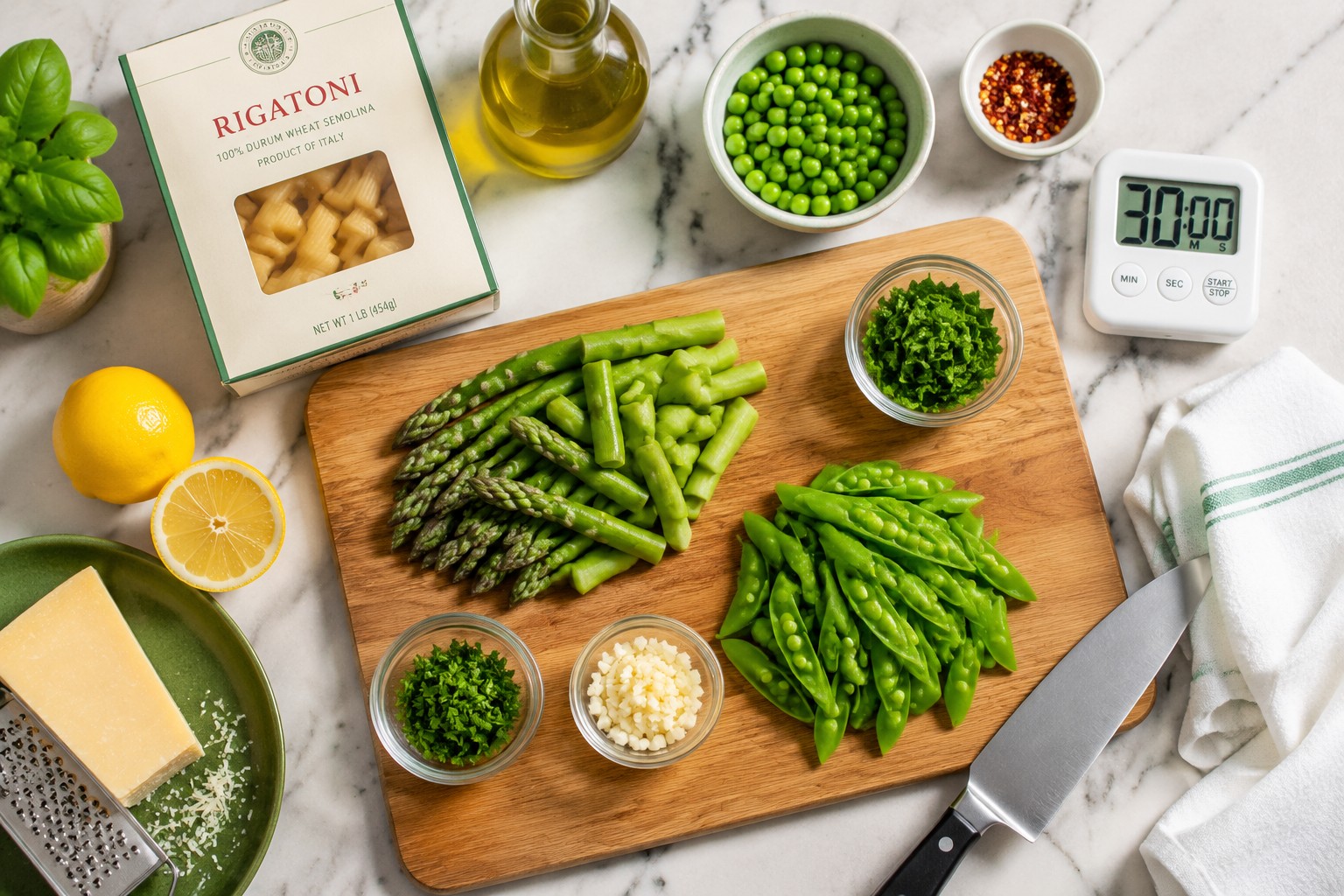
How Can You Add Protein to Spring Pasta Without Extending Cook Time?
Pre-cooked proteins like rotisserie chicken, cooked shrimp, crispy bacon, or prosciutto add substance to spring pasta without requiring additional cooking time. These options can be torn, sliced, or crumbled and simply tossed with hot pasta during the final assembly.
Fastest protein additions (ranked by prep time):
- Rotisserie chicken (2 minutes): Shred or dice while pasta cooks; toss with hot pasta to warm through
- Prosciutto (1 minute): Tear into pieces; residual heat from pasta crisps edges slightly
- Pre-cooked bacon (3 minutes): Cook while pasta boils; crumble over finished dish
- Canned tuna (30 seconds): Drain and flake; works especially well with lemon-based sauces
- Quick-cooking shrimp (5 minutes): Sauté in the sauce pan while pasta finishes; shrimp cook in 3-4 minutes
For shrimp specifically: Use large (21-25 count) peeled and deveined shrimp. Add them to your sauce pan when you start the sauce, and they’ll be perfectly cooked by the time the pasta is ready. Shrimp are done when they turn pink and opaque, which takes 3-4 minutes over medium-high heat.
Smart shortcut: Keep a rotisserie chicken in your refrigerator at the start of each week. One chicken provides enough protein for 2-3 pasta dinners, and the meat stays fresh for 3-4 days.
If you’re looking for other quick protein preparation methods, check out our guide on whole chicken breast recipes for juicy, easy meals.
What Pasta Shapes Work Best for 30-Minute Spring Recipes?
Short pasta shapes like penne, fusilli, and orecchiette work best for spring vegetable pasta because they cook in 9-11 minutes and their shapes trap vegetables and sauce effectively. Long pasta like spaghetti works well too, but requires more careful tossing to distribute vegetables evenly.
Best pasta shapes for spring vegetables:
- Penne or rigatoni: Tubes catch peas and small vegetable pieces inside
- Fusilli (spirals): Grooves hold onto light cream sauces and herbs
- Orecchiette (“little ears”): Cup shape cradles peas and small vegetable pieces
- Farfalle (bow ties): Flat surfaces work well with asparagus and snap peas
- Spaghetti or linguine: Classic choice for lemon-butter sauces with vegetables
Cooking time matters: Choose pasta with a 9-11 minute cook time for true 30-minute meals. Fresh pasta cooks in 2-3 minutes but costs more and has limited shapes. Whole wheat pasta typically takes 12-14 minutes, adding time to your meal.
Common mistake: Using tiny pasta shapes like orzo or ditalini with large vegetable pieces. The size mismatch makes the dish hard to eat. Match pasta size to vegetable size: cut asparagus into 1-inch pieces for penne, or use whole spears with long pasta.
How Do You Keep Spring Pasta Light Instead of Heavy?
Use pasta cooking water instead of extra cream to create silky sauces, and limit cheese to 1/2 cup or less per pound of pasta. The starch in pasta water creates a light coating that feels creamy without the heaviness of traditional cream sauces.
Five strategies for lighter spring pasta:
- Replace half the cream with pasta water: If a recipe calls for 1 cup cream, use 1/2 cup cream and 1/2 cup pasta water
- Use fresh herbs generously: 1/4 cup fresh basil, parsley, or tarragon adds flavor without calories or heaviness
- Finish with lemon: A squeeze of fresh lemon juice right before serving brightens flavors and cuts richness
- Choose olive oil over butter: Olive oil creates lighter sauces than butter-based preparations
- Add vegetables first, pasta second: Fill half your bowl with vegetables, then add pasta on top for better vegetable-to-pasta ratio
Texture comparison: Traditional Alfredo sauce uses 1 cup heavy cream and 1 cup parmesan for 1 pound pasta. A light spring version uses 1/4 cup cream, 1/2 cup pasta water, and 1/4 cup parmesan, creating a silky coating instead of a thick sauce.
Choose lighter preparations if you’re serving pasta as a main course on warm spring evenings. Choose slightly richer versions if you’re serving smaller portions as a side dish or first course.
What Are Common Mistakes When Making Quick Spring Pasta?
The most common mistake is adding vegetables too early, which causes them to overcook and lose their bright green color. Asparagus and snap peas should stay crisp-tender and vibrant, not soft and olive-colored.
Seven mistakes that ruin spring pasta:
- Overcooking vegetables: Add asparagus and snap peas during the last 4 minutes of pasta cooking, not at the beginning
- Skipping pasta water: Draining all the water means you can’t create a proper emulsified sauce
- Using dried herbs: Dried basil and parsley taste dusty compared to fresh versions in light spring dishes
- Overcrowding the pan: Too many vegetables in the skillet means they steam instead of sauté, becoming soggy
- Adding cheese too early: Parmesan added to boiling sauce becomes stringy; add it off heat while tossing
- Cutting vegetables too large: 1-inch pieces cook evenly in 4-5 minutes; 3-inch pieces take twice as long
- Forgetting acid: Spring pasta needs lemon juice or zest to balance richness and brighten flavors
Recovery tip: If you’ve overcooked your vegetables and they’ve lost their color, add a handful of fresh baby spinach or arugula at the end. The raw greens will add back the bright color and fresh flavor.
How Can You Meal Prep Spring Pasta for Busy Weeknights?
Prep vegetables on Sunday by washing, trimming, and cutting asparagus and snap peas into ready-to-cook pieces stored in airtight containers. This cuts weeknight cooking time from 30 minutes to 20 minutes by eliminating all prep work.
Sunday prep tasks (30 minutes total):
- Wash and trim asparagus: Cut into 1-inch pieces, store in container with damp paper towel (stays fresh 4-5 days)
- Trim snap peas: Remove strings, slice on diagonal, store in airtight container (stays fresh 5 days)
- Mince garlic: Peel and mince 1 head of garlic, store in small jar covered with olive oil (stays fresh 1 week)
- Zest lemons: Zest 3-4 lemons, store zest in small container (stays fresh 1 week); refrigerate whole lemons for juice
- Wash and dry herbs: Wash basil, parsley, or tarragon, wrap in damp paper towel, store in plastic bag (stays fresh 5-7 days)
What NOT to prep ahead: Don’t cook pasta in advance for these recipes. Reheated pasta never has the same texture as freshly cooked. Don’t make cream sauces ahead; they separate when reheated.
Smart shortcut: Buy pre-washed baby spinach, pre-trimmed asparagus, and jarred minced garlic if Sunday prep time is limited. The convenience is worth the extra cost for truly busy weeks.
For more tips on keeping ingredients fresh and ready, see our guide on how chicken breast recipes stay juicy.
FAQ
How long does spring pasta last in the refrigerator? Cooked spring pasta with vegetables lasts 3-4 days in an airtight container in the refrigerator. The vegetables will soften slightly, but the dish remains safe to eat. Reheat gently with a splash of water or broth to revive the sauce.
Can you freeze spring pasta dishes? Cream-based spring pasta doesn’t freeze well because the sauce separates when thawed. Oil-based or butter-based spring pasta can be frozen for up to 2 months, but vegetables will lose their crisp-tender texture. Fresh herbs turn black when frozen in pasta dishes.
What’s the best way to reheat spring pasta? Reheat spring pasta in a skillet over medium heat with 2-3 tablespoons of water, broth, or additional pasta water. Stir frequently until heated through (3-4 minutes). Microwave reheating works but can make vegetables rubbery; use 50% power and stir every minute.
Can you use frozen vegetables for spring pasta? Frozen peas work perfectly in spring pasta and often taste sweeter than fresh. Frozen asparagus becomes mushy when cooked and isn’t recommended. Frozen spinach works but must be thawed and squeezed dry first, or it will water down your sauce.
What wine pairs well with spring pasta? Light white wines like Pinot Grigio, Sauvignon Blanc, or unoaked Chardonnay pair best with spring pasta. The crisp acidity complements lemon-based sauces and doesn’t overpower delicate vegetable flavors. Avoid heavy reds that clash with the light, fresh character of spring dishes.
How do you make spring pasta vegan? Replace butter with olive oil, skip the parmesan or use nutritional yeast, and use vegetable broth instead of chicken broth. Cashew cream (blended soaked cashews and water) creates a creamy texture without dairy. Most spring pasta recipes adapt easily to vegan diets.
Can you make spring pasta ahead for meal prep? Spring pasta is best eaten fresh, but you can prep all ingredients ahead and cook the dish in 15 minutes on busy nights. Store prepped vegetables, pre-measured seasonings, and uncooked pasta separately. Assemble and cook when ready to eat for best texture and flavor.
What herbs work best in spring pasta besides basil? Fresh tarragon adds an elegant, slightly anise-like flavor that pairs beautifully with asparagus and peas. Mint works well with peas and snap peas for an unexpected brightness. Chives add mild onion flavor without overpowering delicate vegetables. Parsley adds freshness and color to any spring pasta.
How much pasta water should you reserve? Reserve at least 1 cup of pasta cooking water before draining. You’ll typically use 1/4 to 1/2 cup to create the sauce, but having extra ensures you can adjust consistency. Pasta water keeps for several hours at room temperature if you need it later.
Can you use whole wheat pasta for spring recipes? Whole wheat pasta works in spring recipes but has a nuttier flavor and denser texture that can overpower delicate vegetables. If using whole wheat, choose recipes with stronger flavors like bacon or prosciutto. Whole wheat pasta also takes 12-14 minutes to cook, extending total time beyond 30 minutes.
What’s the difference between English peas and snap peas in pasta? English peas (shelled peas) are sweet and tender with a soft texture when cooked. Snap peas (eaten pod and all) stay crisp-tender and add textural contrast. English peas blend into sauces better, while snap peas provide crunch. Both work well in spring pasta; choose based on texture preference.
How do you prevent pasta from sticking together? Use at least 4 quarts of water per pound of pasta and stir during the first 2 minutes of cooking. Don’t add oil to the water; it prevents sauce from adhering to pasta. If pasta sits after draining, toss with a small amount of olive oil or reserved pasta water to prevent clumping.
Conclusion
30-minute weeknight pasta recipes that use spring produce deliver fresh, satisfying dinners without the time commitment of elaborate cooking. The key strategies are choosing quick-cooking vegetables like asparagus, peas, and snap peas; building light sauces with pasta water and lemon; and using pre-cooked proteins when you want extra substance.
Your action plan for spring pasta success:
- Stock your pantry: Keep pasta shapes with 9-11 minute cook times, good olive oil, lemons, and garlic on hand
- Prep on Sunday: Spend 30 minutes washing, trimming, and cutting vegetables for the week ahead
- Master the basic sauce formula: Fat + aromatics + acid + pasta water creates dozens of variations
- Start simple: Try the lemon ricotta pasta or snap pea and basil pasta first before moving to more complex recipes
- Reserve pasta water: Always save 1 cup before draining; it’s the secret to silky, restaurant-quality sauces
Spring pasta works best from March through May when vegetables are at peak freshness and flavor. As the season progresses into summer, adapt these techniques to zucchini, tomatoes, and corn for equally fast weeknight meals.
The beauty of these recipes is their flexibility. Once you understand the basic method—cook pasta, add quick-cooking vegetables, build a simple sauce—you can create dozens of variations based on what’s fresh at your market and what’s already in your refrigerator.
References
[1] Spring Pasta Dinner Ideas – https://www.thepioneerwoman.com/food-cooking/meals-menus/g71151028/spring-pasta-dinner-ideas/
[2] Spring Pasta Recipes 11929683 – https://www.foodandwine.com/spring-pasta-recipes-11929683
[3] Light Spring Pasta Dinners – https://www.countryliving.com/food-drinks/food-news/a70954427/light-spring-pasta-dinners/
[4] facebook – https://www.facebook.com/delish/posts/these-30-spring-dinners-are-ready-in-30-minutes-or-less/1317845203540083/


