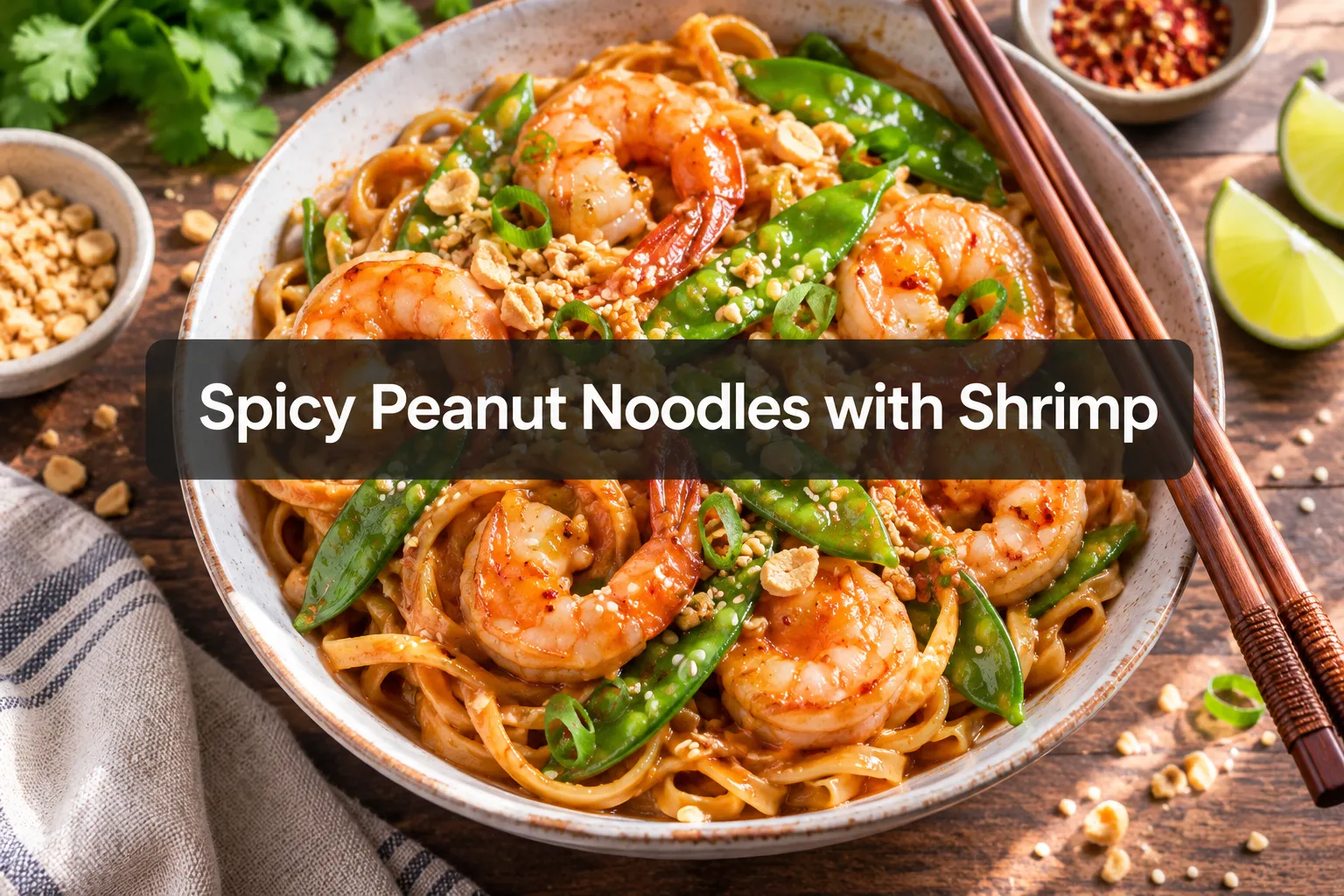
Spicy Peanut Noodles with Shrimp and Snow Peas: ATK’s #2 Hit with Protein Boosts and Veggie Swaps
Last updated: July 17, 2026
Quick Answer
Spicy Peanut Noodles with Shrimp and Snow Peas: ATK’s #2 Hit with Protein Boosts and Veggie Swaps is America’s Test Kitchen’s second most popular noodle recipe, featuring a balanced peanut sauce with just the right heat level, quick-cooking shrimp, and crisp snow peas. The dish takes about 25 minutes to make and can be customized with alternative proteins like chicken, tofu, or edamame, plus vegetable swaps such as bell peppers, snap peas, or broccoli. The recipe’s success comes from ATK’s precise sauce ratios that prevent graininess and achieve the ideal creamy-but-not-thick consistency.
Key Takeaways
- Quick cooking time: The entire dish comes together in 25 minutes, making it perfect for busy weeknights
- Balanced sauce formula: ATK’s recipe uses specific ratios of peanut butter, soy sauce, rice vinegar, and sesame oil to prevent separation and graininess
- High protein content: A standard serving with shrimp provides approximately 28-32 grams of protein
- Flexible protein options: Shrimp, chicken, tofu, tempeh, and edamame all work beautifully with the peanut sauce
- Vegetable versatility: Snow peas can be swapped for snap peas, bell peppers, broccoli, carrots, or cabbage
- Meal prep friendly: The dish holds well for 3-4 days when stored properly with sauce kept separate
- Adjustable heat level: The spice can be dialed up or down by adjusting chili paste or sriracha amounts
- Noodle flexibility: Rice noodles, lo mein, soba, udon, or even spaghetti work with this sauce
- Sauce consistency matters: The sauce should coat the noodles like a light glaze, not pool at the bottom of the bowl
- Make-ahead strategy: Components can be prepped separately and assembled just before serving for best texture
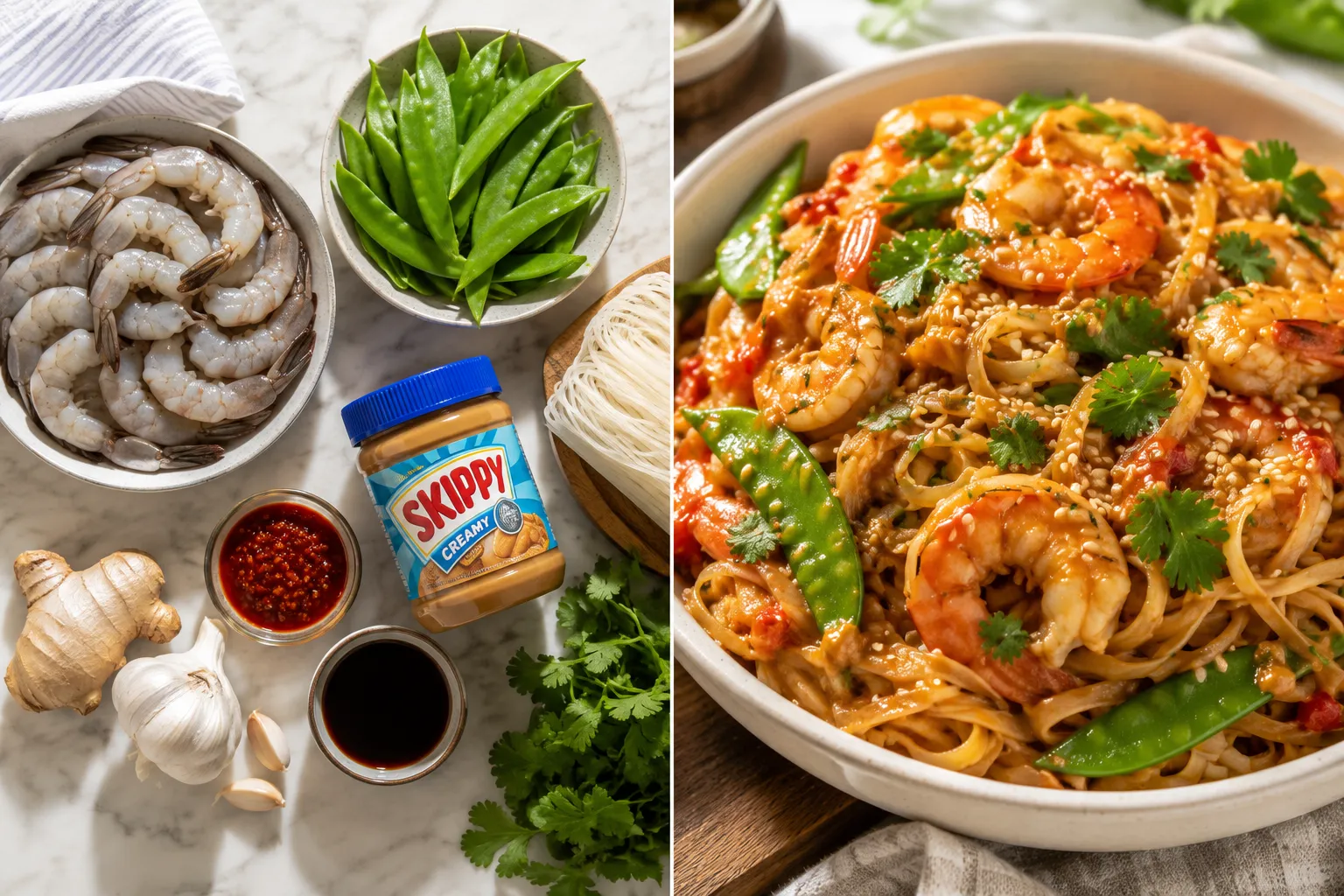
What Are Spicy Peanut Noodles with Shrimp?
Spicy peanut noodles with shrimp is an Asian-inspired dish that combines tender noodles coated in a creamy, savory-sweet peanut sauce with quick-cooked shrimp and crisp vegetables. The America’s Test Kitchen version became their second most popular recipe because it solves common problems like grainy sauce, overcooked shrimp, and soggy vegetables.
The dish originated from Southeast Asian cuisine, particularly Thai and Chinese cooking traditions, but has been adapted for American home kitchens. ATK’s version emphasizes:
- Sauce balance: Equal parts richness, tang, salt, and heat
- Texture contrast: Tender noodles, firm shrimp, crisp vegetables
- Quick assembly: All components cook in under 30 minutes
- Room temperature serving: The dish works hot, warm, or cold
The “spicy” element typically comes from chili-garlic sauce, sriracha, or sambal oelek, but the heat level remains moderate enough for most palates while still delivering a noticeable kick.
How to Make ATK Spicy Peanut Noodles Recipe
ATK’s method focuses on three separate components that come together at the end: the sauce, the protein, and the noodles with vegetables.
For the sauce (makes enough for 4 servings):
- Whisk together ½ cup smooth peanut butter, 3 tablespoons soy sauce, 2 tablespoons rice vinegar, 2 tablespoons warm water, 1 tablespoon sesame oil, 1 tablespoon honey, 2 teaspoons chili-garlic sauce, and 2 minced garlic cloves
- Add water one tablespoon at a time until the sauce reaches a pourable but not watery consistency
- Set aside at room temperature (do not refrigerate before serving)
For the shrimp:
- Pat 1 pound of peeled, deveined shrimp completely dry
- Heat 1 tablespoon neutral oil in a large skillet over high heat until shimmering
- Add shrimp in a single layer and cook without moving for 90 seconds
- Flip and cook another 60-90 seconds until just opaque
- Remove immediately to prevent overcooking
For the noodles and assembly:
- Cook 12 ounces of rice noodles according to package directions
- In the last 2 minutes of cooking, add 8 ounces of snow peas to the pot
- Drain and rinse under cool water to stop cooking
- Toss noodles and snow peas with the peanut sauce
- Top with shrimp, sliced scallions, cilantro, crushed peanuts, and sesame seeds
Common mistake to avoid: Don’t add the sauce to hot noodles straight from the pot. The residual heat can cause the peanut butter to separate and become oily. Let the noodles cool for 2-3 minutes first.
Can I Substitute Chicken for Shrimp in Peanut Noodles?
Yes, chicken works excellently in place of shrimp and is one of the most popular protein swaps for this dish. Use 1 pound of boneless, skinless chicken breast or thighs, cut into bite-sized pieces or thin strips.
Cooking method for chicken:
- Slice chicken into ½-inch thick strips or 1-inch cubes for even cooking
- Season with salt and pepper
- Cook in 1 tablespoon oil over medium-high heat for 5-7 minutes, stirring occasionally
- Chicken is done when it reaches 165°F internally and shows no pink
Why chicken works well:
- Similar mild flavor that doesn’t compete with the peanut sauce
- Absorbs the sauce flavors effectively
- Provides comparable protein content (about 26-30 grams per serving)
- More budget-friendly than shrimp in most markets
- Easier to find in bulk for meal prep
For even faster preparation, use leftover rotisserie chicken shredded into bite-sized pieces. Just toss it with the warm noodles to heat through, no additional cooking required.
Choose chicken if: You’re meal prepping for the week (chicken holds better than shrimp), feeding picky eaters who prefer familiar proteins, or working with a tighter budget.
What Vegetables Can I Use Instead of Snow Peas?
Snow peas can be replaced with numerous vegetables that provide similar crunch and color contrast. The best substitutes are vegetables that stay crisp-tender and don’t release excess water into the dish.
Top vegetable swaps:
- Snap peas: Nearly identical to snow peas; use the same cooking method
- Bell peppers: Slice thin; add raw or quick-sauté for 2 minutes
- Broccoli florets: Blanch for 2-3 minutes until bright green and crisp-tender
- Shredded carrots: Add raw for crunch; they’ll soften slightly from the sauce
- Red cabbage: Slice thin; adds color and stays crunchy
- Edamame: Provides extra protein; use frozen, thawed
- Baby corn: Slice in half lengthwise; adds sweetness
- Bok choy: Separate leaves from stems; add stems first, then leaves
Vegetables to avoid:
- Zucchini or cucumber (too watery)
- Tomatoes (break down and make the dish soggy)
- Leafy greens like spinach (wilt too much and look unappetizing)
Pro tip: Mix two or three vegetables for visual appeal and varied texture. A combination of bell peppers, shredded carrots, and snap peas creates a colorful, restaurant-quality presentation.
Is Peanut Sauce Supposed to Be Thick or Thin?
Peanut sauce for noodles should have a pourable, glaze-like consistency, thick enough to coat the noodles evenly but thin enough to distribute throughout the dish without clumping. Think of it as slightly thicker than heavy cream but thinner than mayonnaise.
The right consistency:
- Drips slowly off a spoon in a steady stream
- Coats the back of a spoon but isn’t gloppy
- Mixes easily with noodles without requiring excessive tossing
- Doesn’t pool at the bottom of the bowl after plating
How to adjust:
- Too thick: Add warm water one tablespoon at a time, whisking after each addition
- Too thin: Whisk in an extra tablespoon of peanut butter or let it sit for 5 minutes to thicken naturally
Temperature matters: Peanut sauce thickens as it cools and thins when warm. Make it slightly thinner than your target consistency if you’re serving the dish immediately, or slightly thicker if you’re refrigerating it for later.
Common mistake: Adding too much liquid at once. Water incorporates slowly into peanut butter, so patience is key. Add liquid gradually and whisk thoroughly between additions.
How Much Protein Is in Shrimp Peanut Noodles?
A standard serving of spicy peanut noodles with shrimp (about 2 cups) contains approximately 28-32 grams of protein, making it a satisfying, protein-rich meal.
Protein breakdown per serving:
- Shrimp (4 ounces cooked): 24-26 grams
- Peanut butter (2 tablespoons): 7-8 grams
- Noodles (3 ounces cooked): 3-4 grams
- Total: 34-38 grams per generous serving
Protein comparison with other options:
| Protein Choice | Protein per 4 oz | Total per Serving |
|---|---|---|
| Shrimp | 24-26g | 34-38g |
| Chicken breast | 26-28g | 36-40g |
| Firm tofu | 10-12g | 20-24g |
| Tempeh | 16-18g | 26-30g |
| Edamame | 12-14g | 22-26g |
For those focused on high-protein recipes, this dish delivers substantial protein without requiring supplements or protein powder.
Boost protein further by:
- Adding an extra 2 ounces of shrimp per serving (+12g)
- Sprinkling 2 tablespoons of crushed peanuts on top (+4g)
- Using edamame noodles instead of rice noodles (+8-10g)
- Mixing in ½ cup of edamame along with the snow peas (+7g)
Can I Make Spicy Peanut Noodles Ahead of Time?
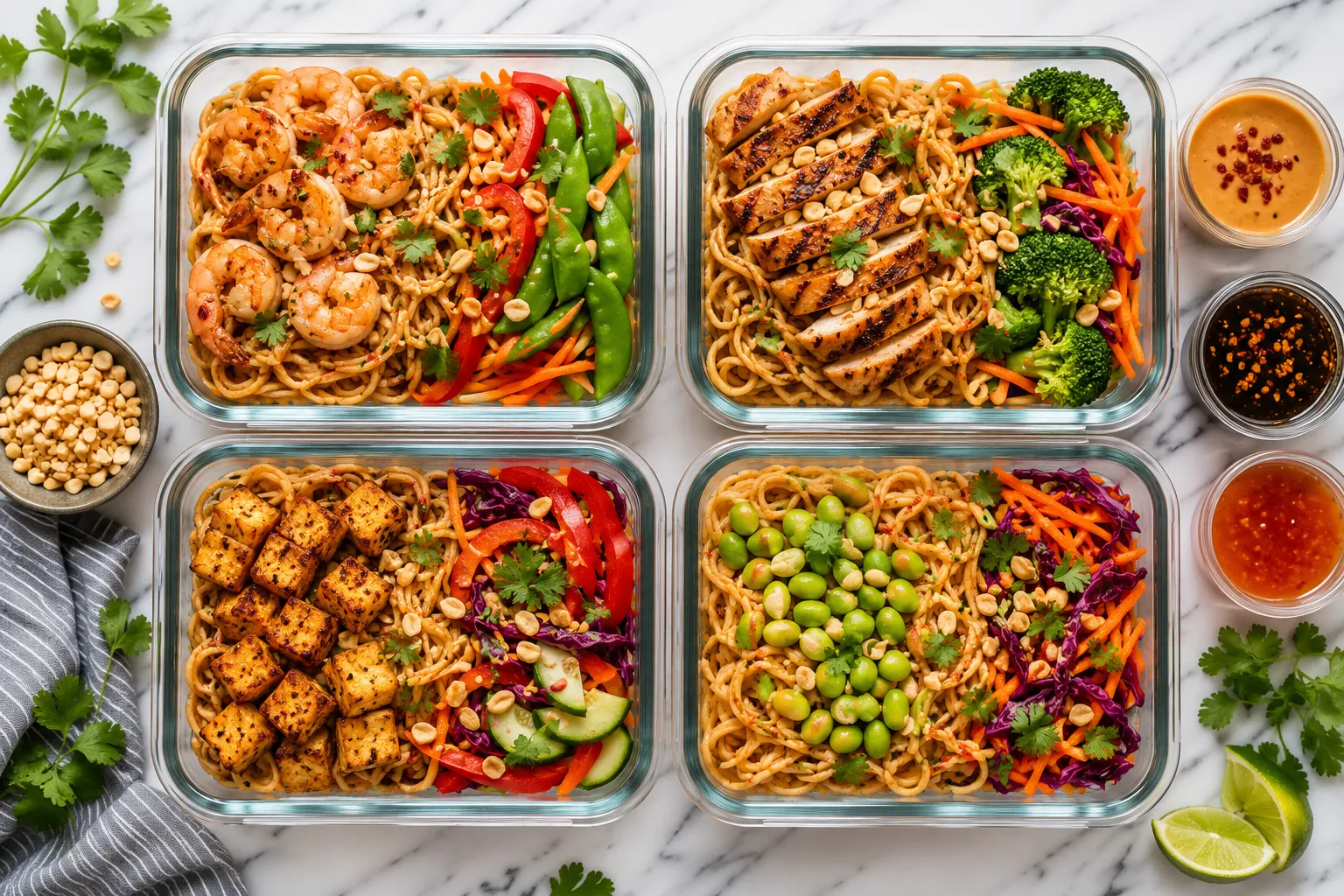
Yes, spicy peanut noodles are excellent for meal prep and can be made 3-4 days in advance when stored properly. The key is keeping components separate until serving to maintain optimal texture.
Best make-ahead strategy:
- Cook and store noodles: Toss with a tiny bit of sesame oil to prevent sticking; refrigerate in an airtight container
- Prepare sauce: Store in a separate container at room temperature for up to 2 days, or refrigerate for up to 5 days
- Cook protein: Store cooked shrimp or chicken separately; refrigerate for up to 3 days
- Prep vegetables: Wash and cut vegetables; store in a container with a damp paper towel
- Assemble when ready: Toss cold or room-temperature noodles with sauce, add protein and vegetables
If you must assemble in advance:
- The dish holds for 2-3 days fully assembled
- Expect noodles to absorb sauce and become slightly softer
- Add extra sauce (2-3 tablespoons per serving) before storing
- Store in individual meal prep containers for grab-and-go lunches
Reheating options:
- Cold: Eat straight from the fridge (many prefer it this way)
- Room temperature: Let sit out for 20-30 minutes
- Warm: Microwave for 60-90 seconds, stirring halfway through
- Refreshed: Add a splash of water and toss before eating to loosen the sauce
This makes spicy peanut noodles perfect for one-pan meal prep strategies where you batch-cook components on Sunday for the week ahead.
Why Is My Peanut Sauce Grainy and Separated?
Grainy, separated peanut sauce happens when the peanut butter’s oils split from the solids, usually due to temperature shock, insufficient emulsification, or using natural peanut butter without proper technique.
Main causes and fixes:
1. Temperature shock
- Problem: Adding cold liquid to peanut butter or mixing sauce with very hot noodles
- Fix: Use room-temperature or warm water when making the sauce; let noodles cool for 2-3 minutes before tossing
2. Natural peanut butter without stabilizers
- Problem: Natural peanut butter separates more easily than conventional brands
- Fix: Stir the jar thoroughly before measuring, or use conventional peanut butter (Jif, Skippy) for more stable results
3. Insufficient whisking
- Problem: Ingredients aren’t fully emulsified
- Fix: Whisk vigorously for 60-90 seconds until completely smooth; use a blender for foolproof results
4. Wrong liquid ratio
- Problem: Too much liquid added too quickly
- Fix: Add liquid gradually, one tablespoon at a time, whisking thoroughly between additions
How to rescue separated sauce:
- Add 1 tablespoon of warm water
- Whisk vigorously for 30 seconds
- If still separated, transfer to a blender and blend on high for 15-20 seconds
- Alternatively, add ½ teaspoon of honey and whisk, the sugar helps re-emulsify
Prevention tip: Make the sauce 15-20 minutes before serving and let it sit at room temperature. This allows the ingredients to fully incorporate and stabilize.
Best Noodles to Use for Spicy Peanut Noodles
Rice noodles are the traditional choice for spicy peanut noodles, but several other noodle types work equally well depending on your texture preference and dietary needs.
Top noodle options ranked:
1. Rice noodles (pad thai style)
- Why they work: Neutral flavor, slightly chewy texture, gluten-free
- Best for: Traditional taste, gluten-free diets
- Cooking tip: Don’t overcook; they should be tender but still have slight resistance
2. Lo mein or Chinese egg noodles
- Why they work: Substantial chew, hold sauce well, authentic Chinese-American taste
- Best for: Heartier meals, those who prefer wheat noodles
- Cooking tip: Rinse after cooking to remove excess starch
3. Soba noodles
- Why they work: Nutty flavor complements peanut sauce, higher protein than rice noodles
- Best for: Adding nutritional value, Japanese-inspired variation
- Cooking tip: Follow package timing precisely; they turn mushy quickly
4. Udon noodles
- Why they work: Thick, chewy texture creates a more substantial dish
- Best for: Cold noodle salads, those who like bold textures
- Cooking tip: Rinse thoroughly under cold water after cooking
5. Spaghetti or linguine
- Why they work: Readily available, familiar texture, works in a pinch
- Best for: Using pantry staples, feeding picky eaters
- Cooking tip: Cook al dente; Italian pasta continues to absorb sauce more than Asian noodles
High-protein alternative: Edamame or chickpea pasta adds 15-20 grams of protein per serving but has a distinct bean flavor that some find overpowering with peanut sauce.
Choose rice noodles if: You want the most authentic taste and texture, or you’re cooking gluten-free.
Can I Use Almond Butter Instead of Peanut Butter?
Yes, almond butter can replace peanut butter in this recipe, but expect a milder, slightly sweeter flavor and a thinner sauce consistency. Almond butter works best when you adjust the recipe slightly to compensate for its different properties.
Key differences:
- Flavor: Almond butter is more subtle and less “nutty” than peanut butter
- Texture: Naturally thinner and smoother
- Oil content: Higher oil content means easier separation
- Sweetness: Slightly sweeter, which may require reducing honey
Recipe adjustments for almond butter:
- Use 2-3 tablespoons less water than the original recipe calls for
- Reduce honey to 2 teaspoons (from 1 tablespoon)
- Add an extra ½ teaspoon of soy sauce to boost umami
- Whisk more vigorously to prevent separation
- Consider adding 1 teaspoon of tahini for richer, more complex flavor
Other nut and seed butter alternatives:
- Cashew butter: Creamiest option; very mild flavor; use same ratios as almond butter
- Sunflower seed butter: Nut-free option; slightly bitter; add extra honey to balance
- Tahini: Not a direct substitute but can be mixed 50/50 with peanut butter for a Middle Eastern twist
Avoid: Hazelnut butter (too sweet and distinct) or any chocolate-flavored nut butters.
Choose almond butter if: You have peanut allergies, prefer milder flavors, or want a slightly lighter sauce. For the most authentic taste, stick with peanut butter.
How Spicy Are ATK Peanut Noodles?
ATK’s spicy peanut noodles rate about 3-4 out of 10 on the heat scale, noticeable warmth with a gentle kick but not overwhelming for most palates. The recipe uses 2 teaspoons of chili-garlic sauce, which provides flavor-forward heat rather than pure burn.
Heat level breakdown:
- Mild (1-2/10): Use 1 teaspoon chili-garlic sauce or omit entirely
- Medium (3-4/10): ATK’s standard 2 teaspoons (original recipe)
- Medium-hot (5-6/10): Use 1 tablespoon chili-garlic sauce
- Hot (7-8/10): Add 1-2 teaspoons sriracha plus the chili-garlic sauce
- Very hot (9-10/10): Include fresh sliced Thai chilies or ½ teaspoon cayenne pepper
Heat sources you can adjust:
- Chili-garlic sauce: Provides garlic flavor with moderate heat
- Sriracha: Adds vinegar tang and medium heat
- Sambal oelek: Pure chili heat without additional flavors
- Fresh chilies: Jalapeño (mild), serrano (medium), Thai bird (hot)
- Chili oil: Adds heat plus rich, toasted flavor
- Red pepper flakes: Convenient pantry option; use ½ teaspoon for medium heat
Cooling strategies if too spicy:
- Add an extra tablespoon of peanut butter (fat reduces heat perception)
- Increase honey by 1 teaspoon (sweetness balances spice)
- Squeeze fresh lime juice over the finished dish (acid cuts heat)
- Top with extra crushed peanuts (fat and texture provide relief)
Pro tip: Start with less heat than you think you want. You can always add more chili sauce at the table, but you can’t remove it once mixed in.
What Protein Works Best with Peanut Noodles Besides Shrimp?
Beyond shrimp, tofu, chicken, and tempeh are the top three proteins that pair beautifully with peanut noodles, each offering distinct advantages for different dietary preferences and cooking styles.
Protein ranking by performance:
1. Crispy tofu (firm or extra-firm)
- Why it works: Absorbs sauce flavor, provides textural contrast when crisped, plant-based
- Preparation: Press for 15 minutes, cube, toss with cornstarch, pan-fry until golden
- Best for: Vegetarians, those seeking lighter protein, meal prep (holds texture well)
- Protein content: 10-12g per 4-ounce serving
2. Grilled or sautéed chicken
- Why it works: Mild flavor, familiar, budget-friendly, high protein
- Preparation: Slice thin, season simply, cook over medium-high heat for 5-7 minutes
- Best for: Families, meal prep, those who prefer poultry
- Protein content: 26-28g per 4-ounce serving
3. Tempeh
- Why it works: Nutty flavor complements peanut sauce, firm texture, fermented benefits
- Preparation: Slice thin, steam for 10 minutes, then pan-fry until browned
- Best for: Plant-based eaters seeking whole-food protein, those who enjoy bold flavors
- Protein content: 16-18g per 4-ounce serving
Other excellent options:
- Edamame: Easiest option; just thaw and toss in (12-14g protein per 4 oz)
- Pork tenderloin: Slice thin and stir-fry; adds richness (22-24g protein per 4 oz)
- Salmon: Flake cooked salmon into chunks; adds omega-3s (22-25g protein per 4 oz)
- Hard-boiled eggs: Halve and place on top; budget-friendly (6g protein per egg)
For more alternative protein ideas, consider duck, quail, or even tinned fish like mackerel for unique variations.
Mix proteins: Combine crispy tofu and edamame for a complete plant-based amino acid profile, or use half shrimp and half chicken for variety in meal prep containers.
Do I Need to Blanch Snow Peas First?
You don’t need to blanch snow peas separately if you’re adding them to the noodle cooking water in the final 2 minutes, which is the most efficient method. However, blanching separately gives you more control over texture and is necessary if you’re serving the dish cold.
Three methods compared:
1. Add to noodle water (easiest)
- Drop snow peas into boiling noodle water 2 minutes before noodles are done
- Drain everything together
- Pros: One pot, minimal cleanup, perfectly timed
- Cons: Less control over doneness
2. Blanch separately (best for meal prep)
- Boil water, add snow peas for 90 seconds, immediately transfer to ice bath
- Pros: Bright green color, crisp texture, stops cooking precisely
- Cons: Extra pot and bowl required
3. Use raw (works for thin, tender snow peas)
- Slice snow peas thinly on the diagonal, toss with warm noodles
- Pros: Maximum crunch, no cooking required
- Cons: Slightly grassy flavor, not for everyone
Signs of properly cooked snow peas:
- Bright, vibrant green color
- Tender but still crisp (should snap when bent)
- No raw, grassy taste
- Slightly sweet flavor comes through
Common mistake: Overcooking snow peas until they’re limp and army-green. They need only 90 seconds to 2 minutes of heat exposure.
Choose the add-to-noodles method if: You’re making the dish for immediate serving and want minimal cleanup. Choose separate blanching if you’re meal prepping or want restaurant-quality bright green vegetables.
Can I Make This Recipe Vegan Without Shrimp?
Yes, this recipe easily converts to a completely vegan dish by swapping shrimp for plant-based proteins and ensuring your sauce ingredients are vegan-friendly (most are by default).
Vegan protein swaps:
Best options:
- Crispy tofu: Press, cube, coat in cornstarch, pan-fry until golden (most popular)
- Tempeh: Steam 10 minutes, slice, pan-fry until browned (adds nutty flavor)
- Edamame: Simplest option; thaw frozen edamame and toss in (adds 12-14g protein per serving)
- Chickpeas: Roast with oil and spices until crispy (adds fiber and protein)
Vegan sauce checklist:
✅ Peanut butter (naturally vegan) ✅ Soy sauce or tamari (check label; most are vegan) ✅ Rice vinegar (vegan) ✅ Sesame oil (vegan) ⚠️ Honey: Replace with maple syrup or agave nectar (same amount) ✅ Chili-garlic sauce (most brands are vegan; check label) ✅ Garlic and ginger (vegan)
Complete vegan recipe modifications:
- Use 14 ounces firm tofu (pressed and cubed) or 1½ cups edamame instead of shrimp
- Replace honey with maple syrup
- Add nutritional yeast (1 tablespoon) for extra umami and B vitamins
- Include extra vegetables for volume: bell peppers, carrots, broccoli
Protein boost for vegan version:
- Use edamame noodles instead of rice noodles (+10g protein)
- Add both tofu AND edamame (+20g protein total)
- Top with hemp hearts or crushed peanuts (+4-5g protein)
- Mix in cooked quinoa alongside noodles (+8g protein per cup)
The vegan version is just as satisfying as the original and works beautifully for high-protein plant-based meals.
Frequently Asked Questions
Can I use crunchy peanut butter instead of smooth?
Yes, but the sauce will have a grainier texture with small peanut pieces throughout. Smooth peanut butter creates a more cohesive, restaurant-quality sauce. If using crunchy, add crushed peanuts as a garnish instead for better texture control.
How long does leftover peanut sauce last in the fridge?
Peanut sauce keeps for 5-7 days in an airtight container in the refrigerator. It will thicken considerably when cold; thin it with warm water (1 tablespoon at a time) and whisk before using. Bring to room temperature for best flavor.
Can I freeze spicy peanut noodles?
Freezing isn’t recommended. The noodles become mushy and the sauce separates when thawed. If you must freeze, store the sauce separately (freezes well for up to 3 months) and cook fresh noodles when ready to serve.
What size shrimp should I buy?
Medium to large shrimp (31-40 count per pound or 26-30 count) work best. They’re substantial enough to feel like a proper protein but cook quickly. Avoid jumbo shrimp (they take too long) or tiny salad shrimp (they get lost in the noodles).
Is this dish served hot or cold?
Spicy peanut noodles are traditionally served at room temperature or slightly warm, but they’re delicious cold too. Many people prefer them chilled as a noodle salad, especially in summer. The sauce flavors actually intensify when served cold.
Can I make the sauce in a blender?
Absolutely. Combine all sauce ingredients in a blender and blend on high for 30-45 seconds until completely smooth. This method guarantees no graininess and creates the silkiest texture. Add water gradually through the top opening while blending to reach desired consistency.
What can I use if I don’t have rice vinegar?
Apple cider vinegar or white wine vinegar work well as substitutes. Use slightly less (1½ tablespoons instead of 2) because they’re more acidic than rice vinegar. Avoid balsamic or red wine vinegar, which will darken the sauce and add unwanted flavors.
How do I prevent noodles from sticking together?
Rinse cooked noodles under cool water immediately after draining to remove excess starch. Toss with a small amount of sesame oil (1 teaspoon) if storing separately. When ready to serve, the peanut sauce will coat them and prevent further sticking.
Can kids eat this dish?
Yes, but reduce or omit the chili-garlic sauce for kid-friendly versions. The peanut sauce base is naturally appealing to children. Start with ½ teaspoon chili sauce and let older kids add more at the table if desired.
What garnishes work best?
Sliced scallions, fresh cilantro, crushed peanuts, sesame seeds, and lime wedges are traditional. For extra flair, add crispy fried shallots, pickled vegetables, or fresh Thai basil. The garnishes add crucial textural contrast to the creamy noodles.
Is this recipe gluten-free?
It can be. Use rice noodles (naturally gluten-free), tamari instead of regular soy sauce, and check that your chili-garlic sauce is gluten-free (most are). All other ingredients are naturally gluten-free.
How do I make the sauce less sweet?
Reduce honey to 1-2 teaspoons or omit entirely. Add an extra ½ tablespoon of rice vinegar to balance the flavors. Some prefer a more savory sauce; adjust to your taste preference after the first batch.
Conclusion
Spicy Peanut Noodles with Shrimp and Snow Peas: ATK’s #2 Hit with Protein Boosts and Veggie Swaps delivers restaurant-quality flavor in just 25 minutes, making it an ideal weeknight dinner or meal prep staple. The recipe’s success lies in its balanced peanut sauce formula, quick-cooking technique, and remarkable flexibility for protein and vegetable substitutions.
Your next steps:
- Start with the classic version using shrimp and snow peas to understand the baseline flavors and textures
- Make extra sauce and store it separately for quick assembly throughout the week
- Experiment with one swap at a time,try chicken instead of shrimp first, then test different vegetables
- Adjust the heat level to your preference; start mild and increase gradually
- Prep components on Sunday for grab-and-go lunches that stay fresh for 3-4 days
Whether you’re cooking for a busy weeknight, meal prepping for the week, or adapting the recipe for dietary needs, this versatile dish rewards experimentation while remaining foolproof. The combination of protein-rich ingredients, vibrant vegetables, and that perfectly balanced peanut sauce makes it a recipe you’ll return to again and again.
For more quick, protein-packed dinner ideas, explore our guides to 20-minute one-pan dinners and leftover transformation hacks that turn simple ingredients into restaurant-worthy meals.
SEO Meta Title: Spicy Peanut Noodles with Shrimp: ATK Recipe Guide