
What to Cook with Leftover Rotisserie Chicken: Crispy Wraps, Salads, Pasta, and Snacks
Last updated: June 10, 2026
Americans buy more than 900 million rotisserie chickens every year, but most people eat the legs and breasts straight from the container and then stare at the leftovers wondering what comes next. The answer is simple: transform that remaining chicken into completely different meals that taste nothing like the original bird. When you know what to cook with leftover rotisserie chicken—crispy wraps, salads, pasta, and snacks—you can turn one $6 chicken into four or five distinct dishes with different textures, sauces, and flavor profiles.
Key Takeaways
- Leftover rotisserie chicken stays fresh in the fridge for 3-4 days when stored properly in airtight containers
- Shred chicken while it’s still slightly warm for easier separation and better texture in wraps and salads
- Freeze portions in freezer bags for up to 3 months, removing as much air as possible to prevent freezer burn
- Crisp up leftover chicken in a hot skillet with oil or in the oven at 400°F for 5-7 minutes
- Save the bones and skin to make homemade chicken stock that adds depth to soups and pasta dishes
- Mix different sauces and seasonings to create meals that taste completely different from the original chicken
- Meal prep with rotisserie chicken saves 2-3 hours compared to cooking raw chicken from scratch
What Are the Best Ways to Use Leftover Rotisserie Chicken
The best ways to use leftover rotisserie chicken include shredding it for wraps and tacos, chopping it for salads and grain bowls, dicing it for pasta dishes, or cutting it into strips for quick snacks and appetizers. Each preparation method changes the texture and how the chicken absorbs new flavors.
Shredding works best for wraps, quesadillas, and sandwiches because the thin strands mix easily with sauces and create even distribution in every bite. Chopping into bite-sized cubes suits salads, fried rice, and stir-fries where you want distinct chicken pieces. Dicing into smaller pieces integrates well into pasta, soups, and casseroles. Slicing into strips makes perfect finger foods, chicken tenders, or salad toppers.
Choose your method based on the final dish:
- Wraps and tacos: shred with two forks
- Salads and bowls: chop into 1-inch cubes
- Pasta and soups: dice into ½-inch pieces
- Snacks and appetizers: slice into strips
The key is working with chicken that’s slightly warm or at room temperature—cold chicken from the fridge is harder to pull apart cleanly. If you’re working with cold chicken, microwave it for 20-30 seconds to make shredding easier.
How Long Does Rotisserie Chicken Last in the Fridge
Rotisserie chicken lasts 3-4 days in the refrigerator when stored in an airtight container within 2 hours of purchase. Remove the meat from the bones and store it separately from the skin and carcass to maximize freshness and prevent bacterial growth.
Store chicken in shallow containers rather than deep bowls so it cools quickly and evenly. The USDA recommends keeping your fridge at 40°F or below. If the chicken has been sitting out at room temperature for more than 2 hours (or 1 hour if the room is above 90°F), discard it.
Signs your rotisserie chicken has gone bad:
- Sour or ammonia-like smell
- Slimy or sticky texture on the surface
- Gray or dull color instead of the original golden tone
- Mold spots (white, green, or black)
Label your container with the date you stored it. If you won’t use the chicken within 3-4 days, freeze it instead. For more guidance on handling chicken safely, check out our guide on how to know when chicken goes bad.
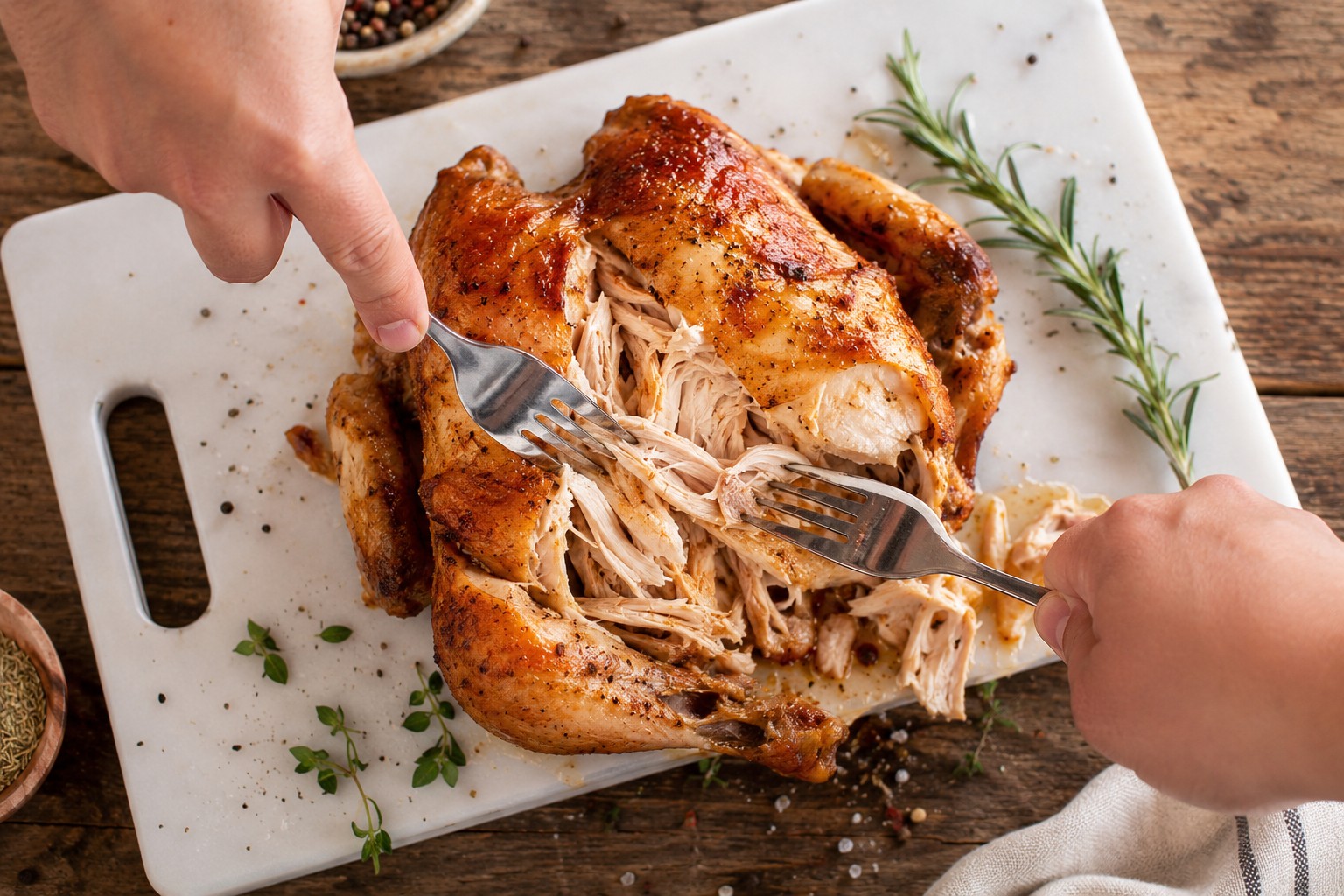
How to Shred Rotisserie Chicken Easily
Shred rotisserie chicken easily by using two forks to pull the meat apart while it’s still warm, working with the grain first and then against it for fine shreds. A stand mixer with the paddle attachment can shred a whole chicken in 30 seconds on low speed.
Hand-shredding method:
- Remove large pieces of chicken from the bones
- Place meat on a cutting board
- Hold one fork steady and use the other to pull meat apart
- Work in the direction the muscle fibers run, then cross-grain for finer texture
- Discard any cartilage, fat, or gristle as you work
Stand mixer method:
- Place chicken pieces in the mixer bowl
- Use the paddle attachment (not the whisk)
- Run on low speed for 20-30 seconds
- Check texture and pulse for another 10 seconds if needed
- Don’t over-mix or the chicken becomes mushy
The mixer method works best when you need a large quantity of evenly shredded chicken for meal prep. Hand-shredding gives you more control over texture—useful when you want some larger chunks mixed with fine shreds. For tips on preparing chicken for different cooking methods, see our article on the best way to cook chicken breast for shredding.
Can You Freeze Leftover Rotisserie Chicken
You can freeze leftover rotisserie chicken for up to 3 months in freezer-safe bags or airtight containers, maintaining good quality and flavor when properly wrapped. Remove as much air as possible from bags and label with the date before freezing.
Best practices for freezing:
- Shred or chop the chicken before freezing for faster thawing and easier portioning
- Divide into meal-sized portions (1-2 cups each) so you only thaw what you need
- Flatten freezer bags to save space and speed up freezing and thawing
- Add a tablespoon of chicken broth to each portion to prevent dryness
- Wrap containers in an extra layer of plastic wrap or foil to prevent freezer burn
Thawing methods:
- Refrigerator: 8-12 hours (safest method)
- Cold water: 1-2 hours in a sealed bag, changing water every 30 minutes
- Microwave: use defrost setting, then cook immediately
Never refreeze chicken that’s been thawed unless you cook it first. Frozen rotisserie chicken works best in cooked dishes like soups, casseroles, and pasta rather than cold salads where texture matters more. For more information about working with frozen chicken, read our guide on cooking chicken breast from frozen safely.
Easy Rotisserie Chicken Wrap Recipes
Easy rotisserie chicken wrap recipes include buffalo chicken wraps with ranch dressing, Caesar wraps with romaine and parmesan, and BBQ chicken wraps with coleslaw—all taking less than 10 minutes to assemble. The key is using sauces that add moisture and bold flavor to the already-cooked chicken.
Buffalo Chicken Wrap:
- 1 cup shredded rotisserie chicken
- 3 tablespoons buffalo sauce
- 2 tablespoons ranch or blue cheese dressing
- ½ cup shredded lettuce
- ¼ cup diced celery
- Large flour tortilla
Mix chicken with buffalo sauce, spread dressing on tortilla, add chicken mixture, top with lettuce and celery, then roll tightly.
Mediterranean Wrap:
- 1 cup chopped rotisserie chicken
- ¼ cup hummus
- ¼ cup diced cucumber
- ¼ cup diced tomatoes
- 2 tablespoons crumbled feta
- Handful of spinach
- Whole wheat wrap
Spread hummus on wrap, layer chicken and vegetables, sprinkle feta, add spinach, and roll.
Asian-Inspired Wrap:
- 1 cup shredded chicken
- 2 tablespoons peanut sauce or teriyaki
- ¼ cup shredded carrots
- ¼ cup red cabbage
- 2 tablespoons chopped peanuts
- Fresh cilantro
- Large tortilla
The trick to non-soggy wraps is spreading thick sauces (hummus, cream cheese, guacamole) directly on the tortilla first to create a moisture barrier, then adding wet ingredients in the center only.
How to Make Rotisserie Chicken Crispy Again
Make rotisserie chicken crispy again by reheating it in a 400°F oven for 5-7 minutes on a wire rack set over a baking sheet, or pan-frying pieces in a tablespoon of oil over medium-high heat for 2-3 minutes per side. Both methods restore the crispy skin and warm the meat without drying it out.
Oven method (best for larger pieces):
- Preheat oven to 400°F
- Place chicken on a wire rack over a baking sheet
- Brush lightly with oil or melted butter
- Heat for 5-7 minutes until skin sizzles
- Broil for 1-2 minutes if you want extra crispiness
Skillet method (best for shredded or chopped chicken):
- Heat 1-2 tablespoons oil in a cast-iron or non-stick skillet
- Add chicken in a single layer (don’t crowd the pan)
- Let it sit undisturbed for 2-3 minutes to develop crispy edges
- Flip and cook another 1-2 minutes
- Season with salt, pepper, or spices while hot
Air fryer method (fastest):
- Preheat air fryer to 375°F
- Arrange chicken in a single layer
- Cook for 3-4 minutes
- Shake basket and cook 2 more minutes
Avoid the microwave if you want crispy texture—it steams the chicken and makes the skin rubbery. For more techniques on keeping chicken moist during cooking, see our guide on the best way to cook chicken breasts to keep them moist.
Quick Pasta Dishes with Rotisserie Chicken
Quick pasta dishes with rotisserie chicken include creamy Alfredo pasta, lemon garlic pasta, pesto pasta, and chicken carbonara—all ready in 15-20 minutes using the already-cooked chicken. Add the chicken at the end of cooking so it just warms through without drying out.
Creamy Chicken Alfredo:
- 8 oz fettuccine
- 2 cups chopped rotisserie chicken
- 1 cup heavy cream
- ½ cup grated Parmesan
- 2 cloves garlic, minced
- Salt, pepper, and nutmeg
Cook pasta, sauté garlic in butter, add cream and Parmesan, toss with pasta and chicken, season to taste.
Lemon Garlic Chicken Pasta:
- 8 oz spaghetti or linguine
- 2 cups shredded chicken
- 3 tablespoons olive oil
- 4 cloves garlic, sliced
- Zest and juice of 1 lemon
- ¼ cup pasta water
- Fresh parsley and red pepper flakes
Cook pasta, reserve pasta water, sauté garlic in oil, add lemon zest and juice, toss with pasta and chicken, add pasta water to create sauce.
Pesto Chicken Pasta:
- 8 oz rotini or penne
- 2 cups diced chicken
- ½ cup basil pesto
- ½ cup cherry tomatoes, halved
- ¼ cup pine nuts, toasted
- Parmesan for serving
Cook pasta, toss hot pasta with pesto, fold in chicken and tomatoes, top with pine nuts and cheese.
The pasta water is crucial—its starch helps sauces cling to the noodles and chicken. Always reserve at least ½ cup before draining.
Healthy Snacks to Make with Leftover Chicken
Healthy snacks to make with leftover chicken include chicken lettuce cups, protein-packed chicken salad with Greek yogurt, chicken and veggie skewers, and buffalo chicken celery sticks—all high in protein and low in processed carbs. These snacks work well for meal prep and stay fresh for 2-3 days.
Chicken Lettuce Cups:
- 1 cup finely chopped chicken
- 2 tablespoons hoisin or teriyaki sauce
- ¼ cup diced water chestnuts
- 2 green onions, sliced
- Butter lettuce leaves
Mix chicken with sauce and water chestnuts, spoon into lettuce leaves, top with green onions.
Greek Yogurt Chicken Salad:
- 2 cups diced chicken
- ½ cup plain Greek yogurt
- 1 tablespoon Dijon mustard
- ¼ cup diced celery
- ¼ cup halved grapes
- 2 tablespoons chopped pecans
- Salt and pepper
Mix all ingredients, serve on cucumber slices or whole grain crackers.
Chicken Veggie Skewers:
- Chicken pieces
- Cherry tomatoes
- Cucumber chunks
- Bell pepper pieces
- Thread on small skewers, drizzle with balsamic glaze
Buffalo Chicken Celery Sticks:
- Mix shredded chicken with buffalo sauce
- Fill celery sticks
- Top with blue cheese crumbles
These snacks provide 15-25 grams of protein per serving and take less than 10 minutes to prepare. For more ideas on healthy chicken preparation, check out the healthiest way to eat chicken breast.
Best Sauces to Pair with Rotisserie Chicken Wraps
The best sauces to pair with rotisserie chicken wraps include ranch dressing, chipotle mayo, tzatziki, peanut sauce, and honey mustard—each creating a completely different flavor profile from the original seasoned chicken. Use 2-3 tablespoons of sauce per wrap for optimal moisture and flavor.
Sauce pairing guide:
Ranch or Blue Cheese pairs with buffalo chicken, bacon, lettuce, and tomato for a classic American flavor.
Chipotle Mayo (mix mayo with chipotle peppers in adobo) works with black beans, corn, avocado, and cilantro for a Southwestern wrap.
Tzatziki (Greek yogurt, cucumber, garlic, dill) complements feta, olives, tomatoes, and spinach in Mediterranean wraps.
Peanut Sauce matches with shredded carrots, cabbage, cilantro, and crushed peanuts for Asian-inspired wraps.
Honey Mustard balances with Swiss cheese, spinach, and apple slices for a sweet-savory combination.
Avocado Crema (blended avocado, lime, cilantro, sour cream) enhances Mexican-style wraps with salsa and cheese.
Make sauces thicker than usual for wraps—thin sauces leak out and make the tortilla soggy. If using store-bought dressing, choose “thick” or “creamy” versions rather than pourable ones.
Rotisserie Chicken Salad vs Chicken Caesar Salad
Rotisserie chicken salad typically refers to a mayo-based chicken salad with celery and seasonings served on bread or greens, while chicken Caesar salad is a green salad with romaine lettuce, Caesar dressing, croutons, and Parmesan topped with sliced chicken. Both use rotisserie chicken but serve completely different purposes.
Classic Chicken Salad:
- Chopped rotisserie chicken
- Mayonnaise or Greek yogurt base
- Diced celery for crunch
- Optional: grapes, apples, pecans, dried cranberries
- Served on bread, crackers, or lettuce cups
- Best for: sandwiches, meal prep, picnics
Chicken Caesar Salad:
- Romaine lettuce base
- Caesar dressing (anchovy, garlic, lemon, Parmesan)
- Sliced or chopped rotisserie chicken
- Croutons and shaved Parmesan
- Served as a main-dish salad
- Best for: quick dinners, restaurant-style meals
Chicken salad is more portable and works cold, while Caesar salad is best eaten fresh because the lettuce wilts once dressed. For meal prep, make chicken salad on Sunday and it lasts all week; make Caesar salad components separately and assemble just before eating.
You can also create other salad variations: Cobb salad with bacon and hard-boiled eggs, Asian chicken salad with mandarin oranges and crispy wontons, or Greek salad with feta and olives.
Can You Use Rotisserie Chicken Bones for Stock
You can use rotisserie chicken bones for stock and the result is flavorful, though slightly different from stock made with raw bones because the chicken is already seasoned. Simmer the carcass with vegetables and water for 2-4 hours to extract gelatin and flavor.
Basic rotisserie chicken stock recipe:
- Place the chicken carcass (including skin) in a large pot
- Add 1 onion (quartered), 2 carrots (chopped), 2 celery stalks (chopped)
- Add 2 bay leaves, 1 teaspoon peppercorns, and fresh herbs if available
- Cover with 8-10 cups cold water
- Bring to a boil, then reduce to a gentle simmer
- Simmer uncovered for 2-4 hours, skimming foam occasionally
- Strain through a fine-mesh sieve
- Cool and refrigerate; remove fat layer from the top
The stock will have a deeper, more roasted flavor than stock from raw bones because the chicken was already cooked. It may also be slightly saltier depending on how the original chicken was seasoned—taste before adding salt to recipes.
Uses for rotisserie chicken stock:
- Soup base (especially chicken noodle or tortilla soup)
- Cooking liquid for rice, quinoa, or couscous
- Deglazing pan for sauces
- Adding moisture to casseroles
Store stock in the refrigerator for up to 5 days or freeze in ice cube trays for easy portioning.
Is Rotisserie Chicken Good for Meal Prep
Rotisserie chicken is excellent for meal prep because it’s already cooked, seasoned, and ready to portion into multiple meals, saving 60-90 minutes compared to cooking raw chicken. One $6-8 chicken yields 3-4 cups of meat, enough for 4-6 meal prep servings.
Meal prep strategy:
- Buy chicken on Sunday or your prep day
- Remove all meat while slightly warm (easier to shred)
- Divide into portions based on your meal plan
- Store in separate containers with different seasonings
- Save bones for stock
Sample 5-day meal prep from one chicken:
- Monday: Buffalo chicken wrap with ranch and celery
- Tuesday: Chicken Caesar salad with homemade croutons
- Wednesday: Creamy chicken Alfredo pasta
- Thursday: Chicken fried rice with vegetables
- Friday: Chicken quesadillas with salsa and guacamole
Each meal tastes completely different because you’re changing the sauce, format, and accompanying ingredients. The chicken itself is neutral enough to take on new flavors.
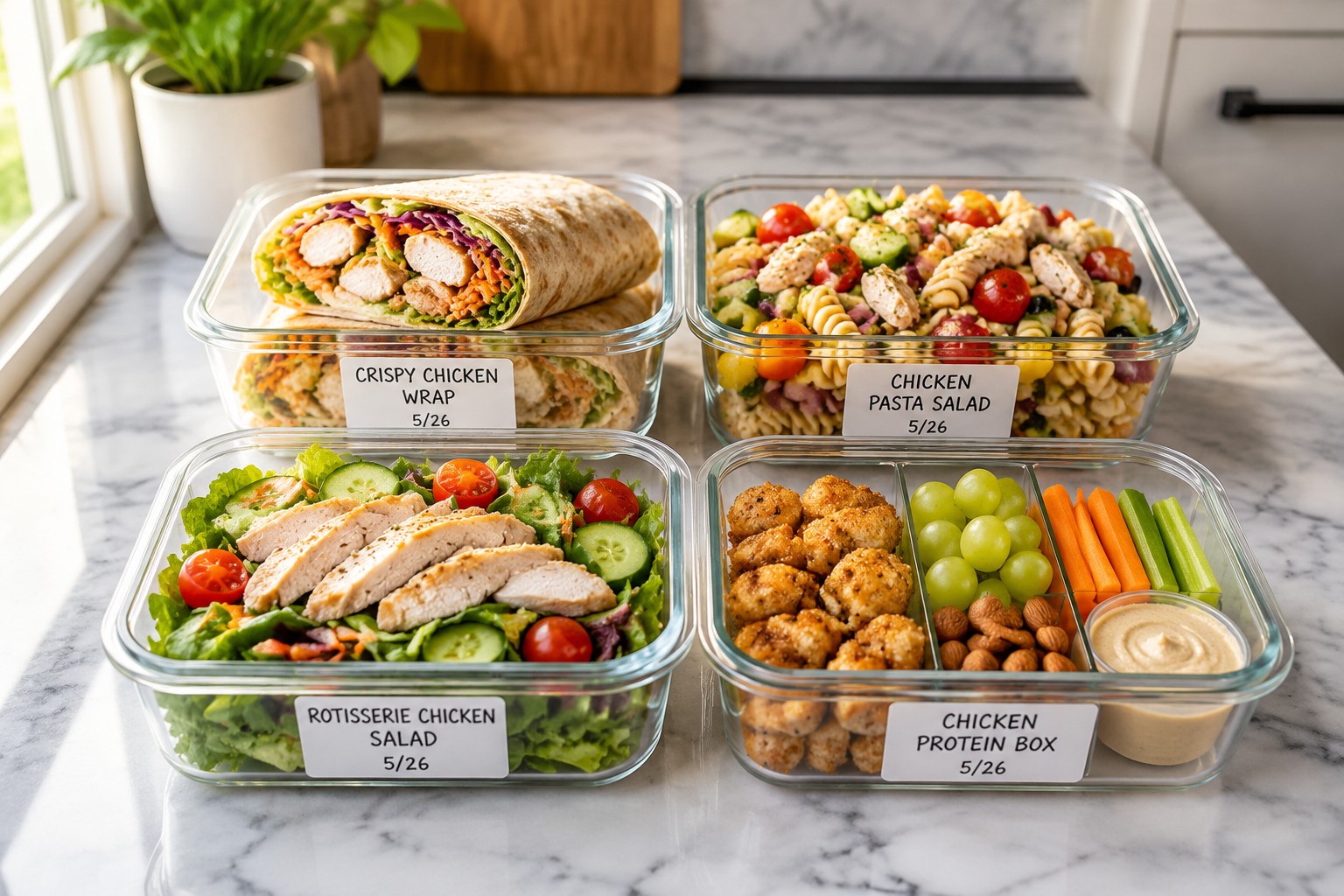
Meal prep containers: Use glass containers with tight lids for salads and pasta, and keep wraps unassembled (store components separately and assemble at lunch) to prevent sogginess.
What Not to Do with Leftover Rotisserie Chicken
Do not leave rotisserie chicken at room temperature for more than 2 hours, reheat it more than once, or store it with the bones still in for more than a day—these practices increase bacterial growth and food safety risks. Also avoid over-microwaving, which creates rubbery, dry chicken.
Common mistakes to avoid:
Leaving chicken in the original container: The plastic container doesn’t seal well and allows bacteria to grow. Transfer to an airtight container immediately.
Storing chicken with bones attached: Bones retain moisture and create an environment for bacteria. Remove meat from bones within 24 hours.
Reheating multiple times: Each reheating cycle increases the risk of bacterial growth. Only reheat the portion you’ll eat immediately.
Microwaving on high power: This dries out the chicken and makes it rubbery. Use 50% power and add a splash of water or broth.
Freezing without removing air: Freezer burn ruins texture and flavor. Press air out of freezer bags or use vacuum-sealed containers.
Adding chicken to hot dishes too early: If you’re making soup or pasta, add the chicken in the last 5 minutes just to warm through—cooking it longer dries it out.
Not tasting before adding salt: Rotisserie chicken is already seasoned, sometimes heavily. Taste your dish before adding more salt.
Rotisserie Chicken Recipes for Picky Eaters
Rotisserie chicken recipes for picky eaters include chicken quesadillas with just cheese, plain chicken and pasta with butter, chicken nuggets made from chopped chicken pieces, and chicken and rice bowls with mild seasonings. The key is keeping flavors simple and textures familiar.
Kid-Friendly Chicken Quesadillas:
- Shredded chicken
- Shredded cheddar or mozzarella
- Flour tortillas
- Cook in a skillet until cheese melts
Serve with sour cream or ranch for dipping. No vegetables required—add them gradually over time.
Butter Pasta with Chicken:
- Cooked pasta (shapes like rotini or penne work best)
- Diced chicken
- Butter and Parmesan
- Optional: peas or corn if accepted
Mix warm pasta with butter, fold in chicken, sprinkle with cheese.
Homemade Chicken Nuggets:
- Cut chicken into nugget-sized pieces
- Coat in beaten egg, then breadcrumbs
- Bake at 400°F for 10-12 minutes until crispy
- Serve with ketchup or honey mustard
Chicken and Rice Bowl:
- White or brown rice
- Diced chicken
- Drizzle of soy sauce or teriyaki (mild)
- Optional: edamame or cucumber
Let picky eaters build their own bowls so they control what goes in. Start with familiar flavors and gradually introduce new ingredients one at a time.
FAQ
How do you keep rotisserie chicken moist when reheating? Add 2-3 tablespoons of chicken broth or water to the container before reheating, cover with a damp paper towel, and microwave at 50% power in 30-second intervals. The steam keeps the chicken from drying out.
Can you eat rotisserie chicken cold? Yes, rotisserie chicken is safe to eat cold straight from the refrigerator and works well in cold salads, wraps, and sandwiches. Just ensure it’s been stored properly at 40°F or below.
What’s the fastest way to use leftover rotisserie chicken? The fastest way is making a wrap or quesadilla, which takes 5-10 minutes. Shred the chicken, add sauce and cheese, wrap in a tortilla, and heat in a skillet for 2-3 minutes per side.
Should you remove the skin from rotisserie chicken before storing? Yes, remove the skin before storing unless you plan to crisp it up within 24 hours. The skin becomes soggy in the fridge and doesn’t reheat well in most dishes.
How much meat do you get from a rotisserie chicken? A typical rotisserie chicken yields 3-4 cups of shredded or chopped meat, depending on the size of the bird. This is enough for 4-6 servings in most recipes.
Can you use rotisserie chicken in soup? Yes, rotisserie chicken works perfectly in soup. Add it during the last 5-10 minutes of cooking just to warm through, and use the bones to make the soup base for extra flavor.
What vegetables go well with rotisserie chicken wraps? Lettuce, tomatoes, cucumbers, bell peppers, shredded carrots, red cabbage, spinach, and avocado all work well in chicken wraps. Choose 2-3 vegetables per wrap for the best texture balance.
Is rotisserie chicken already seasoned enough? Most rotisserie chickens are well-seasoned with salt, garlic, and herbs, but you can add more flavor with sauces, spices, or marinades depending on your recipe. Taste before adding extra salt.
How do you make rotisserie chicken taste different each day? Change the sauce, format, and accompanying ingredients. Use buffalo sauce for wraps on Monday, pesto for pasta on Tuesday, teriyaki for rice bowls on Wednesday—the chicken takes on completely new flavors.
Can you use rotisserie chicken for chicken salad sandwiches? Yes, rotisserie chicken makes excellent chicken salad. Chop it finely, mix with mayo or Greek yogurt, add celery and seasonings, and serve on bread, crackers, or lettuce cups.
What’s the difference between white and dark meat from rotisserie chicken? White meat (breast) is leaner and milder, while dark meat (thighs and legs) is juicier and more flavorful. Use white meat for salads and wraps, dark meat for tacos and pasta where moisture matters.
Should you wash rotisserie chicken before using it? No, never wash rotisserie chicken or any cooked poultry. Washing spreads bacteria around your kitchen through splashing water. The chicken is already cooked and safe to eat as-is.
Conclusion
Knowing what to cook with leftover rotisserie chicken—crispy wraps, salads, pasta, and snacks—transforms one convenient store-bought chicken into a week’s worth of completely different meals. The key is changing the format, sauce, and texture so each dish feels new rather than like reheated leftovers.
Start by properly storing your chicken within 2 hours of purchase, removing the meat from the bones and dividing it into meal-sized portions. Shred some for wraps and tacos, chop some for salads and bowls, and dice some for pasta and soups. Save the bones for homemade stock that adds depth to future meals.
Focus on bold sauces and crunchy textures—buffalo sauce with ranch, pesto with pine nuts, teriyaki with crispy vegetables—to create meals that taste nothing like the original seasoned chicken. When you need crispy texture, reheat in a hot skillet or oven rather than the microwave.
Your next steps: Buy a rotisserie chicken this week, shred it while it’s warm, divide it into three portions, and try one wrap recipe, one pasta dish, and one salad. You’ll spend less than 30 minutes total and have three distinct meals ready to go. For more guidance on working with chicken, explore our collection of chicken cooking guides covering everything from safe temperatures to moisture-retention techniques.
SEO Meta Title: Leftover Rotisserie Chicken Recipes: Wraps, Salads & More


