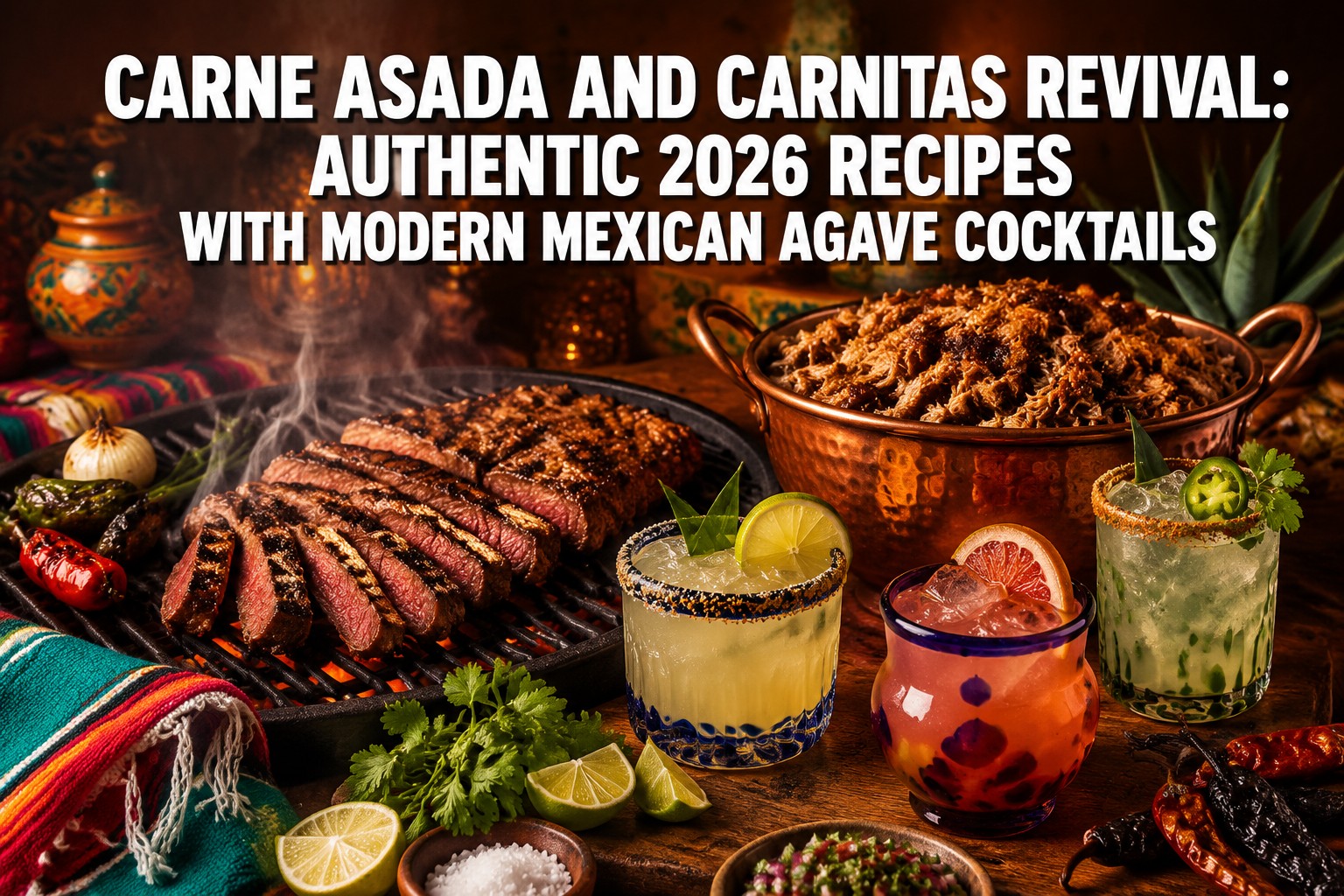
Carne Asada and Carnitas Revival: Authentic 2026 Recipes with Modern Mexican Agave Cocktails
Last updated: June 7, 2026
Mexican meat traditions are experiencing a major comeback in 2026, with carne asada and carnitas leading the charge alongside innovative agave cocktails. This revival blends authentic cooking methods with modern techniques, including home spit-roasting and Lebanese-Mexican fusion elements that trace back to the tacos árabes tradition. The Carne Asada and Carnitas Revival: Authentic 2026 Recipes with Modern Mexican Agave Cocktails movement brings bold flavors, traditional preparation methods, and contemporary cocktail pairings to home kitchens across North America.
Key Takeaways
- Carne asada uses thinly sliced, marinated beef (typically skirt or flank steak) grilled quickly over high heat, while carnitas are chunks of pork shoulder slow-cooked until tender and then crisped
- Authentic 2026 marinades incorporate citrus, chilies, and Lebanese-inspired spices reflecting the historical tacos árabes influence
- The best pork cuts for carnitas are pork shoulder (Boston butt) or pork butt, which have enough fat to stay moist during long cooking
- Modern agave cocktails featuring corn-chaya combinations and artisanal mezcal pair exceptionally well with both meat preparations
- Traditional carnitas take 2.5-3 hours to cook properly, while carne asada requires only 10-15 minutes of active grilling after marinating
- Common mistakes include overcooking carne asada past medium-rare and not crisping carnitas after the initial braise
- Both dishes work for beginners with proper guidance, though carnitas require more patience and time management
- Authentic Mexican agave spirits are increasingly available at specialty liquor stores and online retailers in 2026
What Is the Difference Between Carne Asada and Carnitas?
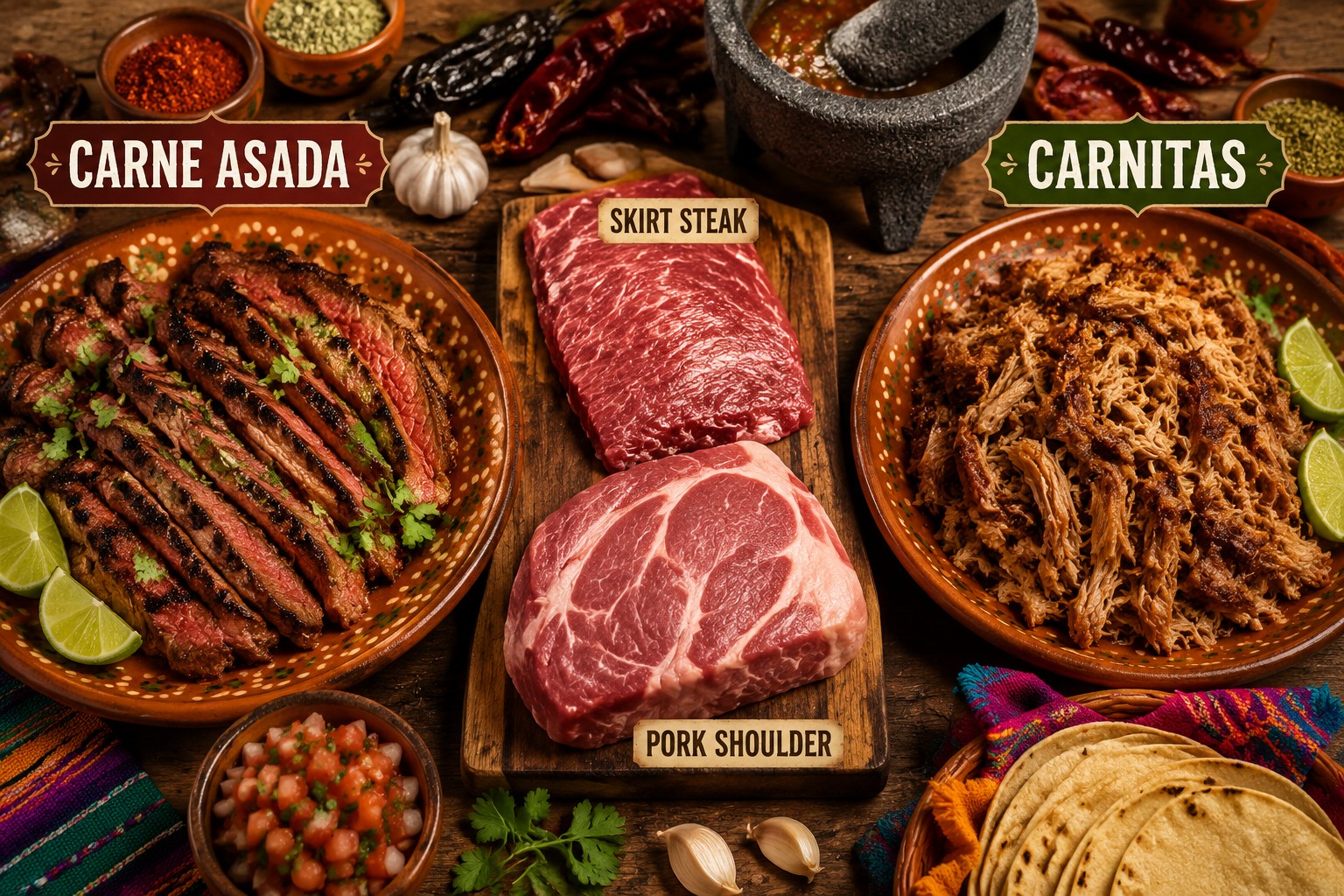
Carne asada and carnitas represent two distinct Mexican meat preparation styles that differ in cut, cooking method, and final texture. Carne asada translates to “grilled meat” and uses thin cuts of beef (usually skirt or flank steak) marinated in citrus and spices, then grilled quickly over high heat for 3-5 minutes per side. Carnitas means “little meats” and involves pork shoulder braised slowly in lard or its own fat for 2.5-3 hours until fall-apart tender, then crisped under high heat.
Key differences:
- Protein type: Carne asada uses beef; carnitas use pork
- Cooking time: Carne asada takes 15 minutes total; carnitas need 2.5-3 hours
- Texture: Carne asada is chewy and slightly charred; carnitas are tender inside with crispy edges
- Fat content: Carne asada is leaner; carnitas are higher in fat due to the cut and cooking method
- Serving style: Carne asada is sliced thin against the grain; carnitas are shredded or pulled into chunks
Choose carne asada when you want a quick weeknight meal with bold char flavor and need to serve a crowd quickly. Pick carnitas when you have time for slow cooking and want rich, melt-in-your-mouth pork that can be prepared ahead and reheated.
How to Make Authentic Carne Asada at Home
Authentic carne asada starts with the right cut and a citrus-based marinade that tenderizes the meat while adding flavor. Use 2 pounds of skirt steak or flank steak, trimmed of excess fat. The 2026 revival emphasizes marinades that blend traditional Mexican ingredients with Lebanese-inspired spices, reflecting the historical influence of Middle Eastern immigrants on Mexican cuisine.
Authentic 2026 Carne Asada Recipe:
- Prepare the marinade: Combine 1/2 cup fresh orange juice, 1/4 cup lime juice, 4 minced garlic cloves, 1 tablespoon cumin, 1 teaspoon coriander, 1 teaspoon smoked paprika, 1/2 teaspoon cinnamon (Lebanese influence), 1/4 cup chopped cilantro, 2 tablespoons olive oil, and 1 teaspoon salt
- Marinate the meat: Place steak in a shallow dish, pour marinade over it, and refrigerate for 2-4 hours (not longer than 8 hours or the citrus will make it mushy)
- Prepare your grill: Heat to high (450-500°F) and oil the grates
- Grill the steak: Cook 3-4 minutes per side for medium-rare (internal temp 130-135°F)
- Rest and slice: Let meat rest 5 minutes, then slice thinly against the grain
Common mistake: Many home cooks over-marinate carne asada or cook it past medium-rare, resulting in tough, chewy meat. The thin cut cooks quickly and continues cooking while resting, so pull it off the grill when it’s slightly underdone.
For those wondering about alternative cooking methods, you can achieve similar results using a cast-iron skillet or grill pan, though you’ll miss some of the smoky char flavor from an outdoor grill.
What Marinades Are Used in Authentic 2026 Carne Asada Recipes?
The 2026 carne asada revival features marinades that honor both traditional Mexican flavors and Lebanese-Mexican fusion elements. Authentic marinades always include citrus for acid (to tenderize), oil (to carry fat-soluble flavors), and aromatics (garlic, chilies, herbs). The Lebanese influence adds warm spices like cinnamon, allspice, and coriander that complement the beef without overpowering it.
Three signature 2026 marinade styles:
Traditional Mexican:
- Orange juice, lime juice, garlic, cumin, oregano, cilantro, jalapeño, olive oil
Lebanese-Mexican Fusion:
- Orange juice, lemon juice, garlic, cumin, coriander, cinnamon, allspice, mint, olive oil
Modern Smoky:
- Orange juice, lime juice, chipotle in adobo, smoked paprika, garlic, cumin, Mexican oregano, avocado oil
The acid-to-oil ratio should be roughly 3:1, and marinating time should stay between 2-8 hours. Less than 2 hours won’t penetrate the meat enough; more than 8 hours will make the exterior mushy. For best results, bring the marinated meat to room temperature 30 minutes before grilling.
Best Cuts of Meat for Carnitas
Carnitas require fatty pork cuts that can withstand long, slow cooking without drying out. Pork shoulder (also called Boston butt or pork butt) is the gold standard because it contains enough intramuscular fat and connective tissue to stay moist and become tender during the 2.5-3 hour cooking process. The fat renders slowly, basting the meat from within while the collagen breaks down into gelatin.
Recommended cuts ranked by quality:
- Pork shoulder/Boston butt (best choice): 15-20% fat content, perfect marbling, yields the most authentic texture
- Pork butt: Same cut as Boston butt, just a different regional name
- Pork shoulder picnic roast: Slightly leaner but still works well, may need added lard
- Pork belly (for extra-rich carnitas): Very high fat content, use in combination with shoulder for balance
Avoid lean cuts like pork loin or tenderloin, which will dry out and become stringy during the long cooking time. Plan on 1/3 to 1/2 pound of raw pork per person, as the meat will lose about 25% of its weight during cooking.
Pro tip: Cut the pork shoulder into 2-3 inch chunks before cooking rather than cooking it whole. This increases the surface area that gets crispy during the final browning step and reduces cooking time by about 30 minutes.
How Long Does It Take to Make Traditional Carnitas?
Traditional carnitas require 2.5 to 3 hours of total cooking time, including both the slow braise and the final crisping step. The pork shoulder chunks simmer gently in lard or a combination of lard and water until the meat is fall-apart tender (about 2-2.5 hours), then get crisped under the broiler or in a hot skillet for 5-10 minutes. This two-stage process creates the signature texture: tender and juicy inside with crispy, caramelized edges.
Carnitas cooking timeline:
- Prep time: 15 minutes (cutting meat, preparing aromatics)
- Initial sear (optional): 10 minutes
- Slow braise: 2-2.5 hours at low simmer
- Crisping stage: 5-10 minutes under broiler or in hot pan
- Total active time: 30-40 minutes
- Total elapsed time: 2.5-3 hours
The meat is done when it shreds easily with two forks and has an internal temperature of 195-205°F. At this temperature, the collagen has fully broken down and the fat has rendered, creating that melt-in-your-mouth texture.
Time-saving option: Make carnitas in a slow cooker (4-5 hours on high or 7-8 hours on low) or Instant Pot (45 minutes at high pressure plus natural release). Both methods work well but require the same final crisping step for authentic texture. The stovetop method gives you more control over the final consistency.
Common Mistakes When Cooking Carnitas
The most common carnitas mistake is skipping the final crisping step, which leaves you with tender but texturally one-dimensional pork. Authentic carnitas must have crispy, caramelized edges that contrast with the tender interior. Home cooks also frequently use too-lean cuts, cook at too high a temperature (causing tough meat), or fail to season adequately during the braising stage.
Seven mistakes to avoid:
- Using lean pork cuts: Loin or tenderloin will dry out; always use shoulder
- Cooking too hot: Rapid boiling makes meat tough; maintain a gentle simmer
- Skipping the crisp: The final high-heat step is non-negotiable for authentic texture
- Under-seasoning: Salt the cooking liquid generously; the pork needs to absorb flavor
- Not rendering enough fat: If using water instead of lard, the meat won’t be as rich
- Cutting chunks too small: Pieces under 2 inches will fall apart and become mushy
- Rushing the process: Carnitas cannot be hurried; the collagen needs time to break down
Edge case: If your carnitas turn out dry despite using pork shoulder, you likely cooked them at too high a temperature or for too long. The sweet spot is 195-205°F internal temperature. Beyond that, even fatty cuts start losing moisture.
For readers interested in proper meat preparation techniques, understanding how to keep chicken breast from getting tough offers similar principles about low-and-slow cooking versus high-heat methods.
Are Carnitas Healthy or High in Fat?
Carnitas are high in fat due to both the cut of meat (pork shoulder contains 15-20% fat) and the traditional cooking method (braising in lard). A typical 4-ounce serving of carnitas contains approximately 280-320 calories, 20-24 grams of fat (including 7-9 grams of saturated fat), and 24-26 grams of protein. This makes carnitas a calorie-dense, high-protein food that should be eaten in moderation as part of a balanced diet.
Nutritional considerations:
- Protein content: Excellent source of complete protein for muscle maintenance
- Fat profile: Mix of saturated and monounsaturated fats; higher in saturated fat than chicken or fish
- Micronutrients: Good source of B vitamins (especially B12), zinc, and selenium
- Sodium: Can be high depending on seasoning; control by limiting added salt
Healthier preparation options:
- Trim visible fat from pork shoulder before cooking (reduces fat by 15-20%)
- Braise in water or broth instead of lard (cuts fat content by 25-30%)
- Increase vegetable sides and use carnitas as a protein accent rather than the main focus
- Serve in lettuce wraps instead of flour tortillas to reduce overall calorie load
Choose carnitas when you want a satisfying, protein-rich meal and can accommodate the higher fat content in your daily intake. Skip them if you’re following a strict low-fat diet or need to limit saturated fat for health reasons. The occasional serving as part of a varied diet poses no health concerns for most people.
What Agave Cocktails Pair Well with Carne Asada?
Modern Mexican agave cocktails featuring tequila or mezcal pair exceptionally well with carne asada’s bold, charred flavors. The 2026 cocktail revival emphasizes corn-chaya drinks (using fresh corn and chaya leaves, a traditional Mayan green) that complement rather than compete with the meat’s citrus marinade and smoky char. Choose cocktails with citrus, herbal, or slightly bitter notes that cut through the richness of the beef.
Five signature pairings for carne asada:
- Corn-Chaya Margarita: Blanco tequila, fresh lime juice, agave nectar, muddled corn kernels, chaya leaves, served on the rocks with a salted rim
- Mezcal Paloma: Mezcal, fresh grapefruit juice, lime juice, agave syrup, topped with sparkling water
- Smoky Michelada: Mexican lager, lime juice, Worcestershire sauce, hot sauce, with a mezcal float
- Tequila Reposado Old Fashioned: Reposado tequila, agave nectar, orange bitters, expressed orange peel
- Charred Pineapple Margarita: Blanco tequila, grilled pineapple juice, lime juice, jalapeño, cilantro
The key is matching intensity: carne asada’s bold char and citrus marinade need cocktails with enough character to stand up to those flavors. Avoid overly sweet or creamy cocktails that will clash with the meat’s savory profile.
Serving tip: Prepare cocktails with fresh-squeezed citrus and quality agave spirits (100% agave tequila or artisanal mezcal). The 2026 trend emphasizes craft spirits and fresh ingredients over pre-made mixes.
Best Tequila or Mezcal for Modern Mexican Cocktails
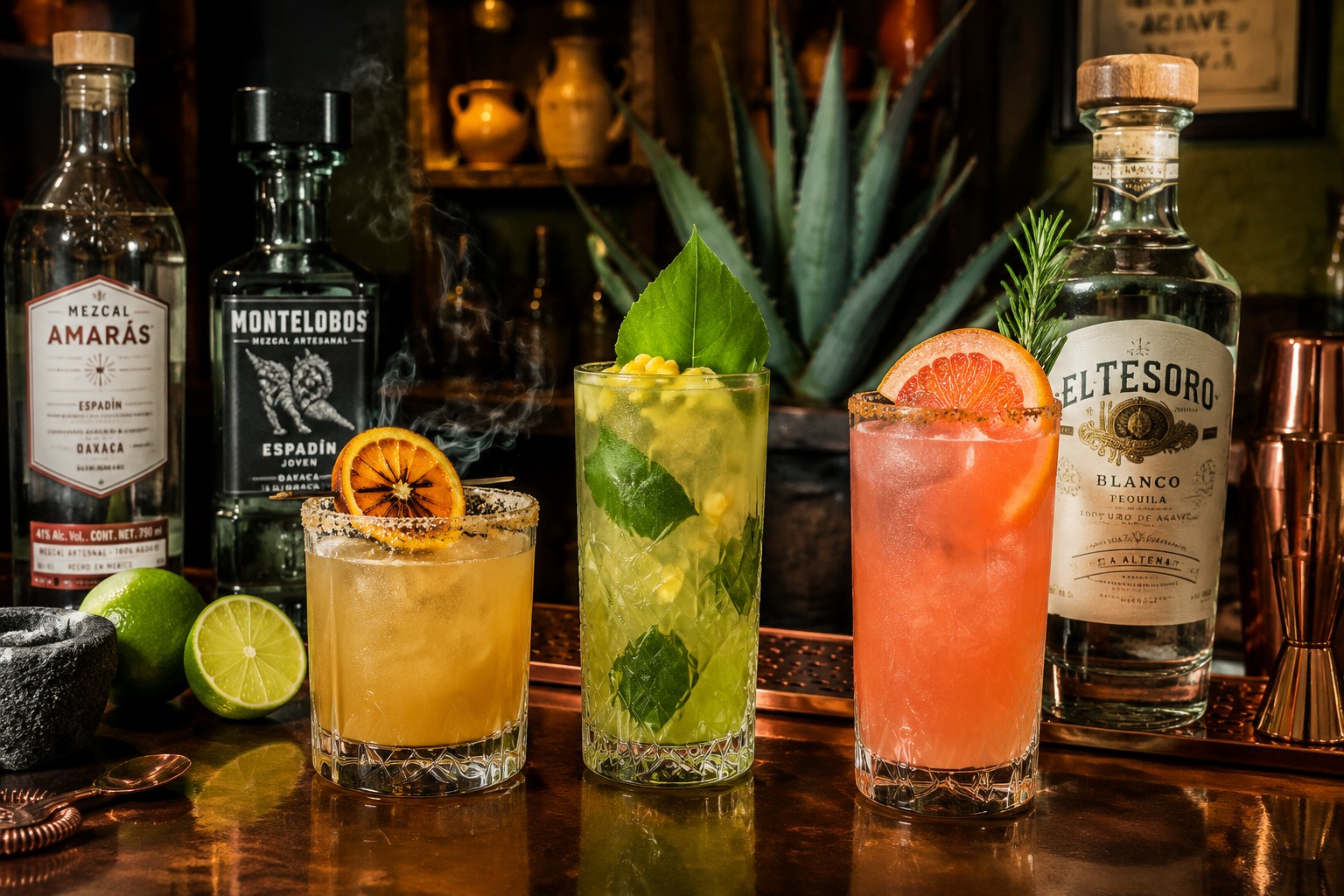
The best agave spirits for modern Mexican cocktails in 2026 are 100% agave tequilas and artisanal mezcals that showcase the spirit’s natural flavors without excessive sweetness or artificial additives. For cocktails, blanco (unaged) tequila works best in citrus-forward drinks, reposado (aged 2-12 months) adds complexity to spirit-forward cocktails, and mezcal brings smoky depth that pairs beautifully with grilled meats.
Recommended spirit categories by use:
For margaritas and citrus cocktails:
- 100% agave blanco tequila (look for brands like Espolòn, Cimarrón, or Olmeca Altos)
- Clean, crisp flavor that doesn’t compete with fresh citrus
- Price range: $25-45 per 750ml bottle
For spirit-forward cocktails:
- Reposado tequila (aged in oak, adds vanilla and caramel notes)
- Añejo tequila for sipping or very simple cocktails
- Price range: $35-60 per 750ml bottle
For smoky, complex drinks:
- Artisanal mezcal from Oaxaca (look for espadin agave as a starting point)
- Avoid overly smoky mezcals that overpower other ingredients
- Price range: $40-70 per 750ml bottle
What to avoid: Mixto tequilas (less than 100% agave), artificially flavored spirits, and any bottle that doesn’t clearly state “100% agave” on the label. These lower-quality spirits contain added sugars and will produce inferior cocktails with harsh aftertastes.
Where to buy: Specialty liquor stores, online retailers like Drizly or ReserveBar, and increasingly at well-stocked grocery stores in 2026. Many regions now have dedicated agave spirit sections with knowledgeable staff who can guide your selection.
Can I Make Carne Asada Without a Grill?
Yes, you can make excellent carne asada without an outdoor grill using a cast-iron skillet, grill pan, or broiler. While you’ll miss some of the smoky char flavor from live fire, these alternative methods still produce well-seared, flavorful meat when done correctly. The key is using extremely high heat and not overcrowding the pan, which would cause the meat to steam rather than sear.
Three no-grill methods:
Cast-iron skillet method (best indoor option):
- Heat a heavy cast-iron skillet over high heat until smoking (4-5 minutes)
- Pat marinated steak completely dry with paper towels
- Add 1 tablespoon high-smoke-point oil (avocado or grapeseed)
- Sear steak 3-4 minutes per side without moving it
- Rest 5 minutes before slicing
Broiler method:
- Position oven rack 4-6 inches from broiler element
- Preheat broiler on high for 10 minutes
- Place steak on a wire rack over a baking sheet
- Broil 4-5 minutes per side, watching carefully to prevent burning
- Rest and slice
Grill pan method:
- Heat ridged grill pan over high heat until very hot
- Follow same process as cast-iron method
- Ridges create grill marks and allow fat to drain
Pro tip: Add a small amount of liquid smoke (1/4 teaspoon) to your marinade if using indoor methods to approximate the smoky flavor from outdoor grilling. Open windows and turn on your exhaust fan, as high-heat searing creates significant smoke.
For readers exploring various cooking methods, our guide on the best ways to cook chicken breast covers similar high-heat techniques that apply to other proteins.
What Sides Go with Carne Asada and Carnitas?
Traditional Mexican sides that complement both carne asada and carnitas include rice, beans, fresh salsas, grilled vegetables, and warm tortillas. The 2026 revival emphasizes lighter, vegetable-forward sides that balance the richness of the meats while incorporating Lebanese-Mexican fusion elements like tahini-spiked beans or za’atar-dusted grilled vegetables.
Essential sides for both meats:
- Mexican rice (arroz rojo): Tomato-based rice cooked with garlic, onion, and chicken broth
- Refried beans or whole pinto beans: Creamy, protein-rich complement to the meat
- Fresh pico de gallo: Diced tomatoes, onion, cilantro, jalapeño, lime juice
- Guacamole: Mashed avocados with lime, cilantro, onion, and salt
- Grilled vegetables: Bell peppers, onions, zucchini, and corn
- Warm corn or flour tortillas: For making tacos
- Mexican street corn (elote): Grilled corn with mayo, cotija cheese, chili powder, lime
2026 fusion sides:
- Tahini-black bean dip: Refried black beans blended with tahini, cumin, and lime
- Za’atar grilled vegetables: Zucchini and bell peppers dusted with za’atar spice blend
- Corn-chaya salad: Fresh corn kernels, chaya leaves, lime vinaigrette, queso fresco
- Lebanese-style pickled vegetables: Quick-pickled carrots, radishes, and jalapeños with sumac
Serving strategy: Offer 3-4 sides for a complete meal: one starch (rice or beans), one fresh element (salsa or guacamole), one vegetable, and tortillas. This creates a balanced plate with varied textures and temperatures.
Carne Asada vs Al Pastor: Which Is Better?
Carne asada and al pastor are both grilled Mexican meats, but al pastor uses marinated pork cooked on a vertical spit (similar to shawarma), while carne asada uses marinated beef grilled flat. Neither is objectively “better”—the choice depends on your flavor preferences, cooking equipment, and time available. Al pastor has a sweeter, more complex flavor from pineapple and achiote marinade, while carne asada offers bolder, more straightforward beef and citrus flavors.
Key differences:
| Aspect | Carne Asada | Al Pastor |
|---|---|---|
| Meat | Beef (skirt/flank steak) | Pork (shoulder, thinly sliced) |
| Marinade | Citrus, garlic, cumin, chilies | Pineapple, achiote, chilies, vinegar |
| Cooking method | Flat grill, high heat | Vertical spit (trompo) or flat grill |
| Cooking time | 10-15 minutes | 2-3 hours on spit, 15 minutes if pre-marinated and grilled flat |
| Flavor profile | Savory, citrusy, charred | Sweet-savory, complex, slightly fruity |
| Texture | Chewy, slightly firm | Tender, slightly crispy edges |
| Home cooking ease | Easy (just needs a grill or pan) | Difficult (requires special equipment for authentic version) |
Choose carne asada when you want a quick, straightforward grilled beef taco with bold char flavor and have standard grilling equipment. Pick al pastor when you want more complex sweet-savory flavors and either have access to a vertical spit or are willing to adapt the recipe for flat grilling (which sacrifices some authenticity but still tastes excellent).
Home cook reality: Most people find carne asada easier to execute authentically at home, while al pastor often requires compromises unless you invest in specialized equipment or visit a restaurant with a proper trompo.
Where to Buy Authentic Mexican Agave Spirits for Cocktails
Authentic Mexican agave spirits are widely available in 2026 through specialty liquor stores, online retailers, and increasingly at well-stocked grocery stores with dedicated spirits sections. Look for bottles that clearly state “100% agave” for tequila or list the specific agave variety (usually espadin) for mezcal. Avoid mixto tequilas or bottles without clear agave content labeling.
Best purchasing options:
Specialty liquor stores:
- Knowledgeable staff can guide selection
- Often carry artisanal and small-batch producers
- Can request special orders for specific brands
- Price range: $25-100+ per bottle
Online retailers:
- Drizly, ReserveBar, Caskers, Old Town Tequila
- Wider selection than most physical stores
- Read reviews and ratings before purchasing
- Delivery available in most states (check local laws)
Grocery stores with premium spirits sections:
- Whole Foods, Total Wine, BevMo
- Good selection of mid-range quality spirits
- Convenient for one-stop shopping
- Price range: $25-60 per bottle
What to look for on the label:
- “100% agave” or “100% agave azul” for tequila
- NOM number (distillery registration number)
- Specific agave variety for mezcal (espadin is most common)
- Region of origin (Jalisco for tequila, Oaxaca for most mezcal)
- Additive-free certification (increasingly common in 2026)
Red flags: Bottles labeled simply “tequila” without “100% agave,” artificially colored spirits, flavored tequilas for cocktails (save these for sipping if you enjoy them), and prices that seem too good to be true (quality 100% agave tequila rarely costs less than $20 per 750ml bottle).
Is This Cookbook Good for Beginners or Advanced Cooks?
The Carne Asada and Carnitas Revival: Authentic 2026 Recipes with Modern Mexican Agave Cocktails approach works for both beginners and advanced cooks, though each will focus on different aspects. Beginners can start with straightforward carne asada recipes and simple margaritas, which require minimal technique and equipment. Advanced cooks will appreciate the Lebanese-Mexican fusion elements, home spit-roasting techniques, and complex cocktail pairings that challenge their skills.
For beginners:
- Start with basic carne asada using a simple citrus marinade
- Master the cast-iron skillet method before attempting outdoor grilling
- Begin with blanco tequila margaritas using fresh ingredients
- Focus on proper meat temperature and resting times
- Expected learning curve: 2-3 attempts to achieve consistent results
For advanced cooks:
- Experiment with Lebanese-Mexican fusion marinades incorporating warm spices
- Try home spit-roasting techniques for al pastor-style preparations
- Create complex agave cocktails with house-made ingredients (infused spirits, fresh syrups)
- Master the two-stage carnitas process for perfect texture
- Explore different agave varieties and regional mezcal styles
Skills required by recipe type:
- Carne asada: Basic (knife skills, marinating, high-heat cooking)
- Carnitas: Intermediate (time management, temperature control, two-stage cooking)
- Simple cocktails: Basic (measuring, shaking, balancing flavors)
- Complex cocktails: Intermediate to advanced (infusions, syrups, garnish techniques)
The recipes scale in difficulty, allowing cooks to progress from simple preparations to more complex techniques as their confidence grows. Beginners should expect to spend 30-45 minutes on their first carne asada attempt, while advanced cooks might complete the same recipe in 20 minutes.
For those new to cooking proteins properly, understanding how to know when chicken breast is fully cooked provides foundational temperature and visual cues that apply to all meat cookery.
FAQ
How long should I marinate carne asada? Marinate carne asada for 2-4 hours for optimal flavor and tenderness. Less than 2 hours won’t penetrate the meat enough, while more than 8 hours will make the exterior mushy from the citrus acid. Never marinate longer than 12 hours.
Can I make carnitas ahead of time? Yes, carnitas actually improve when made 1-2 days ahead. Complete the braising step, refrigerate the meat in its cooking liquid, then reheat and crisp just before serving. This makes them perfect for meal prep or entertaining.
What’s the best cut for carne asada if I can’t find skirt steak? Flank steak is the best substitute for skirt steak in carne asada. Other options include flat iron steak or sirloin flap meat (also called bavette). Avoid thick cuts like ribeye or New York strip, which don’t work well with the quick, high-heat cooking method.
Do I need to use lard for authentic carnitas? Traditional carnitas use lard for the richest flavor, but you can substitute with a combination of water and the pork’s rendered fat. The texture will be slightly different but still delicious. For a compromise, use half lard and half water.
What’s the difference between tequila and mezcal? All tequila is mezcal, but not all mezcal is tequila. Tequila must be made from blue agave in specific regions (primarily Jalisco), while mezcal can be made from various agave species (usually espadin) primarily in Oaxaca. Mezcal typically has a smokier flavor from traditional pit-roasting of the agave.
Can I freeze cooked carnitas? Yes, carnitas freeze excellently for up to 3 months. Freeze in portions with some of the cooking liquid to prevent drying. Thaw overnight in the refrigerator, then reheat and crisp in a hot skillet or under the broiler.
How do I know when carne asada is done? Carne asada is best served medium-rare to medium (130-140°F internal temperature). Use an instant-read thermometer and pull the meat off the heat at 130°F for medium-rare, as it will continue cooking while resting. The meat should feel slightly firm but still give when pressed.
What makes carnitas crispy? The final crisping step makes carnitas crispy. After braising until tender, spread the shredded meat on a baking sheet and broil for 5-10 minutes, or pan-fry in a hot skillet with some of the rendered fat. The high heat caramelizes the exterior while keeping the inside tender.
Can I use chicken instead of pork for carnitas? While you can slow-cook chicken in a similar style, it won’t be authentic carnitas and will have a very different texture. Chicken lacks the fat and collagen that make pork carnitas special. If you want a similar preparation with chicken, try country chicken thigh recipes which work better with slow cooking methods.
What’s chaya and where can I find it? Chaya is a leafy green vegetable native to Mexico, similar to spinach but with a slightly stronger flavor. Find it at Mexican grocery stores, specialty produce markets, or substitute with spinach or Swiss chard in cocktails and sides. Fresh chaya must be cooked before eating, but small amounts in cocktails (muddled) are safe.
How spicy are these recipes? The spice level is adjustable in all recipes. Traditional carne asada and carnitas are mildly spicy, with most heat coming from fresh jalapeños or dried chilies in the marinade. Remove seeds and membranes from peppers for less heat, or omit them entirely for no spice.
What’s the best way to reheat carne asada? Reheat carne asada gently in a skillet over medium heat for 2-3 minutes, just until warmed through. Avoid microwaving, which will make it tough and rubbery. For best results, slice the meat before refrigerating and bring to room temperature before reheating.
Conclusion
The Carne Asada and Carnitas Revival: Authentic 2026 Recipes with Modern Mexican Agave Cocktails brings together time-honored Mexican cooking techniques with contemporary fusion elements and craft cocktail culture. Whether you’re grilling quick weeknight carne asada tacos or slow-braising weekend carnitas for a crowd, these recipes deliver bold flavors that honor tradition while embracing modern innovation.
Start with the basics: master a simple citrus marinade for carne asada and learn the two-stage cooking process for carnitas. Once you’re comfortable with these foundations, experiment with Lebanese-Mexican fusion spices, craft your own agave cocktails with fresh ingredients, and explore the corn-chaya combinations that define 2026’s Mexican food revival.
Your next steps:
- Choose your first recipe based on available time (carne asada for quick meals, carnitas for weekend projects)
- Source quality ingredients: 100% agave spirits, fresh citrus, and the right cuts of meat
- Invest in a few key tools: instant-read thermometer, cast-iron skillet, and a good knife
- Practice the techniques once before serving to guests
- Pair your meats with complementary sides and cocktails for a complete experience
The beauty of these recipes lies in their flexibility. Adapt them to your skill level, dietary preferences, and available equipment while maintaining the core principles that make them authentically delicious. Whether you’re a beginner learning to grill your first skirt steak or an experienced cook perfecting home spit-roasting techniques, this revival offers something for everyone who loves bold, satisfying Mexican flavors.
SEO Meta Title: Carne Asada and Carnitas Revival: 2026 Authentic Recipes


