
How Do You Know Chicken Breast Is Fully Cooked? Key Signs
When you want to know if chicken breast is fully cooked, check the internal temperature first. Chicken breast can look done on the outside but still be undercooked in the center, so you need a reliable way to confirm doneness before serving.
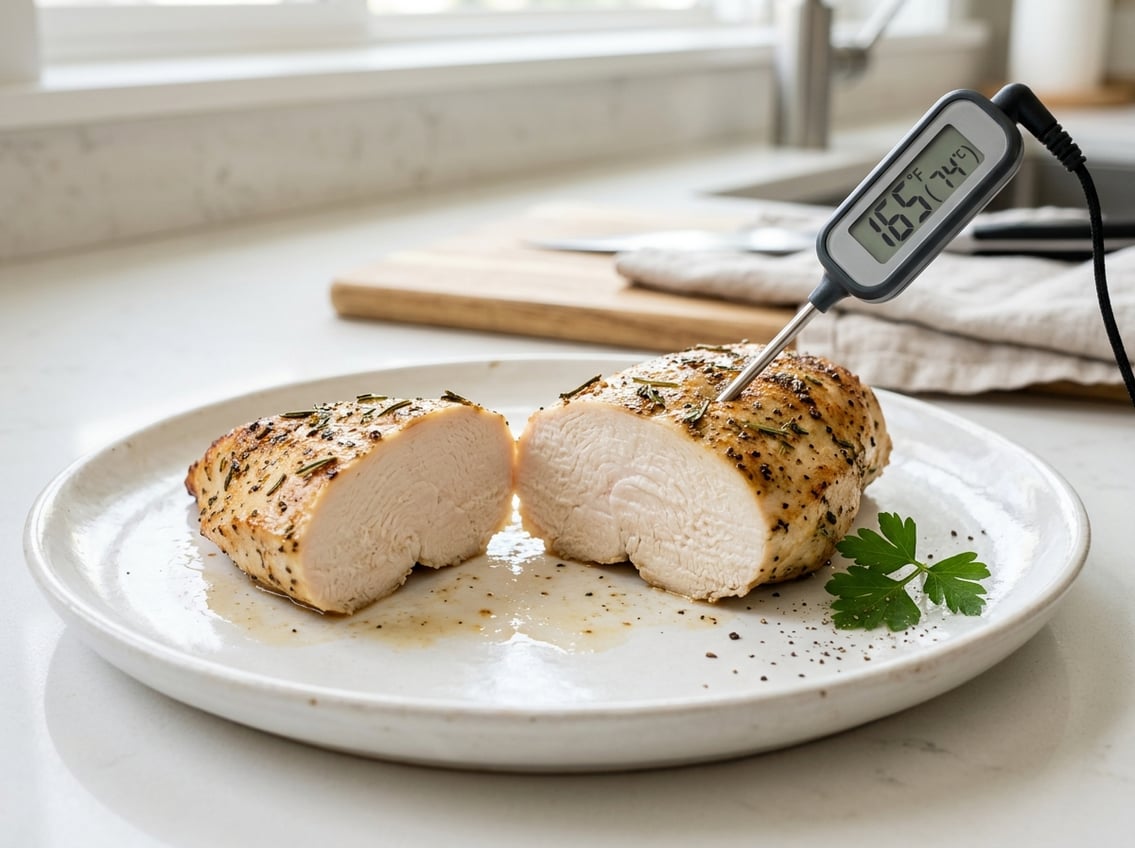
Chicken breast is fully cooked when the thickest part reaches 165°F. Use a meat thermometer to confirm it.
Visual clues help, especially if you cook chicken breast often and want to build confidence. Clear juices, firm meat, and opaque white flesh support what the thermometer shows, but should not replace it.
Check Internal Temperature First
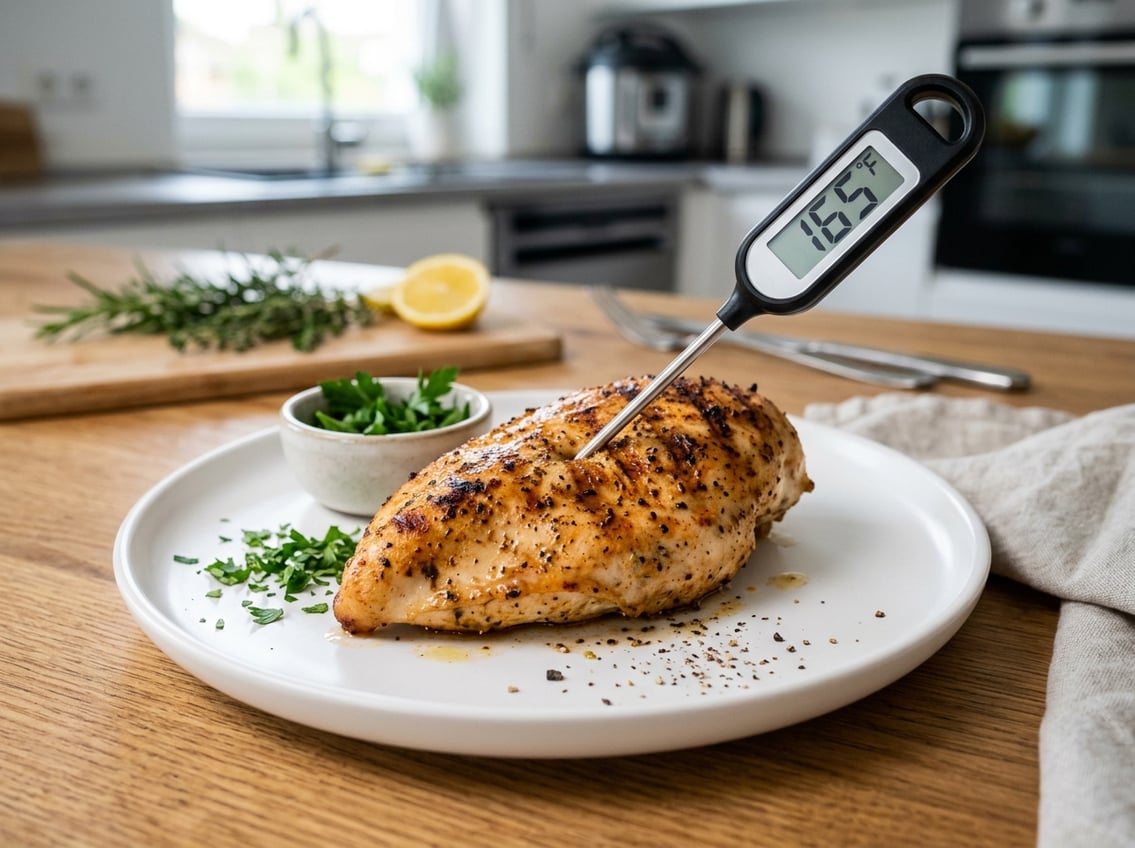
A meat thermometer gives you the clearest answer when you cook chicken breast. It removes guesswork and helps you avoid unsafe or dry chicken.
Why 165°F Is the Safe Benchmark
The safe minimum internal temperature for chicken breast is 165°F, or 74°C. Most home cooks use this standard because it marks when chicken is safe to eat.
The USDA Food Safety chart lists 165°F for poultry, and many cooking experts follow this guidance. You can see this in the USDA safe minimum internal temperatures guide, which explains why temperature is the most reliable test.
How to Use a Meat Thermometer Correctly
Insert the thermometer toward the end of the cooking time, when the chicken is almost done. Wait until the number settles for an accurate reading.
An instant-read digital thermometer works well for most home cooks. If you use a leave-in thermometer, place it before cooking so you can track the temperature as the chicken heats.
Where to Insert the Thermometer in Thin or Thick Breasts
Check the thickest part of the breast, because that part heats last. If the breast is uneven, aim for the center of the thickest area and avoid touching the pan, baking dish, or bone.
With thin breasts, insert the probe from the side so the tip stays in the middle. With thick breasts, go in from the top and slide the thermometer toward the center for the most accurate reading.
Use Visual and Texture Clues as Backup
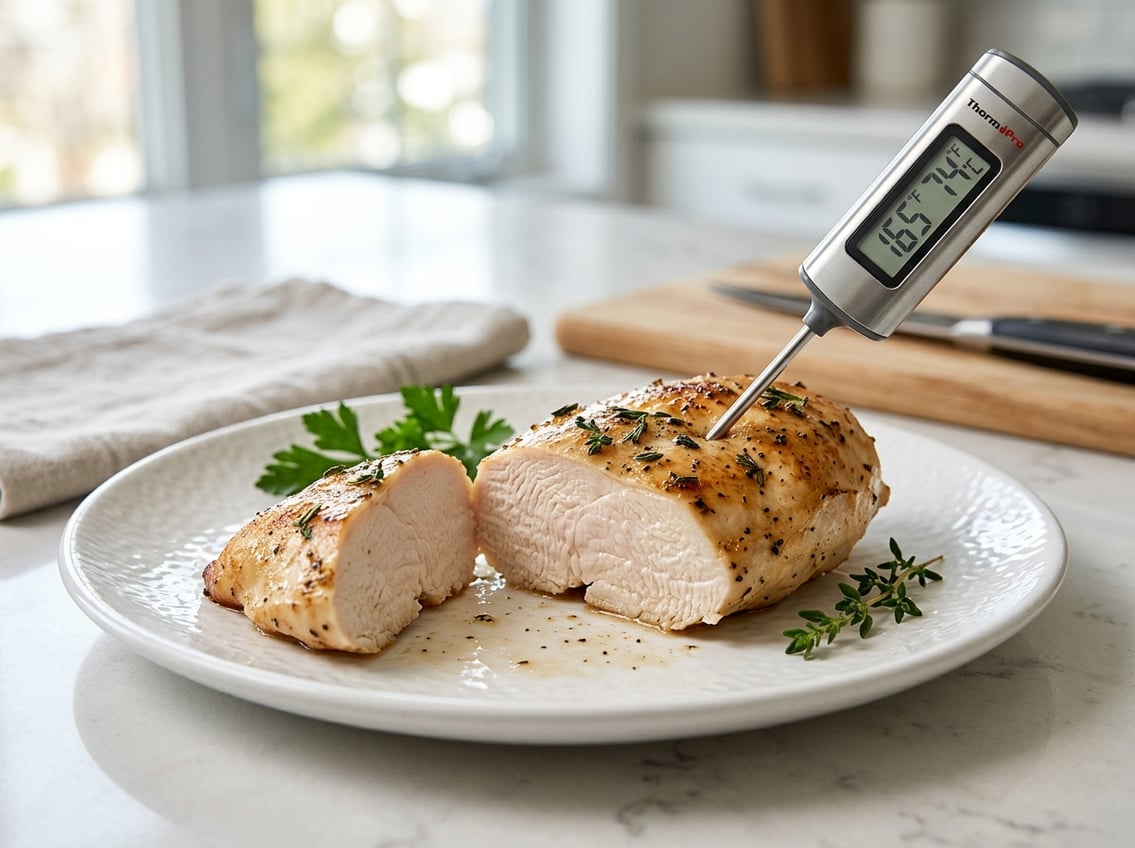
Visual signs confirm what the thermometer shows. They are useful when you check the last few minutes of cooking or want a second sign the chicken breast is ready.
What the Inside Should Look Like
A fully cooked chicken breast should look opaque and white, with no raw, translucent areas in the center. Sometimes, a small amount of very light pink near the center can appear, especially near bones or from certain cooking methods, but temperature still matters most.
If you cut into the breast and see glossy, wet meat that looks jelly-like, it likely needs more time. Cooked chicken should look set, not soft and raw.
What Clear or Pink Juices Really Mean
Clear juices often show the chicken is close to done. Cloudy or reddish juices usually mean it needs more cooking.
Juice color alone is not enough to judge doneness, especially with thick breasts or chicken cooked with marinades. As this guide to how to know if chicken is cooked notes, juices, color, and texture work best as supporting clues.
How Firm Cooked Meat Should Feel
Cooked chicken breast should feel firm, not soft or rubbery. When you press it gently with a finger or utensil, it should bounce back with some resistance.
If it still feels squishy in the center, it probably needs more time. If it feels very hard, it may already be overcooked.
Avoid Common Doneness Mistakes
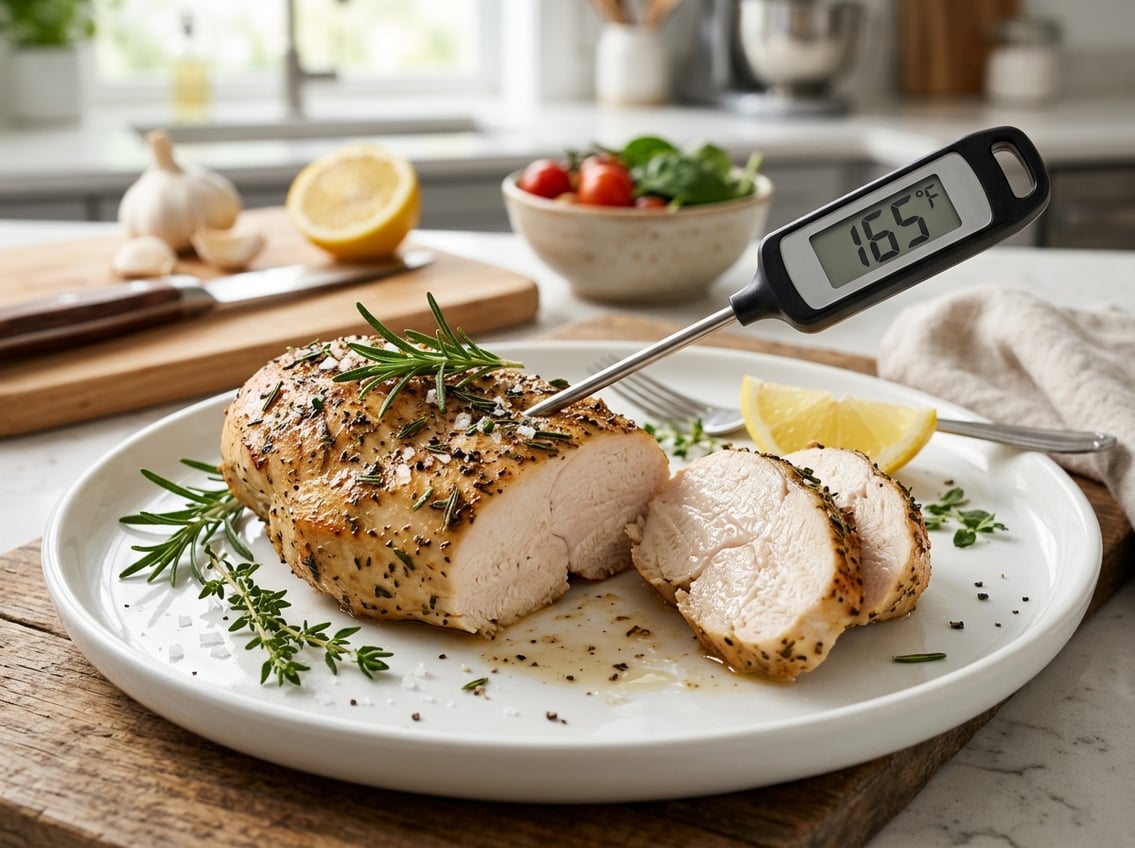
Mistakes happen when you trust one sign too much. Color, timing, and even the moment you check the chicken can all lead to the wrong call.
Why Color Alone Can Be Misleading
Chicken breast can look white before it is fully safe to eat, and it can still hold a little pink after reaching a safe temperature. Marinades, smoking, and some cooking methods can also change the color.
A meat thermometer gives a more accurate answer than guessing from the outside. Color can support your check, but it should not decide it for you.
How Overcooking and Undercooking Happen
Undercooking often happens when the outside looks done before the center cooks through. This is common with thick pieces, uneven cuts, or high heat that browns the outside too fast.
Overcooking happens when you keep cooking past 165°F without checking. The meat can turn dry and tough.
Why Resting Changes the Final Result
Chicken breast keeps cooking for a short time after you take it off the heat. Resting matters, especially for thicker pieces.
If you pull the chicken at 165°F, the temperature may rise a little as it rests. Letting it sit for a few minutes also helps the juices settle, so the meat stays moist when you slice it.
Cooking Method and Thickness Matter
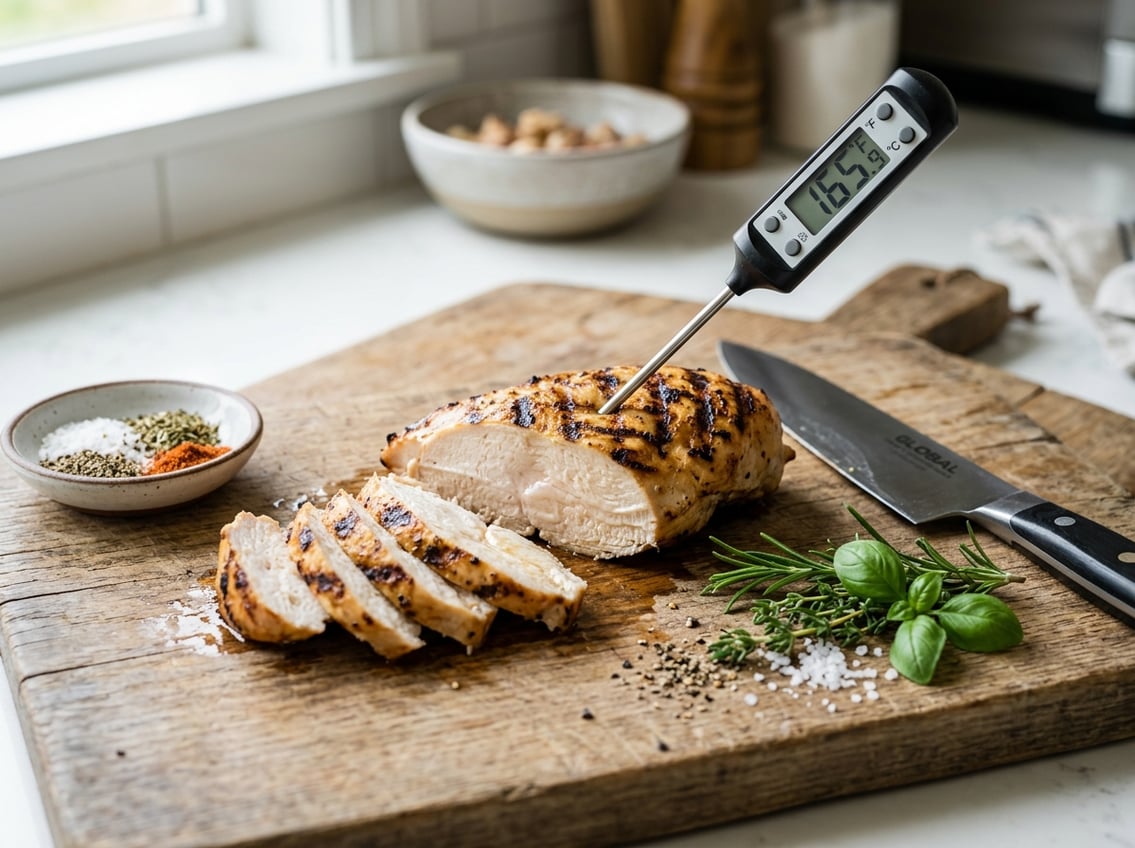
The way you cook chicken breast affects how fast it finishes and how you check it. Thickness matters too, because a thin cut may reach 165°F much faster than a thick one.
Baked, Grilled, and Pan-Seared Breasts
Baked chicken breast usually cooks more evenly, so it is easier to check with a thermometer near the end of the bake time. Grilled chicken can brown quickly on the outside, which makes temperature checking even more important.
Pan-seared breasts often cook fast and can dry out if you leave them on the heat too long. In every case, check the center of the thickest part instead of relying on the surface.
Boneless vs. Bone-In Pieces
Boneless chicken breast usually cooks faster and more evenly than bone-in pieces. Bone-in chicken takes longer because the bone slows heat flow to the center.
If you cook bone-in chicken breast, give it extra time and check several spots if the piece is large. The area near the bone can stay cooler than the rest of the meat.
How Thickness Affects Cooking Time
Thicker breasts need more time. Thinner breasts need less.
Cooking time alone is not enough to tell you whether chicken is done. If one breast is much thicker than the others, cook the pieces separately when you can.
Remove the thinner ones earlier. Even a small size difference can change the finish by several minutes.


