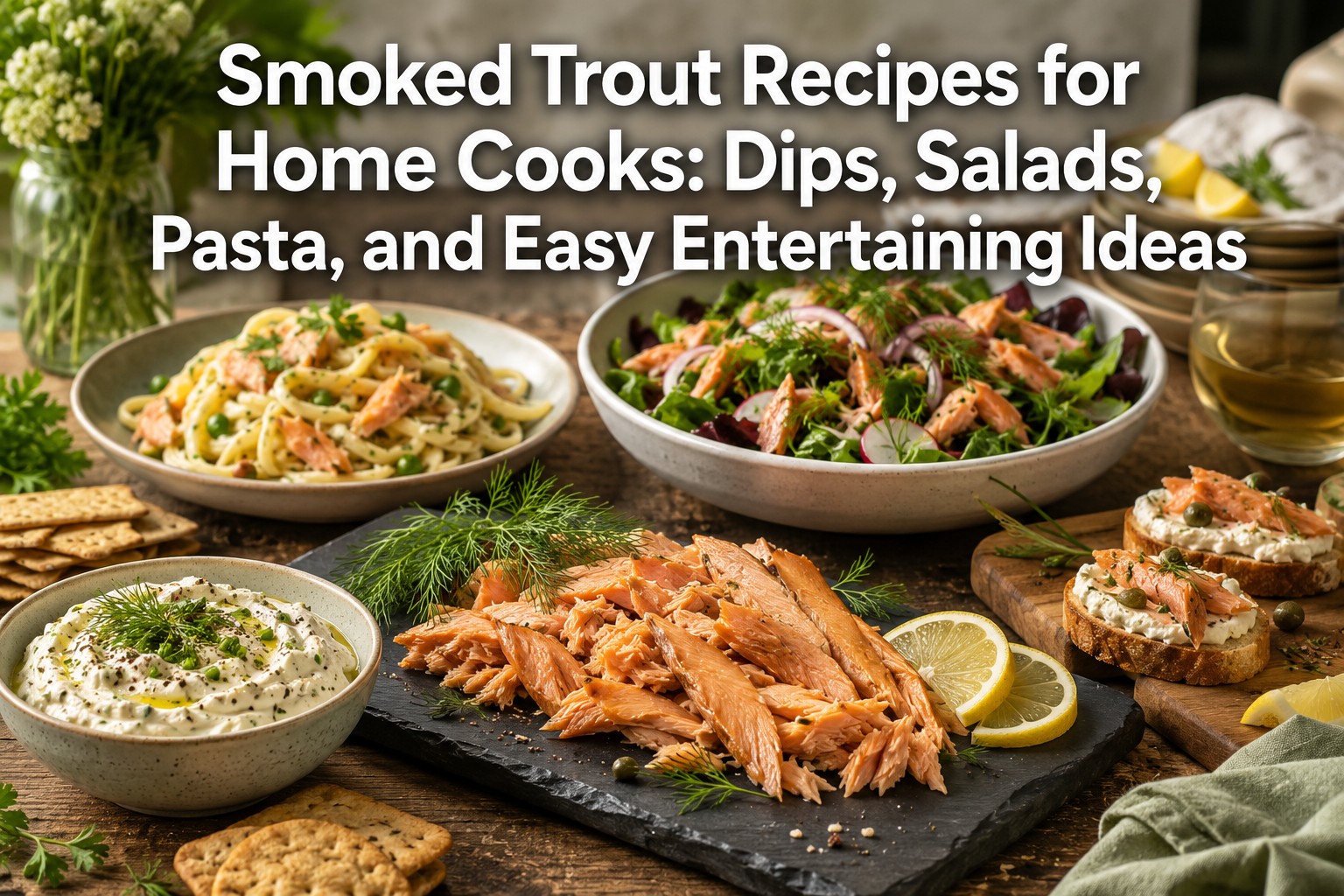
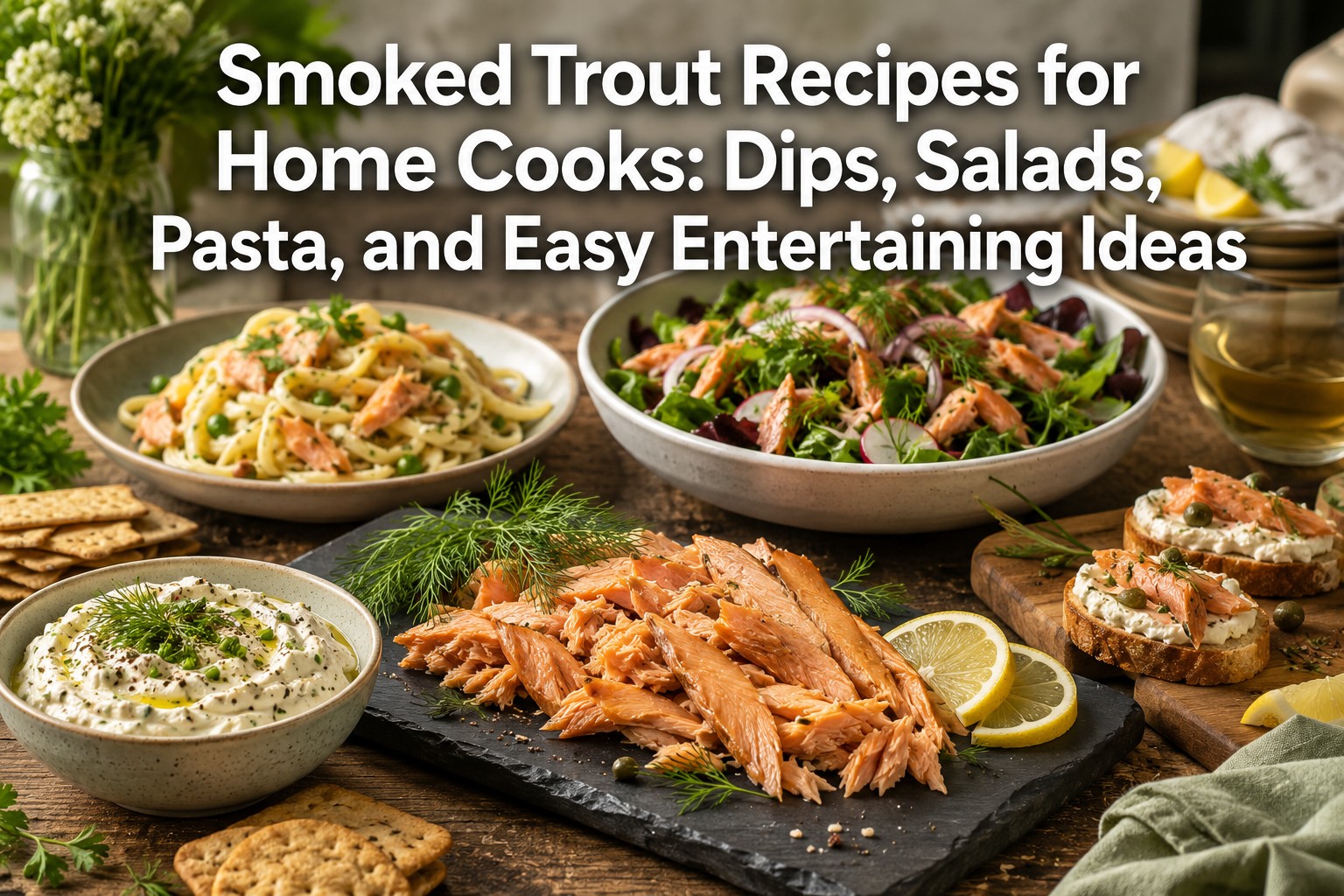
Smoked Trout Recipes for Home Cooks: Dips, Salads, Pasta, and Easy Entertaining Ideas
Last updated: June 11, 2026
Smoked fish is quietly making a comeback in home kitchens across the country, and smoked trout is leading the charge with its delicate flavor and surprising versatility. Smoked trout recipes for home cooks span everything from creamy dips and fresh salads to elegant pasta dishes and crowd-pleasing appetizers, all while being easier to work with than you might think. This mild, flaky fish brings a sophisticated touch to weeknight dinners and entertaining without requiring advanced cooking skills or hard-to-find ingredients.
Key Takeaways
- Smoked trout is milder and more delicate than smoked salmon, making it perfect for home cooks who want elegant results without overpowering flavors
- Cream cheese-based dips are the easiest entry point, requiring just 5 minutes and no cooking
- Fresh smoked trout costs $15-25 per pound at specialty stores, while vacuum-sealed packages run $8-12 and last months in the fridge
- Canned smoked trout works well in dips and salads but won’t have the same texture for pasta dishes or appetizers
- The biggest mistake is overworking the fish—gentle flaking preserves the delicate texture that makes smoked trout special
- Smoked trout lasts 3-5 days after opening when properly wrapped and refrigerated
- Dairy-free recipes using avocado, tahini, or olive oil work beautifully with smoked trout’s natural oils
- Pasta dishes come together in under 20 minutes, making them ideal for weeknight entertaining
What Is Smoked Trout and How Is It Different From Regular Trout?
Smoked trout is fresh trout that has been cured with salt and then slowly smoked over wood chips, typically alder or applewood. This process gives the fish a golden-brown exterior, a tender flaky texture, and a subtle smoky flavor that’s much milder than smoked salmon.
The key differences from regular trout are flavor and shelf life. Fresh trout has a clean, mild taste and must be cooked within 1-2 days of purchase. Smoked trout develops a gentle smokiness, requires no cooking, and keeps for weeks when vacuum-sealed or 3-5 days after opening.
Choose smoked trout over regular trout when:
- You want ready-to-eat fish that needs no preparation
- You’re making cold dishes like dips, salads, or canapés
- You need something that stores longer than fresh fish
- You want a more sophisticated flavor without being too “fishy”
The smoking process also partially cooks the fish, so it’s safe to eat straight from the package—no additional cooking needed.
Smoked Trout Dip Recipe With Cream Cheese
A cream cheese-based smoked trout dip is the simplest recipe to start with and takes just 5 minutes to prepare. Mix 8 oz softened cream cheese with 6-8 oz flaked smoked trout, 2 tablespoons fresh lemon juice, 2 tablespoons chopped fresh dill, 1 tablespoon horseradish, and salt and pepper to taste.
Step-by-step method:
- Let cream cheese sit at room temperature for 20 minutes (softens easier)
- Flake smoked trout gently with a fork, removing any skin or bones
- Mix cream cheese with lemon juice and horseradish until smooth
- Fold in flaked trout and dill—don’t overmix or the fish will turn mushy
- Taste and adjust seasoning (smoked trout varies in saltiness)
- Chill for 30 minutes to let flavors blend
Common mistake: Adding the trout too early and mixing too vigorously. The fish should stay in visible flakes, not turn into a paste. Fold it in last and handle gently.
Serve with crackers, cucumber slices, or toasted baguette rounds. This dip keeps for 3 days covered in the fridge and actually tastes better the next day once the flavors meld.
Easy Smoked Trout Pasta Recipes for Weeknight Dinner
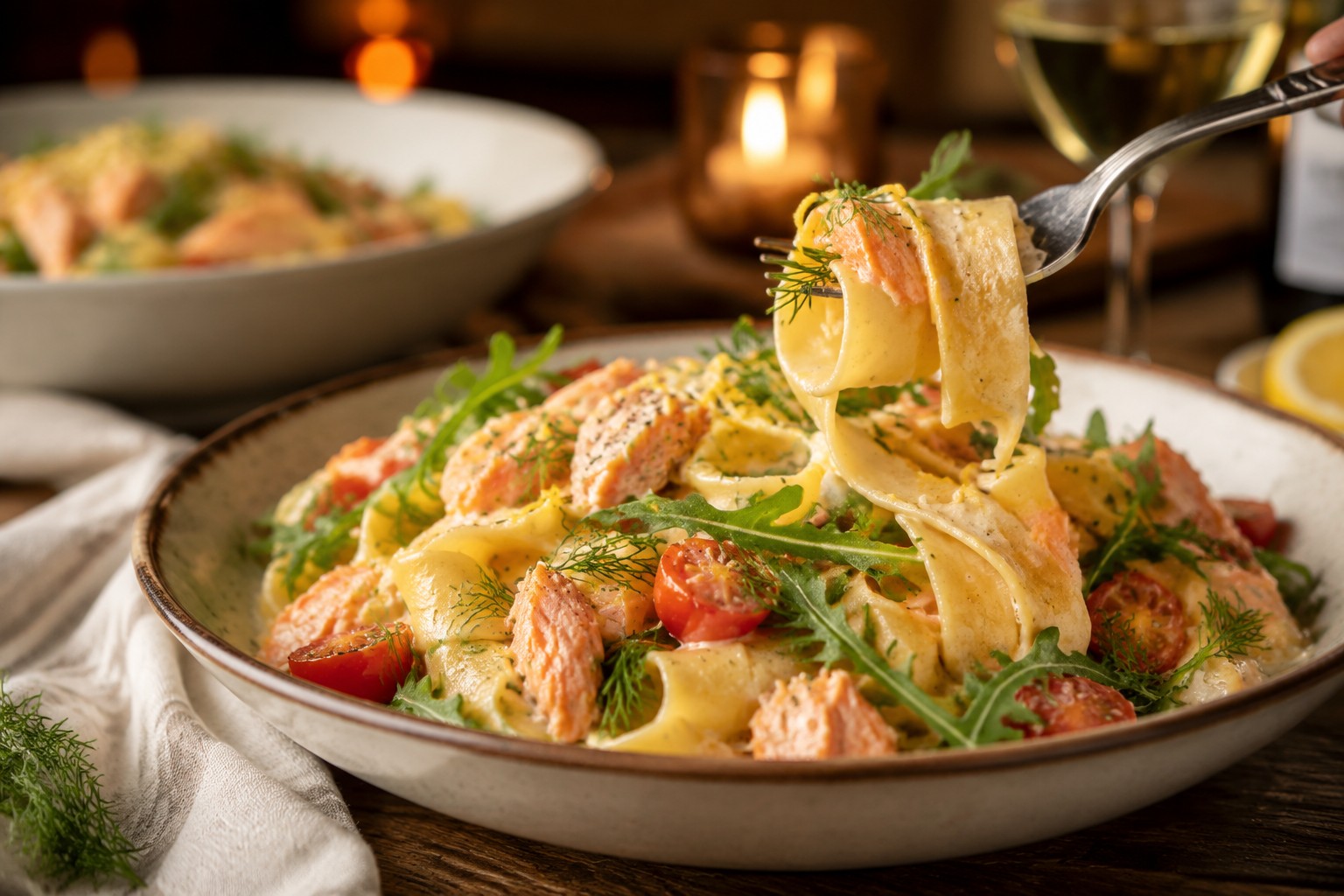
Smoked trout pasta comes together faster than most chicken dishes and feels restaurant-quality with minimal effort. The fish needs no cooking—just toss it with hot pasta, cream or olive oil, fresh herbs, and aromatics in the last minute.
Quick weeknight formula:
- 12 oz pasta (pappardelle, fettuccine, or penne work best)
- 6-8 oz flaked smoked trout
- ½ cup heavy cream or ⅓ cup olive oil
- 2 cloves minced garlic (sautéed briefly)
- Fresh dill, parsley, or chives
- Lemon zest and juice
- Optional: capers, peas, or cherry tomatoes
20-minute method:
- Boil pasta in salted water until al dente
- While pasta cooks, sauté garlic in butter or oil for 30 seconds
- Add cream (or reserve ½ cup pasta water if using oil)
- Drain pasta, toss with sauce and lemon
- Remove from heat, fold in flaked trout and herbs
- Serve immediately with extra lemon wedges
The key is adding the trout off-heat so it warms through without overcooking. If you’re looking for more quick protein ideas for weeknight meals, check out our guide on what to make with chicken breast for dinner.
Choose this over salmon pasta if: You want a lighter, less oily dish that won’t overpower delicate cream sauces or fresh spring vegetables.
Smoked Trout Salad Ideas With Arugula or Greens
Smoked trout transforms simple green salads into substantial meals without the heaviness of grilled chicken or steak. The fish’s natural oils mean you can use a lighter vinaigrette, and its smoky flavor pairs beautifully with peppery arugula, bitter endive, or butter lettuce.
Best salad combinations:
- Spring mix: Arugula, smoked trout, shaved fennel, orange segments, toasted almonds, citrus vinaigrette
- Classic: Butter lettuce, trout, boiled potatoes, green beans, hard-boiled eggs, Dijon dressing (like a Niçoise)
- Grain bowl: Farro or quinoa, mixed greens, trout, roasted beets, goat cheese, balsamic
- Simple lunch: Baby spinach, trout, avocado, cucumber, lemon-olive oil dressing
Assembly tip: Dress the greens first, then top with flaked trout at the very end. If you toss the fish with the salad, it breaks apart and gets lost in the leaves. Keeping it on top preserves the texture and makes the dish look more intentional.
Add crunch with toasted nuts, seeds, or crispy shallots. The contrast between creamy fish and crunchy elements makes these salads feel complete rather than just “fish on lettuce.”
Where to Buy Smoked Trout Near Me or Online
Fresh smoked trout is available at specialty fish markets, upscale grocery stores (Whole Foods, Trader Joe’s), and many farmers markets, especially in spring and summer. Look in the refrigerated seafood section near smoked salmon.
Buying options by format:
- Fresh whole smoked trout: $15-25/lb at fish counters, best quality and texture
- Vacuum-sealed fillets: $8-12 per 4-6 oz package, found in refrigerated sections, lasts months unopened
- Canned smoked trout: $4-7 per can, shelf-stable, available at most grocery stores and online
- Online specialty retailers: Ship frozen, typically $12-18/lb plus shipping
What to look for: The flesh should be moist and golden-brown, not dried out or gray. Vacuum-sealed packages should have no tears or excessive liquid. Check the sell-by date—fresh smoked trout should have at least 5-7 days remaining.
If your local stores don’t carry it, ask the seafood counter to special order it. Many will, especially if you’re buying for a party. Online options include specialty food retailers and direct-from-smokehouse websites, though shipping costs can add up.
How Much Does Smoked Trout Cost Per Pound?
Smoked trout typically costs $15-25 per pound for fresh whole fish or fillets at specialty markets, making it slightly less expensive than premium smoked salmon ($25-35/lb) but pricier than canned tuna or regular fresh trout.
Price breakdown by format:
- Fresh whole smoked trout: $15-25/lb
- Vacuum-sealed fillets: $20-30/lb (sold in 4-8 oz packages)
- Canned smoked trout: $15-20/lb equivalent
- Frozen smoked trout: $12-18/lb
A typical 8 oz fillet ($10-12) makes enough dip for 8-10 people or serves 2-3 as a main course in pasta or salad. This makes it a reasonable splurge for entertaining or special weeknight meals.
Budget tip: Canned smoked trout costs about half as much as fresh and works perfectly in dips, spreads, and salads where texture is less critical. Save the fresh fillets for dishes where you want visible, elegant flakes.
Smoked Trout vs Smoked Salmon: Which Is Better for Dips?
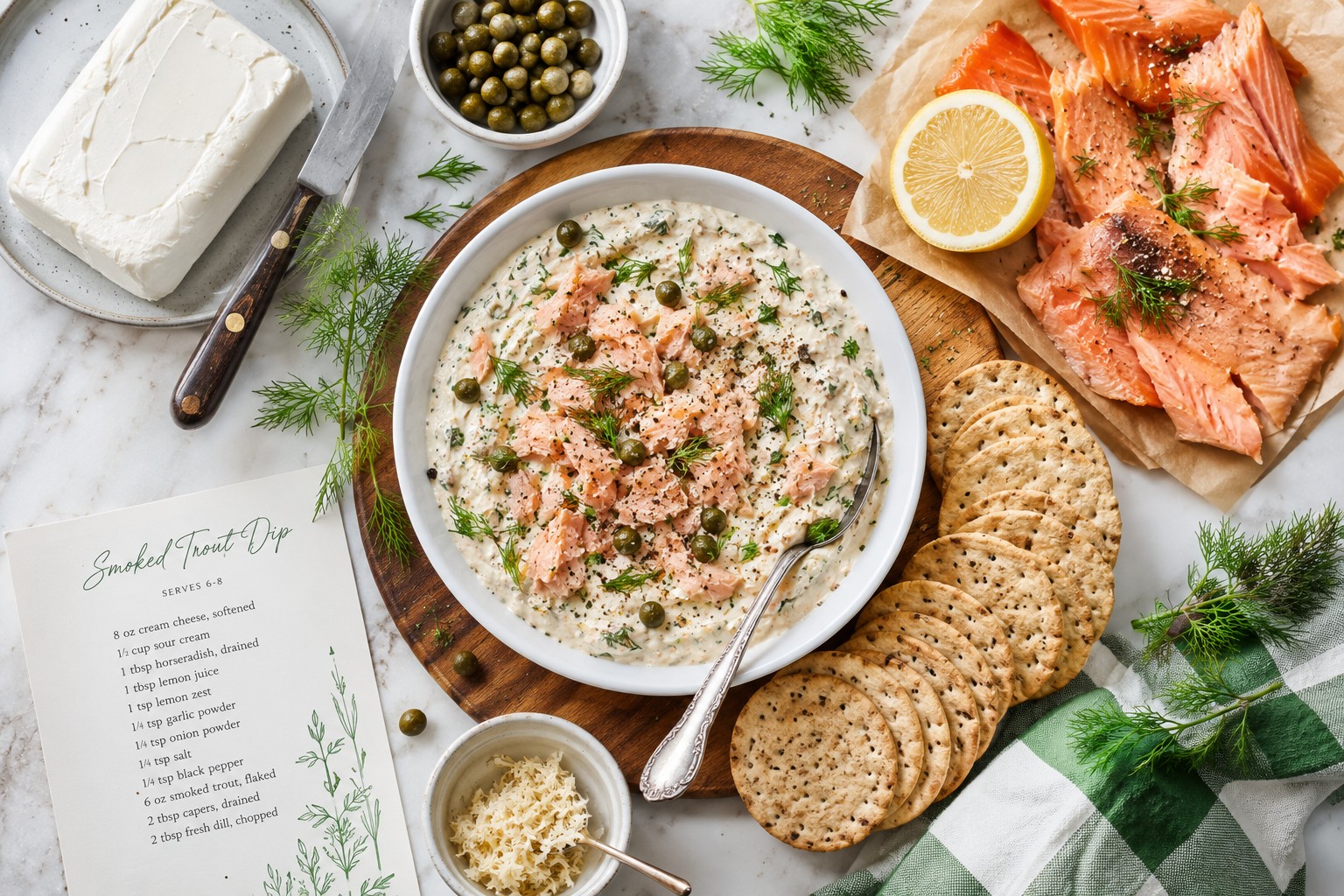
Smoked trout is often better for dips because it’s milder, less oily, and more affordable than smoked salmon. The gentler flavor lets other ingredients (herbs, citrus, horseradish) shine through instead of being overwhelmed by fishiness.
Comparison for dips:
| Factor | Smoked Trout | Smoked Salmon |
|---|---|---|
| Flavor intensity | Mild, subtle smoke | Strong, pronounced |
| Texture | Flaky, delicate | Silky, sometimes chewy |
| Oil content | Moderate | High (can separate in dips) |
| Price per pound | $15-25 | $25-35 |
| Best for | Cream cheese dips, lighter spreads | Bagels, canapés, standalone |
Choose smoked trout for dips when: You want something that tastes elegant but not overwhelming, especially if you’re serving guests who say they “don’t usually like fish.” The milder profile converts skeptics.
Choose smoked salmon when: You want that classic lox flavor or you’re making traditional Jewish-style spreads where the fish is the star.
Both work, but trout gives you more flexibility with seasonings and costs less for party-sized batches.
Can You Use Canned Smoked Trout Instead of Fresh?
Yes, canned smoked trout works well in dips, spreads, salads, and mixed dishes where the fish will be broken up anyway. It won’t work as well for recipes where you want large, elegant flakes or visual presentation, like pasta garnishes or appetizer platters.
Best uses for canned:
- Cream cheese dips and spreads
- Chopped salads or grain bowls
- Pasta sauces where the fish is mixed in
- Quick weeknight meals when you don’t have time to shop
Not ideal for:
- Appetizers where the fish is the visual focus
- Dishes requiring large, intact flakes
- Recipes where texture is critical
Preparation difference: Drain canned trout well and pat dry with paper towels before using. It’s often packed in oil or water that can make dips too loose. Fresh smoked trout needs no draining and has better texture straight from the package.
The flavor is nearly identical once mixed into recipes, so canned is a smart pantry staple for spontaneous meals. Just keep fresh on hand when presentation matters.
What Mistakes Do People Make When Cooking With Smoked Trout?
The most common mistake is overworking the fish, which turns delicate flakes into mush. Smoked trout is already cooked and very tender, so it needs minimal handling and should be added at the end of recipes, not cooked further.
Top mistakes and fixes:
- Overmixing in dips: Fold the fish in gently at the end rather than blending it into a paste
- Adding it too early in hot dishes: Toss with pasta or vegetables off-heat so it just warms through
- Not removing skin and bones: Even “boneless” fillets often have pin bones—run your fingers along the flesh to find them
- Using too much in one dish: A little goes a long way; 6-8 oz serves 4-6 people in most recipes
- Not balancing the smoke: Add bright flavors (lemon, herbs, capers) to keep it from tasting one-dimensional
- Storing improperly after opening: Wrap tightly in plastic wrap and use within 3-5 days
Edge case: If your smoked trout tastes too salty (brands vary), soak the fillets in milk for 10 minutes, then pat dry. This draws out excess salt without affecting texture.
The fish is delicate by nature—treat it gently and add it last, and you’ll get perfect results every time.
Smoked Trout Appetizers for Party Entertaining
Smoked trout makes impressive appetizers that look fancy but require almost no cooking skill. The fish is already prepared, so you’re really just assembling ingredients in attractive ways.
Easy entertaining ideas:
Smoked trout crostini:
- Toast baguette slices
- Spread with crème fraîche or cream cheese
- Top with flaked trout, fresh dill, and lemon zest
- Add a caper or microgreen for color
Smoked trout cucumber bites:
- Slice English cucumber into ½-inch rounds
- Top with herbed cream cheese
- Add a small piece of trout and fresh dill
- Serve on a platter with lemon wedges
Smoked trout deviled eggs:
- Make deviled eggs as usual
- Mix flaked trout into the yolk filling
- Garnish with paprika and chives
Smoked trout tea sandwiches:
- Use thin white or pumpernickel bread
- Spread with butter and watercress
- Layer with trout and cucumber
- Cut into triangles or fingers
Make-ahead tip: Prep all components separately and assemble 30 minutes before guests arrive. The fish dries out if assembled too early, but everything else can be ready hours ahead.
These appetizers work for everything from casual gatherings to formal dinner parties, and they’re naturally gluten-free if you skip the bread. For more entertaining protein ideas, see our guide on different ways to cook chicken breast.
Is Smoked Trout Good for Beginners Who Don’t Cook Fish Often?
Smoked trout is ideal for beginners because it requires no cooking, has a mild flavor that’s not intimidating, and is nearly impossible to mess up. Unlike fresh fish that needs precise timing and temperature, smoked trout is already cooked and just needs to be flaked and added to dishes.
Why it’s beginner-friendly:
- No cooking required—just open the package and use
- Mild flavor won’t overwhelm if you’re not used to fish
- Hard to overcook (it’s already cooked)
- Works in familiar dishes (pasta, salads, dips)
- Stores longer than fresh fish
- No fishy smell in your kitchen from cooking
Start with: A simple cream cheese dip. If you can mix ingredients in a bowl, you can make it successfully. Once you’re comfortable, move to pasta or salads where the fish is just one component.
Beginner mistake to avoid: Don’t expect it to taste like fresh grilled trout. Smoked fish has its own distinct flavor profile—smoky, slightly salty, and more intense than fresh. If you’ve never had smoked fish before, buy a small amount first to see if you like it before planning a whole meal around it.
The learning curve is minimal, making this a great way to add more fish to your diet without the stress of cooking seafood from scratch.
How Long Does Smoked Trout Last in the Fridge After Opening?
Opened smoked trout lasts 3-5 days in the refrigerator when properly wrapped and stored at 38-40°F. Vacuum-sealed packages that haven’t been opened can last several weeks or even months, depending on the sell-by date.
Storage guidelines:
After opening:
- Wrap tightly in plastic wrap or transfer to an airtight container
- Use within 3-5 days for best quality
- Check for off smells or slimy texture before using
Unopened vacuum-sealed:
- Lasts until the sell-by date (often 2-3 months)
- Store in the coldest part of your fridge
- Once opened, treat as fresh and use within 3-5 days
Freezing:
- Vacuum-sealed packages can be frozen for up to 3 months
- Wrap opened portions tightly in plastic wrap, then foil
- Thaw overnight in the fridge, not at room temperature
- Texture may be slightly softer after freezing
Signs it’s gone bad: Sour or ammonia smell, slimy texture, or gray discoloration. When in doubt, throw it out—fish spoilage can cause serious food poisoning.
Pro tip: If you won’t use it within 5 days, freeze half immediately after opening. This prevents waste and gives you ready-to-use fish for future meals.
What to Serve With Smoked Trout Pasta for Dinner Party
Smoked trout pasta is rich and flavorful, so pair it with light, fresh sides that won’t compete or make the meal feel heavy. Think crisp vegetables, simple salads, and crusty bread rather than more starches or heavy proteins.
Best side dish pairings:
Salads:
- Arugula with lemon vinaigrette and shaved Parmesan
- Mixed greens with citrus segments and toasted nuts
- Shaved fennel and apple slaw
- Simple tomato and basil salad
Vegetables:
- Roasted asparagus with lemon
- Sautéed green beans with garlic
- Grilled zucchini and summer squash
- Steamed broccoli with olive oil
Bread:
- Crusty baguette or ciabatta
- Garlic bread (if your pasta isn’t already garlicky)
- Focaccia with herbs
What to skip: Heavy sides like garlic bread, Caesar salad, or additional pasta/potato dishes. The trout pasta is already rich, so you want contrast, not more richness.
Wine pairing: Crisp white wines work best—Sauvignon Blanc, Pinot Grigio, or unoaked Chardonnay. The acidity cuts through the cream and complements the smoky fish.
Timing tip: Make the pasta last so it’s hot when served. Prep all sides first, then cook the pasta in the final 15 minutes before dinner. This keeps everything fresh and prevents the pasta from getting gummy.
Smoked Trout Recipes Without Mayo or Dairy
Smoked trout works beautifully in dairy-free recipes because the fish itself has natural oils that create creaminess without needing cream cheese or mayo. Use avocado, tahini, olive oil, or coconut cream as your base instead.
Dairy-free recipe ideas:
Avocado-trout spread:
- Mash 2 ripe avocados with lemon juice
- Fold in 6 oz flaked smoked trout
- Add diced red onion, cilantro, and jalapeño
- Serve with crackers or vegetable sticks
Tahini-trout dip:
- Mix ¼ cup tahini with 2 tablespoons lemon juice and water to thin
- Fold in flaked trout, garlic, and fresh herbs
- Season with cumin and paprika
- Serve with pita or vegetables
Olive oil pasta:
- Toss hot pasta with olive oil, garlic, and lemon
- Add flaked trout, cherry tomatoes, and fresh basil
- Finish with red pepper flakes and lemon zest
- No cream needed—the pasta water creates sauce
Asian-inspired salad:
- Mix trout with sesame oil, rice vinegar, and ginger
- Serve over mixed greens with edamame and cucumber
- Top with sesame seeds and sliced scallions
The fish’s natural richness means you don’t need dairy to make these recipes feel satisfying. They’re lighter than cream-based versions but still substantial enough for a meal. If you’re interested in other protein preparation methods that don’t require heavy ingredients, check out our guide on the best way to bake chicken breast.
FAQ
How do you eat smoked trout? Eat smoked trout cold in salads, dips, and appetizers, or warm it gently by tossing with hot pasta or vegetables. Remove the skin and any bones, then flake the flesh with a fork. It needs no additional cooking and can be eaten straight from the package.
Can you substitute smoked trout for smoked salmon in recipes? Yes, smoked trout works in most smoked salmon recipes but will have a milder, less oily flavor. Use it in dips, pasta, salads, and on bagels. The texture is slightly flakier than salmon, so it works better in mixed dishes than as standalone slices.
Does smoked trout need to be cooked? No, smoked trout is already cooked during the smoking process and is safe to eat cold. You can warm it gently if adding to hot dishes, but additional cooking isn’t necessary and can dry it out.
What’s the difference between hot-smoked and cold-smoked trout? Hot-smoked trout (most common in stores) is cooked during smoking at 120-180°F, resulting in flaky, fully cooked fish. Cold-smoked trout is cured and smoked at lower temperatures (below 90°F), creating a texture more like lox—silky and less cooked. Most recipes call for hot-smoked.
Can you freeze smoked trout? Yes, freeze smoked trout in its original vacuum-sealed package or wrap tightly in plastic wrap and foil for up to 3 months. Thaw overnight in the refrigerator. The texture may be slightly softer after freezing but works fine in dips, salads, and pasta.
Is smoked trout healthy? Smoked trout is high in protein (20-25g per 4 oz serving) and omega-3 fatty acids, making it a nutritious choice. It’s also high in sodium due to the curing process (300-500mg per serving), so those watching salt intake should eat it in moderation.
What herbs go best with smoked trout? Fresh dill is the classic pairing, but parsley, chives, tarragon, and cilantro also work well. Avoid strong herbs like rosemary or sage that overpower the delicate fish. Add herbs at the end to preserve their fresh flavor.
Can you make smoked trout ahead for a party? Yes, dips and spreads can be made 1-2 days ahead and actually taste better after the flavors meld. Assembled appetizers (crostini, cucumber bites) should be made no more than 2 hours before serving to prevent sogginess. Store components separately and assemble just before guests arrive.
Why is my smoked trout dip too salty? Some brands are saltier than others due to different curing methods. Soak the fish in milk for 10 minutes before using, or balance the salt by adding more cream cheese, sour cream, or avocado to dilute the saltiness. Taste before adding any additional salt to recipes.
What’s the best pasta shape for smoked trout? Wide, flat noodles like pappardelle, fettuccine, or tagliatelle work best because they catch the flaked fish and sauce. Short shapes like penne or farfalle also work well. Avoid very thin pasta like angel hair, which gets overwhelmed by the fish.
Can kids eat smoked trout? Yes, smoked trout is safe for children over age 2, though the smoky flavor may be too strong for some young palates. Start with mild preparations like cream cheese dips mixed with other ingredients. Avoid giving smoked fish to children under 1 year due to the high sodium content.
How do you remove bones from smoked trout? Run your fingers along the flesh from head to tail to feel for pin bones. Use clean tweezers or needle-nose pliers to pull them out in the direction they’re pointing. Most store-bought fillets have bones removed, but check anyway—there are usually a few small ones remaining.
Conclusion
Smoked trout recipes for home cooks offer an accessible way to bring elegant, flavorful fish dishes to your table without advanced cooking skills or expensive ingredients. From 5-minute cream cheese dips to impressive pasta dinners and fresh spring salads, this mild, versatile fish works in dozens of preparations that feel special but remain weeknight-friendly.
Start with these action steps:
- Buy a small vacuum-sealed package (4-6 oz) to try before committing to larger amounts
- Make the cream cheese dip first—it’s foolproof and shows you how the fish tastes
- Try one pasta recipe for an easy weeknight dinner that feels restaurant-quality
- Experiment with a fresh salad to see how the fish works in lighter preparations
- Plan appetizers for your next gathering—crostini or cucumber bites take 10 minutes
The key to success is handling the fish gently, adding it at the end of recipes, and balancing the smoke with bright flavors like lemon, fresh herbs, and capers. Whether you’re entertaining guests or just want to elevate a Tuesday dinner, smoked trout delivers sophisticated results with minimal effort.
Keep a vacuum-sealed package in your fridge as a pantry staple—it lasts for months and turns into an impressive meal faster than ordering takeout.
SEO Meta Title: Smoked Trout Recipes: Dips, Salads, Pasta for Home Cooks