
What Is the Best Way to Bake Chicken Breast? A Simple Method
The best way to bake chicken breast is simple and repeatable. Season boneless skinless chicken breast well, bake it in a hot oven, and use an instant-read thermometer to stop at the right time.
This method gives you juicy baked chicken breast without much guesswork.
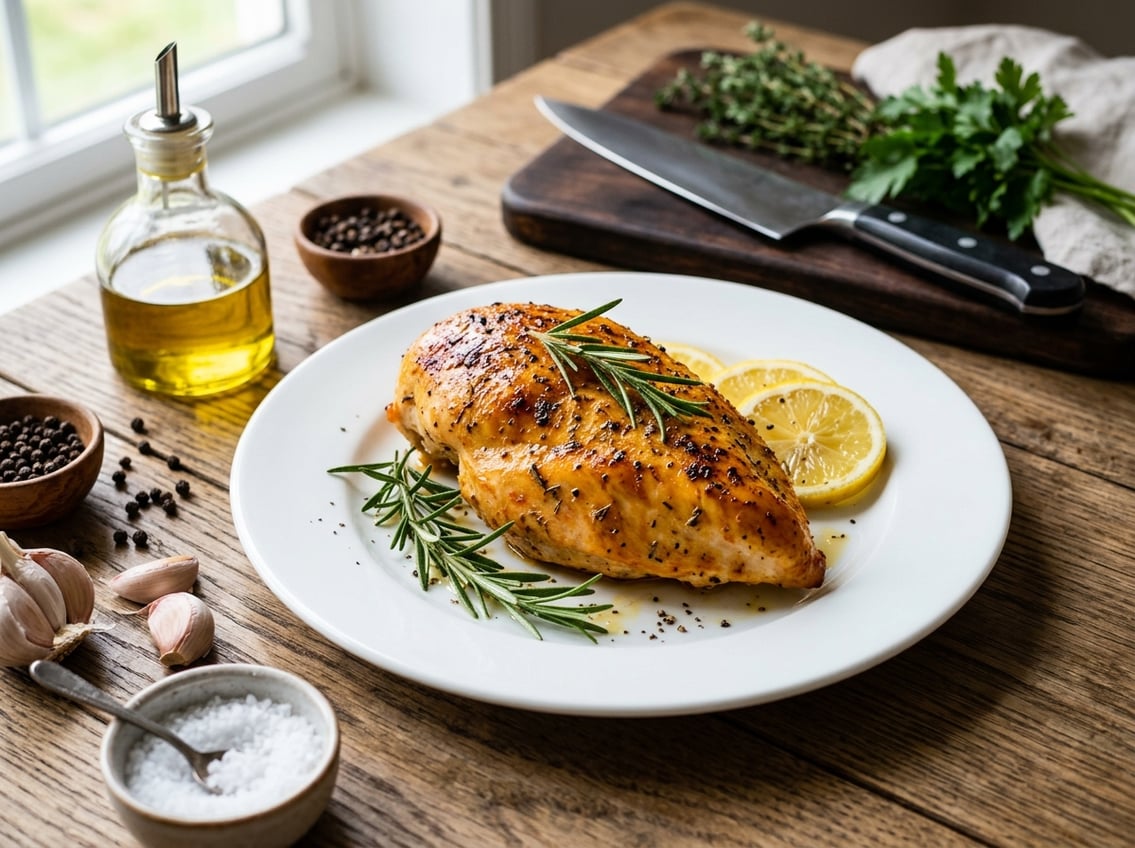
A good chicken breast recipe needs only a few ingredients. Olive oil, garlic powder, onion powder, paprika, kosher salt, and black pepper provide steady flavor and help the outside brown.
If you want a reliable weeknight method, keep the seasoning simple. Bake at a moderate-high temperature and pull the chicken as soon as it reaches 165°F.
The Most Reliable Oven Method
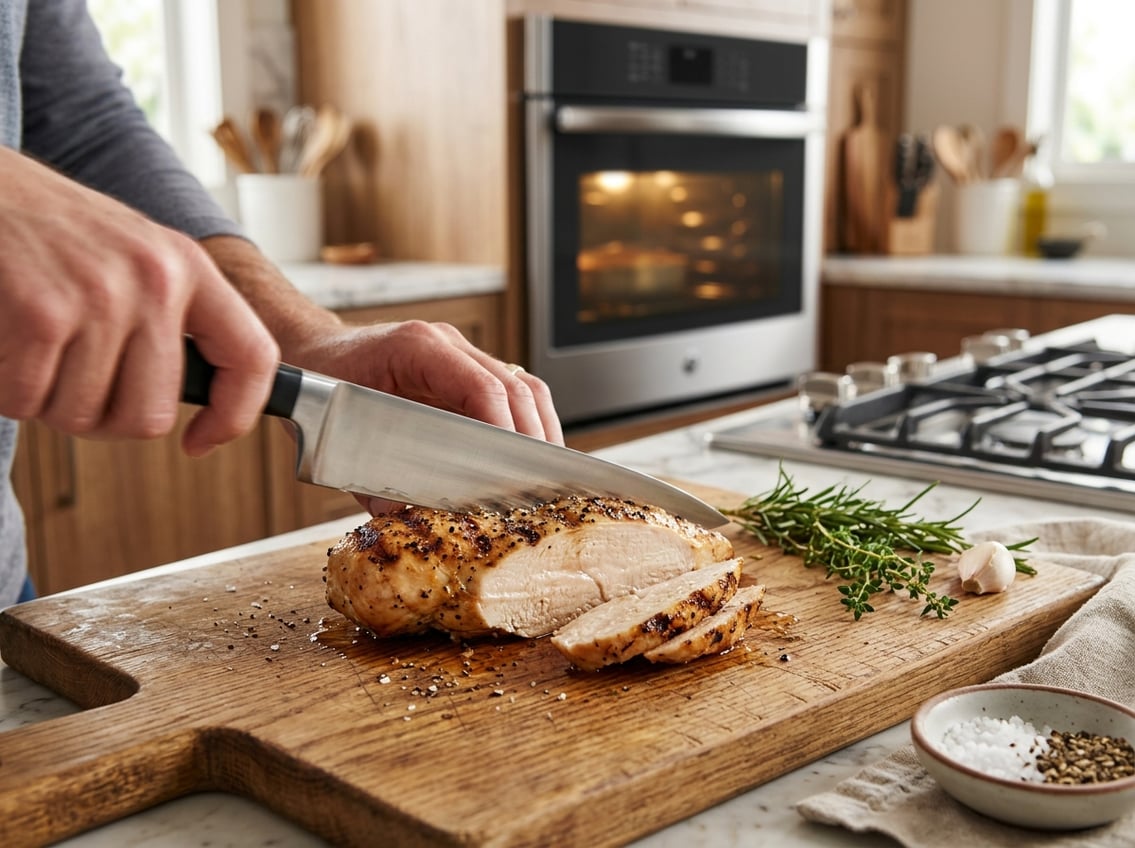
This simple method works well for most boneless skinless chicken breasts. Aim for even cooking, light browning, and a moist center.
Choose the Right Cut and Pan
Pick boneless skinless chicken breast pieces that are similar in size. If one piece is much thicker, it will cook more slowly.
Place the chicken on a baking sheet in a single layer. A sheet pan lets hot air move around the chicken for even cooking.
Season Simply for Consistent Results
Pat the chicken dry and coat it with olive oil. Add kosher salt, black pepper, garlic powder, onion powder, and paprika on both sides.
This seasoning is enough for a simple baked chicken that tastes well balanced. A clean seasoning mix works especially well if you plan to use the chicken in salads, pasta, or casseroles.
Bake at the Right Temperature
Bake the chicken in a preheated oven at 375°F to 425°F, depending on your preferred timing and browning. At 375°F, many 6 to 8 ounce breasts cook in 25 to 30 minutes.
Higher heat cooks faster and gives a more golden outside. Lower heat gives you more time to watch the chicken closely.
Check Doneness the Right Way
Use an instant-read thermometer instead of guessing by color. Chicken is done when the thickest part reaches 165°F.
The center should look opaque, and the juices should run clear. If the chicken is close but not quite there, give it a few more minutes and check again.
Rest Before Slicing
Let the chicken rest for 5 to 10 minutes after baking. This helps the juices settle in the meat.
Slice after resting for a juicier chicken breast and a cleaner texture. Resting also makes the chicken easier to serve.
Timing, Temperature, and Size Adjustments
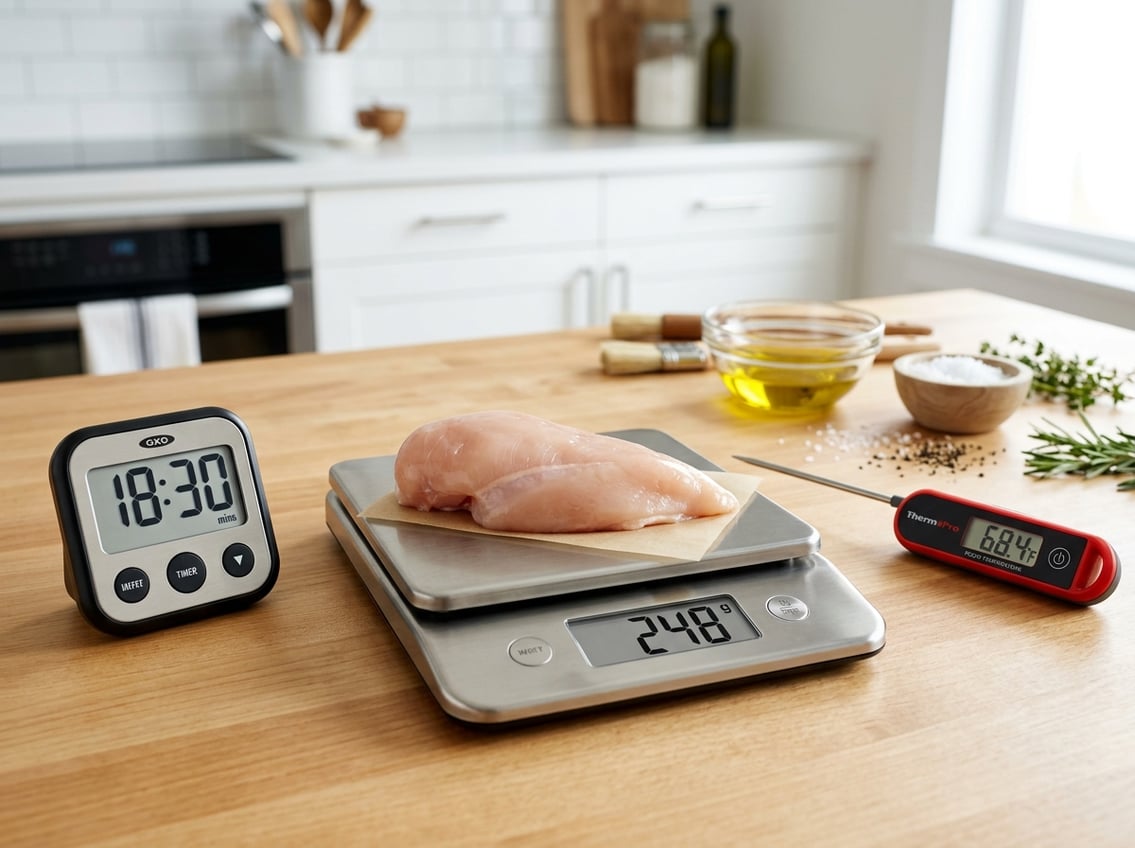
How long you bake chicken breasts depends on thickness, weight, and whether the pieces are boneless or bone-in. A thermometer matters more than the clock because size changes the cooking time.
How Long Smaller and Larger Pieces Need
Smaller boneless pieces may finish in about 18 to 22 minutes at a hot oven temperature. Larger boneless skinless chicken breasts often need 25 to 30 minutes, and extra-large pieces can take longer.
Start checking early when the pieces are thick or uneven. That helps you avoid overbaking.
When to Pull Chicken From the Oven
Pull the chicken when the thickest part reaches 165°F. If you leave it in too long after that point, the meat can dry out.
Many cooks remove it a minute or two before it seems fully done, then let carryover heat finish the job while it rests. The thermometer is your best guide.
Boneless Versus Bone-In Differences
Boneless chicken breasts cook faster and more evenly, so they are the easiest choice for a basic oven recipe. Bone-in chicken breast usually takes longer because the bone slows heat movement through the meat.
For bone-in chicken breast, plan for more time and check the center carefully near the end.
How to Keep Chicken Moist and Flavorful
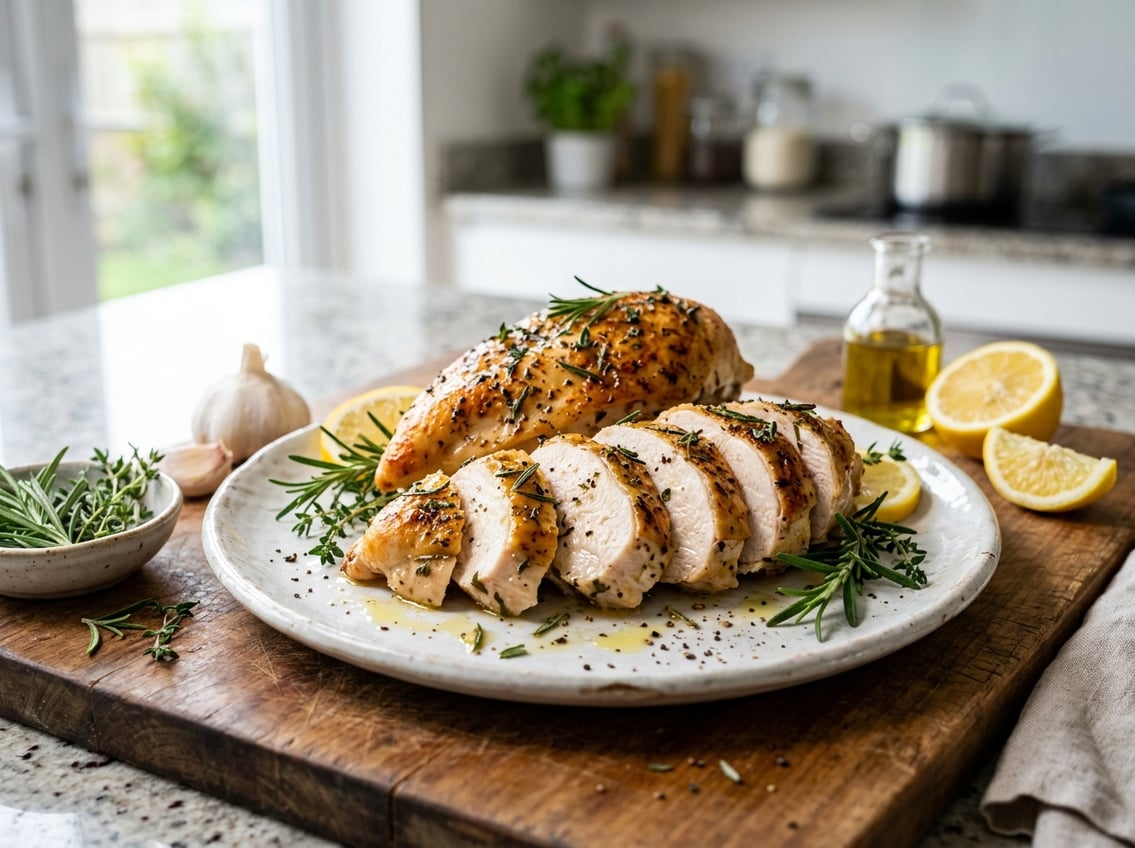
Moist chicken starts before you put the pan in the oven. Small prep steps make a big difference in texture.
Prevent Dryness Before Baking
Start with olive oil and enough kosher salt to season the surface well. Dry the chicken with paper towels before seasoning, since excess moisture can prevent browning.
Even thickness helps too. If one side is much thicker, lightly pound it so the breast cooks more evenly and stays juicy.
Brining, Marinating, and Even Thickness
Brining or marinating can help, especially with boneless skinless chicken breast. A short brine gives the meat more moisture retention, while a marinade adds flavor.
Chefs often recommend brining or marinating boneless, skinless breasts ahead of time. This gives you more forgiveness in the oven.
Common Mistakes That Ruin Texture
Overbaking is the biggest problem. Even a few extra minutes can make chicken dry.
Using too little seasoning, skipping the rest time, or slicing too soon also hurts texture. Keep the spice mix simple and let the chicken rest before cutting.
Serving, Storing, and Reusing Extras
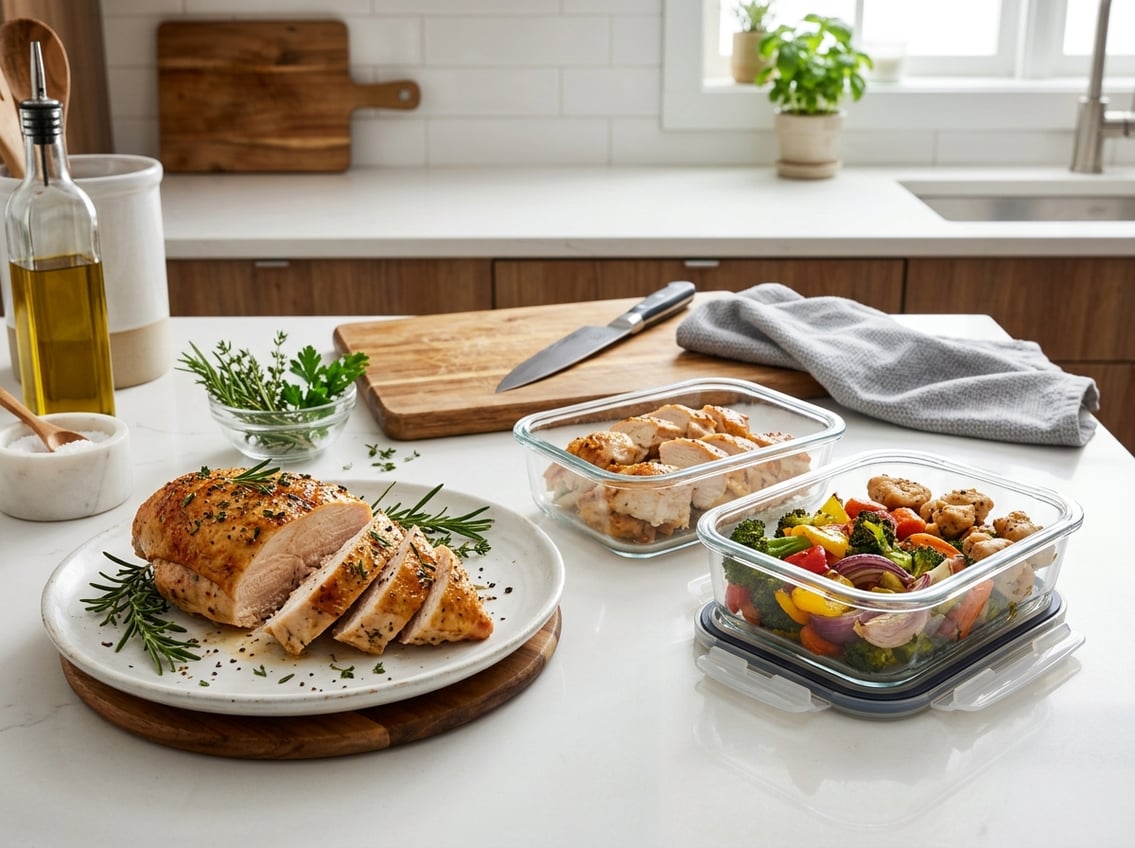
A good baked chicken breast recipe works for dinner now and other meals later. Store leftovers safely and reheat them with care.
Best Ways to Slice and Serve
Slice across the grain for the most tender bite. This makes the chicken easier to chew and helps it fit well in bowls, wraps, and salads.
Serve baked chicken with roasted vegetables, rice, potatoes, or a green salad. The mild flavor also works well with sauce or gravy.
How to Store and Reheat Without Drying Out
Cool leftover baked chicken before storing it in airtight containers. Proper cold storage helps keep food fresh and safe.
For reheating, use a covered dish with a splash of broth or water so the chicken does not dry out. Heat just until warm, since too much time in the oven or microwave can toughen it.
Ideas for Leftovers in Other Meals
You can use leftover baked chicken in chicken casserole, soup, sandwiches, tacos, and pasta. It also works well in grain bowls and meal prep lunches.
If you make extra, you can use the chicken as a shortcut for the next day.


