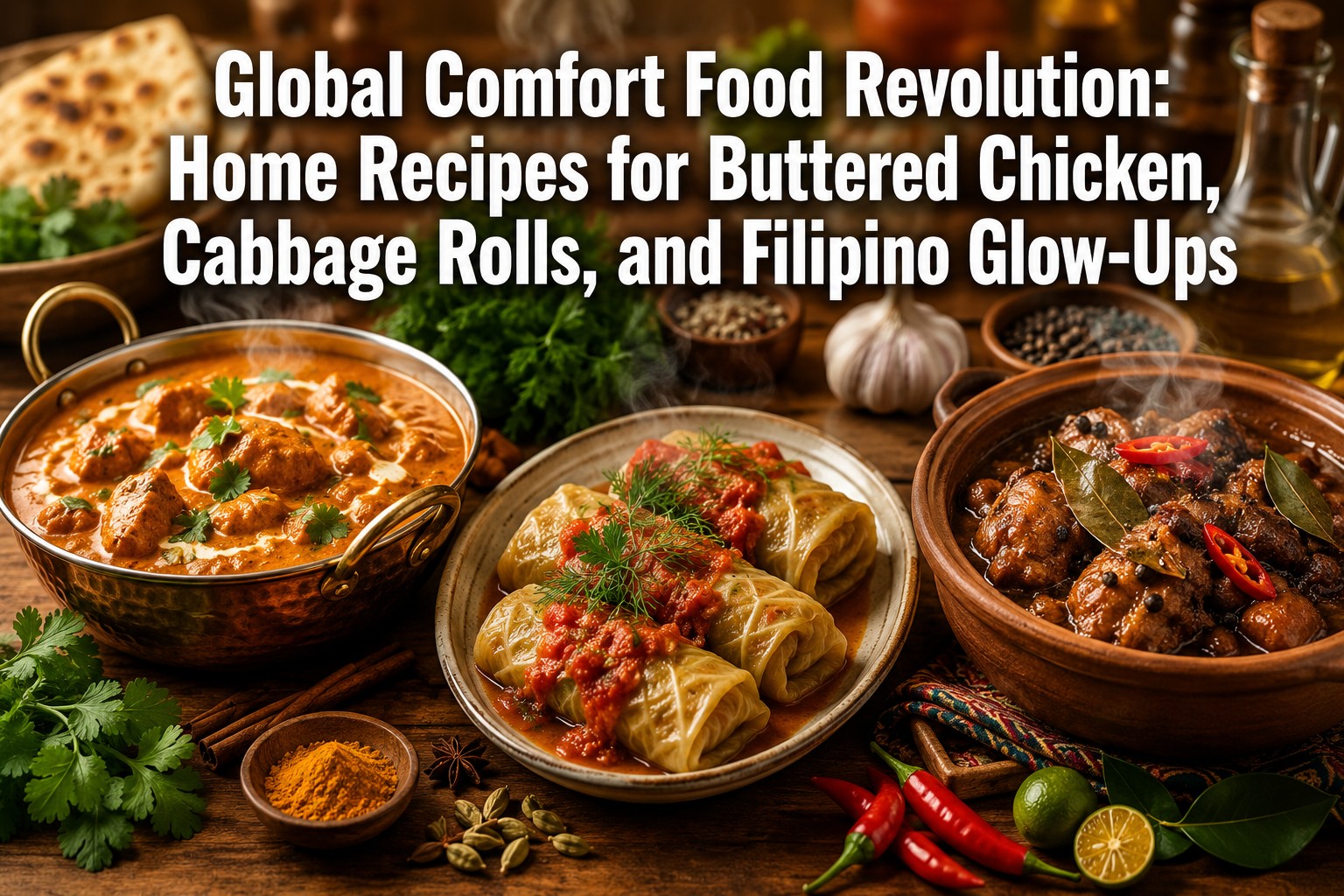
Global Comfort Food Revolution: Home Recipes for Buttered Chicken, Cabbage Rolls, and Filipino Glow-Ups
Last updated: June 12, 2026
Home cooks across the world are ditching takeout menus and recreating restaurant-quality international comfort dishes in their own kitchens. The Global Comfort Food Revolution: Home Recipes for Buttered Chicken, Cabbage Rolls, and Filipino Glow-Ups represents a shift toward accessible, authentic recipes that bring the warmth of global cuisines to everyday tables without expensive ingredients or complicated techniques.
Quick Answer
The Global Comfort Food Revolution: Home Recipes for Buttered Chicken, Cabbage Rolls, and Filipino Glow-Ups is a cooking movement focused on making international comfort dishes accessible for home preparation. Butter chicken (murgh makhani) requires marinated chicken in a tomato-cream sauce with Indian spices, cabbage rolls involve stuffed leaves baked in tomato sauce, and Filipino comfort food “glow-ups” modernize traditional dishes like adobo and sinigang with fresh techniques. Most recipes take 45-90 minutes and use supermarket ingredients, making authentic global flavors achievable for beginners and experienced cooks alike.
Key Takeaways
- Butter chicken takes about 60 minutes total and uses common spices like garam masala, turmeric, and cumin with chicken, tomato, and cream
- Cabbage rolls require 90 minutes including prep time, with savoy or green cabbage working best for easy rolling
- Filipino comfort food includes beginner-friendly dishes like chicken adobo (45 minutes) and lumpia (30 minutes for prep)
- Most recipes cost $15-25 to make and serve 4-6 people, significantly cheaper than restaurant versions
- Common mistakes include not marinating chicken long enough, using tough cabbage, and over-reducing sauces
- Cabbage rolls freeze exceptionally well for up to 3 months, making them ideal for meal prep
- Heavy cream alternatives for butter chicken include coconut milk, cashew cream, or Greek yogurt
What Is the Global Comfort Food Revolution?
The global comfort food revolution refers to the growing trend of home cooks recreating authentic international dishes that traditionally required specialized ingredients or restaurant expertise. This movement gained momentum in 2020 and continues strong in 2026, driven by improved access to international ingredients at mainstream grocery stores, online recipe communities, and a desire for restaurant-quality meals at home prices.
The revolution focuses on three key principles:
- Accessibility: Recipes adapted to use ingredients available at regular supermarkets
- Authenticity: Maintaining traditional flavor profiles while simplifying techniques
- Affordability: Creating dishes that cost 50-70% less than restaurant versions
Popular categories include Indian curries (especially butter chicken), Eastern European stuffed dishes (cabbage rolls, pierogi), Filipino comfort classics (adobo, pancit), Thai curries, and Japanese comfort bowls. The movement emphasizes that “comfort food” isn’t limited to Western mac and cheese or pot roast—every culture has soul-warming dishes worth mastering at home.
Choose this approach if you want to expand your cooking repertoire beyond familiar recipes, enjoy trying new flavors, and prefer cooking from scratch over ordering delivery.
How to Make Authentic Butter Chicken at Home
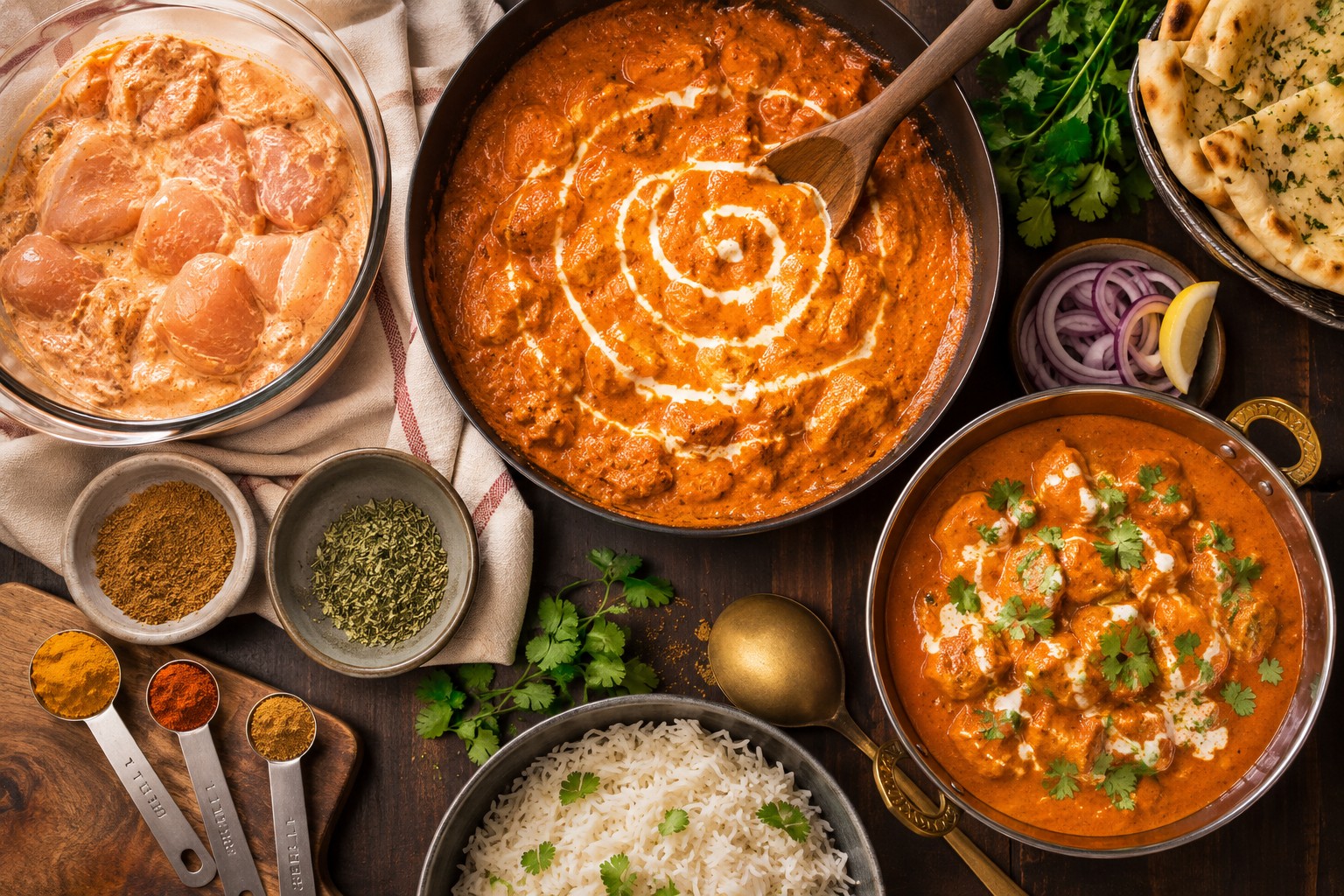
Authentic butter chicken (murgh makhani) takes about 60 minutes and requires two main steps: marinating chicken in yogurt and spices, then simmering it in a rich tomato-cream sauce. The dish originated in Delhi and has become one of the most popular Indian restaurant dishes worldwide, but it’s surprisingly straightforward to make at home.
Essential Ingredients for Butter Chicken
For the marinade:
- 1.5 lbs boneless chicken (breast or thigh), cut into 2-inch pieces
- 1 cup plain yogurt
- 1 tablespoon lemon juice
- 2 teaspoons garam masala
- 1 teaspoon turmeric
- 1 teaspoon cumin
- 1 teaspoon paprika
- Salt to taste
For the sauce:
- 3 tablespoons butter
- 1 large onion, finely chopped
- 4 cloves garlic, minced
- 1 tablespoon ginger, grated
- 2 teaspoons garam masala
- 1 teaspoon cumin
- 1 can (14 oz) crushed tomatoes
- 1 cup heavy cream
- 1 tablespoon kasuri methi (dried fenugreek leaves)
- Salt and sugar to balance
Step-by-Step Method
- Marinate the chicken for at least 30 minutes (or up to 24 hours in the refrigerator) in yogurt, lemon juice, and spices
- Cook the chicken in a hot skillet or grill until charred on the outside but not fully cooked through (about 3-4 minutes per side)
- Make the sauce by sautéing onions in butter until golden, adding garlic and ginger, then spices
- Add tomatoes and simmer for 10 minutes until the sauce thickens
- Blend the sauce until smooth (optional but recommended for restaurant texture)
- Return sauce to pan, add cream, then add the partially cooked chicken
- Simmer for 10-15 minutes until chicken is fully cooked and sauce reaches desired consistency
- Finish with kasuri methi and a pat of butter
The key to authentic flavor is the kasuri methi (dried fenugreek leaves), which adds a slightly bitter, aromatic note that distinguishes butter chicken from other tomato-based curries. If you’re working with chicken breast, ensure it reaches the proper internal temperature of 165°F.
Common Mistakes When Making Butter Chicken at Home
The most frequent butter chicken errors include under-marinating the chicken (aim for at least 30 minutes, ideally 2-4 hours), adding cream too early which can cause curdling, and using pre-ground spices that have lost their potency. Fresh whole spices toasted and ground make a noticeable difference in flavor depth.
Three critical mistakes to avoid:
- Skipping the char: Butter chicken should have slightly charred, smoky chicken pieces. Cook them on high heat before adding to the sauce
- Watery sauce: If your sauce is too thin, simmer uncovered for an extra 5-10 minutes or add a tablespoon of tomato paste
- Wrong chicken cut: While breast works, thighs stay more tender and forgiving if slightly overcooked
For the best results, choose quality chicken breast and avoid cooking from frozen. If you must use frozen chicken, learn the proper defrosting method to maintain texture and food safety.
Why Is My Butter Chicken Sauce Not Creamy Enough?
A thin or grainy butter chicken sauce usually results from insufficient cooking time for the tomato base, adding cold cream to hot sauce (causing separation), or using low-fat dairy products. The sauce should simmer for at least 10 minutes after adding tomatoes to concentrate flavors and thicken naturally before adding cream.
Quick fixes for thin sauce:
- Simmer uncovered for 5-10 more minutes to reduce liquid
- Add 1-2 tablespoons tomato paste for body and depth
- Stir in 2 tablespoons ground cashews or almond flour as a natural thickener
- Blend a portion of the sauce to release starches and create creaminess
For grainy texture:
- Always temper cream by warming it slightly before adding to hot sauce
- Remove sauce from direct heat when adding cream
- Use full-fat cream or coconut milk (low-fat versions separate more easily)
- Blend the sauce completely smooth before adding cream
The sauce should coat the back of a spoon and have a glossy, velvety appearance. If you’re concerned about keeping your chicken moist throughout cooking, check out the best methods for cooking chicken breast.
Alternatives to Heavy Cream in Butter Chicken
Coconut milk (full-fat) is the best dairy-free substitute for heavy cream in butter chicken, providing similar richness and a subtle sweetness that complements the spices. Other effective alternatives include cashew cream (soaked cashews blended with water), Greek yogurt added at the end of cooking, or a combination of milk and butter.
Substitution guide:
| Original | Substitute | Ratio | Notes |
|---|---|---|---|
| 1 cup heavy cream | 1 cup coconut milk | 1:1 | Use full-fat; adds slight coconut flavor |
| 1 cup heavy cream | 3/4 cup cashew cream | 3:4 | Soak 1/2 cup cashews, blend with 1/4 cup water |
| 1 cup heavy cream | 3/4 cup Greek yogurt | 3:4 | Add off heat to prevent curdling |
| 1 cup heavy cream | 3/4 cup milk + 3 tbsp butter | 3:4 + 3 tbsp | Closest to original richness |
For the healthiest option without sacrificing too much richness, use half coconut milk and half Greek yogurt. Add the yogurt last, off the heat, stirring constantly. This reduces calories by about 40% compared to full cream while maintaining a satisfying texture.
Butter Chicken vs Tikka Masala Difference
Butter chicken and chicken tikka masala are similar but distinct dishes: butter chicken has a smoother, sweeter, more tomato-forward sauce with visible butter, while tikka masala features a spicier, chunkier sauce with more pronounced onion and pepper flavors. Butter chicken traditionally uses chicken marinated in yogurt and cooked in a tandoor, while tikka masala uses pre-grilled chicken tikka pieces.
Key differences:
- Sauce texture: Butter chicken is blended smooth; tikka masala often has visible onion and pepper pieces
- Sweetness: Butter chicken includes more cream and sometimes sugar; tikka masala is more savory
- Spice level: Tikka masala typically has more heat from green chilies or cayenne
- Origin: Butter chicken is authentically Indian (Delhi, 1950s); tikka masala’s origin is debated (possibly British-Indian)
- Color: Butter chicken is lighter orange-red; tikka masala is deeper red
Both dishes work well with the same chicken preparation methods, so if you’re cooking chicken breast step by step, the marinating and grilling techniques apply to both recipes.
Traditional Cabbage Rolls Recipe Step by Step
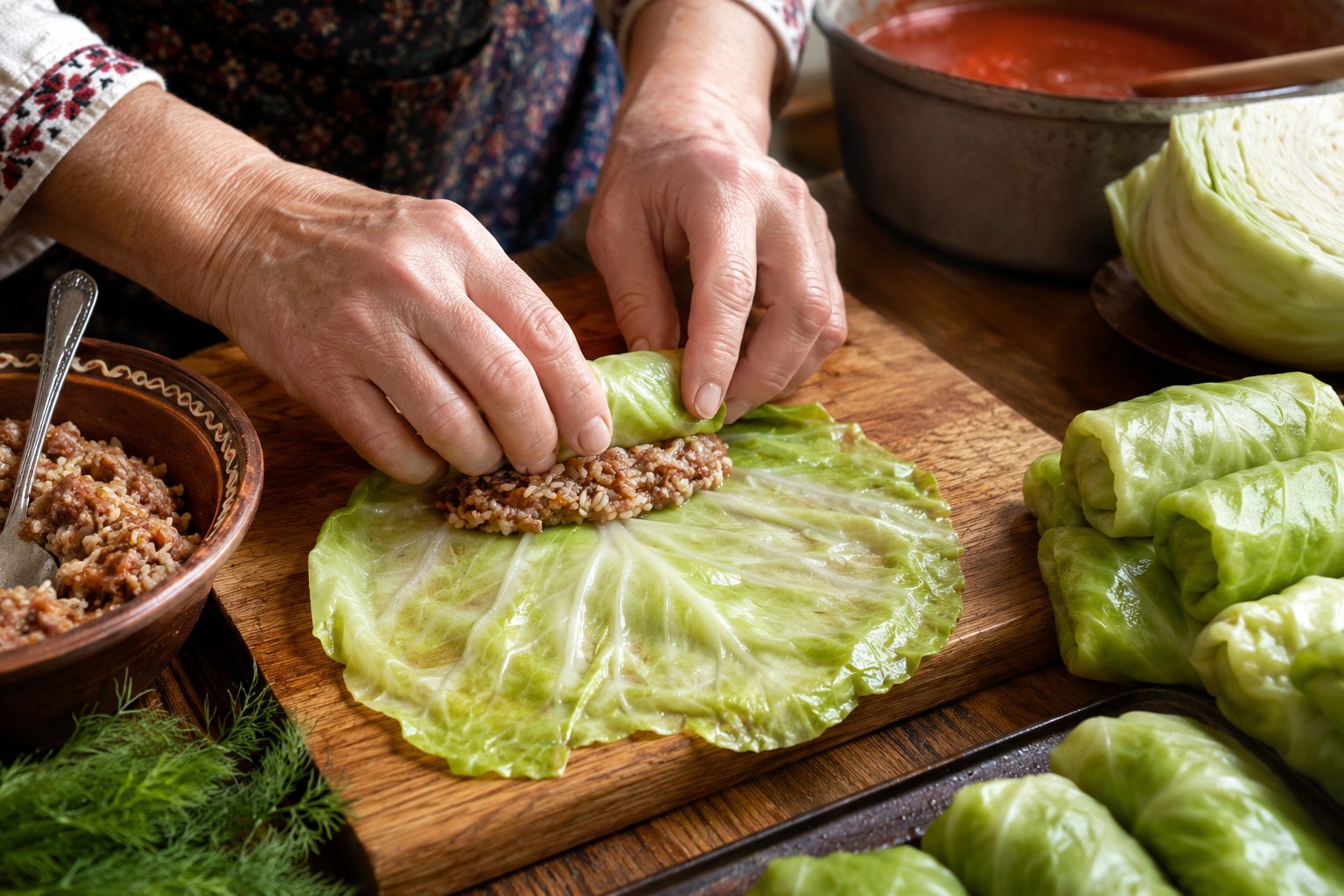
Traditional cabbage rolls (also called golabki, holubky, or sarma depending on the region) take about 90 minutes total and involve stuffing softened cabbage leaves with a meat-rice mixture, then baking them in tomato sauce. This Eastern European comfort dish is labor-intensive but incredibly satisfying, and the recipe scales well for meal prep or freezing.
Ingredients for 12 Cabbage Rolls
For the rolls:
- 1 large head of cabbage (savoy or green)
- 1 lb ground beef (or beef-pork mix)
- 1/2 cup uncooked white rice
- 1 small onion, finely diced
- 2 cloves garlic, minced
- 1 egg
- 1 teaspoon paprika
- Salt and pepper to taste
For the sauce:
- 1 can (28 oz) crushed tomatoes
- 1 can (14 oz) tomato sauce
- 2 tablespoons brown sugar
- 1 tablespoon vinegar
- 1 teaspoon dried dill
- Salt and pepper
Complete Method
- Prepare the cabbage: Bring a large pot of salted water to boil. Core the cabbage and place the whole head in boiling water for 2-3 minutes. Carefully peel off softened outer leaves. Return cabbage to water and repeat until you have 12-15 usable leaves
- Make the filling: Mix ground meat, uncooked rice, onion, garlic, egg, and seasonings in a bowl
- Trim the leaves: Cut away the thick center rib from each cabbage leaf to make rolling easier
- Fill and roll: Place 2-3 tablespoons of filling near the stem end of each leaf. Fold sides in, then roll tightly from stem to tip
- Prepare the sauce: Mix crushed tomatoes, tomato sauce, sugar, vinegar, and dill in a bowl
- Assemble: Pour a thin layer of sauce in a 9×13 baking dish. Place rolls seam-side down. Pour remaining sauce over rolls
- Bake: Cover tightly with foil and bake at 350°F for 75-90 minutes until rice is tender and meat is cooked through
The rice cooks inside the rolls, absorbing flavors from the meat and sauce. Using uncooked rice is traditional and creates the right texture—pre-cooked rice becomes mushy.
Best Cabbage for Making Cabbage Rolls
Savoy cabbage is the best choice for cabbage rolls because its leaves are naturally more pliable, have a milder flavor, and separate more easily than standard green cabbage. However, regular green cabbage works perfectly well and is more widely available—just expect to boil it slightly longer to achieve the same flexibility.
Cabbage comparison:
- Savoy cabbage: Crinkled leaves, naturally tender, easiest to roll, slightly sweeter flavor (best choice)
- Green cabbage: Smooth leaves, requires longer boiling, more traditional flavor, widely available (good choice)
- Napa cabbage: Very delicate, tears easily, better for Asian-style rolls, less traditional (use with care)
- Red cabbage: Too tough even when boiled, strong flavor, not recommended
Choose a cabbage head that feels heavy for its size with tightly packed leaves. Avoid cabbages with loose, separated outer leaves or brown spots. A 3-4 pound head typically yields 12-15 usable leaves for rolling.
How Long Does It Take to Make Cabbage Rolls From Scratch?
Making cabbage rolls from scratch takes approximately 90 minutes total: 20 minutes for softening cabbage leaves, 20 minutes for preparing filling and rolling, 5 minutes for assembling, and 75-90 minutes for baking. The active hands-on time is about 45 minutes, with the rest being passive baking time.
Time breakdown:
- Boiling and softening cabbage: 15-20 minutes
- Preparing meat filling: 10 minutes
- Rolling individual cabbage rolls: 15-20 minutes (faster with practice)
- Making sauce and assembling dish: 5 minutes
- Baking time: 75-90 minutes
- Resting before serving: 5 minutes
Total time: 90-120 minutes
You can significantly reduce active time by preparing components ahead. The filling can be made a day in advance, and cabbage leaves can be softened and refrigerated for up to 2 days before rolling. Some cooks prefer to freeze the entire head of cabbage overnight, then thaw it—the freezing process breaks down cell walls, making leaves naturally pliable without boiling.
Can I Make Cabbage Rolls Ahead of Time and Freeze Them?
Yes, cabbage rolls freeze exceptionally well for up to 3 months and can be frozen either before or after baking. For best results, assemble the rolls completely with sauce, freeze them in a single layer on a baking sheet until solid, then transfer to freezer bags or containers. Bake from frozen, adding 30-45 minutes to the original baking time.
Freezing methods:
Unbaked (recommended):
- Assemble rolls completely with sauce in a freezer-safe baking dish
- Cover tightly with plastic wrap, then foil
- Freeze for up to 3 months
- Bake from frozen at 350°F for 2-2.5 hours, covered
Pre-baked:
- Bake rolls completely, then cool to room temperature
- Freeze in portions with sauce
- Reheat covered at 350°F for 45-60 minutes
Individual portions:
- Freeze rolls separately without sauce
- Store sauce separately
- Combine when reheating for fresher taste
Cabbage rolls actually improve in flavor after freezing and reheating, as the flavors meld together during storage. This makes them ideal for batch cooking—many families double or triple the recipe and freeze portions for quick weeknight dinners.
What Are Filipino Glow Up Recipes?
Filipino glow-up recipes are modern, elevated versions of traditional Filipino comfort dishes that maintain authentic flavors while improving presentation, reducing cooking time, or incorporating healthier ingredients. The “glow-up” trend on social media showcases how classic dishes like chicken adobo, lumpia, and pancit can be made more accessible to home cooks while honoring their cultural roots.
These recipes typically focus on:
- Simplified techniques that don’t require specialty equipment
- Ingredient substitutions using items available at mainstream grocery stores
- Improved presentation for social media and entertaining
- Healthier modifications like baking instead of deep-frying or reducing sodium
Popular Filipino glow-up dishes include air-fryer lumpia (spring rolls), one-pot chicken adobo, deconstructed halo-halo desserts, and ube (purple yam) incorporated into Western baked goods. The movement celebrates Filipino cuisine while making it more approachable for younger generations and non-Filipino home cooks.
What Filipino Dishes Are Considered Comfort Food?
Filipino comfort food centers around dishes that are savory, slightly tangy, and often feature a balance of salty-sour-sweet flavors. The most iconic comfort dishes include chicken adobo (meat braised in vinegar, soy sauce, and garlic), sinigang (sour tamarind soup), pancit (stir-fried noodles), lumpia (spring rolls), and arroz caldo (rice porridge with chicken).
Top Filipino comfort dishes for home cooking:
- Chicken Adobo: The national dish, featuring chicken braised in vinegar, soy sauce, garlic, and bay leaves (45 minutes)
- Sinigang: Sour soup with pork or shrimp, vegetables, and tamarind broth (60 minutes)
- Pancit Canton: Stir-fried wheat noodles with vegetables and meat (30 minutes)
- Lumpia Shanghai: Fried spring rolls with ground pork filling (45 minutes prep, 15 minutes frying)
- Arroz Caldo: Ginger-garlic rice porridge with chicken, similar to congee (45 minutes)
- Kare-Kare: Oxtail and vegetable stew in peanut sauce (2-3 hours)
- Bistek Tagalog: Filipino beef steak with onions and citrus marinade (30 minutes)
These dishes share common ingredients like garlic, onions, soy sauce, vinegar, and calamansi (Filipino lime), making them economical to prepare once you stock a Filipino pantry. Most recipes are naturally gluten-free or easily adapted.
Are Filipino Comfort Food Recipes Beginner Friendly?
Most Filipino comfort food recipes are very beginner-friendly, requiring basic cooking techniques like braising, stir-frying, or simmering rather than complex methods. Chicken adobo, in particular, is considered one of the easiest international dishes to master—it requires just one pot, six ingredients, and about 45 minutes of mostly hands-off cooking time.
Beginner-friendly Filipino recipes:
- Chicken Adobo: One pot, 6 ingredients, hard to overcook (difficulty: 1/5)
- Pancit Canton: Basic stir-fry technique, flexible ingredients (difficulty: 2/5)
- Lumpia: Requires rolling practice but filling is forgiving (difficulty: 2/5)
- Arroz Caldo: Similar to making risotto but more forgiving (difficulty: 2/5)
More challenging recipes:
- Kare-Kare: Long cooking time, requires peanut butter or ground peanuts (difficulty: 3/5)
- Lechon Kawali: Deep-frying large pork pieces requires confidence (difficulty: 3/5)
The key advantage for beginners is that Filipino cooking emphasizes building layers of flavor through simple techniques rather than precise timing or temperatures. Most dishes are forgiving and taste even better the next day, making them ideal for new cooks. If you’re working with chicken in Filipino recipes, the same basic chicken cooking principles apply.
Is Comfort Food Cooking Expensive to Do at Home?
Cooking comfort food at home is significantly cheaper than restaurant versions, typically costing $15-25 to make dishes that serve 4-6 people. Butter chicken costs approximately $18 for ingredients that would cost $50-60 at an Indian restaurant, cabbage rolls run about $15 for a dozen (versus $3-4 each at restaurants), and Filipino adobo costs under $12 for a family meal.
Cost comparison for Global Comfort Food Revolution recipes:
| Dish | Home Cost (serves 4-6) | Restaurant Cost | Savings |
|---|---|---|---|
| Butter Chicken | $18-22 | $50-60 | 65% |
| Cabbage Rolls (12) | $15-18 | $36-48 | 60% |
| Chicken Adobo | $10-12 | $35-45 | 70% |
| Lumpia (24 pieces) | $12-15 | $30-40 | 60% |
Budget-saving strategies:
- Buy spices in bulk from international markets (1/3 the cost of supermarket jars)
- Use chicken thighs instead of breast for butter chicken and adobo (cheaper and more flavorful)
- Make double batches and freeze portions for future meals
- Grow fresh herbs like cilantro and dill if you cook these cuisines regularly
The initial investment in spices and specialty ingredients (garam masala, fish sauce, kasuri methi) might cost $30-40, but these ingredients last for months and are used across multiple recipes. After stocking your pantry, individual meals become very economical.
FAQ
How long can I marinate chicken for butter chicken? Marinate chicken for butter chicken for a minimum of 30 minutes and up to 24 hours in the refrigerator. Longer marination (4-24 hours) produces more tender, flavorful chicken, but even 30 minutes provides good results. Don’t marinate longer than 24 hours, as the yogurt’s acidity can make the chicken mushy.
Can I use red cabbage for cabbage rolls? Red cabbage is not recommended for traditional cabbage rolls because it remains tough even after boiling and has a stronger, more bitter flavor that doesn’t complement the meat filling. Stick with green or savoy cabbage for best results. Red cabbage works better for braising or coleslaw.
What can I substitute for fish sauce in Filipino recipes? Substitute fish sauce with soy sauce mixed with a small amount of anchovy paste (1 tablespoon soy sauce + 1/4 teaspoon anchovy paste per tablespoon of fish sauce), or use straight soy sauce with a squeeze of lime for a vegetarian option. The flavor won’t be identical but will provide the necessary salty, umami depth.
Do I need a tandoor oven to make authentic butter chicken? No, you don’t need a tandoor oven for butter chicken at home. Grill the marinated chicken on a regular grill, broil it in your oven, or pan-sear it in a very hot cast-iron skillet to achieve the characteristic char. The key is high heat to create some caramelization and smokiness.
How do I know when cabbage rolls are done baking? Cabbage rolls are done when the internal temperature reaches 160°F, the rice is tender (not crunchy), and the cabbage is very soft. This typically takes 75-90 minutes at 350°F. Pierce a roll with a knife—if it slides through easily and the rice is soft, they’re ready.
Can I make butter chicken without cream? Yes, make butter chicken without cream by using full-fat coconut milk, cashew cream (blended soaked cashews), or Greek yogurt added at the end of cooking. Coconut milk provides the closest texture and richness to traditional cream while keeping the dish dairy-free.
What’s the best way to reheat cabbage rolls? Reheat cabbage rolls covered in a 350°F oven for 30-40 minutes if refrigerated, or 45-60 minutes if frozen. Add a splash of water or extra tomato sauce before covering to prevent drying. Microwave individual portions for 3-4 minutes, covered, for a quicker option.
Is chicken adobo spicy? Traditional chicken adobo is not spicy—it’s savory, tangy, and slightly sweet with no heat. The flavor comes from vinegar, soy sauce, garlic, and bay leaves. Some regional variations add black pepper or chili peppers for heat, but the basic recipe is mild and suitable for all spice tolerance levels.
Can I prep butter chicken sauce in advance? Yes, prepare butter chicken sauce up to 3 days in advance and store it refrigerated, or freeze it for up to 3 months. Make the sauce through the cream addition, cool completely, then refrigerate. When ready to serve, reheat the sauce and add freshly cooked chicken, simmering for 10-15 minutes.
What rice goes best with butter chicken? Basmati rice is the traditional and best choice for butter chicken, offering a fragrant, fluffy texture that complements the rich sauce. Cook it plain or make it into pilau (rice cooked with whole spices). Jasmine rice works as a substitute, or serve with naan bread instead.
How do I prevent lumpia wrappers from cracking? Prevent lumpia wrappers from cracking by keeping them covered with a damp towel while working, handling them gently, and not overfilling the rolls. If wrappers become brittle, lightly mist them with water. Seal edges with a cornstarch-water paste to prevent opening during frying.
Can I bake cabbage rolls instead of using tomato sauce? Yes, bake cabbage rolls in chicken or beef broth instead of tomato sauce for a different flavor profile. Use 2-3 cups of broth, cover tightly, and bake at the same temperature and time. This creates a more savory, less acidic dish popular in some Eastern European variations.
Conclusion
The Global Comfort Food Revolution: Home Recipes for Buttered Chicken, Cabbage Rolls, and Filipino Glow-Ups brings the world’s most satisfying dishes into your kitchen with accessible ingredients and straightforward techniques. Butter chicken delivers restaurant-quality Indian flavors in about an hour, cabbage rolls provide make-ahead Eastern European comfort that freezes beautifully, and Filipino dishes like chicken adobo offer bold, balanced flavors with minimal effort.
Start with the easiest recipe that appeals to you—chicken adobo for beginners, butter chicken if you enjoy creamy curries, or cabbage rolls if you want a weekend project that yields multiple meals. Stock your pantry with key ingredients like garam masala, fish sauce, and quality canned tomatoes, then experiment with one new dish per week.
The beauty of these global comfort foods is their forgiving nature and ability to improve with practice. Your first butter chicken might not be perfect, but it will still be delicious and cost a fraction of takeout. By mastering these foundational recipes, you’ll build confidence to explore other international cuisines and develop a repertoire of crowd-pleasing dishes that bring warmth and flavor to any table in 2026.
SEO Meta Title: Global Comfort Food Revolution: Butter Chicken & More